FITZ
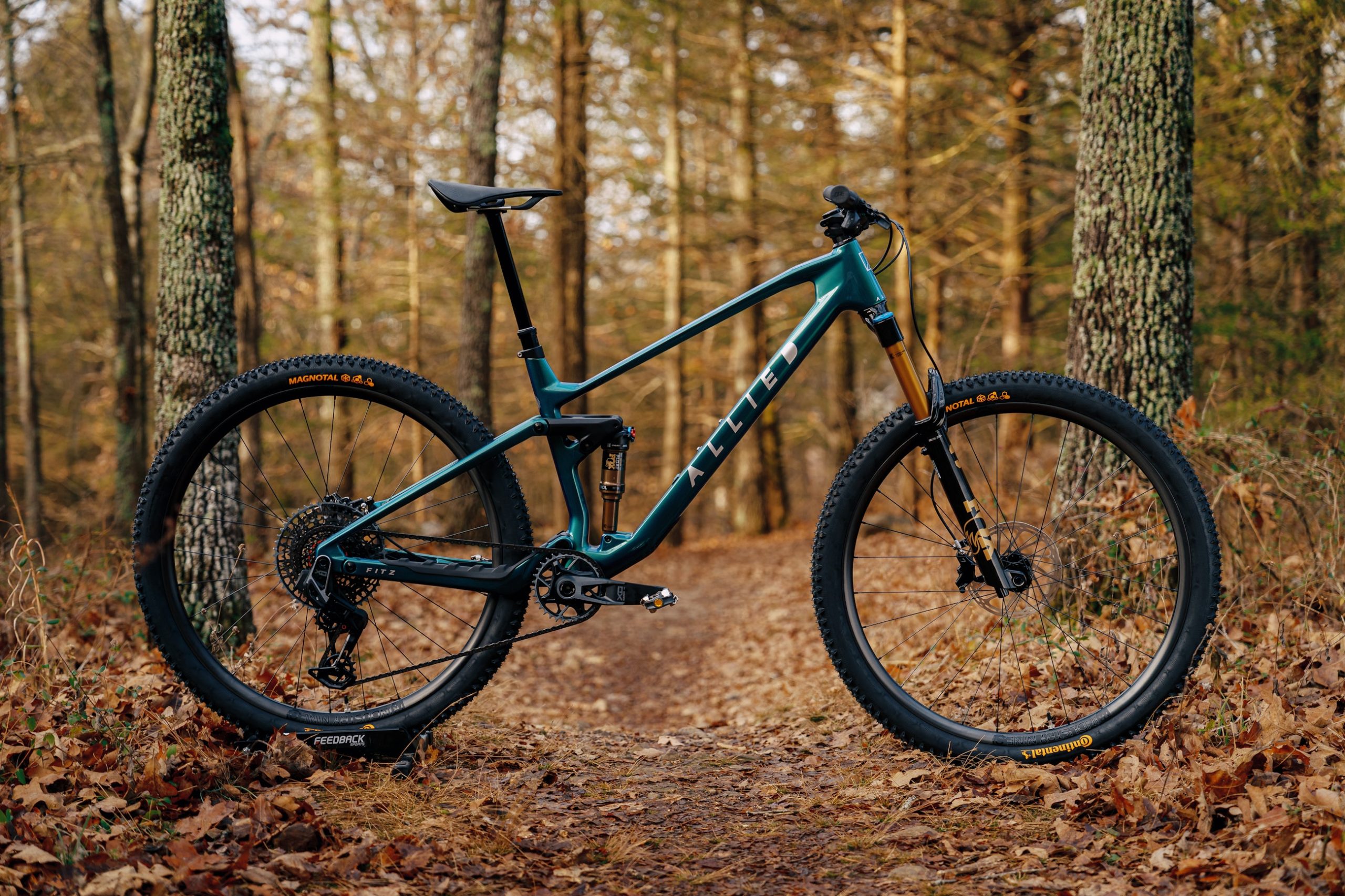
The Allied Fitz is a 140mm trail bike designed to strip away the excess weight and bulk that has crept into the mid-travel category. Built around a lightweight carbon frame and 29-inch wheels, it targets riders who want the pedaling efficiency of a downcountry bike without sacrificing the suspension depth needed for aggressive descents. Allied positions the Fitz as a return to the classic trail bike ethos, prioritizing agility and fatigue reduction for long backcountry rides over sheer downhill plowing capability. By keeping the chassis exceptionally light, the bike remains highly responsive under power and easy to maneuver at low speeds. It suits the rider who values vertical gain and all-day stamina just as much as technical descending, offering a streamlined alternative to the increasingly heavy, enduro-adjacent options dominating the current trail market.
Geometry & fit.
4 sizes published.
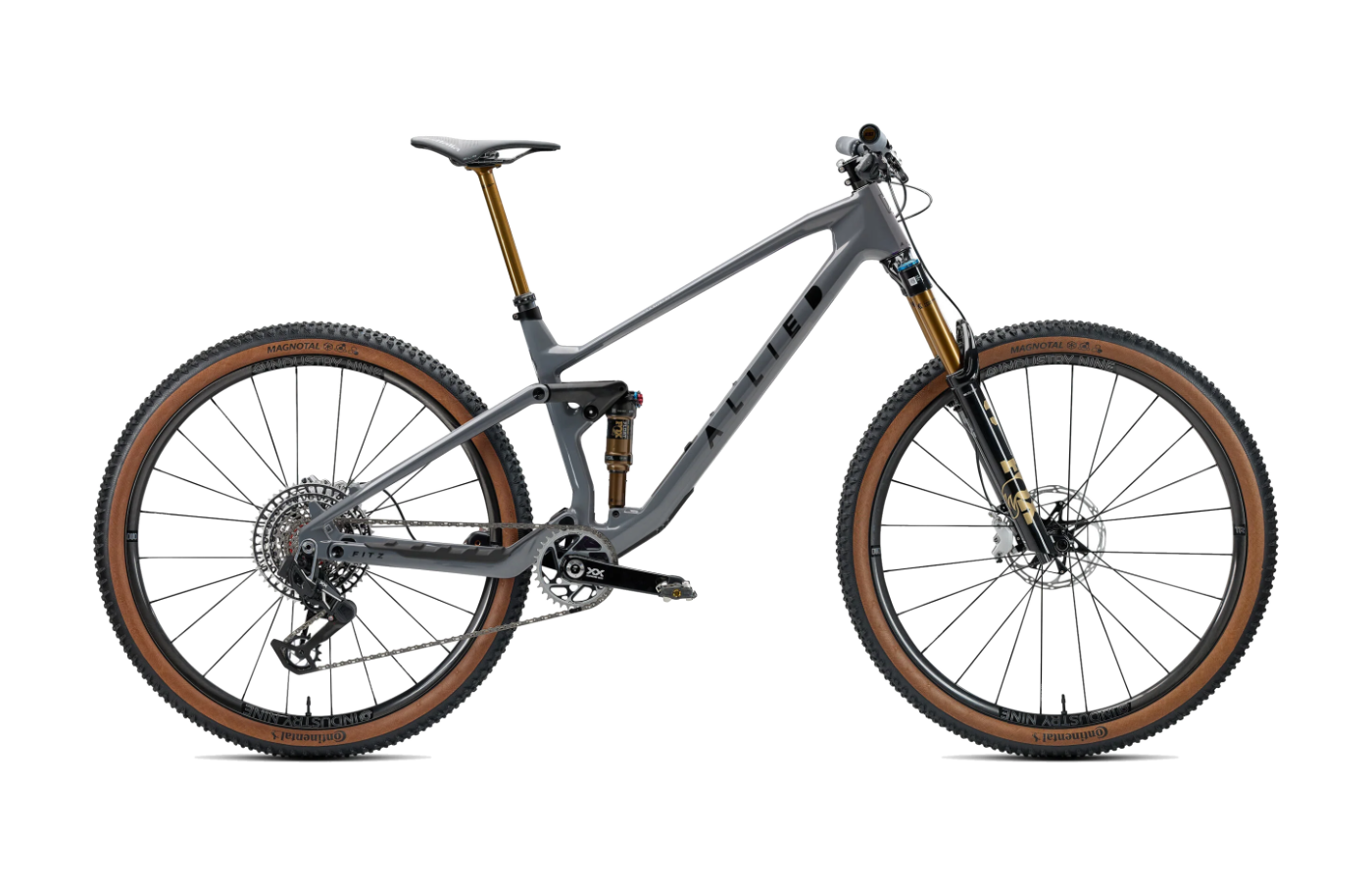
The Fitz utilizes a geometry layout that balances its lightweight construction with descending stability. A slack 64.5-degree head tube angle pushes the front wheel forward, helping the bike track predictably through steep, high-speed sections and preventing the nervous handling sometimes associated with ultra-light frames. This is paired with a steep seat tube angle hovering around 76.6 degrees, which places the rider in an upright, forward-biased pedaling position to maximize power transfer on steep climbs.
Reach measurements are generous, spanning from 430mm on the small to 505mm on the extra-large, giving the rider plenty of room to shift their weight and maintain balance over the center of the bike. A consistent 440mm chainstay length across all sizes provides a stable rear center that resists lifting on punchy ascents while remaining short enough to navigate tight switchbacks. The frame is designed with a low standover height and a straight, uninterrupted seat tube, allowing compatibility with dropper posts of 200mm or more so riders can get the saddle completely out of the way on technical descents.
Where the handlebar sits relative to the bottom bracket — the single most important fit pair.
01Fit geometry6 values
03Handling geometry6 values
Which size should I buy?
Slide your height to see the recommended size. GearWise's fit algorithm works from the published stack, reach, and ETT — the brand's own recommendation may differ.
→Calculated from GearWise's own stack / reach / ETT algorithm — the brand's size chart may recommend a different size, and a proper bike fit beats any calculator.
The lineup.
3 builds, ranging $6,900 – $11,400.
The Fitz lineup consists of three complete builds, all utilizing SRAM’s wireless Transmission drivetrains and Fox 36 forks with 140mm of travel. The range starts with the GX Eagle AXS Transmission build, which pairs a Fox Performance fork with Industry Nine 1/1 Trail S alloy wheels and SRAM Motive Bronze four-piston brakes. This entry point delivers the core electronic shifting and suspension performance of the platform at the most accessible price.
Moving to the mid-tier XO Transmission build upgrades the suspension to a Fox Factory 36 with the Grip X damper and introduces carbon fiber to the rolling stock with Industry Nine 1/1 Trail S Carbon wheels. The brakes also step up to the Motive Silver tier, and the cockpit shifts to carbon components from OneUp.
The flagship XX SL Eagle Transmission build focuses heavily on weight reduction, utilizing SRAM’s lightest cross-country drivetrain components alongside Industry Nine Solix Trail Carbon wheels and SRAM Motive Ultimate brakes. Across all builds, Allied specifies Continental Magnotal Grip Trail 29x2.4 tires and includes magnetic downtube storage, ensuring the bike’s practical backcountry features remain consistent regardless of the component tier.


From the press.
1 review from the cycling press.
Early impressions of the Allied Fitz center on its stark contrast to the heavier, more aggressive bikes that currently define the mid-travel segment. Reviewers note that the bike successfully reclaims the feel of a "purist trail bike" (Feedthehabit), delivering a ride character that prioritizes agility and climbing efficiency. Because the frame sheds several pounds compared to typical 140mm competitors, the Fitz accelerates with a distinct snap and requires noticeably less effort to muscle through tight, slow-speed technical sections.
On the trail, the Horst link suspension provides a "consistent, proven trail feel" (Feedthehabit) that remains active under braking and predictable through rough chatter. While it lacks the bottomless, smash-through-anything sensation of a heavier enduro rig, the suspension offers enough support to handle steep, rocky descents without feeling overwhelmed. The low overall weight means the bike is easy to loft over obstacles, allowing riders to maintain momentum rather than simply absorbing every impact.
The consensus points to a highly versatile machine that manages to "hang with the XC crowd" (Feedthehabit) on long ascents while retaining enough stability for demanding downhills. It is best suited for riders who want a highly responsive, energetic platform for massive backcountry loops, though those who frequent bike parks or prioritize high-speed rock gardens might miss the extra mass of a traditional all-mountain build.