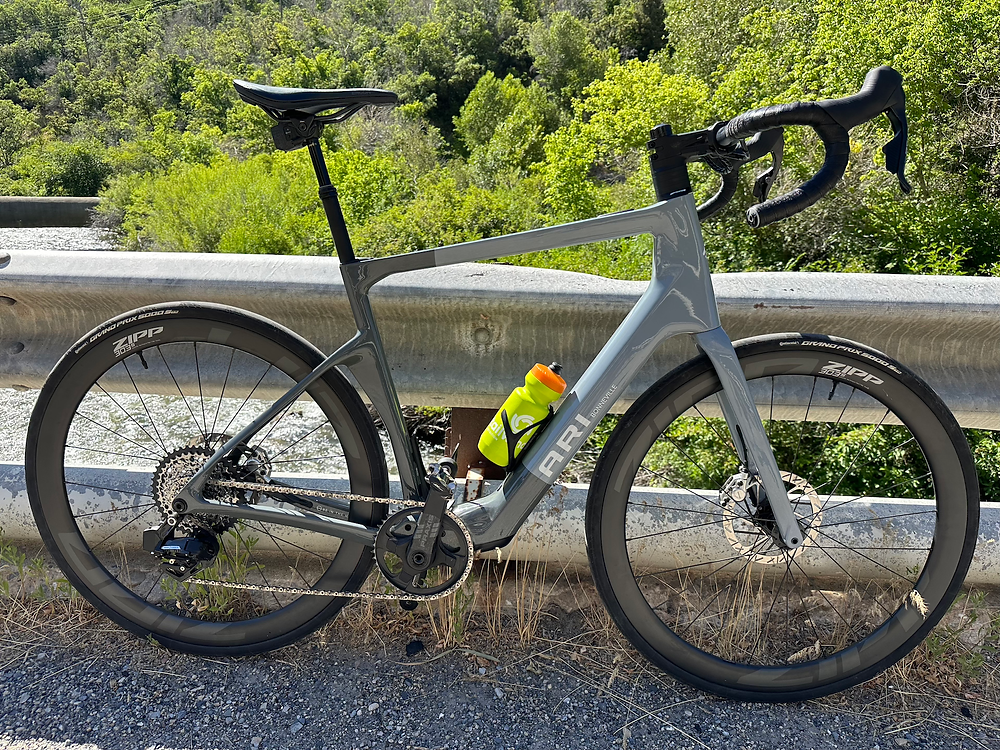
Bonneville
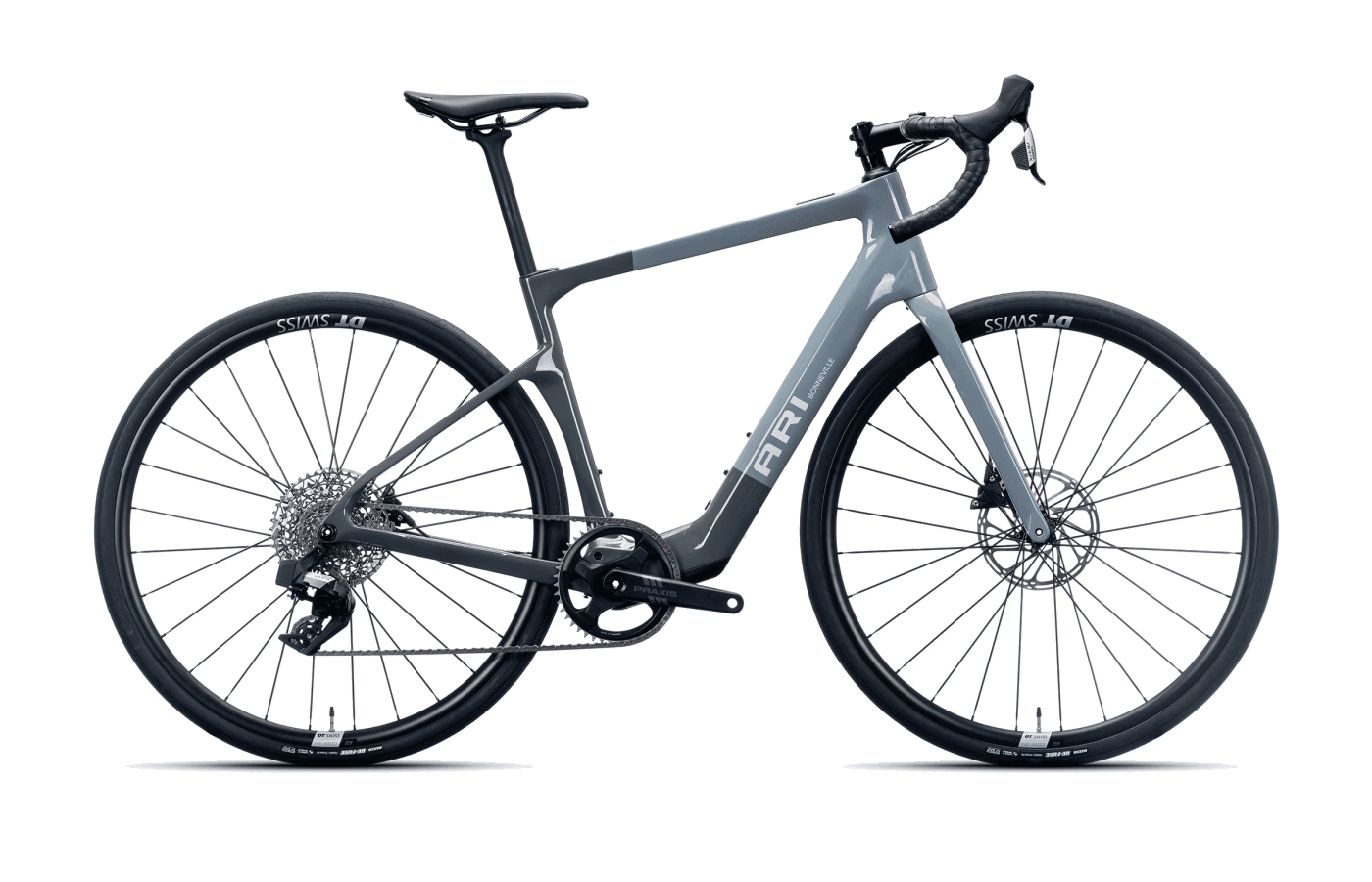
The Ari Bonneville is an electric adventure road bike built to neutralize headwinds and steep gradients without erasing the tactile feedback of a traditional road machine. Centered around a carbon frame and a Fazua Ride 60 motor, it is designed for riders who want to maintain a brisk pace on long commutes, keep up with faster groups, or simply manage fatigue on demanding routes.
Rather than aiming for ultra-lightweight climbing agility, the Bonneville leverages its motorized platform to prioritize momentum and stability across varied pavement. With clearance for up to 45c tires and a strictly one-by electronic drivetrain approach, it bridges the gap between a dedicated tarmac bike and a versatile all-road commuter. The result is a highly capable, long-distance companion that uses its electric assist to smooth out the most punishing aspects of road cycling.
Geometry & fit.
5 sizes published.
The Bonneville’s geometry leans heavily toward endurance and straight-line stability, aligning with its adventure road designation. Across the size range, the stack and reach figures promote a relatively upright, comfortable rider posture designed to minimize fatigue during long commutes or multi-hour rides.
Handling is dictated by a long wheelbase and a relaxed front end. The head tube angle sits at a slack 70.5 degrees on sizes extra-small through medium, steepening slightly to 72 degrees on the extra-large. Paired with consistent 421.5mm chainstays across all sizes, this geometry resists twitchiness and helps manage the bike's motorized mass. The bottom bracket drop ranges from 76mm on the smallest frame to 72mm on the largest, keeping the rider’s center of gravity low for predictable cornering.
Cockpit setups vary by tier, but all models utilize flared drop bars to widen the rider's stance for better control on rougher pavement. The top-tier Team build features a customized Vision SMR stem and Zipp XPLR carbon bars, while the lower builds rely on standard alloy stems paired with Easton or Ari-branded alloy handlebars.
Where the handlebar sits relative to the bottom bracket — the single most important fit pair.
01Fit geometry6 values
03Handling geometry7 values
Which size should I buy?
Slide your height to see the recommended size. GearWise's fit algorithm works from the published stack, reach, and ETT — the brand's own recommendation may differ.
→Calculated from GearWise's own stack / reach / ETT algorithm — the brand's size chart may recommend a different size, and a proper bike fit beats any calculator.
The lineup.
4 builds, ranging $3,999 – $8,599.
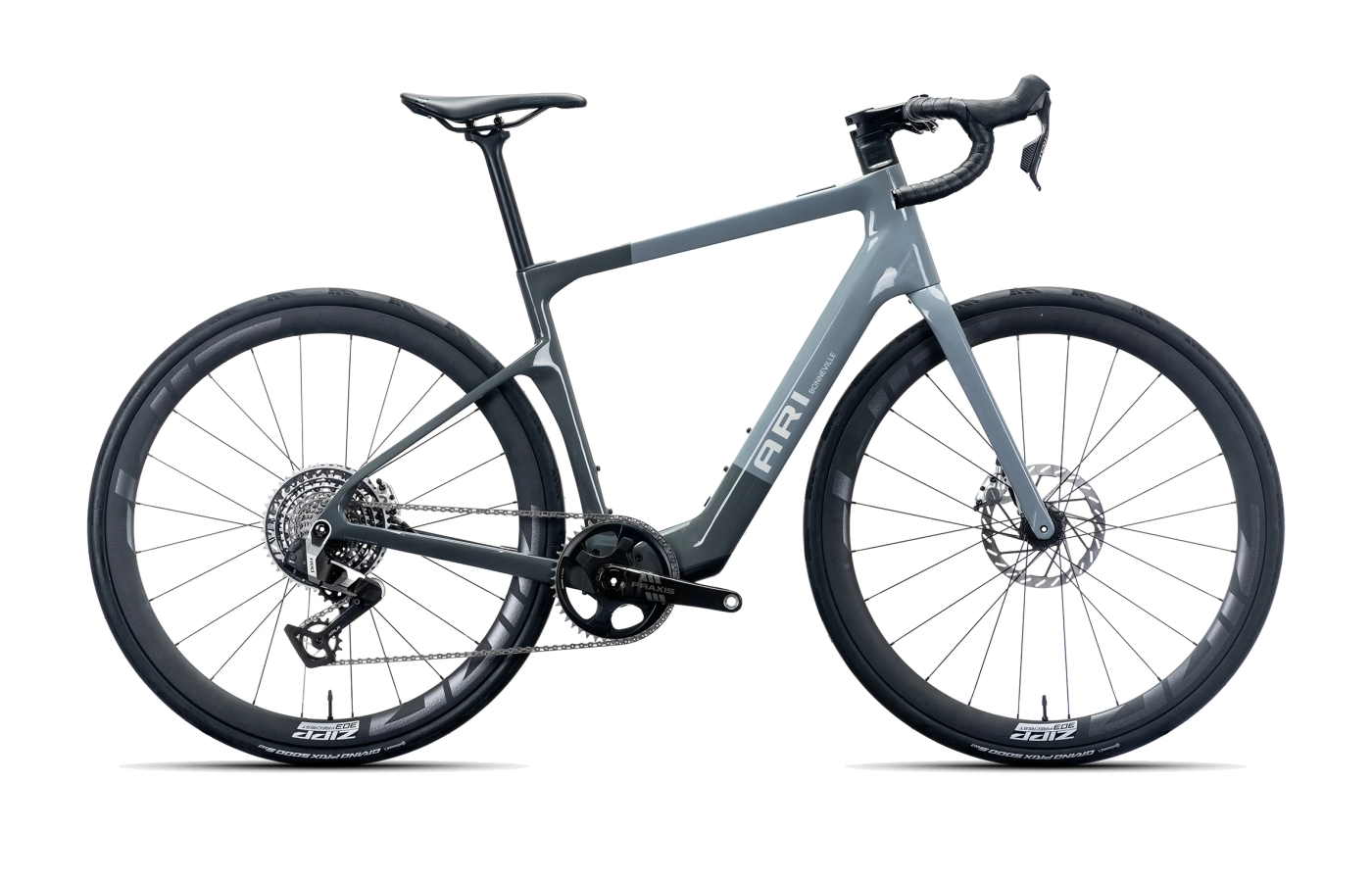
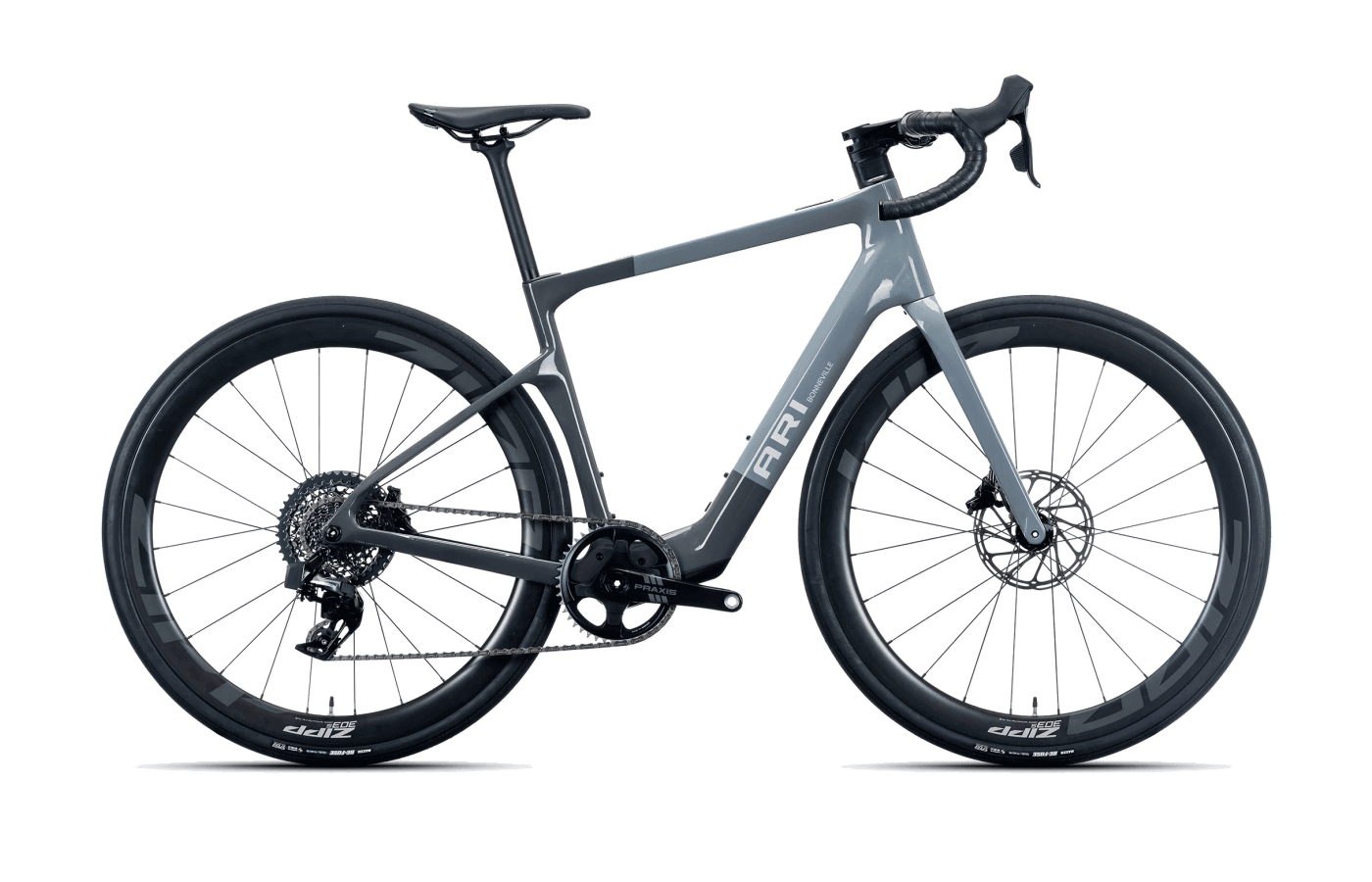
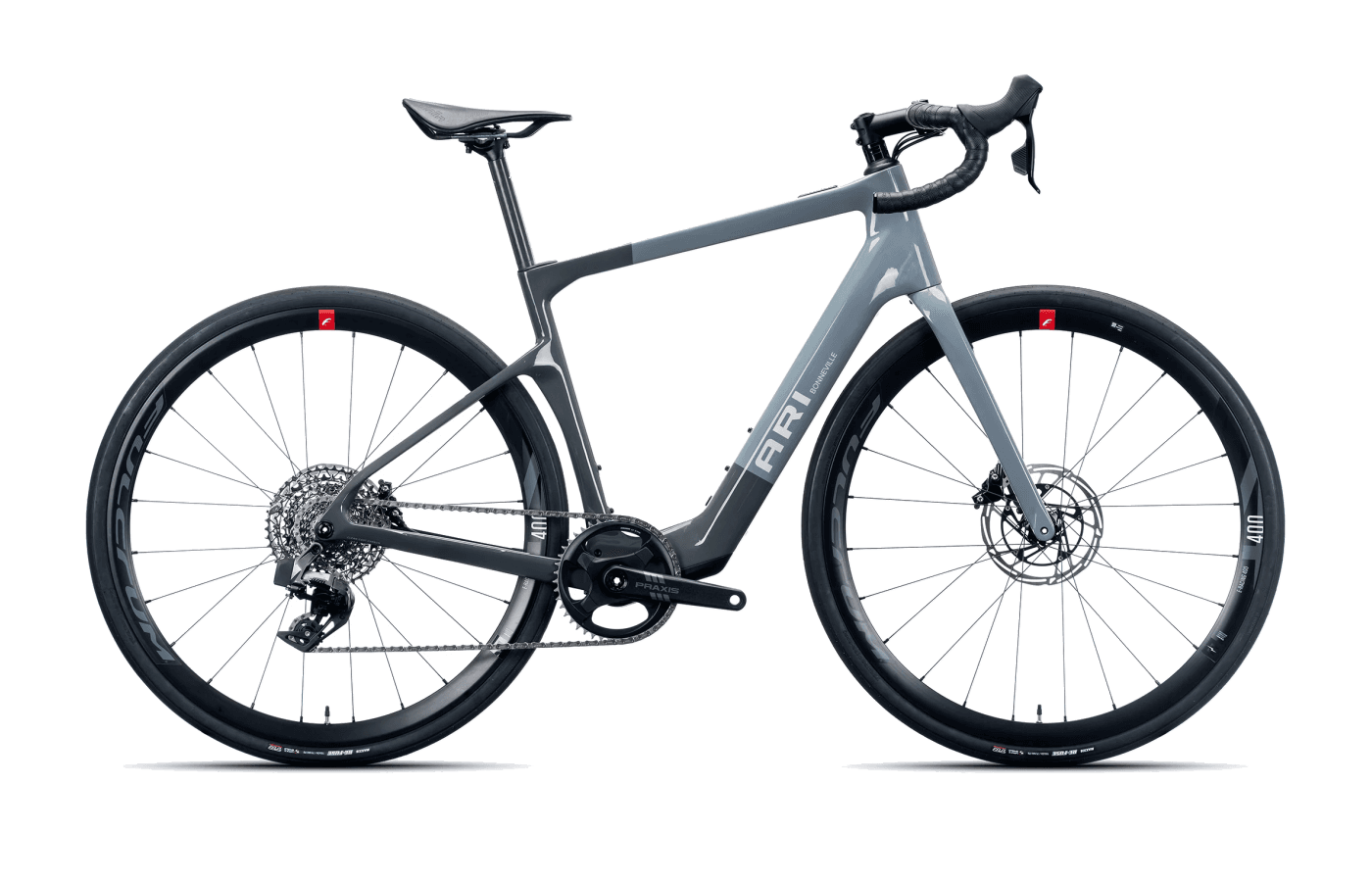
Ari offers the Bonneville in four builds ranging from $3,999 to $8,599. Because every model shares the exact same carbon frameset and Fazua Ride 60 motor, the core ride quality and power delivery remain consistent regardless of price. The entire lineup is built around SRAM AXS one-by electronic drivetrains and hydraulic disc brakes.
The flagship Team build features the new 13-speed SRAM Red XPLR group, Zipp 303s carbon wheels, and Continental GP5000S tires. However, the Pro build stands out as a major inflection point for value. It drops the price significantly by moving to a 12-speed SRAM Force XPLR drivetrain, but retains the premium Zipp 303s carbon wheelset found on the top model.
The Elite and Comp builds transition to alloy wheelsets from Fulcrum and DT Swiss, respectively, paired with SRAM Rival and Apex groups. Aside from the Team model’s Continental rubber, all other builds roll on durable 32c Maxxis Re-Fuse tires. This straightforward ladder allows riders to pay strictly for drivetrain refinement and wheel weight reductions without sacrificing the underlying electric platform.

From the press.
1 review from the cycling press.
Early impressions of the Bonneville center on the subtlety of its motor integration and its composure in adverse conditions. Reviewers note that the Fazua drive system avoids the aggressive surging typical of high-torque e-bikes, instead delivering a transparent assist that mimics a traditional pedaling dynamic. The power delivery is so natural that one tester initially wondered, "is this thing on" (Awesomemtb) after their first few pedal strokes.
Once at cruising speed, the bike behaves much like a standard road model, though its added mass fundamentally shapes the handling. Rather than feeling cumbersome, this extra weight acts as a stabilizing force. When facing heavy, gusting headwinds that would typically buffet a lightweight carbon frame, testers reported that the Bonneville "kept chugging along with no issues" (Awesomemtb). This predictable momentum makes it highly effective for long-distance commuting and open-road exploration.
The motor also proves highly practical in urban environments, where riders appreciated the "power to get up to speed from a standstill" (Awesomemtb) at intersections. While it lacks the immediate flickability of a featherweight climbing bike, the consensus points to a refined, stable platform that successfully masks its electric nature while in motion.