Bianchi
Aquila RCRival eTap AXS E1
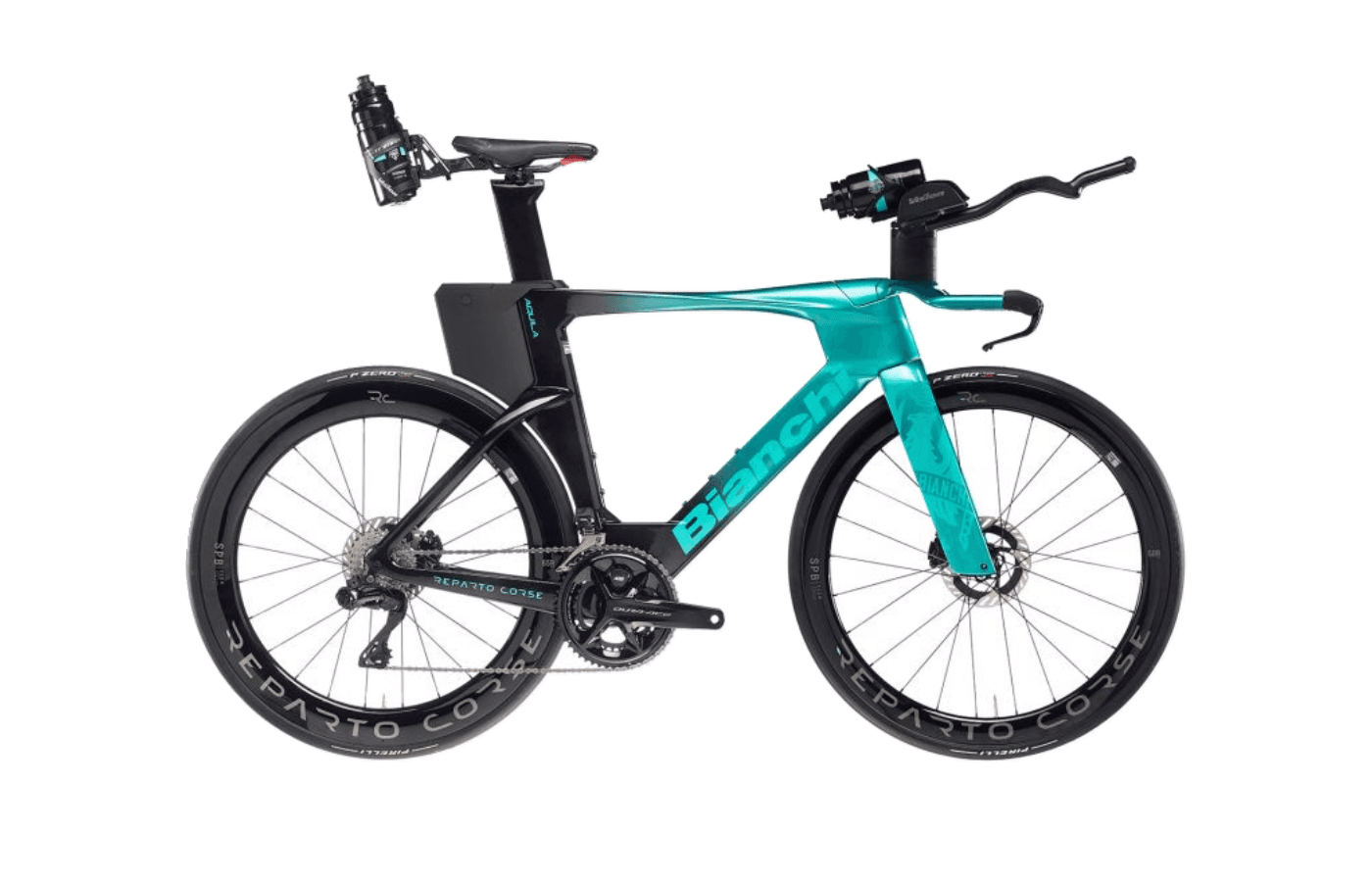
The 2025-on Bianchi Aquila RC is a full reset of the brand’s time-trial platform rather than a light refresh of the old bike. The major change is structural: Bianchi moved the Aquila to hydraulic disc brakes, thru-axles, and flat-mount calipers, replacing the previous generation’s rim-brake architecture with a layout that is easier to package around modern wheels and more consistent in real-world braking conditions. Tire clearance grows to 28 mm, and the front end is now built around a new integrated Vision/FSA cockpit, giving the bike a cleaner interface while preserving the fit adjustability expected of a serious TT machine.
Just as important as the hardware update is the shift in rider-position philosophy. Bianchi specifically calls out a steeper 77.5° seat-tube angle and increased reach compared with the old Aquila, which points to a more aggressive, forward-biased setup aimed at contemporary time-trial and triathlon positioning. That puts this generation squarely in the current superbike category: highly integrated, disc-brake-only, and designed around aerodynamic efficiency without abandoning the fit range needed for competitive use. In the market, it sits as Bianchi’s flagship aero race platform for riders who want a modern TT chassis rather than a legacy rim-brake design kept alive with minor revisions.
Spec sheet.
Every component shipped with this build.
Geometry & fit.
3 sizes published.
The geometry shows a bike built around a long-and-low TT fit. Across all sizes, the seat-tube angle is a steep 77.5°, reinforcing Bianchi’s move toward a more forward rider position suited to sustained aerodynamic efforts and triathlon-style setups. Reach is substantial for the category at 402 mm in S, 420 mm in M, and 440 mm in L, while stack stays low at 486, 500, and 524 mm respectively. That combination gives fitters room to create an aggressive front-end drop without relying entirely on extreme cockpit adjustments.
Handling numbers are conservative and stable rather than ultra-quick. The head-tube angle is 72.0° in every size, chainstays are a short 410 mm, and BB drop is 75 mm throughout. Wheelbase grows from 986 mm in S to 1036 mm in L, which should help the bike feel planted at speed and in crosswinds, an important trait for a disc-brake TT bike expected to run deeper wheels and 28 mm tires. Overall, the geometry suggests a platform aimed at stability in the aerobars and efficient weight distribution, with the steeper seat angle doing much of the work in defining the bike’s updated fit character.
Where the handlebar sits relative to the bottom bracket — the single most important fit pair.
01Fit geometry5 values
02Component geometry3 values
03Handling geometry7 values
Which size should I buy?
Slide your height to see the recommended size. GearWise's fit algorithm works from the published stack, reach, and ETT — the brand's own recommendation may differ.
→Calculated from GearWise's own stack / reach / ETT algorithm — the brand's size chart may recommend a different size, and a proper bike fit beats any calculator.
The lineup.
3 builds, ranging $6,800 – $13,390.
The Aquila RC range is offered in three complete builds spanning a wide price spread. The entry point is the Rival eTap AXS E1 at $6,800, followed by the Force eTap AXS E1 at $8,790, while the top-end Dura-Ace Di2 4iiii PWM build reaches $13,390. Even without a full component breakdown, the structure of the lineup is clear: Bianchi offers two SRAM wireless electronic options at more accessible and mid-tier price points, then a premium Shimano flagship build with an included 4iiii power meter for riders shopping at the sharp end of the category.
From a value perspective, the Rival model is the most notable because it brings the same all-new Aquila RC frameset and integrated platform down to a comparatively attainable price for a modern TT superbike. The Force build is positioned as the upgrade step for riders who want a higher-tier SRAM setup without jumping into five-figure territory. The Dura-Ace Di2 4iiii PWM bike is the halo option, justified by top-level drivetrain spec and integrated power measurement rather than any change to the underlying chassis.