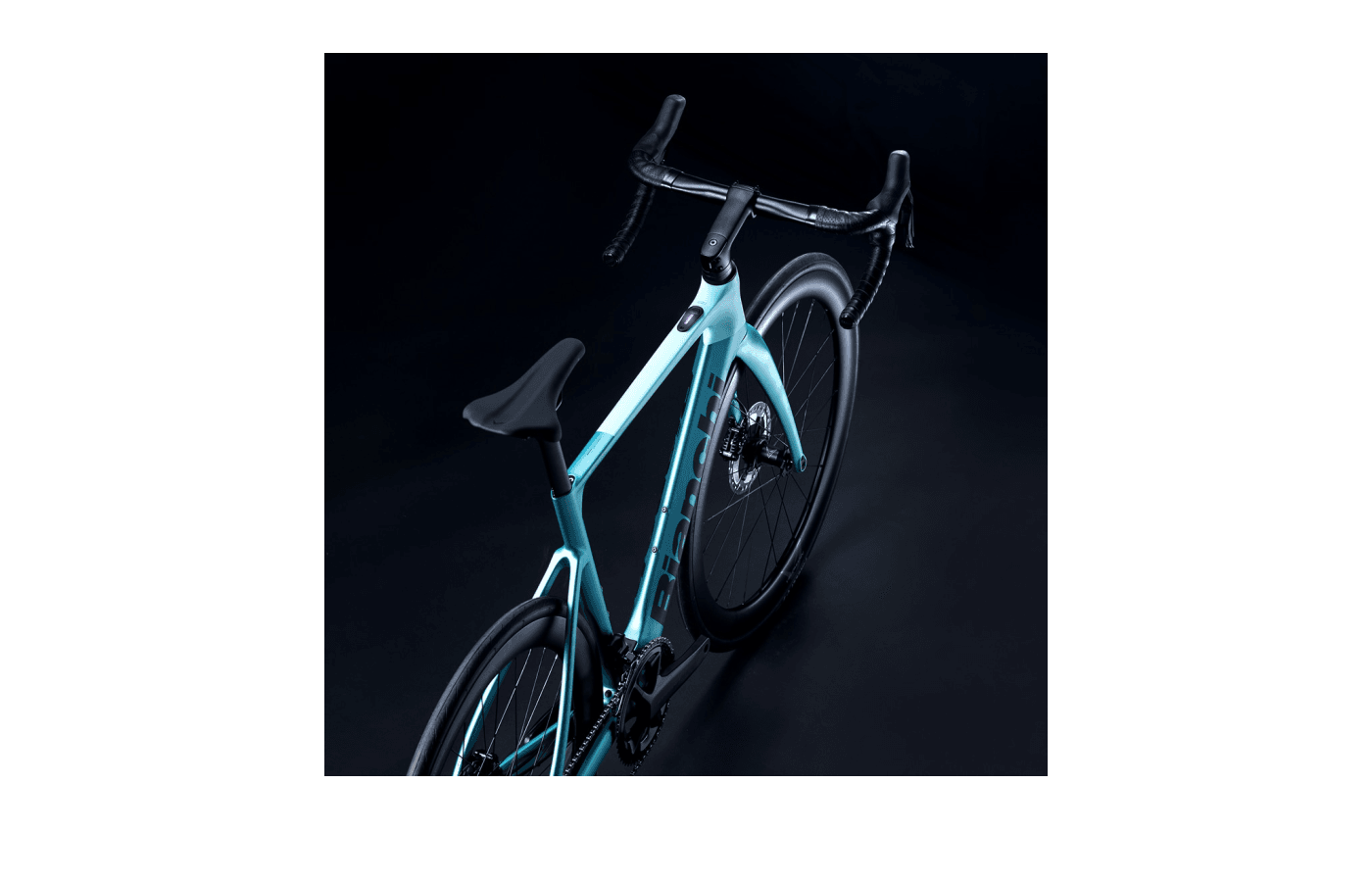
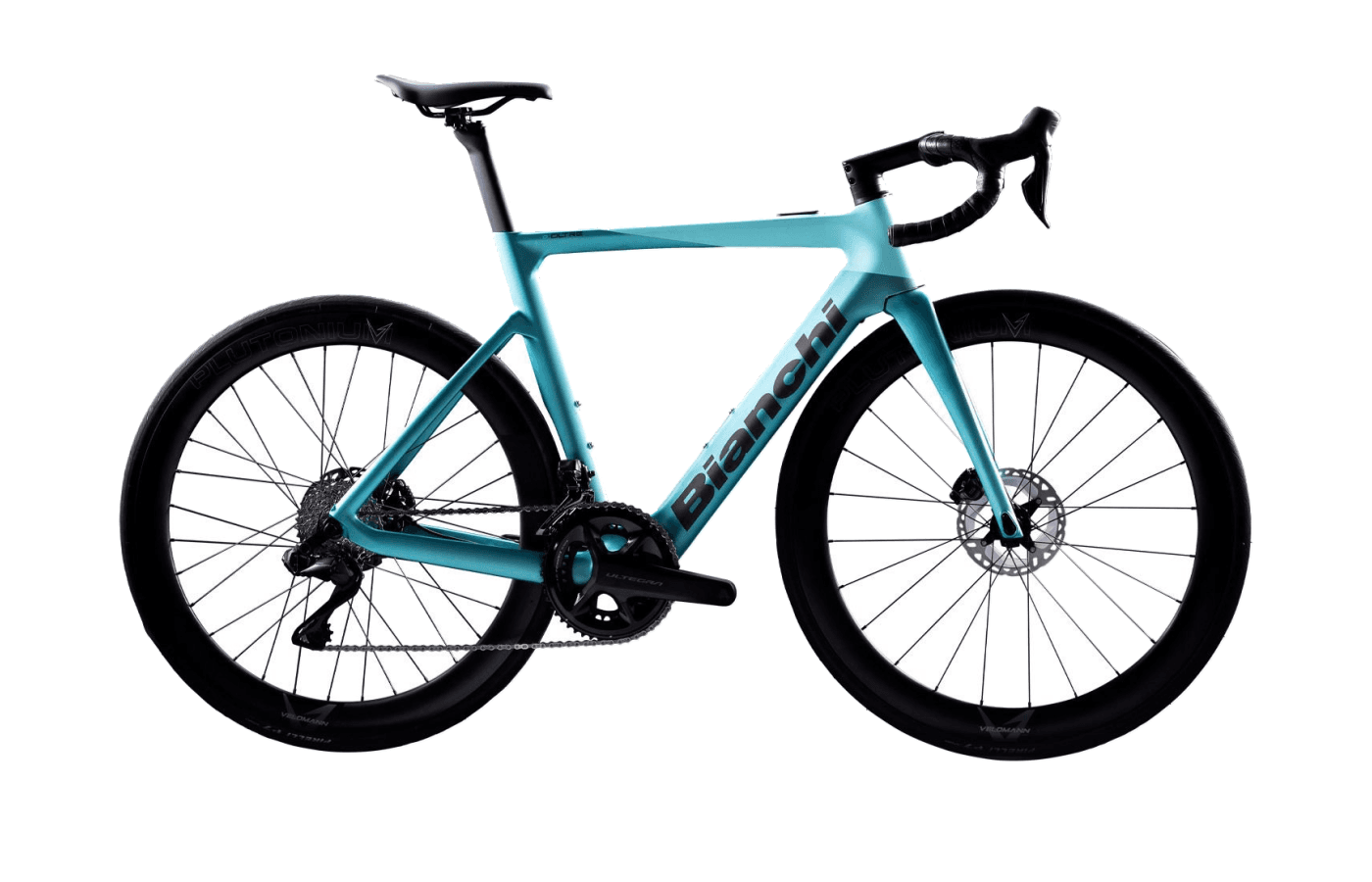
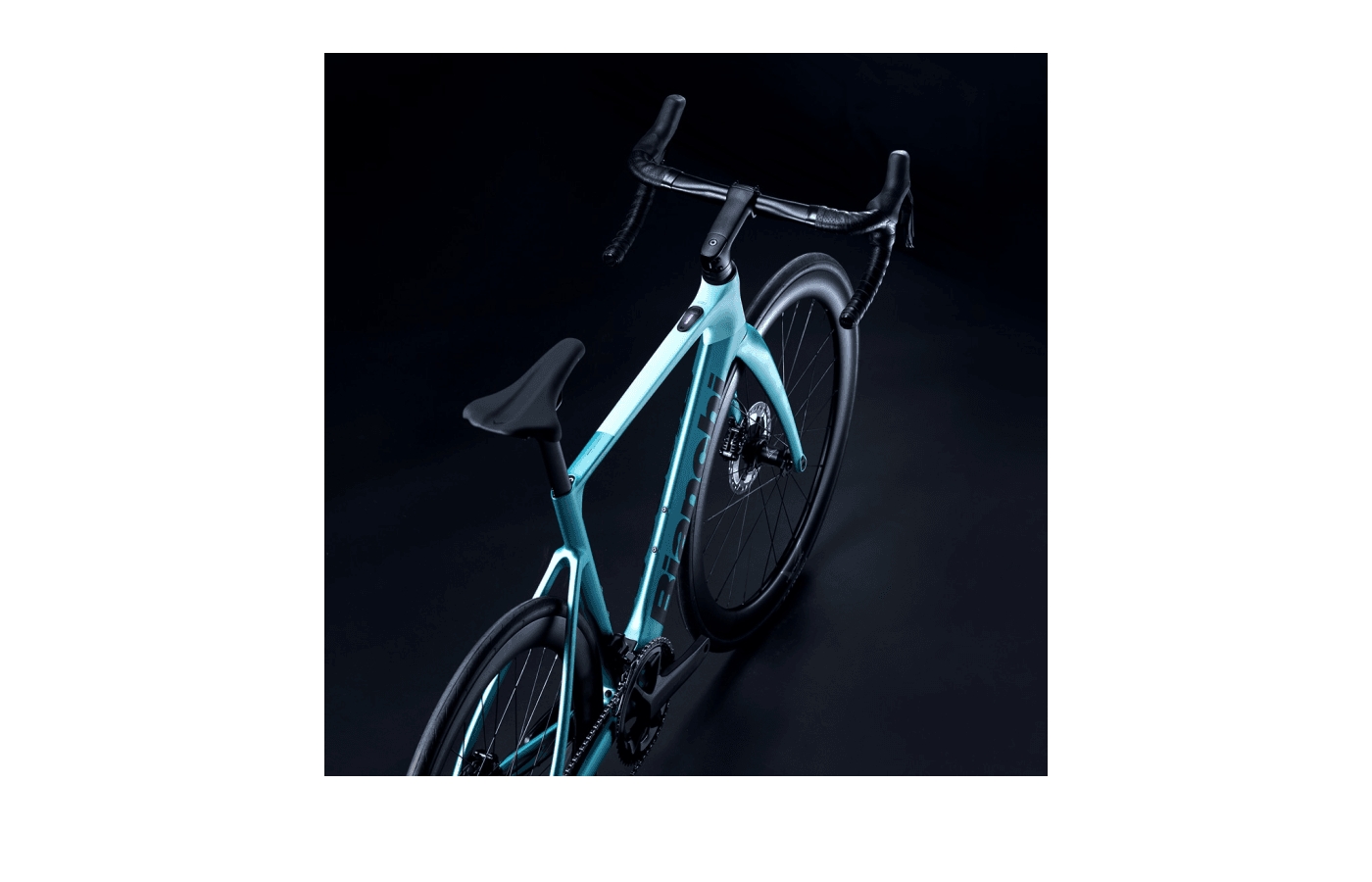
E-Oltre
The current Bianchi E-Oltre is Bianchi’s new-generation e-road platform, introduced for model year 2025 rather than carried over from an earlier line. It takes the Oltre name into the lightweight assist category with a carbon drop-bar chassis, full-carbon aero fork, disc brakes, and integrated cable routing, while using Mahle’s X30 rear-hub drive system paired with a 250Wh internal battery. That combination places it firmly in the performance e-road segment: a bike intended to preserve much of the feel and silhouette of a conventional road bike while adding discreet assistance for hilly routes, higher average speeds, or riders who want support without moving to a bulkier mid-drive platform.
What distinguishes this generation is how closely it stays aligned with race-road design priorities. The geometry is clearly road oriented rather than endurance focused, and the frame details point to a modern performance layout, including flat-mount brakes and integrated routing. Bianchi keeps the platform simple by offering the same core frame and motor system across the range, with differentiation coming through build level rather than multiple frame variants. In the current market, that makes the E-Oltre a relatively straightforward proposition: a carbon aero-leaning e-road bike built around the compact, low-drag Mahle X30 system, aimed at riders who want assist with minimal visual and handling compromise.
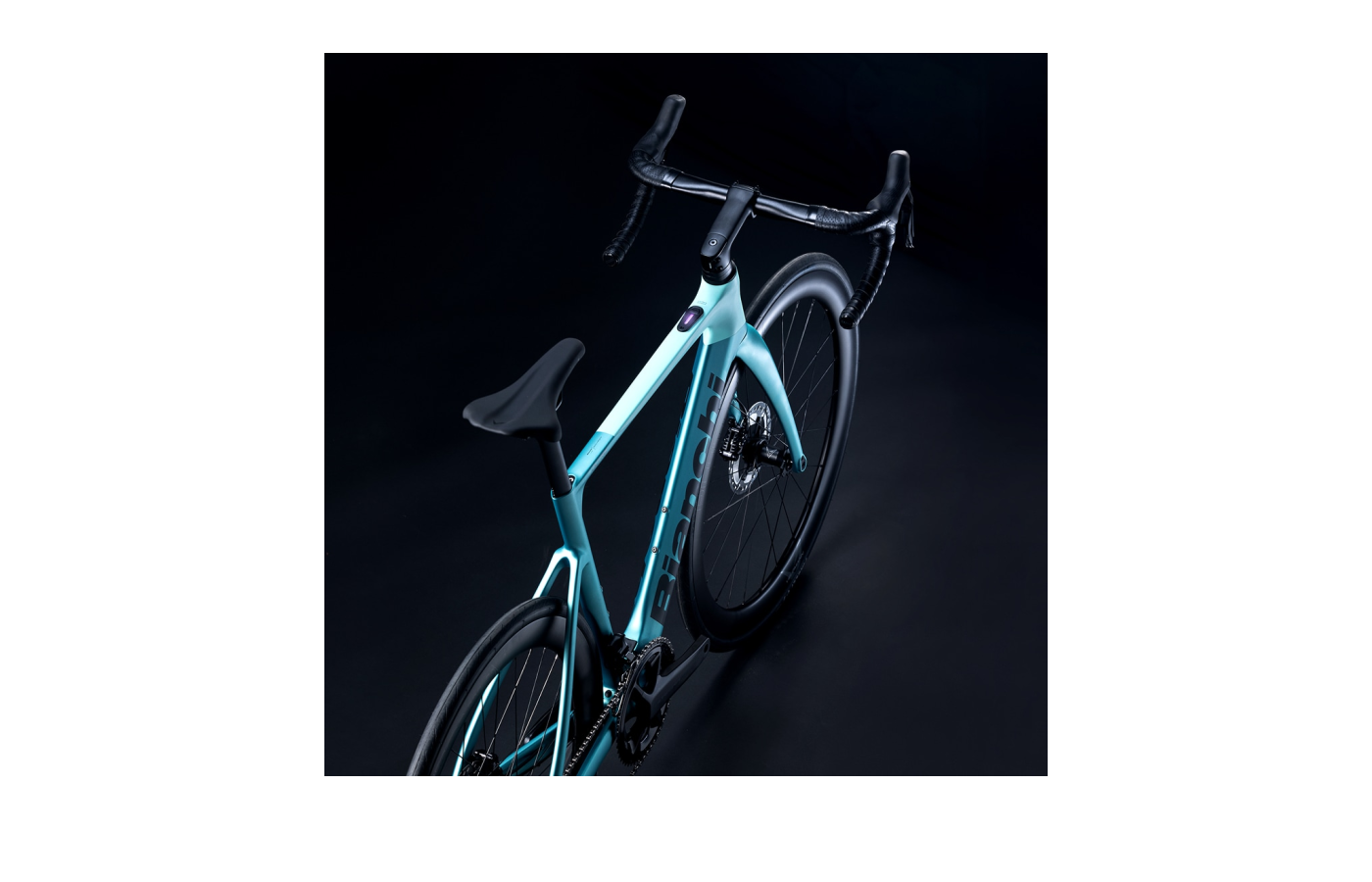
Geometry & fit.
7 sizes published.
The E-Oltre’s geometry reads as race-road rather than relaxed endurance. Chainstays are very short at 410mm from sizes 47 to 57, only growing to 412mm and 414mm on the two largest sizes, while wheelbase stays compact at 982mm to 1012mm across the range. That points to quick direction changes and a lively rear end, especially notable on an e-road bike where designers often add length for stability or packaging. Reach numbers are moderate rather than stretched, ranging from 379mm to 398mm, while stack rises from 490mm to 595mm, giving each size a fairly conventional road-bike fit window instead of an unusually upright posture.
The steering geometry also follows a road-performance pattern. Head tube angle starts at 70.5 degrees in the 47 and steepens progressively to 73 degrees in the larger sizes, balancing front-end stability for smaller frames with sharper steering on bigger ones. Effective top tube grows from 515mm to 585mm, and seat tube angle slackens from 74.5 degrees in the smaller sizes to 72.5 degrees in the largest, a typical approach to keeping rider position consistent across the size run. BB drop is 58mm in the two smallest sizes and 68mm from size 53 upward, suggesting Bianchi is trying to preserve predictable handling and pedal clearance as wheel and frame proportions change. Overall, the numbers suggest a bike that should feel closer to a modern all-round race bike than to a comfort-first e-road machine.
Where the handlebar sits relative to the bottom bracket — the single most important fit pair.
01Fit geometry5 values
03Handling geometry7 values
Which size should I buy?
Slide your height to see the recommended size. GearWise's fit algorithm works from the published stack, reach, and ETT — the brand's own recommendation may differ.
→Calculated from GearWise's own stack / reach / ETT algorithm — the brand's size chart may recommend a different size, and a proper bike fit beats any calculator.
The lineup.
3 builds, ranging $5,250 – $10,100.
Bianchi offers the E-Oltre in three builds, all using the same Mahle X30 rear-hub system with a 250Wh internal battery. The entry model is the 105 2x12-speed version at $5,250, followed by the Ultegra Di2 2x12-speed model at $6,750, and the top Dura-Ace Di2 2x12-speed build at $10,100. That gives the range a clear progression from a relatively accessible mechanical build to two electronic-shifting options aimed at riders who want a more premium drivetrain package on the same core chassis.
The most notable equipment split is not just drivetrain tier but cable integration. Bianchi specifies the Dura-Ace Di2 and Ultegra Di2 bikes with full internal routing, while the 105 mechanical version uses semi-integrated cables. That means the Ultegra Di2 model is likely the key value point in the lineup for riders who want the cleaner cockpit and higher-end presentation of the platform without the large price jump to Dura-Ace. The 105 build should appeal to buyers focused on getting into the carbon Mahle X30 platform at the lowest price, while the flagship is positioned for riders prioritizing top-tier electronic shifting and a no-compromise spec sheet.