Bianchi
T-Tronik CStandard
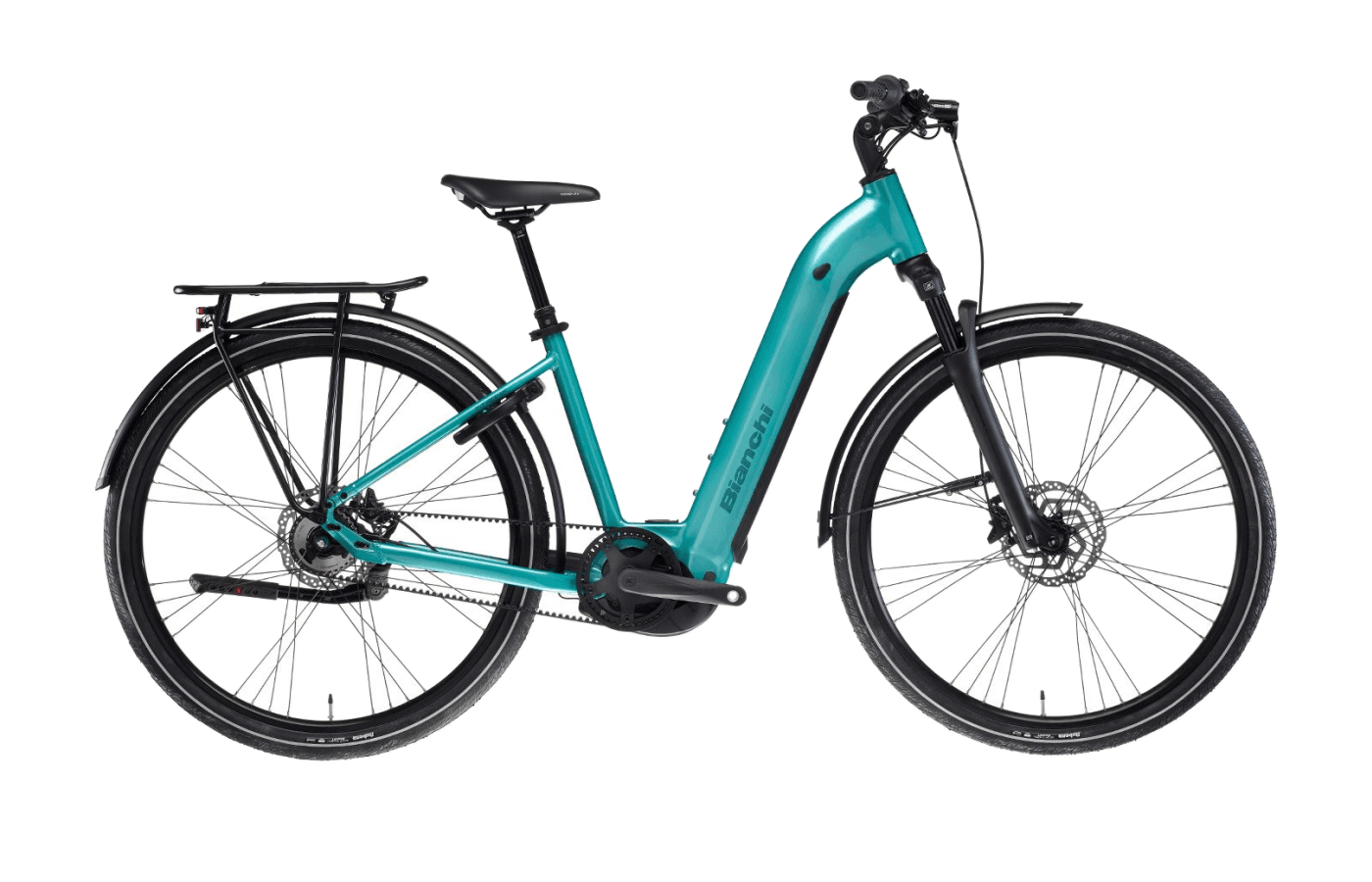
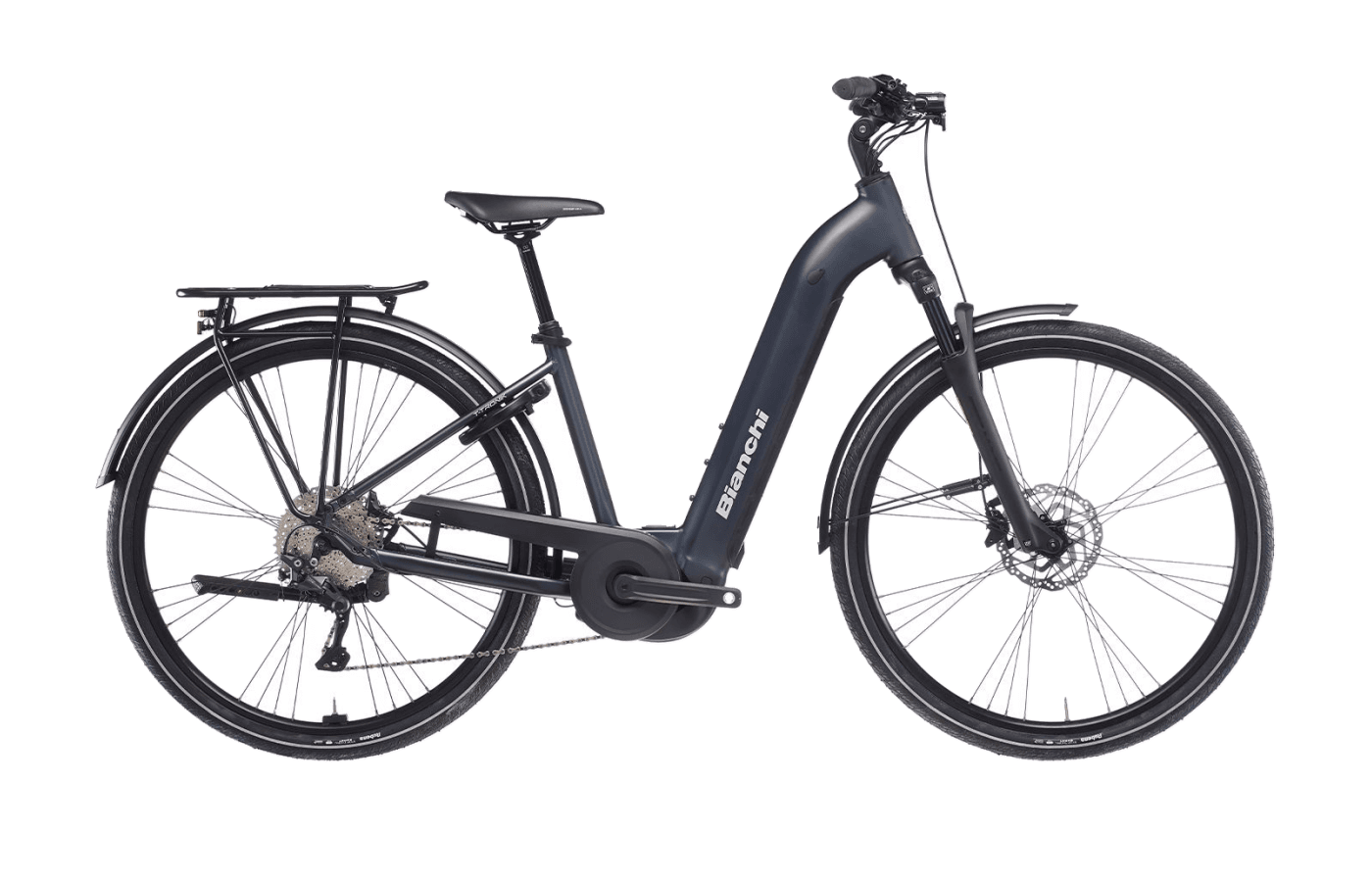
The current Bianchi T-Tronik C is a low-step urban e-bike platform that marks a clear break from the brand’s earlier C-Type models. Introduced for the 2024 model year and continuing unchanged through the current range, it moves to a Bosch-based system built around the Performance Line motor and a 600 Wh battery, with compatibility for an 800 Wh battery and Bosch Powermore range extender support. The frame is aluminum, but the broader redesign is what stands out: integrated front-end cable routing, four frame sizes from S to XL, 80 mm fork travel, and a more utility-oriented chassis with details such as an integrated frame lock and a rack compatible with the SnapIt 2 system.
What distinguishes this generation is that it is not just an urban bike with motor assistance, but a purpose-built city and utility platform. Bianchi offers it in both conventional chain-drive and belt-drive form, broadening its appeal between riders who want familiar derailleur gearing and those prioritizing low maintenance. From size M upward it also adds a dropper post, an unusual but practical choice on a step-through city bike because it makes frequent stops and remounts easier. In the market, the T-Tronik C sits as a premium urban e-bike with a stronger focus on everyday practicality, cleaner integration, and higher-capacity Bosch hardware than many entry-level city models.
Spec sheet.
Every component shipped with this build.
Geometry & fit.
4 sizes published.
The T-Tronik C’s geometry is oriented toward stability, easy access, and an upright riding position rather than quick steering. Across the size range, stack is tall at 642 mm in S up to 664 mm in XL, while reach stays moderate at 409 to 430 mm. That points to a relatively short, high front end that should suit city riding, visibility in traffic, and lower strain on the rider’s back and hands. Effective top tube lengths from 599 to 627 mm are also conservative for the category, reinforcing the bike’s relaxed fit.
Handling numbers further underline its utility focus. The head tube angle is slack for an urban bike at 68 degrees in S and 68.5 degrees in M through XL, paired with a very long 500 mm chainstay and wheelbases from 1182 to 1206 mm. That combination should produce calm, planted steering and good load stability, especially with a rack fitted, but it will not feel especially nimble at low speed compared with shorter city bikes. A 75 mm bottom bracket drop helps keep the center of gravity low, which should add confidence for everyday riding and stop-start use.
Where the handlebar sits relative to the bottom bracket — the single most important fit pair.
01Fit geometry5 values
03Handling geometry6 values
Which size should I buy?
Slide your height to see the recommended size. GearWise's fit algorithm works from the published stack, reach, and ETT — the brand's own recommendation may differ.
→Calculated from GearWise's own stack / reach / ETT algorithm — the brand's size chart may recommend a different size, and a proper bike fit beats any calculator.
The lineup.
3 builds, ranging $2,799 – $3,850.
The range is straightforward, with two main builds sharing the same core platform. The 8.2 Chain Deore 10-speed is priced at $3,350 and represents the more conventional option, using a chain drivetrain with Shimano Deore gearing. For riders who want broader gear choice and easier serviceability, that is likely the more versatile build.
Above it, the 8.2 Belt Nexus 5-speed comes in at $3,850 and trades derailleur gearing for a belt-drive setup with Shimano Nexus 5-speed internal gearing. That makes it the more maintenance-conscious option for daily urban use, especially in poor weather or for riders who prioritize cleanliness and durability over gear range. Since both builds sit on the same Bosch Performance Line, 600 Wh-capable platform with the same utility-focused frame features, the decision is less about motor performance and more about whether the buyer values lower upkeep enough to justify the $500 premium.