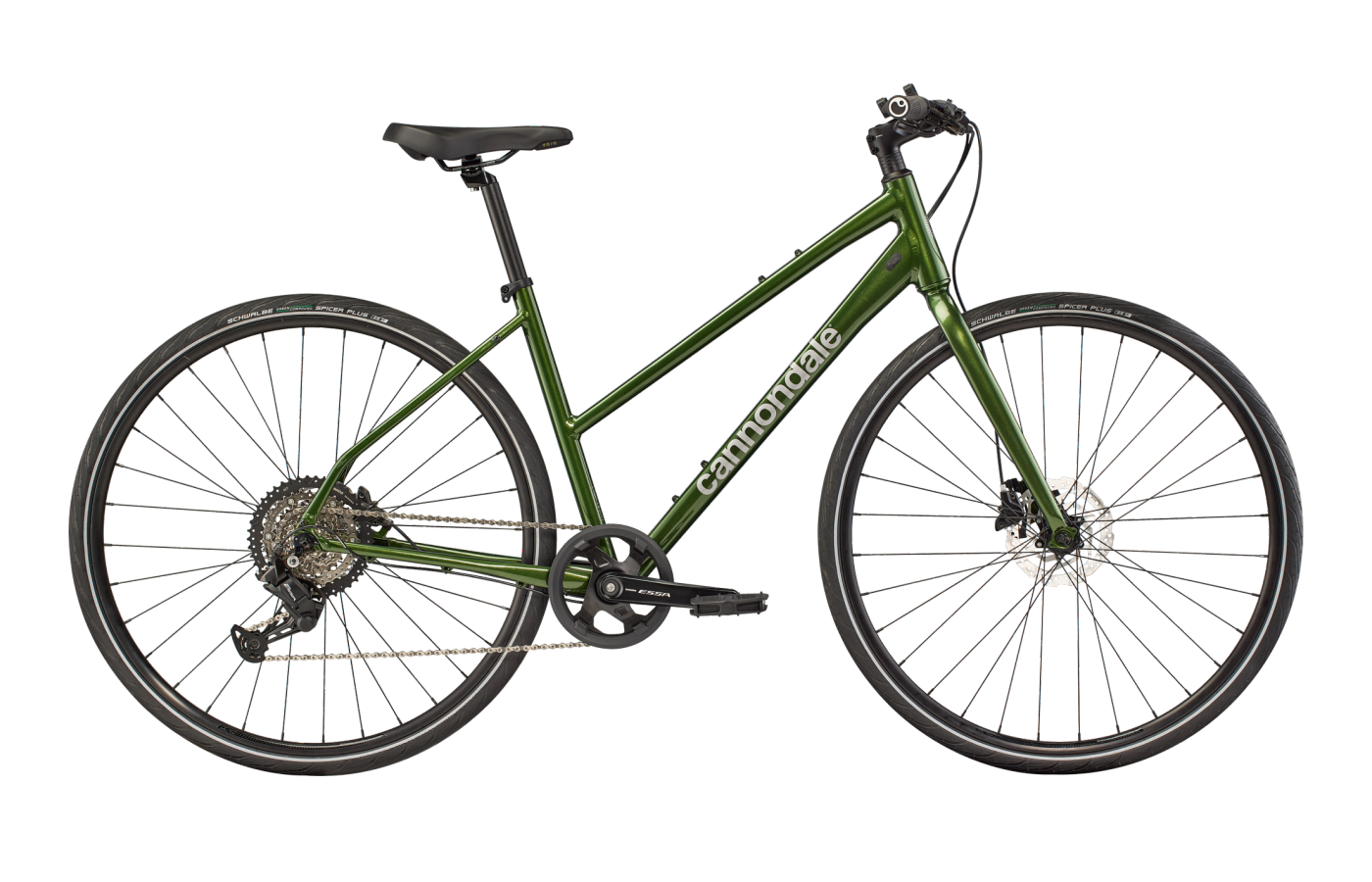
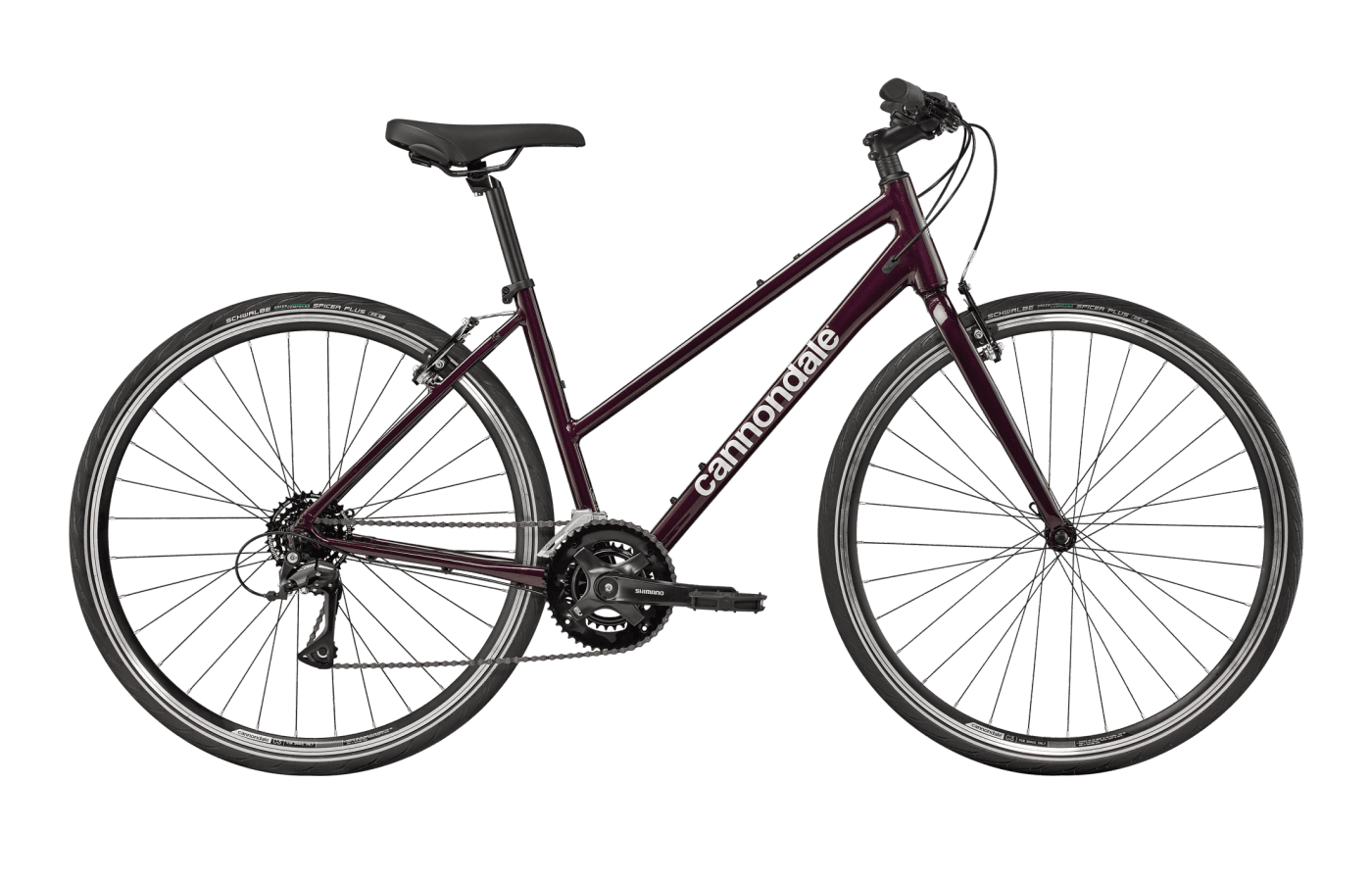
The 2026 Cannondale Quick marks a clear reset for the company’s flat-bar fitness bike. Rather than evolving the previous, more premium-feeling Quick platform, Cannondale moved to a simpler SmartForm C3 Alloy chassis with a 1-1/8in integrated headset, rack/fender and Si kickstand mounts, and more conventional hardware choices. The old Quick’s SAVE-branded frame and fork package, flat-mount disc setup, thru-axle carbon fork, reflective graphics, and built-in wheel-sensor ecosystem are no longer part of the main step-over platform. In their place is a more straightforward commuter/fitness bike architecture that appears designed to hit lower price points and prioritize ease of ownership over technical distinction.
That shift shows up most clearly in the build choices. The Quick 3 uses a steel quick-release fork and a simplified 1x drivetrain, while the Quick 4 drops to V-brakes, underscoring that this is not a routine spec update but a broader repositioning of the model. The result is a bike aimed squarely at riders who want an efficient, upright pavement bike for commuting, fitness riding, and general city use, with enough versatility for light mixed surfaces but no real pretense of being a gravel or performance road crossover. In the market, this puts the current Quick closer to the practical core of the hybrid category: less ambitious than the previous generation in frame and fork tech, but more accessible and easier to understand as an everyday urban bike.
Where to get it.
3 retailers · size XS.
Spec sheet.
Every component shipped with this build.
Geometry & fit.
6 sizes published.
The Quick’s geometry is conservative and clearly tuned for hybrid-bike stability rather than aggressive flat-bar speed. In size M, the bike pairs a 578mm stack with a relatively short 406mm reach, and the head tube angle is 71 degrees across most sizes, slackening to 70 degrees in XS. That combination points to a more upright riding position with calm steering, especially when compared with sportier fitness bikes that use steeper front ends and longer reaches. The consistent 70.3-degree seat tube angle also keeps rider weight centered rather than pushing the position into a more stretched, road-like posture.
Handling numbers reinforce that theme. A 435mm chainstay is fairly typical for an urban hybrid, helping with straight-line stability and practical utility, while wheelbases range from 1046mm in XS to 1118mm in XXL, which should give the bike predictable manners under less-experienced riders and when fitted with commuting accessories. Trail is 64mm in most sizes and 70mm in XS, another sign that Cannondale prioritized steady, confidence-building steering over quick twitchiness. Overall, the geometry suggests a bike that should feel composed in traffic, easy to balance at lower speeds, and comfortable for general fitness riding, while giving up some of the sharper, more forward-leaning feel of the previous Quick generation.
Where the handlebar sits relative to the bottom bracket — the single most important fit pair.
01Fit geometry6 values
02Component geometry1 values
03Handling geometry9 values
Which size should I buy?
Slide your height to see the recommended size. GearWise's fit algorithm works from the published stack, reach, and ETT — the brand's own recommendation may differ.
→Calculated from GearWise's own stack / reach / ETT algorithm — the brand's size chart may recommend a different size, and a proper bike fit beats any calculator.
The lineup.
4 builds, ranging $599 – $749.
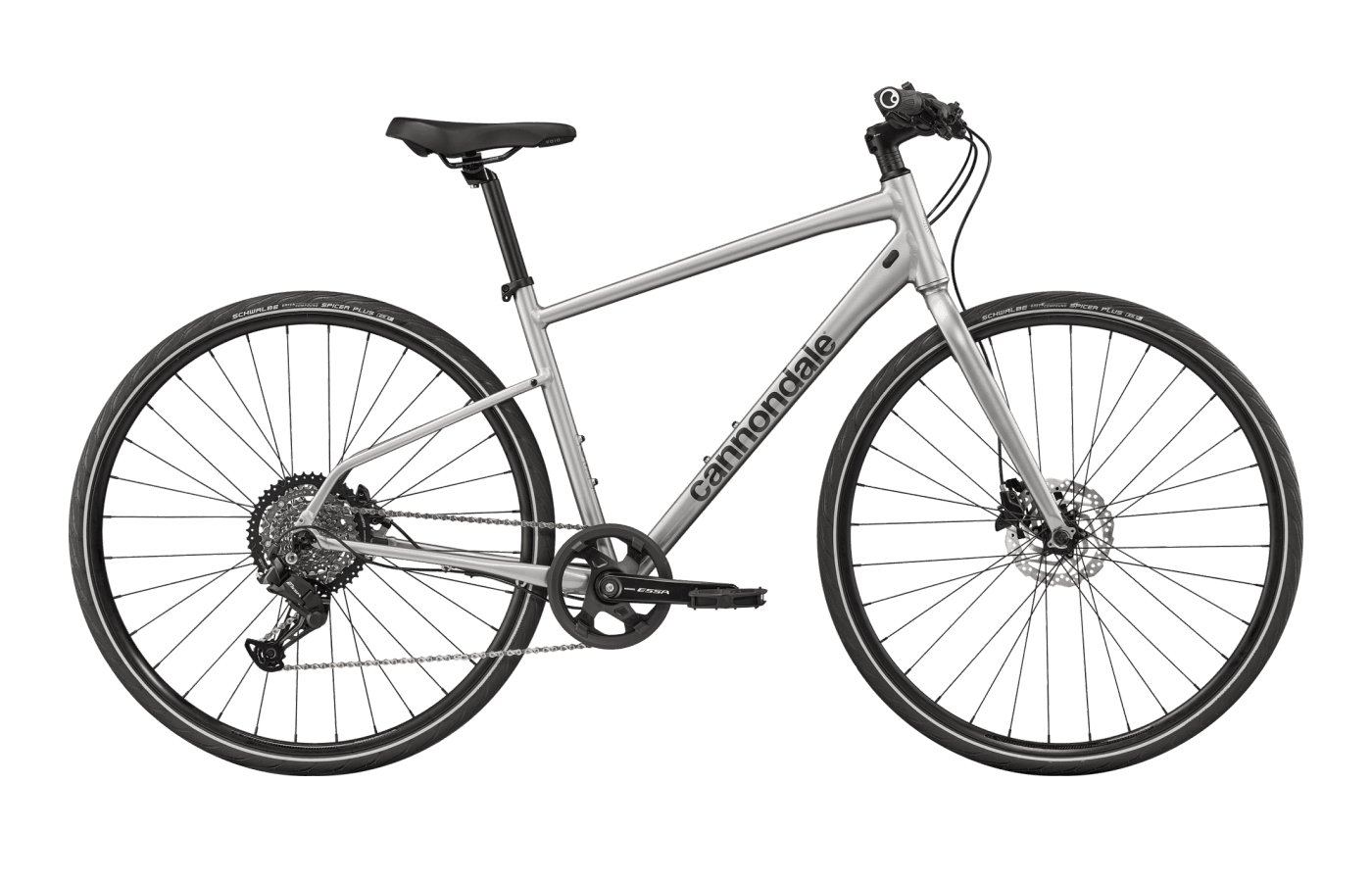
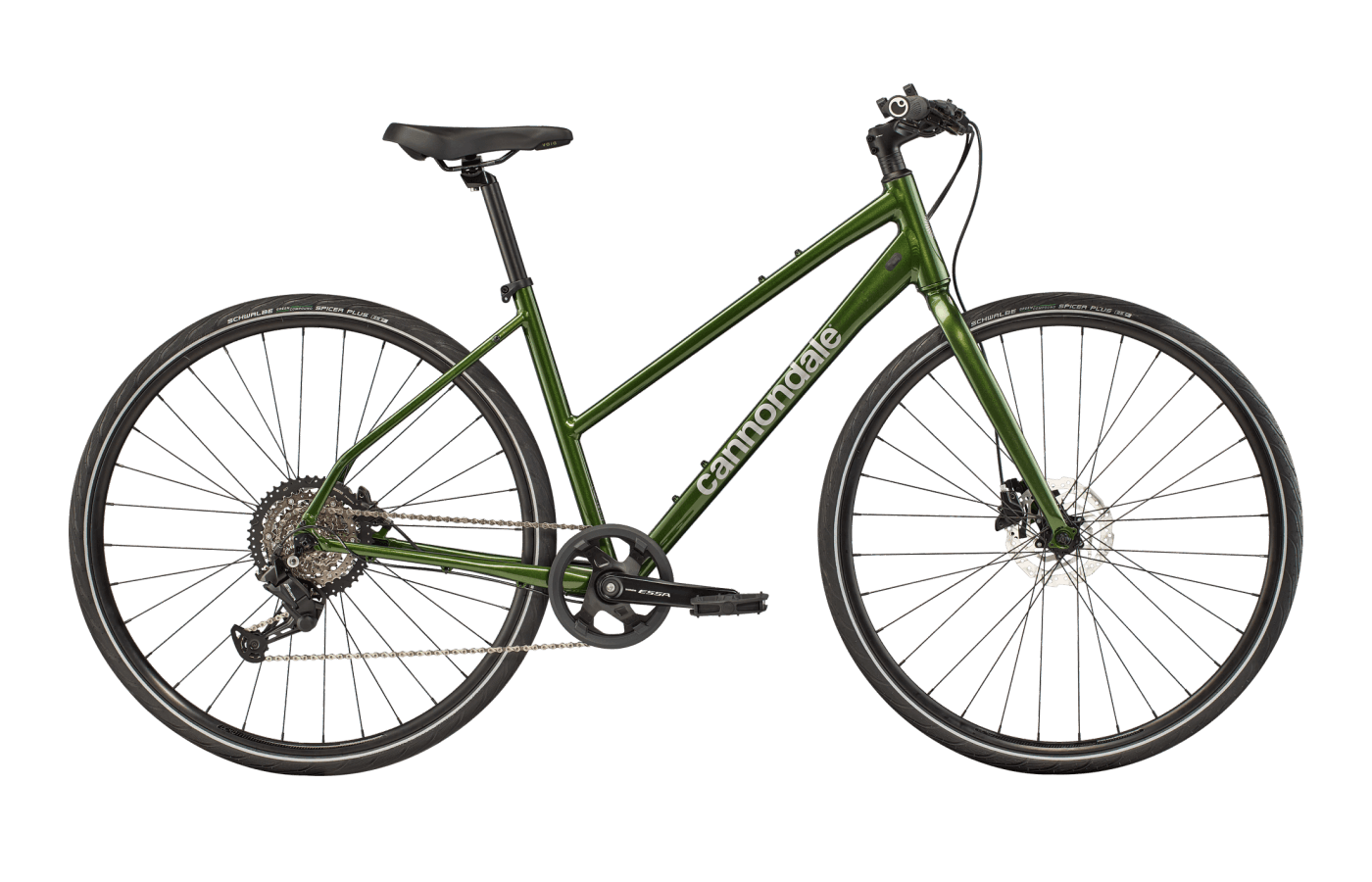
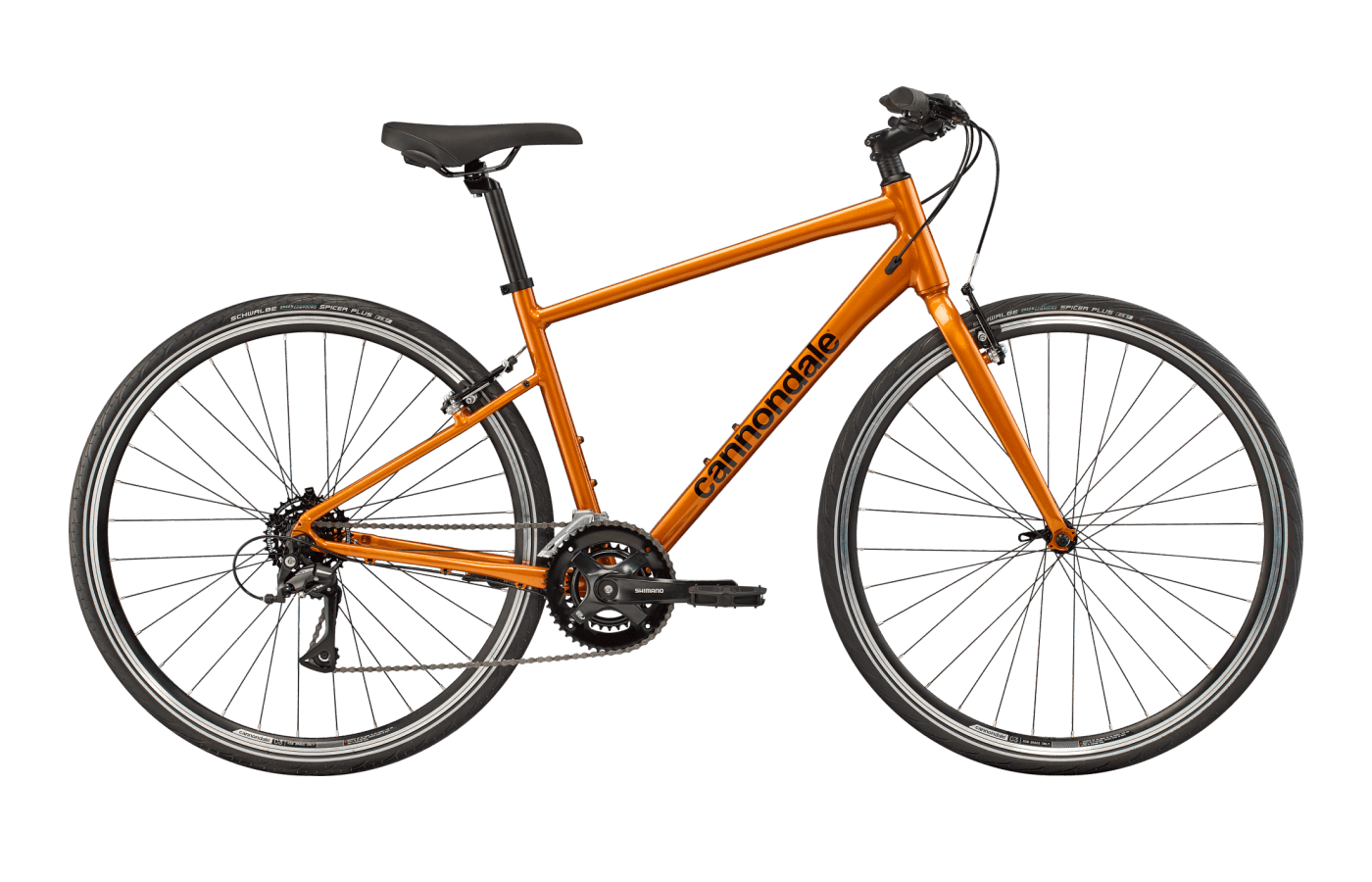
The range is straightforward, with four models split between standard and step-through frames. The Quick 4 and Quick 4 StepThru sit at $599, while the Quick 3 and Quick 3 StepThru move up to $749. That pricing confirms the new generation’s more budget-conscious positioning, and the parallel step-through options make it clear Cannondale is treating accessibility as a core part of the lineup rather than a niche variation.
Within the range, the Quick 3 is the more fully equipped version and the one described in review coverage, with a steel fork, 1x drivetrain, and hydraulic disc brakes. The Quick 4 is notably more basic, returning to V-brakes, which is one of the clearest signs of the platform’s reset toward simpler, lower-cost hardware. Based on the available information, the Quick 3 stands out as the value build for riders who want the stronger all-weather braking and more modern everyday spec, while the Quick 4 is positioned as the entry point for riders prioritizing price over braking performance and overall refinement.
From the press.
1 review from the cycling press.
Early feedback on the 2026 Quick 3 is broadly positive about its core ride character. Reviewers describe it as a fitness hybrid with noticeable road-bike influence, praising its lively acceleration, precise urban handling, and generally smooth ride for an aluminum bike. Much of that comfort is attributed to the combination of the SmartForm C3 alloy frame, 700x35c Schwalbe Spicer Plus tires, and especially the steel fork, which several reviewers say does a good job muting vibration on rough pavement. The upright position, Ergon GA30 grips, and moderate-contact-point spec are also repeatedly mentioned as strengths for longer commutes and fitness rides.
The strongest component-level praise centers on the Shimano MT200 hydraulic disc brakes, which reviewers consistently call out for their power, modulation, and low hand effort compared with mechanical systems or rim brakes. The Shimano Essa 1x8 drivetrain is seen as a good fit for the bike’s purpose: simple, intuitive, and low-maintenance, with enough range for typical city riding and moderate hills. Reviewers also like the practical details, including mounts for commuting accessories and the integrated phone/app ecosystem.
Weaknesses are mostly tied to what Cannondale gave up in the platform reset. Several reviewers note that the steel fork, while comfortable, adds weight and lacks the lighter, sharper feel of carbon forks found on some rivals. The 1x8 transmission is appreciated for simplicity, but some point out that it offers less gear range and less refinement than 9- or 10-speed competitors, especially for very steep climbing. Reviewers are also clear that despite its ability to handle light gravel and mixed paths, the Quick 3 remains a pavement-first hybrid rather than a bike for rough trails or more demanding off-road use.
