Dude
The 2021-present Canyon Dude marks a clear shift in the model’s identity from a more traditional 26-inch fat bike toward a lighter, faster, more trail-oriented platform. The defining change is the move to stock 27.5 x 3.8 wheels and tires, built around Canyon and DT Swiss-developed BR 2250 rims with a very wide 78 mm internal width. That setup is paired with a full-carbon frame and fork, updated cable routing with full internal stealth dropper compatibility, and Canyon’s adjustable rear dropout system. Crucially, the frame still preserves the Dude’s multi-format flexibility, allowing riders to run 26 x 4.8, 27.5 fat, or even 29 x 3.0 configurations depending on terrain and priorities.
What distinguishes this generation is that it is not trying to be the softest, floatiest fat bike on the market. Instead, it prioritizes efficiency, rollover, and a more precise steering feel than many ultra-wide-tire fat bikes. The optional 120 mm Manitou Mastodon-equipped version further pushes the platform toward trail-hardtail territory, while the rigid versions remain lighter and more direct for groomed snow, sand, and fast mixed-surface riding. In the market, the Dude sits as a performance-focused carbon fat bike for riders who want speed and handling sharpness first, with enough wheel-size versatility to broaden its use beyond winter-only riding.
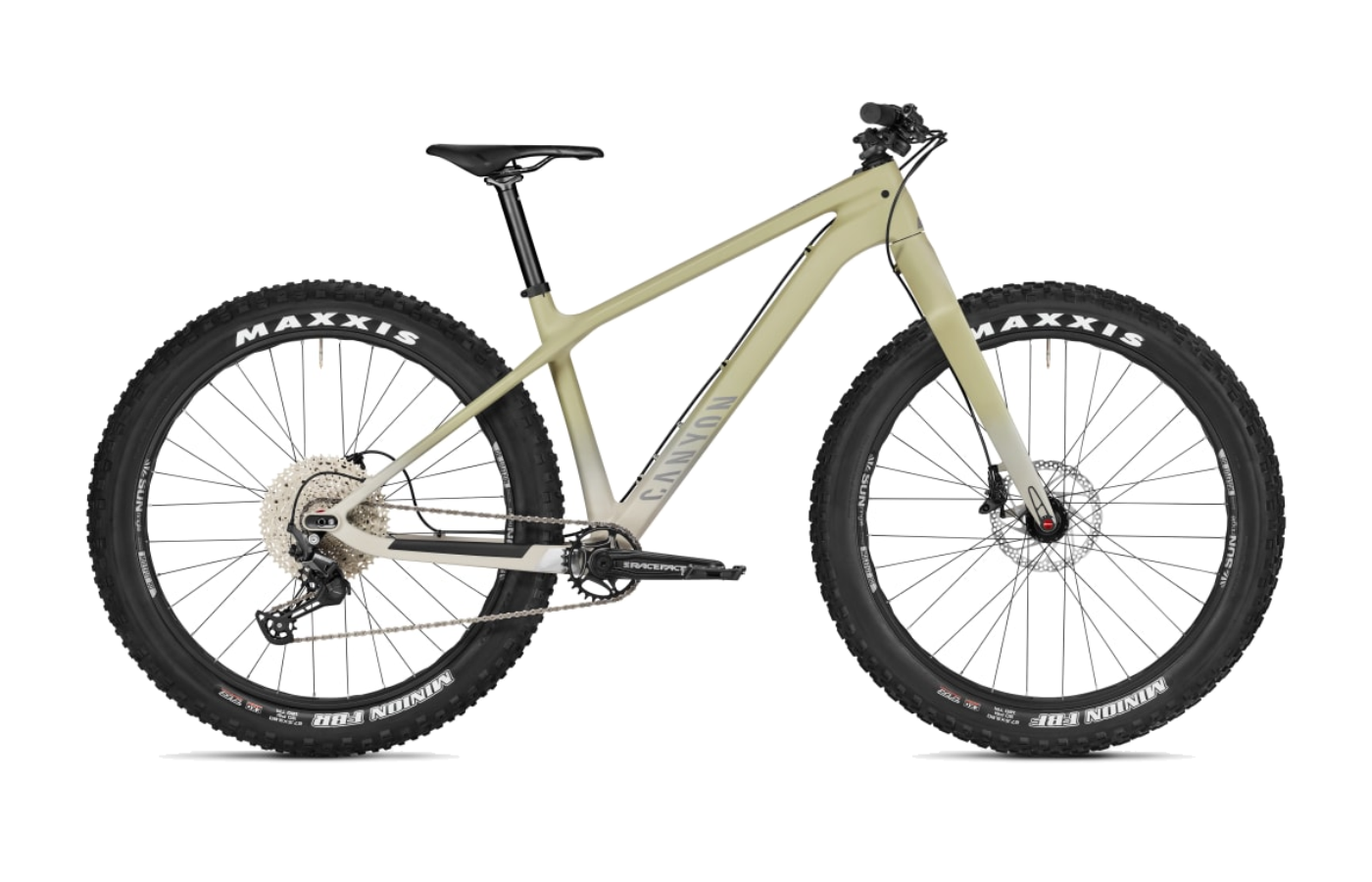
Geometry & fit.
3 sizes published.
The available geometry points to a conservative-but-modern fat bike fit. In size L, the Dude combines a 455 mm reach, 652 mm stack, 69-degree head tube angle, 72.2-degree seat tube angle, 443 mm chainstays, and an 1182 mm wheelbase. That reach is fairly long for a fat bike and helps create a roomier cockpit with better high-speed stability than older, shorter-fat-bike layouts. The 69-degree head angle is not especially slack by current trail-bike standards, but on a rigid fat bike it should keep steering more direct at low speeds and reduce the floppy front-end feel that can show up on snow or technical climbs.
The rest of the numbers reinforce that balanced intent. A 443 mm chainstay is moderate for the category and should help the bike feel stable without becoming excessively hard to manual or place through tighter turns. The 60 mm bottom bracket drop keeps the rider reasonably settled between the wheels, while the relatively slack 72.0-72.2-degree seat tube angle suggests a more rearward seated position than on modern progressive hardtails. For riders, that means the Dude should feel planted and predictable rather than radically aggressive, with geometry that favors all-around control and efficiency over ultra-steep climbing posture or ultra-slack descending behavior.
Where the handlebar sits relative to the bottom bracket — the single most important fit pair.
01Fit geometry6 values
03Handling geometry5 values
Which size should I buy?
Slide your height to see the recommended size. GearWise's fit algorithm works from the published stack, reach, and ETT — the brand's own recommendation may differ.
→Calculated from GearWise's own stack / reach / ETT algorithm — the brand's size chart may recommend a different size, and a proper bike fit beats any calculator.
The lineup.
1 build, ranging $1,499.
Only limited build information is provided here, so a full lineup comparison is not possible. The listed available build is the CF 8, but no complete component or pricing details are included for that model, which limits any meaningful breakdown of value or spec hierarchy.
At the platform level, the important spec story is the shared chassis: a full-carbon frame and fork, stock 27.5 x 3.8 wheel format, adjustable rear dropouts for alternate 26-, 27.5-, and 29-inch setups, and updated routing that includes stealth dropper compatibility. Those features matter more than trim-level distinctions because they define the Dude’s long-term versatility and upgrade potential, but without confirmed CF 8 pricing and component details, a proper builds overview would be incomplete.

From the press.
5 reviews from the cycling press.
Reviewers consistently describe the current Dude as one of the lighter, quicker-feeling fat bikes in its class. Outdoor Gear Lab called the CF 7 a lightweight, stiff, and responsive carbon fat bike with "snappy handling" and an efficient pedaling feel, ultimately giving it a Best Buy award. Across reviews, the 27.5 x 3.8 setup is widely credited with improving rollover and momentum compared with older 26-inch fat bikes, while the carbon chassis gives the bike a notably direct power transfer on climbs and firmer surfaces. Testers also repeatedly praised the value proposition: a carbon frame, quality wheelset, and relatively low complete weight at pricing that undercuts many competing builds.
At the same time, reviewers were clear about the tradeoffs. The narrower 3.8-inch tires do not deliver the same flotation or passive suspension feel as 4.5- to 4.8-inch setups, and several testers noted the bike can feel stiff and somewhat racy, especially in rigid form. Fat-bike.de found the newer 27.5 platform less playful than the previous 26-inch Dude and pointed to the larger wheels' rotating mass as a drag during hard accelerations. The suspended CF 9 earned praise for turning the bike into a much more composed, trail-hardtail-like machine, but reviewers also noted that its taller front end and slacker front geometry reduce low-speed agility and can make steep climbing more awkward. In short, the consensus is that the Dude is excellent when used as a fast, efficient fat bike, but less convincing for riders seeking maximum float, comfort, or expedition-style versatility.
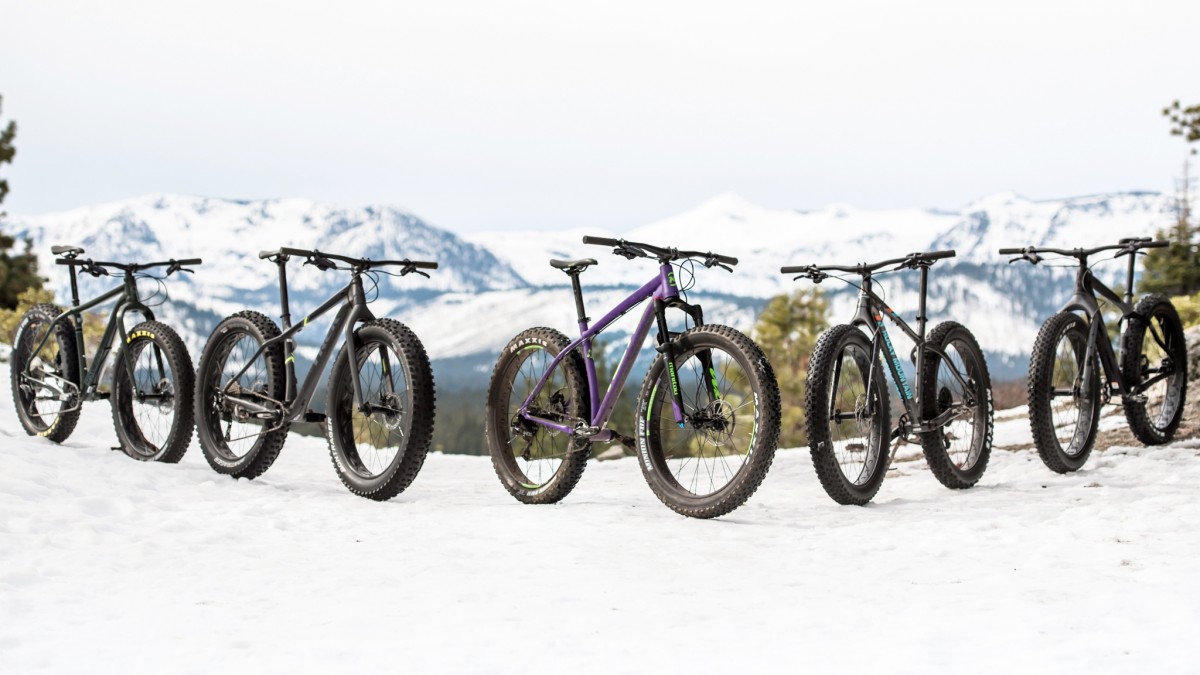
The Best Fat Bike | Tested & Ranked - Outdoor Gear Lab
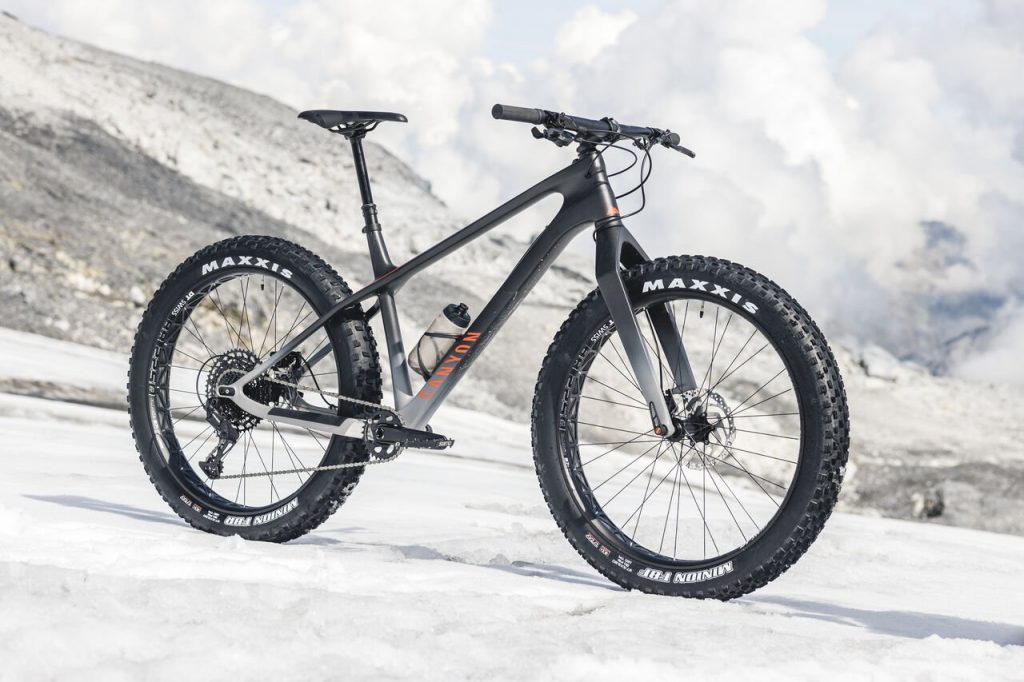
Canyon The Dude Fat Bike Review – 2021 - FatBike Planet
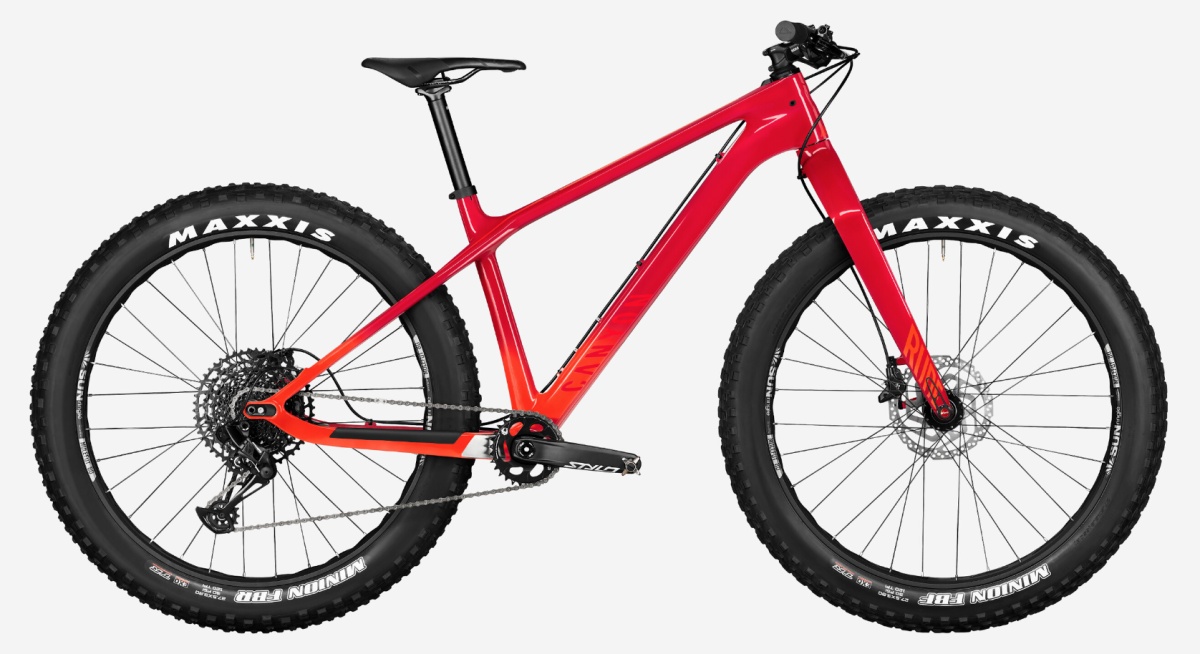
Canyon Dude CF 7 Review

Der Canyon Dude CF 9 2021 Test – ein Kumpel auf Diät
