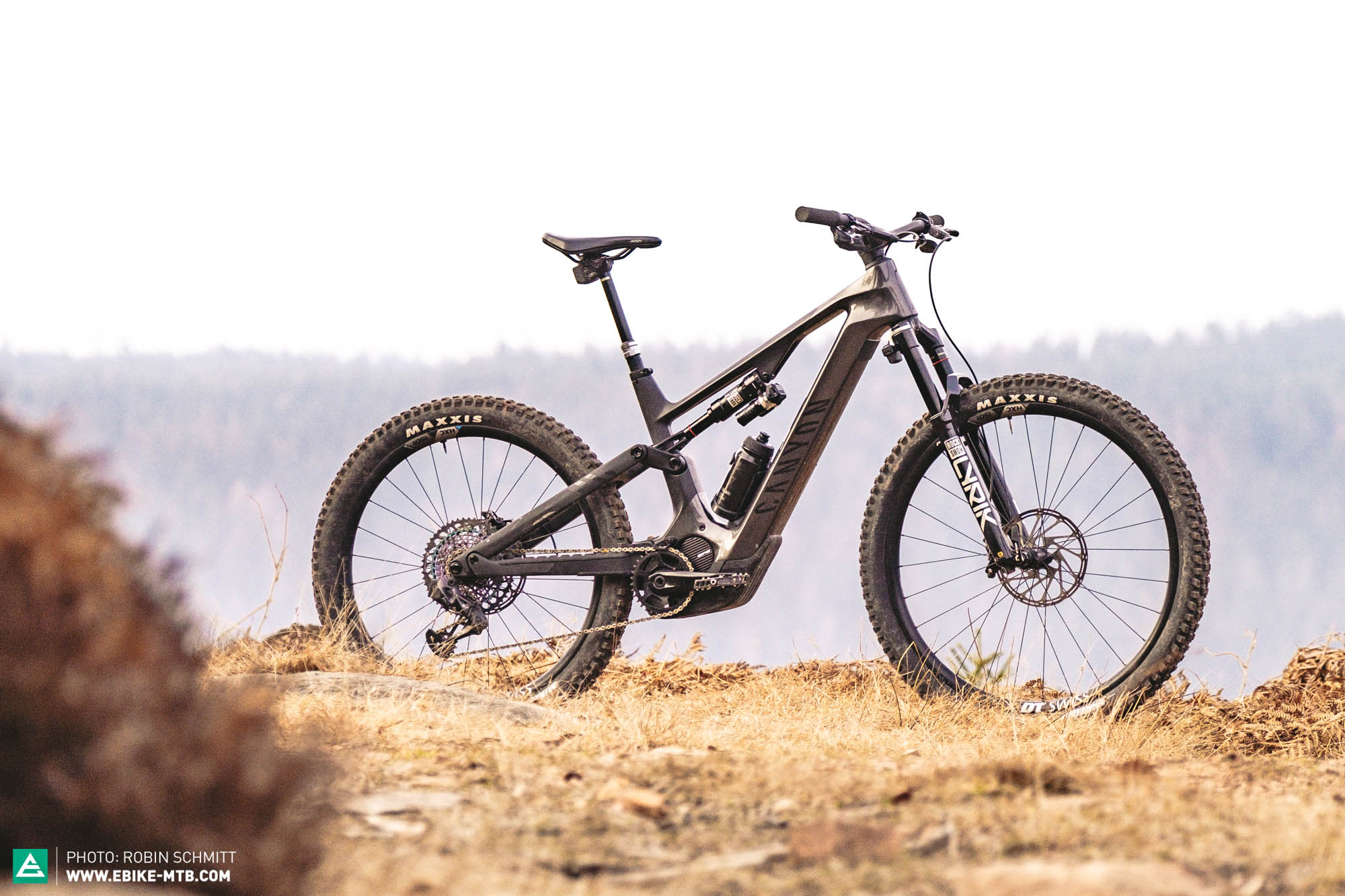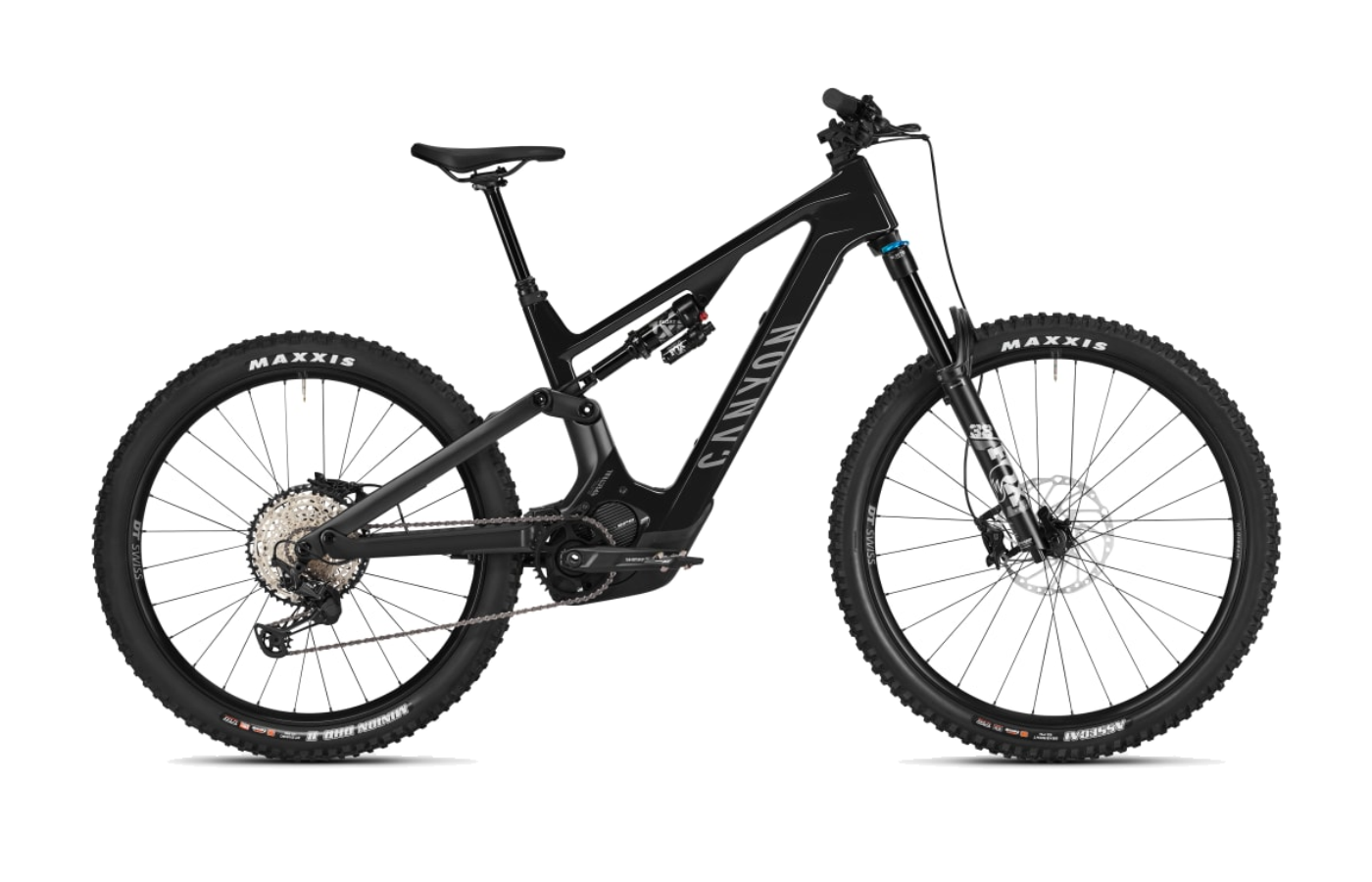
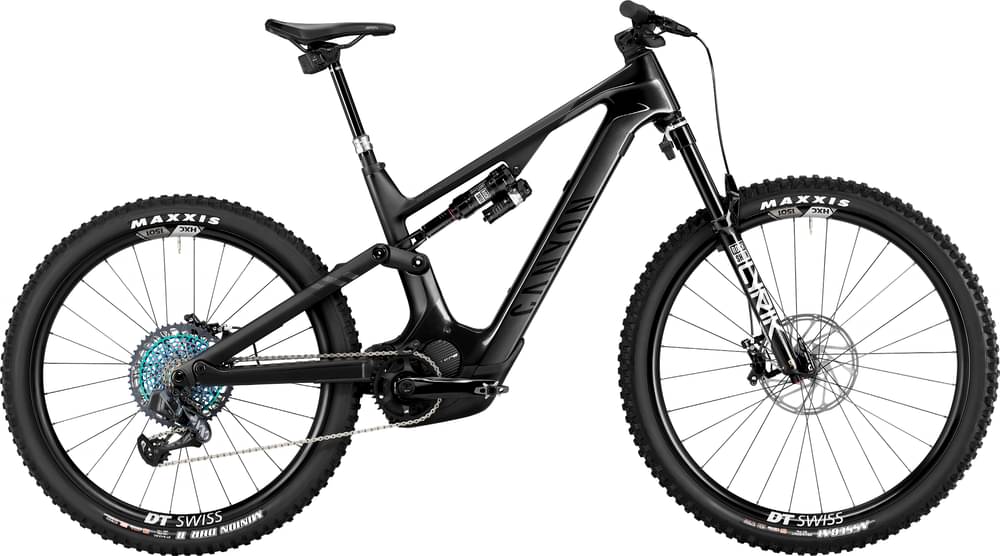
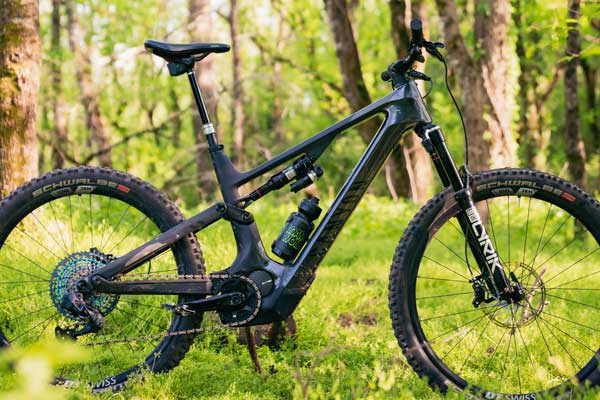
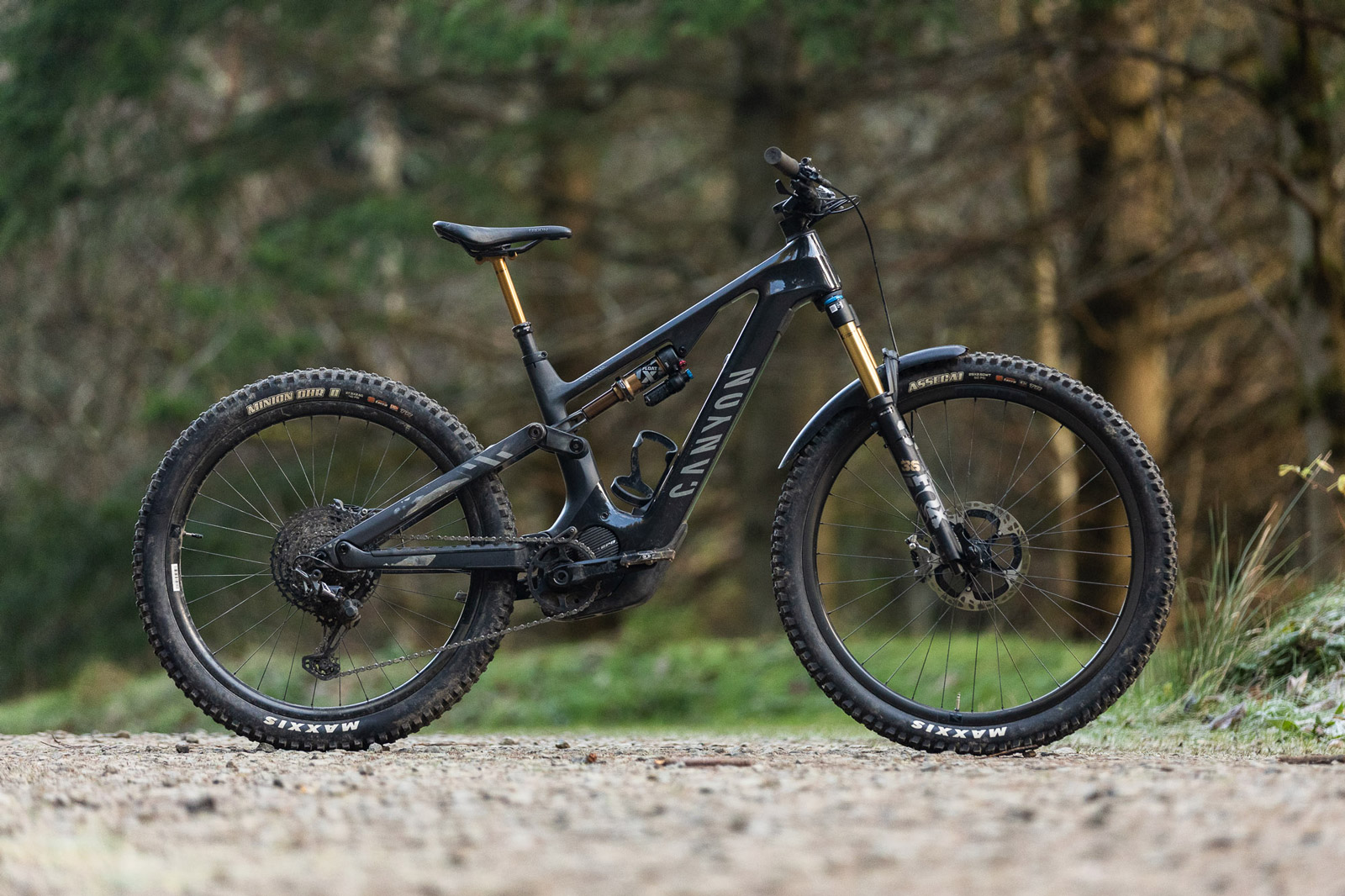
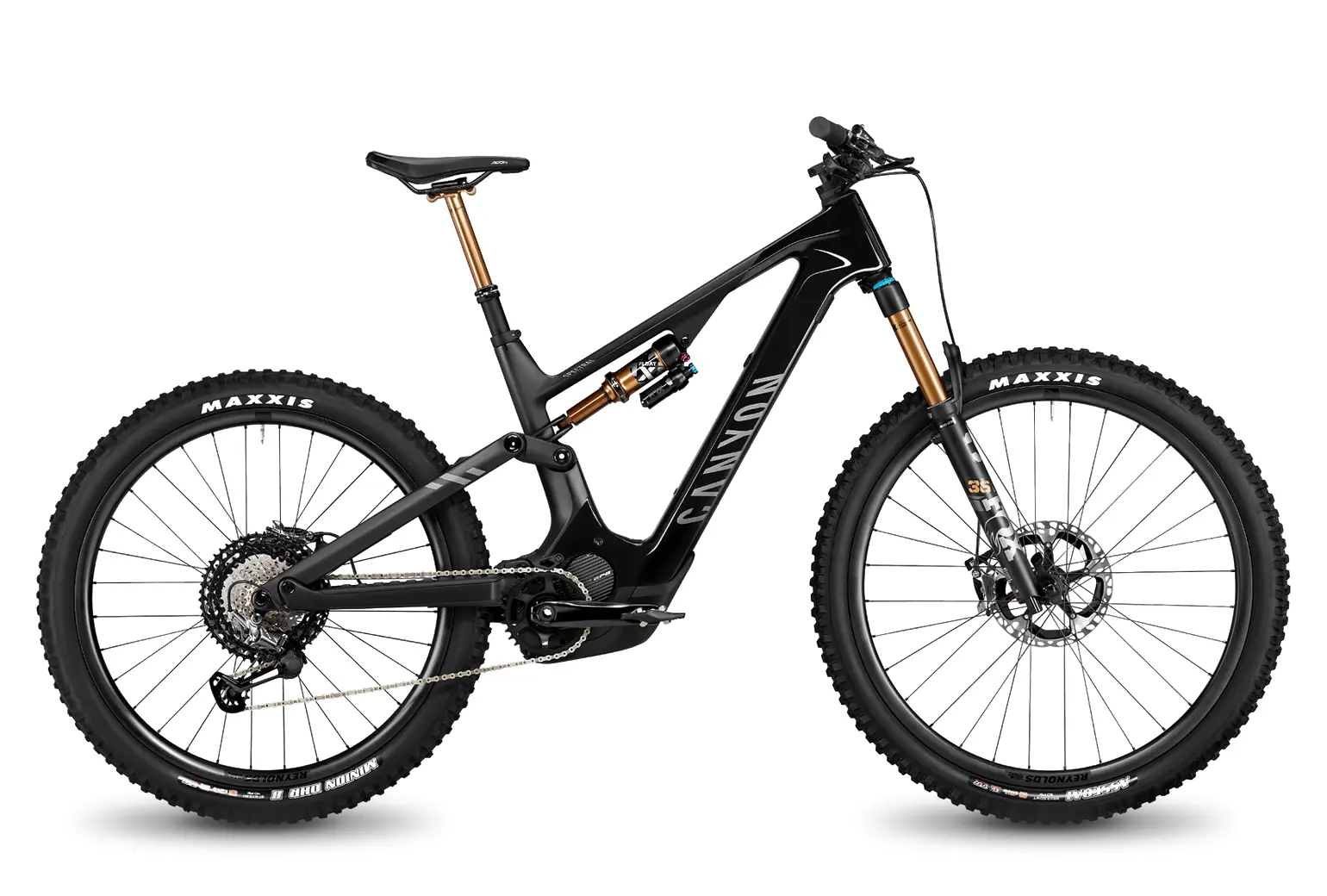
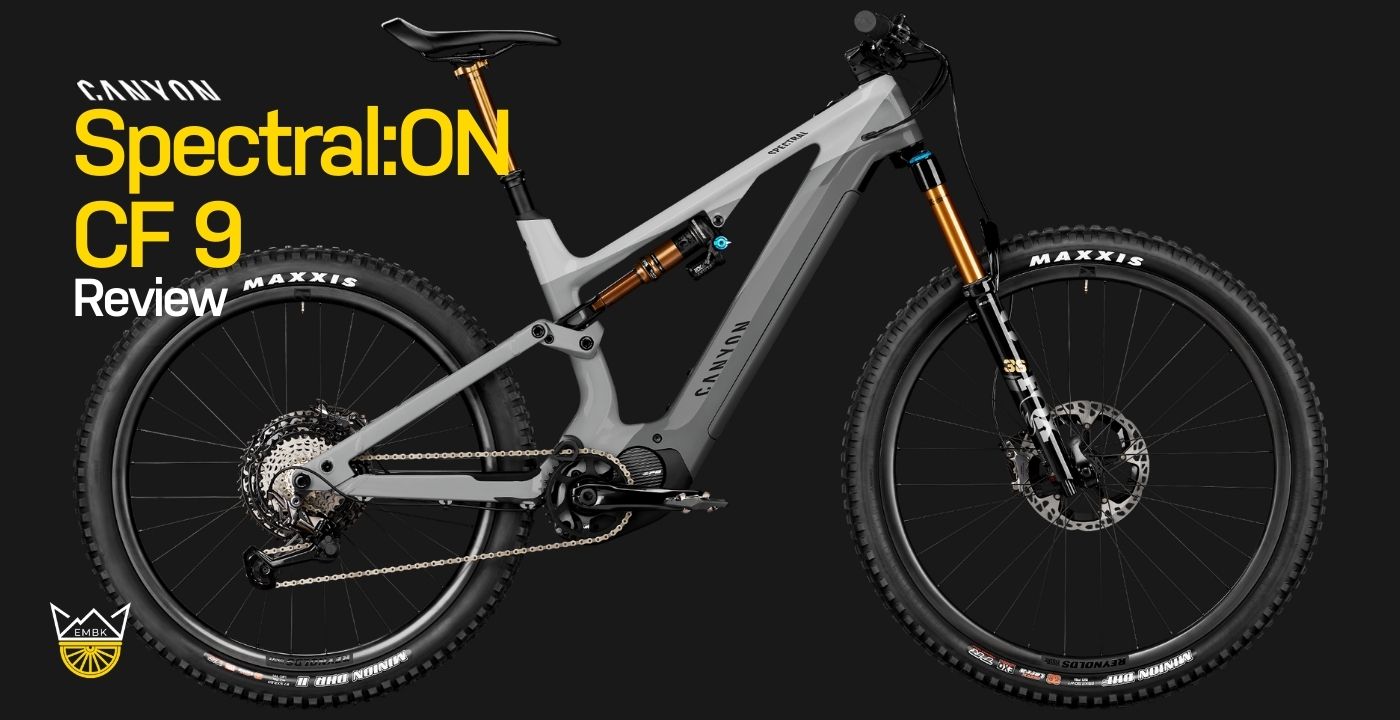
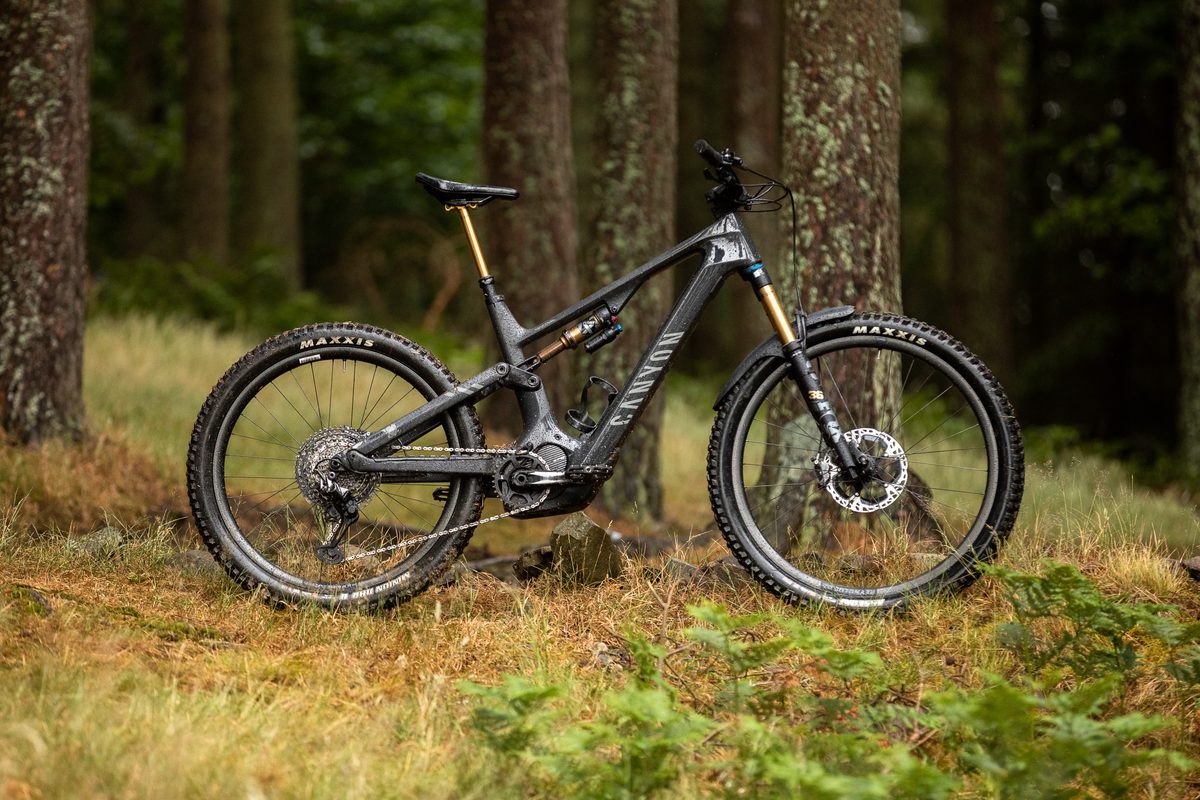
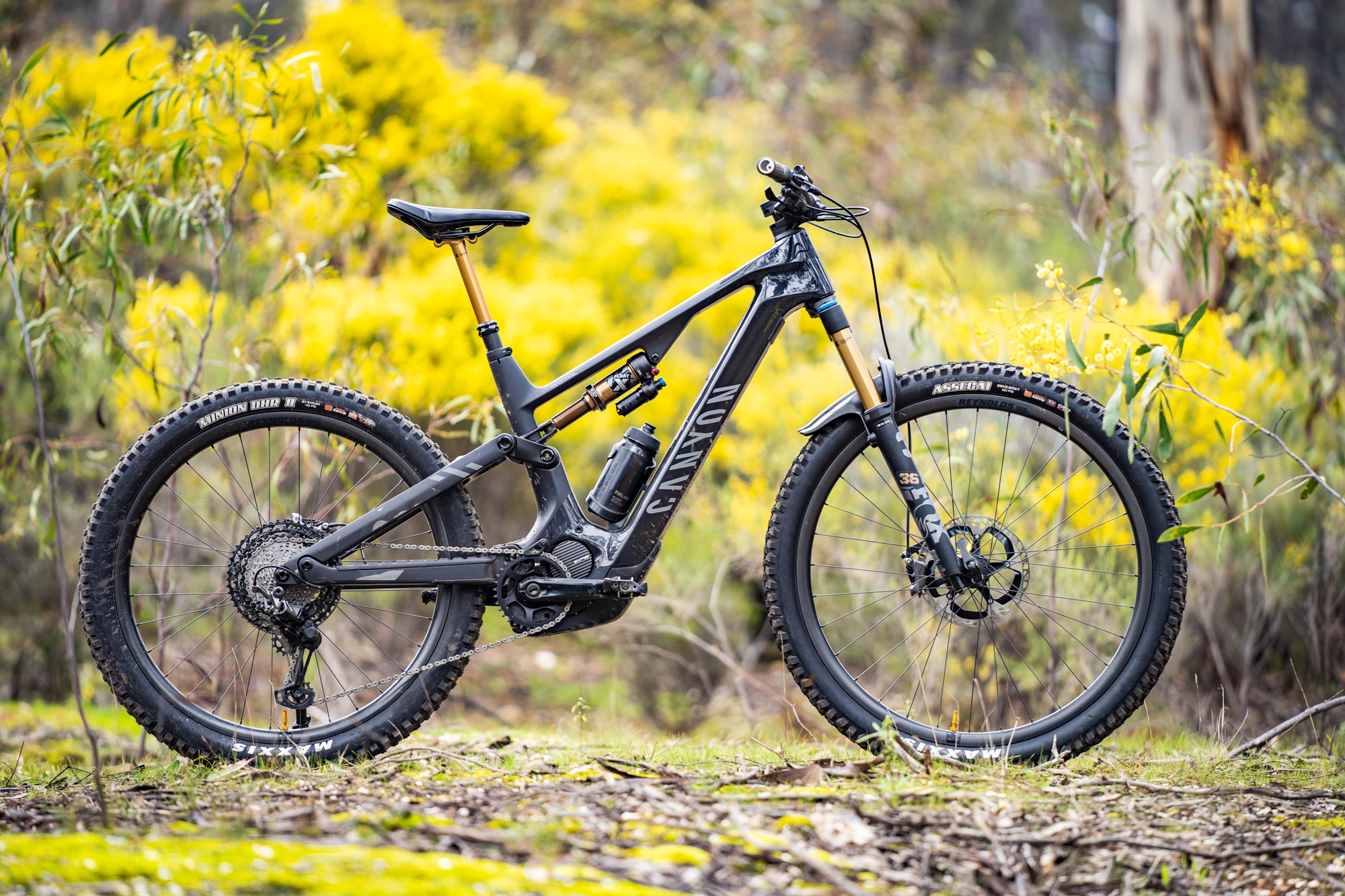
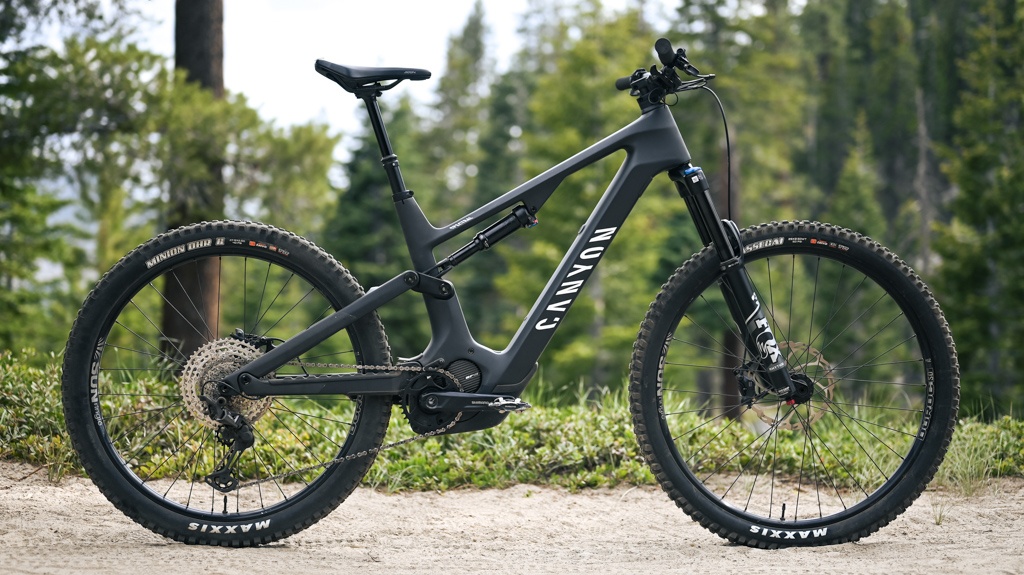
The 2022-on Canyon Spectral:ON marked a full platform reset rather than a mild update. Canyon moved the bike to its M129/M091 chassis with a fully carbon frame in CF and CFR trims, a removable in-house downtube battery system, and a more gravity-oriented mixed-wheel layout. Core numbers define the bike’s intent: 155 mm of rear travel, a 150 mm fork at launch, 29in front / 27.5in rear wheels, a 65.5° head angle, 76.5° seat angle, and 440 mm chainstays. Compared with the previous Spectral:ON, this generation is longer, slacker, steeper at the seat tube, and visually much cleaner thanks to the fully integrated battery and neater motor-area cable routing.
What makes this generation distinctive is how it tries to combine full-power e-MTB range with a more reactive trail-bike feel. Canyon’s battery and motor packaging, including the tilted Shimano EP8 layout and low-slung battery placement, was designed to keep mass centralized rather than simply chase maximum capacity. The result is a bike that sits in the market as a lively, gravity-capable trail e-bike rather than a mini-downhill bruiser. It targets riders who want a full-power motor and big-battery practicality, but still care about pop, line changes, and mixed-wheel agility on everyday trail terrain.
Where to get it.
1 retailer · size L.
Spec sheet.
Every component shipped with this build.
Geometry & fit.
4 sizes published.
The published geometry points to a modern but not extreme e-trail bike. In size L, the Spectral:ON pairs a 485 mm reach with a 648 mm stack, a 65.5° head angle, and a 76.5° seat angle; size M comes in at 460 mm reach and 639 mm stack. Those numbers put the rider in a centered climbing position without stretching the bike into full enduro territory. The relatively steep 76.5° seat angle helps keep weight forward on seated climbs, while the tall front end adds security on descents and reduces the over-the-front feeling on steeper terrain.
Handling is shaped heavily by the fixed 440 mm chainstays and mixed-wheel format. For an e-MTB, 440 mm stays are moderate rather than especially long, which helps explain the bike’s quick direction changes and easier front-wheel lifts compared with more planted, longer-rear competitors. Wheelbases of 1223 mm in M and 1252 mm in L support stability, but the 65.5° head angle is still conservative by current hard-charging e-enduro standards, which matches reviewer comments that the bike feels agile and lively more than ultra-calm in high-speed chunk. The 32 mm BB drop is central to its cornering feel, lowering the center of gravity, but it also helps explain the frequent pedal-strike complaints on technical trails.
Where the handlebar sits relative to the bottom bracket — the single most important fit pair.
01Fit geometry6 values
02Component geometry1 values
03Handling geometry5 values
Which size should I buy?
Slide your height to see the recommended size. GearWise's fit algorithm works from the published stack, reach, and ETT — the brand's own recommendation may differ.
→Calculated from GearWise's own stack / reach / ETT algorithm — the brand's size chart may recommend a different size, and a proper bike fit beats any calculator.
The lineup.
2 builds, ranging $3,899 – $4,499.
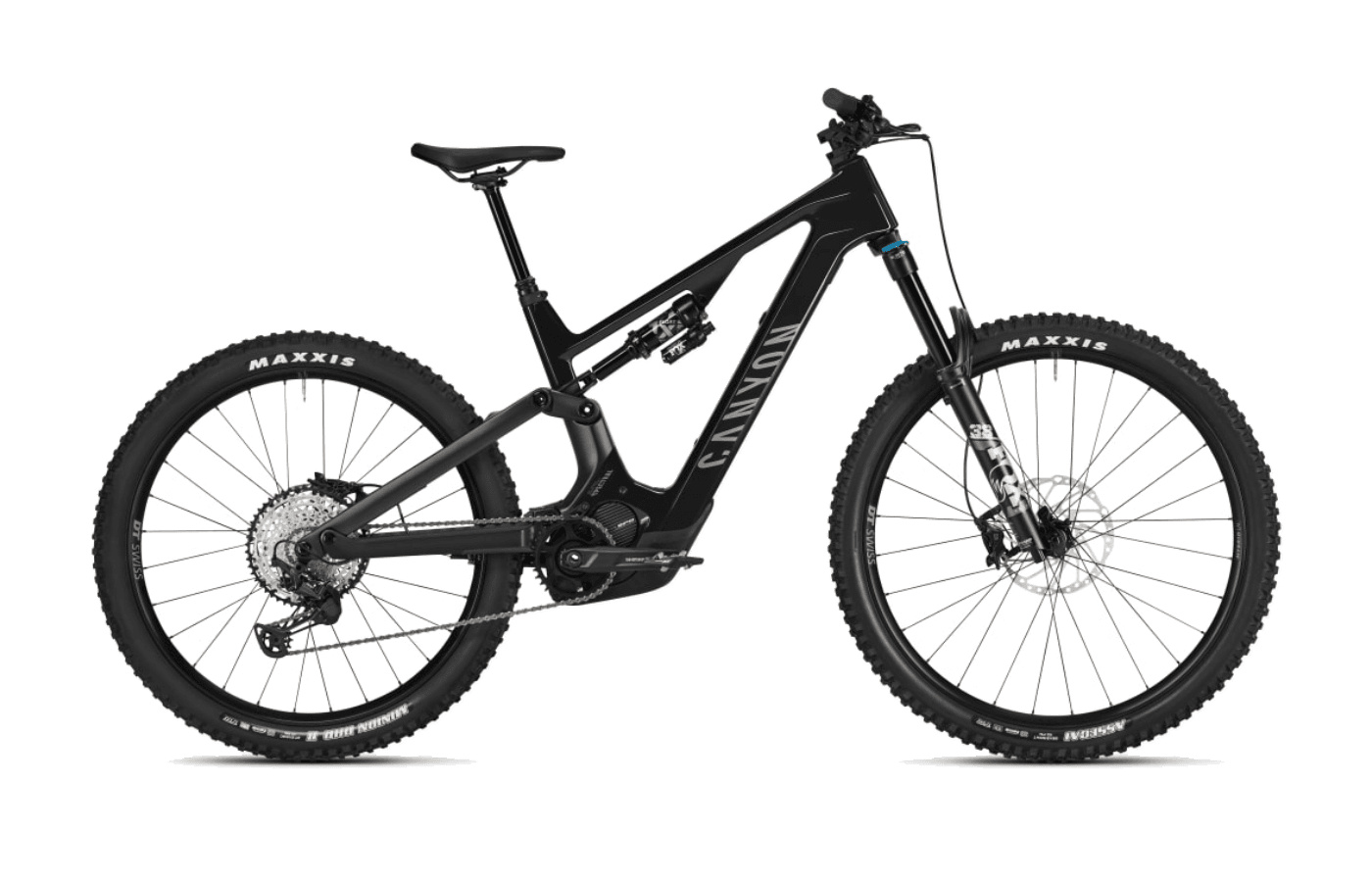
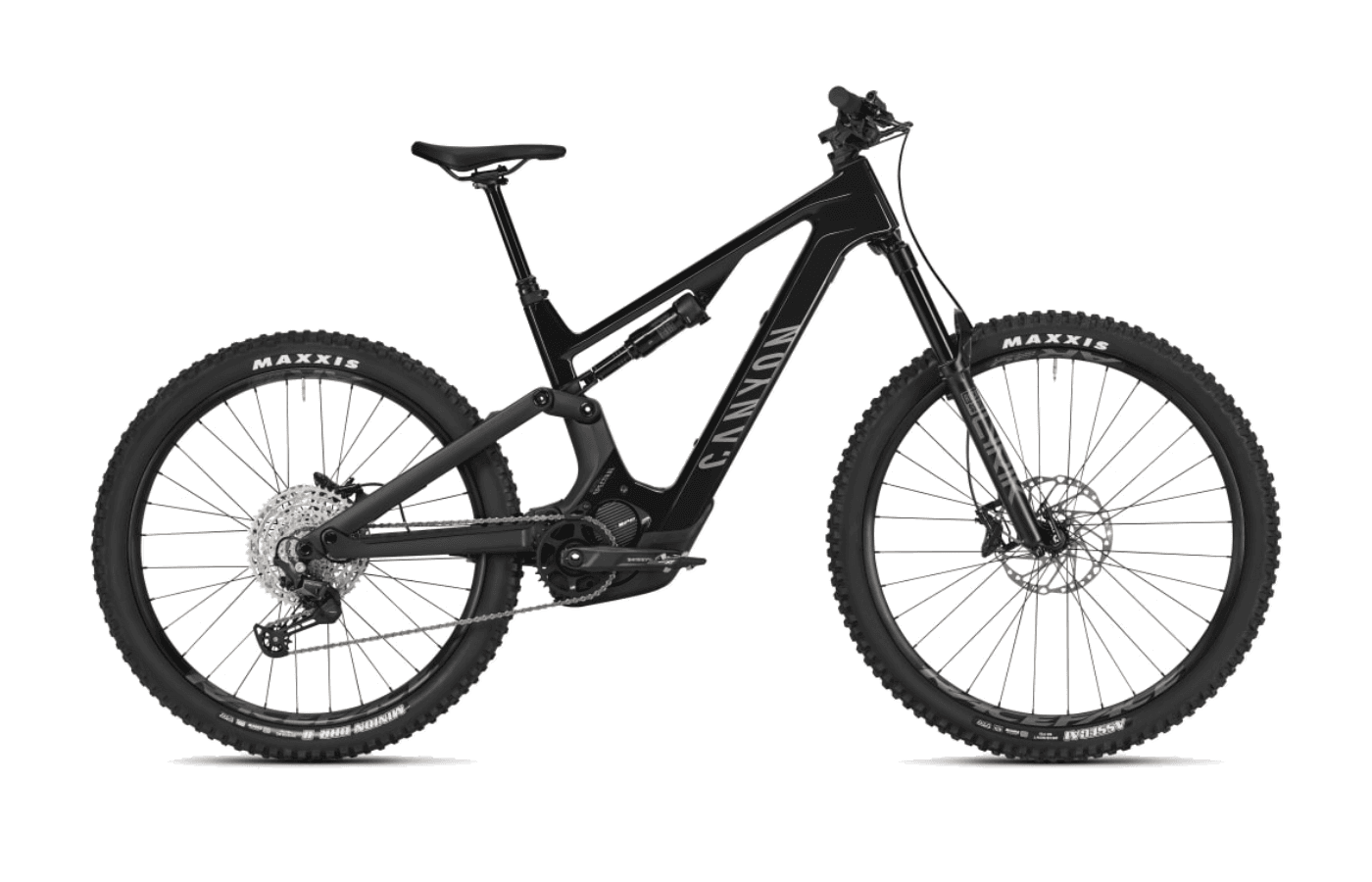
Available builds listed here are the CF 7 and CF 8, positioned as the more accessible entries into the current carbon Spectral:ON platform. Even without full component breakdowns, the key story is that both sit on the same fully carbon chassis and geometry package as the rest of the range, giving buyers access to the core mixed-wheel, 155 mm travel platform without stepping up to CFR pricing. Review coverage broadly frames these lower and mid-range CF models as important value points in the lineup because they deliver the same frame concept, Shimano full-power drive system, and large-capacity battery approach that define the bike.
Where the range typically separates itself is through component level, wheel material, and premium electronics rather than a different ride concept. Higher-end CFR models noted in reviews moved to parts such as Fox Factory suspension, Shimano XTR or SRAM AXS drivetrains, carbon wheels, and in LTD trim RockShox Flight Attendant, while reviewers often identified the CF 7 and CF 8 as the practical sweet spot for riders who want the platform’s low weight and big-range appeal without paying for the most expensive carbon finishing kit. Given the limited build-sheet data provided here, a more detailed spec-by-spec comparison would not be reliable.
From the press.
15 reviews from the cycling press.
Reviewers are unusually consistent about the Spectral:ON’s core personality: it is one of the more agile and playful full-power e-MTBs of its era. BikeRumor, Flow Mountain Bike, and E-MOUNTAINBIKE all highlighted how the bike feels lighter than its roughly 21.8-23 kg weight suggests, crediting the low battery placement and centralized mass. On trail, testers repeatedly described it as poppy, easy to pump, and especially strong on flow trails, jump lines, and faster singletrack where the mixed-wheel setup and supportive suspension make it easy to change direction and generate speed. BikeRumor specifically praised the rear suspension for being supple off the top with enough mid-stroke support to push through corners.
The weaknesses are just as clear. BikeRadar described the ride as quite raw over trail chatter, and several reviewers tied that to the stiff carbon chassis, carbon wheels, and in some cases the one-piece cockpit on higher-end models. Multiple outlets also flagged frequent pedal strikes from the low bottom bracket and motor/battery bulge, with technical climbing requiring careful timing. On steeper, rougher descents, reviewers from BikeRumor and BikeRadar found the stock 65.5° front end and 150 mm fork less composed than a more enduro-biased setup, with some suggesting a 160 mm fork upgrade. There was also criticism of lighter EXO and EXO+ tire casings on a 22 kg-plus bike, plus recurring complaints about noise, headset cable routing, and the proprietary battery system’s earlier durability concerns.
CANYON SPECTRAL:ON CFR LTD 2022 - Review, Specs & Price

Canyon Spectral:ON CF 2026 Review - emtb-test.com
Canyon Spectral:On CFR LTD - 2022 eMTB Shootout | The Loam Wolf
Review: Canyon Spectral:ON CFR eMTB Rewards Patience
Canyon Spectral:ON Review
Canyon Spectral:ON CF 9 Review (2023) - E Mountain Bikes
Canyon Spectral:ON CFR review | BikeRadar
Canyon Spectral:ON Review | A better e-MTB in almost every way
Canyon Spectral:ON CF 8 Review | Tested & Rated

Canyon Spectral:ON CFR LTD review – Singletrack World Magazine
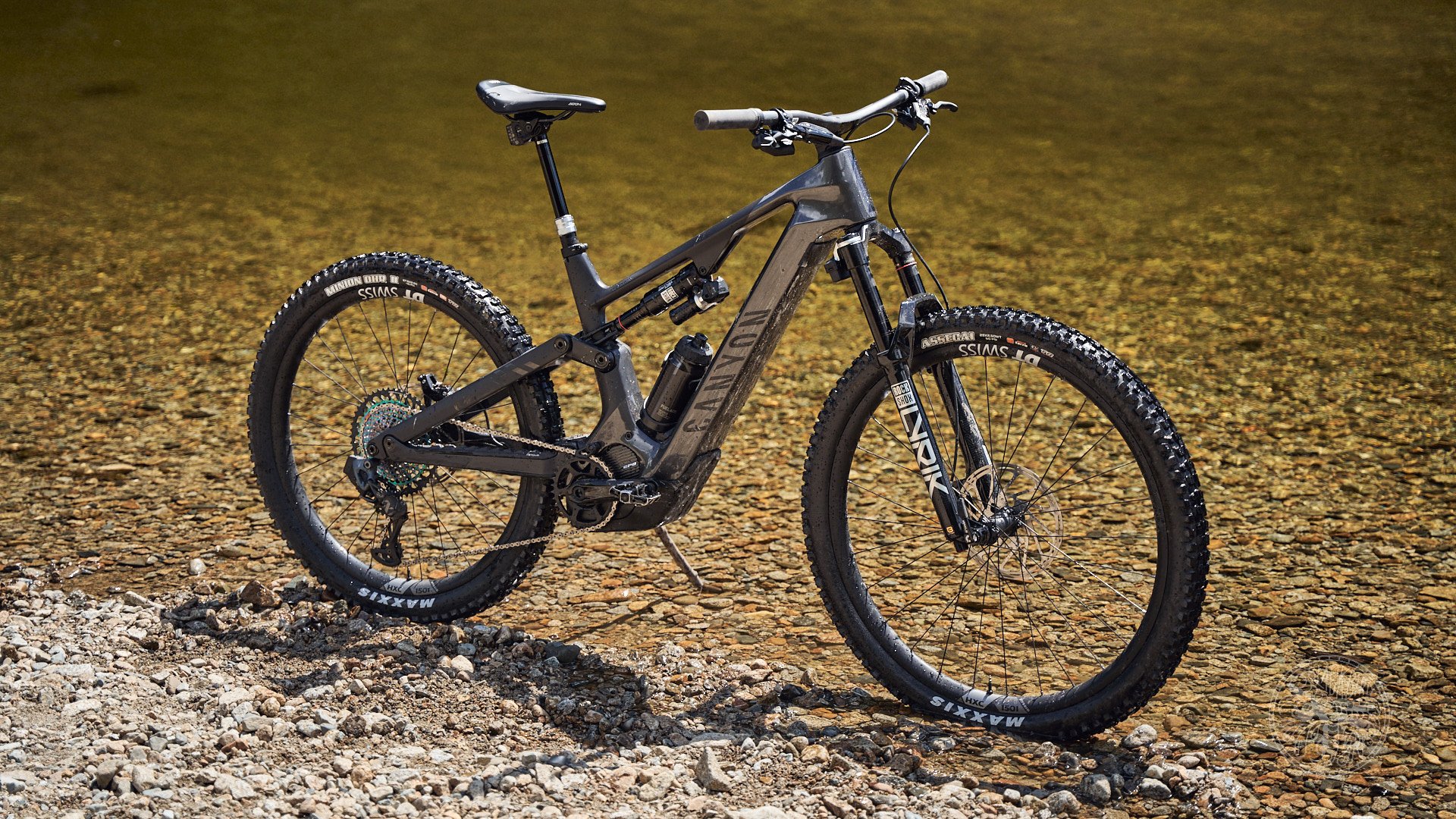
Canyon Spectral :ON CFR LTD

Canyon’s New Pedal-Assist Mountain Bike Devours Every Trail
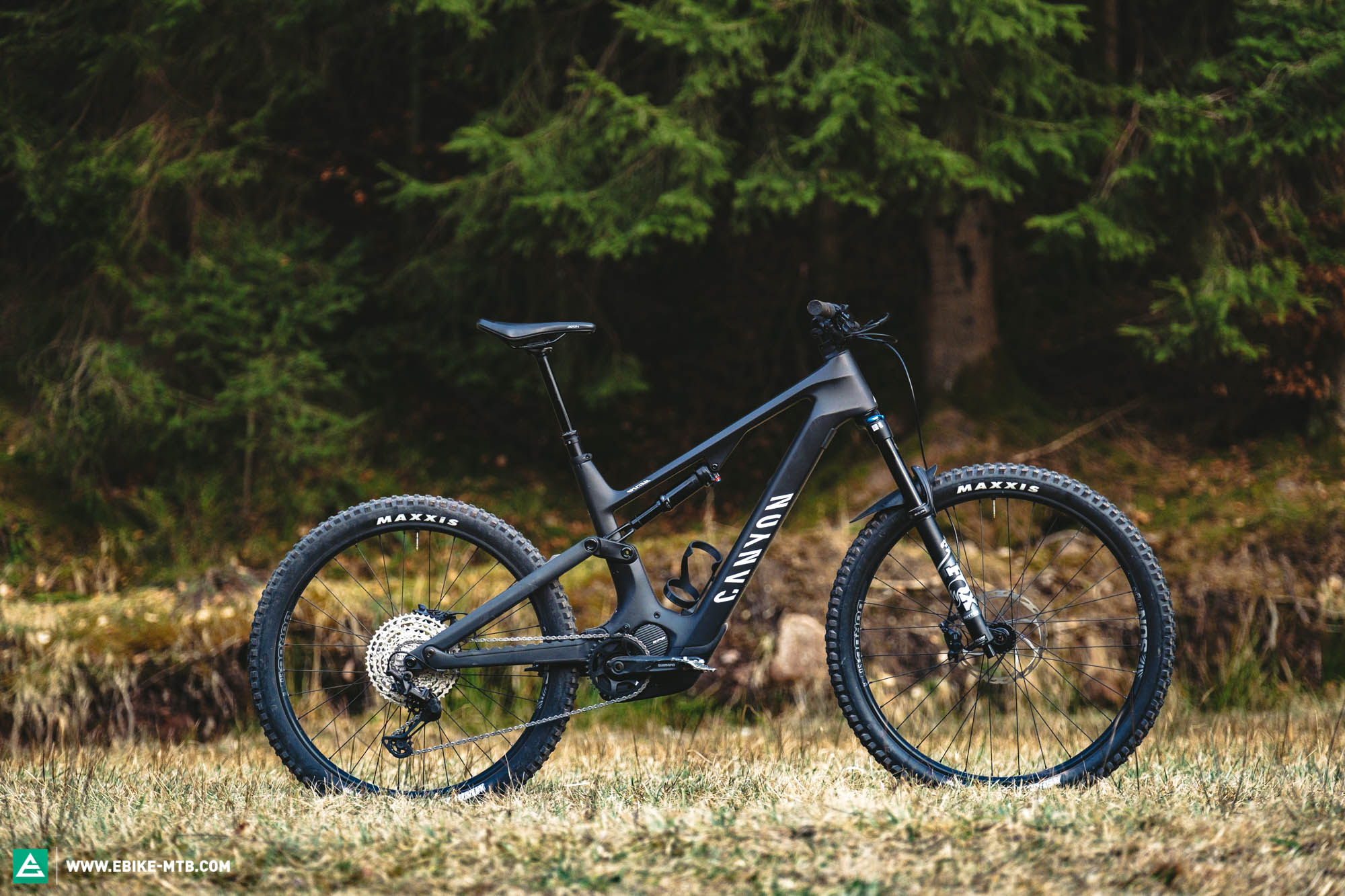
Canyon Spectral:ON CF8 2022 in our 2022 budget eMTB group test

New Canyon Spectral:ON with 900Wh battery and lighter frame - Bike Magazine