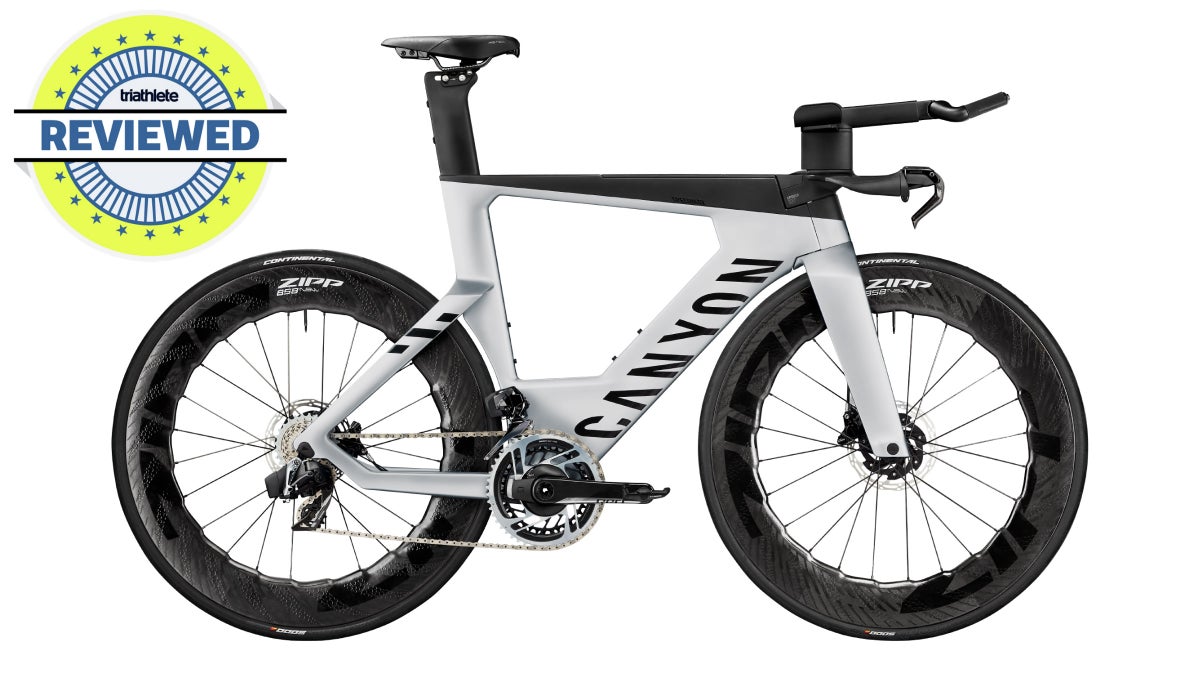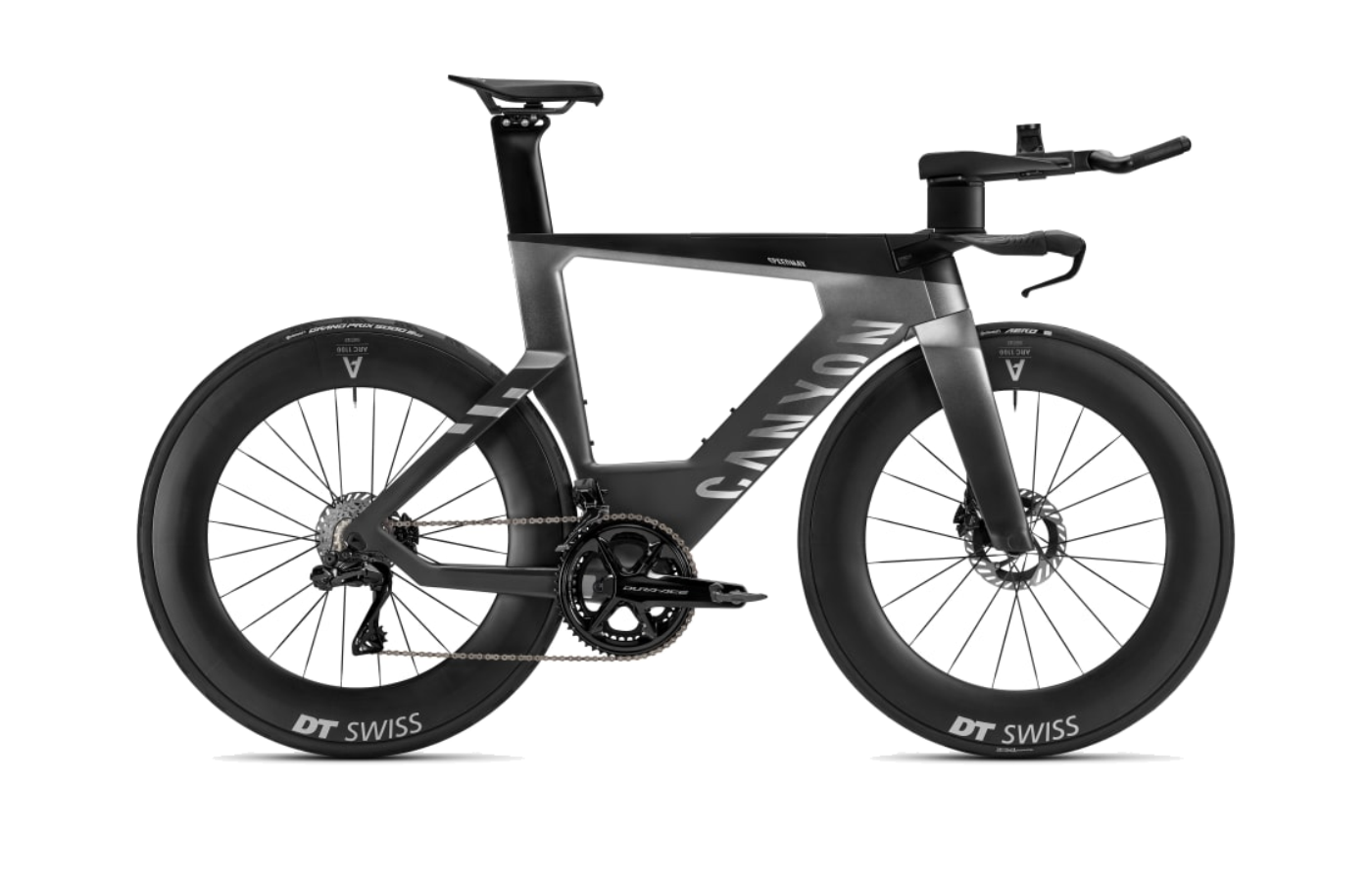
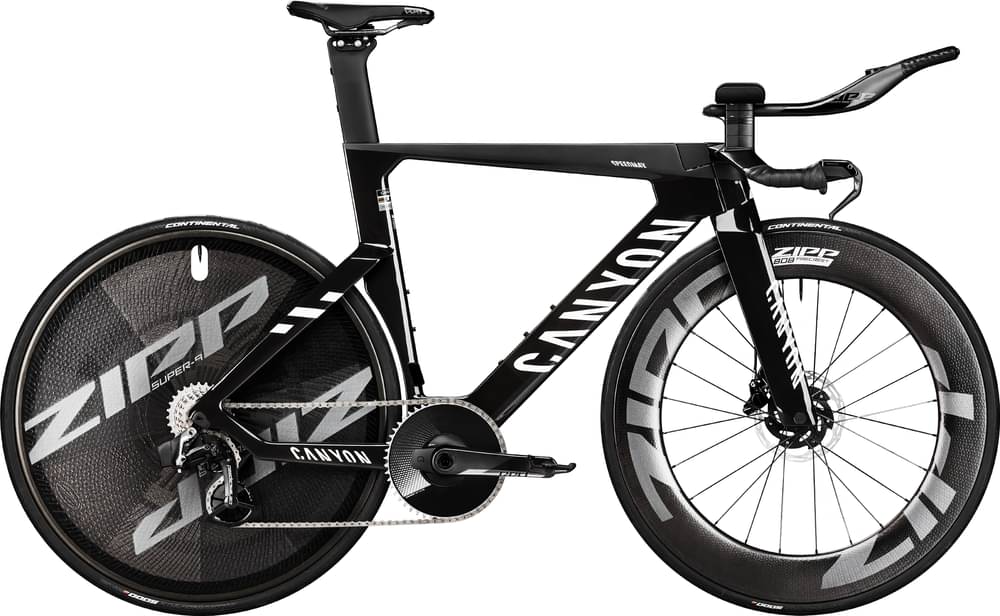
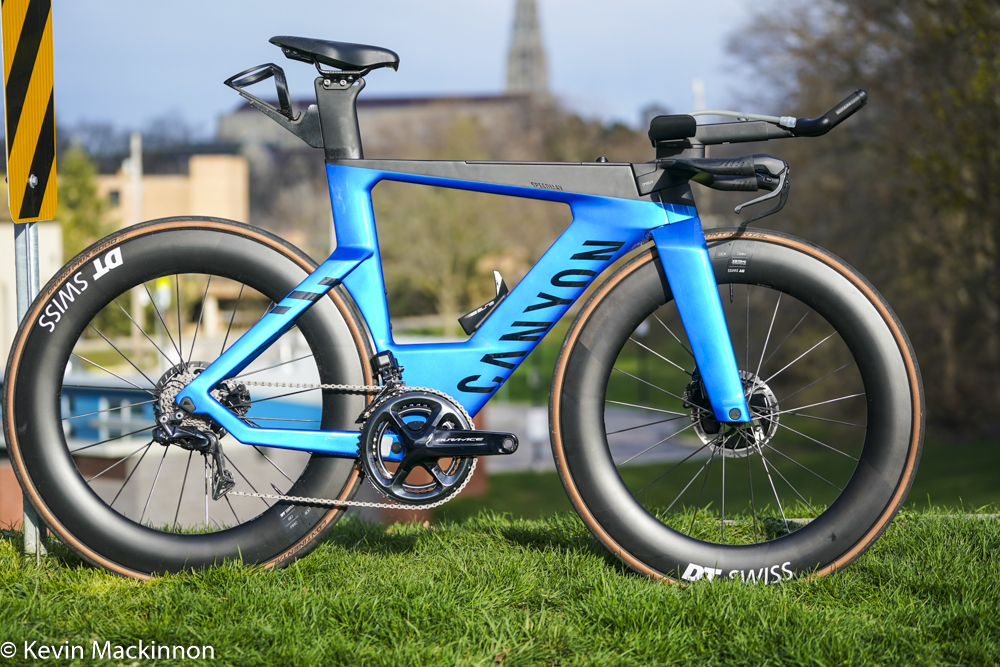
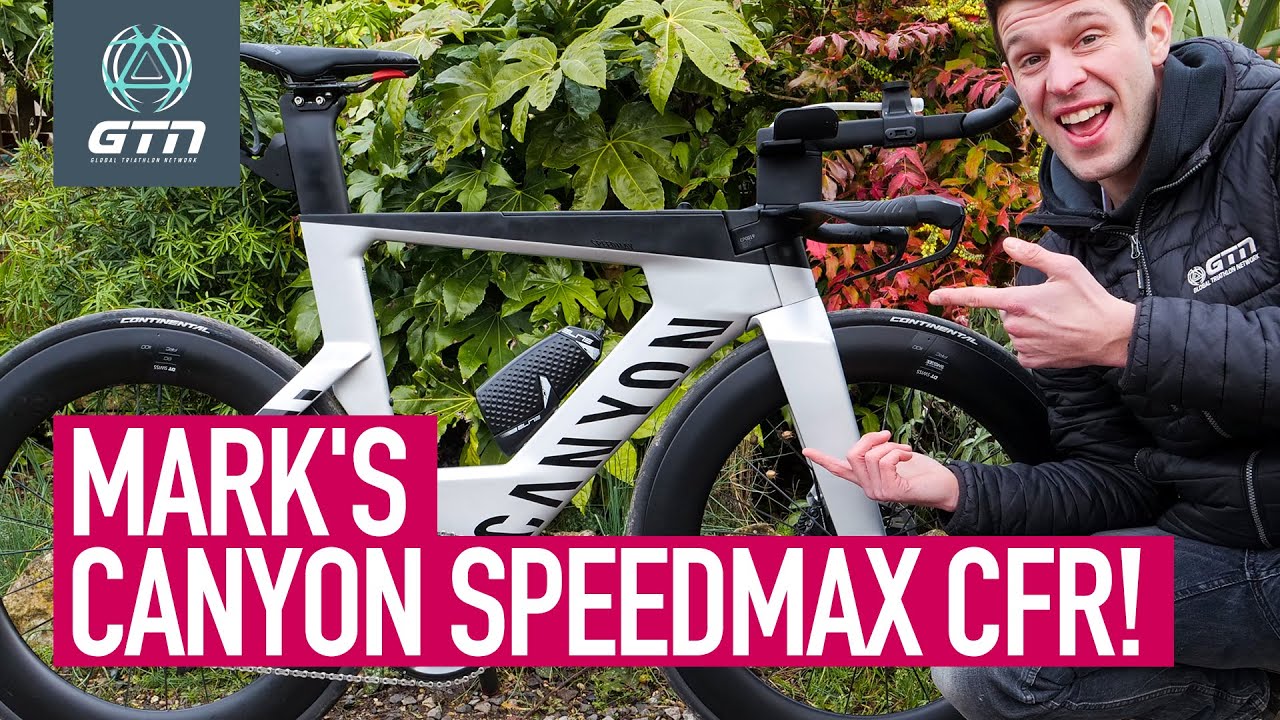
The current Canyon Speedmax generation, introduced for 2021 and still underpinning the line today, marked a full reset of Canyon’s triathlon platform. The big structural change was the move to a disc-brake-only chassis with 12x100 and 12x142 through-axles, flat-mount calipers, and fully internal routing across the family. On the higher-end CFR and CF SLX bikes, Canyon also leaned further into triathlon-specific, non-UCI-constrained frame shaping, pairing deep aero tube profiles with integrated hydration, bento storage, and a hidden toolbox built into the frame rather than relying on aftermarket bolt-ons.
What distinguishes this Speedmax is how thoroughly it treats nutrition, hydration, and cockpit integration as part of the bike’s aerodynamic system rather than accessories. That makes it a purpose-built long-course race bike first and foremost, not a road bike derivative with clip-ons. The fit system still allows substantial adjustment at the front end, but the platform is clearly aimed at athletes who want a clean, highly integrated setup for triathlon and time trial use, with Canyon splitting the range into CFR, CF SLX, and CF tiers to cover flagship race builds down to more attainable options.
In the market, the Speedmax sits as a direct-to-consumer superbike that competes on outright integration and spec value rather than low weight or mechanical simplicity. It is a highly specialized machine defined by aero efficiency, storage integration, and aggressive race intent. The later cockpit update on the lower-tier CF broadened the appeal slightly, but this remains a focused platform for riders prioritizing speed, stability, and race-day execution over easy parts interchangeability.
Where to get it.
No retailers stocking size M.
No retailers carrying size M right now.
Spec sheet.
Every component shipped with this build.
Geometry & fit.
5 sizes published.
The published geometry points to a notably aggressive triathlon fit. Across sizes S through XL, the seat tube angle is a steep 80.5 degrees, which pushes the rider forward over the bottom bracket to support a powerful aero position and easier transition to running. Reach is long for the category of bike use—438 mm in M and 459 mm in L—while stack stays relatively low at 489 mm in M and 527 mm in L, reinforcing that this chassis is designed around a stretched, low frontal position. The XS is especially low at 435 mm stack, while the XL extends to 483 mm reach, showing that Canyon preserved the same race-oriented posture across the size range.
Handling numbers suggest stability first, but not sluggishness. The head tube angle is 73 degrees on S through XL, with XS slightly slacker at 72 degrees, and chainstays are a compact 420 mm on most sizes, shortened to 410 mm on XS. Wheelbase grows from 960 mm in XS to 1079 mm in XL, with a 1014 mm wheelbase in M, which helps explain why reviewers found the bike composed at speed and in crosswinds. The 72 mm bottom bracket drop on most sizes also lowers the rider’s center of gravity for a planted feel, though the combination of a steep front-end setup and short cockpit elements on some builds helps explain why several testers also reported quick, sometimes twitchy steering responses at lower speeds or on rough roads.
Where the handlebar sits relative to the bottom bracket — the single most important fit pair.
01Fit geometry6 values
02Component geometry3 values
03Handling geometry5 values
Which size should I buy?
Slide your height to see the recommended size. GearWise's fit algorithm works from the published stack, reach, and ETT — the brand's own recommendation may differ.
→Calculated from GearWise's own stack / reach / ETT algorithm — the brand's size chart may recommend a different size, and a proper bike fit beats any calculator.
The lineup.
4 builds, ranging $5,999 – $11,499.
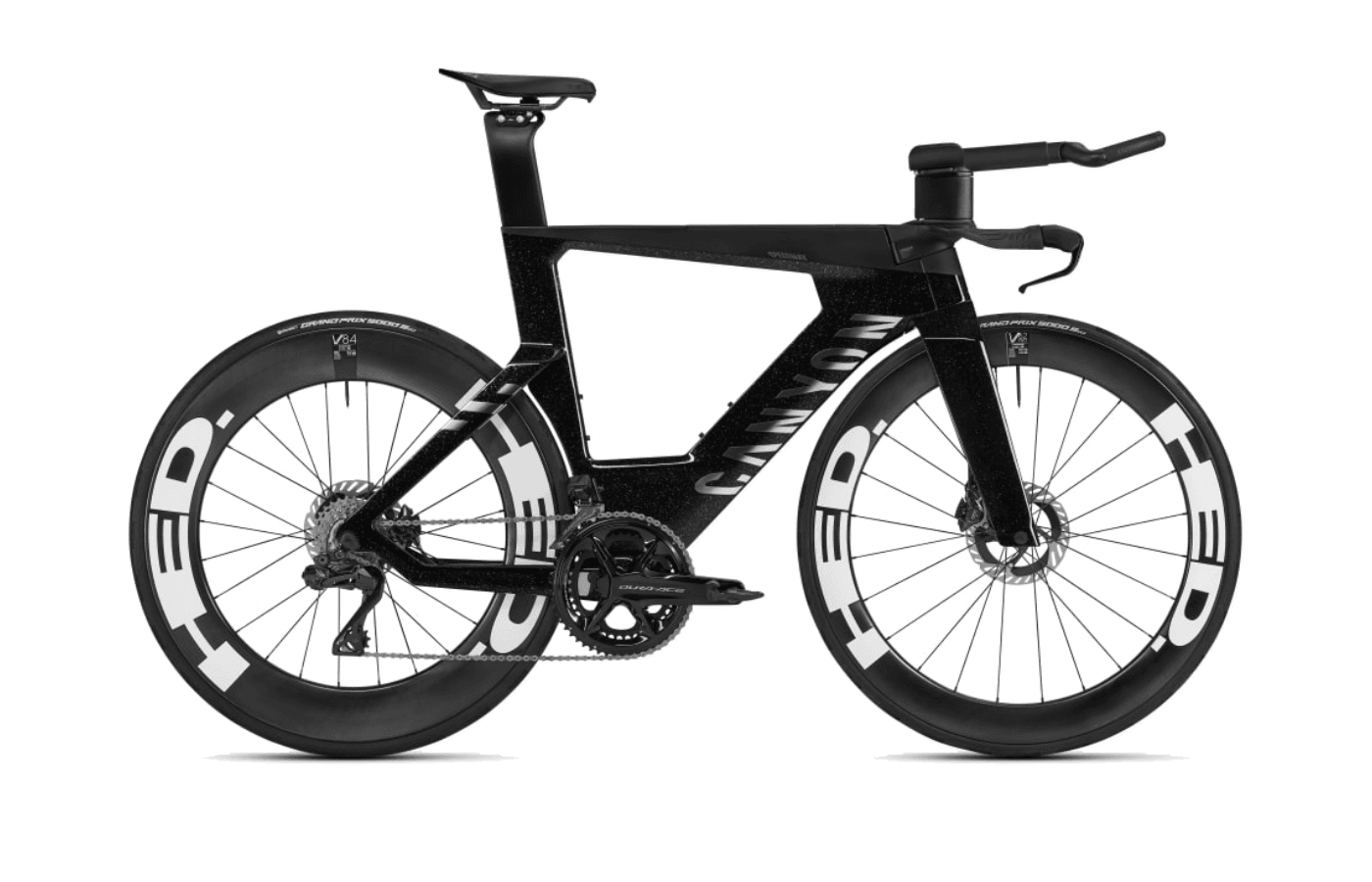
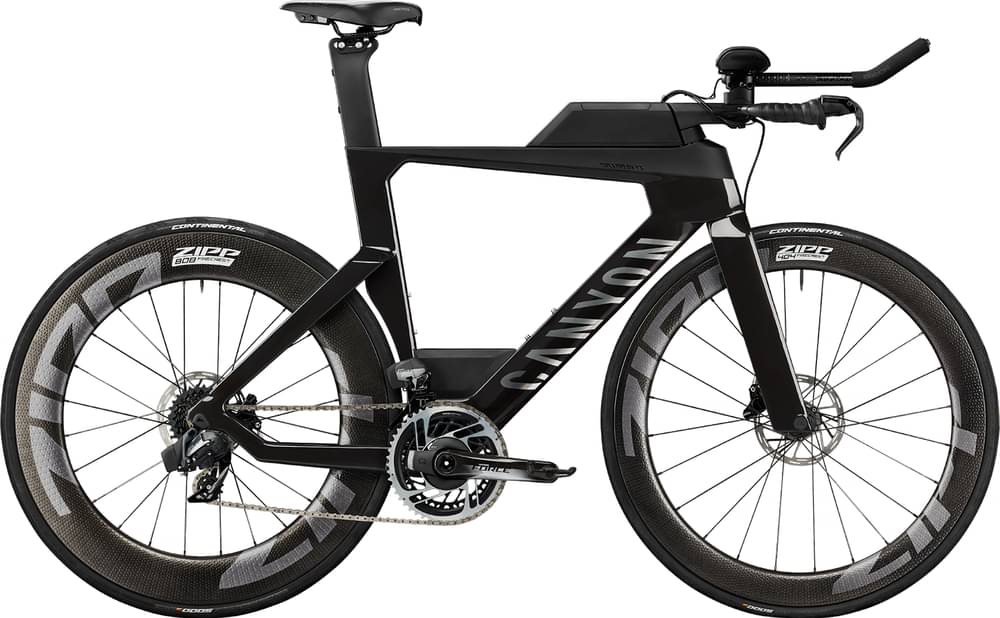
The current range spans four listed builds: CFR di2 Vanquish PRO, CFR di2, CF SLX 8 di2 Vanquish, and CF 7 di2. That lineup follows Canyon’s usual structure, with CFR at the top, CF SLX in the upper middle, and CF as the entry point. Based on the broader review coverage of this generation, the hierarchy is defined less by a change in overall concept than by frame material, wheel and cockpit package, and groupset level. The flagship CFR bikes are the premium race builds, while CF SLX retains most of the integrated superbike character at a lower price, and the CF models bring the Speedmax concept to a more accessible tier.
Review data around this generation consistently points to strong spec value relative to rivals, particularly because Canyon pairs electronic shifting with high-end aero integration even below the very top of the range. Reviewers also noted that power meters are commonly included on upper-tier builds, and that the premium builds are often sold with deep carbon race wheels rather than requiring immediate upgrades. The trade-off is that buyers are committing to a highly integrated, proprietary platform: excellent as a complete race package, but less flexible for riders who expect easy cockpit swaps or extensive aftermarket customization.



From the press.
9 reviews from the cycling press.
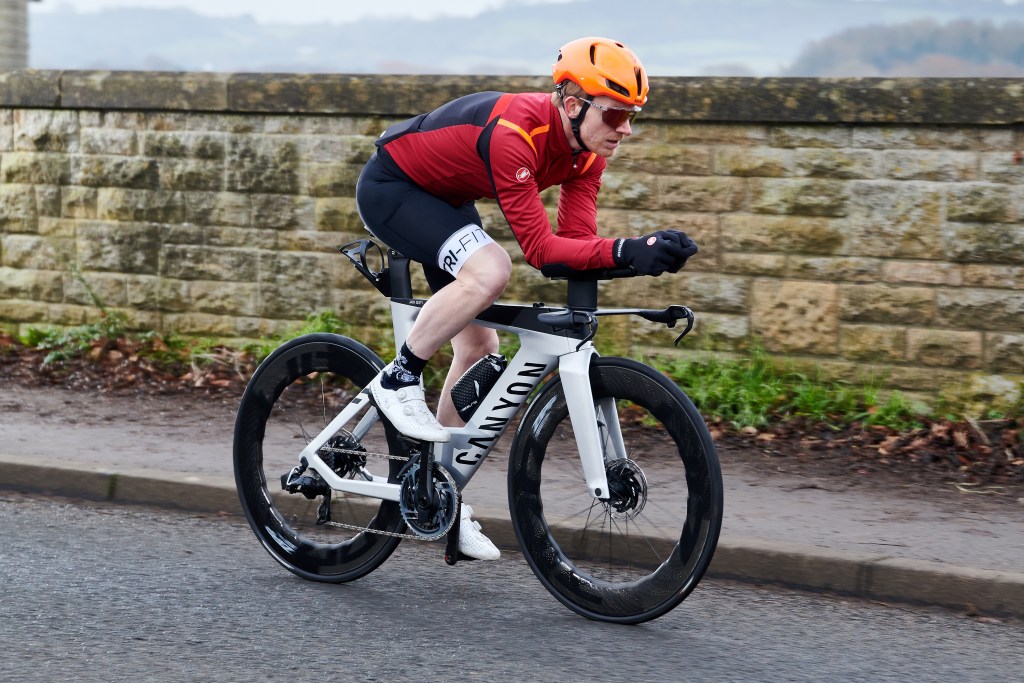
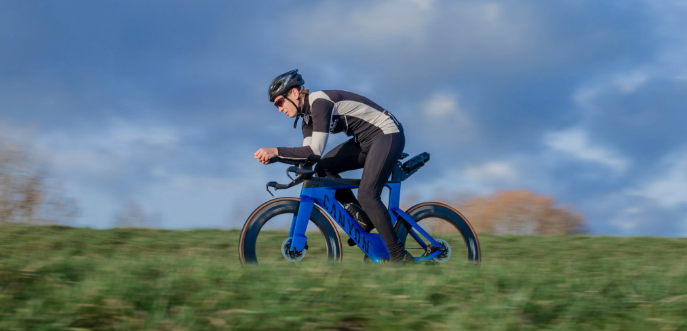
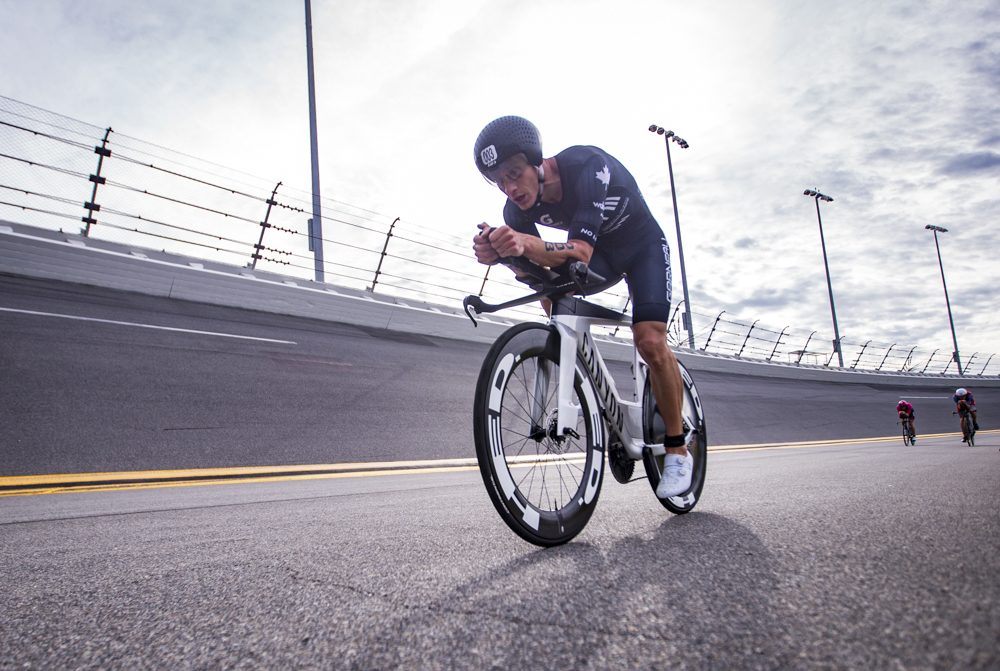
Reviewers consistently describe this Speedmax generation as exceptionally fast and more refined than many dedicated tri bikes. 220 Triathlon, Triathlon Magazine Canada, and 3athlon all highlighted its high-speed stability, especially in crosswinds, with 220 Triathlon attributing that in part to the way the integrated hydration and storage reduce exposed cockpit clutter and create a more controlled aerodynamic profile. Triathlon Magazine Canada found the CFR’s Toray M40X carbon gave the bike an unusually polished balance of stiffness and comfort for such an aggressive platform, while several testers said it feels lighter and more responsive than its roughly 9.1 to 9.5 kg complete weight would suggest.
Handling feedback was more nuanced. Multiple reviewers praised the bike’s responsive, almost road-bike-like cornering manners for a triathlon machine, and the move to hydraulic disc brakes was widely seen as a major gain in confidence on descents and into corners. But Triathlete and others also noted that the front end can feel snappy or slightly twitchy, especially when ridden in the aerobars or with a higher riser setup. Reviewers from 220 Triathlon and 3athlon also pointed to the very narrow aero hand and elbow position as a trade-off: efficient in the wind, but not always reassuring on rough or bumpy roads.
Long-course practicality earned strong marks, particularly the integrated hydration, bento storage, and toolbox layout, and Canyon’s value proposition came up repeatedly thanks to aggressive pricing relative to similarly equipped rivals. At the same time, reviewers flagged some ownership drawbacks. The most common complaint was the weak magnet securing the hydration straw, which several outlets said allowed it to move around in the wind. A few also mentioned the downside of proprietary integration, including harder cockpit changes, fit limitations for some riders, and the possibility of delays when specialized replacement parts are needed.
CANYON SPEEDMAX CF 8 DISC ETAP 2021 - Review, Weight & Price
CANYON SPEEDMAX CFR TT DISC 2021 - Review, Weight & Price
Canyon Speedmax CFR Disc eTap tri bike review

Canyon SpeedMax CF8 First Impressions
Review Canyon Speedmax CFR Disc eTap: 'high-end afgemonteerd, fietsen als een koning' - 3athlon.nl
Road review: Speedmax CFR Disc Di2 - Triathlon Magazine Canada
Canyon Speedmax arrives in Canada - Triathlon Magazine Canada
Mark's Canyon Speedmax CFR | GTN Presenter Pro Bike!