Colnago
V4Shimano 105 Di2
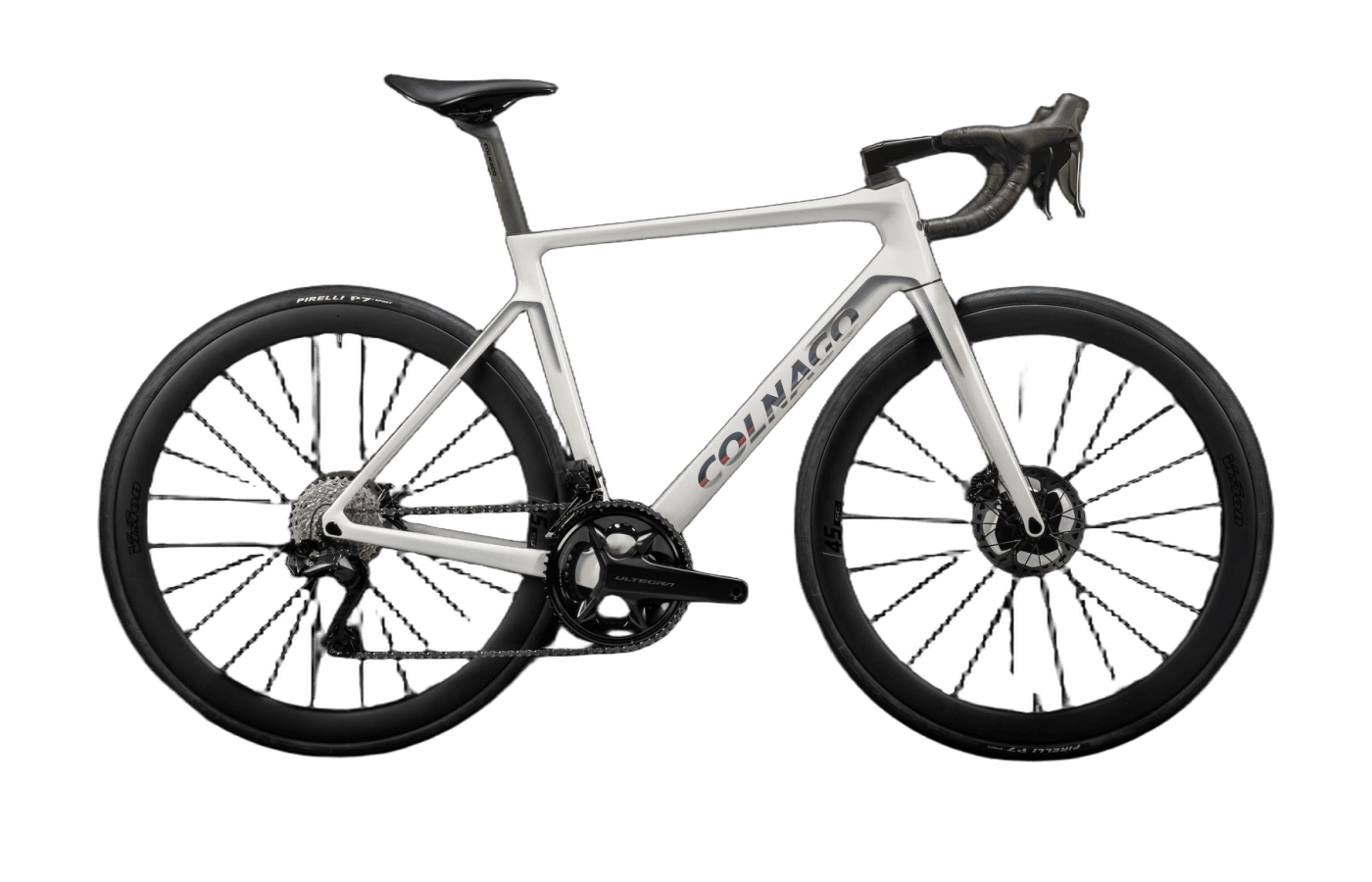
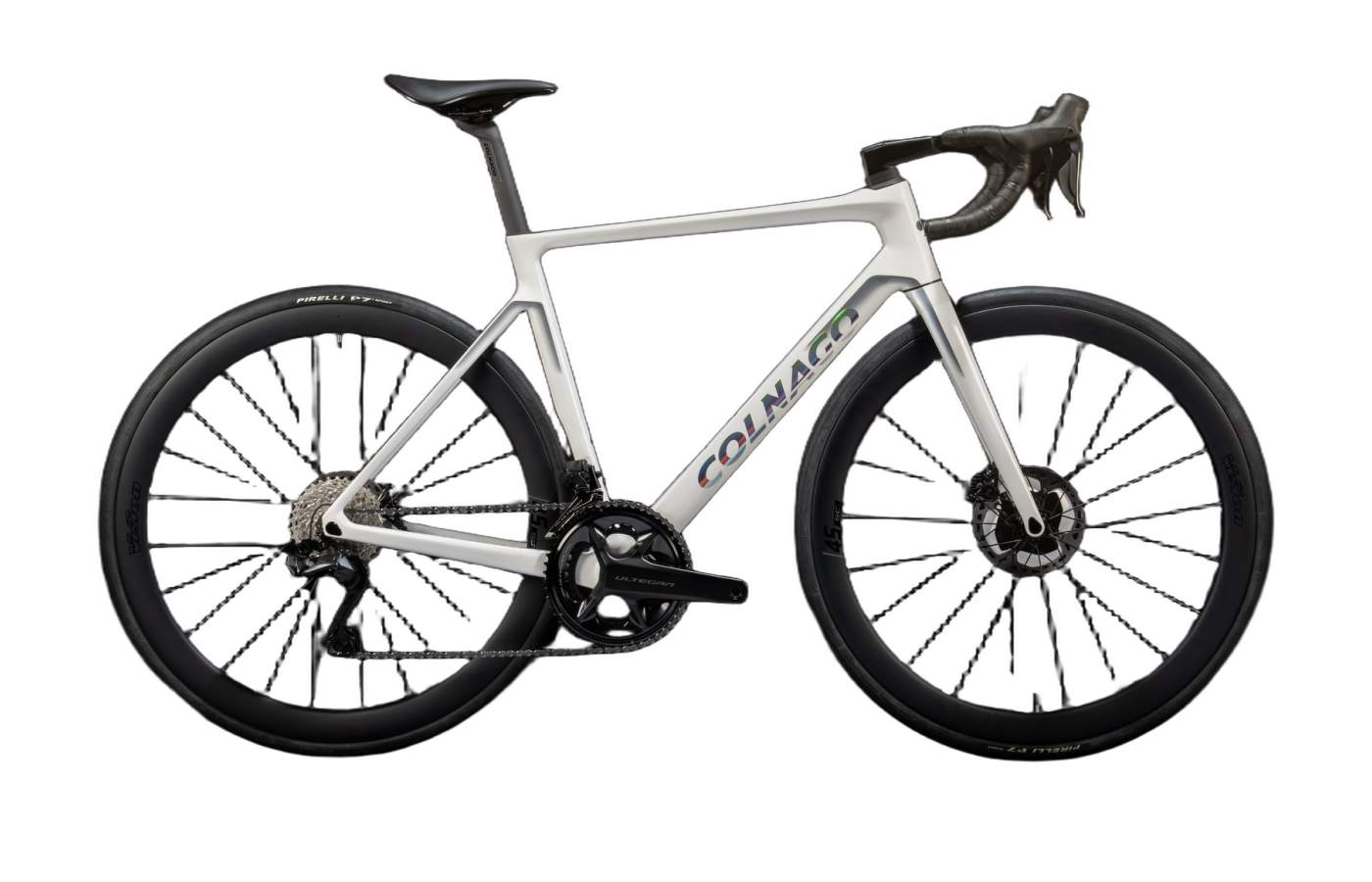
The Colnago V4 sits just below the V4Rs in the brand’s road race range, but it is not a throwback or softened endurance model. It uses the same broader V4-generation thinking as the flagship bike: a slimmer, more aerodynamic front end, revised fork shaping, fully integrated hose and cable routing through the stem and front end, and the same geometry platform as the V4Rs. Where it diverges is in execution. Colnago positions the V4 as the more attainable and more broadly compatible version of its all-round race bike, pairing that race-focused chassis with conventional cockpit choices and compatibility that extends to mechanical drivetrains rather than limiting the bike to electronic-only setups.
That makes the V4 distinctive in the current market. Rather than chasing an extreme aero identity or moving toward endurance-bike comfort cues, it remains a modern all-round race bike intended for riders who want sharp handling, high stiffness, and contemporary integration without the cost and complexity of a halo superbike build. In practical terms, it replaces the older V3-era approach with the newer V4Rs-derived platform, giving buyers access to Colnago’s latest race-bike fit and front-end design in complete-bike packages built around more mainstream groupsets.
Spec sheet.
Every component shipped with this build.
Geometry & fit.
2 sizes published.
The V4’s geometry is firmly modern race-bike territory. Across the listed sizes, reach grows from 377 mm to 410 mm while stack moves from 522 mm to 612 mm, giving the bike a long-and-low fit profile consistent with its V4Rs-derived positioning. Head tube angles steepen from 71 degrees in the smallest size to 73.1 degrees in the larger sizes, while seat tube angles relax from 75 degrees to 73 degrees as sizes increase. That pattern is typical of performance road bikes designed to preserve consistent weight distribution and steering feel across the size range.
A 408 mm chainstay is notably short for an all-round road race bike, pointing to quick acceleration and a more responsive rear end rather than ultra-stable endurance handling. The 72 mm bottom bracket drop is also in line with contemporary race geometry, balancing cornering stability with pedal clearance. Combined with the relatively stretched effective top tube figures, the V4 should suit riders looking for an aggressive position and direct handling, not an upright or especially forgiving fit.
Where the handlebar sits relative to the bottom bracket — the single most important fit pair.
01Fit geometry4 values
02Component geometry4 values
03Handling geometry5 values
Which size should I buy?
Slide your height to see the recommended size. GearWise's fit algorithm works from the published stack, reach, and ETT — the brand's own recommendation may differ.
→Calculated from GearWise's own stack / reach / ETT algorithm — the brand's size chart may recommend a different size, and a proper bike fit beats any calculator.
The lineup.
3 builds, ranging $4,200 – $5,500.
The V4 is offered in three complete builds: SRAM Rival AXS, Shimano 105 Di2, and Shimano Ultegra Di2. That spread makes the bike’s intent clear. Rather than reserving the frame for only top-tier superbike specifications, Colnago uses the V4 to bring its current race platform to more attainable electronic groupsets, with Ultegra Di2 serving as the premium option and Rival AXS and 105 Di2 covering the more value-oriented end of the range.
The main distinction between these builds is drivetrain tier and ecosystem choice rather than a change in the underlying character of the bike. Riders choosing between them are effectively deciding how much they want to spend for shifting refinement, weight savings, and brand preference between SRAM AXS and Shimano Di2. The notable point is that all three builds place a clearly race-focused frame into relatively mainstream spec territory, which is central to the V4’s role in the lineup.