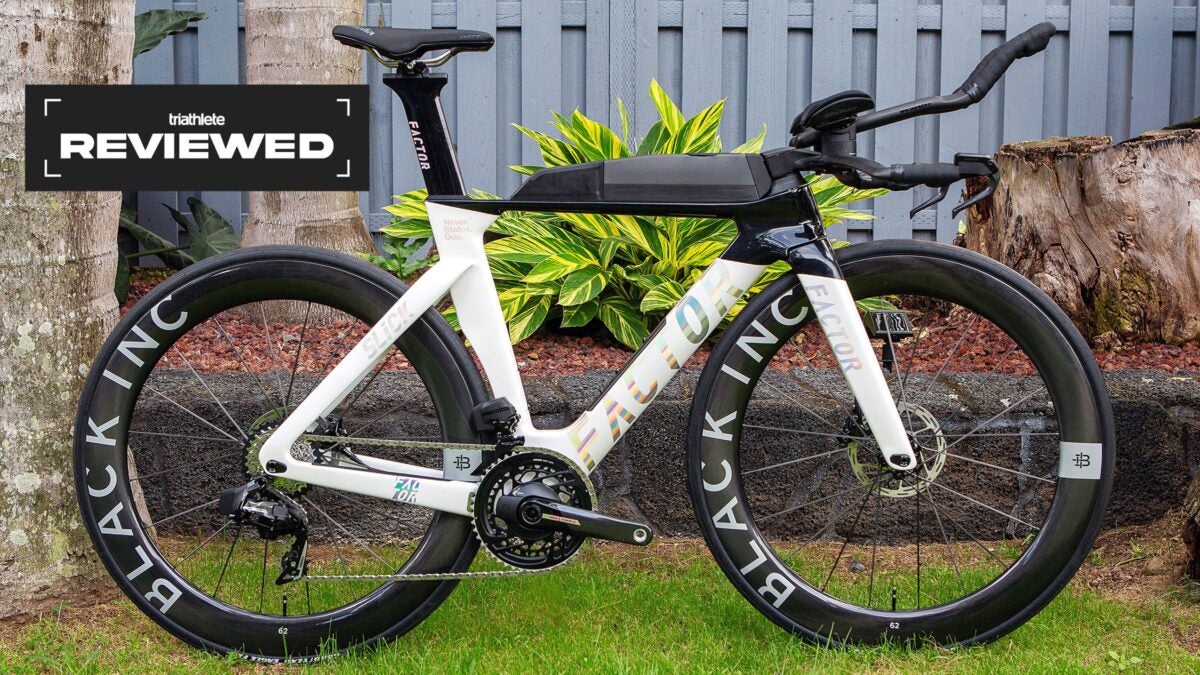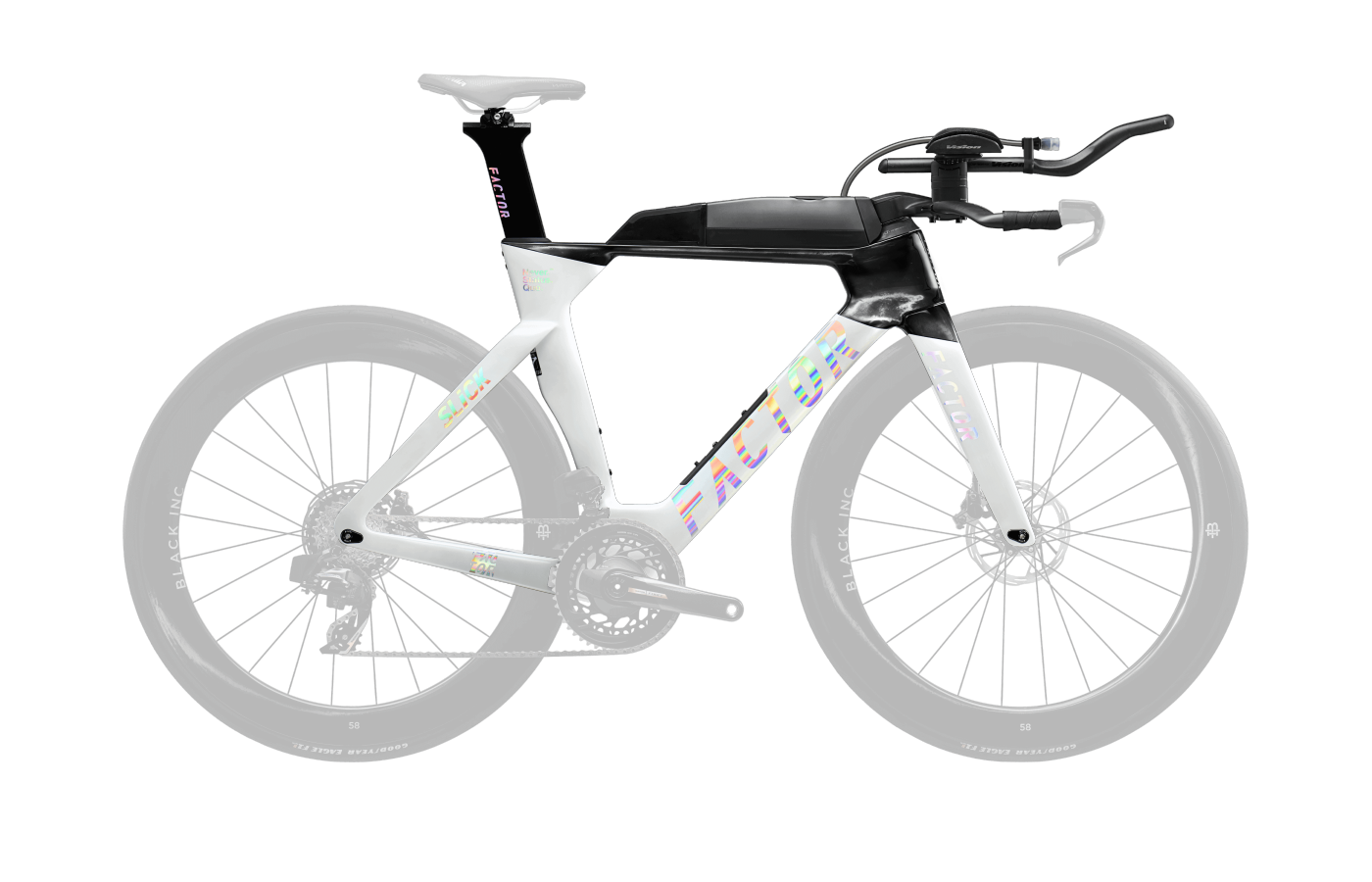
The 2025 Factor SLiCK is not a mild update of the previous bike but a full repositioning of the platform. Where the older SLiCK straddled the line between time trial and triathlon use, this generation is clearly aimed at long-course triathlon, with integrated storage, top-tube hydration and nutrition mounts, and a fit concept built around broader adjustability. Factor also moved away from the old Twin Vane Evo fork layout to a more conventional integrated fork with a standard round steerer/cockpit interface, a notable decision in a category that often relies on proprietary front ends. Combined with fully internal routing, disc brakes, thru-axles, a T47 bottom bracket, and electronic-only compatibility, the new SLiCK is designed to be easier to fit, travel with, and live with than many highly integrated tri bikes.
Just as important, the chassis itself was materially reworked. Factor lowered stack, expanded reach options, added smaller sizing, and tuned the bike toward a slightly more stable disposition with longer rear-center dimensions and more trail than before. The result is a tri-specific race bike that still carries some of Factor's UCI-informed design discipline, rather than chasing the most extreme non-UCI shapes on the market. That places the SLiCK in an interesting part of the segment: it is a modern superbike-style tri platform, but one that emphasizes fit flexibility, low weight, and practical ownership alongside aerodynamic performance rather than all-out packaging extremism.
Where to get it.
1 retailer · size 54.
Spec sheet.
Every component shipped with this build.
Geometry & fit.
5 sizes published.
The geometry points to a tri bike that prioritizes a low front end and a broad fit window without becoming especially radical. Across the five sizes, stack runs from 470 mm in the 48 to 570 mm in the 58, while reach spans 385 to 445 mm in 15 mm steps. That gives fitters a wide spread to work with, and the relatively low stack numbers support aggressive aero positions. Factor pairs that with a 76-degree seat tube angle and an adjustable seatpost system described in review coverage as offering an effective range from roughly 73 to 79 degrees, which should help riders shift between a more forward tri position and a slightly less extreme setup.
Handling numbers suggest a deliberate move toward stability without making the bike sluggish. Chainstays are 405 mm across the size range, and wheelbase grows from 968 mm to 1044 mm as sizes increase. The head tube angle is 71.5 degrees on the 48 and 72.5 degrees on the other sizes, with trail at 61-62 mm, figures that generally support calm, predictable steering rather than twitchy front-end behavior. In practice, that should translate to a bike that holds a line well in the aerobars and feels composed through corners, while the low stack and longish reach options still let strong riders achieve an aggressive race position.
Where the handlebar sits relative to the bottom bracket — the single most important fit pair.
01Fit geometry4 values
02Component geometry1 values
03Handling geometry7 values
Which size should I buy?
Slide your height to see the recommended size. GearWise's fit algorithm works from the published stack, reach, and ETT — the brand's own recommendation may differ.
→Calculated from GearWise's own stack / reach / ETT algorithm — the brand's size chart may recommend a different size, and a proper bike fit beats any calculator.
The lineup.
3 builds, ranging $7,999 – $11,399.
The published range is straightforward, with three builds: Premium SRAM RED with power meter, Premium SRAM Force with power meter, and a SRAM Force with power meter option. Specific component details and pricing splits between those builds are not provided here, but the lineup clearly centers on SRAM electronic drivetrains and includes power measurement throughout the range, which is appropriate for a triathlon bike aimed at serious racing and training use.
What stands out more than the individual build distinctions is the underlying platform they share. Every build gets the same tri-specific frame with disc brakes, fully internal routing, electronic-only compatibility, a T47 bottom bracket, thru-axles, integrated storage, and the standard round-steerer front end that broadens cockpit choice. Based on the available review data, the complete-bike price point starts around $7,200, which reviewers regarded as relatively competitive given the bike's integrated hydration/storage package, low claimed weight, and less proprietary fit hardware.


From the press.
2 reviews from the cycling press.
Reviewers describe the SLiCK as a notably light, lively tri bike that stands out more for responsiveness and predictable handling than for sheer straight-line isolation. Triathlete tested the bike in Kona and came away impressed by its cornering, ride quality, and sizing range, calling out a complete-bike weight of 19 lb 15 oz and a $7,200 price as part of the appeal. Across the review synthesis, the bike is repeatedly characterized as "snappy," with excellent horizontal stiffness and a ride feel that is more engaging than many heavier triathlon superbikes. That showed up especially on rolling terrain, where testers felt it responded well to accelerations and out-of-saddle efforts.
Handling feedback is similarly positive but nuanced. Reviewers say the SLiCK tracks confidently up to about 30 mph and corners better than average for the category, with a consistent line and good confidence off the brakes. At the same time, it is not described as a fully "autopilot" bike on fast descents or in erratic crosswinds; compared with some more extreme non-UCI tri bikes, it sits closer to the middle of the pack for planted high-speed stability. The main criticism centers on the integrated hydration setup: reviewers liked having hydration and storage included at this price, but noted that the 600 ml top-tube reservoir is relatively small and less refined than the best systems, with comments about splash control and packaging compromises. Reviewers also noted that the UCI-legal design likely gives up some aerodynamic potential versus triathlon-only bikes built without those constraints.