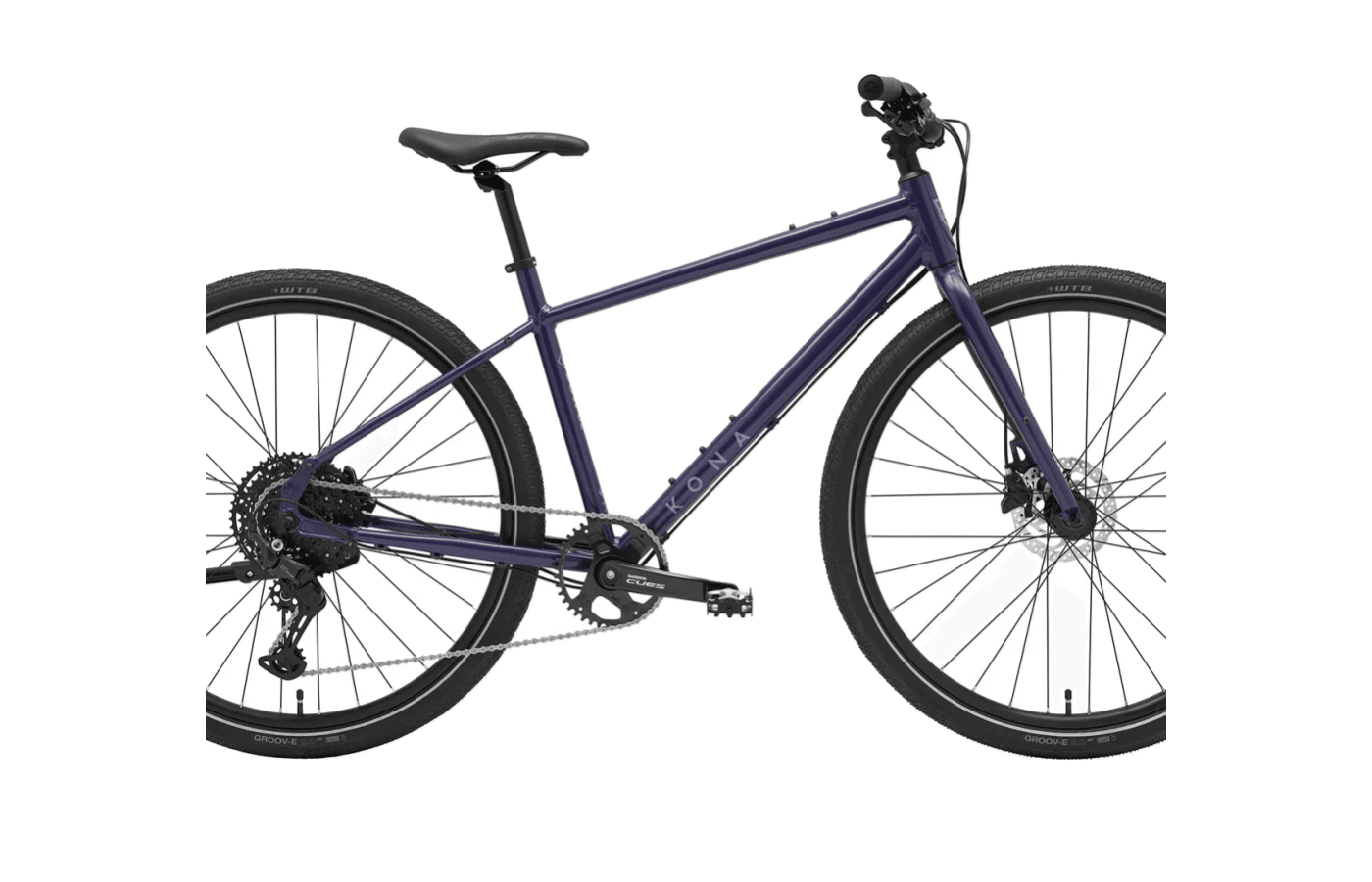
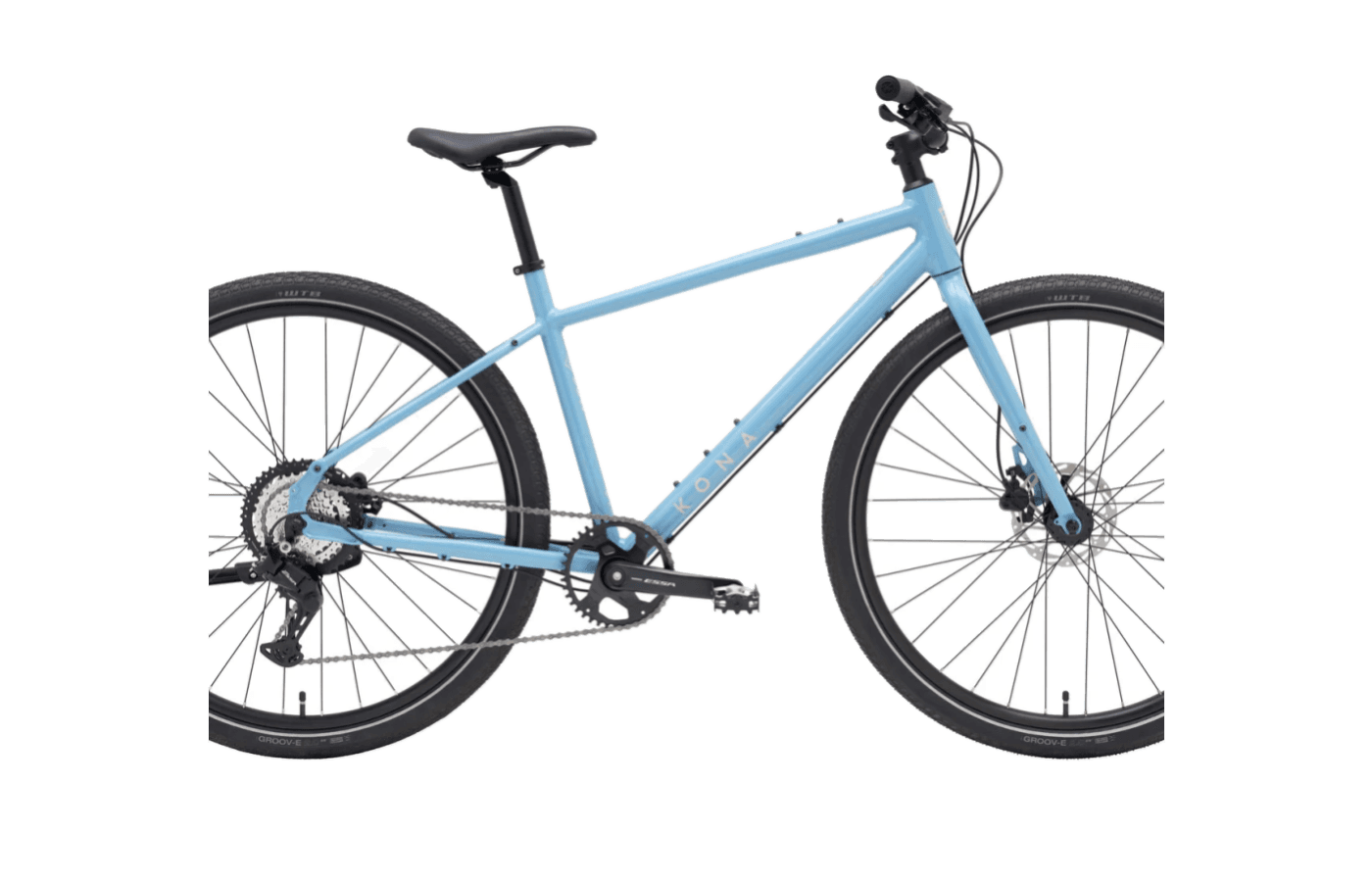
Dew
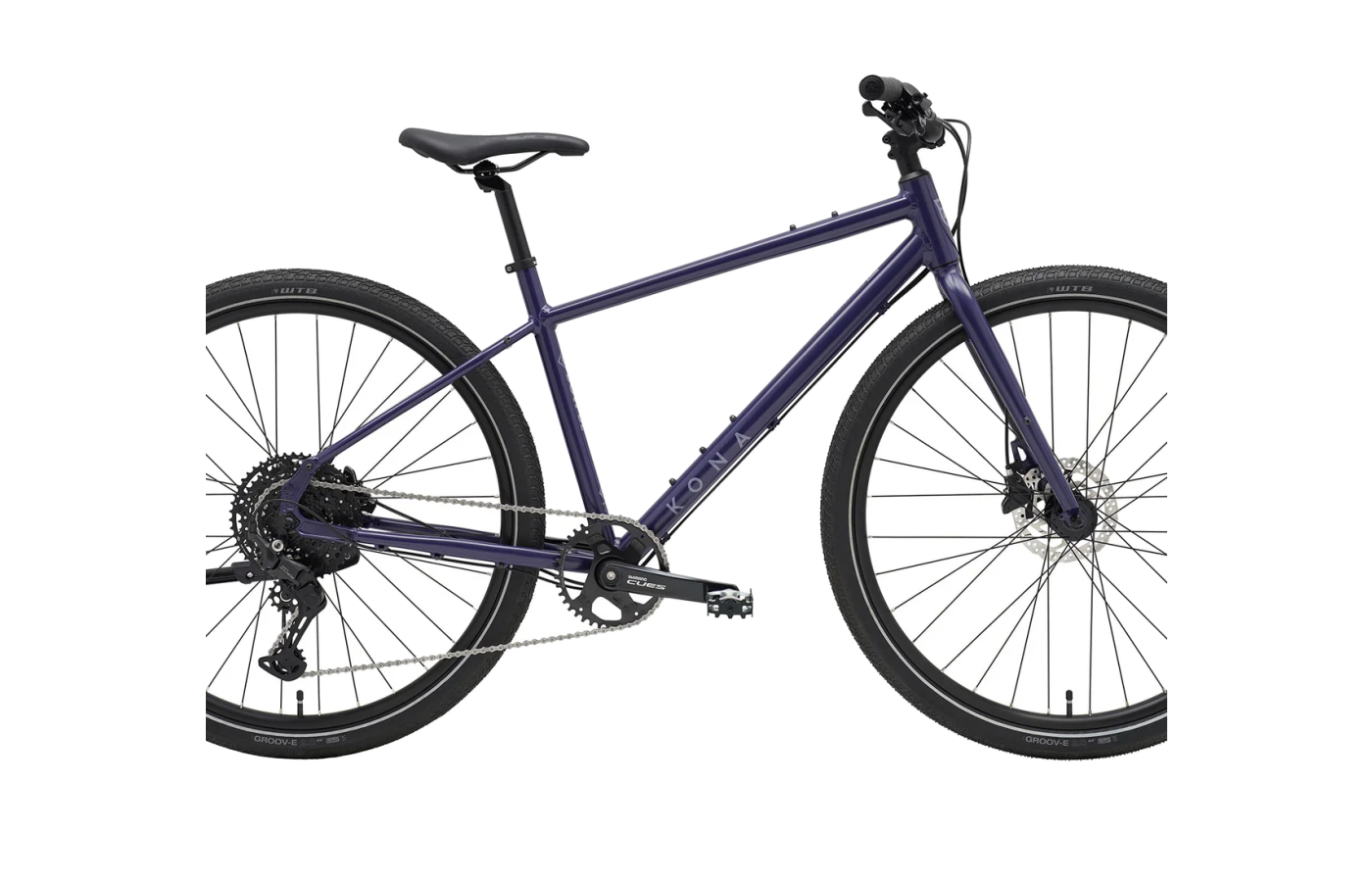
The 2026 Kona Dew marks a genuine reset for Kona’s urban/fitness platform rather than a routine annual update. Kona reworked the bike around a new aluminum frame, a rigid aluminum fork, and what it calls commuter geometry, with the most visible shift being the move from the previous generation’s 650x47c setup to 29x2.0 tires. That change, combined with a 69° head angle, 470 mm chainstays, and a longer, lower overall stance, pushes the Dew toward a more stable, MTB-influenced interpretation of the everyday commuter. It remains a practical, rigid, disc-brake bike, but the new platform is clearly designed to feel more planted and capable on rough pavement, broken bike paths, and mixed urban surfaces.
What distinguishes this generation is the way Kona has modernized the Dew without turning it into a flat-bar gravel bike or a suspension hybrid. The lower stack and shorter head tubes compared with the prior Dew suggest a more purposeful riding position, while the long rear end and big-volume tires keep the handling calm and utility-focused. The base model still uses quick-release disc architecture with 135 mm rear spacing, so this is not a premium-tech commuter platform, but it sits in an important middle ground: more robust and contemporary than a traditional city hybrid, yet simpler and more affordable than many adventure-oriented urban bikes.
Geometry & fit.
4 sizes published.
The new Dew’s geometry points to a stable, confidence-first ride. Across the size range, the head tube angle is 69° and the chainstay length is 470 mm, both notably conservative numbers for an urban fitness bike. That combination, along with wheelbases of 1098 mm in S, 1143 mm in M, 1187 mm in L, and 1231 mm in XL, should produce steady tracking and predictable steering rather than quick, twitchy responses. The 70 mm bottom bracket drop also helps keep the rider centered in the bike, reinforcing a planted feel on pavement and light mixed-surface use.
Fit-wise, the bike is relatively long for its category, with reach figures of 400 mm (S), 430 mm (M), 460 mm (L), and 490 mm (XL). Stack numbers of 539 mm to 651 mm are paired with Kona’s stated lower front end and shorter head tubes versus the old Dew, indicating a more forward, active position than many upright hybrids. The consistent 73° seat tube angle keeps pedaling position neutral and familiar, while the long effective top tubes—565 mm in S up to 695 mm in XL—suggest that riders will get a roomy cockpit suited to covering distance and maintaining control with the larger 29x2.0 tire package.
Where the handlebar sits relative to the bottom bracket — the single most important fit pair.
01Fit geometry6 values
03Handling geometry8 values
Which size should I buy?
Slide your height to see the recommended size. GearWise's fit algorithm works from the published stack, reach, and ETT — the brand's own recommendation may differ.
→Calculated from GearWise's own stack / reach / ETT algorithm — the brand's size chart may recommend a different size, and a proper bike fit beats any calculator.
The lineup.
2 builds, ranging $799 – $899.
The available-build information is too limited to give a meaningful breakdown of the range. The provided data indicates two builds, listed as Dew DL and Dew, but no pricing or component-level specifications are included here.
What can be said is that the platform itself centers on an aluminum frame, rigid aluminum fork, and 29x2.0 tires, with the base Dew specifically noted as using a Kona 6061 aluminum fork and retaining quick-release disc, 135 mm rear spacing. Without drivetrain, brake, wheel, and price details for each build, though, a proper comparison between the Dew and Dew DL is not possible.