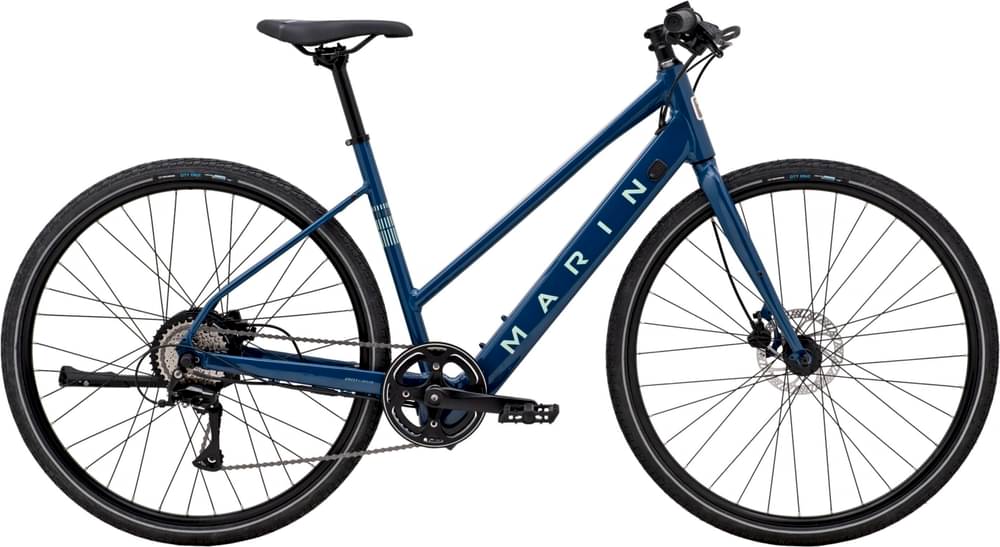
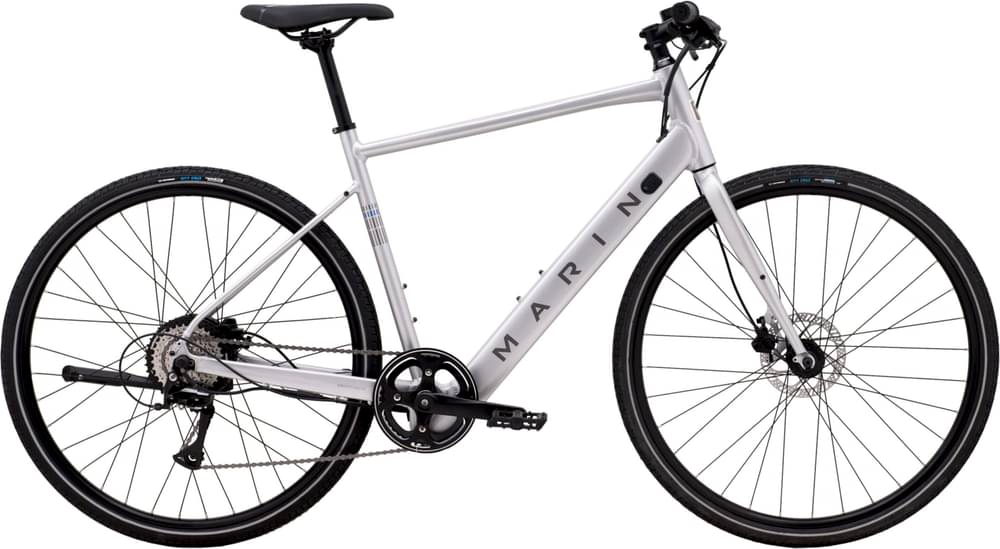
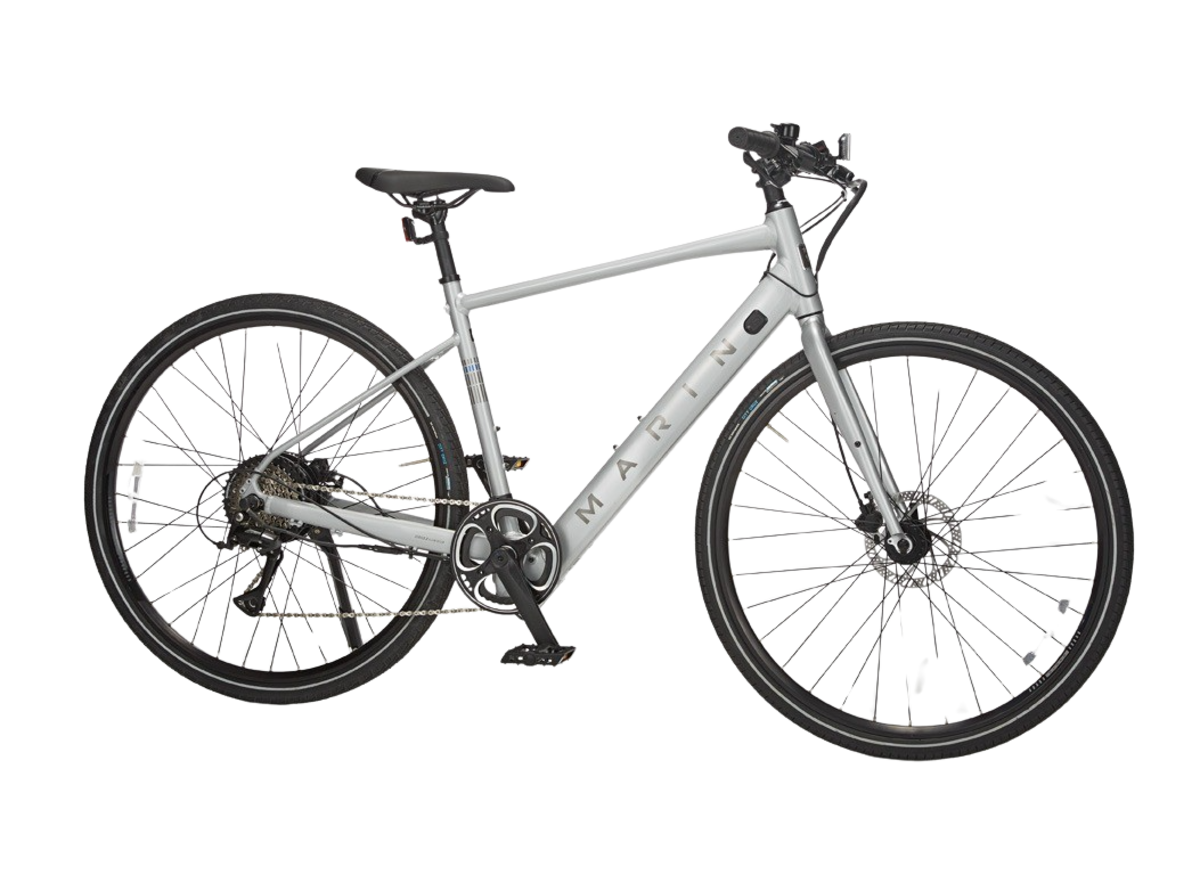
Fairfax E
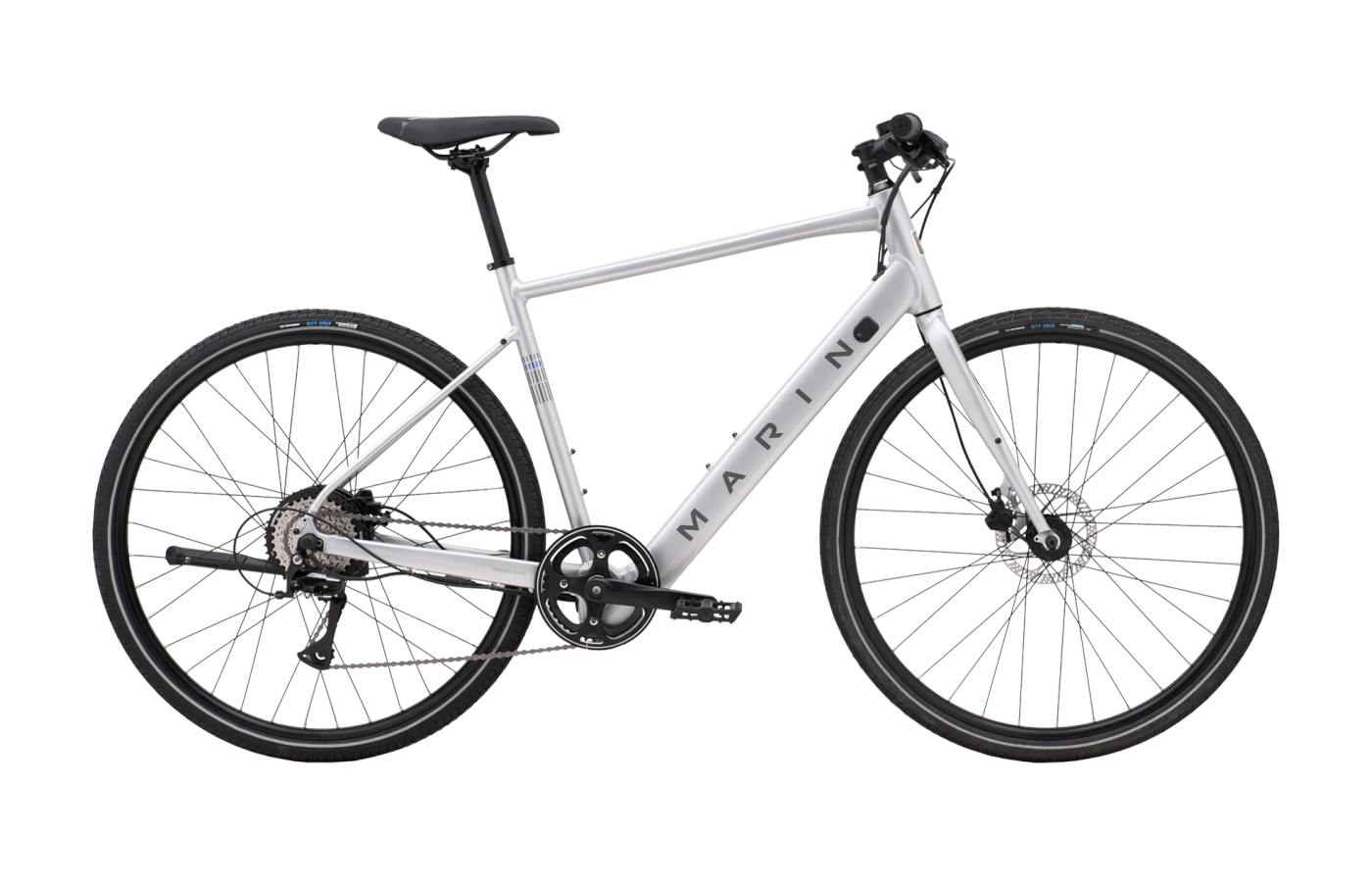
The Marin Fairfax E is a fitness-oriented urban e-bike built around a notably simple brief: keep the feel of a conventional flat-bar hybrid, then add modest electric assist rather than redesigning the bike around motor power. Introduced for 2024 and carried forward unchanged into 2025, it uses a Series 2 aluminum frame, rigid straight-blade aluminum fork, integrated 340 Wh downtube battery, internal routing, and practical mounts for racks, fenders, and a kickstand. Its core hardware stays consistent across the generation: a Bafang 250 W rear-hub motor rated at 40 Nm, hydraulic disc brakes, and 700x40 tires.
What makes the Fairfax E distinctive is that it sits at the lighter, lower-powered end of the commuter e-bike market. Rather than chasing high torque, suspension forks, or oversized batteries, Marin has gone with a rigid 700c platform that prioritizes efficiency, straightforward maintenance, and a more bicycle-like ride character. That places it squarely between a traditional fitness hybrid and a heavier utility commuter: well suited to fast city riding, short-to-moderate commutes, and recreational paved rides, but less convincing for steep terrain, long-range use, or riders expecting strong off-the-line acceleration.
Geometry & fit.
4 sizes published.
The Fairfax E's geometry is conservative and stable for a fitness hybrid. Across sizes, the head tube angle stays at 70.5 degrees, the seat tube angle at 73.5 degrees, chainstays at 445 mm, and BB drop at 70 mm. That combination points to predictable steering rather than quick, nervous handling. The fairly long 445 mm rear center and wheelbase figures of 1070 mm in size S, 1097 mm in M, 1123 mm in L, and 1148 mm in XL support straight-line stability and calm behavior under braking, which suits an urban e-bike carrying extra system weight.
Fit-wise, the numbers put the rider in a moderately sporty but not aggressive position. Reach grows from 399.5 mm in S to 455 mm in XL, while stack runs from 571.3 mm to 637.3 mm, giving the bike a balanced flat-bar posture that is more engaged than an upright comfort bike but still approachable for everyday riding. Effective top tube lengths from 569 mm to 644 mm reinforce that fitness-bike stance. In practice, the geometry should feel familiar to hybrid riders: efficient on pavement, stable at speed, and easy to manage in traffic, though not especially sharp or playful.
Where the handlebar sits relative to the bottom bracket — the single most important fit pair.
01Fit geometry6 values
03Handling geometry7 values
Which size should I buy?
Slide your height to see the recommended size. GearWise's fit algorithm works from the published stack, reach, and ETT — the brand's own recommendation may differ.
→Calculated from GearWise's own stack / reach / ETT algorithm — the brand's size chart may recommend a different size, and a proper bike fit beats any calculator.
The lineup.
2 builds, ranging $1,599.
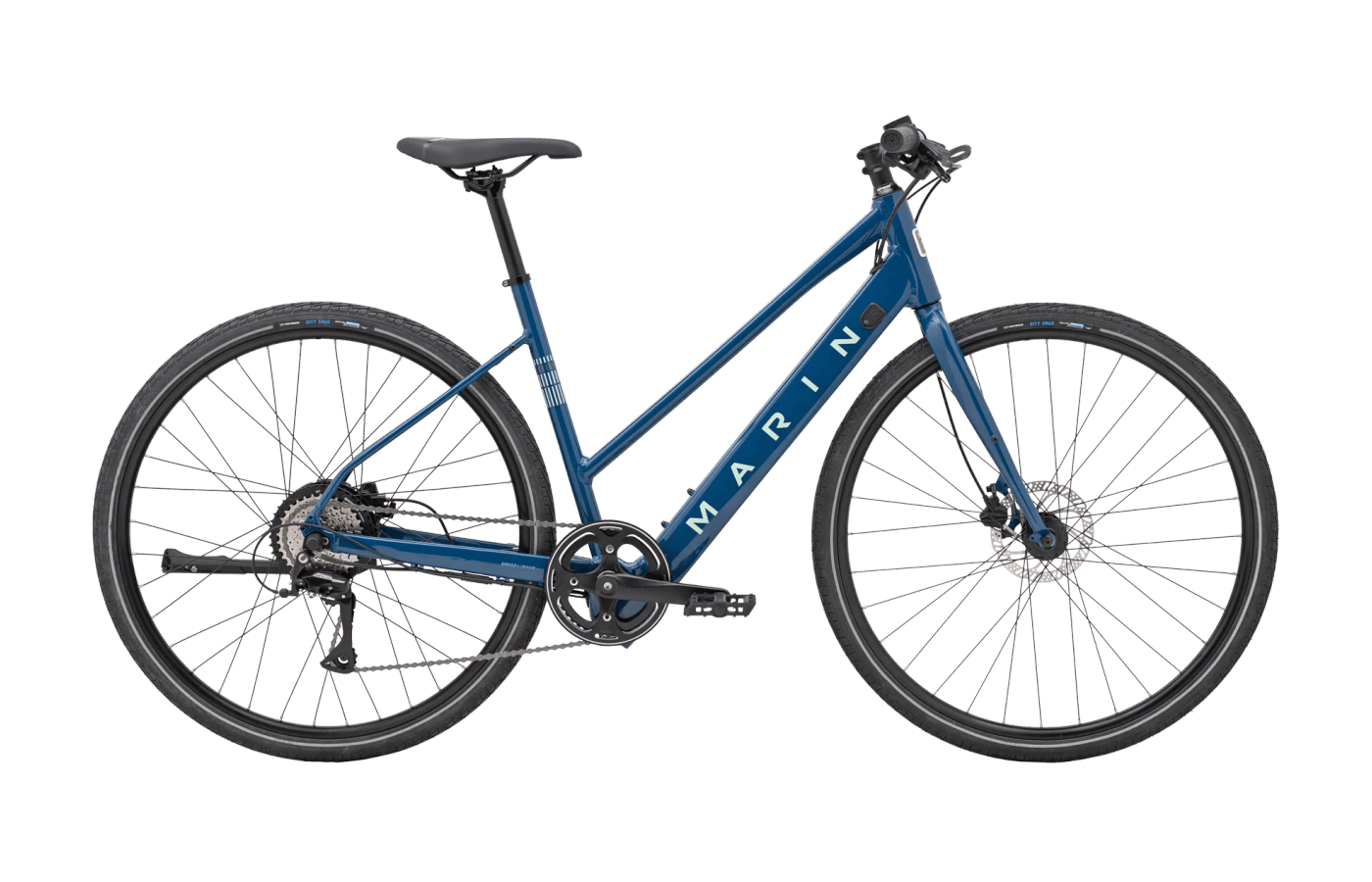
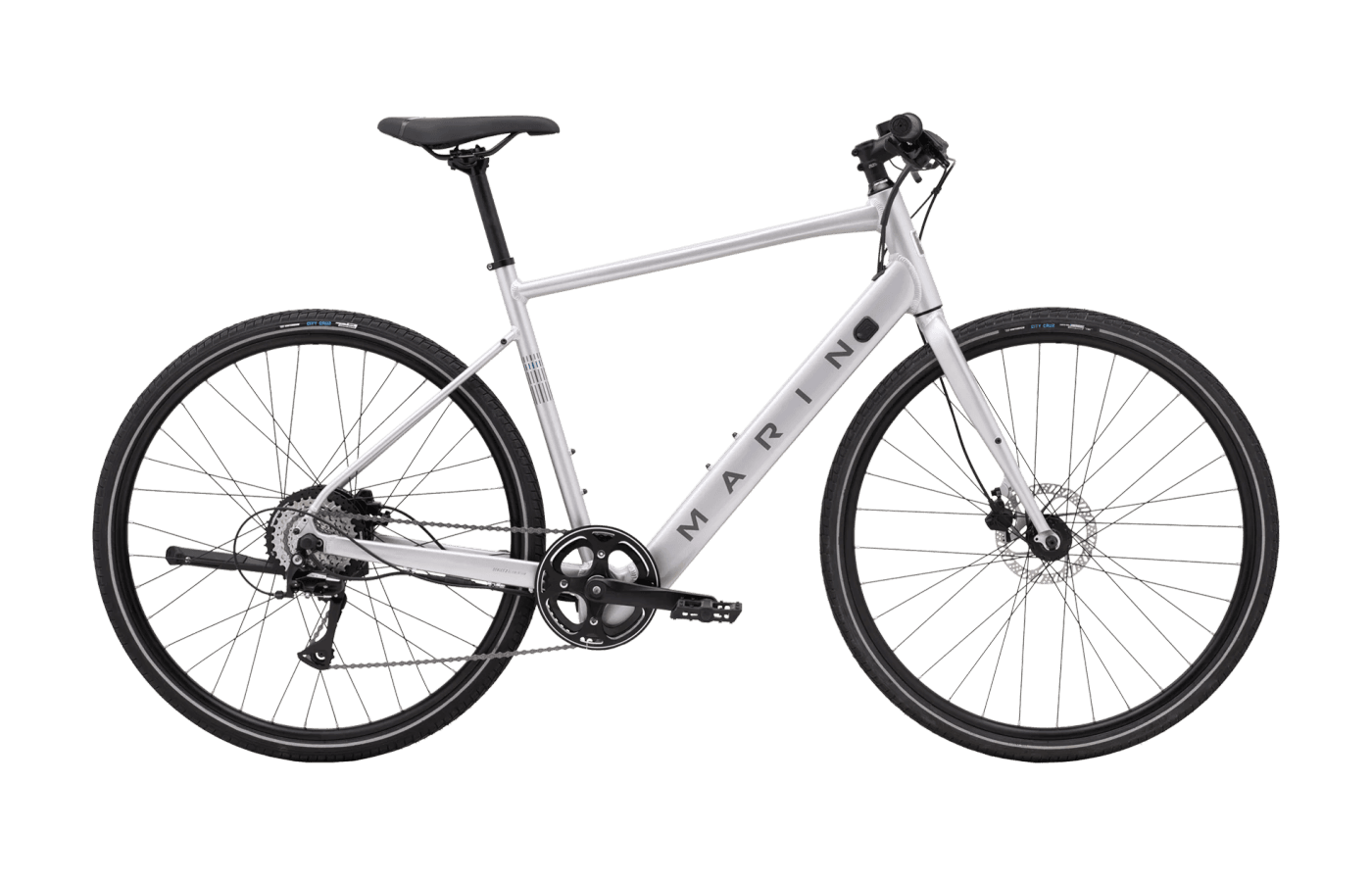
This generation is offered in two versions: the standard Fairfax E and the step-through Fairfax E ST. The available data points to the same core equipment across both, with the ST listed at £1,562 in one market and the standard model at $2,146 in another. Both use the same Bafang 250 W rear-hub motor with 40 Nm torque, 340 Wh integrated battery, rigid aluminum chassis, 700c wheels, Tektro hydraulic disc brakes, and Shimano Acera/Altus 1x8 drivetrain.
The main choice is therefore frame format rather than performance level. Riders wanting easier mounting and dismounting will gravitate to the ST, while the standard frame will appeal to those who prefer a conventional fitness-bike silhouette. Spec-wise, the highlights are the hydraulic brakes and practical frame mounts, while the compromises are the modest battery size and basic 1x8 transmission. There is no evidence here of a multi-tier range with major component upgrades, so the Fairfax E is best understood as a single-spec platform offered in two frame styles.
From the press.
4 reviews from the cycling press.
Reviewers consistently describe the Fairfax E as a natural-feeling, light-footed e-bike that avoids the heavy, over-assisted character common in urban hub-drive models. Opticycles calls the bike "simple and dependable" and says the assist feels "mellow and predictable," with the rider having to "pedal into pace rather than being shoved along." Consumer Reports reaches a similar conclusion from a different angle, noting that the bike rides smoothly, steers well, and feels composed in typical city use. Across reviews, the 700x40 mm tires are repeatedly identified as a key part of the package, adding enough compliance to smooth rough pavement without dulling the bike's fitness-bike character.
The limitations are also clear. The 40 Nm rear hub motor is widely seen as adequate rather than punchy, especially on steeper hills or in stop-start situations where some riders may want stronger acceleration. Consumer Reports notes that the bike can feel a little sluggish on climbs when assist is reduced or off, which is unsurprising given its roughly 42-43 lb weight. Reviewers also point to the Shimano Acera/Altus 1x8 drivetrain and 11-40T cassette as a constraint at the top end, with a tendency to spin out when riding well above the assist limit. Value assessments are mixed: some see strong everyday usefulness thanks to the frame quality, hydraulic brakes, and utility mounts, while others note that competing e-fitness bikes can undercut it on price.