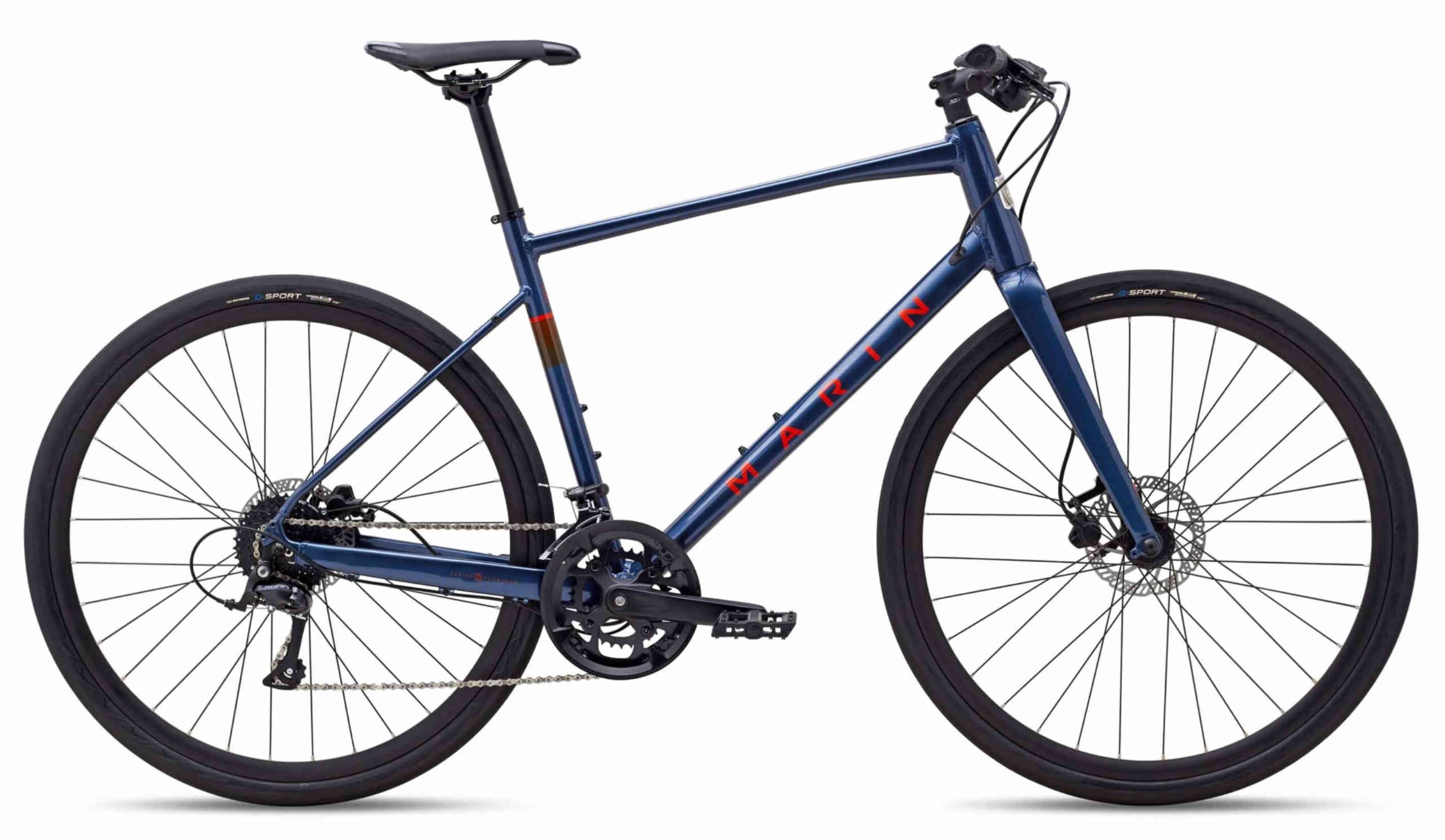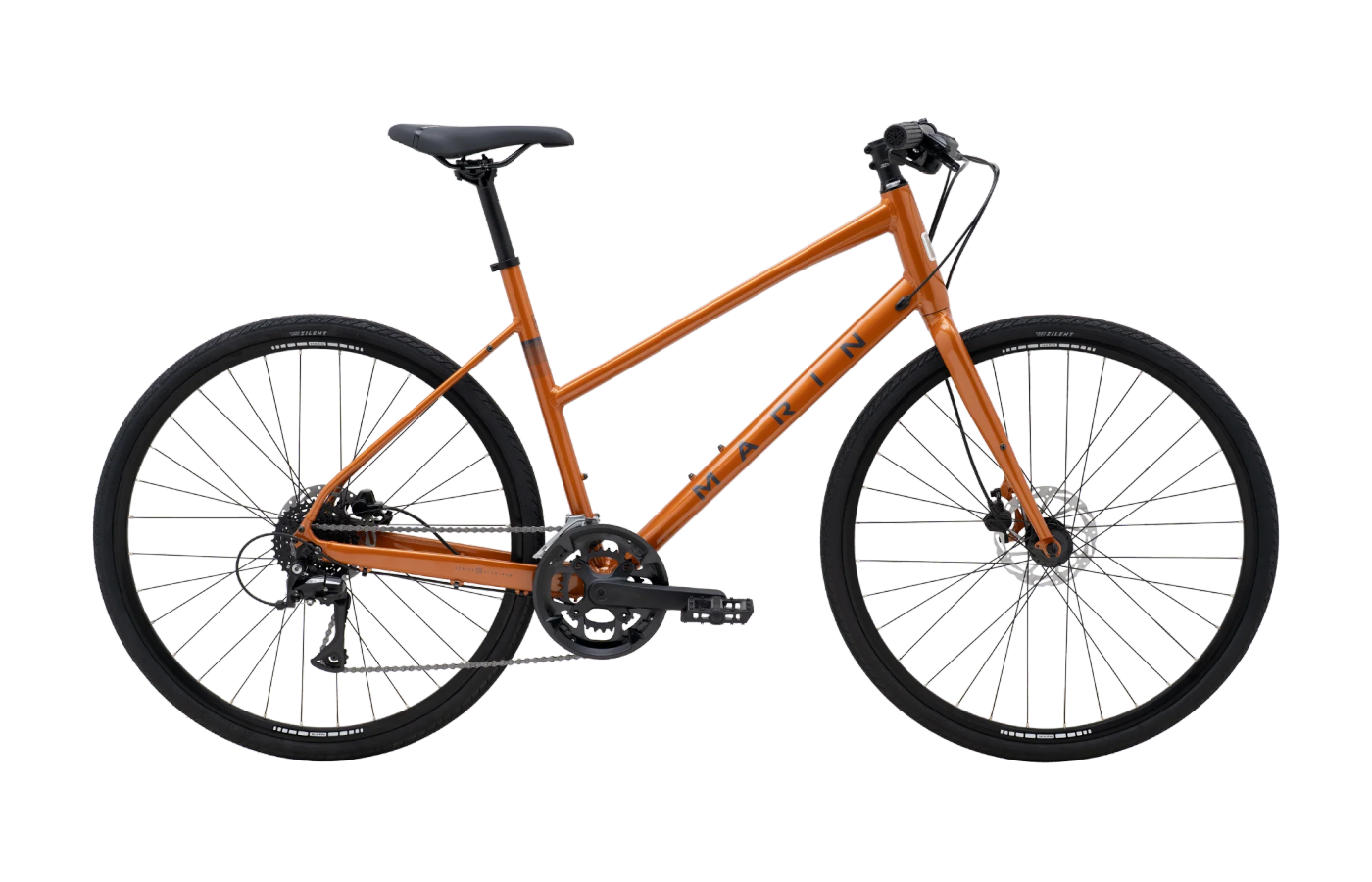
The 2022-present Marin Fairfax is a modern fitness hybrid that moved the line toward a more stable, utility-friendly platform rather than a lightly modified flat-bar road bike. This generation is defined by revised geometry shared across the family, including a notably slack 70.5° head angle, 445mm chainstays, 70mm bottom bracket drop, and a longer wheelbase/reach layout than the previous Fairfax. Marin also standardized the platform around practical details such as forged quick-release disc dropouts, rear kickstand mounts, internal routing, and rack/fender compatibility, making the bike as relevant for daily transport as for recreational fitness riding.
Within the range, the frame and fork choices clearly separate the models. Fairfax 2 uses the Series 2 aluminum frame with a straight-blade alloy fork, while Fairfax 3 adds a Series 3 frame and carbon fork, though the older higher-end flat-mount/12mm thru-axle fork arrangement is gone in favor of a simpler QR setup. That change makes the current Fairfax less of a quasi-performance flat-bar road bike and more of a durable, accessible hybrid with broad appeal. In the market, it sits against bikes such as the Trek FX and Specialized Sirrus families, but distinguishes itself by pairing conservative, confidence-oriented geometry with practical mounts and, on the better trims, unusually strong value in braking and gearing.
Where to get it.
1 retailer · size XS.
Spec sheet.
Every component shipped with this build.
Geometry & fit.
4 sizes published.
The current Fairfax geometry is unusually calm for a fitness hybrid, and the numbers explain why. Across sizes, the head tube angle is 70.5°, paired with 445mm chainstays and a 70mm bottom bracket drop. On a size Medium, that produces a 1096.7mm wheelbase with 420mm reach and 590mm stack. Compared with racier flat-bar road bikes, those figures point to a more upright position and a longer, more planted chassis. The result is steadier steering, easier low-speed balance, and less nervous behavior on rough pavement or when carrying commuting gear.
Fit-wise, the Fairfax is biased toward comfort and control rather than an aggressively stretched posture. The Medium's 594.8mm effective top tube and 590mm stack, along with the same 73.5° seat tube angle used across the range, should place most riders in a neutral position that works well for visibility in traffic and longer steady rides. The long 445mm rear center also helps keep weight distribution predictable, which supports the bike's stable feel but makes it less snappy than a shorter-wheelbase fitness bike. Overall, the geometry favors riders who want confidence, easy handling, and all-day usability over sharp road-bike reflexes.
Where the handlebar sits relative to the bottom bracket — the single most important fit pair.
01Fit geometry6 values
02Component geometry3 values
03Handling geometry7 values
Which size should I buy?
Slide your height to see the recommended size. GearWise's fit algorithm works from the published stack, reach, and ETT — the brand's own recommendation may differ.
→Calculated from GearWise's own stack / reach / ETT algorithm — the brand's size chart may recommend a different size, and a proper bike fit beats any calculator.
The lineup.
5 builds, ranging $599 – $799.
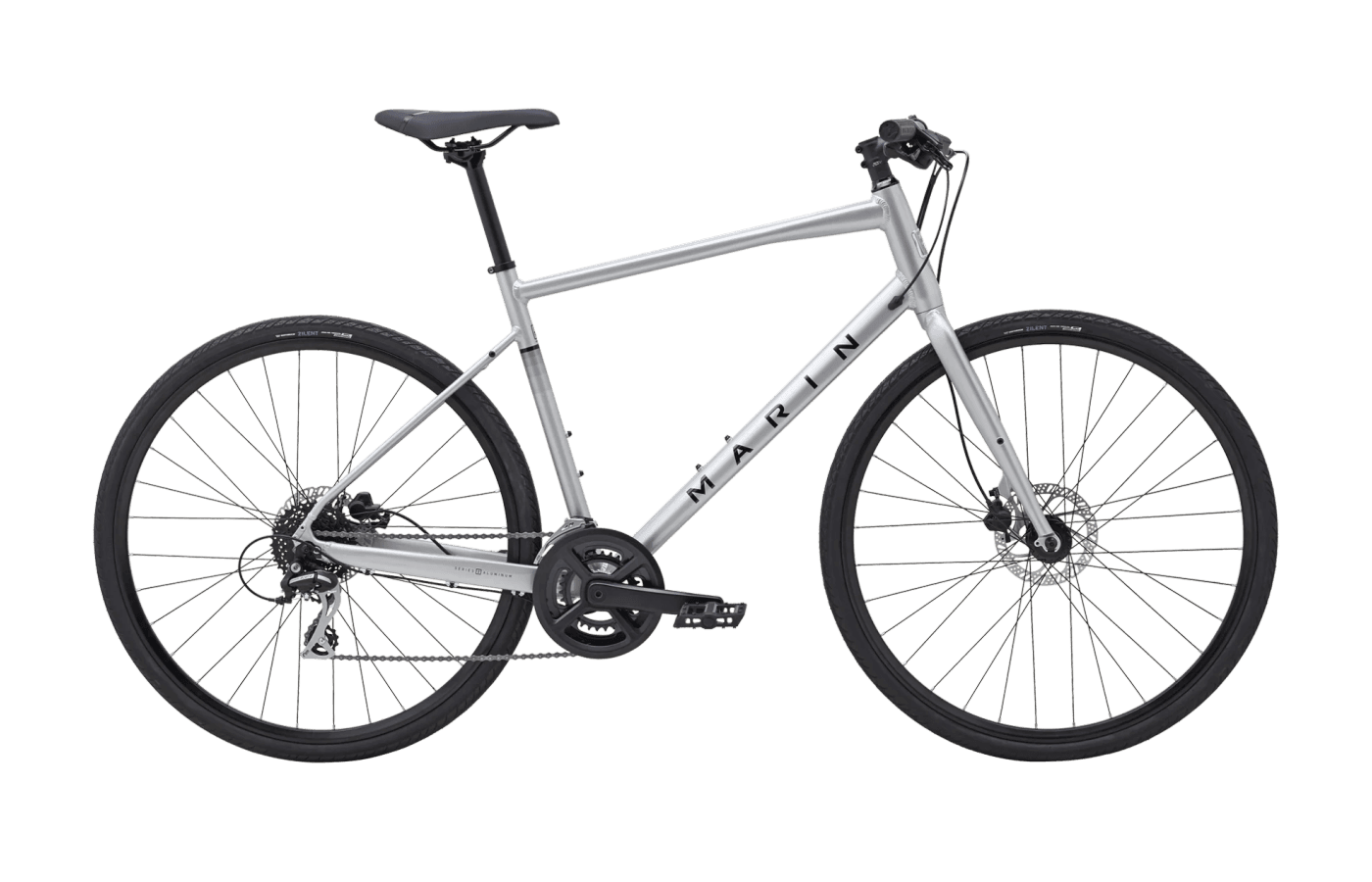
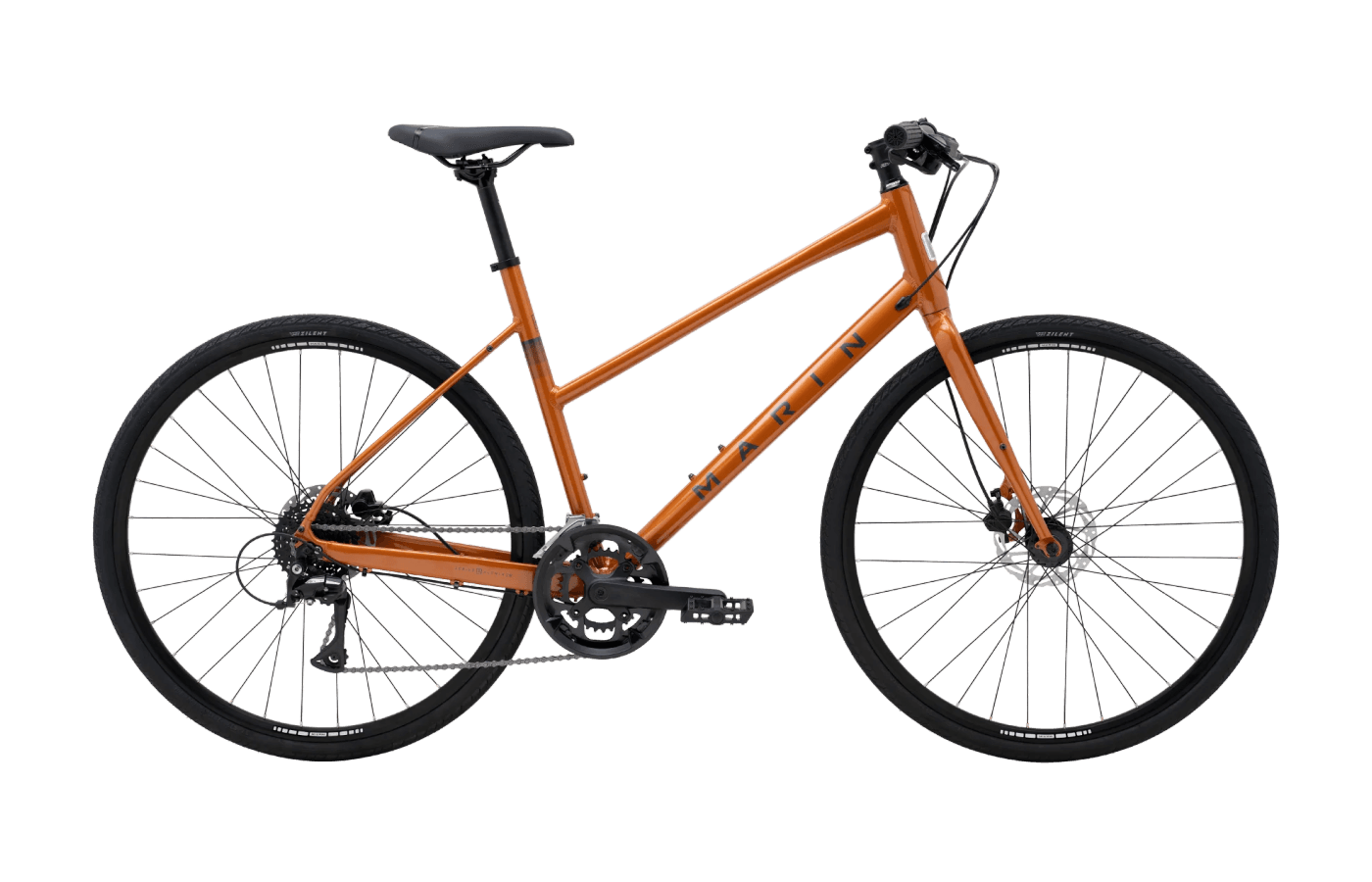
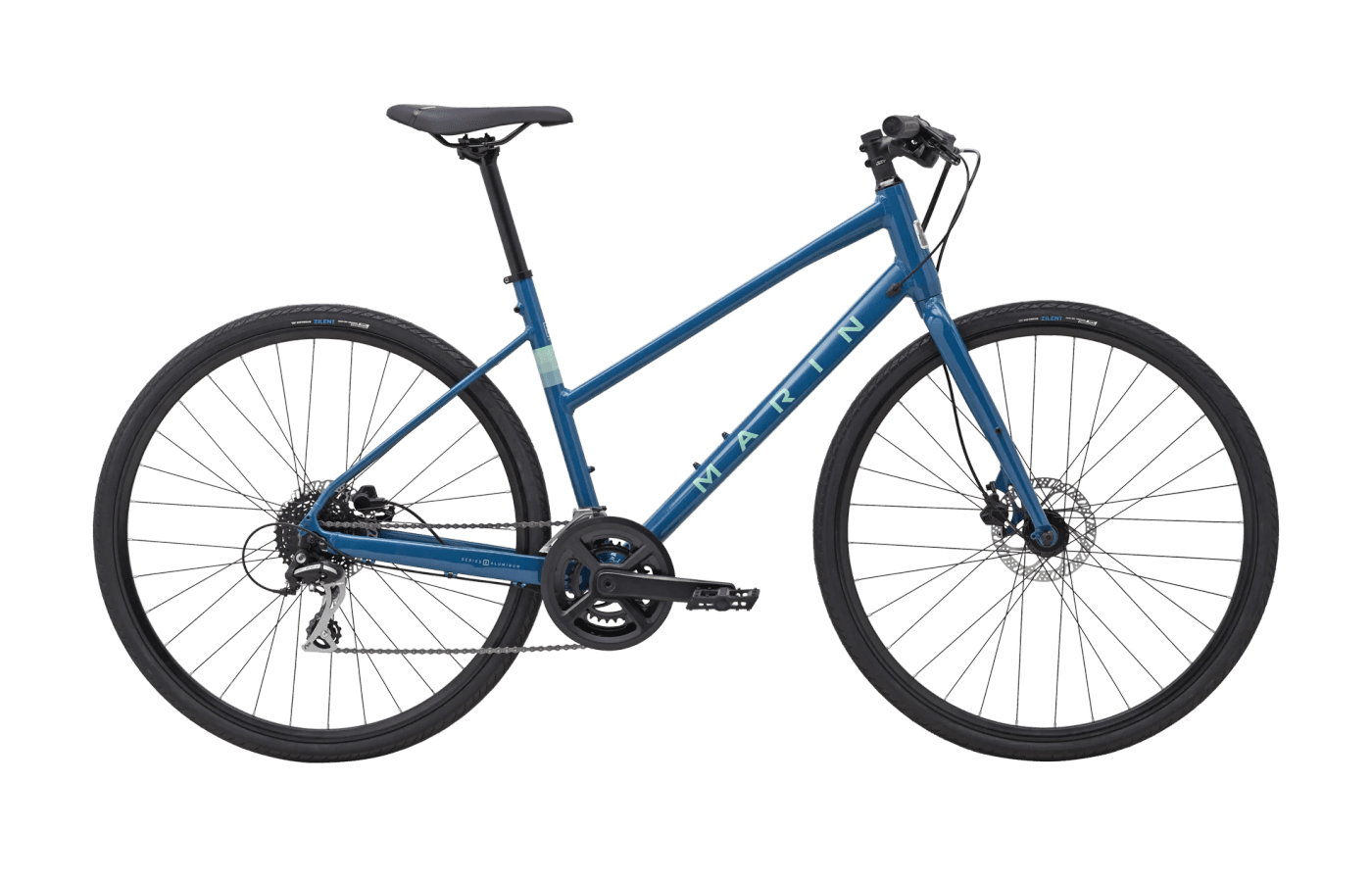
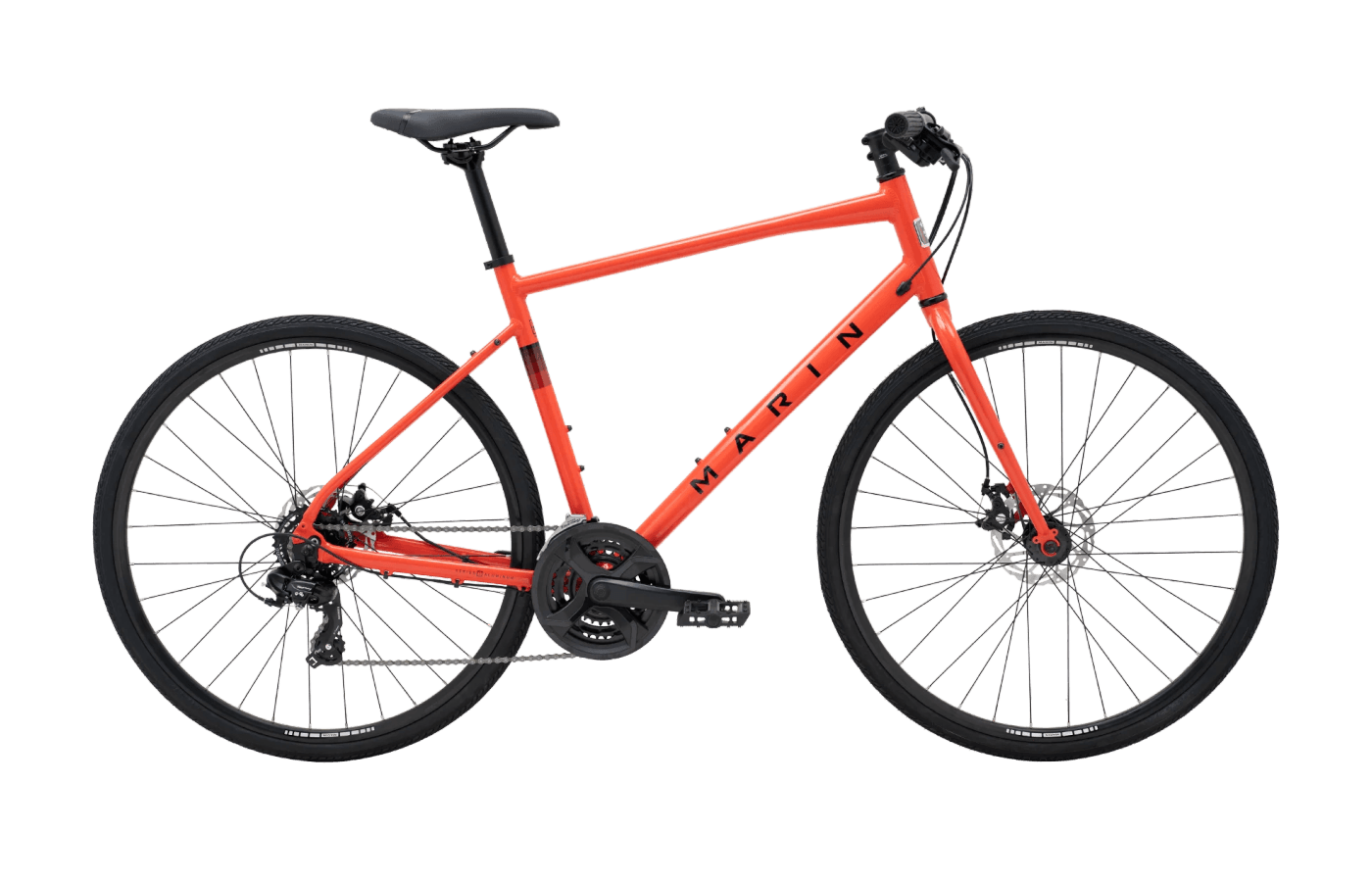
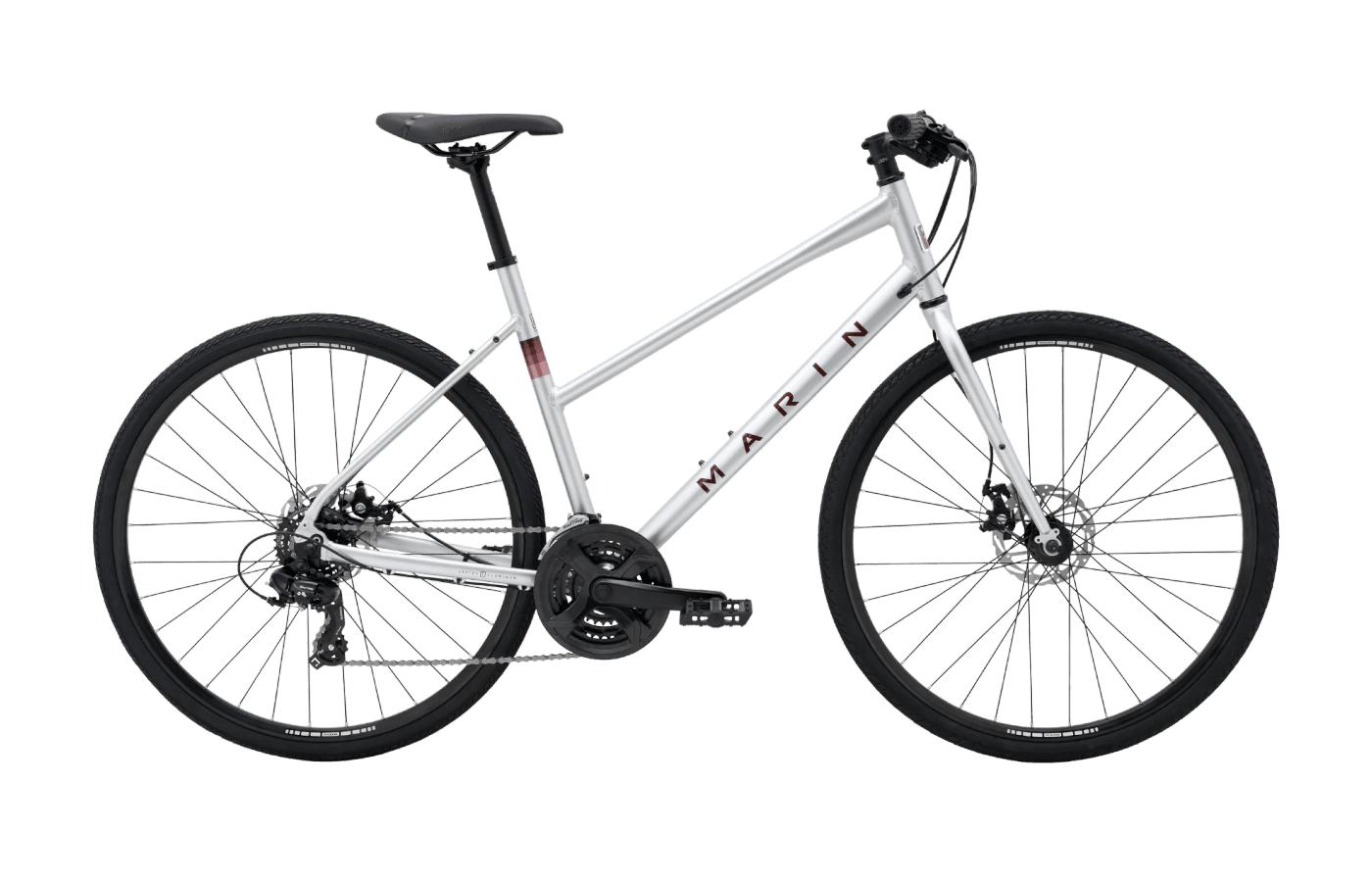
The Fairfax range spans from budget commuter to more polished fitness bike, with clear spec steps between models. Review data places the Fairfax 1 at about $499 with a 3x7 drivetrain, steel fork, and mechanical disc brakes; the Fairfax 2 at $699 with a 2x8 drivetrain, aluminum fork, and hydraulic disc brakes; and the Fairfax 3 at $989 with a carbon fork and 2x9 drivetrain. That progression is logical: the base bike is aimed at cost-conscious riders, while the upper trims add better braking, lighter front-end hardware, and more refined shifting.
The Fairfax 2 is widely regarded as the value sweet spot because it combines hydraulic discs with practical sub-compact gearing at a price where many rivals still use mechanical brakes. BikeRadar especially praised its gear range and braking, and reviewers repeatedly pointed to that build as unusually well judged for commuting, fitness riding, and even light touring. The Fairfax 3 justifies its higher price with the carbon fork and 18-speed setup, giving it a smoother, more responsive front end and a more performance-oriented feel. The lower-end Fairfax 1 remains the affordable entry point, but most reviewers saw its drivetrain and brake package as basic rather than standout.
From the press.
7 reviews from the cycling press.
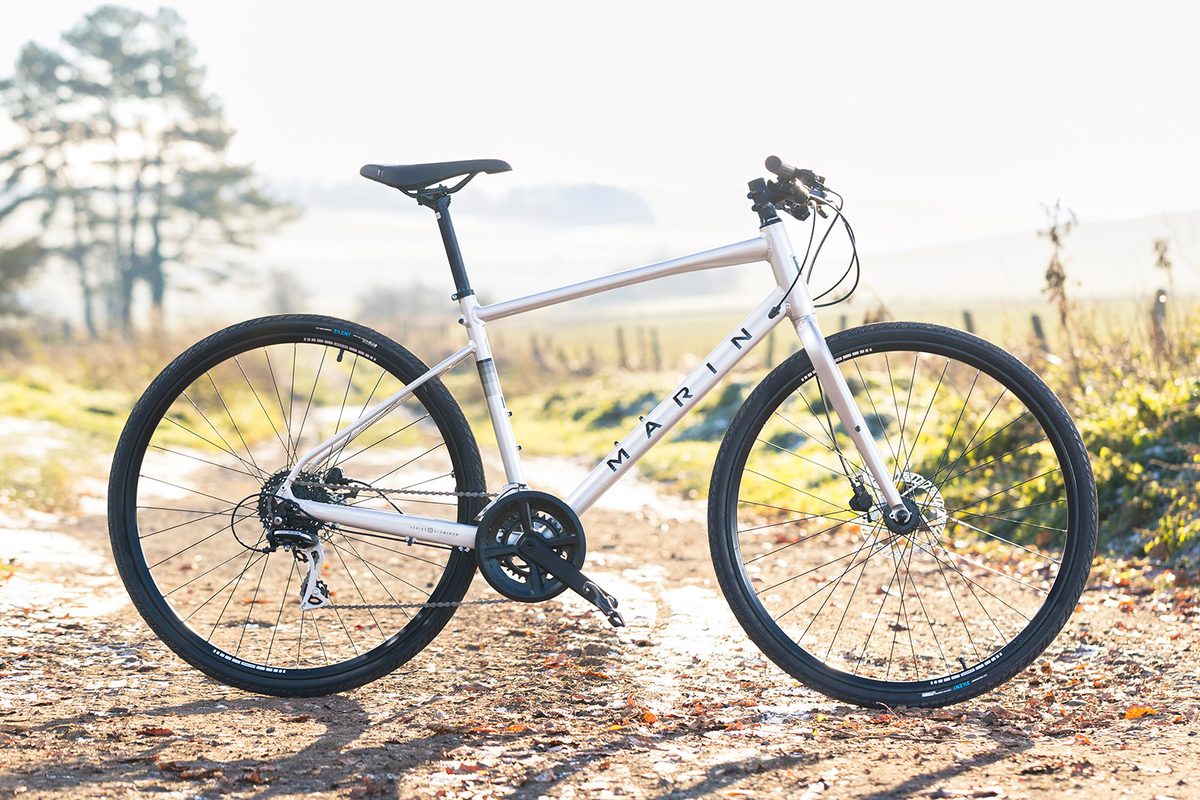
Reviewers consistently describe the Fairfax as a composed, confidence-inspiring hybrid whose ride quality is better than expected for the price. BikeRadar called the Fairfax 2 a versatile and comfortable "flat-bar all-rounder," praising its lovely ride, wide gearing, hydraulic brakes, and abundance of accessory mounts. Across reviews, the 35mm tires are a recurring strength: testers found them more supple than typical stock hybrid rubber and credited them with much of the bike's comfort and surefootedness on rough pavement, debris-strewn roads, and occasional light gravel. Consumer Reports' summary of the Fairfax 3 was similarly positive, highlighting nimble handling and a relatively comfortable ride, with the carbon fork helping the higher-spec bike feel calmer and less harsh at the front end.
The handling balance is a major theme. Reviewers repeatedly noted that the bike feels agile enough in traffic and on crowded paths, yet stable at speed thanks to the relaxed geometry and wide tires. Hydraulic disc brakes on the Fairfax 2 and 3 were singled out as a standout feature, especially at these prices, with testers praising their one-finger power and controlled modulation. The main criticisms are directed at the lower-end trims and some comfort details rather than the platform itself: the Fairfax 1's mechanical brakes and basic Tourney-level drivetrain were described as more clunky, some found the stock flat-bar setup limiting on longer rides because of the single hand position, and BikeRadar specifically objected to Schrader valves on the Fairfax 2. Reviewers also noted that the base-model tires are less reassuring for puncture resistance than the rubber fitted higher in the range.
Marin Fairfax 2 hybrid bike review
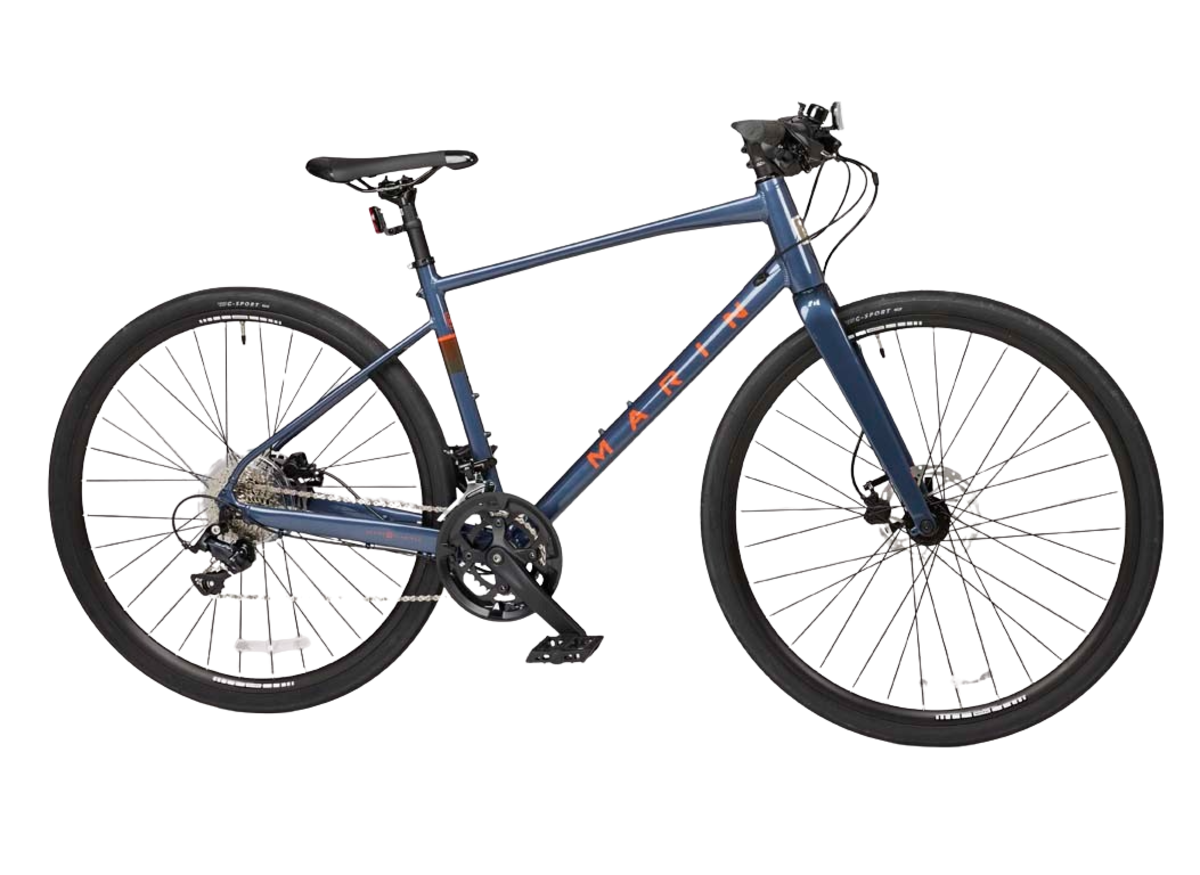
Marin Fairfax 3
![Is Marin Fairfax 2 Your Perfect Match? - [Marin Fairfax 2 Review]](https://paklmrfyhygqlkyhjcnf.supabase.co/storage/v1/object/public/storage/review-images/marin/fairfax/generation-2022-present/review-2961aee2f1f8.webp)
Is Marin Fairfax 2 Your Perfect Match? - [Marin Fairfax 2 Review]
![Is Marin Fairfax 3 A Perfect Selection? - [Marin Fairfax 3 Review]](https://paklmrfyhygqlkyhjcnf.supabase.co/storage/v1/object/public/storage/review-images/marin/fairfax/generation-2022-present/review-1ba736917959.webp)
Is Marin Fairfax 3 A Perfect Selection? - [Marin Fairfax 3 Review]
![Is Marin Fairfax 1 A Perfect Choice? - [Marin Fairfax 1 Review]](https://paklmrfyhygqlkyhjcnf.supabase.co/storage/v1/object/public/storage/review-images/marin/fairfax/generation-2022-present/review-764bd49b8d73.webp)
Is Marin Fairfax 1 A Perfect Choice? - [Marin Fairfax 1 Review]
![Is Marin Fairfax ST 1 A Good Bike? [Marin Fairfax ST 1 Review]](https://paklmrfyhygqlkyhjcnf.supabase.co/storage/v1/object/public/storage/review-images/marin/fairfax/generation-2022-present/review-e416cfdbb193.jpg)
Is Marin Fairfax ST 1 A Good Bike? [Marin Fairfax ST 1 Review]