Marin
Larkspur1
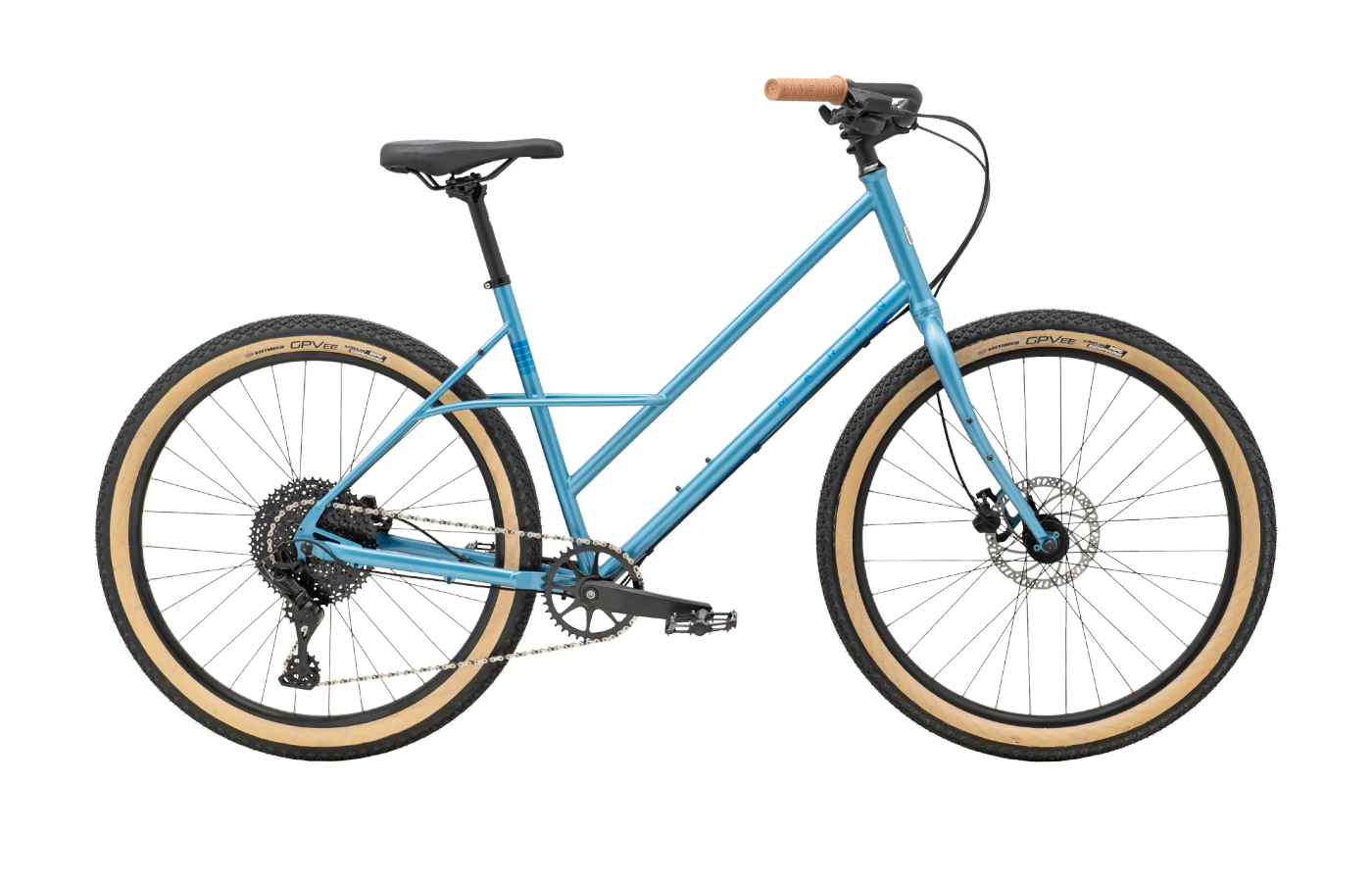
The current Marin Larkspur, introduced for 2021 and still current in this form, is not a conventional comfort hybrid. It marked a full reset of the nameplate into a steel, low-step “adventure mixte” built around a Series 2 butted CrMo frame and matching curved CrMo fork. Marin paired that frame with 27.5/650B wheels, stock 2.35-inch tires, disc brakes, 1x drivetrains, and practical mounts for racks, fenders, and a kickstand. The result is a bike that sits somewhere between an urban utility bike, an all-terrain townie, and a rigid ATB rather than a typical flat-bar commuter.
What makes this generation distinctive is how deliberately it borrows mountain-bike thinking for everyday riding. A 69-degree head angle, 440 mm chainstays, and 75 mm bottom-bracket drop give it a lower, calmer, more planted chassis than most city hybrids, while the mixte frame keeps access easy and utility high. The higher-spec Larkspur 2 goes further with a dropper post, underlining that this platform is intended not just for pavement but for rough streets, paths, fire roads, and light trail use. In the market, the Larkspur stands out as a niche but well-resolved option for riders who want comfort, cargo mounts, and real mixed-surface capability without moving to a gravel bike or a suspension-equipped hardtail.
Spec sheet.
Every component shipped with this build.
Geometry & fit.
3 sizes published.
The Larkspur’s geometry is notably more off-road-oriented than most urban hybrids. Across sizes S, M, and L, the head tube angle stays at 69 degrees, chainstays remain 440 mm, and bottom-bracket drop is 75 mm. That combination points to slow, predictable steering and a low center of gravity rather than quick handling. Wheelbase is also long for the category—1080 mm in S, 1105 mm in M, and 1132.3 mm in L—which helps explain why reviewers repeatedly describe the bike as stable and composed on descents, rough paths, and loaded utility rides.
Fit is upright and relatively compact. Stack and reach numbers of 602.8/390 mm in S, 616.8/410 mm in M, and 635.4/430 mm in L support a tall-front-end riding position, especially when paired with swept bars. The effective top tube grows from 568.6 mm to 618.2 mm across the range, but reviewer feedback suggests the Large can still feel short in the cockpit for taller riders. The 73.5-degree seat tube angle is moderate rather than aggressively forward, reinforcing the bike’s relaxed pedaling position. Overall, the geometry favors comfort, easy footing, and confidence over speed, making the bike feel more like a rigid ATB with commuter manners than a traditional fitness hybrid.
Where the handlebar sits relative to the bottom bracket — the single most important fit pair.
01Fit geometry6 values
02Component geometry3 values
03Handling geometry7 values
Which size should I buy?
Slide your height to see the recommended size. GearWise's fit algorithm works from the published stack, reach, and ETT — the brand's own recommendation may differ.
→Calculated from GearWise's own stack / reach / ETT algorithm — the brand's size chart may recommend a different size, and a proper bike fit beats any calculator.
The lineup.
2 builds, ranging $899 – $1,199.
The Larkspur was offered in two core builds built around the same steel frame, fork, and geometry, with the main differences in drivetrain, brakes, and finishing kit. The Larkspur 1 was positioned around $869 and uses a microSHIFT Advent X 1x10 drivetrain with an 11-51T cassette, plus mechanical disc brakes. The Larkspur 2 stepped up to about $1,149 with Shimano Deore 1x11, hydraulic disc brakes, and a TranzX dropper post with 70 mm or 110 mm travel depending on size. Both builds use 650B aluminum wheels and high-volume tires, preserving the platform’s mixed-surface character.
The value split between the two is clear. The Larkspur 1 is the more budget-conscious utility and commuter option, but still keeps the wide-range gearing and all-terrain tire concept that define the model. The Larkspur 2 is the more compelling enthusiast build, largely because the Deore drivetrain, hydraulic brakes, and especially the dropper post make the bike feel more complete and more aligned with its ATB brief. Reviewers repeatedly highlighted the Larkspur 2 as unusually well equipped for the price, even if some questioned whether the 180 mm front rotor was more aggressive than necessary.


From the press.
6 reviews from the cycling press.
Reviewers consistently describe the Larkspur as unusually comfortable and versatile for a commuter-adjacent bike. Bicycling called the Larkspur 2 a “comfortable, cruisy, mixtie-inspired bike” with “go-anywhere capability,” and that theme runs through other reviews as well. Testers praised the upright position, steel frame and fork, and especially the 27.5 x 2.35-inch tires for giving the bike a planted, forgiving ride on pavement, boardwalks, gravel paths, and buffed singletrack. Several noted that letting some air out of the high-volume tires adds meaningful plushness, helping the rigid bike feel smoother than expected on rough surfaces.
The bike’s strengths are stability, climbing ease, and broad usefulness rather than quickness. Reviewers liked the wide-range 1x gearing on both models, with the 11-51T cassette repeatedly cited as a major asset on steep climbs. The Larkspur 2 in particular earned praise for combining Shimano Deore, hydraulic brakes, and a TranzX dropper post at a modest price, though one tester felt its 180 mm front rotor was too grabby for the bike’s intended use and would have preferred a 160 mm setup. The main recurring criticism is weight: multiple reviews point out that the steel chassis is not for riders seeking a light or especially snappy bike.
There were also fit-related caveats. One 6'1" reviewer found a size Large cramped and uncomfortable over a 20-mile ride, suggesting the stock stem is too short for taller riders, while a 5'5" rider found the same platform very comfortable. A long-term tester also mentioned some seatpost flex under hard seated efforts. Taken together, reviews portray the Larkspur as a highly likable, high-value all-terrain utility bike whose relaxed cockpit works best if the rider is comfortable with an upright fit—or willing to fine-tune it.

Larkspur 2: One of Bicycling Magazine's 50 Best Bikes of the Year – Marin Bikes
Larkspur 2: One of Bicycling Magazine's 50 Best Bikes of the Year – Marin Bikes
![Is Marin Larkspur 1 A Perfect Selection? - [Marin Larkspur 1 Review]](https://paklmrfyhygqlkyhjcnf.supabase.co/storage/v1/object/public/storage/review-images/marin/larkspur/generation-2021-present/review-a5690e9c229f.webp)
Is Marin Larkspur 1 A Perfect Selection? - [Marin Larkspur 1 Review]
![Is Marin Larkspur 2 A Perfect Selection? - [Marin Larkspur 2 Review]](http://bestbikeselect.com/wp-content/uploads/2023/06/2023-Marin-Larkspur-2-2.jpg)
Is Marin Larkspur 2 A Perfect Selection? - [Marin Larkspur 2 Review]
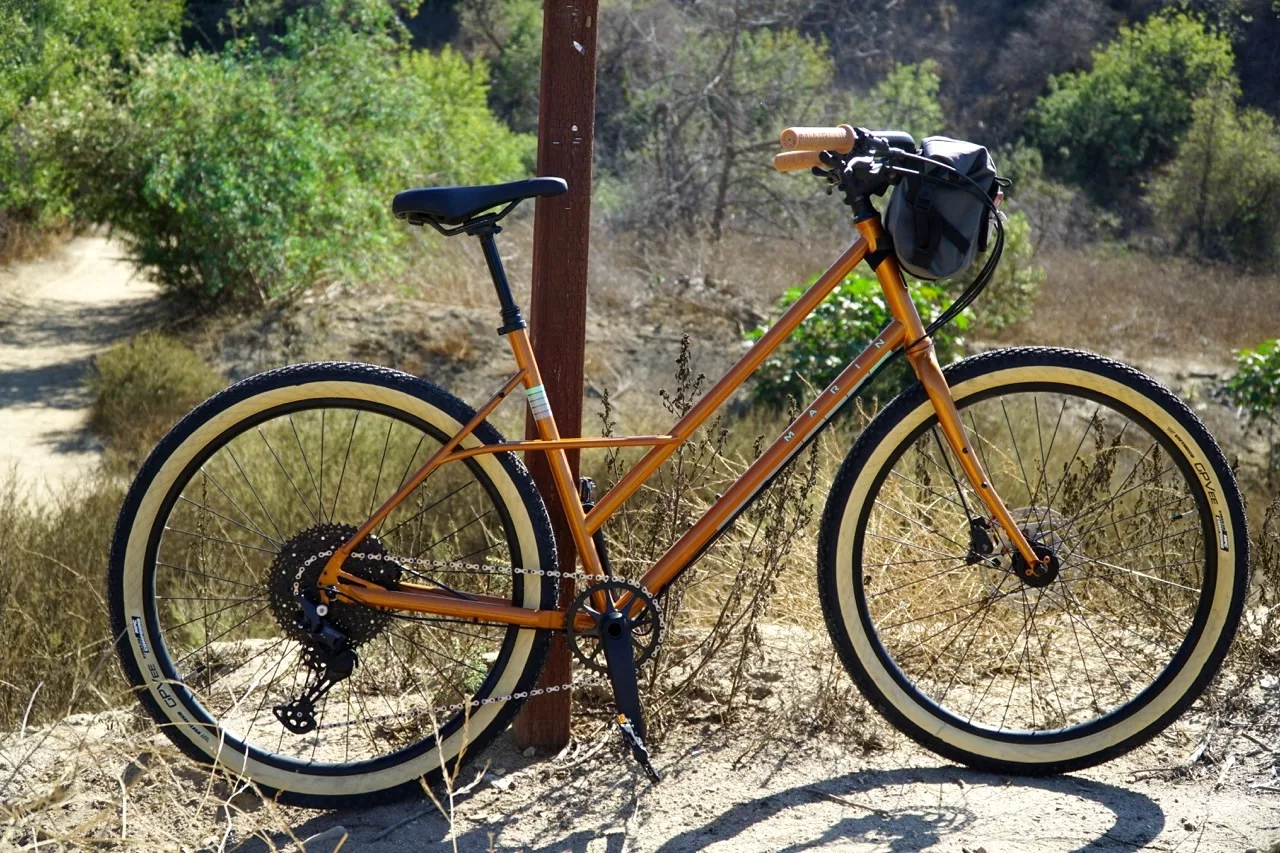
Is it a Mountain Bike or a City Bike? The Marin Larkspur 2 is Both!