Marin
Presidio1
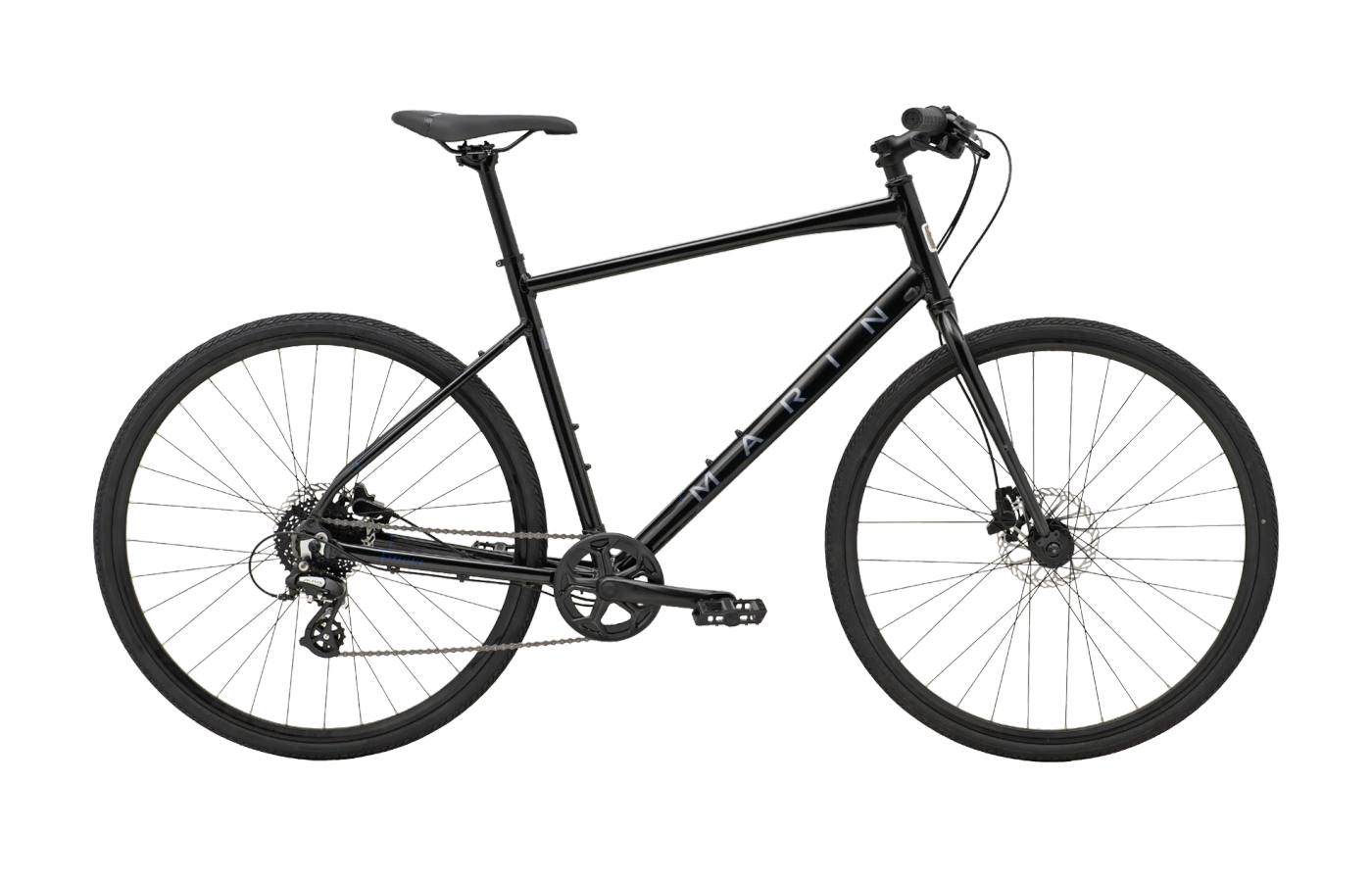
The 2024-on Marin Presidio marks a meaningful reset for Marin’s flat-bar urban platform. The defining change is not a single component update but a new frame and geometry package shared across the range, with noticeably more relaxed numbers than earlier Presidios: a 70.5° head angle, 445mm chainstays, longer wheelbases, a 50mm fork offset, and room for up to 45mm tires without fenders or 40mm with fenders. That shifts the bike away from a narrower, fitness-hybrid interpretation and toward a more stable, all-round commuter suited to rougher pavement, utility riding, and everyday city use.
Within that common platform, Marin still splits the line by purpose and hardware. The Presidio 1 remains the simpler, value-focused option with a Series 1 aluminum frame, steel fork, and conventional derailleur drivetrain, while the Presidio 2 and 3 use the more premium Series 2 concept with alloy fork, slider dropouts, and compatibility with belt-drive and internally geared hub setups. In the market, the Presidio sits as a practical commuter rather than a style-driven city bike or a fast flat-bar road bike: it prioritizes stable handling, utility mounts, wider tire clearance, and low-fuss urban function over speed-focused geometry or premium materials.
Spec sheet.
Every component shipped with this build.
Geometry & fit.
5 sizes published.
The 2024 geometry points clearly toward a more stable, upright urban ride. Across the size range, the Presidio uses a 70.5° head tube angle and 445mm chainstays, both conservative numbers for a flat-bar commuter. Compared with steeper, shorter hybrids, that combination lengthens the front-center and rear-center of the bike, contributing to calmer steering and better composure over broken pavement, with loaded racks, or in wet-weather commuting. Wheelbase is correspondingly long, from 1050mm in XS to 1148.4mm in XL, which should make the bike feel planted rather than twitchy.
Fit is also clearly biased toward comfort and visibility. Stack runs from 557mm in XS to 637.3mm in XL, while reach stays moderate at 385mm to 455mm, giving the bike a naturally upright posture rather than a stretched fitness-bike position. The 73.5° seat angle is neutral and should suit a broad range of riders without pushing weight too far forward. A 70mm bottom bracket drop adds to the settled feel by keeping the rider’s center of gravity relatively low. Overall, the numbers suggest a commuter that favors confidence, easy control, and day-to-day comfort over sharp, sporty handling.
Where the handlebar sits relative to the bottom bracket — the single most important fit pair.
01Fit geometry6 values
02Component geometry3 values
03Handling geometry7 values
Which size should I buy?
Slide your height to see the recommended size. GearWise's fit algorithm works from the published stack, reach, and ETT — the brand's own recommendation may differ.
→Calculated from GearWise's own stack / reach / ETT algorithm — the brand's size chart may recommend a different size, and a proper bike fit beats any calculator.
The lineup.
3 builds, ranging $549 – $1,199.
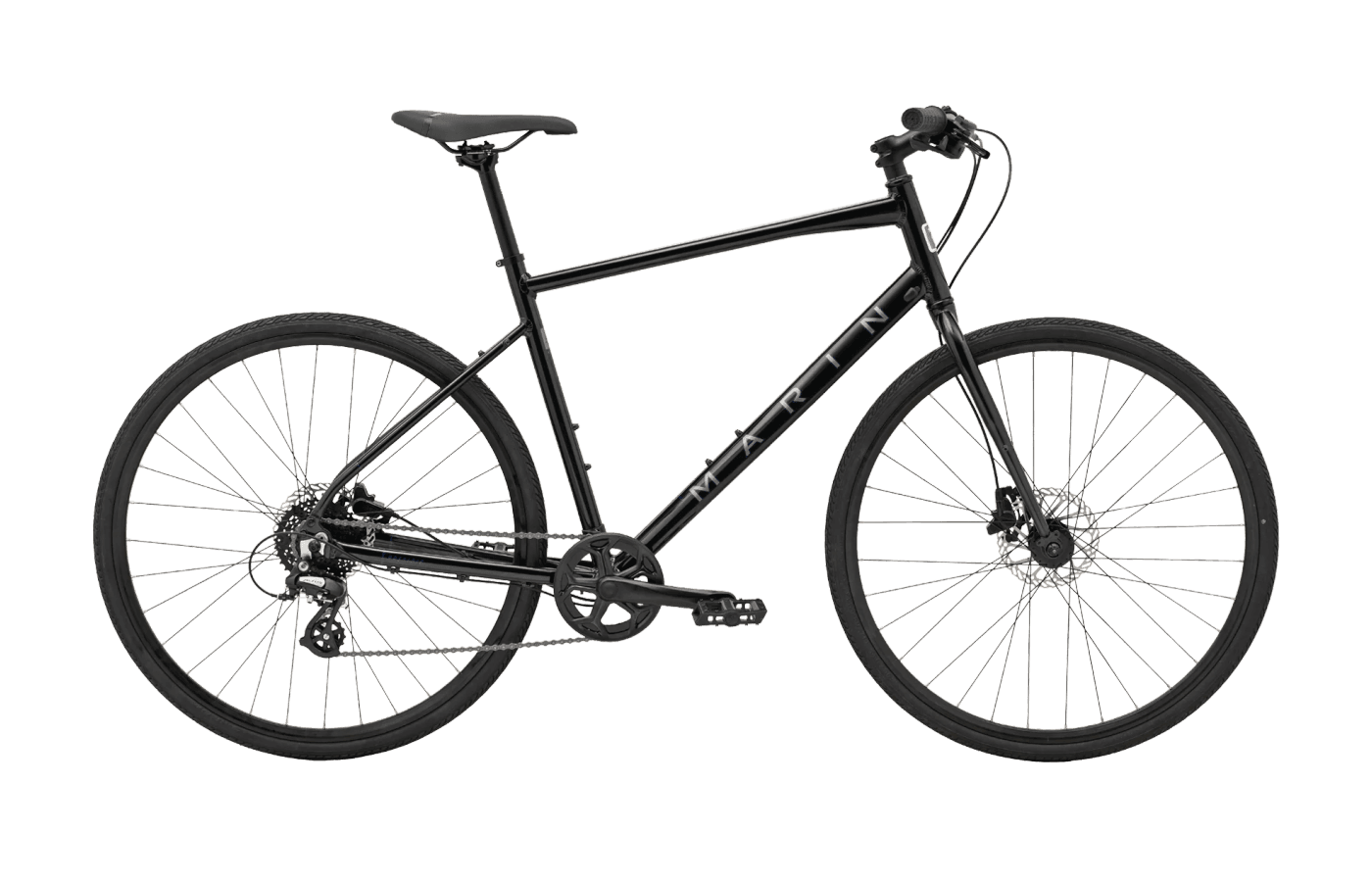
The Presidio family is offered in three builds, with a clear split between the entry model and the more premium city-focused versions. The Presidio 1 is the value anchor of the range, listed in review coverage at $579, and uses the simpler Series 1 format: aluminum frame, steel fork, and a conventional 1x8 derailleur drivetrain. Reviewers highlight this build as particularly strong value because it combines commuter-friendly gearing with hydraulic disc brakes, a spec that is still uncommon at that price. It is also the most straightforward option for riders who want easy servicing and better flexibility on hillier routes.
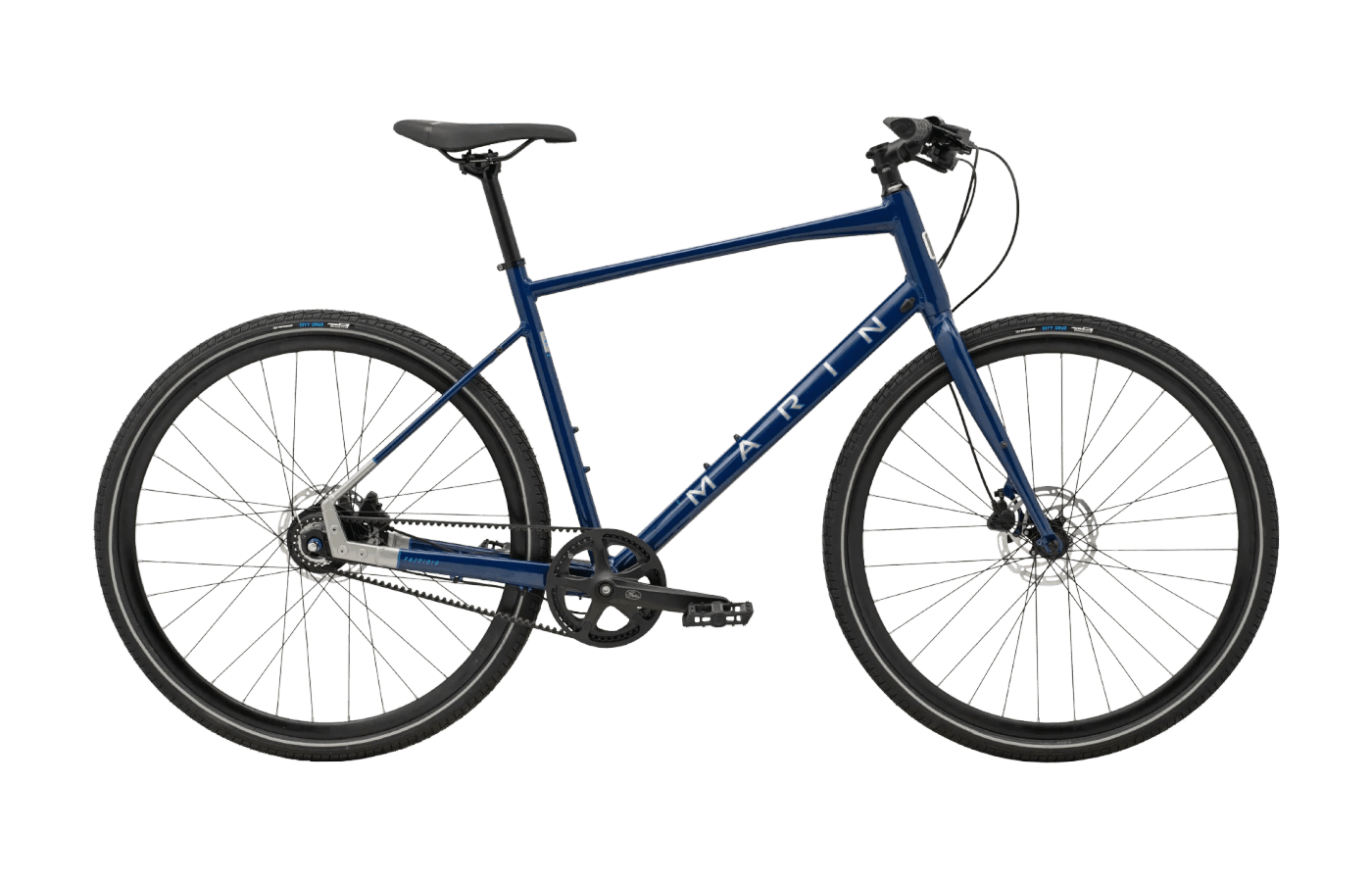
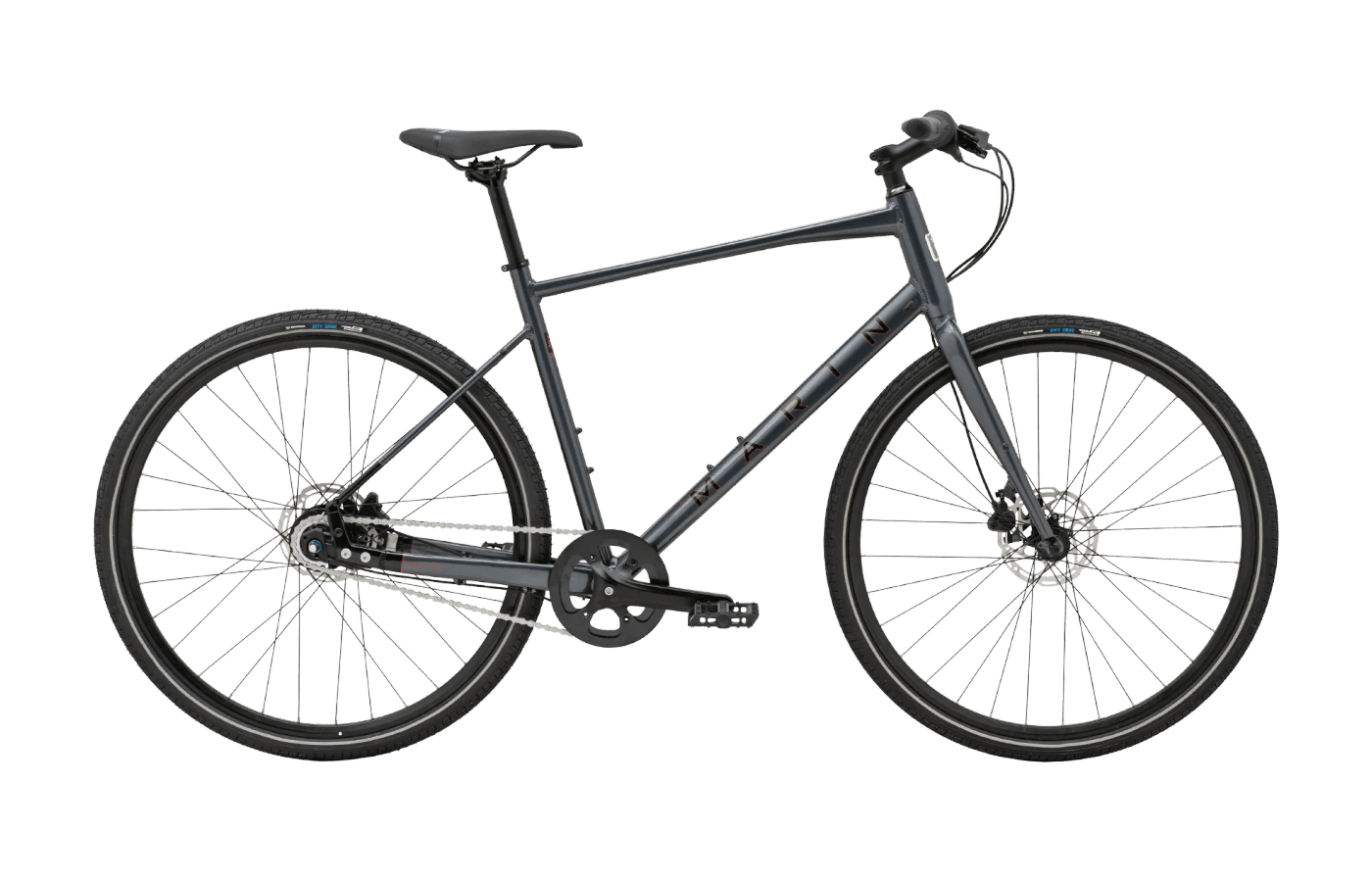
Above that, the Presidio 2 and 3 move to Marin’s Series 2 concept, with alloy fork, slider dropouts, and belt-drive/internal gear hub compatibility. The supplied model information does not include full component lists for those trims here, but the platform distinction is important: the upper bikes are aimed more squarely at lower-maintenance urban use, while the Presidio 1 remains the more budget-conscious and mechanically conventional choice. As a lineup, the Presidio range appears well tiered, with the lower model emphasizing outright value and the higher trims emphasizing reduced maintenance and a cleaner city-bike setup.
From the press.
1 review from the cycling press.
Reviews of the Presidio 1 consistently describe it as a strong-value commuter with a notably practical spec. Bestbikeselect praised the frame finish, pointing to neat welds and quality paint that make the bike look more expensive than its price, and highlighted the inclusion of full fender mounts as part of its everyday usefulness. Across the review material, the bike’s upright riding position is repeatedly cited as a strength, giving riders a natural posture for traffic awareness and making the bike easy to get along with immediately. The steel fork and 700x35mm tires were also seen as sensible choices for urban comfort, taking some edge off rough pavement without blunting efficiency.
Handling and braking drew positive comments as well. Reviewers noted that the short stem contributes to quick low-speed steering, which helps in tight city spaces and stop-start commuting, while the hydraulic disc brakes were singled out as a standout feature at this level for their smooth power and confidence on descents. The 1x8 drivetrain was generally viewed as well judged for mixed urban terrain, with the 38T chainring and 11-34T cassette offering easier climbing than many budget single-speeds or simpler commuter setups.
Weak points were relatively minor but specific. The most repeated complaint was the stock saddle, described by Bestbikeselect as overly squishy and likely to be an early upgrade for riders doing longer distances. Reviewers also framed the bike’s strengths in clearly commuter-oriented terms: it is efficient and responsive for city riding, but it is not a specialized fast flat-bar machine, and riders coming from more aggressive road bikes may find it more neutral than exciting.
![Is Marin Presidio 1 Worth Buying? - [Marin Presidio 1 Review]](https://paklmrfyhygqlkyhjcnf.supabase.co/storage/v1/object/public/storage/review-images/marin/presidio/generation-2024-present/review-b89446eab4d5.webp)