Sight VLT CX
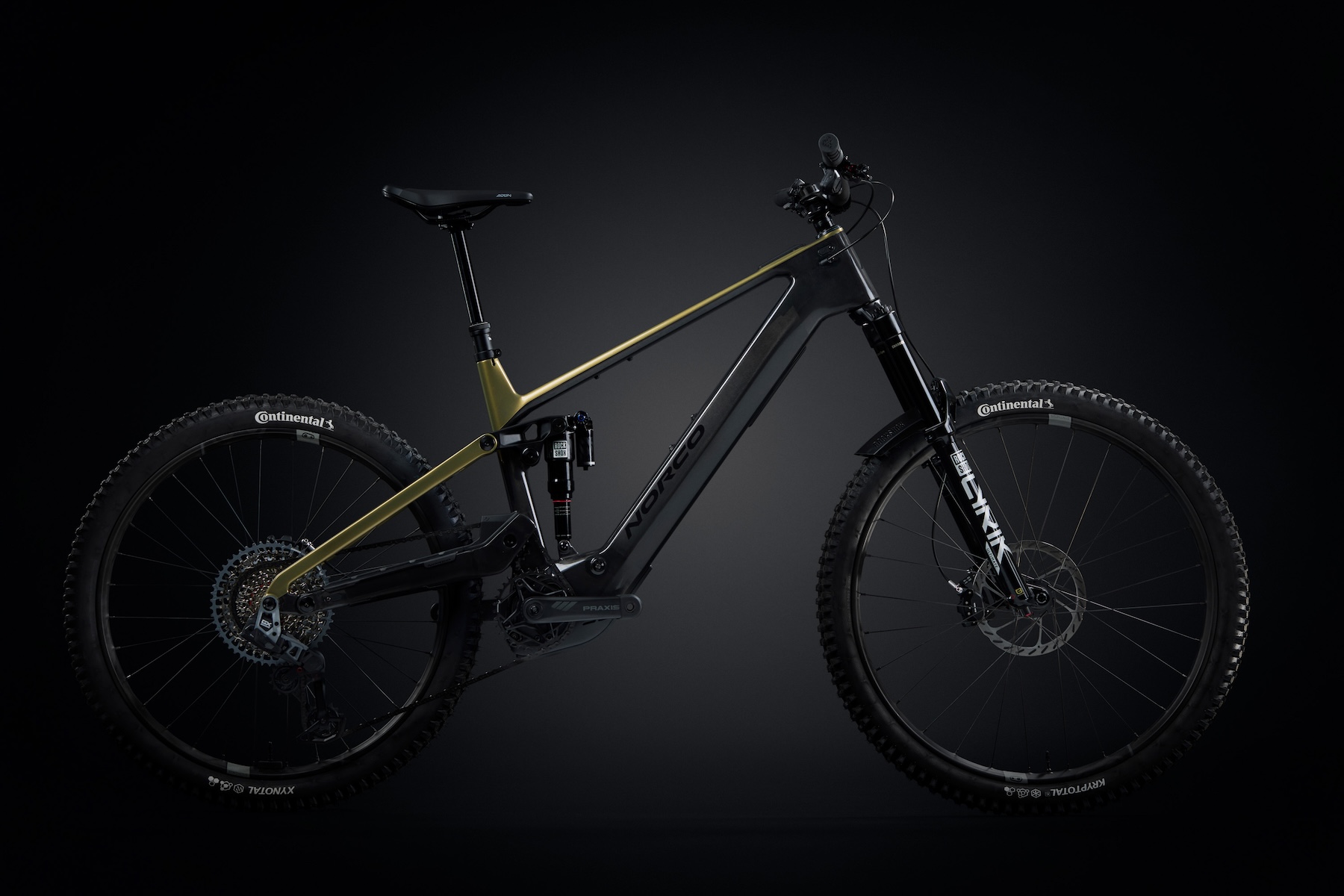
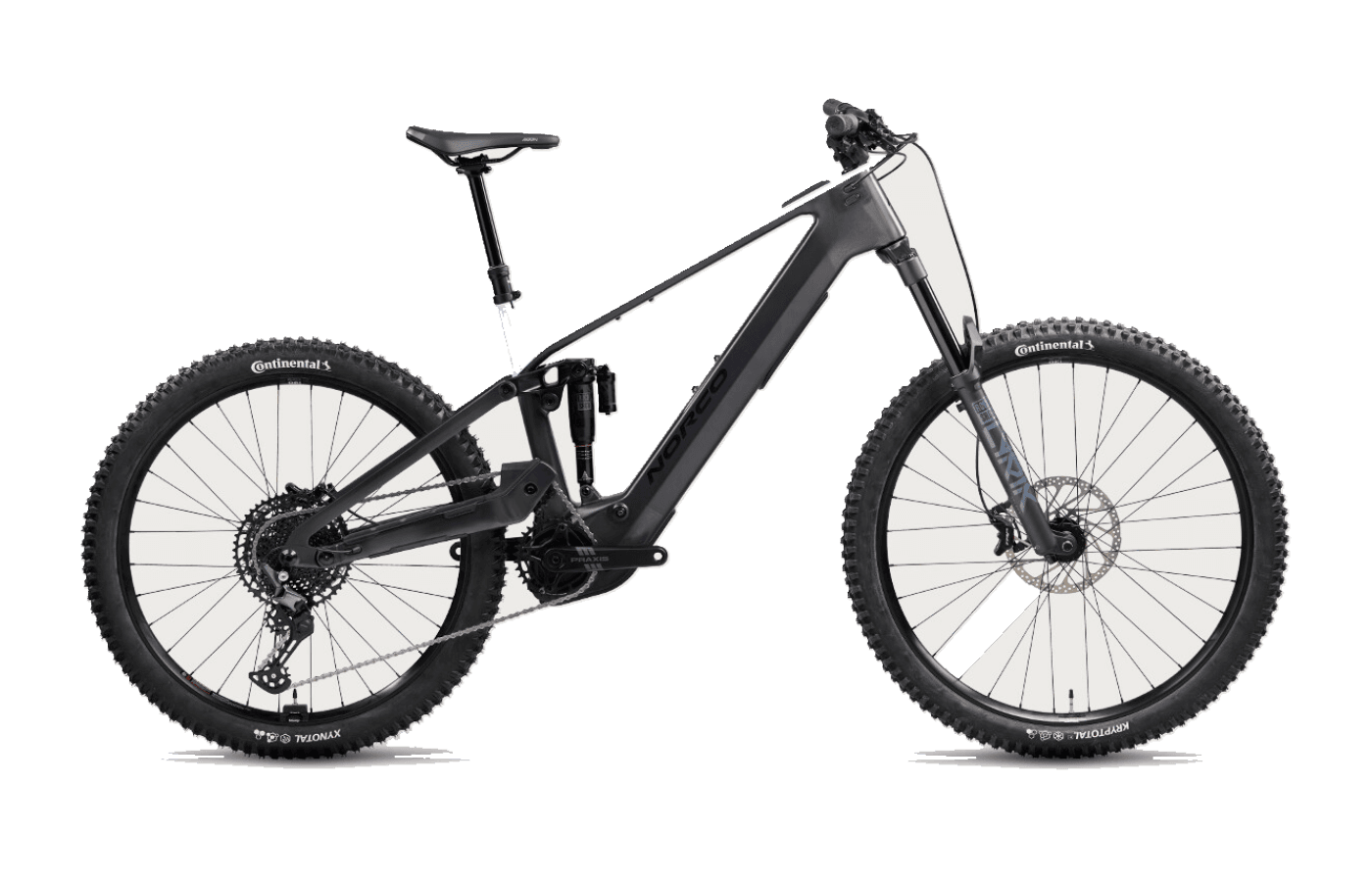
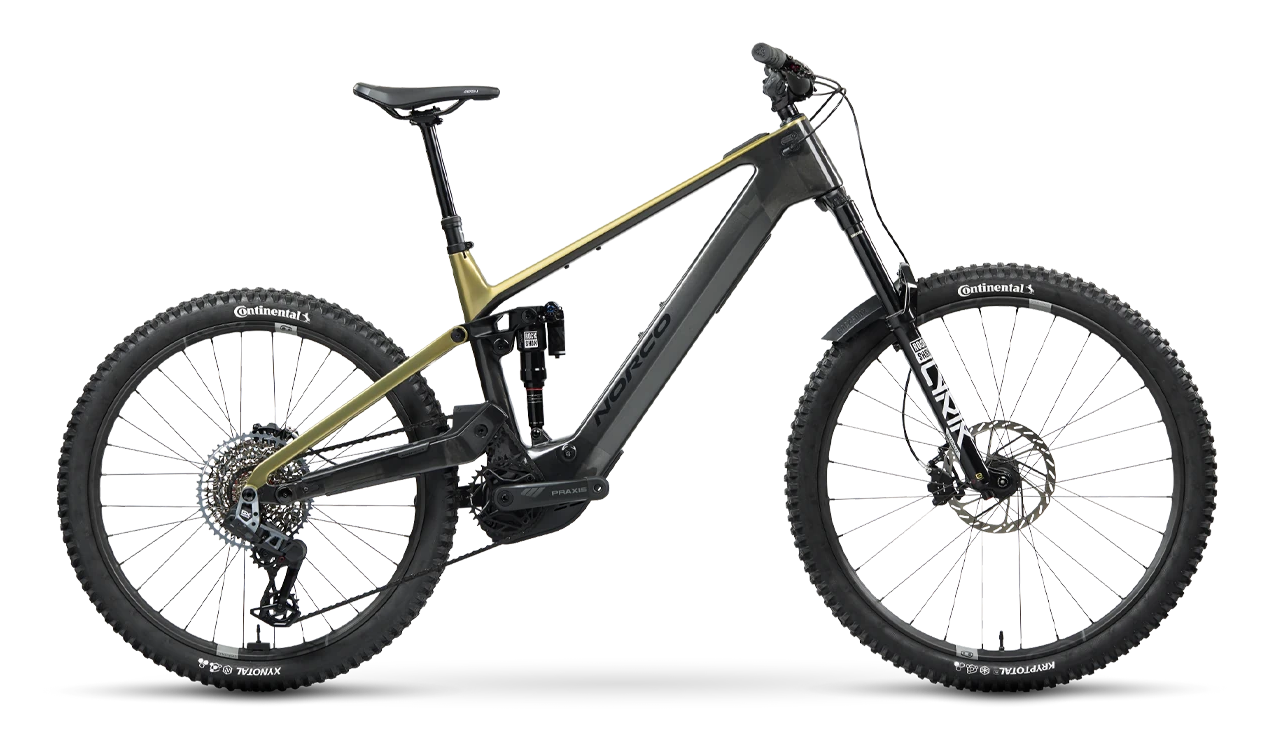
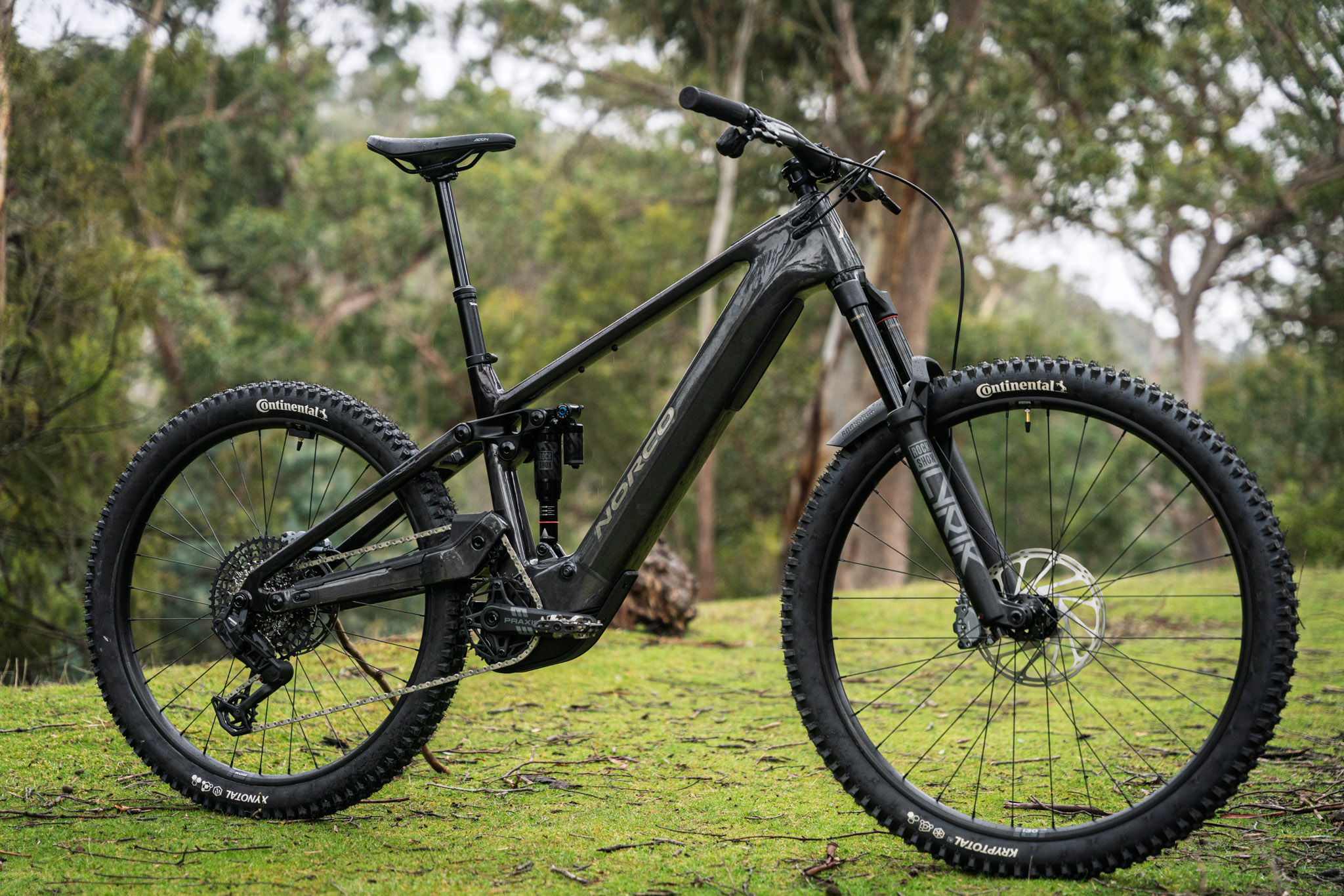
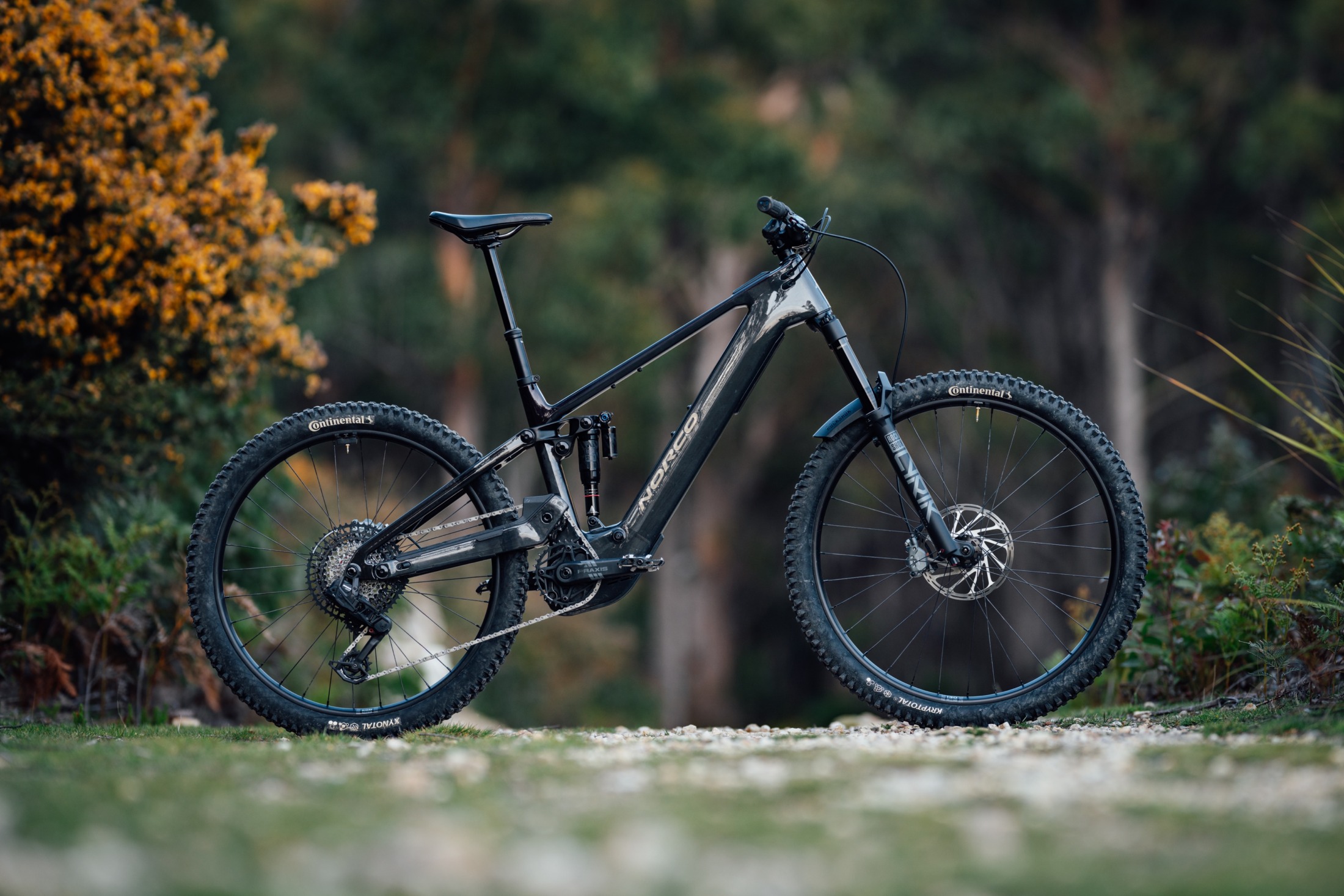
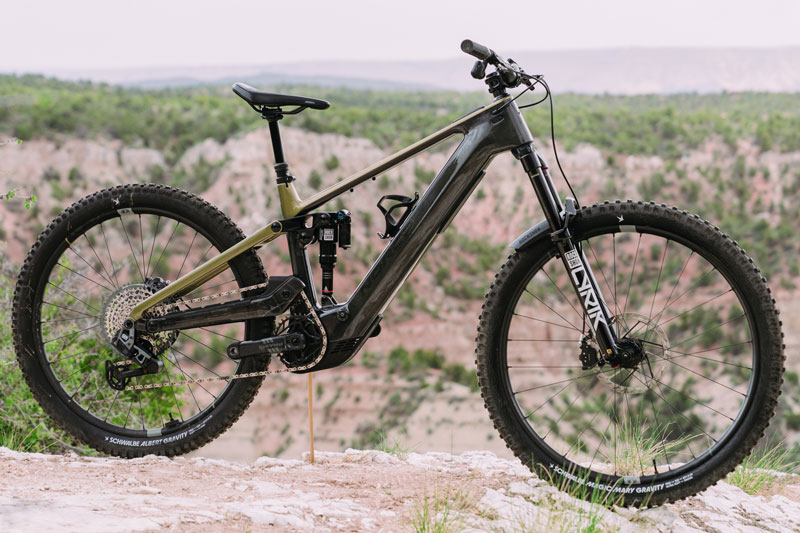
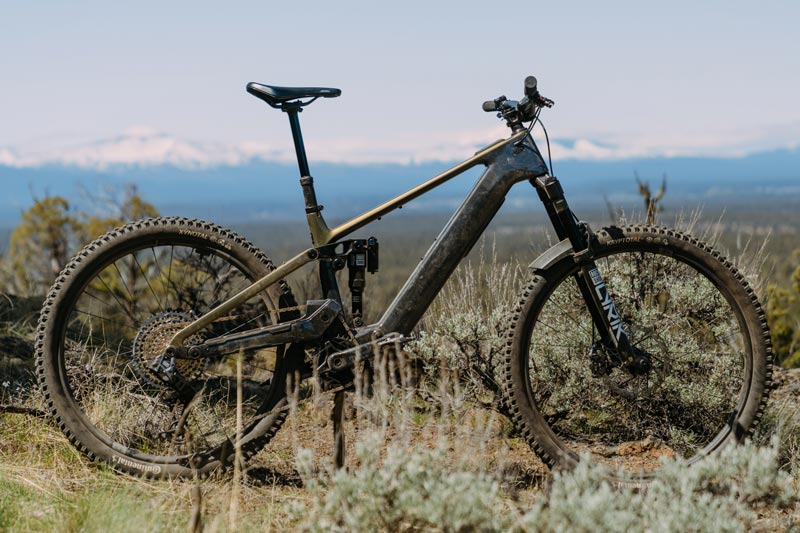
The current Norco Sight VLT CX marks a major reset for Norco’s full-power all-mountain eMTB. Introduced for 2025 and carried into 2026 dealer listings, it keeps the core brief of 160mm front and 150mm rear travel, mixed wheels, and Norco’s VPS high-pivot suspension with a chainstay-mounted idler, but the frame itself is substantially reworked. Compared with the prior generation, it moves to a full-carbon chassis, drops the old front-triangle brace, swaps to a vertically mounted 205x60 trunnion shock, and adopts a slimmer front triangle around Bosch’s newer Performance Line CX system and 800Wh battery. Other frame details point to a more modern, cleaner package too, including a 31.6mm seatpost, ZS44/28.6 upper and ZS56/40 lower headset standard, sizes S2-S5, and a 180PM rear brake mount.
In the market, the Sight VLT CX sits squarely in the aggressive full-power trail-to-enduro category, but it distinguishes itself by pairing a high-pivot layout with a relatively restrained 150mm rear travel figure rather than chasing maximum travel. That gives it a different identity from longer-travel e-enduro bikes: it is aimed at riders who want big-mountain traction, composure, and range without giving up the quicker handling of a mullet all-mountain bike. The Bosch CX/800Wh package makes it a serious long-ride and technical-climb machine, while the high-pivot rearward axle path shows Norco is prioritizing control in rough terrain over simplicity. It is a sophisticated, purpose-built platform rather than a lightly updated carryover.
Geometry & fit.
4 sizes published.
The geometry is modern and deliberately balanced around mixed-wheel handling rather than extreme enduro length. Across sizes S2-S5, the head tube angle stays at 64 degrees, while reach grows from 447.5mm to 522.5mm and chainstays scale from 432mm to 444mm. On the commonly referenced S3, the key numbers are a 472.5mm reach, 636mm stack, 436mm chainstay, and 1255mm wheelbase. That points to a bike with solid front-center stability and enough rear-center length to stay composed under power, without becoming unwieldy in tighter terrain. The fixed 25mm BB drop and 133mm trail reinforce that stable, planted feel.
The fit story is shaped as much by the vertical numbers as the horizontal ones. Effective seat tube angle steepens from 77.25 degrees on S2 to 78 degrees on S5, which should keep riders centered for steep seated climbing and help control front-wheel wander. At the same time, several reviewers noted that the stack is modest for a bike this capable, and the S3’s 636mm stack was specifically mentioned as contributing to a more weight-forward position on descents. In practice, that means the Sight VLT CX should feel precise and responsive, especially with the mullet setup and moderate chainstay lengths, but riders sensitive to low front ends may want to pay close attention to size choice, spacer setup, and bar rise to get the descending posture they want.
Where the handlebar sits relative to the bottom bracket — the single most important fit pair.
01Fit geometry6 values
03Handling geometry8 values
Which size should I buy?
Slide your height to see the recommended size. GearWise's fit algorithm works from the published stack, reach, and ETT — the brand's own recommendation may differ.
→Calculated from GearWise's own stack / reach / ETT algorithm — the brand's size chart may recommend a different size, and a proper bike fit beats any calculator.
The lineup.
3 builds, ranging $6,699 – $9,999.
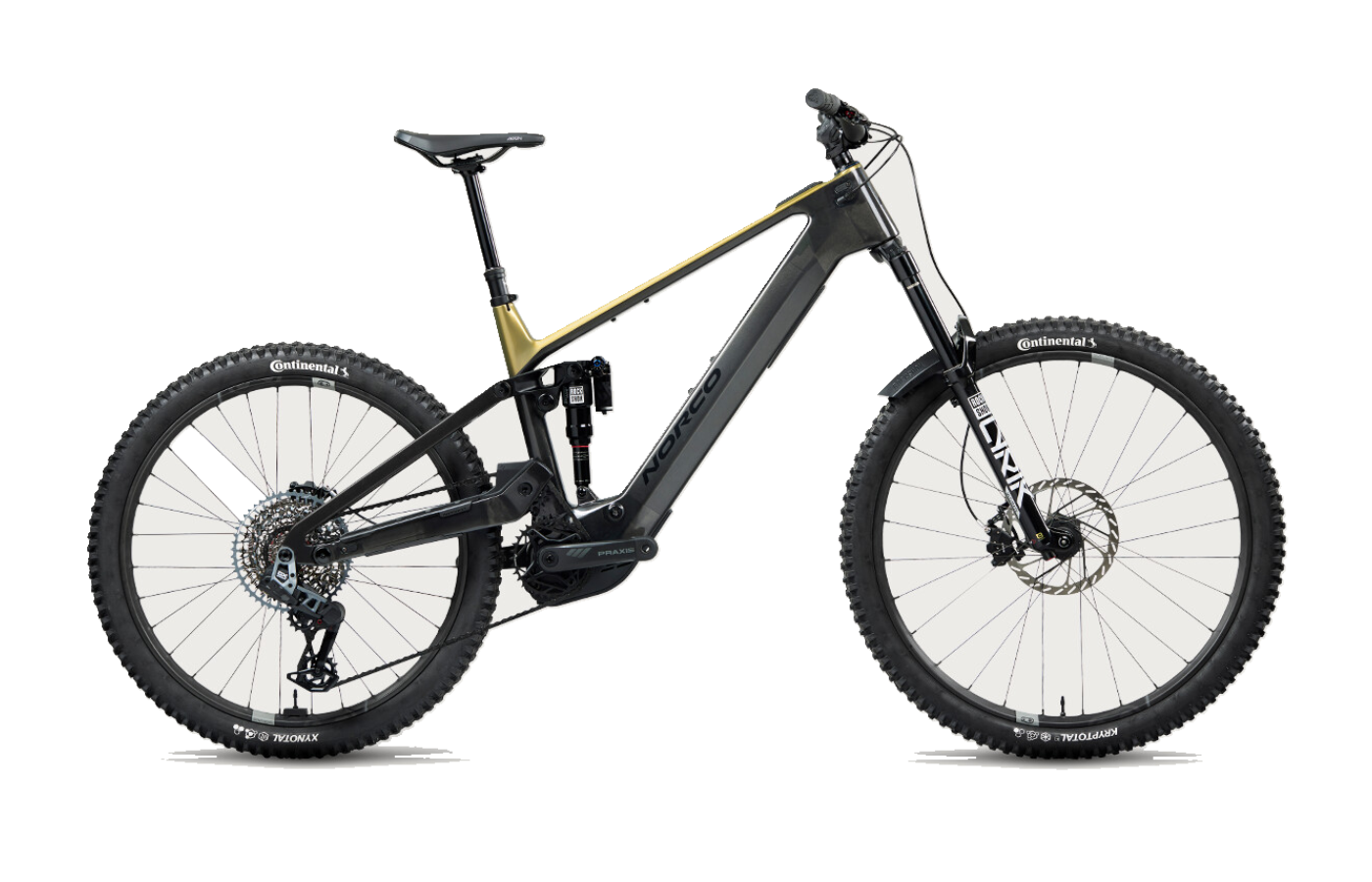
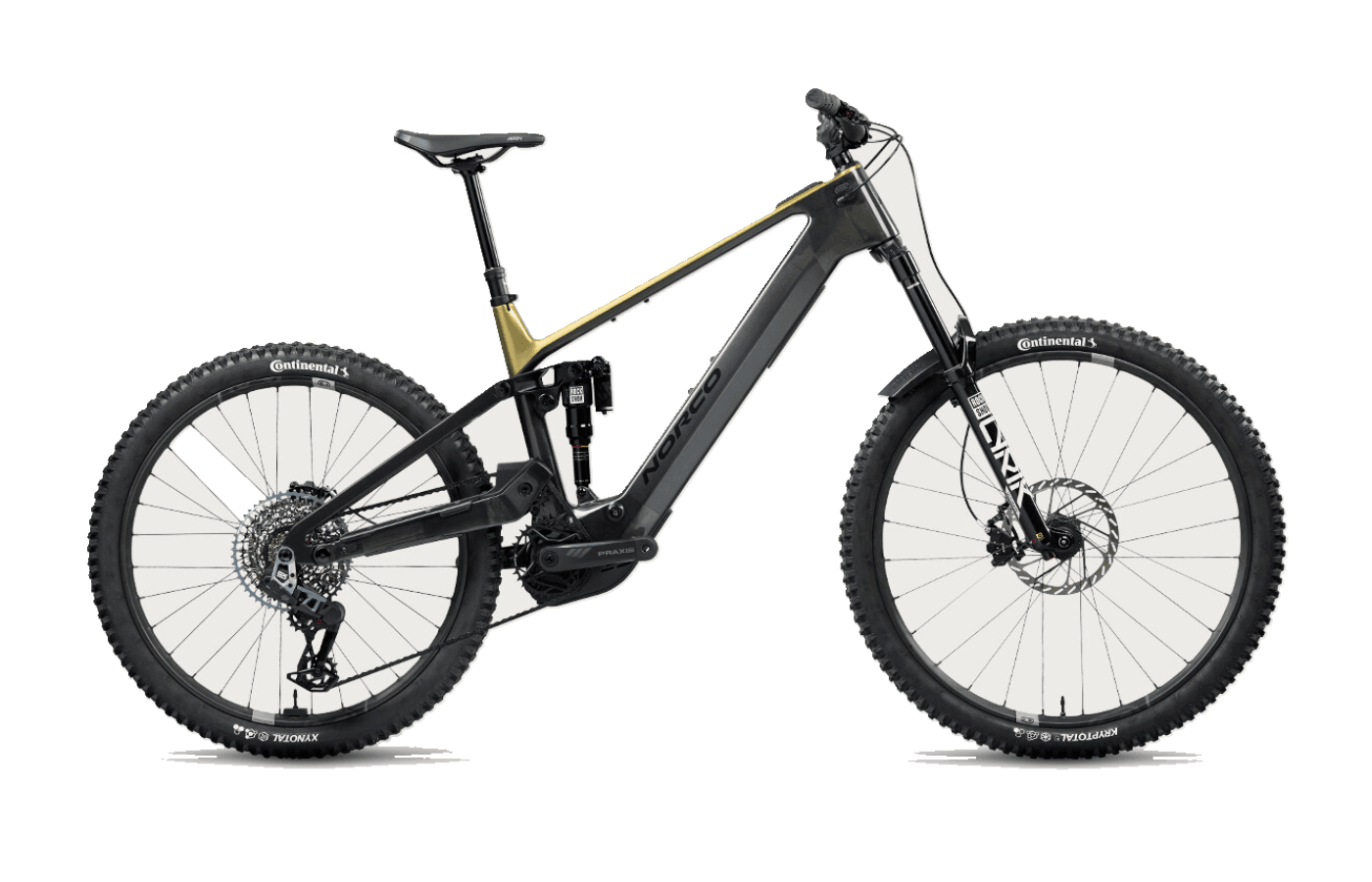
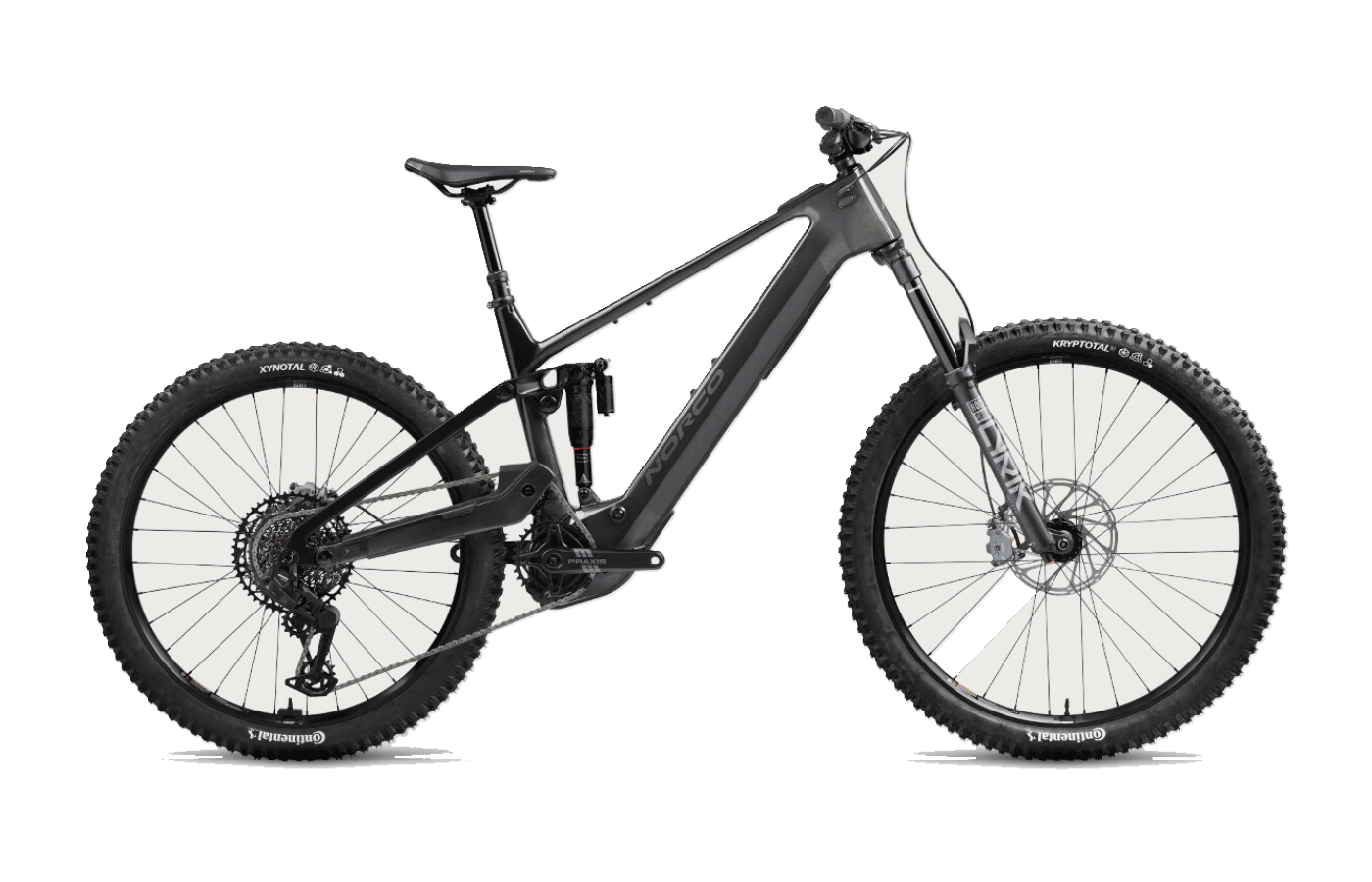
The Sight VLT CX is offered in three carbon builds: C3, C2, and C1. Review coverage places the range from $6,699 USD for the C3 to $9,999 USD for the flagship C1, while European pricing cited by VTTAE lists 7,999, 9,499, and 11,999 euros depending on build. Across the line, the core value proposition is consistent: all models get the same high-pivot carbon frame platform and Bosch Performance Line CX drive system with an 800Wh battery, so buyers are primarily choosing component level rather than a different chassis or motor package.
At the top end, the C1 stands out with carbon wheels and SRAM GX Eagle Transmission, giving it the most premium finish and best out-of-the-box spec. The C2 uses SRAM S1000 Transmission and Maven Bronze brakes, making it the more practical middle-ground option for riders who want current drivetrain tech without paying for carbon wheels. Reviewers generally regarded the platform itself as strong value because the Bosch system and high-pivot frame are both high-end features at these price points. The main spec criticism was consistent across builds: the 160mm RockShox Lyrik was seen by several testers as lighter-duty than the frame’s descending capability warrants, and the 180mm rear rotor was also viewed as undersized for a full-power bike of this intent.
From the press.
11 reviews from the cycling press.
Reviewers were largely aligned on the Sight VLT CX’s defining trait: its rear suspension is exceptionally good. Across outlets, the VPS high-pivot layout was described as delivering a notably smooth, traction-heavy ride, with Flow Mountain Bike calling the feel "super soft and gooey" and several testers comparing it to a "magic carpet." Vital MTB, Biker’s Edge, and others all noted that the bike feels deeper than its stated 150mm of rear travel, with strong support through compressions and unusual calm over square-edged hits. Technical climbing also drew consistent praise, with reviewers crediting the active rear end, steep seat angle, and Bosch CX motor for keeping the rear tire driving forward on loose, awkward pitches.
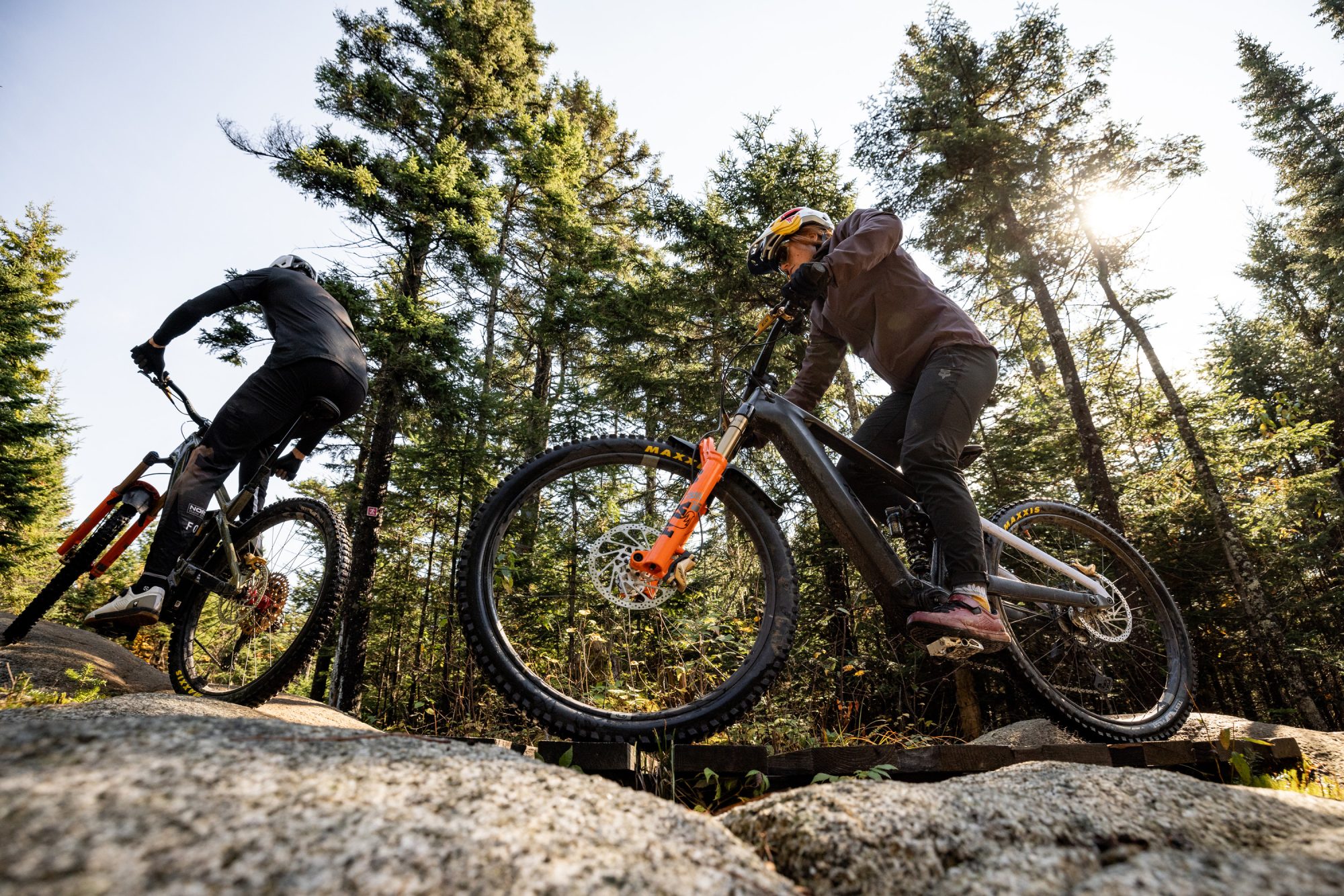
What impressed many testers most was that the bike avoided the usual high-pivot or full-power eMTB penalties in handling. Vital MTB and The Loam Wolf both found it surprisingly nimble and playful for a roughly 49-pound bike, and Flow highlighted the rare combination of planted cornering and poppy response. That said, there were recurring caveats. Multiple reviewers felt the stock 160mm RockShox Lyrik is the weak link, arguing that the rear end’s capability deserves a stiffer 38mm-chassis fork. Flow Mountain Bike and The Vantastic Life also pointed to a relatively low front end, with the S3’s 636mm stack specifically called out as contributing to a weight-forward stance and extra pressure on the hands. The Vantastic Life further felt the fixed 800Wh battery sat high enough in the downtube to make the bike feel heftier than expected in abrupt maneuvers.
Ownership and durability feedback was mostly positive, but not flawless. Reviewers praised the quieter Bosch Gen 5 motor, clean frame protection, and easy-to-wash frame layout, and several saw the Bosch system as a major value and reliability advantage. However, there was an early stop-ride issue tied to rear brake boss manufacturing inconsistency, which Norco addressed with replacement seatstays. Smaller complaints included a difficult-to-open charging port cover, the fixed internal battery limiting charging flexibility, and spec choices such as the 180mm rear rotor and lighter-duty front tire/fork package not fully matching the bike’s descending ceiling.
2025 Norco Sight VLT CX C1 E-Bike - Reviews, Comparisons, Specs - E-Bikes - Vital MTB
Norco Sight VLT CX Review | Powerful, playful and plush
Norco Sight VLT CX Review | Powerful, playful and plush

Norco Sight VLT Review: The High-Pivot, Full-Power eMTB That's ...
Norco Sight VLT CX C1 Review | 2025 eMTB Shootout
Dissected: 2025 Norco Sight VLT CX | The Loam Wolf

Norco Sight VLT CX REVIEW

Norco Sight VLT CX 2 2025 - Présentation et essai | VTTAE.fr
Norco Release Their Bosch CX Equipped Sight VLT. - Wideopen Magazine

off-road.cc