Nytro E Allroad
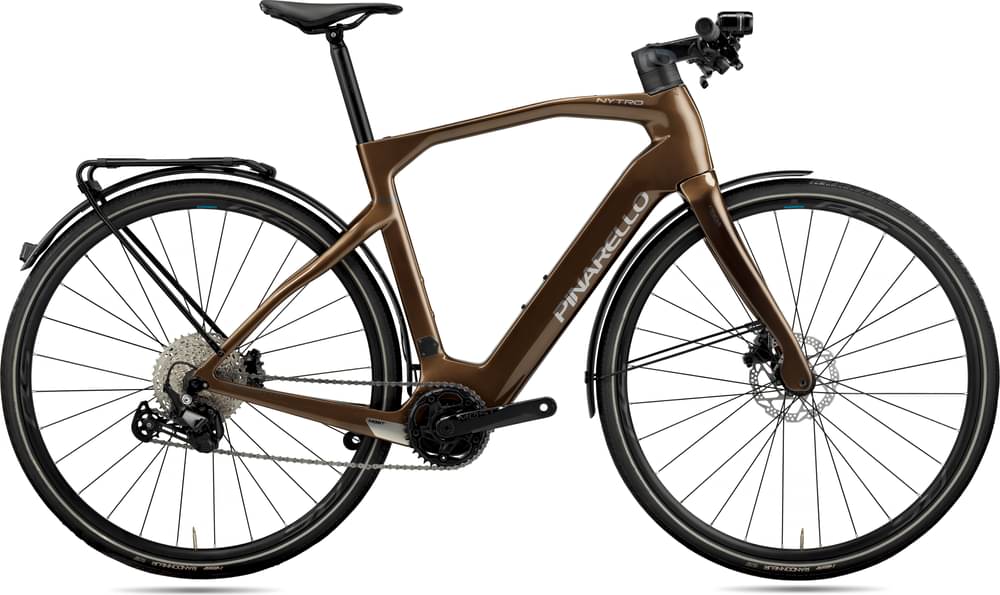
The Pinarello Nytro E Allroad arrived for 2023 as part of the brand’s TQ-HPR50-based Nytro E platform, and it stands apart from earlier Pinarello e-bikes by pairing a lightweight mid-drive system with a clearly all-road brief rather than a pure road or urban one. The frame uses integrated battery packaging, internal/TiCR-oriented cable routing, a carbon chassis, and a carbon Onda fork, while the platform itself is built around gravel-derived geometry with 437 mm chainstays and clearance derived from a chassis designed to accept up to 50 mm tires. In Allroad trim, Pinarello shifts that platform toward flat-bar mixed-surface use, creating a bike that sits between fitness/urban e-bikes and drop-bar e-gravel machines.
What makes this generation distinctive is that it does not chase maximum motor output or cargo-bike practicality. Instead, it uses the compact TQ-HPR50 system to preserve a more conventional bicycle feel, with geometry and frame design aimed at stability on rough roads, gravel paths, and everyday mixed-terrain riding. In the market, the Nytro E Allroad is a premium carbon e-allroad platform that prioritizes ride feel, integration, and composure over outright power or touring range. That places it in a narrower but well-defined niche: riders who want discreet assistance and Pinarello’s road-derived chassis character in a bike that can handle poor pavement and light unpaved use without becoming a heavy-duty adventure rig.
Geometry & fit.
4 sizes published.
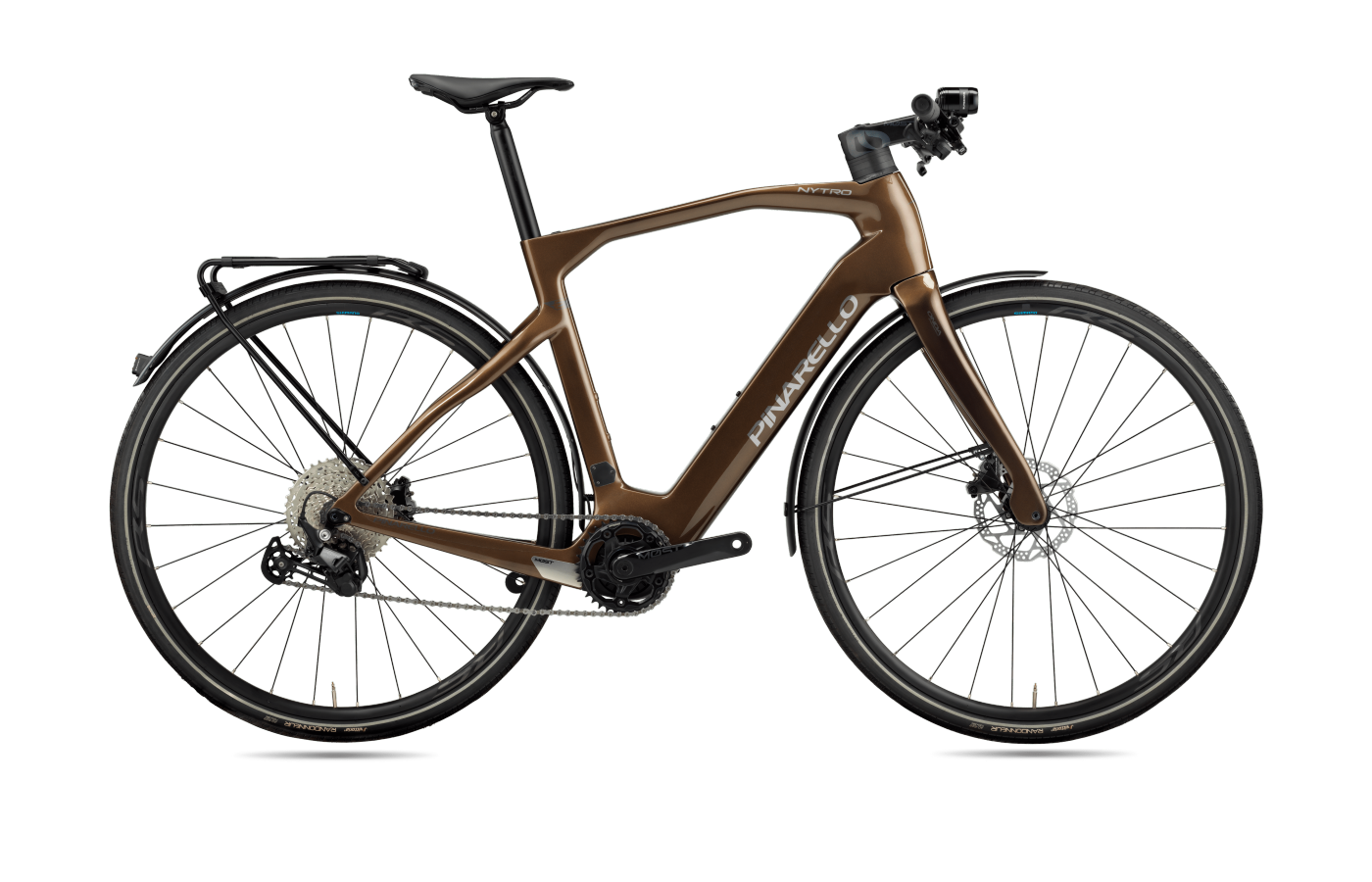
The available geometry points to a stable, comfort-oriented all-road fit rather than an aggressive road position. Stack rises from 571.2 mm in size 500 to 622.3 mm in size 575, while reach stays moderate at 364.2 mm to 388.3 mm. That combination suggests a relatively upright rider posture with enough cockpit length for efficient pedaling, but without the stretched, low front end associated with race bikes. Effective top tube lengths from 535 mm to 581 mm reinforce that this is meant to accommodate longer mixed-surface rides and everyday usability, especially in a flat-bar configuration.
Handling numbers also support the bike’s all-road brief. The head tube angle ranges from 70 to 71.25 degrees, which is on the relaxed side and should calm steering on rough surfaces and descents. The 437 mm chainstays are notably longer than a typical road bike’s, adding straight-line stability and helping keep the bike composed with larger tires and motor-system weight. A 78 mm BB drop on the smaller sizes, easing to 74 mm on the largest, points to a planted center of gravity, which should improve confidence on gravel and poor pavement. Overall, the geometry favors predictable handling and rider comfort over quick, razor-sharp road-bike responses.
Where the handlebar sits relative to the bottom bracket — the single most important fit pair.
01Fit geometry5 values
03Handling geometry5 values
Which size should I buy?
Slide your height to see the recommended size. GearWise's fit algorithm works from the published stack, reach, and ETT — the brand's own recommendation may differ.
→Calculated from GearWise's own stack / reach / ETT algorithm — the brand's size chart may recommend a different size, and a proper bike fit beats any calculator.
The lineup.
1 build, ranging $6,000.
Based on the provided data, the Nytro E Allroad is offered in a single E5 Shimano Deore build. Pricing shown in reviews places it at $3,249 for the 2023 model and $3,049 for the 2024 model. Core equipment includes the TQ-HPR50 motor, a 360 Wh integrated battery, a carbon frame, 700c aluminum wheels, Shimano hydraulic disc brakes, and a Shimano Deore drivetrain.
That build tells a clear story about priorities. Pinarello has put the budget into the carbon chassis and premium lightweight drive system rather than into a high-end groupset or wheelset. The Deore kit is a practical, durable choice for mixed-surface riding and reviewers specifically note its dependable shifting under load, but it is also a modest spec level relative to the frame and brand positioning. As a result, the Allroad’s value proposition rests less on headline component prestige and more on getting the TQ motor and integrated carbon platform at a comparatively accessible entry price for this type of e-bike.
From the press.
3 reviews from the cycling press.
Reviewers consistently describe the Nytro E Allroad as one of the more natural-feeling bikes in this category. Opticycles’ assessment centers on the TQ-HPR50 motor’s quiet, discreet behavior, noting that the bike feels more like a “light e-road bike” than a “bulky e-gravel contraption.” Across the review material, that theme repeats: the assist is subtle, the bike pedals like a familiar non-electric machine, and the 40 mm tires do a meaningful amount of work in smoothing chatter on gravel, broken backroads, and mixed forest tracks. The overall ride is repeatedly characterized as planted, composed, and nimble enough for fast exploratory riding rather than slow, overbuilt utility use.
The praise is balanced by clear limitations. Several reviewers note that the 360 Wh battery is best suited to roughly 80–100 km single-day rides when assist is managed carefully, not long multi-day outings with limited charging. The TQ system’s restrained character is also a drawback for some use cases: on long, steep, loaded climbs, reviewers found the 50 Nm motor underwhelming compared with more powerful e-bike systems. Value is another recurring caveat. The carbon frame, TQ motor, and refined ride quality are seen as genuine strengths, but the Shimano Deore build is viewed as practical rather than impressive for a Pinarello at this price level, which keeps the bike from being a clear spec-for-money standout.