Ridley
E-Kanzo AdventureSram Apex XPLR 1x12sp
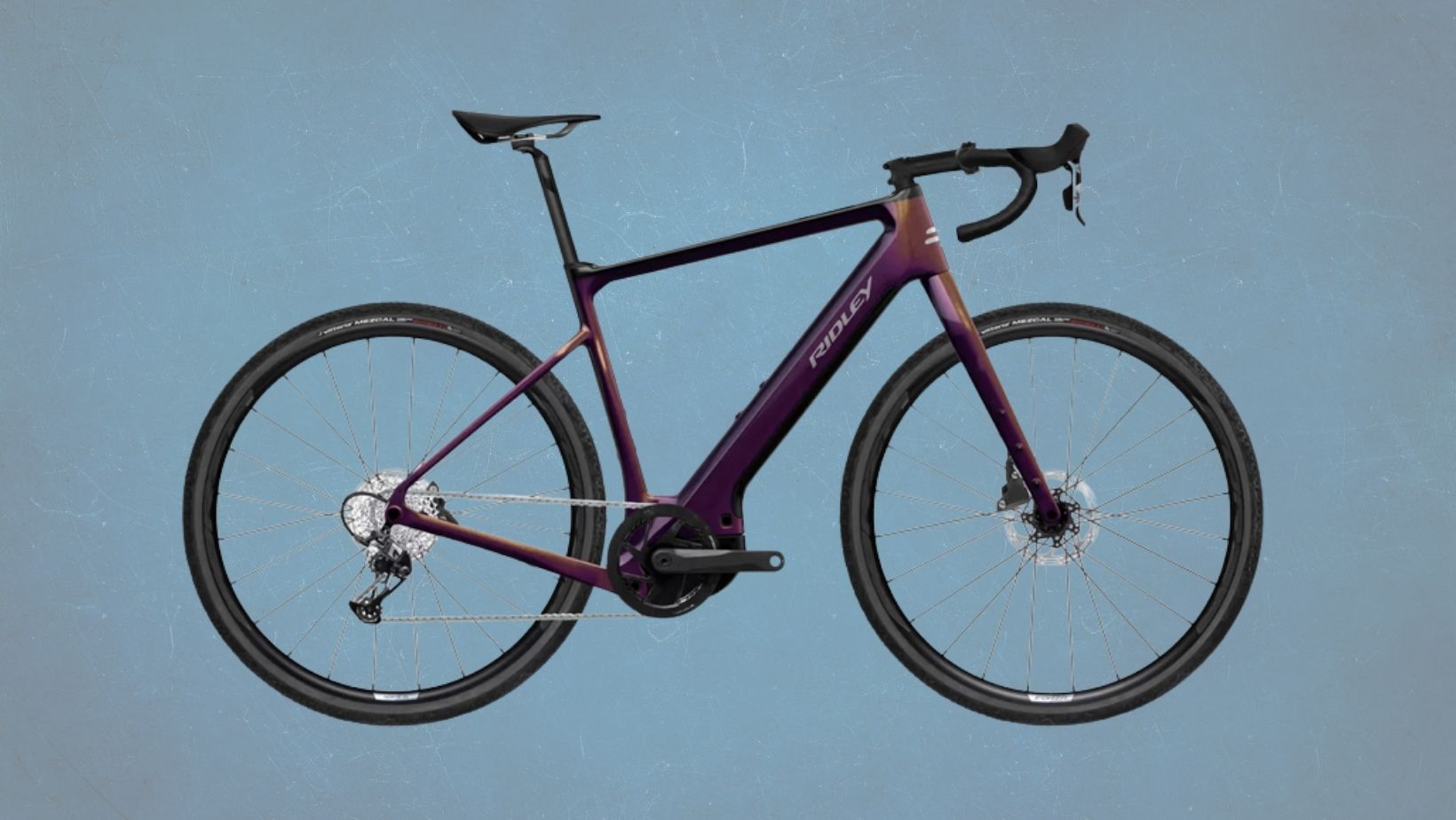
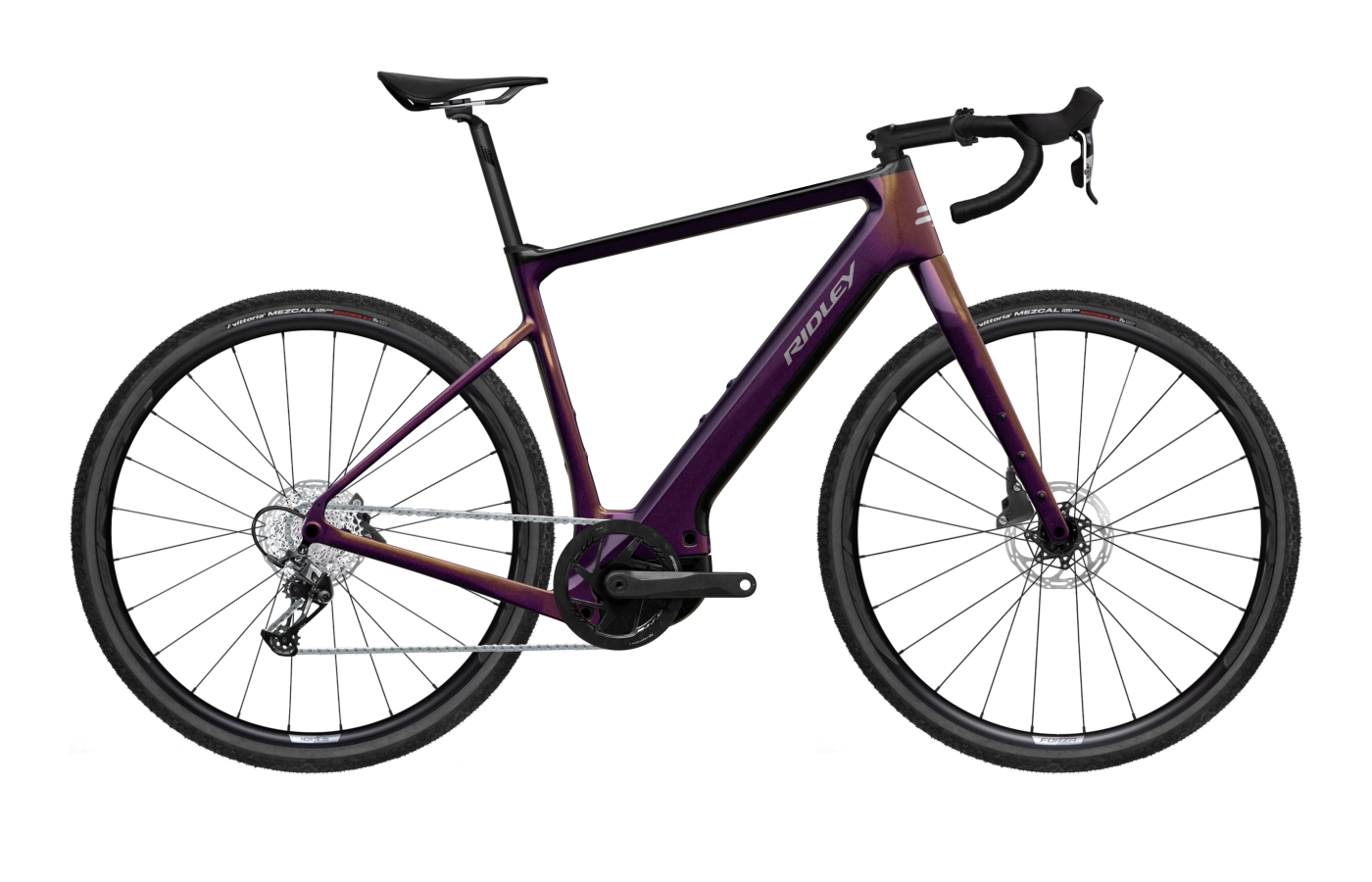
The Ridley E-Kanzo Adventure is Ridley’s dedicated electric adventure-gravel platform, introduced as an e-bike counterpart to the Kanzo Adventure rather than a lightly modified all-road gravel bike. Its defining feature is the use of Bosch’s Performance Line CX mid-drive paired with a 600 Wh integrated Powertube battery, a combination that places it firmly on the high-power end of the e-gravel market. Ridley builds that system around a carbon frame with adventure-specific priorities: generous 54 mm / 29x2.1 in tire clearance, multiple bikepacking mounts, a top-tube Bosch System Controller with Mini Remote, and geometry carried over from the Kanzo Adventure but adapted for the demands of a heavier, motorized platform.
What distinguishes this generation is how clearly it is aimed at loaded exploration rather than speed-focused gravel riding. The frame is suspension-corrected, using a longer 435 mm axle-to-crown fork dimension instead of the 400 mm figure on the non-electric Kanzo Adventure, and the overall package is designed to remain composed with larger tires and luggage on rough terrain. In market terms, this puts the E-Kanzo Adventure closer to an electric drop-bar expedition bike than to lighter, lower-assist e-gravel bikes that prioritize road feel. It is a specialized option for riders who want serious off-pavement range, cargo capacity, and technical-terrain stability, not a general-purpose commuter or race-oriented gravel machine.
Spec sheet.
Every component shipped with this build.
Geometry & fit.
3 sizes published.
The geometry points clearly toward stability. Across all sizes, the E-Kanzo Adventure uses a 70.5-degree head tube angle, a long 435 mm chainstay, and a 75 mm bottom bracket drop. Those numbers are notably adventure-oriented for a drop-bar bike: the slack front end slows steering and adds confidence on descents, the long rear center helps keep the bike composed under load, and the deep BB drop lowers the rider’s center of gravity for a more planted feel. Wheelbase figures of 1045 mm in S, 1075 mm in M, and 1105 mm in L reinforce that message, indicating a bike designed to track steadily rather than react sharply.
Fit is fairly upright and conservative, especially when combined with the e-bike’s intended use. Stack and reach come in at 590/380 mm in S, 610/405 mm in M, and 630/430 mm in L, which should give most riders a comfortable front-end height without an especially stretched racing position. The 74-degree seat tube angle is neutral and should work well for seated endurance riding rather than aggressive forward weighting. Taken together, the geometry suggests a bike that favors long hours, rough surfaces, and loaded handling security over quick, flickable responses.
Where the handlebar sits relative to the bottom bracket — the single most important fit pair.
01Fit geometry6 values
03Handling geometry5 values
Which size should I buy?
Slide your height to see the recommended size. GearWise's fit algorithm works from the published stack, reach, and ETT — the brand's own recommendation may differ.
→Calculated from GearWise's own stack / reach / ETT algorithm — the brand's size chart may recommend a different size, and a proper bike fit beats any calculator.
The lineup.
2 builds.
Ridley offers the E-Kanzo Adventure in two builds: a SRAM Apex XPLR 1x12-speed model and a Shimano GRX800 Di2 1x12-speed model. Both sit on the same carbon frame and Bosch-powered platform, so the main distinction is drivetrain level and shifting format rather than a change in the bike’s core capability. The Apex XPLR version is the more accessible entry point into the range, while the GRX800 Di2 build targets riders who want electronic shifting and a higher-end gravel groupset on an already premium chassis.
Even without detailed component-by-component pricing here, the split is straightforward. The Apex build is likely the value-oriented option for riders prioritizing the motor system, tire clearance, and bikepacking frame features over top-tier transmission parts. The GRX800 Di2 version is the more refined build for buyers willing to pay extra for faster, more precise electronic shifting and a more upscale finish. Since the motor, battery, and frame architecture are the real headline features of this model, both builds are fundamentally buying into the same adventure-focused concept.
From the press.
1 review from the cycling press.
Review coverage consistently describes the E-Kanzo Adventure as a very stable, load-capable e-gravel bike with unusually strong climbing support. Reviewers repeatedly point to the Bosch Performance Line CX motor’s 100 Nm output and the 600 Wh battery as central to the bike’s character, noting that the assistance feels progressive rather than abrupt despite the high torque. The bike’s low center of gravity, wide tire clearance, and adventure-focused geometry are frequently credited for giving it a planted, predictable feel on loose descents, technical mixed terrain, and long rides with bikepacking gear. Several reviewers also praise the comfort contribution from the carbon frame’s compliant rear triangle and the ability to run very high-volume tires, especially the stock 29x2.1 Vittoria Mezcal setup.
The main criticism is weight. Reviewers estimate the bike at around 15 kg, which they generally accept as reasonable for a high-powered carbon e-gravel bike, but they also note that it becomes a drawback in hike-a-bike sections and other situations where the bike must be carried. Some also observe that the bike’s calm, deliberate handling is less lively than lighter, more performance-oriented e-gravel alternatives, and that the Bosch system’s very high assistance can reduce the traditional pedal-bike feel if not tuned carefully. Even so, the overall verdict is strongly positive: reviewers see it as a purpose-built premium machine that excels when the brief is long-distance, heavily loaded, rough-surface adventure rather than everyday versatility.