Ridley
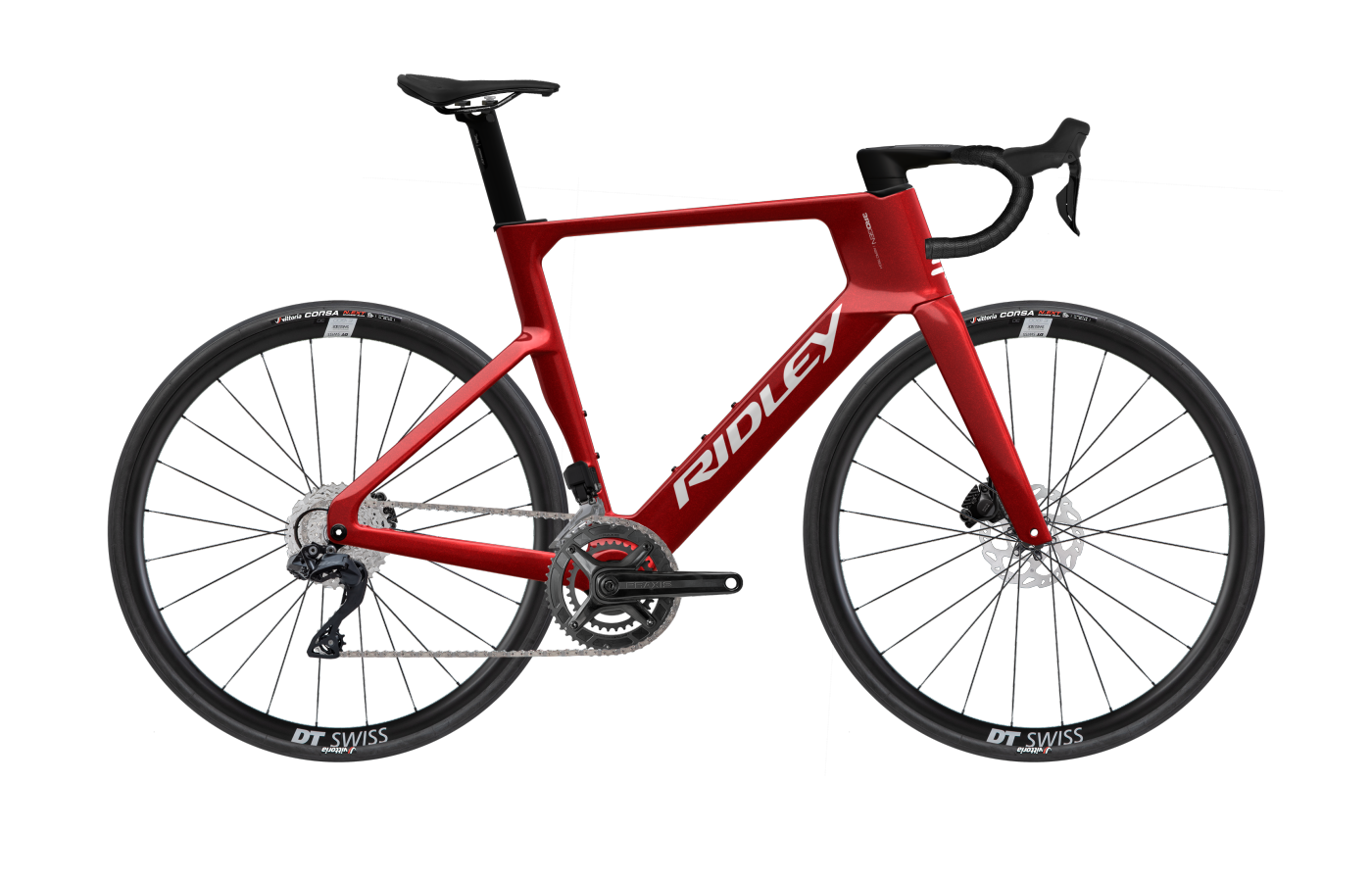
E-NoahShimano 105 DI2 // 2x12s
The Ridley E-Noah is a lightweight electric aero road bike built around the same core idea as the third-generation Noah Fast rather than a separate endurance platform. Ridley has packaged a TQ mid-drive system behind the chainrings and integrated the battery into the deep aero down tube, with the result that the bike remains visually very close to a conventional Noah. That stealth integration is central to the model’s identity: this is not an upright utility e-bike with drop bars, but an e-road bike aimed at riders who still want an aero race-bike silhouette and road-bike pedaling feel.
What distinguishes the E-Noah is the way Ridley has moderated the underlying Noah formula for real-world distance riding. Official material and launch coverage point to geometry that is intentionally more forgiving than the standard Noah, with slightly calmer handling and a more comfortable fit to reduce the fatigue that comes with an uncompromising race bike. In market terms, it sits in the premium lightweight e-road segment alongside other high-end performance-focused models, targeting experienced road riders who want discreet assistance for longer rides, steeper terrain, or staying with faster groups without giving up the speed and aesthetics of an aero bike.
Spec sheet.
Every component shipped with this build.
Geometry & fit.
4 sizes published.
The published geometry shows a bike that is clearly road-race derived but tuned away from twitchy pure-aero handling. In size M, the E-Noah pairs a 565 mm stack with a 403 mm reach, a 72.5° head tube angle, 410 mm chainstays, and a 1015 mm wheelbase. Those are measured, moderate numbers for an aero road bike: the relatively generous stack and restrained reach support a less aggressive position, while the 72.5° head angle and longer wheelbase point to calmer steering and better high-speed stability than a sharper crit-oriented setup.
Across the size range, the pattern stays consistent. Chainstays remain 410 mm throughout, wheelbase grows from 988 mm in XS to 1035 mm in L, and head angle is 72° in XS and 72.5° from S to L. That suggests Ridley prioritized predictable handling and rider confidence over ultra-quick front-end response. The 70 mm BB drop on most sizes, increasing to 72 mm on XS, should help the bike feel planted through corners, while seat tube angles from 75° in XS to 74° in M/L keep rider weight reasonably centered. In practice, the geometry supports the bike’s intended role as an aero e-road machine for long, fast rides rather than an uncompromising race bike.
Where the handlebar sits relative to the bottom bracket — the single most important fit pair.
01Fit geometry6 values
03Handling geometry5 values
Which size should I buy?
Slide your height to see the recommended size. GearWise's fit algorithm works from the published stack, reach, and ETT — the brand's own recommendation may differ.
→Calculated from GearWise's own stack / reach / ETT algorithm — the brand's size chart may recommend a different size, and a proper bike fit beats any calculator.
The lineup.
2 builds.
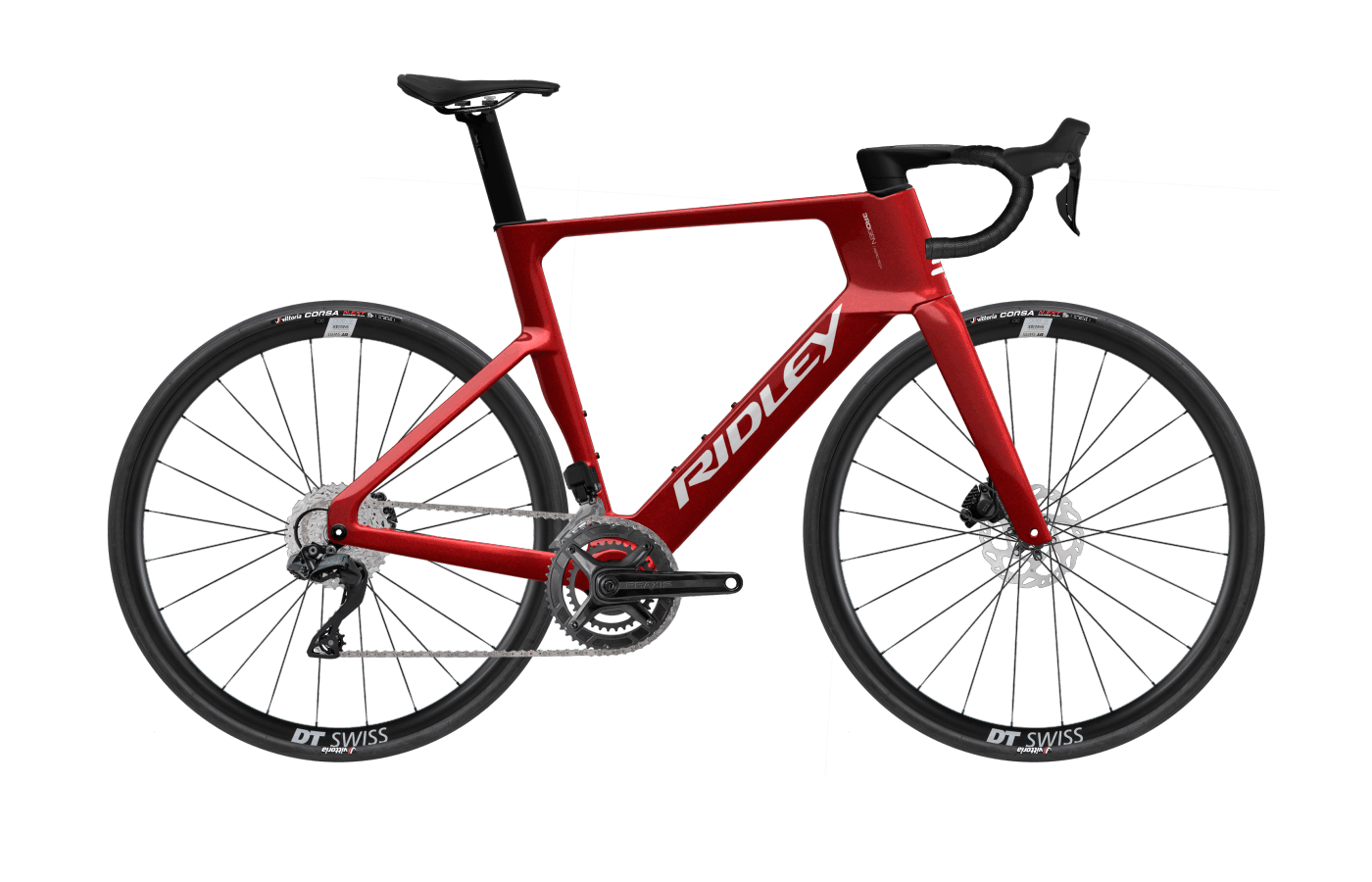
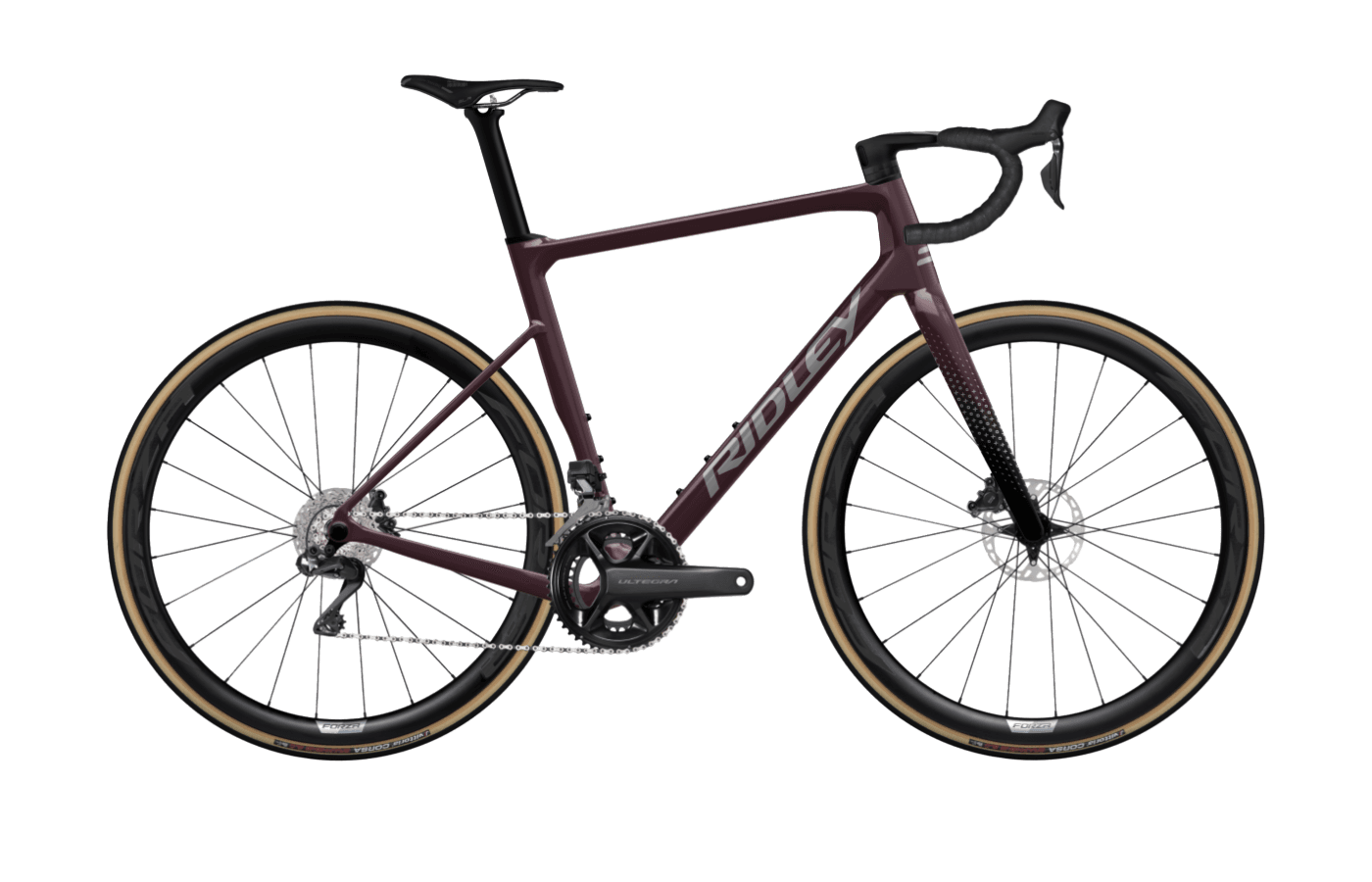
Available builds are straightforward, with Shimano 105 Di2 2x12 and Shimano Ultegra Di2 2x12 options listed. The clearest confirmed price point is €7,099 for the 105 Di2 model, with claimed weight starting from 11 kg. Review coverage also references an Ultegra Di2 version positioned above that entry model, making the range relatively focused rather than sprawling: both builds are aimed at premium lightweight e-road buyers who want electronic shifting and full system integration as standard.
The real spec story is less about a wide spread of component packages and more about the platform itself. Buyers are paying for the aero carbon frame, the hidden TQ drive system, and the unusually clean integration rather than for headline-grabbing value in drivetrain terms. Reviews also mention details such as a Praxis Type-5 crankset and 30 mm Vittoria Corsa N.EXT tires on the lower build, which fit the bike’s brief of blending speed with some all-day road comfort. The 105 Di2 version looks like the practical entry point, while Ultegra Di2 will appeal to riders who want a more premium transmission on the same lightweight electric aero chassis.
From the press.
3 reviews from the cycling press.
Reviewers consistently describe the E-Noah as one of the more convincing executions of the lightweight e-road concept because it preserves much of the feel of a fast acoustic road bike. The Design & Innovation Award jury praised the seamless integration of the TQ HPR40 system and called out its smooth response and natural cut-off above 25 km/h, noting that the bike remains a credible performer even when the motor is no longer assisting. Chinese coverage made a similar point from a rider-use perspective, describing the assistance as subtle rather than forceful and highlighting the standard 135 mm Q-factor as an important detail for riders used to conventional road-bike ergonomics.
The main strengths reviewers identify are stealthy packaging, low overall weight for the category, and a more relaxed handling balance than the standard Noah Fast. Several sources note that the slacker front end and longer wheelbase make the bike more stable and less fatiguing on long rides, while still retaining enough responsiveness to feel like a proper road bike. Weaknesses are more nuanced than fatal: some testers cautioned that the deep aero frame can still produce a firm ride feel, especially compared with dedicated endurance e-road bikes, and the internal battery capacity was seen as potentially limiting for aggressive climbing unless a range extender is added. Price is the other recurring caveat, particularly on the 105 Di2 build, where reviewers argued that buyers are paying for the integration and low-drag TQ system more than for standout drivetrain value alone.