Rocky Mountain
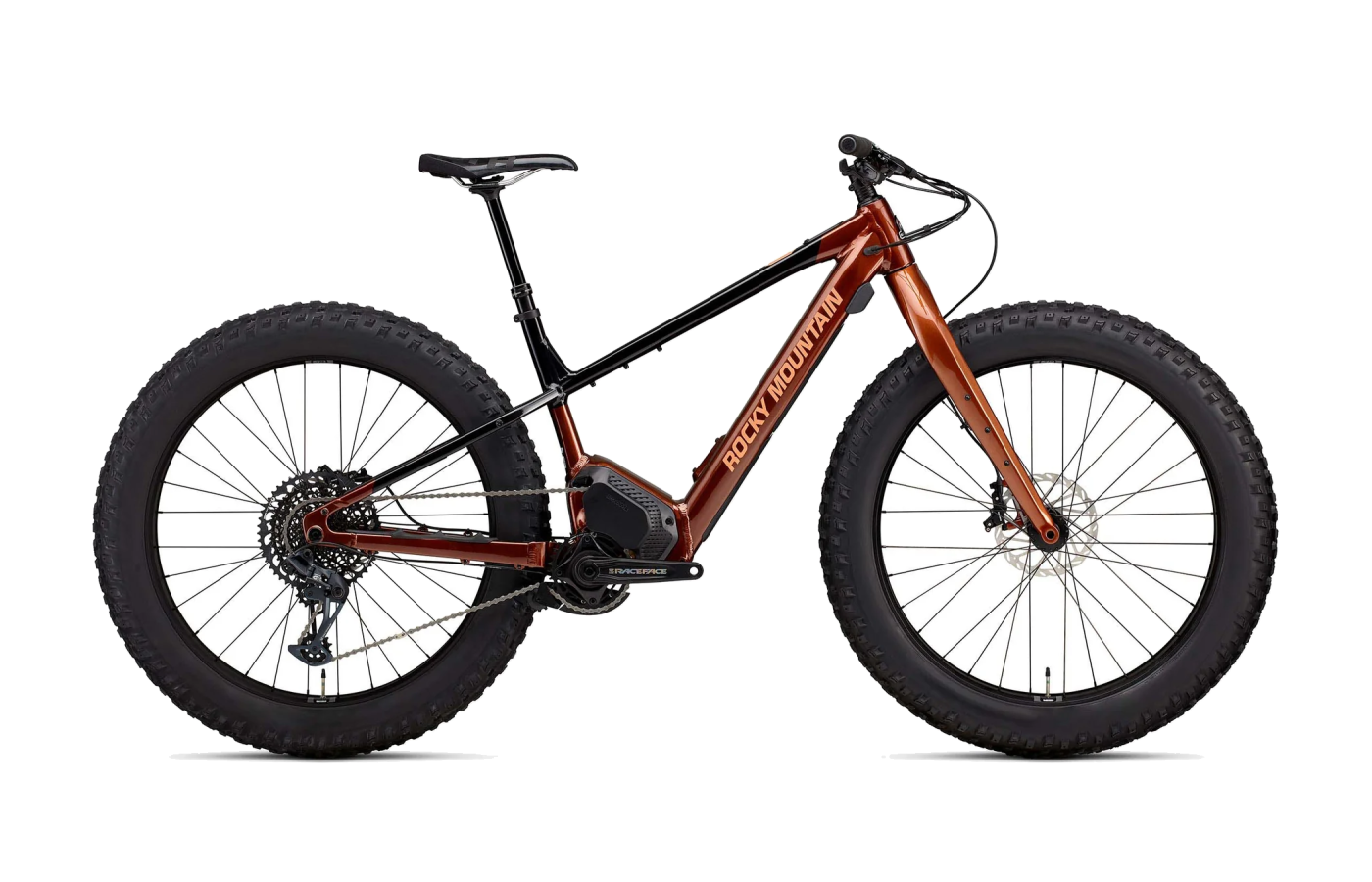
Blizzard PowerplayAlloy 50
The Rocky Mountain Blizzard Powerplay takes the brand’s Blizzard fat-bike platform and turns it into a purpose-built electric hardtail for snow, sand, and other high-drag surfaces. Rather than treating it as a casual cruiser, Rocky Mountain gave it notably trail-oriented numbers for the category: a 66° head angle, 74° seat angle, and a long 460mm rear center to keep the bike stable with 27.5 x 4.5in tires. The layout is unusual and deliberate—an aluminum frame paired with a rigid carbon fat fork—prioritizing simplicity, cold-weather reliability, and cargo/adventure utility over suspension complexity.
Its defining feature is Rocky Mountain’s in-house Dyname 4.0 Class 1 mid-drive, backed by a 720Wh removable battery and the top-tube-integrated Jumbotron display. That combination makes the bike distinct in a niche where many fat e-bikes lean toward upright fit, hub motors, or less refined chassis design. The Blizzard Powerplay is aimed at riders who want a winter-capable machine that still feels like a mountain bike in its handling priorities, with extensive mounting points, enclosed cable routing, dropper compatibility, and optional range-extender support broadening its use beyond snow trails into expedition and mixed-surface riding.
Spec sheet.
Every component shipped with this build.
Geometry & fit.
4 sizes published.
The Blizzard Powerplay’s geometry is notably progressive for a fat bike. Across the size range, the head tube angle is 66° and the seat tube angle is 74°, numbers that place it closer to a modern hardtail trail bike than a traditional upright fat bike. Reach figures of 425mm (S), 450mm (M), 475mm (L), and 500mm (XL) are paired with relatively short stacks for the category—603mm to 627mm—suggesting a more centered, active riding position instead of a high-front-end cruiser posture. That should help riders keep weight on the front wheel in soft terrain while still giving enough front-end confidence for loose descents.
The 460mm chainstay is long by mainstream hardtail standards, but it makes sense here with 27.5 x 4.5in tires and the bike’s intended surfaces. It should improve straight-line stability, climbing traction, and load balance, especially in snow or sand where short rear ends can make a bike feel nervous. Wheelbase numbers from 1192mm in size S to 1266mm in XL reinforce that stable, planted character. A 65mm bottom-bracket drop also helps keep the center of gravity settled, though combined with the long rear center and overall system weight, it likely trades some playfulness for composure and predictable tracking.
Where the handlebar sits relative to the bottom bracket — the single most important fit pair.
01Fit geometry6 values
02Component geometry5 values
03Handling geometry5 values
Which size should I buy?
Slide your height to see the recommended size. GearWise's fit algorithm works from the published stack, reach, and ETT — the brand's own recommendation may differ.
→Calculated from GearWise's own stack / reach / ETT algorithm — the brand's size chart may recommend a different size, and a proper bike fit beats any calculator.
The lineup.
2 builds, ranging $5,169 – $6,089.
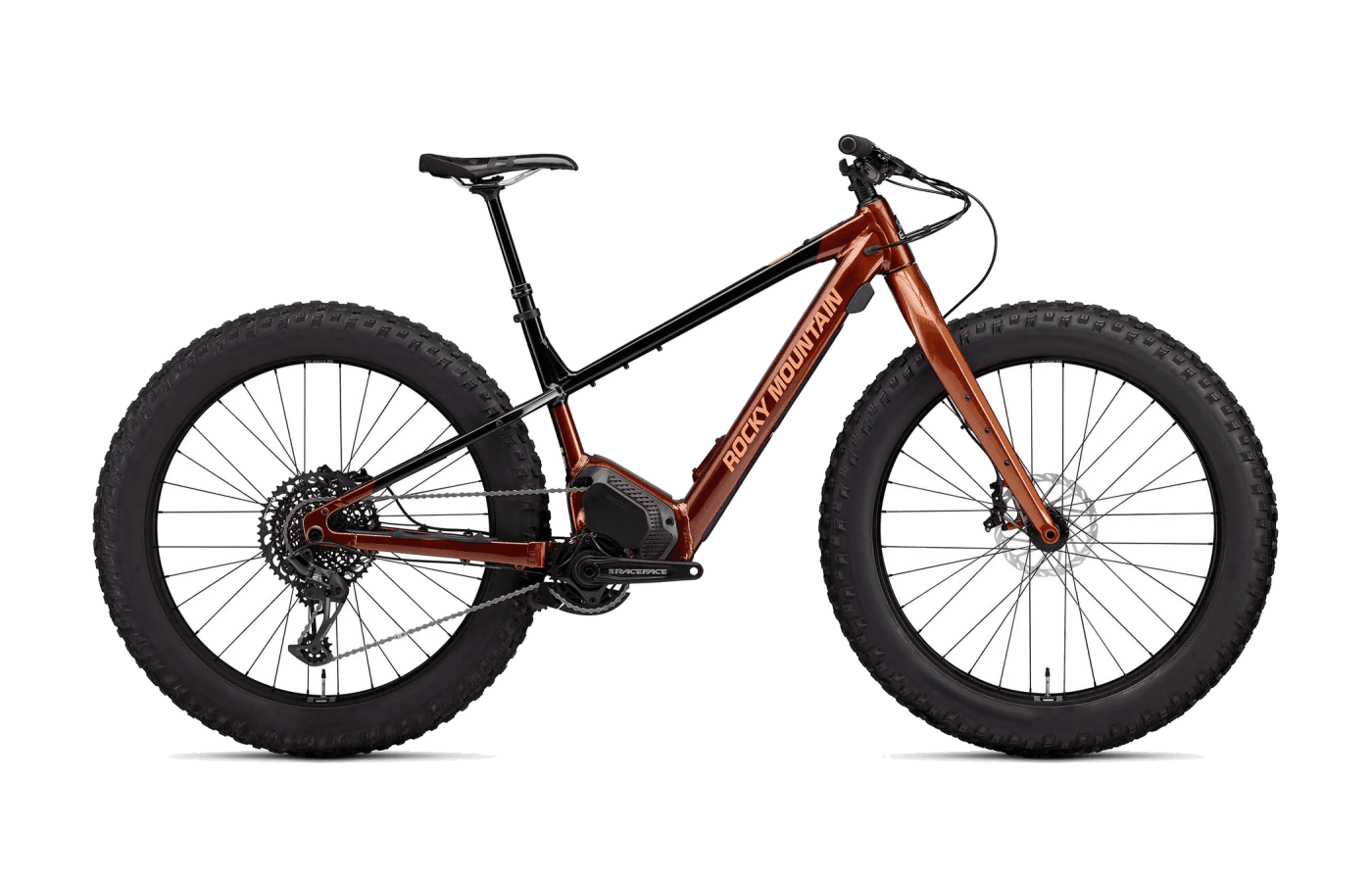
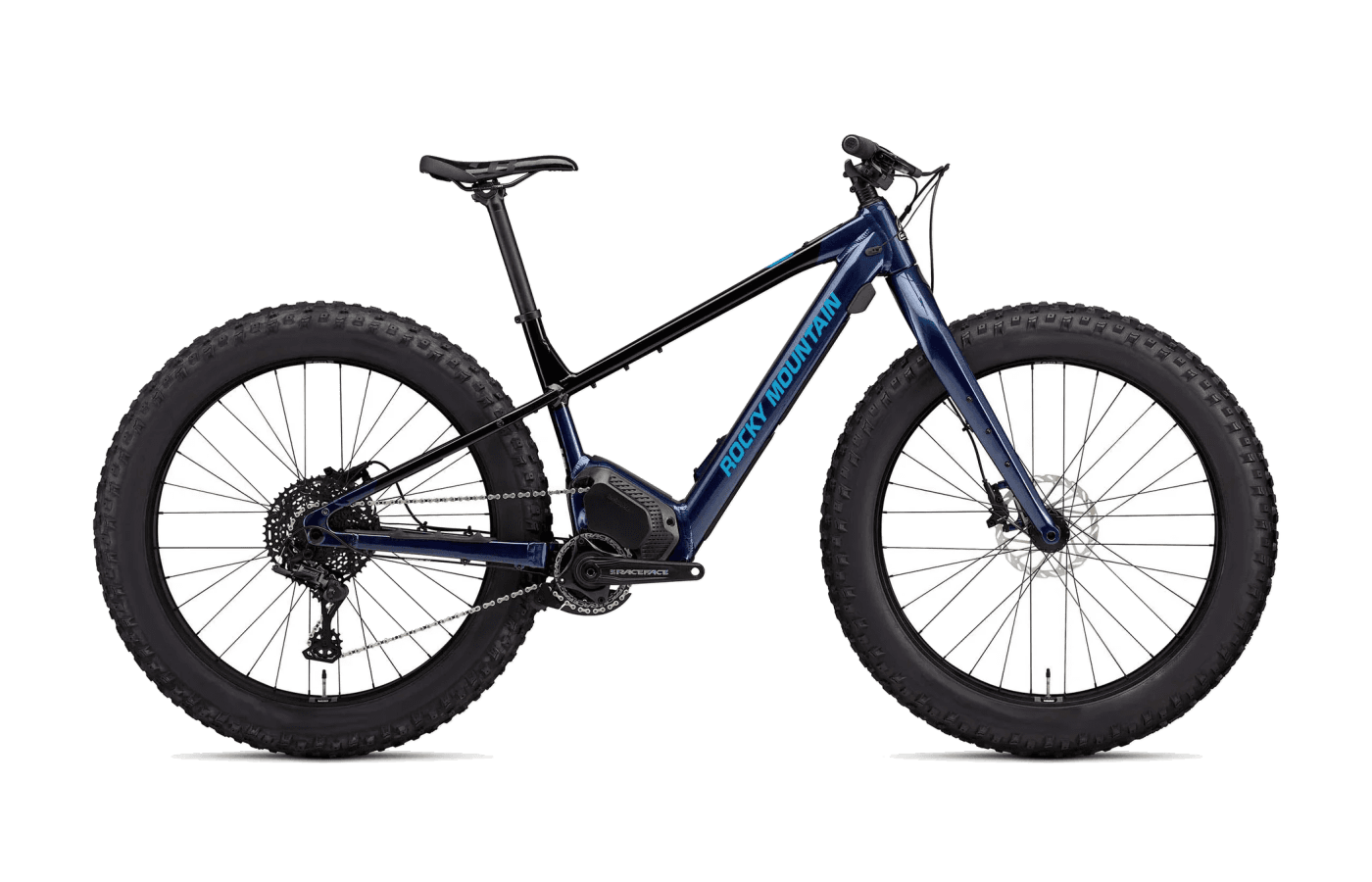
Rocky Mountain offers the Blizzard Powerplay in two 2024 builds: the Alloy 30 at $5,169 and the Alloy 50 at $6,089. Both share the same core platform—aluminum frame, rigid carbon fork, Dyname 4.0 motor, 720Wh removable battery, and 27.5in fat-wheel format—so the decision largely comes down to component level rather than frame or power-system differences.
The more expensive Alloy 50 stands out for its SRAM G2 four-piston brakes and SRAM 10-speed drivetrain, upgrades that make sense on a heavy, high-traction e-fat bike intended for steep and slippery terrain. The Alloy 30 uses a more budget-oriented MicroShift drivetrain and SRAM Level dual-piston brakes, which should keep cost down but are less substantial in terms of braking power. That makes the Alloy 30 the more accessible entry point into the platform, while the Alloy 50 is the better match for riders who expect harder descending, more frequent winter use, or simply want stronger stopping performance for the bike’s weight and speed potential.
From the press.
1 review from the cycling press.
Early coverage consistently frames the Blizzard Powerplay as a highly specialized but well-executed winter e-bike. Reviewers highlight the Dyname 4.0 motor as the central reason the bike works: its 700W peak output and 350% assist are repeatedly cited as transformative on snow and ice, turning steep, high-resistance climbs into manageable efforts. The rigid chassis is also viewed positively in this context, with the carbon fork and 27.5 x 4.5in tires supplying enough compliance for the bike’s intended terrain while avoiding the extra complexity of suspension in cold, messy conditions.
Reviewers also point to the bike’s trail-oriented geometry as a meaningful differentiator from more utility-focused fat e-bikes, noting that it avoids feeling like a tank despite its category and mass. At the same time, that mass remains the main drawback. The planted feel helps the bike track through soft terrain and descend with confidence, but it also reduces low-speed maneuverability and makes the bike less lively to manual or muscle around. Other caveats are more practical than dynamic: the studs for the VeeTire Snow Avalanche tires are included but not installed, charging is said to take up to about four hours, and there is limited hard range data in current reviews. Overall, reviewers see it as an expensive but convincing tool for riders who genuinely need an e-fat bike for winter conditions rather than a general-purpose eMTB.
