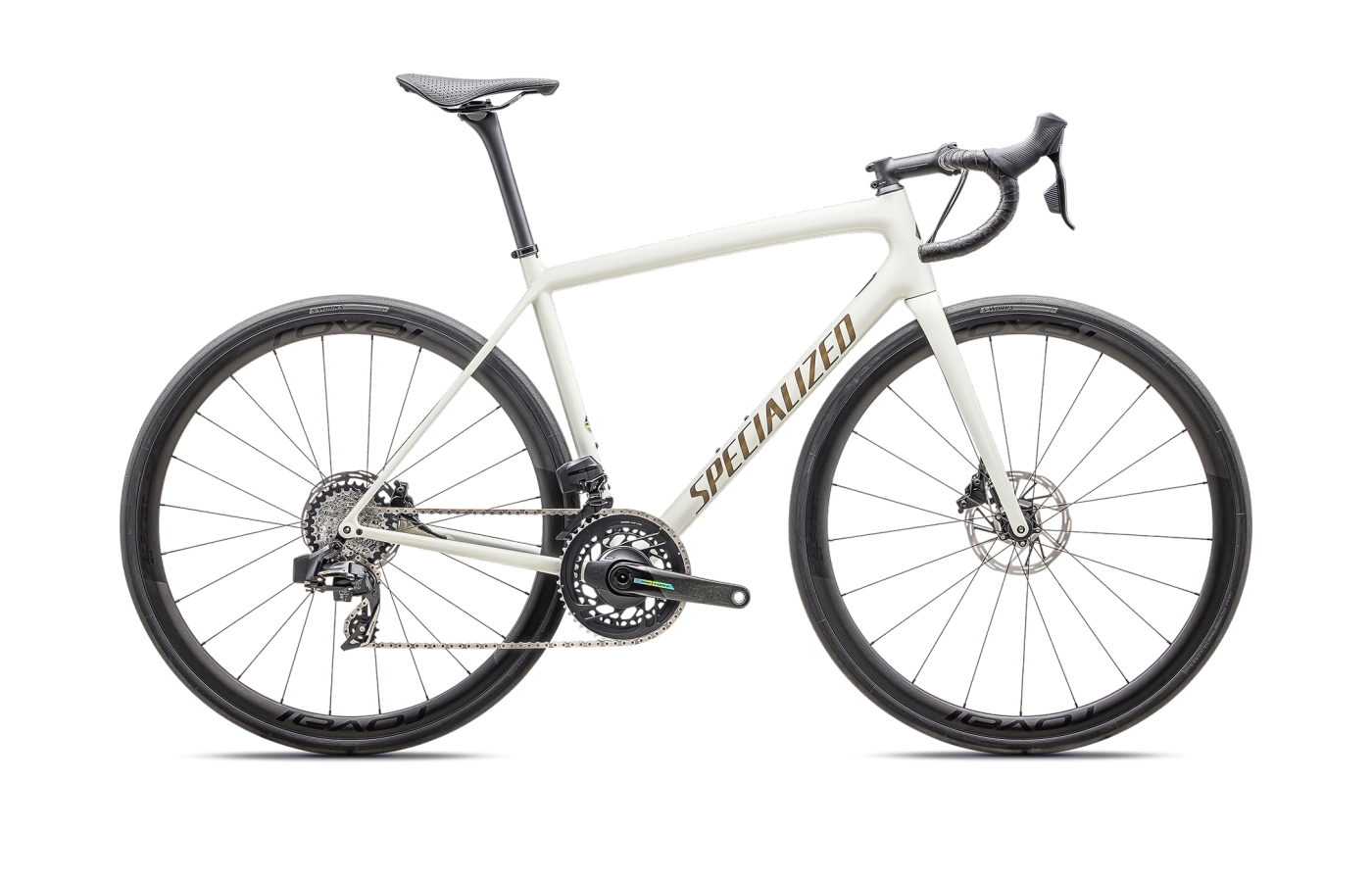
The first-generation Specialized Aethos was conceived as an ultra-light disc-brake road bike that deliberately stepped away from the aero race-bike trend. Rather than using deep tube profiles or heavily integrated packaging, Specialized built the Aethos around low weight and what it described as balanced ride feel, using more traditional rounder tube shapes and a highly optimized carbon layup. The headline number was the claimed 585 g S-Works frame in size 56, which immediately positioned the bike as one of the lightest disc-road platforms of its era.
In use, Aethos 1 sat squarely in the high-end climbing and all-round road category. Its front end used a conventional two-piece cockpit with cables routed externally before entering the frame and fork, making it notably easier to service and simpler to adjust than many fully integrated contemporaries. At the same time, its fit was closer to Specialized's racier road bikes than to a relaxed endurance design, with geometry aligned closely to the Tarmac and a lower stack than the later Aethos 2. Combined with road-focused tire clearance generally cited around 32 mm, that gave the original Aethos a clear identity: a lightweight, sharp-handling premium road bike for riders who prioritized low mass, clean handling, and mechanical practicality over aerodynamic gains.
Where to get it.
1 retailer.
Spec sheet.
Every component shipped with this build.
No specs available yet.
The lineup.
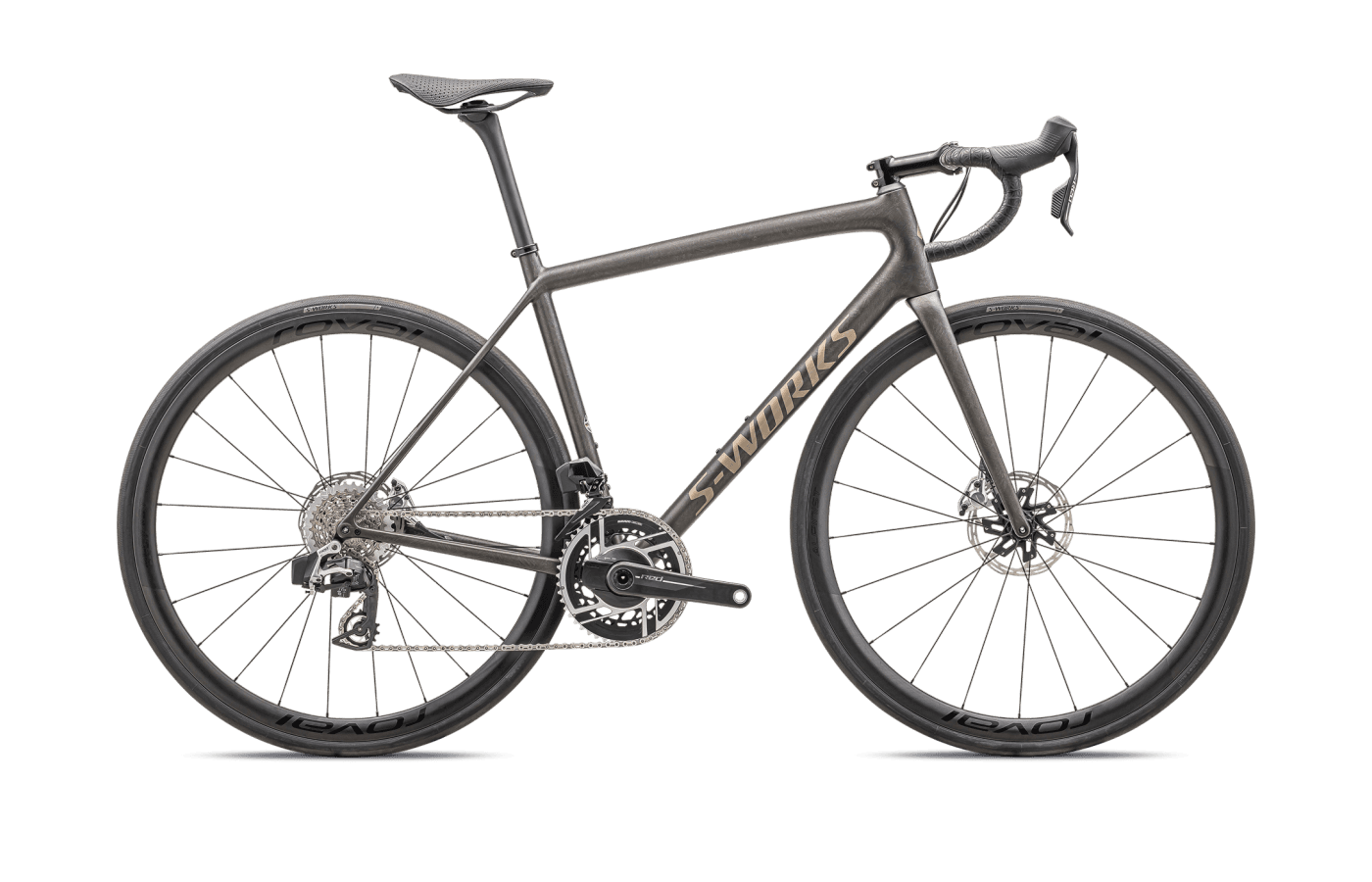
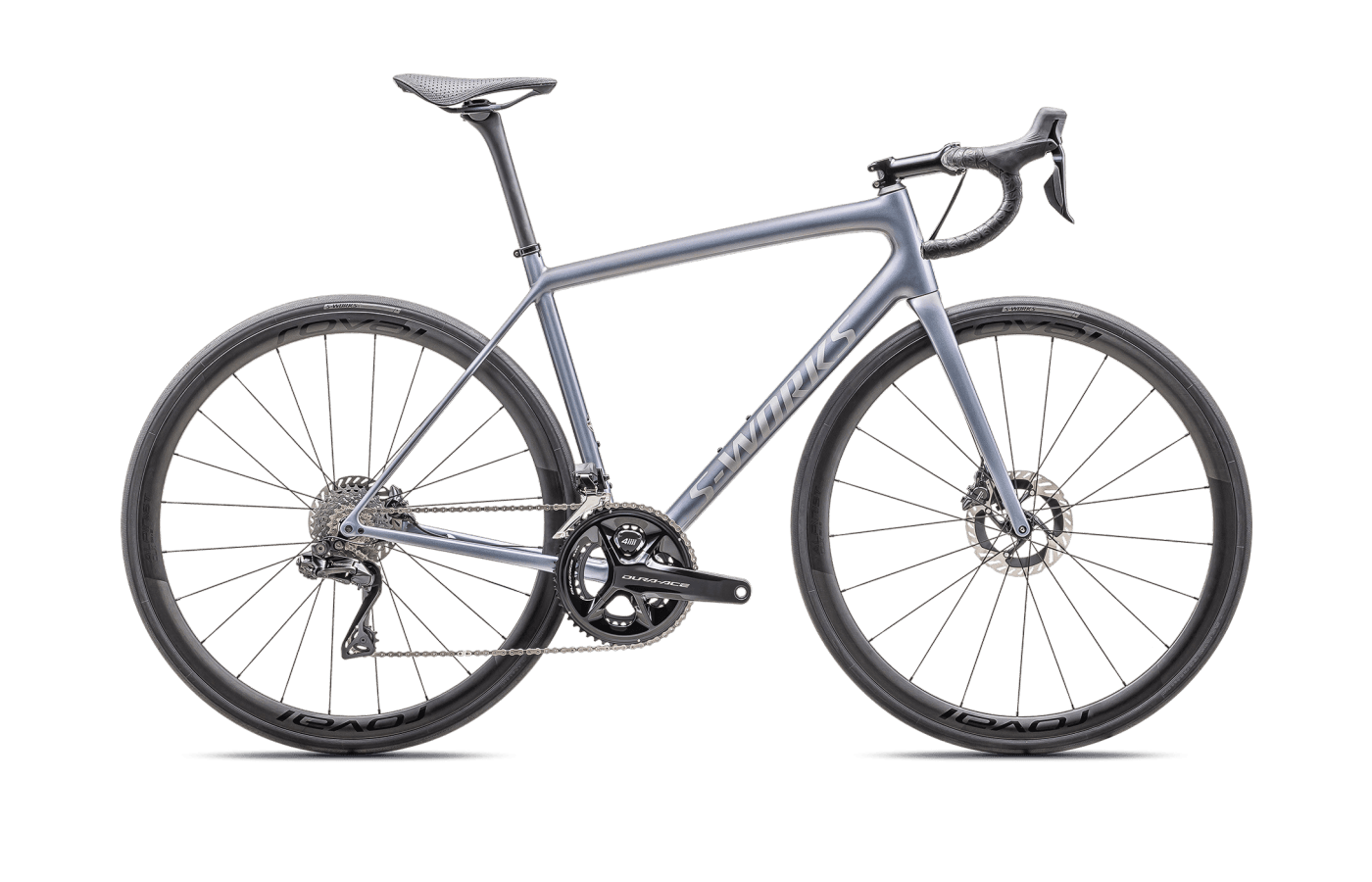
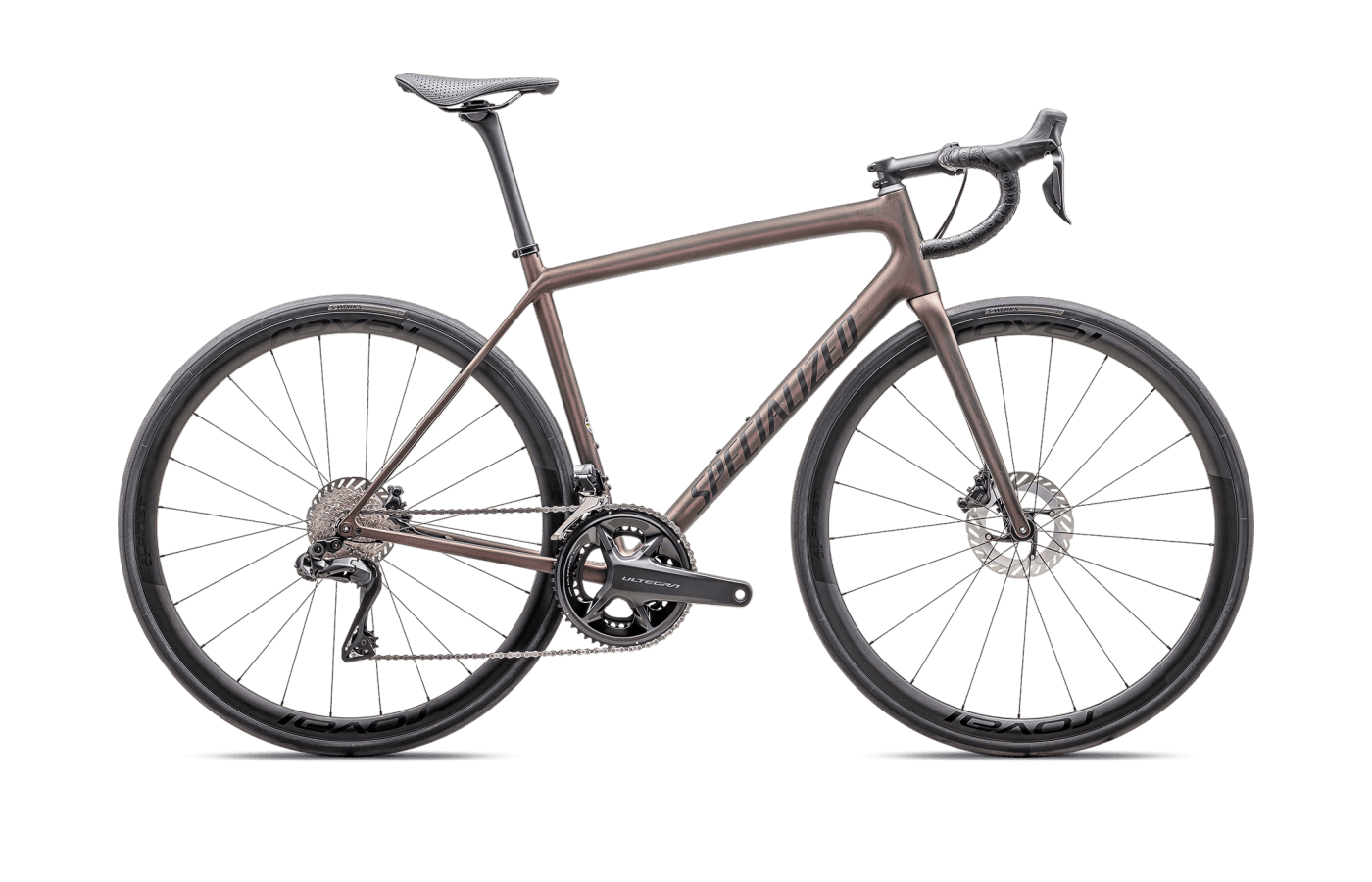
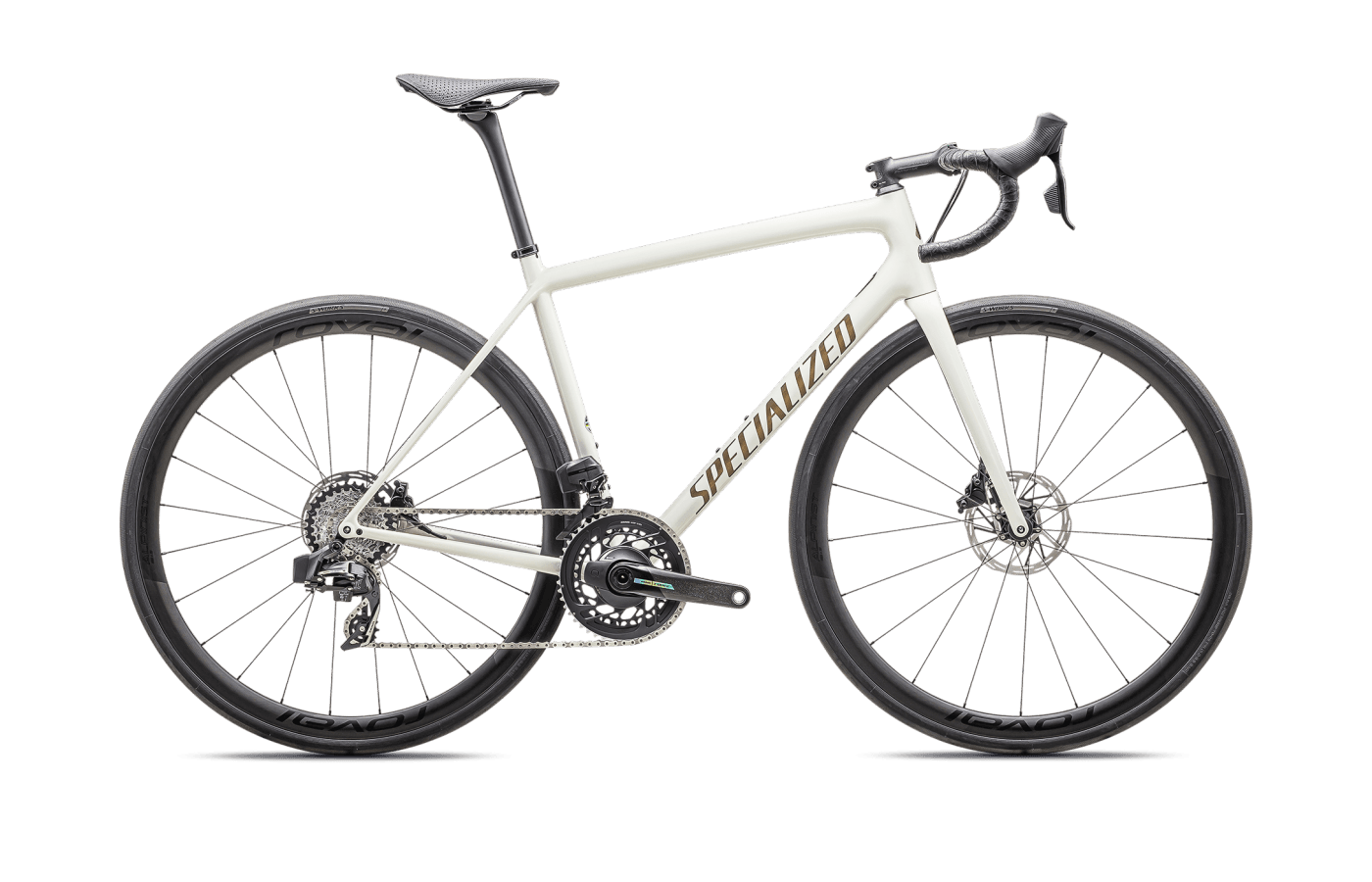
4 builds, ranging $7,000 – $11,500.
The available Aethos 1 range was tightly focused at the premium end of the market. The Pro models were listed at $6,999.99 and offered a choice between Shimano Ultegra Di2 and SRAM Force eTap AXS, putting electronic shifting at the entry point of the line. Above that, the S-Works complete bikes came in at $11,499.99, again split between Shimano Dura-Ace Di2 and SRAM RED AXS, reflecting a straightforward two-tier structure built around drivetrain preference and top-end component level.
That build strategy underscored the Aethos's position as a no-compromise lightweight road platform rather than a broad, value-driven range. The Pro versions delivered the same core concept with upper-tier electronic groupsets at a substantially lower price than the flagship bikes, while the S-Works models were aimed at riders chasing the lightest and most prestigious package available. With both Shimano and SRAM options offered at each level, Specialized made drivetrain ecosystem a primary buying decision rather than forcing riders into a single spec direction.