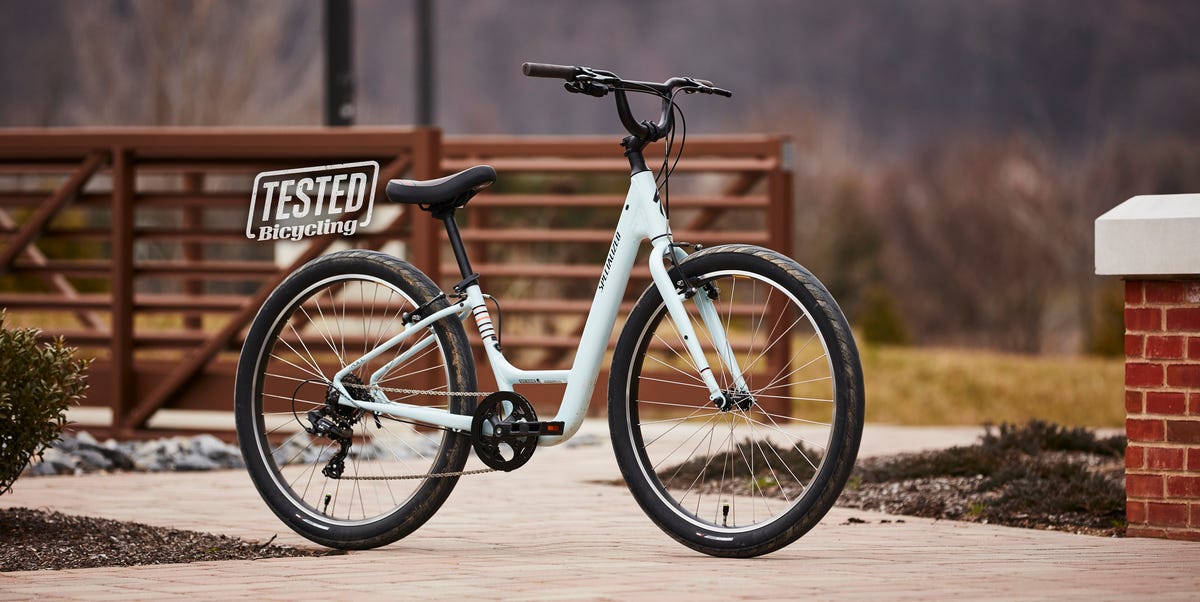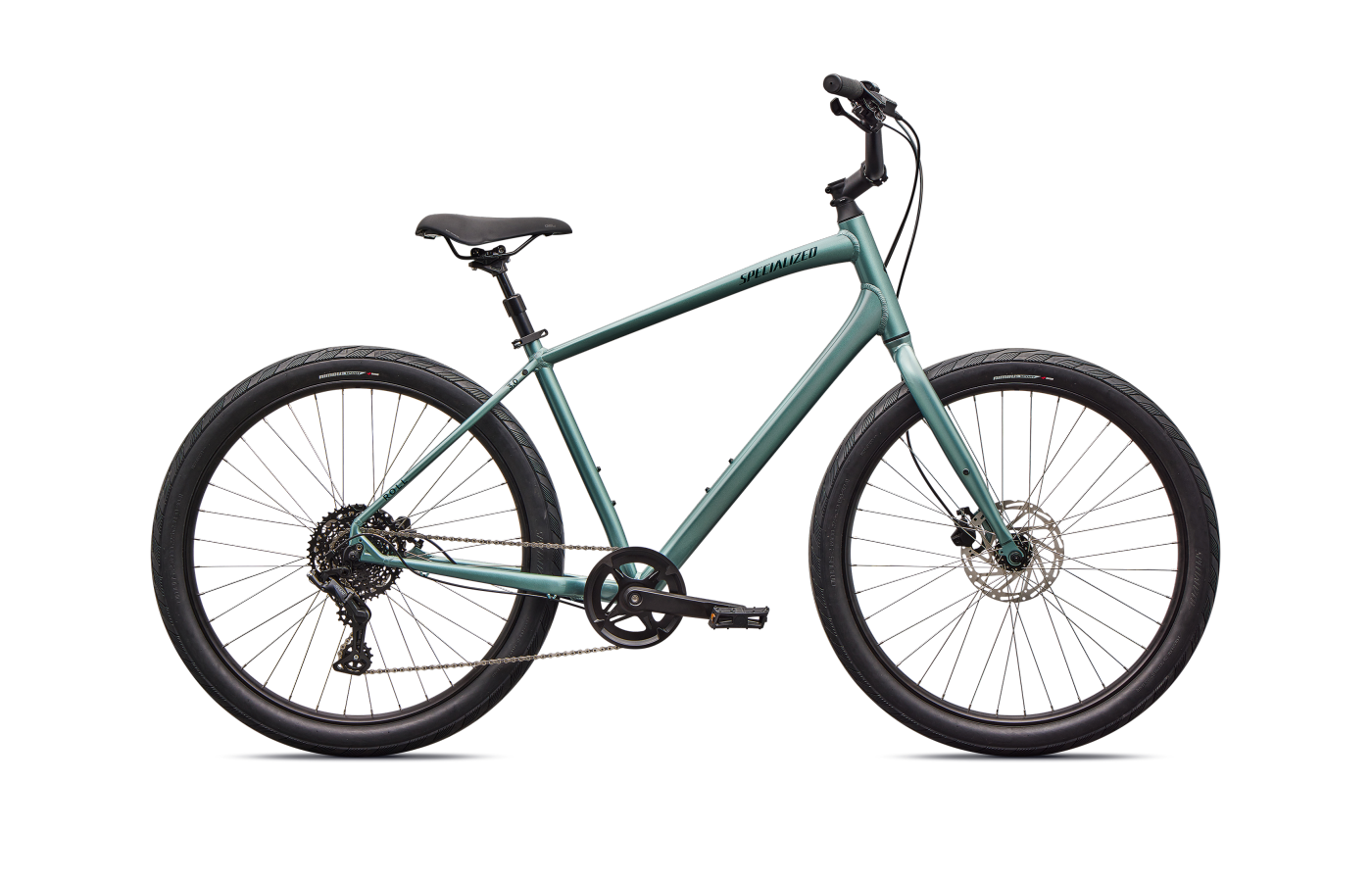
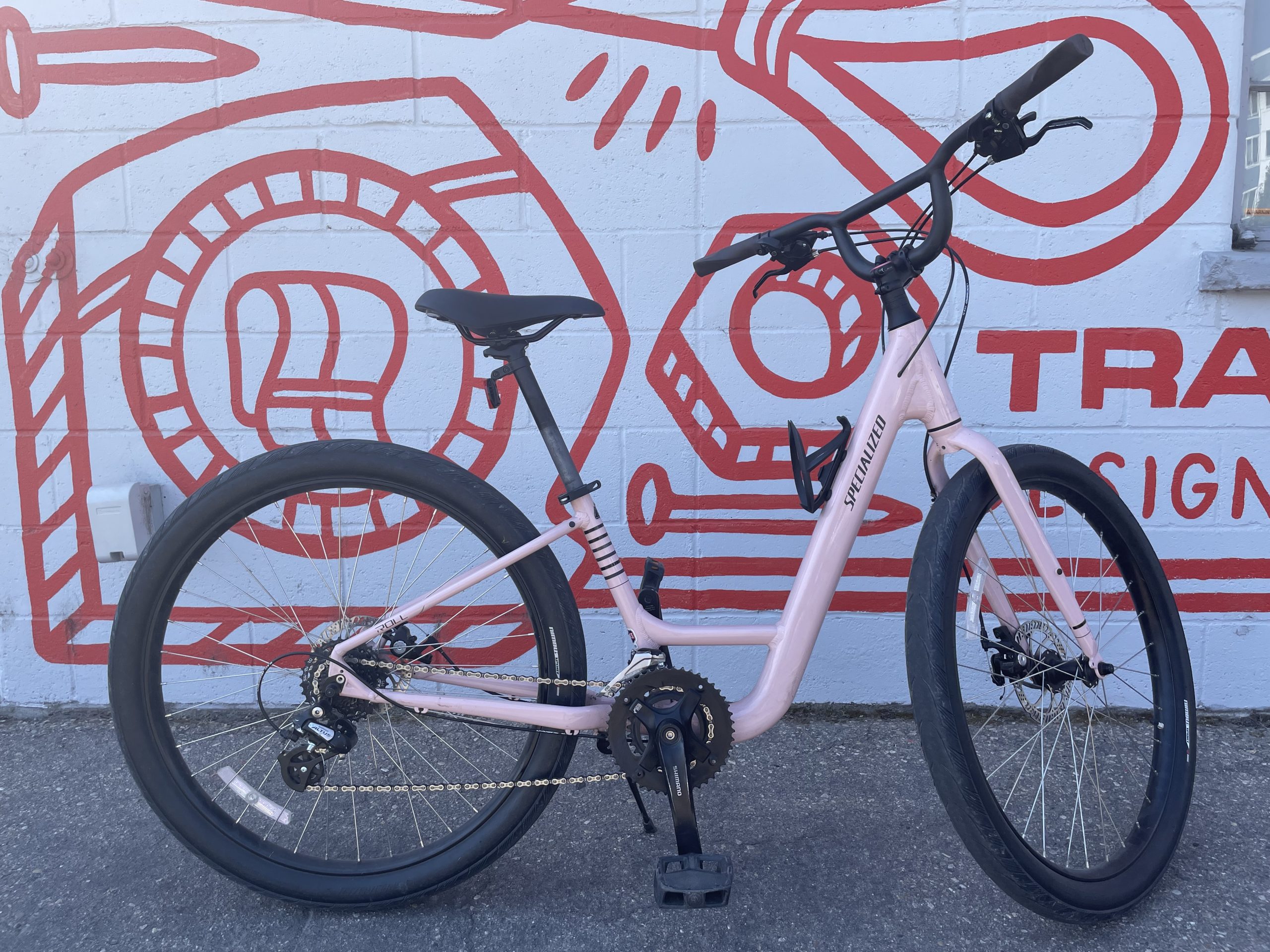
The Specialized Roll is a comfort-oriented urban hybrid that has remained unusually consistent since its 2016 introduction. Rather than chasing the lighter, quicker feel of a traditional fitness bike, this platform is built around Specialized’s Ground Control Positioning: a very upright riding posture, easy foot-down confidence at stops, and calm low-speed manners. The recipe is straightforward and deliberate—A1 Premium Aluminum frame, rigid fork, high-rise backswept bar, and 650b x 2.3-inch tires—producing a bike that sits somewhere between a beach cruiser and a practical commuter.
What makes the Roll distinctive is that it solves comfort and accessibility through geometry and tire volume rather than suspension complexity. The wide tires provide much of the ride isolation, while rack and fender mounts keep it useful for errands and day-to-day transport. Specialized has also offered the platform in both standard and Low-Entry forms, broadening its appeal to newer riders, seniors, and anyone who values easy mounting and stopping. In market terms, the Roll is not a speed-focused hybrid; it is a stable, confidence-first city and path bike for riders who want usability, comfort, and predictable handling over efficiency or aggressive performance.
Where to get it.
8 retailers · size S.
Spec sheet.
Every component shipped with this build.
Geometry & fit.
4 sizes published.
The Roll’s geometry is unusually comfort-focused for a hybrid. In size M, the bike combines a 616 mm stack with a short 352 mm reach, a 69-degree head tube angle, a very slack 67-degree seat tube angle, and long 480 mm chainstays. That is a clear recipe for an upright torso, short stretch to the bar, and a rearward seated position that prioritizes stability and easy starts and stops over pedaling aggression. The 70 mm bottom bracket drop further lowers the rider’s center of gravity, helping the bike feel planted and approachable at low speeds.
Handling follows the same logic. The long rear center and wheelbase of 1095 mm in size M give the Roll a steady, predictable feel rather than a quick, sporty one, while the 68-degree head angle and 84 mm trail on the small size point to slower, calmer steering. Combined with the wide 650b tires, that makes the bike well suited to rough pavement, bike paths, and casual mixed-surface use. The tradeoff is that the slack 67-degree seat angle and short reach reduce climbing leverage and make hard efforts feel less natural, which matches reviewer feedback that the Roll is happiest cruising flats and mellow rollers rather than attacking hills.
Where the handlebar sits relative to the bottom bracket — the single most important fit pair.
01Fit geometry6 values
02Component geometry4 values
03Handling geometry9 values
Which size should I buy?
Slide your height to see the recommended size. GearWise's fit algorithm works from the published stack, reach, and ETT — the brand's own recommendation may differ.
→Calculated from GearWise's own stack / reach / ETT algorithm — the brand's size chart may recommend a different size, and a proper bike fit beats any calculator.
The lineup.
8 builds, ranging $600 – $1,000.
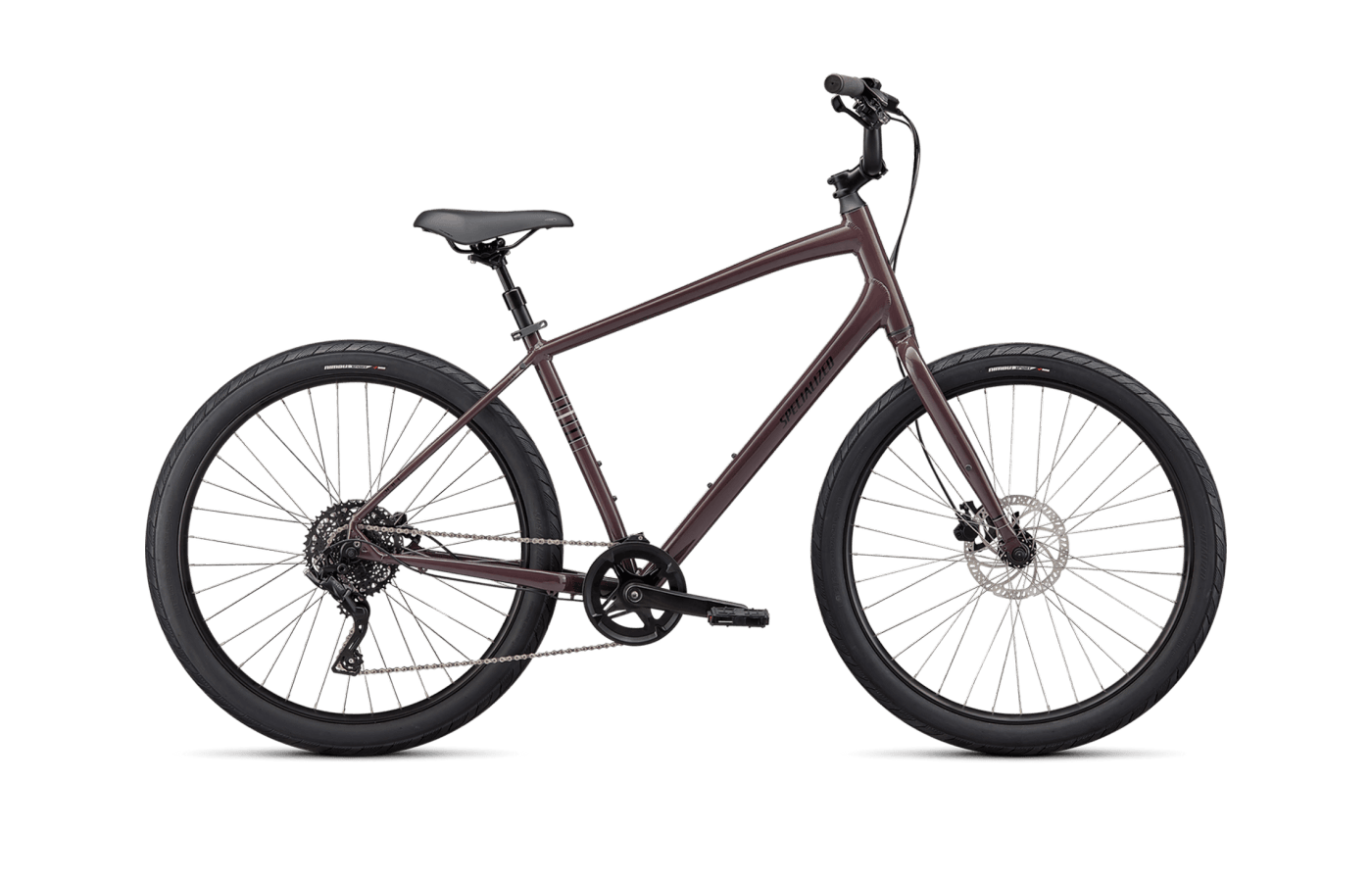
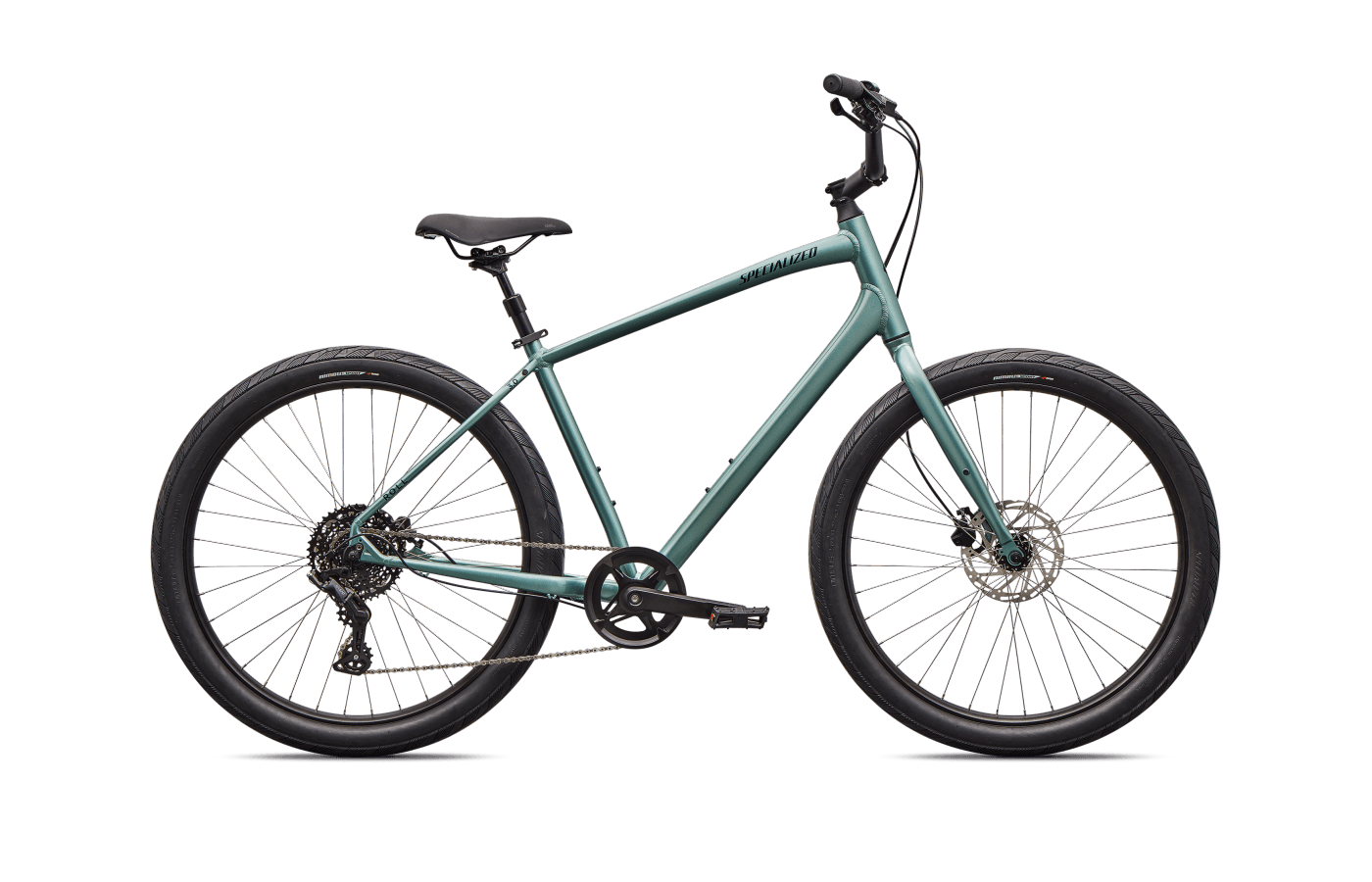
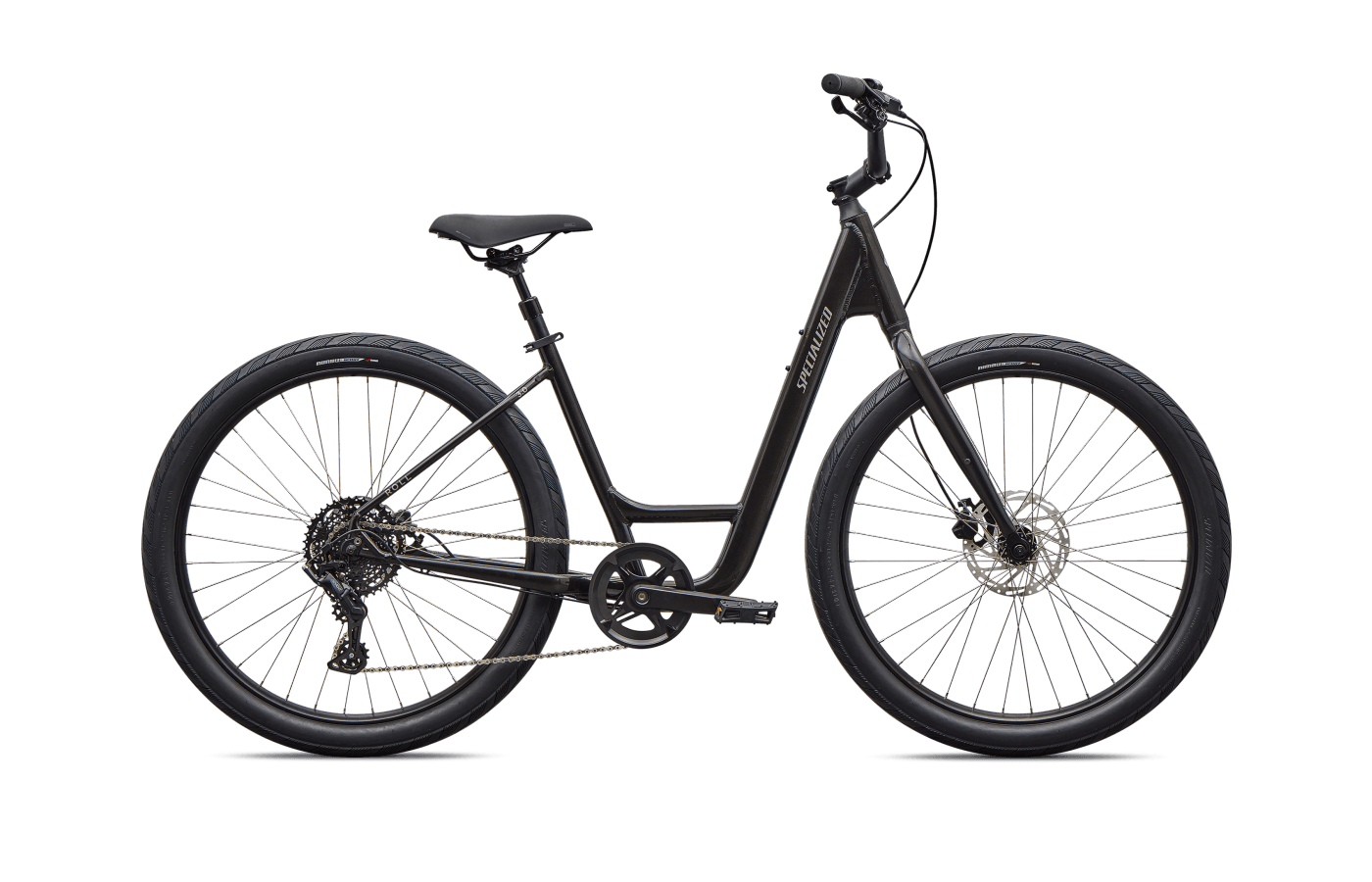
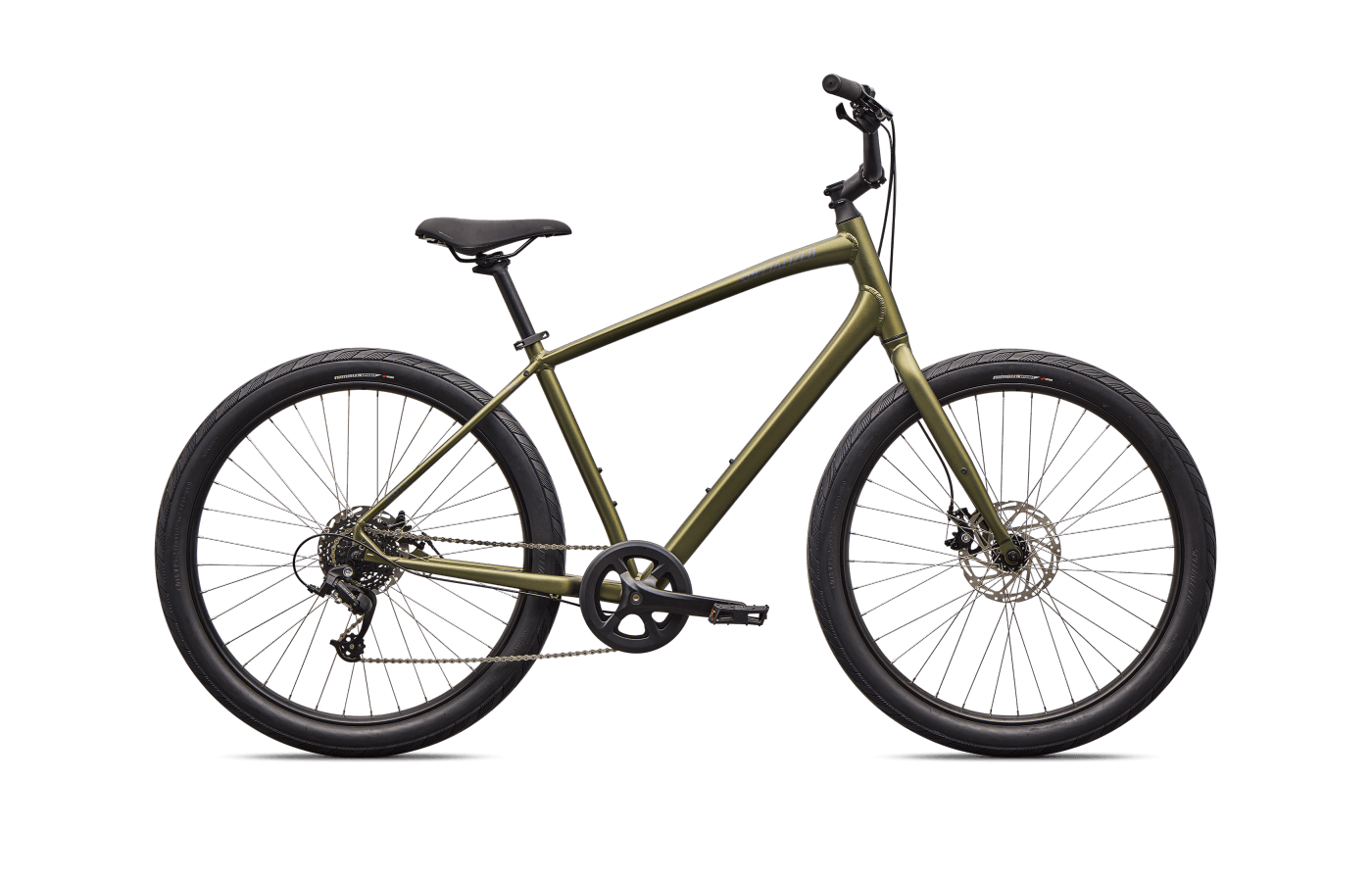
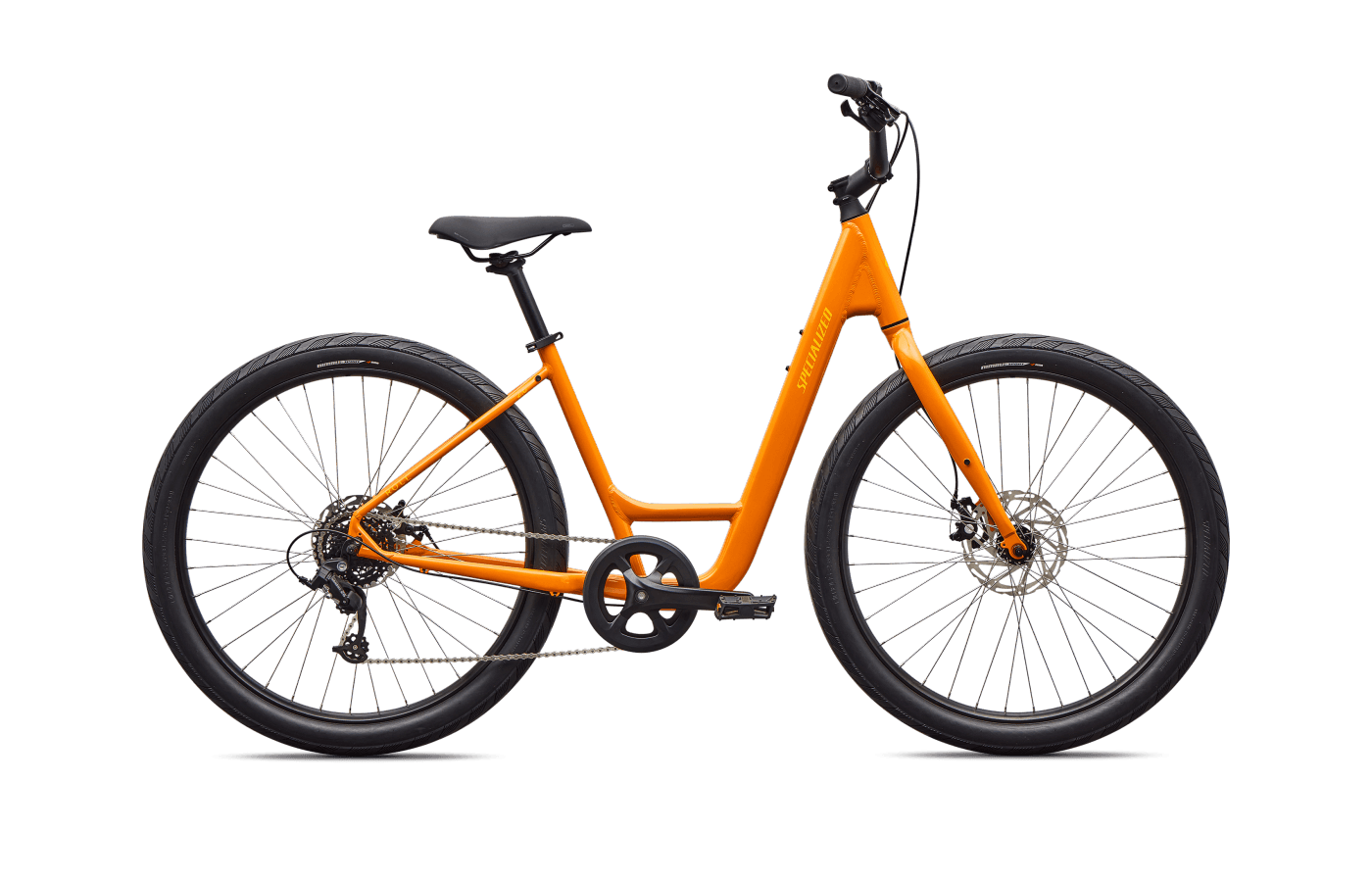
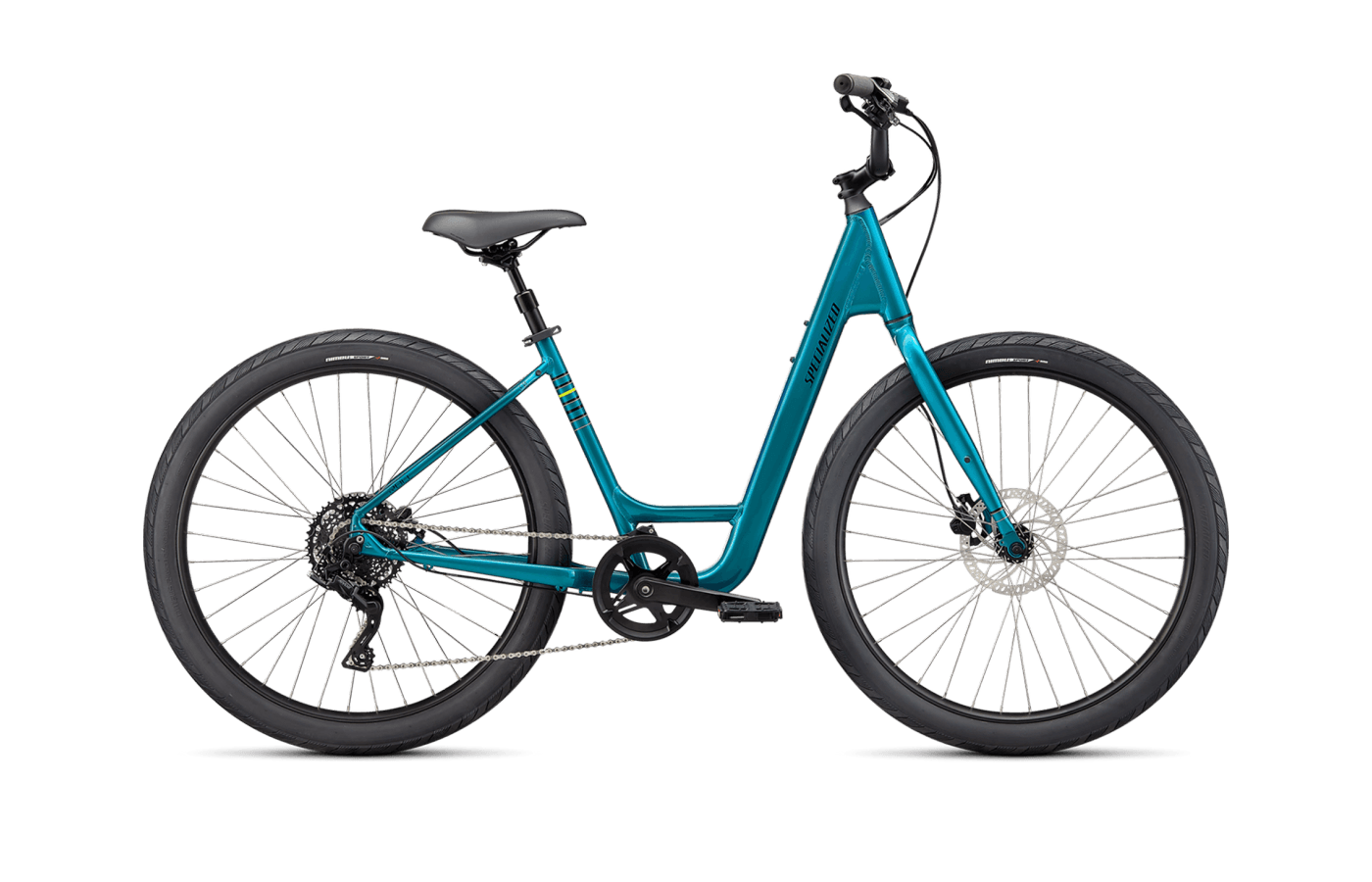
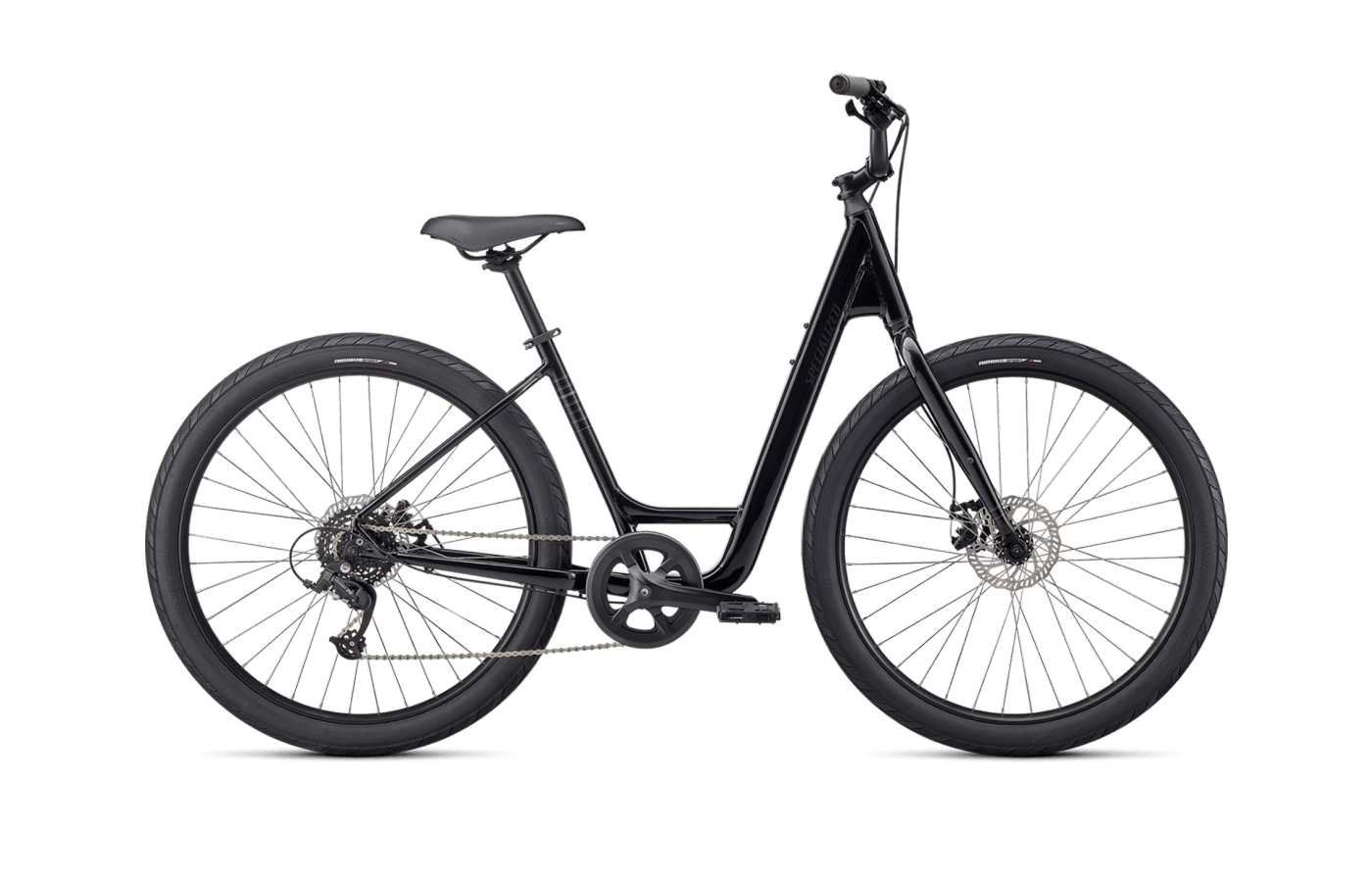
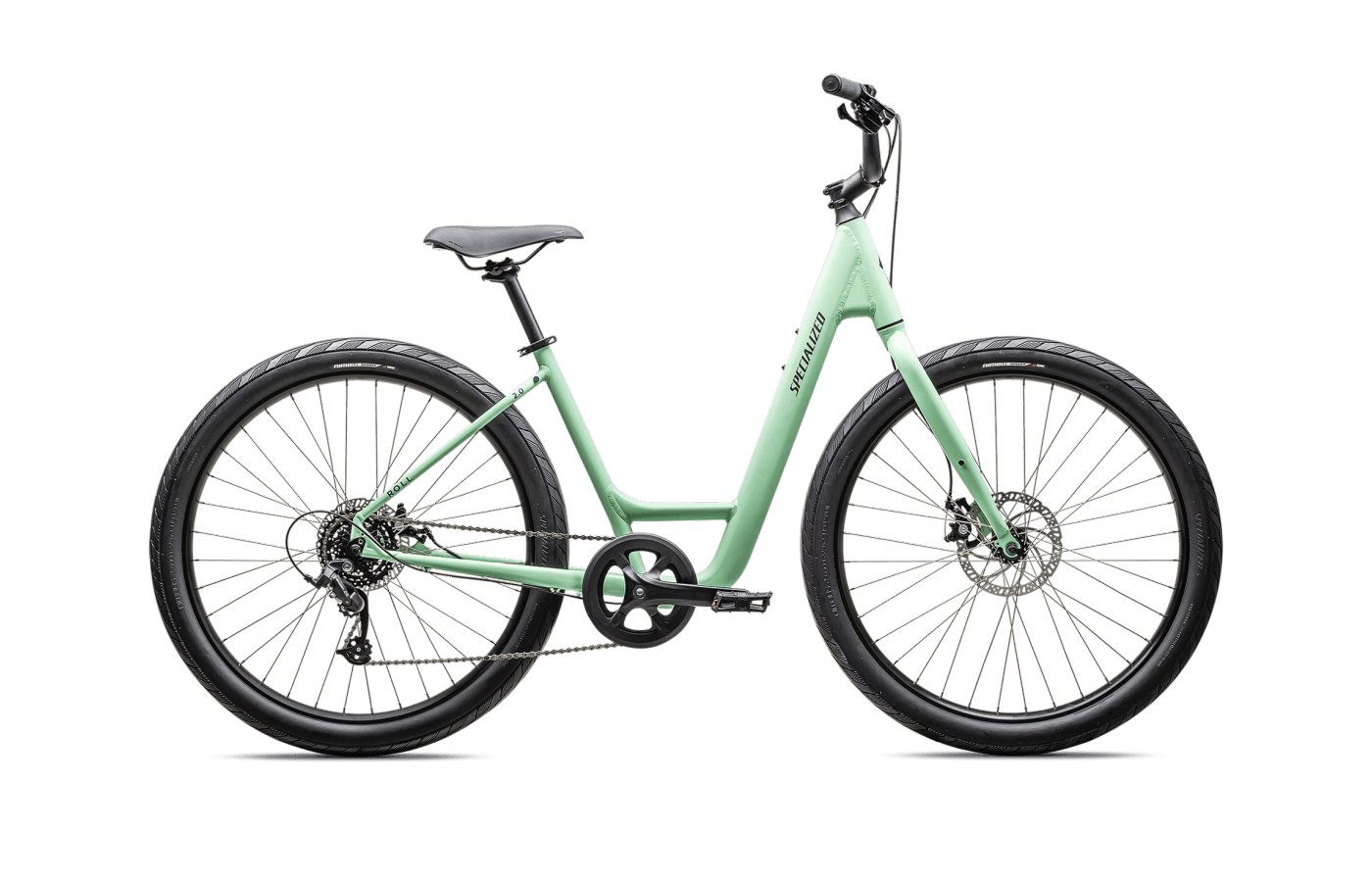
The available Roll builds shown here center on 2.0 and 3.0 models in both standard and Low Entry forms, with listed prices ranging from $599.99 to $999.99. The 2.0 occupies the entry point of the platform, while the 3.0 sits as the more fully equipped version. Even where naming and SKUs vary by year, the basic value structure is consistent: lower-cost builds deliver the same core frame, fit concept, and big-tire ride, while higher trims add better control-oriented components.
The key upgrade path is from the 2.0 to the 3.0. Review sources repeatedly point to the 3.0’s hydraulic disc brakes as the most meaningful improvement, offering better stopping power than the lower-end mechanical setups, and they also note the simpler 1x drivetrain layout used on later higher trims. The 3.0/Elite-level bikes are also associated with extras like a suspension seatpost, which adds comfort but can complicate fit for shorter riders because it does not lower as far as a standard post. For buyers focused on value, the 2.0 delivers the essential Roll experience at a lower price; for riders using the bike more regularly in urban traffic or on hillier routes, the 3.0’s brake and drivetrain upgrades are the more compelling specification package.
From the press.
6 reviews from the cycling press.
Reviewers are remarkably consistent in describing the Roll as one of the most comfortable bikes in its class. Bicycling called its ride "smooth and stable" and noted that the bike’s easy handling made it one riders would want to take out often. Femme Cyclist similarly found the Roll 3.0 Low Entry "super fun" and "zippy," while also emphasizing its exceptionally low standover and upright position for less athletic riders. Across reviews, the biggest contributors to that ride quality are the Ground Control Positioning and the 650b x 2.3-inch Nimbus tires, which several testers said effectively smooth rough pavement and even light gravel without the weight and maintenance of a suspension fork.
The praise is balanced by clear limitations. Multiple reviewers noted that the Roll is not built for speed and feels awkward on steeper climbs because the upright, rearward-biased position makes it harder to stand and drive power into the pedals. Bicycling reported noticeably slower average speeds than on a touring bike, and Femme Cyclist also flagged climbing as a weakness. Reviewers were also split on some comfort details: the wide saddle was praised for long-ride support, but one tester reported inner-leg chafing from its broad nose, and the suspension seatpost on higher trims was seen by some as helpful and by others as barely noticeable. Overall, the consensus is that the Roll excels as an approachable, easy-living commuter and recreational bike, provided the rider accepts the tradeoff in efficiency and hill performance.

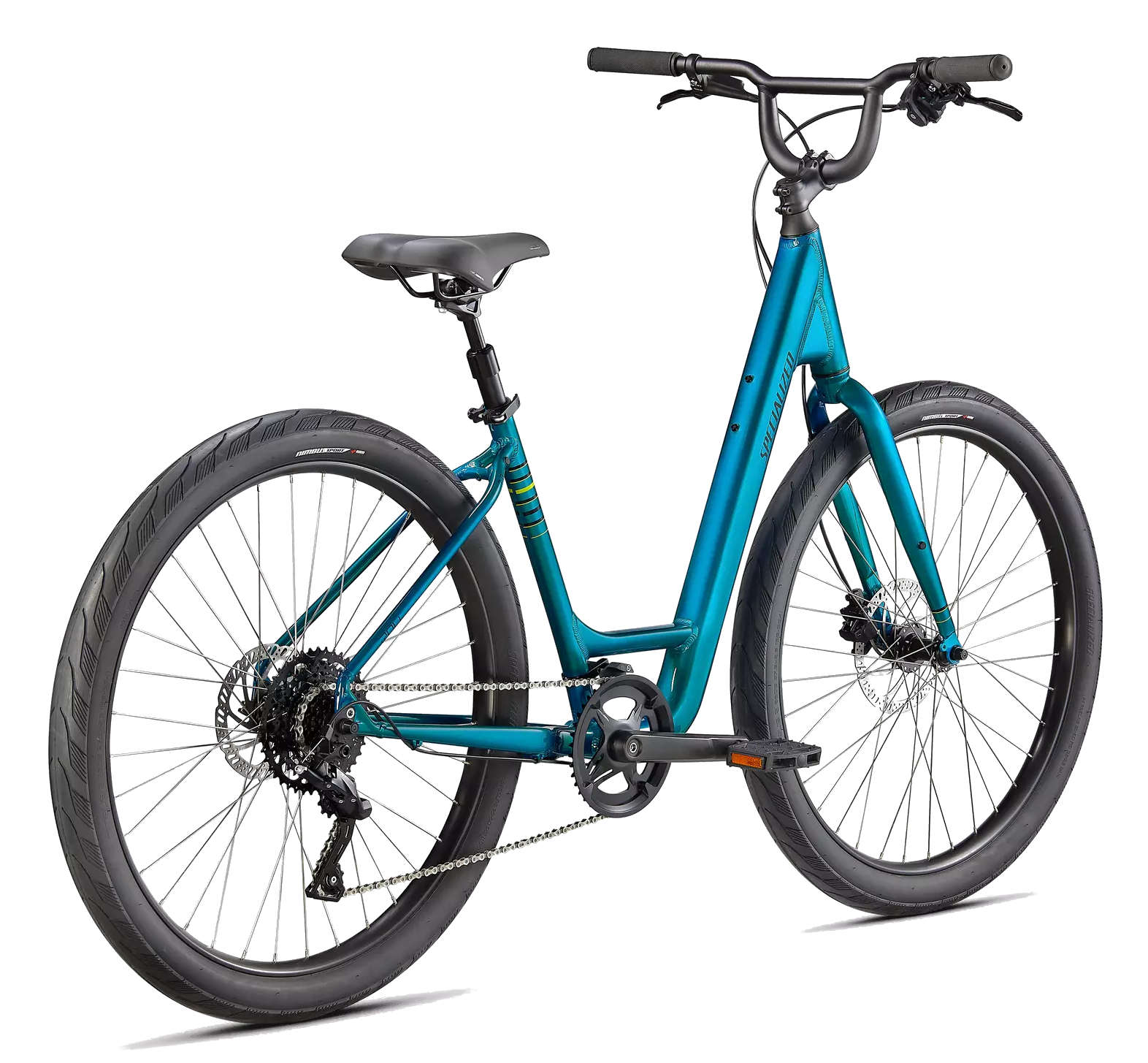
Specialized Roll
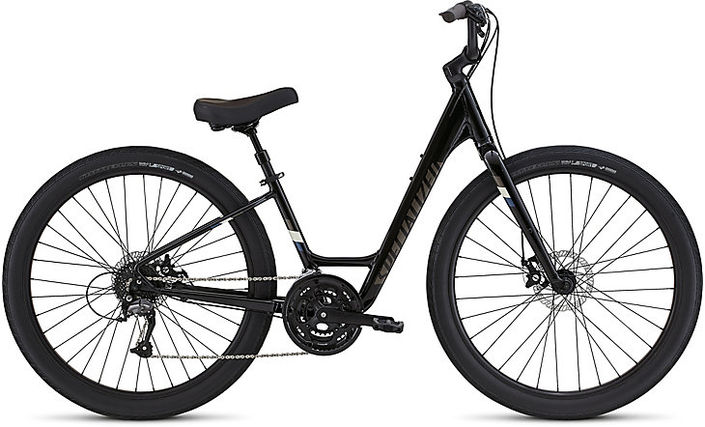
Specialized Roll Elite Low Entry 2016 - Specifications | Reviews |
![Is Specialized Roll 3.0 Low Entry A Good Choice? - [ Specialized Roll 3.0 Low Entry Review]](https://paklmrfyhygqlkyhjcnf.supabase.co/storage/v1/object/public/storage/review-images/specialized/roll/generation-2016-present/review-cb5fe9651318.webp)
Is Specialized Roll 3.0 Low Entry A Good Choice? - [ Specialized Roll 3.0 Low Entry Review]
Specialized Roll: A Comprehensive Review - Femme Cyclist