Shiv
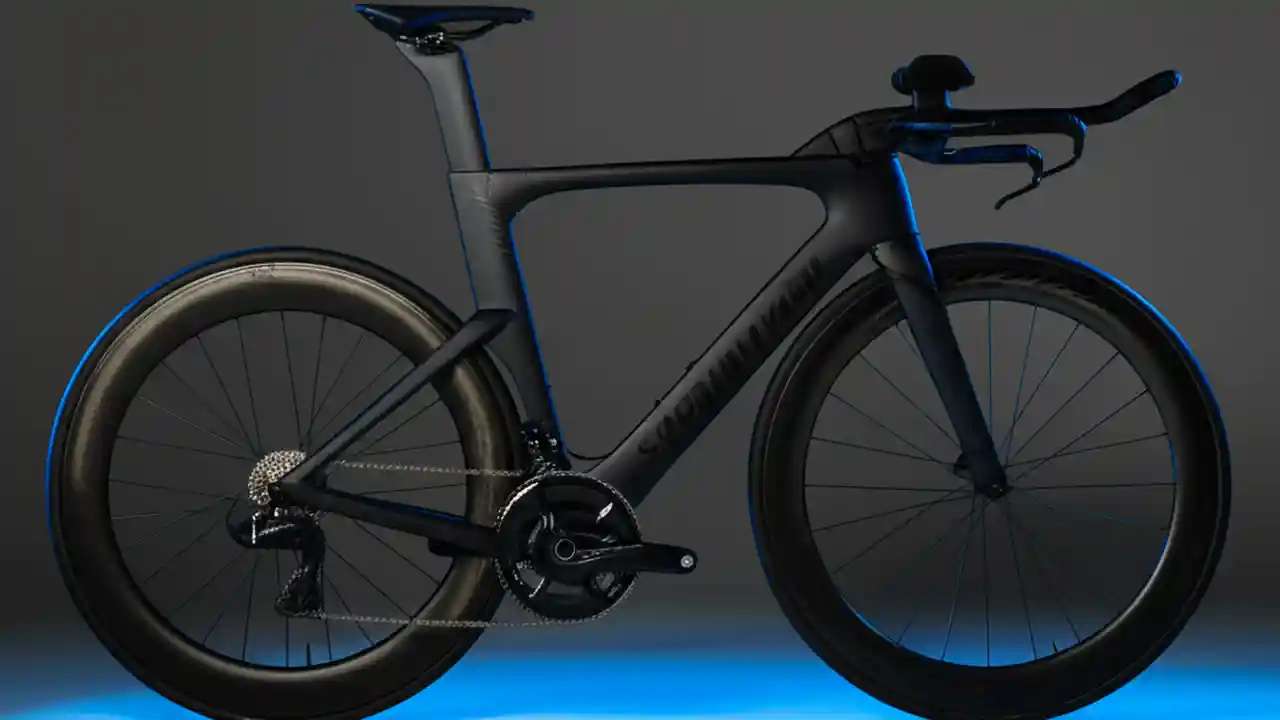
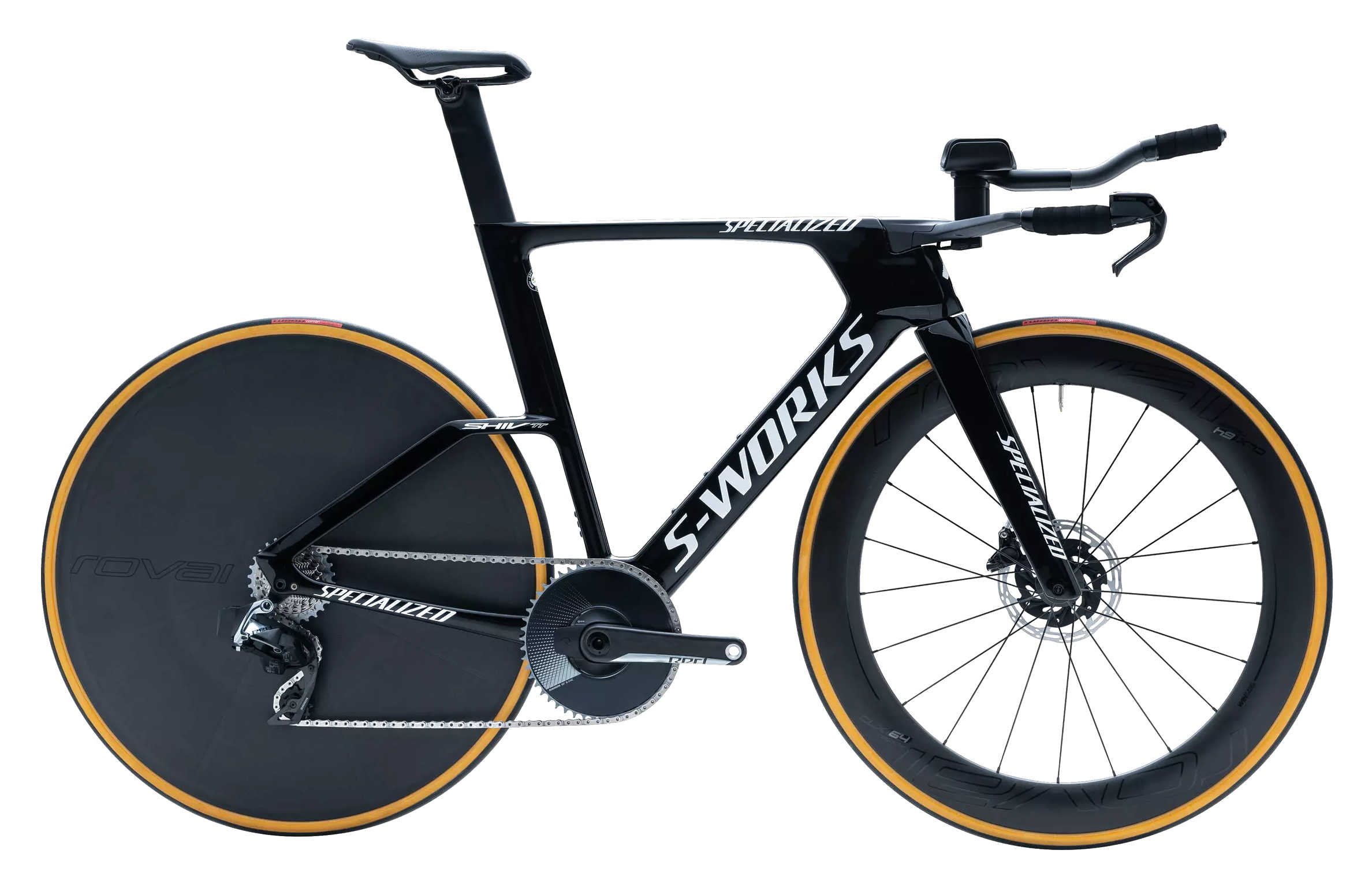
The current Specialized Shiv TT Disc is the brand’s UCI-legal time trial platform, introduced for the 2020 model year as a full redesign of the earlier rim-brake Shiv TT. The key shift was not simply the move to disc brakes and thru-axles, but a broader rethink of what makes a modern TT bike fast in real race conditions. Specialized kept aero performance at the center, but paired it with lower claimed frame weight than the previous TT platform, a more confidence-inspiring front end, and a fit system built around an integrated one-piece bar/stem concept with substantial pad and extension adjustment.
What distinguishes this generation is how clearly it is aimed at pure time trial use rather than triathlon versatility. It is a dedicated racing chassis for technical, windy, and undulating courses where braking performance, front-end precision, and rider position matter as much as tunnel numbers. Disc brakes also enabled clearance for up to 28 mm tires, an important practical change for rolling resistance and rider fatigue. In the market, the Shiv TT Disc sits as a premium specialist option alongside bikes like the Cervélo P5, Trek Speed Concept, and Canyon Speedmax, but with a notably sharper emphasis on UCI legality, road-like handling, and fit adjustability rather than integrated storage or long-course triathlon utility.
Geometry & fit.
4 sizes published.
The geometry points to a purpose-built UCI time trial fit with a low front end and relatively compact wheelbase. Stack is notably low across the range at 495 mm in S, M, and L, dropping to 485 mm in XS, while reach grows from 378 mm in XS to 420 mm in L. That gives the bike a long-and-low posture suited to aggressive aero positions. Seat tube angle ranges from 74.5 to 75.75 degrees, steeper in the larger sizes, which helps center the rider over the pedals in a TT posture without pushing into the far-forward triathlon geometry seen on non-UCI bikes.
Handling numbers are modern but not extreme. The 72-degree head angle on S through L, paired with 63 mm of trail, suggests stable steering meant for speed and confidence rather than nervous response; XS slackens to 71 degrees with 70 mm of trail to preserve front-end composure for smaller riders. Chainstays are short at 410 mm across all sizes, and wheelbase stays compact at 972 to 1008 mm, which should help the bike feel more agile through technical sections than many long-course tri bikes. A 72 mm BB drop on most sizes also keeps the center of gravity low for cornering stability. Overall, the numbers support what reviewers report: an aggressive fit wrapped in handling that is more controlled and road-like than older TT bikes.
Where the handlebar sits relative to the bottom bracket — the single most important fit pair.
01Fit geometry6 values
03Handling geometry9 values
Which size should I buy?
Slide your height to see the recommended size. GearWise's fit algorithm works from the published stack, reach, and ETT — the brand's own recommendation may differ.
→Calculated from GearWise's own stack / reach / ETT algorithm — the brand's size chart may recommend a different size, and a proper bike fit beats any calculator.
The lineup.
1 build, ranging $6,149.
Based on the provided data, the currently listed offering is the S-Works TT Disc Module built around a FACT 11r carbon chassis. As a module rather than a complete bike, it is aimed at riders building a race-specific machine around the frame, fork, seatpost, and integrated cockpit rather than buying a turnkey setup. That fits the Shiv TT Disc’s position as a specialist platform for experienced racers, teams, and fit-driven buyers who want to choose their own drivetrain, wheels, and cockpit details within the frame’s integrated system.
Review coverage highlights several important platform-level spec traits even where complete build details are limited. The bike uses hydraulic disc brakes, a 68 mm threaded bottom bracket, and a cockpit designed to accommodate substantial pad and extension adjustment despite its integrated appearance. Reviewers also note that the platform can be configured 1x or 2x, and praise the threaded BB and wireless-friendly setup for easier assembly and maintenance than many fully integrated TT bikes. With only module information provided here and no listed pricing tiers, a detailed comparison of trims is not possible.
From the press.
2 reviews from the cycling press.
Reviewers consistently describe the Shiv TT Disc as unusually reactive for a dedicated TT bike. Several compare its ride feel to a high-end aero road bike rather than a traditional, dead-feeling straight-line specialist, with one source likening it to a Venge “on massive steroids.” The low complete-bike weight cited by BikeRide at 16.76 lb, the very stiff integrated cockpit, and thru-axle disc-brake chassis all contribute to that impression. Testers repeatedly praise the bike’s stability at speed and in crosswinds, noting that it feels planted rather than twitchy, and that the hydraulic SRAM S-900 Aero HRD brakes allow later, harder braking into corners. That combination makes the bike especially well regarded on technical TT courses rather than only on flat drag-strip efforts.
Review feedback is not uncritical. Multiple sources note that this is a poor fit for triathletes who need integrated hydration and storage, because the Shiv TT Disc is fundamentally a UCI race bike rather than an all-day multisport platform. Some also point to practical spec and ergonomic caveats: the stock 48t Quarq chainring on certain builds was criticized as too small for stronger riders, and at least one reviewer found the stock extension hand position less than ideal. There is also acknowledgment that the disc-brake redesign carries a modest frame weight penalty versus the old rim-brake bike, though most reviewers argue the gains in braking control, handling, and real-world speed more than justify it.