Sirrus
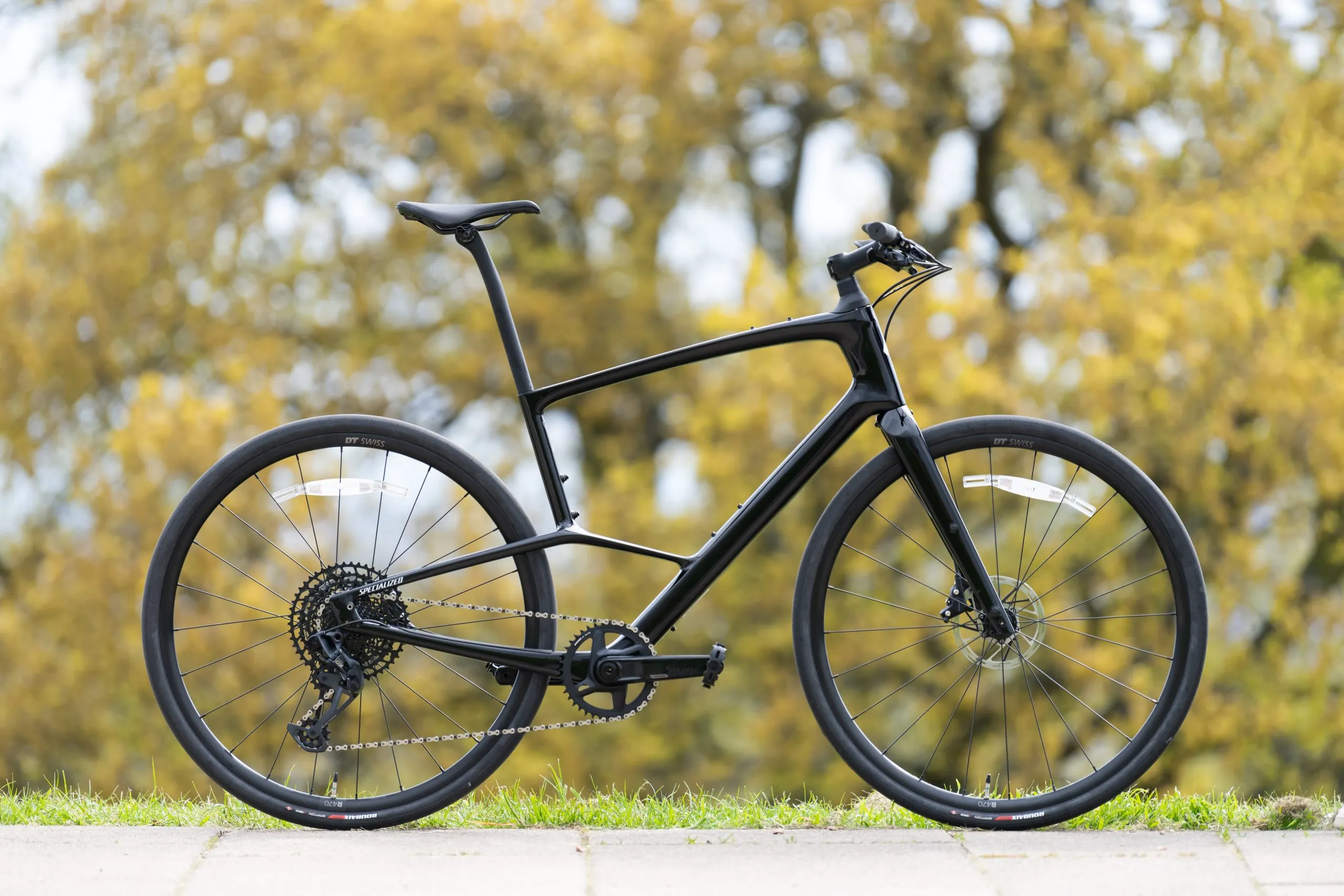
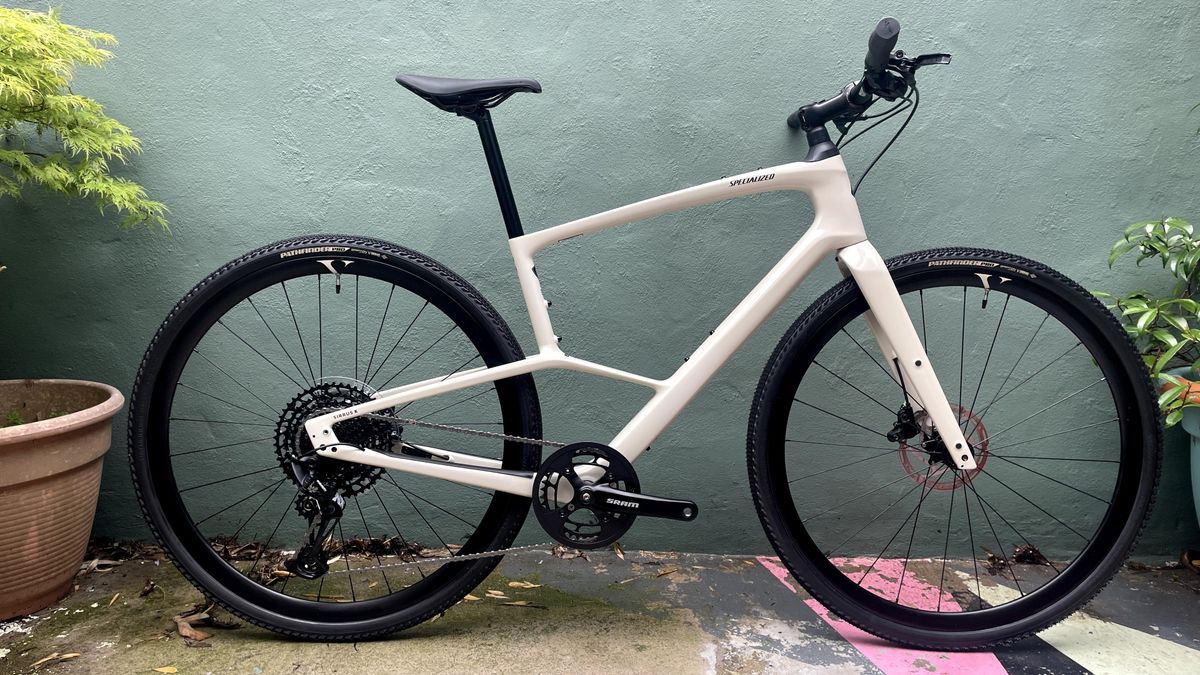
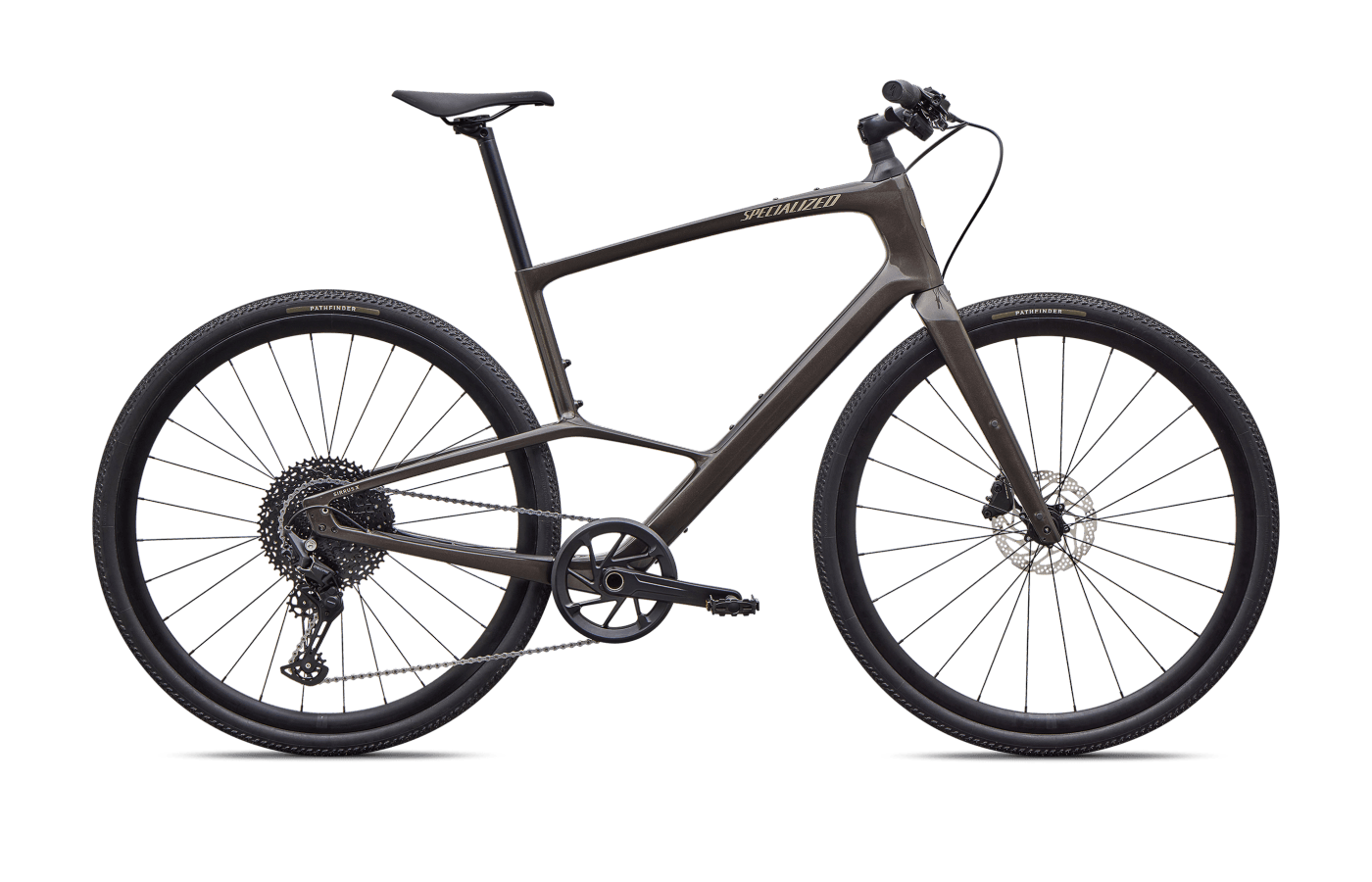
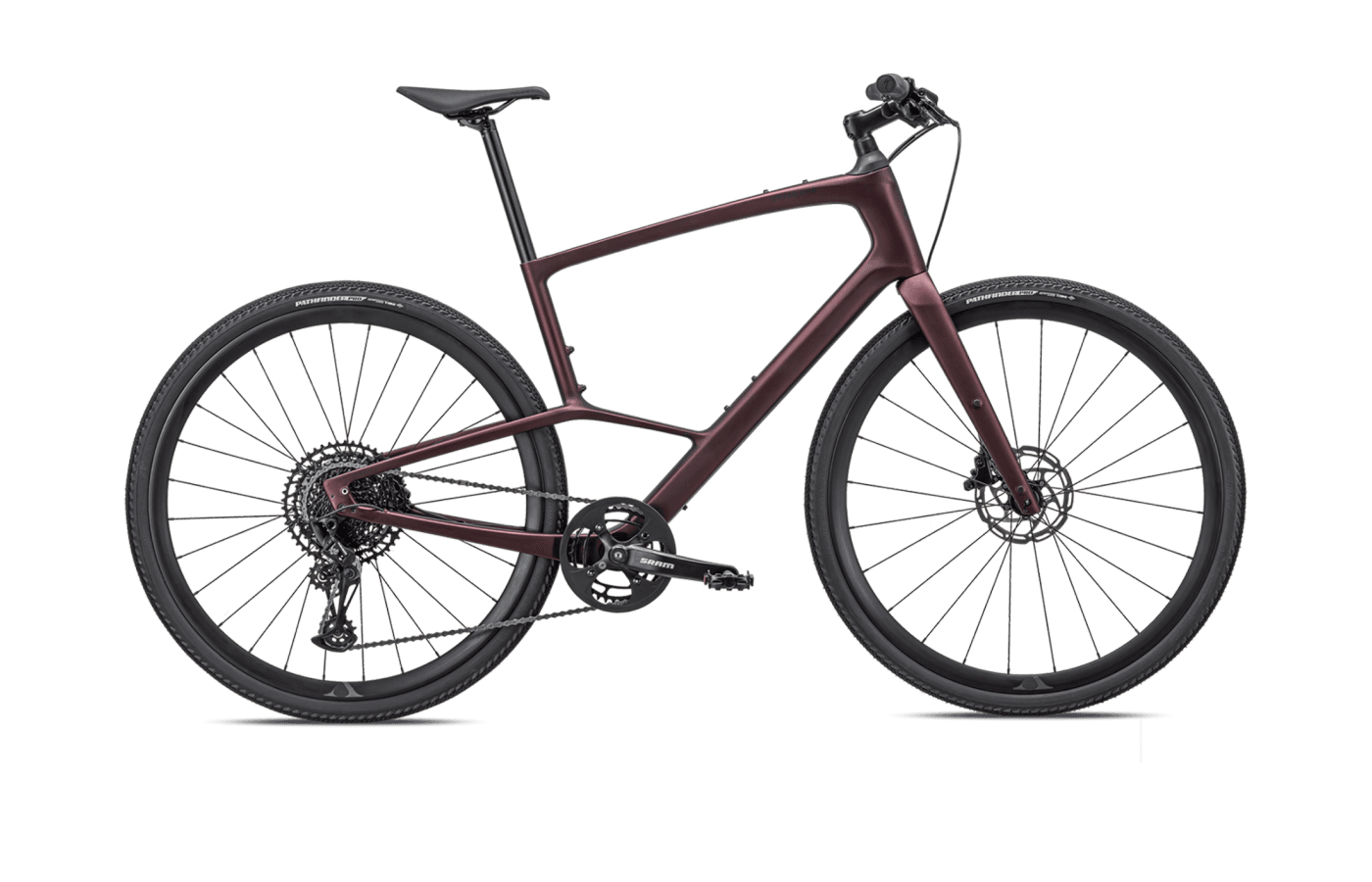
The current Specialized Sirrus carbon platform is an unusually ambitious take on the premium fitness bike. Introduced for 2022, it moves away from the conventional flat-bar road-hybrid formula with a FACT carbon frame built around Specialized’s "Compliance Junction" concept: the lower seat tube is effectively opened up to create controlled rear-end flex, while a 20mm Future Shock 1.5 unit in the head tube reduces impacts at the bar. The result is a bike aimed at riders who want speed and efficiency for commuting, training, and long urban rides, but with substantially more vibration damping than a typical rigid hybrid.
What makes this generation distinctive is that its comfort is engineered into the chassis rather than added through suspension forks or oversized frames. Specialized also built in practical versatility, with rack, fender, and top-tube mounts plus clearance for tires up to 42mm, so the platform can cover paved commuting, fitness riding, and light mixed-surface use. At the top end, the Sirrus 6.0 and Sirrus X 5.0 lean into 1x drivetrains, which suits the bike’s all-conditions, low-maintenance brief. In the market, this puts the Sirrus at the expensive, design-led end of the hybrid category: less a basic commuter and more a flat-bar performance bike for riders willing to pay for a sophisticated frame and a notably smoother ride.
Geometry & fit.
6 sizes published.
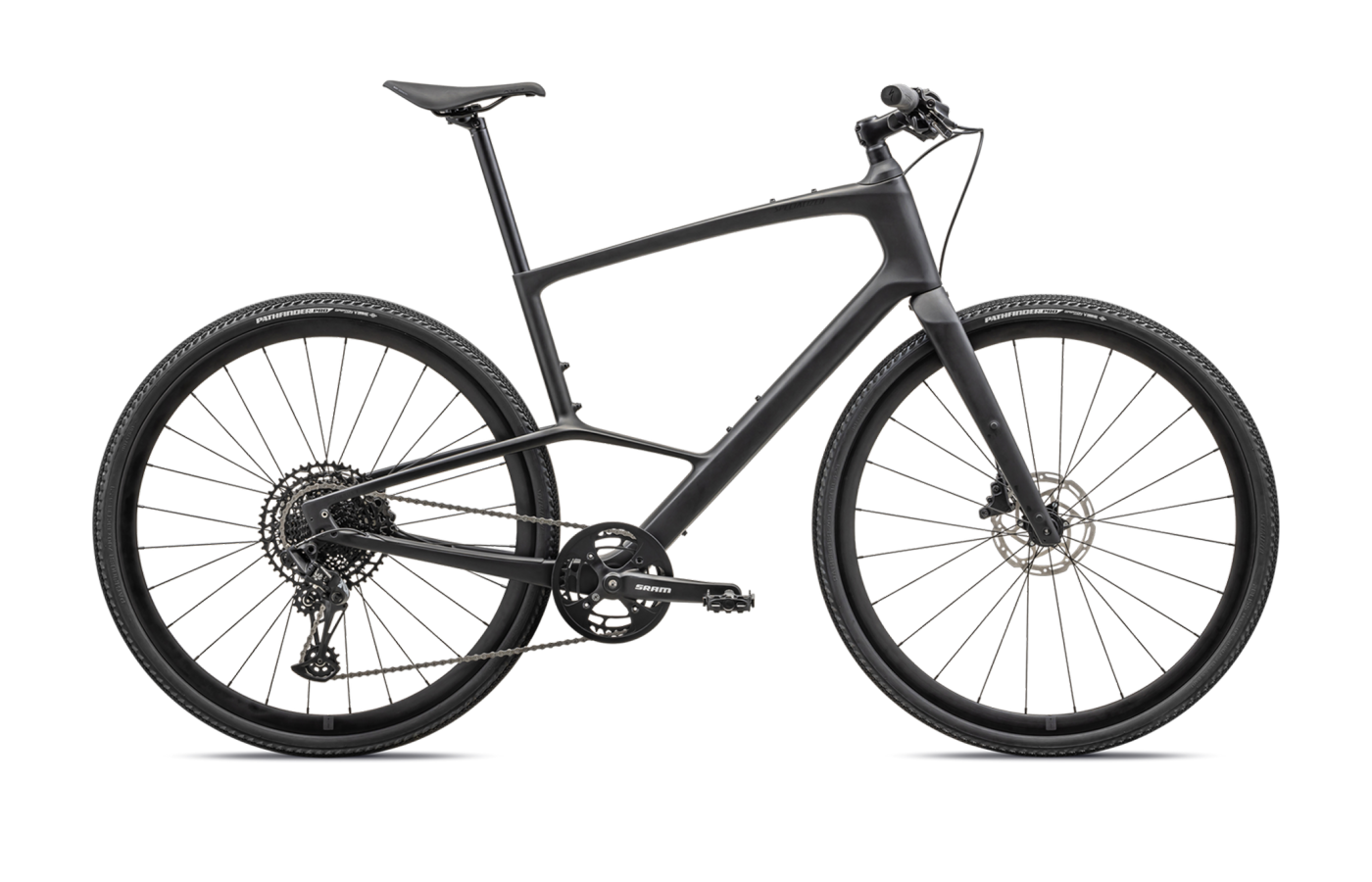
The Sirrus uses geometry that clearly prioritizes stability and all-day comfort over razor-sharp hybrid steering. In size M, the 625mm stack and 380mm reach put the rider in an upright but still purposeful position, appropriate for fitness riding and commuting rather than an aggressive road posture. The 70-degree head tube angle is relatively slack for this category, and with 72mm of trail in M it slows the steering enough to make the bike calmer and less twitchy on rough pavement or mixed surfaces. That impression is reinforced by the long 440mm chainstays and 1,065mm wheelbase in M, stretching to 1,084mm in L.
Those numbers point to a bike that should feel planted at speed and predictable over broken surfaces, with a bit less snap in tight, low-speed maneuvers than a more road-biased flat-bar bike. The 80mm bottom-bracket drop keeps the rider low in the bike for a secure feel, while the consistent 73.5-degree seat angle through most sizes supports an efficient seated pedaling position. Smaller sizes get even slacker front-end numbers, down to a 69.5-degree head angle and 76mm of trail on XS and S, which helps preserve stability and steering feel across the size range.
Where the handlebar sits relative to the bottom bracket — the single most important fit pair.
01Fit geometry6 values
03Handling geometry9 values
Which size should I buy?
Slide your height to see the recommended size. GearWise's fit algorithm works from the published stack, reach, and ETT — the brand's own recommendation may differ.
→Calculated from GearWise's own stack / reach / ETT algorithm — the brand's size chart may recommend a different size, and a proper bike fit beats any calculator.
The lineup.
21 builds, ranging $700 – $2,500.
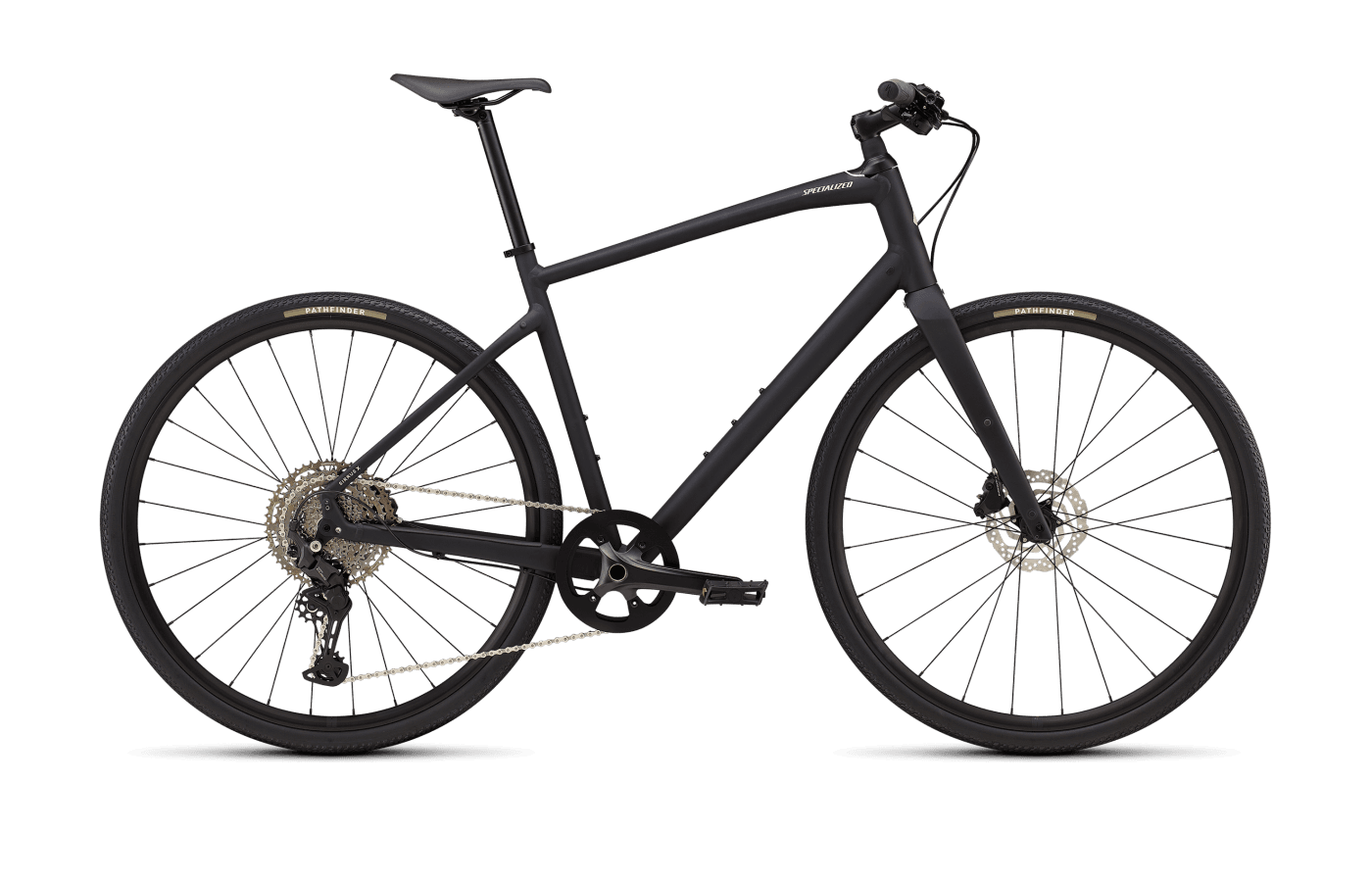
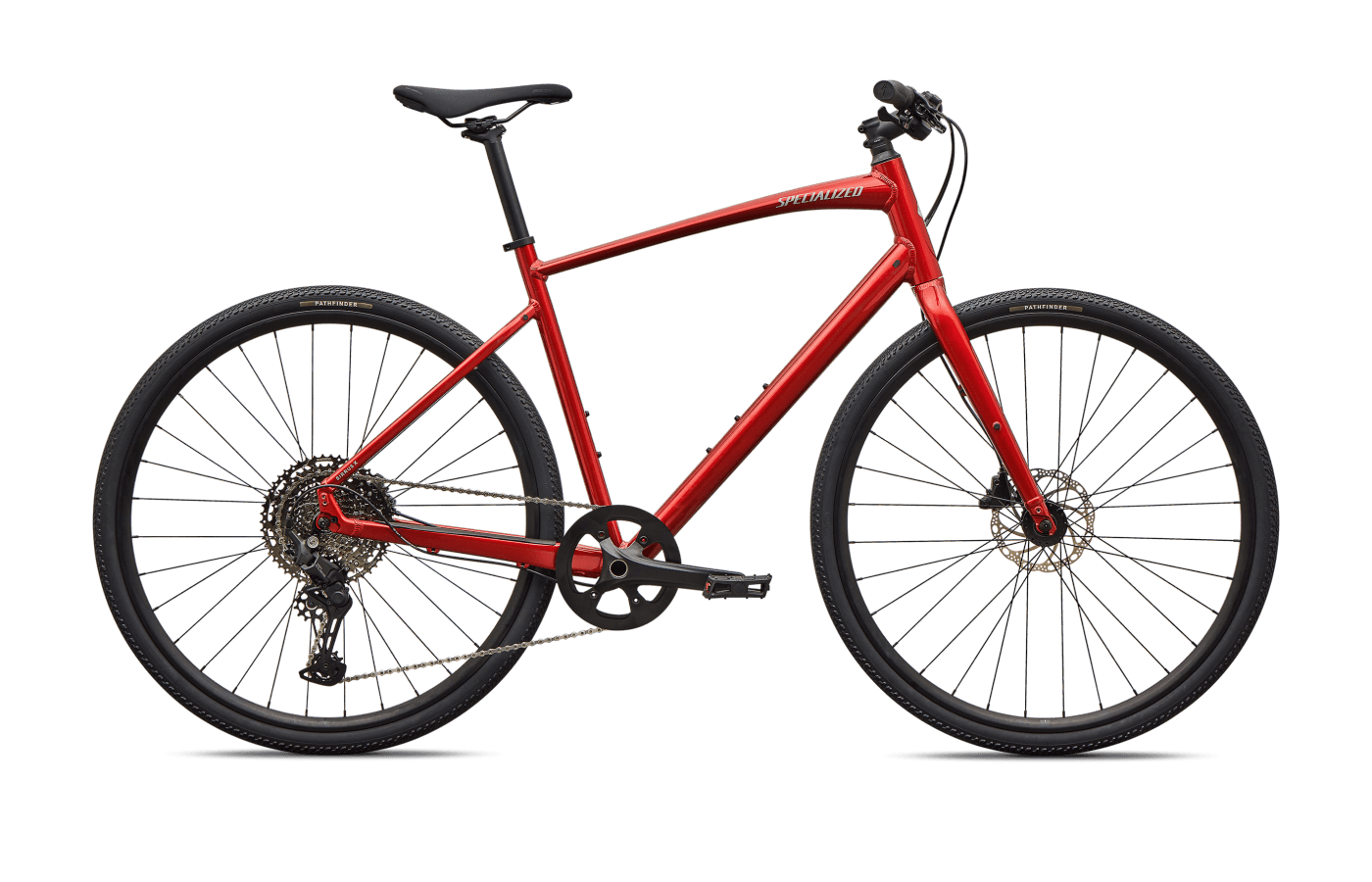
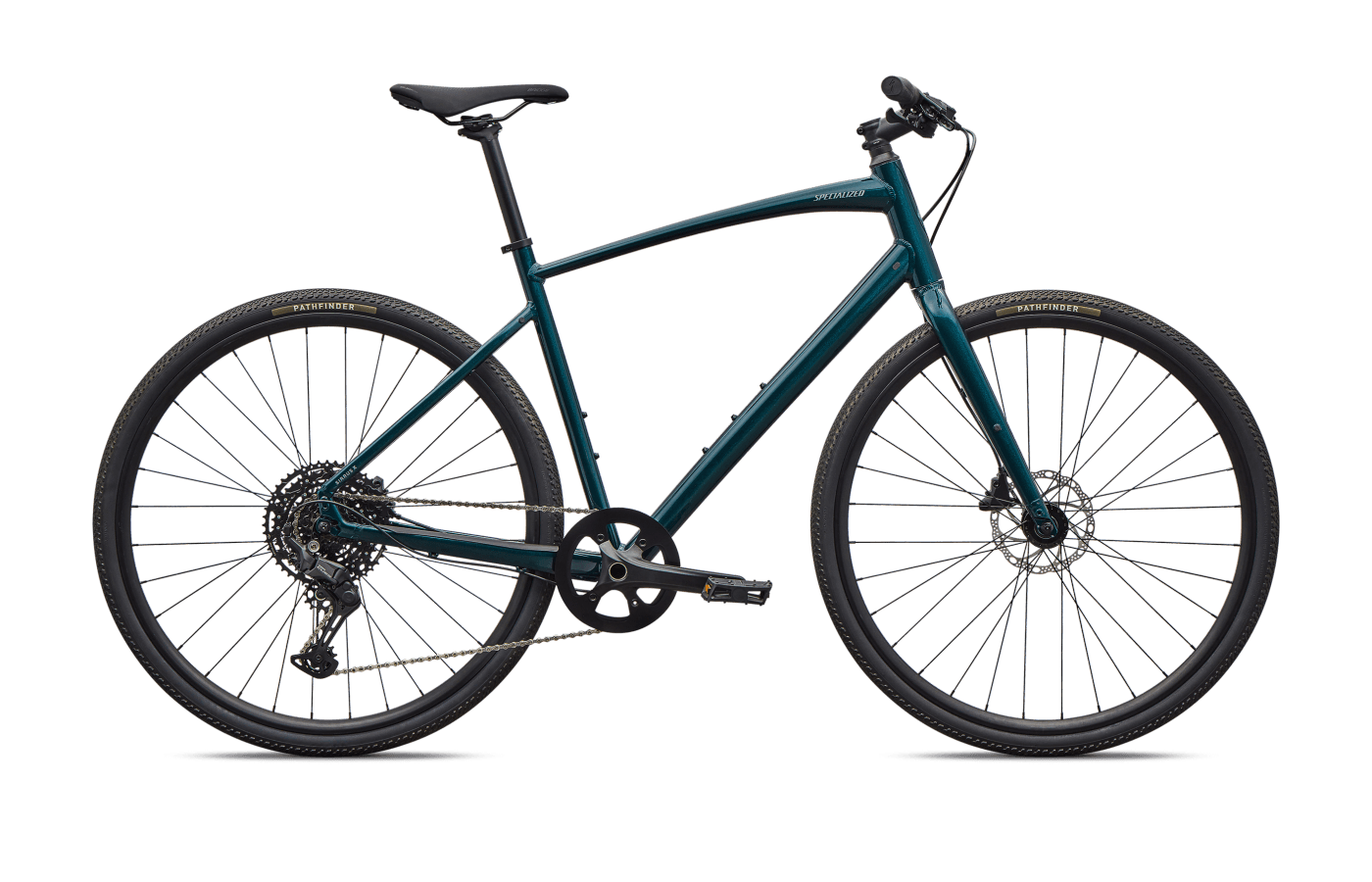
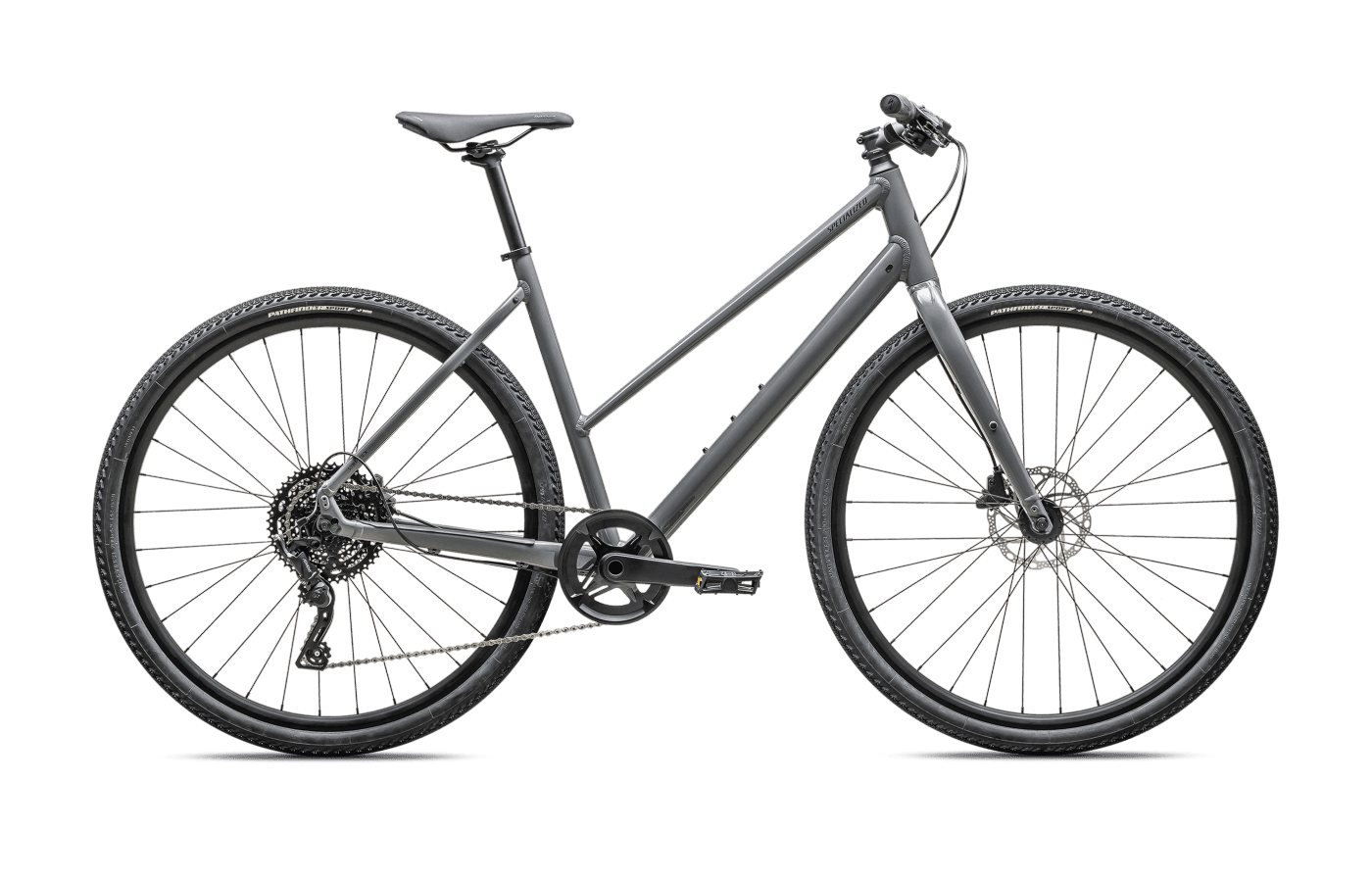
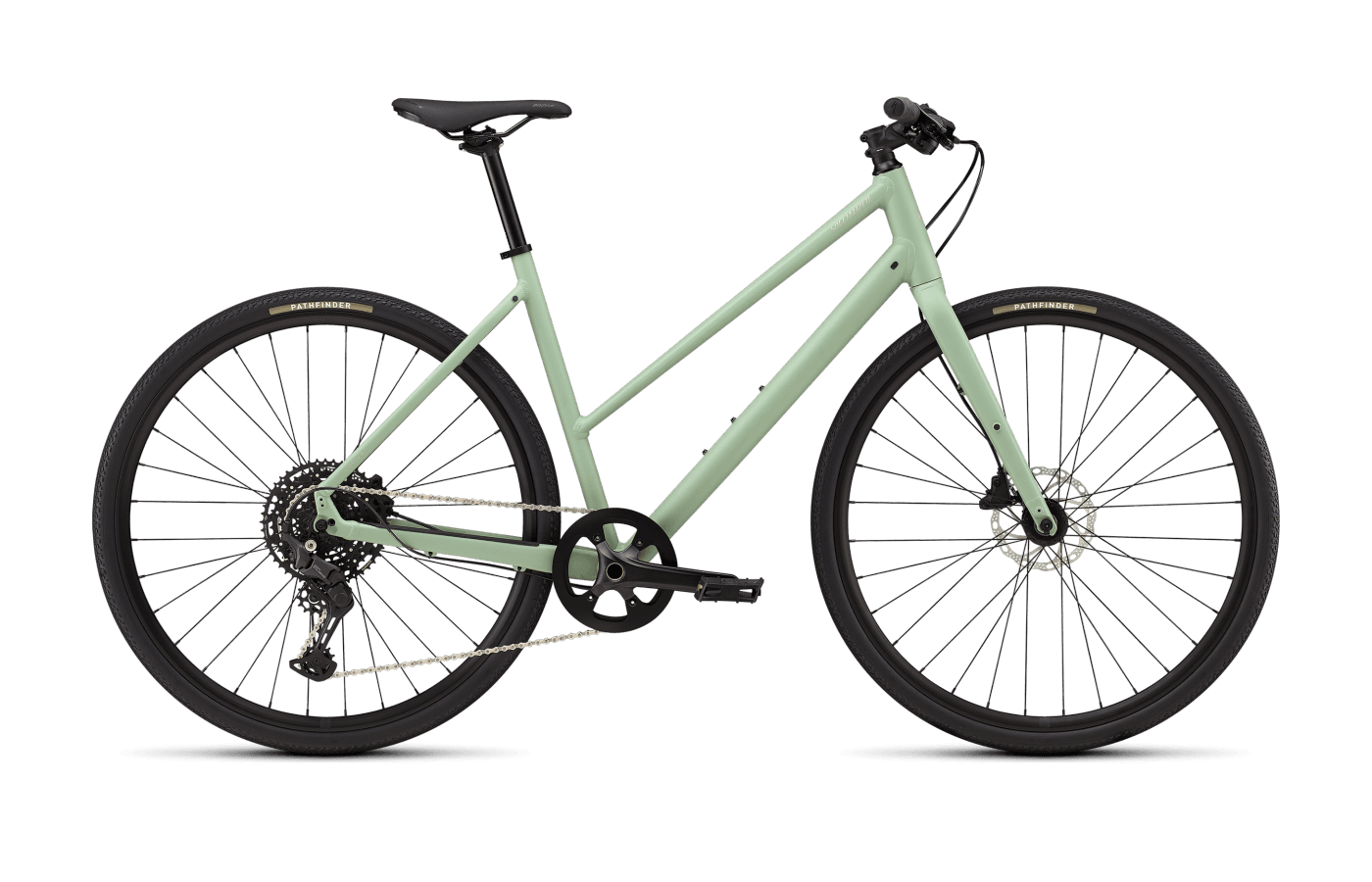
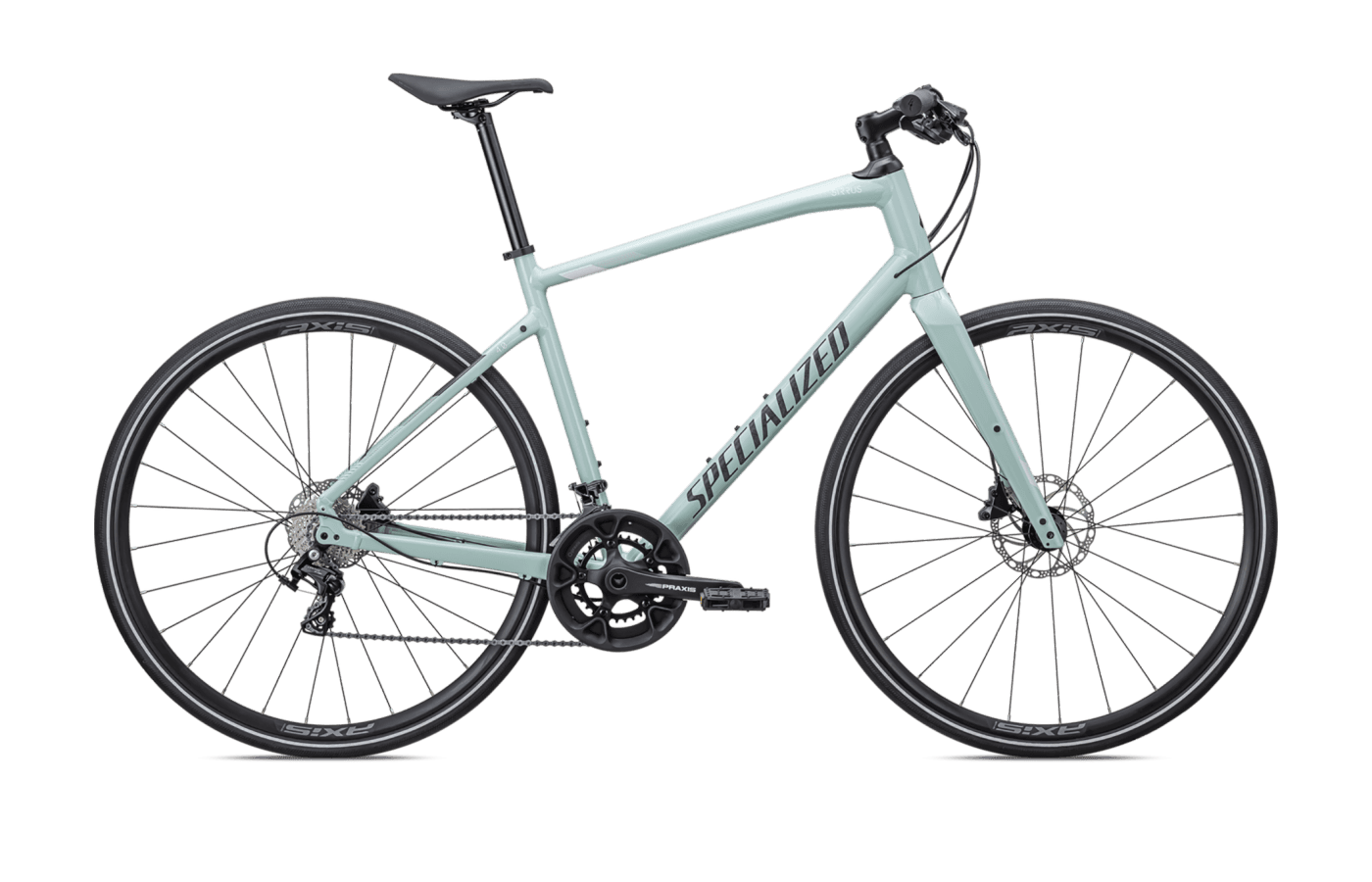
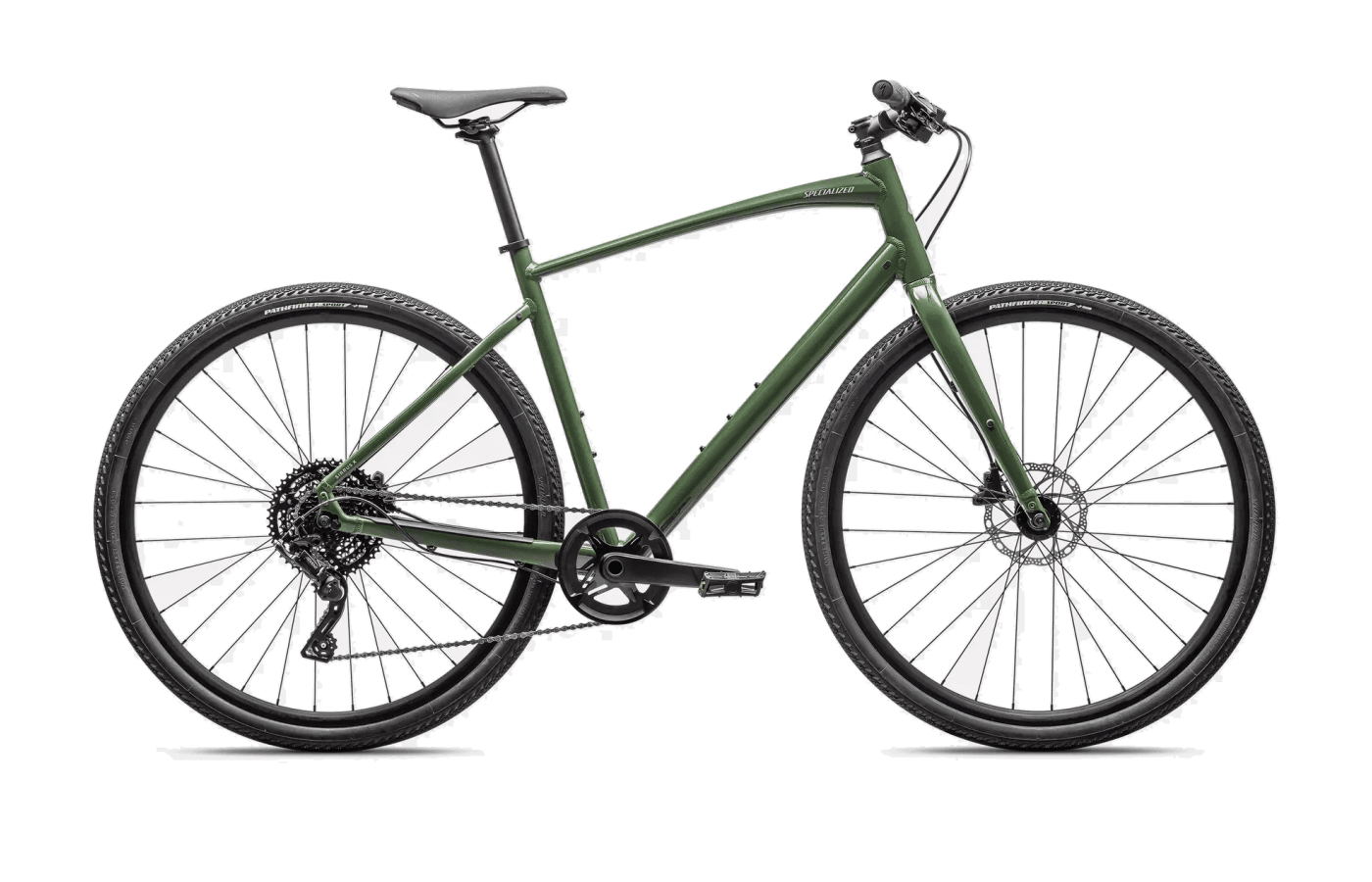
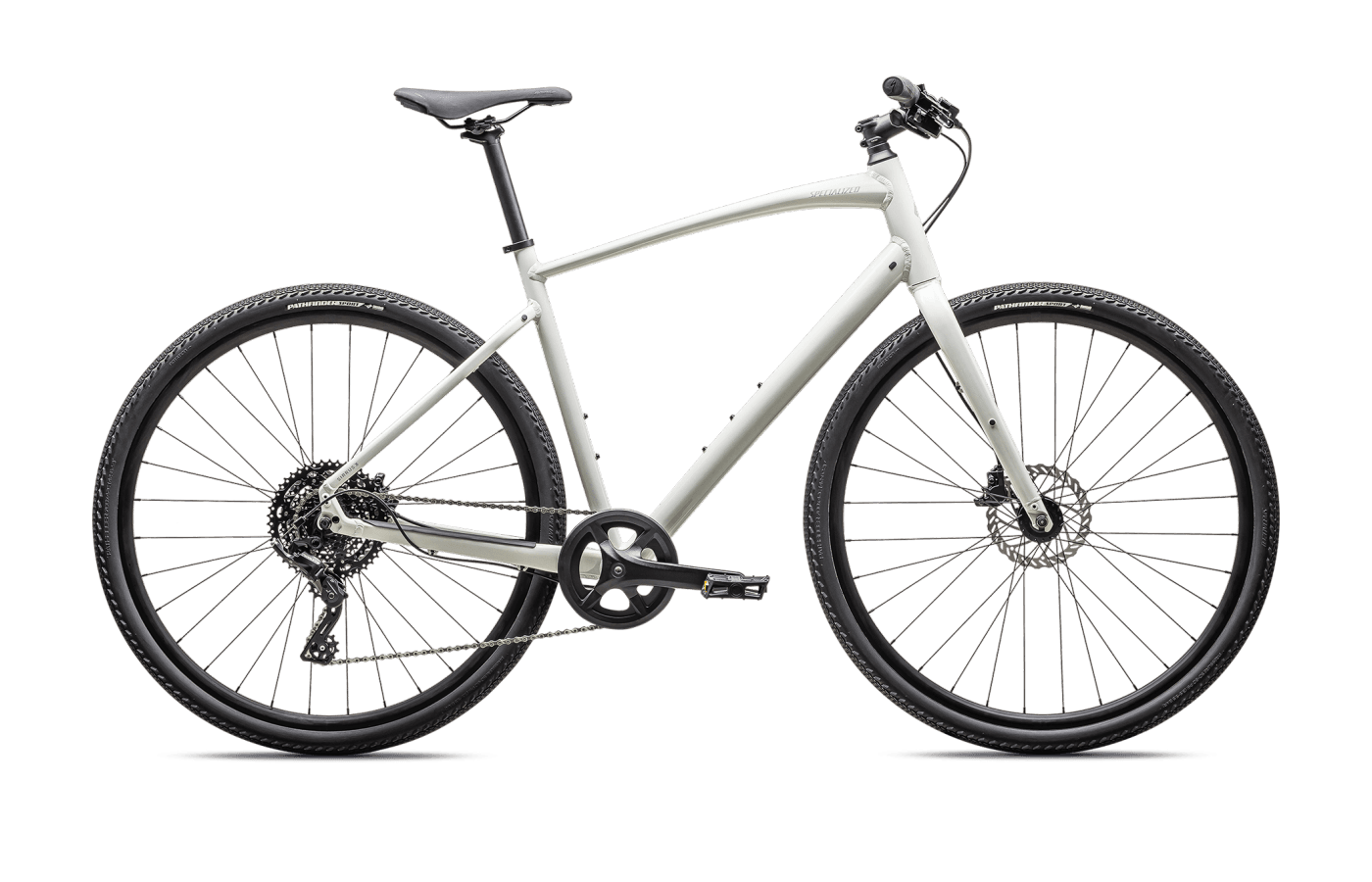
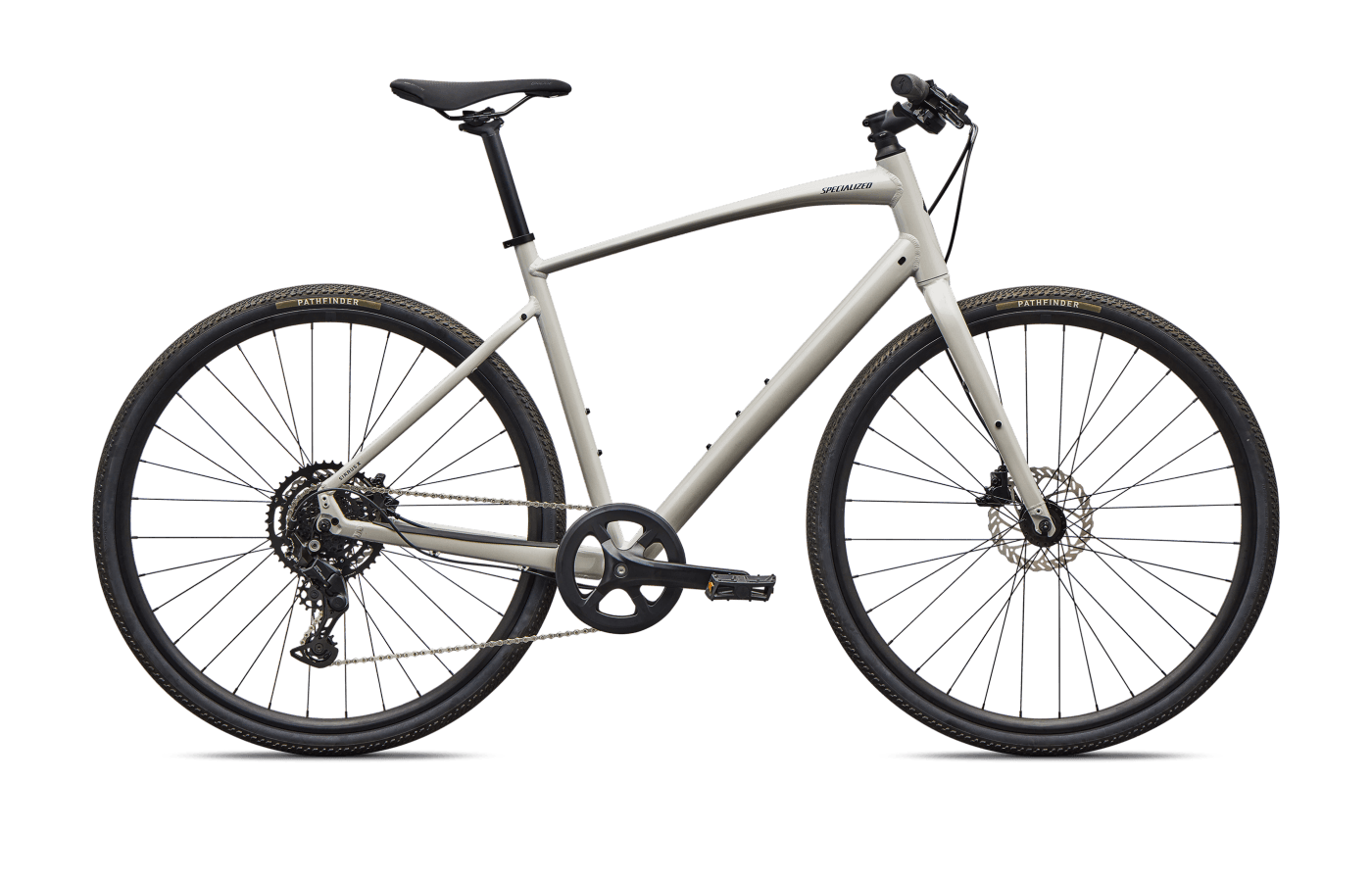
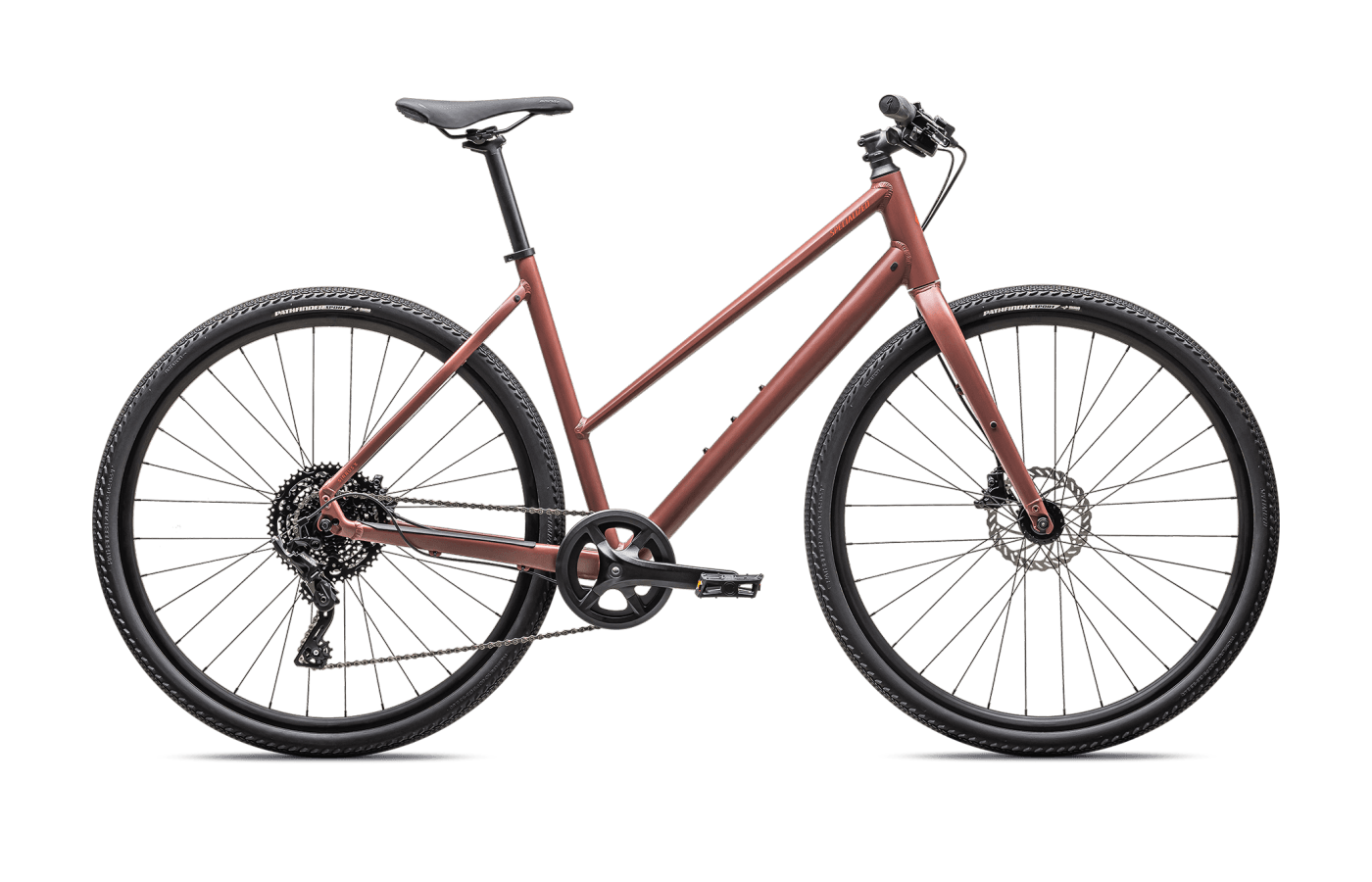
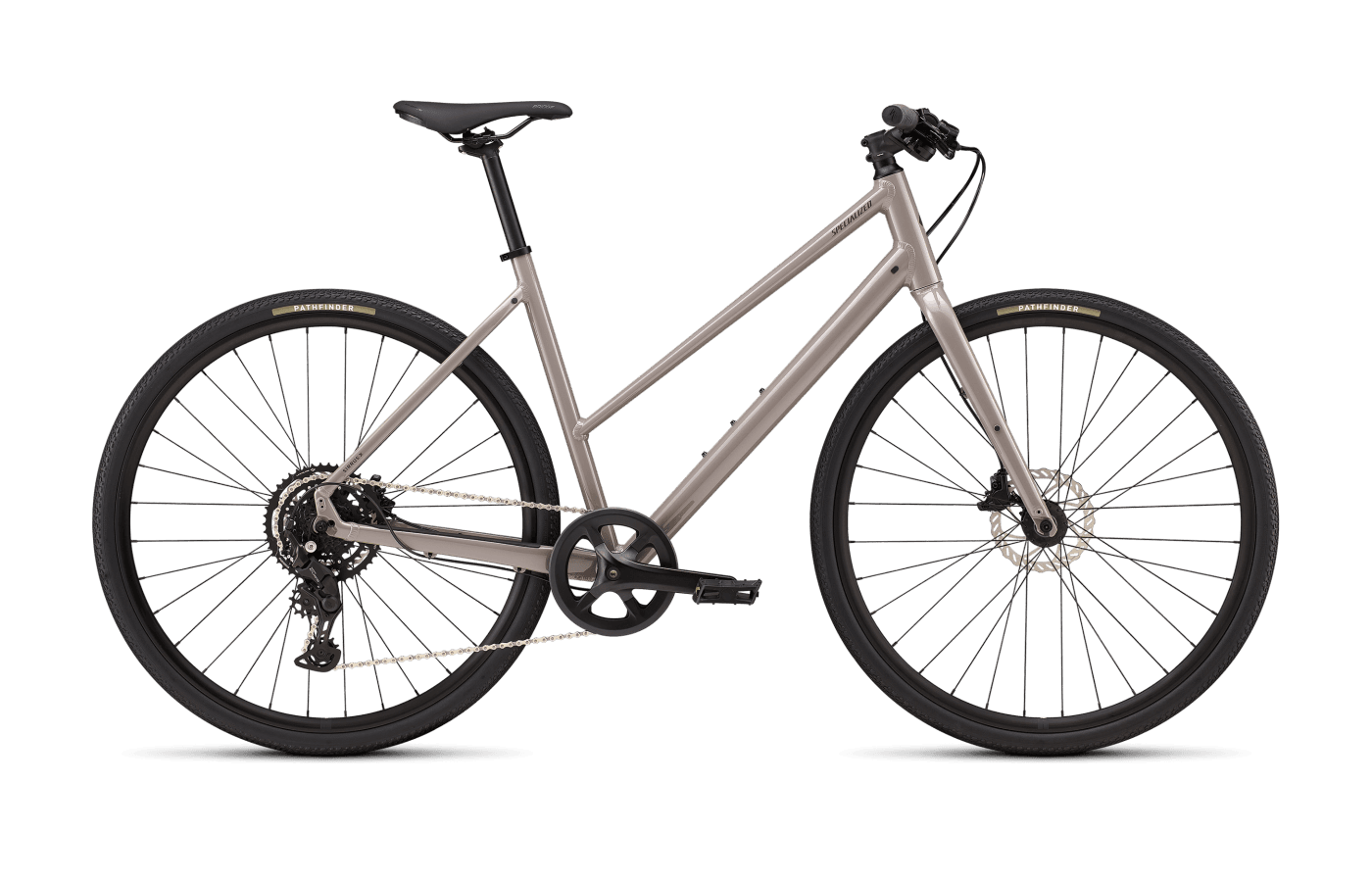
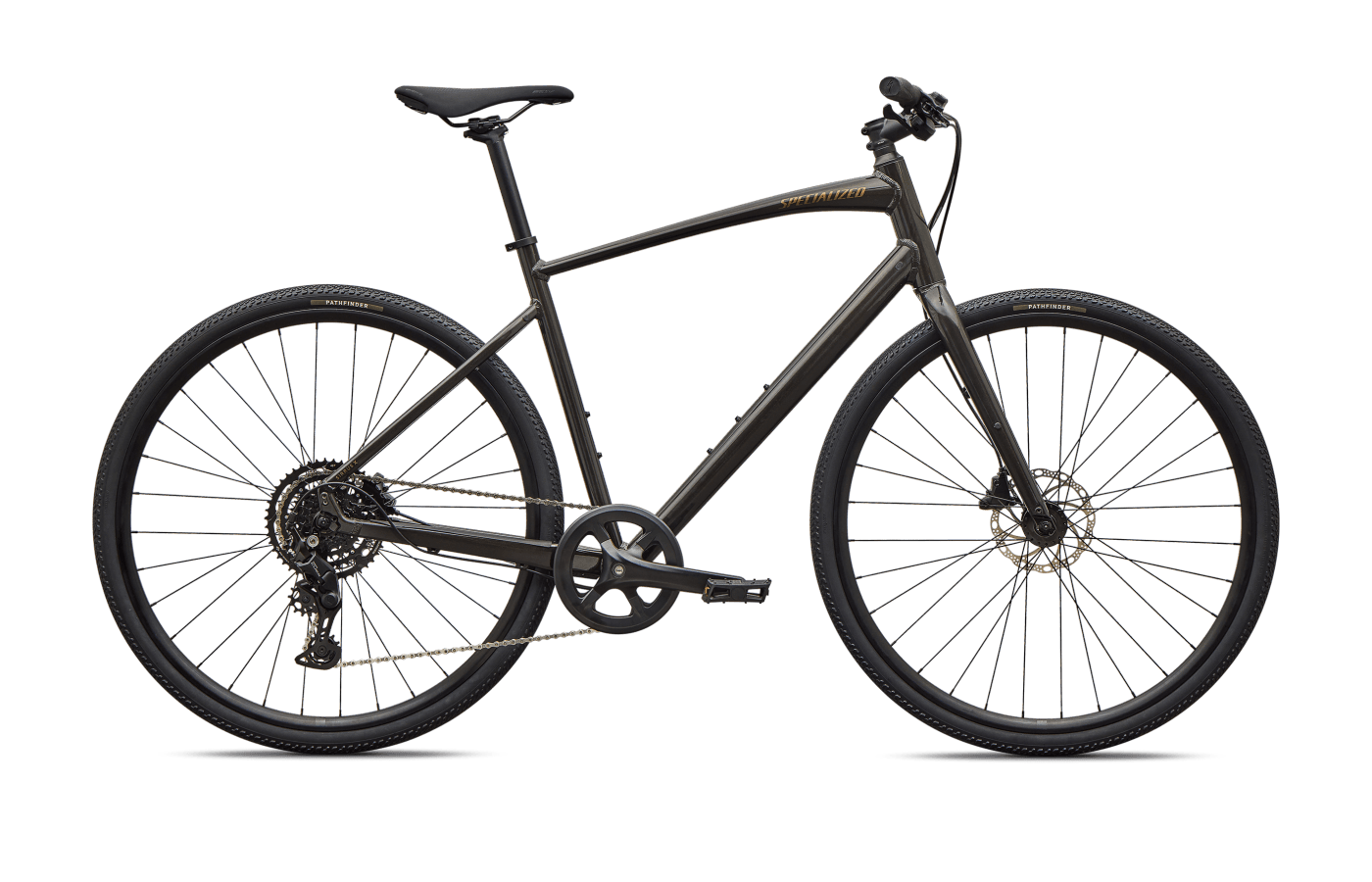
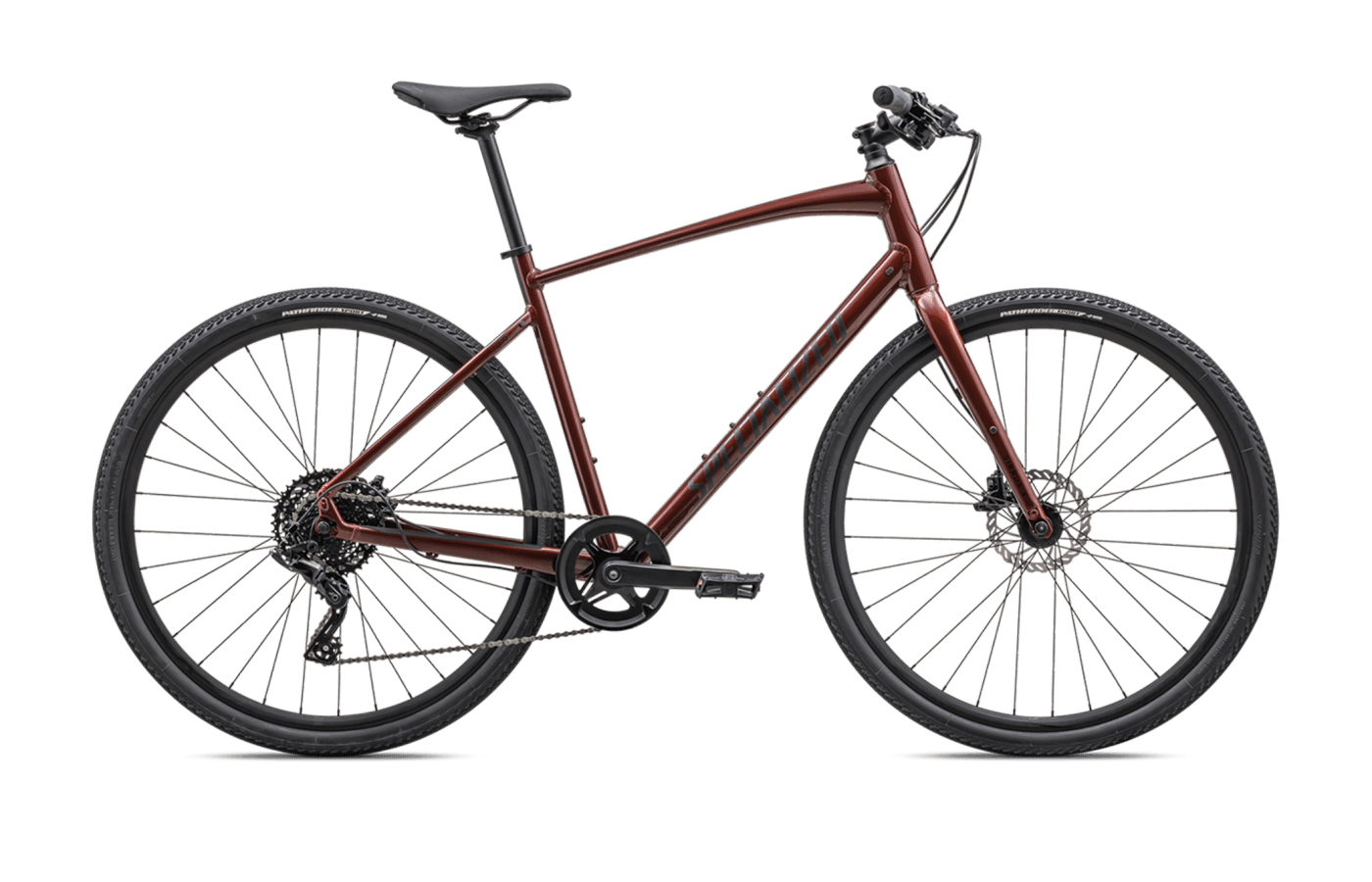
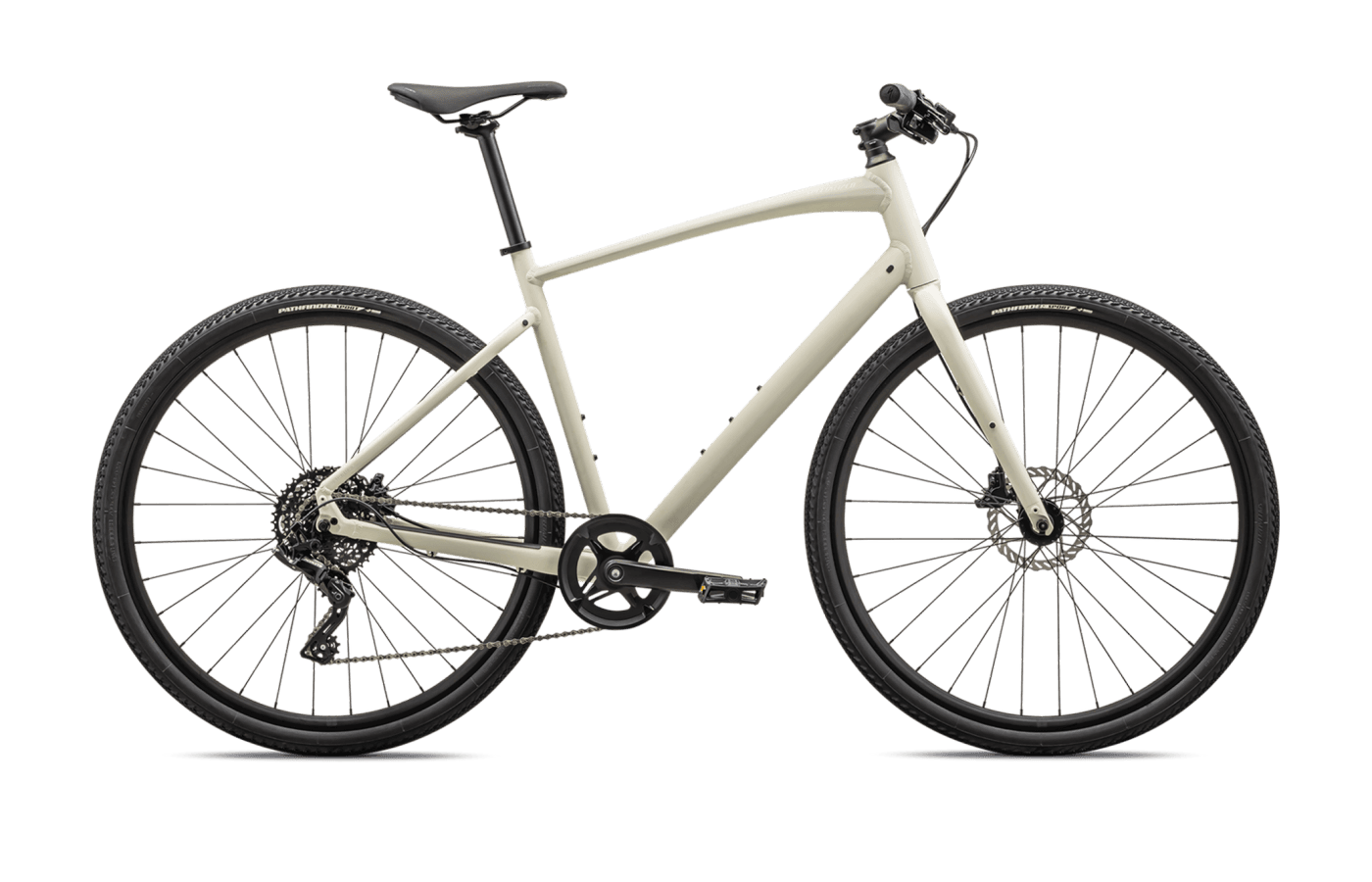
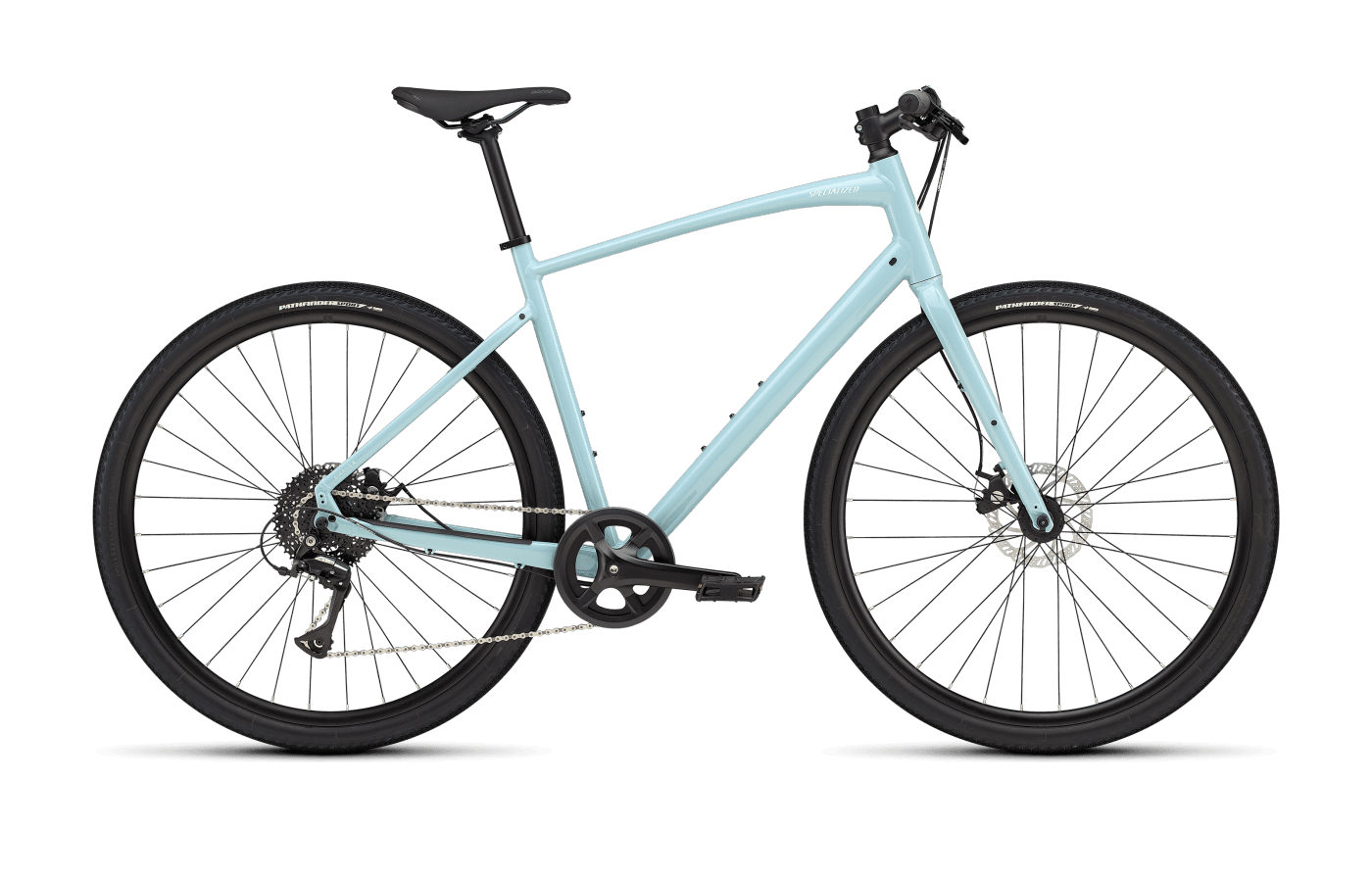
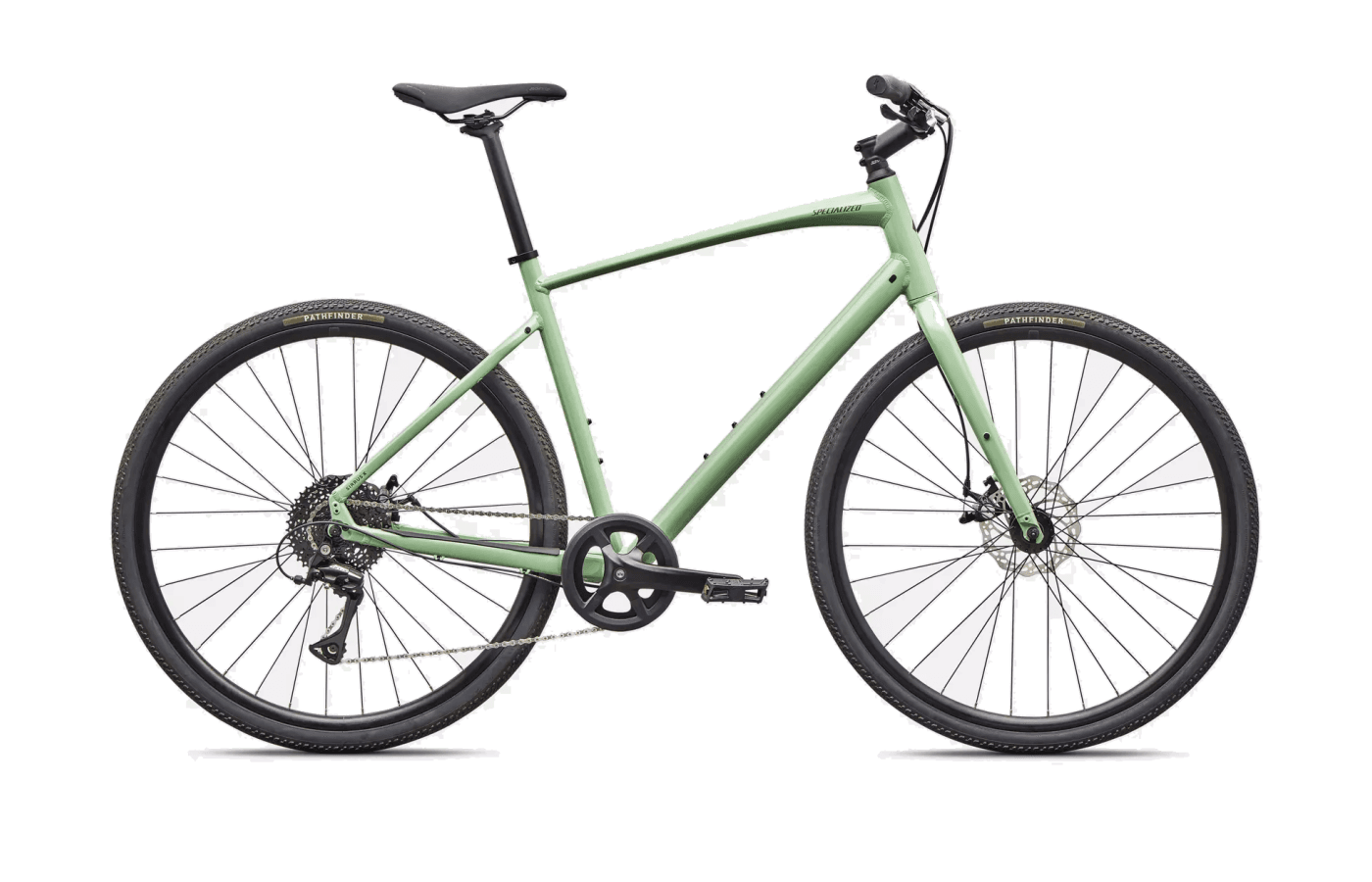
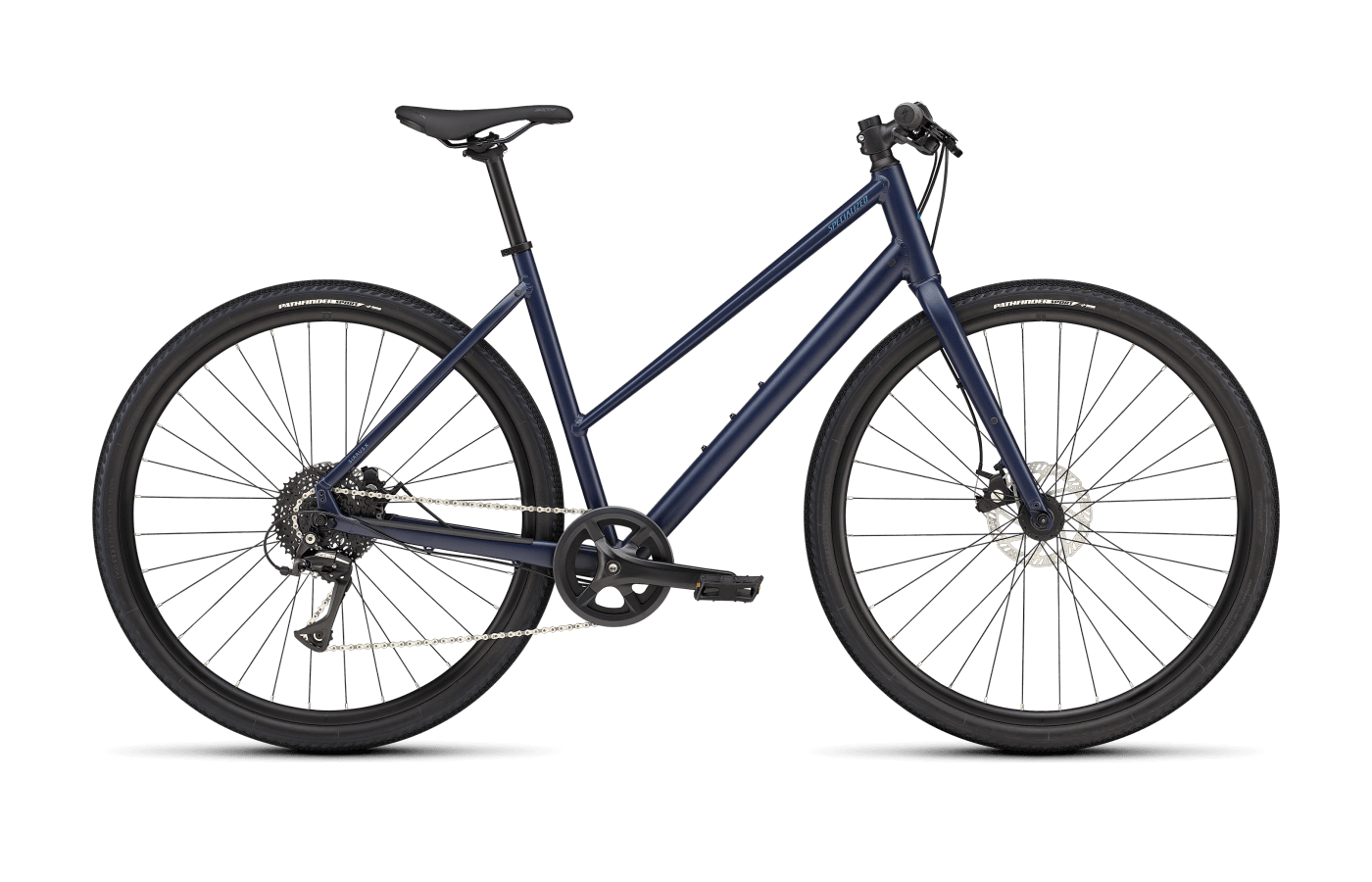
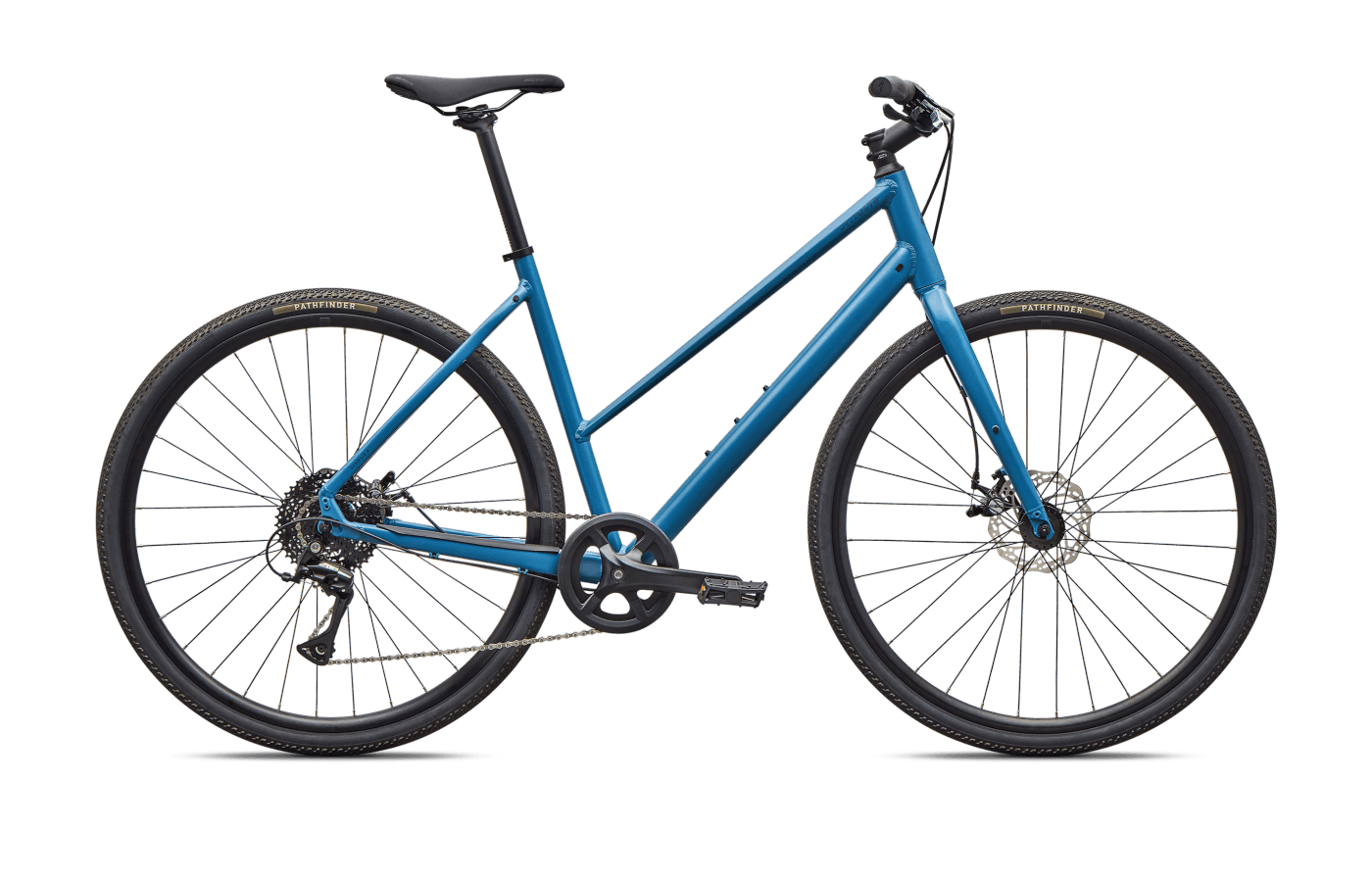
The available Sirrus range spans from entry-level urban models at $699.99 for the X 1.0 up to the carbon-platform X 5.0 at $2,349.99 to $2,499.99, with a broad middle made up of the X 2.0, X 3.0, X 4.0, and the non-X 4.0. That pricing spread shows how far the Sirrus name now stretches: the lower models serve as straightforward value-oriented fitness and commuter bikes, while the top-end X 5.0 sits in a very different premium bracket built around the advanced carbon chassis described here.
Within the reviewed carbon models, the key distinction is between the better-equipped Sirrus 6.0 and the more mixed-value Sirrus X 5.0. Review coverage notes that the 6.0 justifies its higher price with stronger parts, including a SRAM Rival/GX Eagle mix, SRAM Level TLM brakes, and DT Swiss R470 wheels, while the X 5.0 uses a SRAM NX Eagle drivetrain and a square-tapered bottom bracket that reviewers considered underwhelming at this price. Both retain the appeal of a simple 1x drivetrain and wide gearing, but the editorial consensus is that the premium Sirrus frame deserves higher-end components than the X 5.0 receives.
From the press.
3 reviews from the cycling press.
Reviewers were broadly convinced that the new Sirrus frame is more than a styling exercise. Cycling Weekly called the Sirrus X 5.0 frame "beautifully engineered" and found it genuinely comfortable on both road and light off-road terrain, while road.cc described the Sirrus 6.0 as "quirky but quick and comfortable." Across reviews, the Compliance Junction and Future Shock 1.5 were repeatedly credited with muting road chatter and reducing hand and arm fatigue without making the bike feel vague. Cyclist also came away impressed, describing the Sirrus 6.0 as "properly comfortable and a lot of fun to ride," and highlighting its light weight, wide-range gearing, mounts, and tire clearance.
The ride character reviewers describe is stable, efficient, and unexpectedly lively for a fitness hybrid. Testers noted that the bike holds speed well and feels sprightly under power, with enough stiffness for hard efforts despite the visible frame flex. At the same time, several drawbacks came up consistently. The non-adjustable Future Shock 1.5 was the main criticism: road.cc noted noticeable front-end dip under braking and some bob during harder efforts, and Cyclist also flagged the lack of adjustability. Value was the other sticking point. While the frame and ride quality were widely praised, reviewers felt the premium price is driven heavily by the chassis design, and Cycling Weekly in particular thought the X 5.0’s more basic components did not fully match the quality of the frame.