Regulator SX
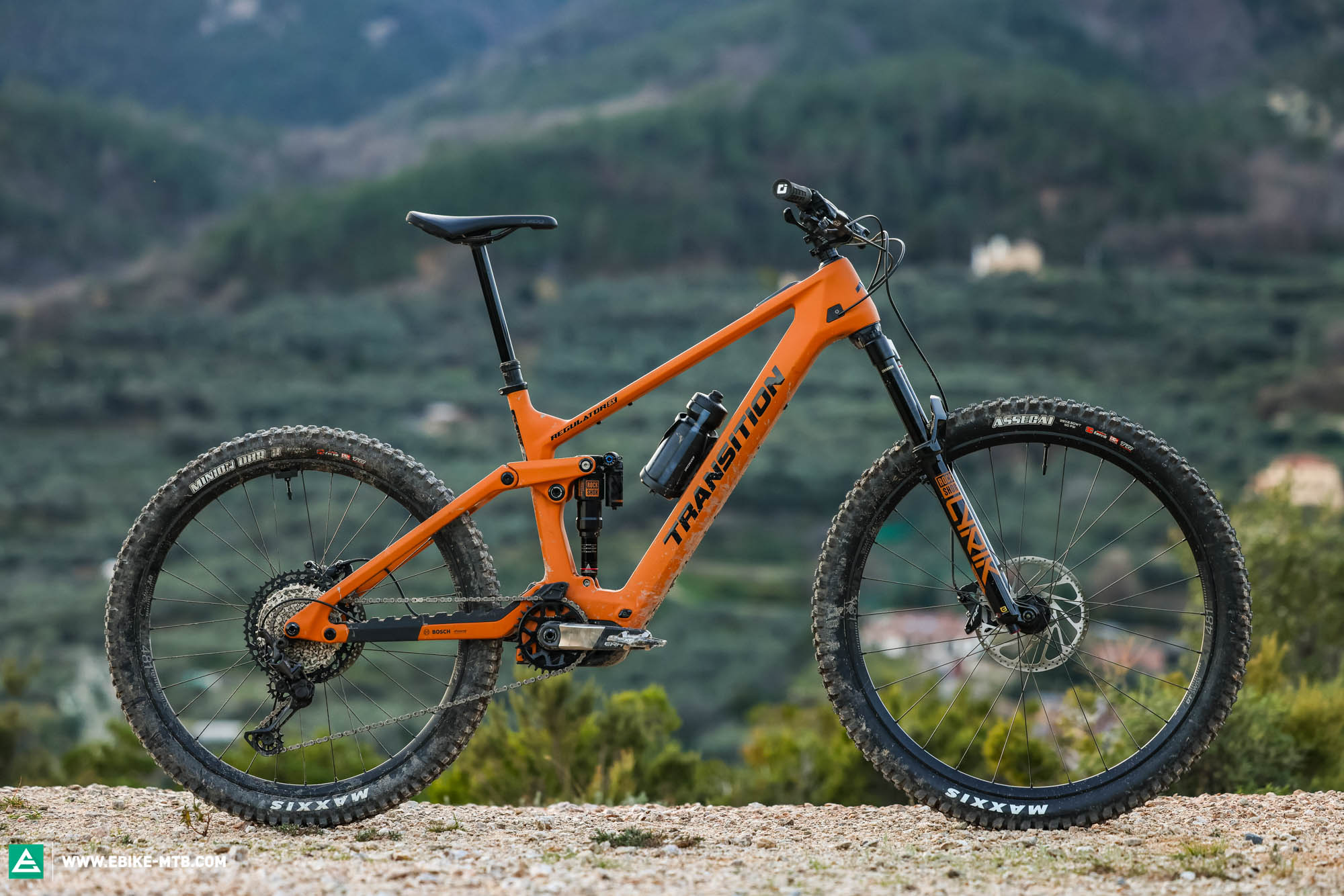
The Transition Regulator SX is the lighter-duty, lighter-feeling version of Transition’s new Regulator eMTB platform, built around Bosch’s Performance Line SX motor and a 400 Wh internal battery. Rather than chasing full-power e-bike numbers, it is aimed at riders who want an all-mountain bike with meaningful assistance but handling that stays closer to a conventional trail bike. The core recipe is a dedicated mullet layout, 150 mm of rear travel paired with a 160 mm fork, and Transition’s GiddyUp suspension layout with a stated 27% progression. That puts it squarely in the modern all-mountain/lightweight-eMTB category, with priorities centered on agility, line choice, and rider input rather than brute-force speed.
What makes the Regulator SX distinctive is how deliberately it avoids the usual heavy e-bike character. The Bosch SX system brings lower torque than a Bosch CX setup, but also a smaller and lighter package, and Transition leans into that with geometry and suspension choices meant to preserve responsiveness. A 64.5° head angle, steep effective seat angles, and size-specific chainstay lengths support a centered climbing position and balanced descending manners. Transition also leaves room for riders to tune the platform: rear travel can be increased from 150 mm to 160 mm with a 205 x 65 mm shock, and Bosch’s 250 Wh PowerMore range extender is supported for riders who want more than the stock 400 Wh battery can offer. In the market, it sits as a premium, handling-first lightweight eMTB for riders who value trail-bike feel more than maximum motor output.
Geometry & fit.
4 sizes published.
The available geometry points to a modern all-mountain fit with an emphasis on centered body position and balanced handling. In size Large, the Regulator SX pairs a 480 mm reach with a 641 mm stack, a 64.5° head tube angle, a 78.2° effective seat tube angle, 448 mm chainstays, and a 1,271 mm wheelbase. That combination is fairly telling: the front end is long enough for stability, but not excessively stretched, while the steep seat angle keeps the rider forward for seated climbing efficiency. Reviewers consistently noted that this creates a comfortable but slightly sporty pedaling position that suits the Bosch SX motor’s preference for higher-cadence riding.
Handling-wise, the numbers support the bike’s reputation for being agile without becoming nervous. The 64.5° head angle is slack enough for steep descents, but still quick enough to preserve responsive steering in tighter terrain. Transition’s decision to use 448 mm chainstays on Large and XL sizes is especially important on a mullet bike, because it keeps the bike from feeling too rear-biased and helps front-wheel tracking on technical climbs. Smaller sizes use 442 mm stays, preserving maneuverability for shorter riders. The 25 mm bottom bracket drop is relatively conservative, which can slightly raise ride height compared with lower-slung competitors, but reviewers generally felt the low motor placement and overall weight distribution kept the bike stable and predictable rather than top-heavy.
Where the handlebar sits relative to the bottom bracket — the single most important fit pair.
01Fit geometry5 values
03Handling geometry6 values
Which size should I buy?
Slide your height to see the recommended size. GearWise's fit algorithm works from the published stack, reach, and ETT — the brand's own recommendation may differ.
→Calculated from GearWise's own stack / reach / ETT algorithm — the brand's size chart may recommend a different size, and a proper bike fit beats any calculator.
The lineup.
2 builds, ranging $7,299 – $9,499.
The Regulator SX is offered in two complete builds: Deore and XT. Pricing starts at $7,299 USD for the Deore model, while the XT build is listed around €9,990 in the reviewed European spec. Both share the same carbon frame, Bosch Performance Line SX drive unit, 400 Wh battery, mullet wheel format, and 160/150 mm travel layout, so the main differences come down to suspension, brakes, wheels, and finishing kit.
Those spec differences matter a lot on this bike. Reviews were notably critical of the Deore build’s lower-tier suspension, with Blister singling out the RockShox Lyrik Base and Super Deluxe Select as holding back the chassis. The base bike’s tires and WTB wheels also drew criticism for being too light-duty for aggressive eMTB use, even if the Shimano Deore drivetrain itself was seen as dependable. The XT build, by contrast, was much more positively received thanks to Ultimate-level RockShox suspension, stronger braking from TRP DH-R EVOs, and an overall parts package better matched to the frame’s capability. As a result, the XT version appears to be the more coherent build for riders who want to experience what the Regulator SX platform can actually do, while the Deore build makes more sense only if a buyer is prepared to budget for upgrades.
From the press.
3 reviews from the cycling press.
Reviewers were broadly aligned in describing the Regulator SX as one of the more convincing lightweight eMTBs for riders coming from unassisted mountain bikes. Ebike-mtb and Blister both praised its neutral, intuitive handling and the way its roughly 19 kg system weight avoids the tank-like feel of many full-power e-bikes. AllAroundJoe went as far as saying it feels so much like a modern trail bike that a rider might not immediately notice the motor on mellow terrain. Across reviews, the mullet wheel setup and balanced geometry were credited with making the bike easy to flick through tight corners while still remaining composed when speeds rise.
The biggest caveat was build sensitivity. Blister found the Deore build’s RockShox Lyrik Base fork and Super Deluxe Select shock to be a major limitation, calling the fork divey and harsh and the shock short on mid-stroke support. By contrast, Ebike-mtb tested the XT build with higher-end RockShox suspension and came away impressed by its small-bump sensitivity, support, and overall control. That split shaped much of the review consensus: the frame and chassis are highly capable, but the complete bike’s ride quality depends heavily on damper quality. Reviewers also noted a few recurring drawbacks, including Bosch SX freewheel rattle on descents, limited battery capacity for bigger rides, and a value proposition that looks less compelling when compared with full-power alternatives at similar prices.
On climbs, reviewers liked the steep seating position, long-enough rear center, and strong traction, but they were also clear that the Bosch SX motor rewards an active rider. It performs best at higher cadences and feels punchy on moderate grades, yet Blister in particular noted a more abrupt drop in support on very steep pitches than a Bosch CX-equipped bike would show. That leaves the Regulator SX as a well-rounded middle ground: lively, engaging, and versatile, but not the best choice for riders who prioritize maximum torque, maximum range, or the most aggressive descending package at the lowest price.