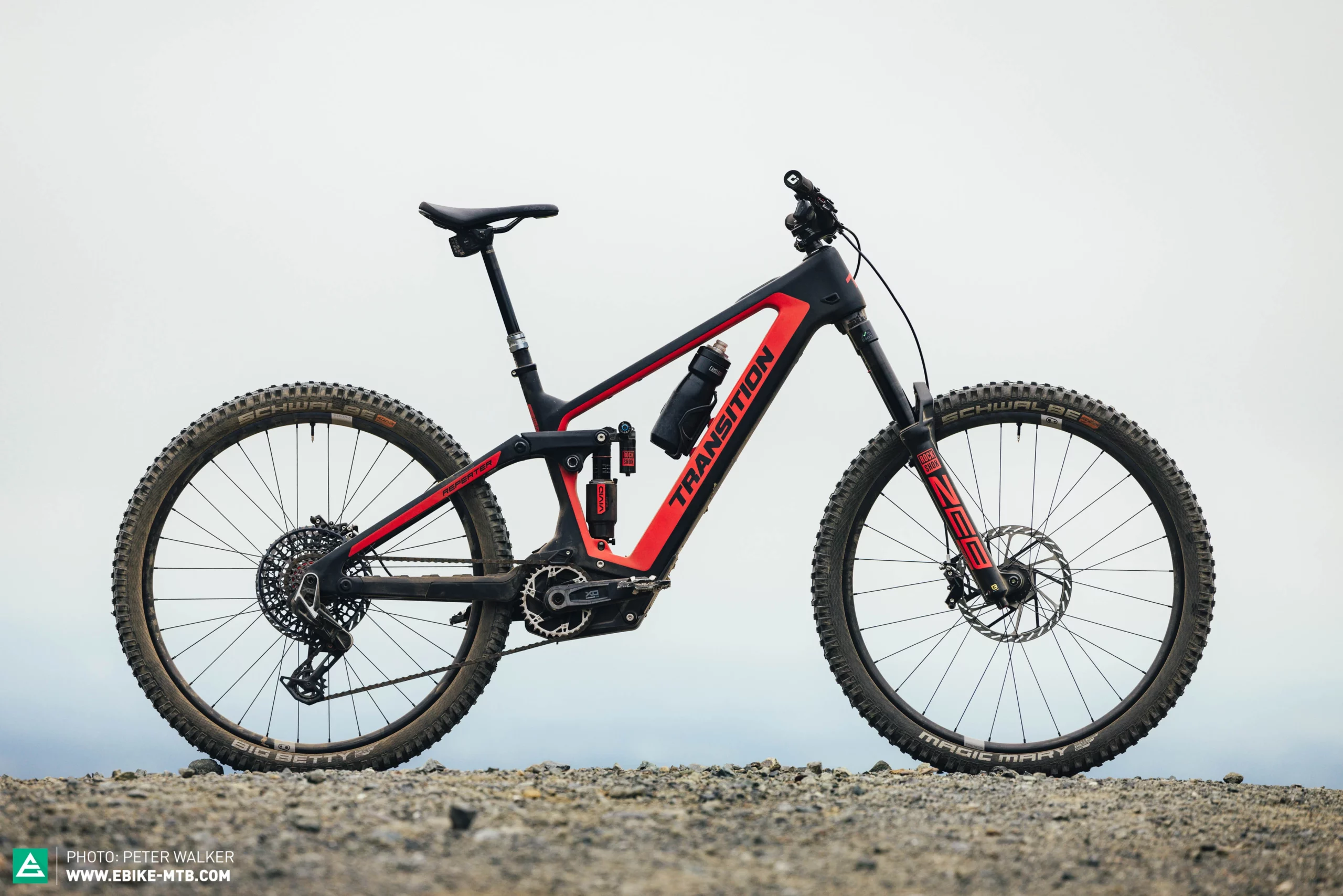
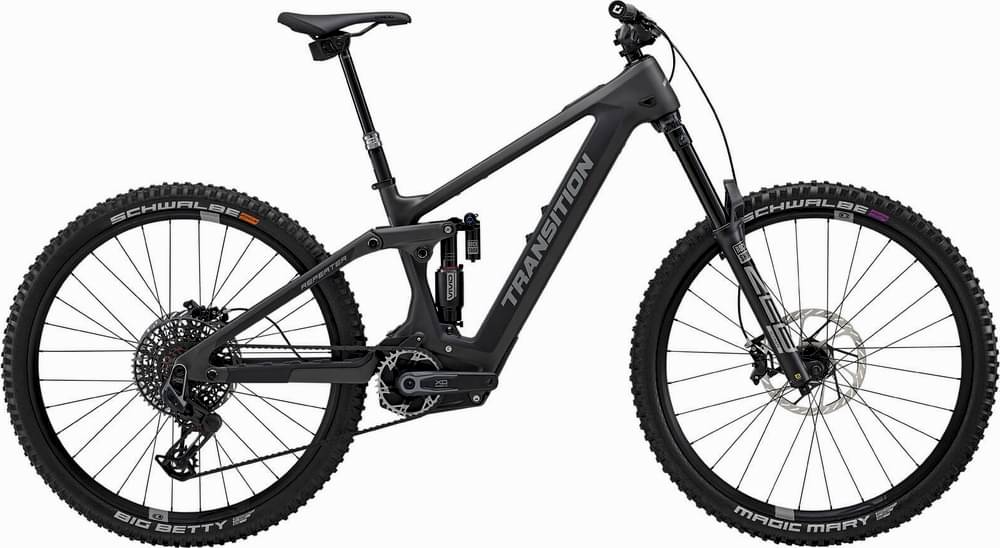
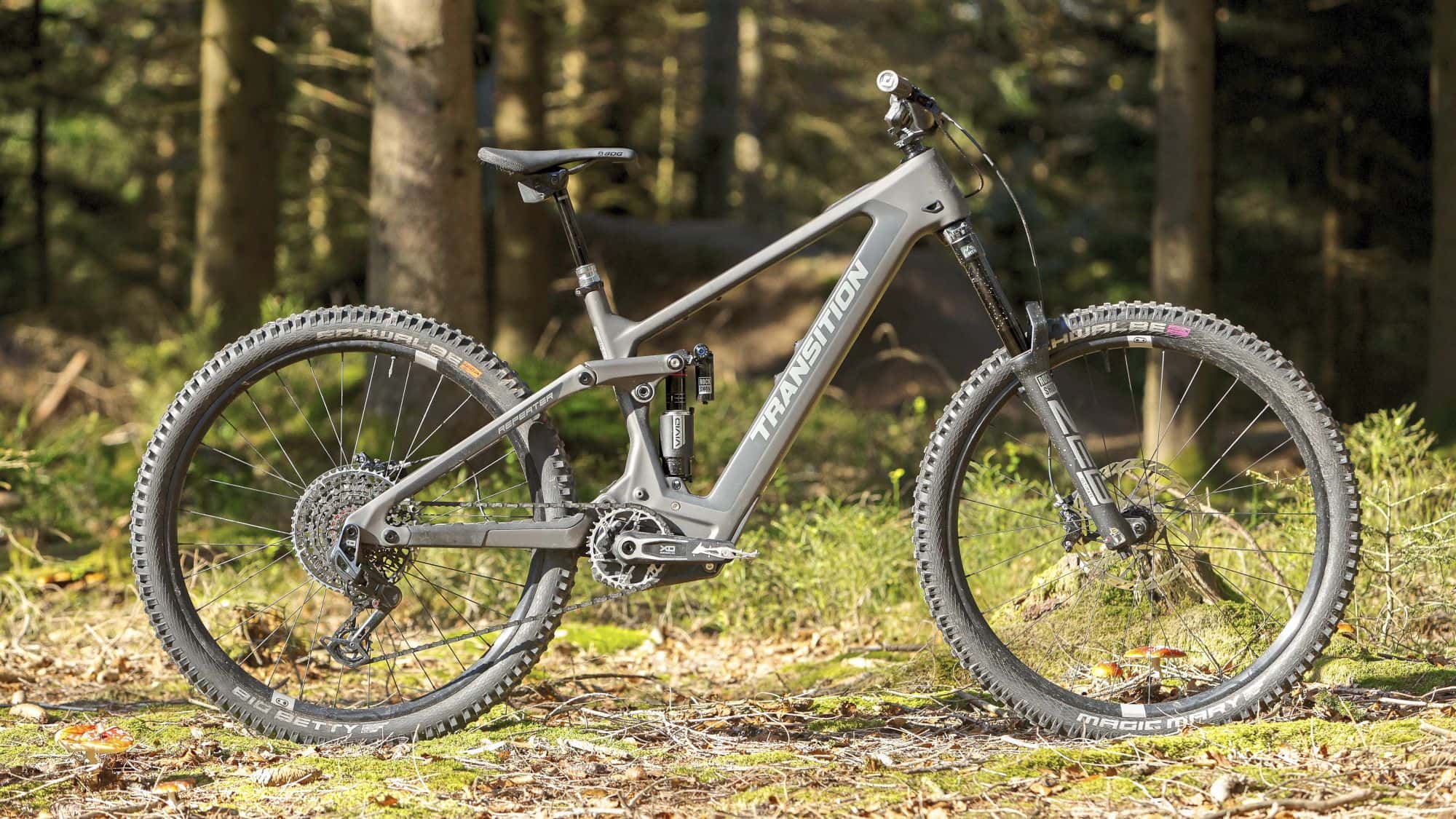
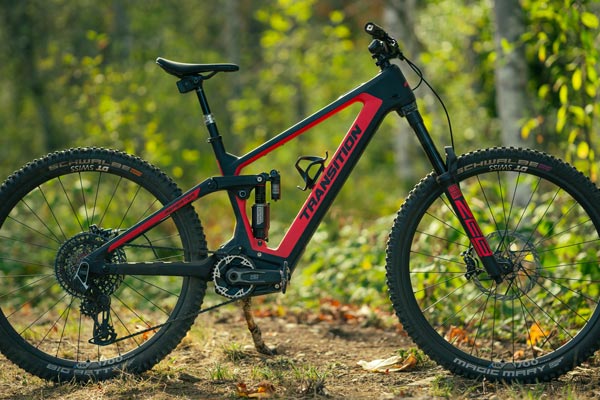
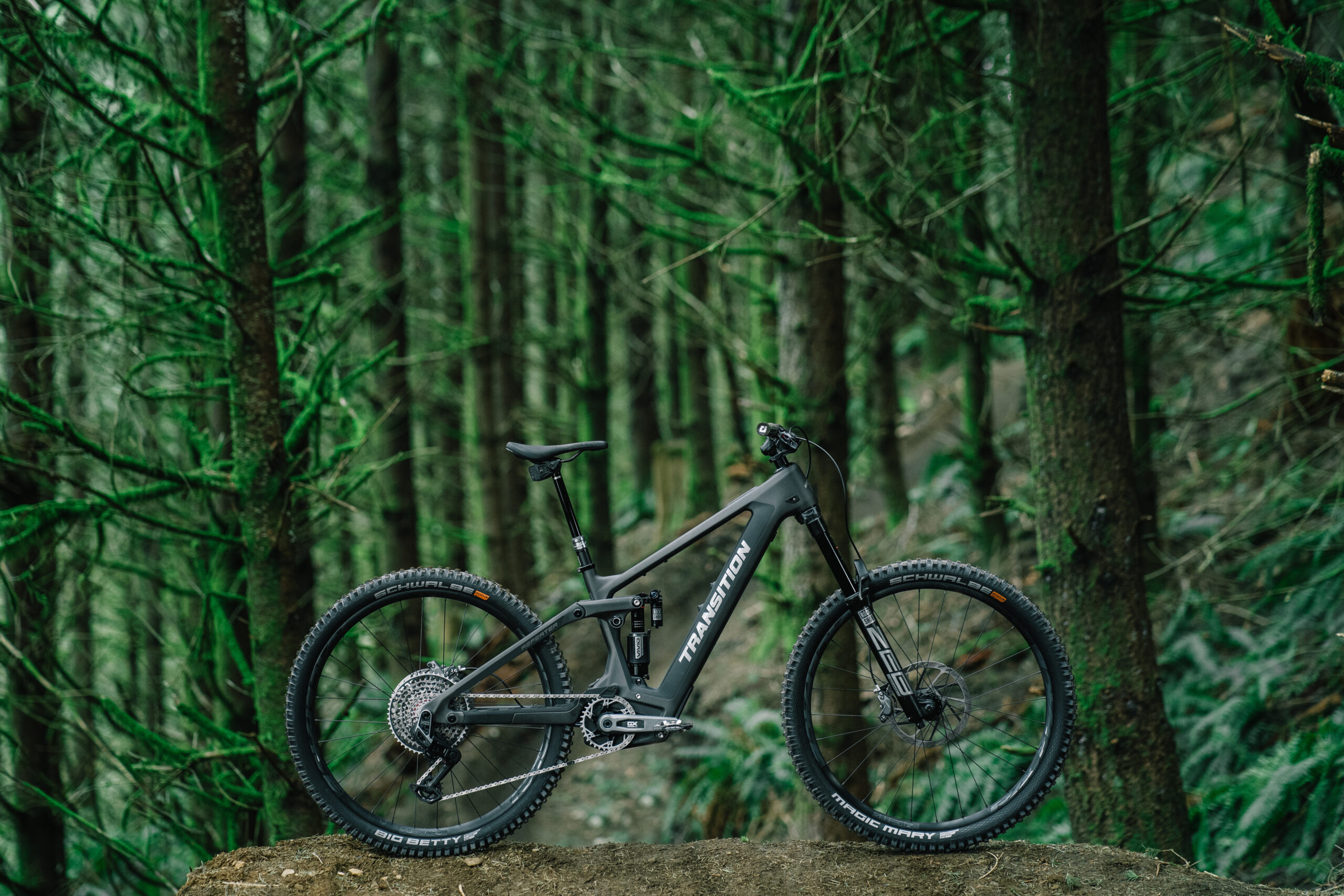
The 2024-on Transition Repeater PT is the brand’s full-power e-enduro built specifically around SRAM’s Eagle Powertrain system rather than Shimano’s EP platform used on earlier Repeater variants. That distinction matters: the PT is not just a motor swap, but a dedicated 170 mm-travel carbon chassis shaped around SRAM’s tightly integrated ecosystem, including the Brose-based 90 Nm drive unit, AXS-centric controls, and features such as Auto Shift and Coast Shift. Transition paired that system with its GiddyUp four-bar suspension, a 205 x 65 mm shock, dual-29in wheels as standard, and optional mullet compatibility via a lower shock-mount adjustment chip.
In character, the Repeater PT sits firmly on the gravity end of the eMTB spectrum. Its 63.5° head angle, steep effective seat angles, and fixed 455 mm chainstays point to a bike intended for steep, rough, high-speed terrain rather than everyday trail riding. The large motor area and clean cockpit give it a distinct visual identity, but the more important takeaway is how clearly the bike is positioned: this is a heavy-hitting, self-shuttling enduro bike for riders who want maximum composure, traction, and descending confidence, even if that comes with extra mass and less liveliness on mellower trails. In the current market, it occupies a premium niche alongside other long-travel full-power e-enduro bikes, with integration and descending stability prioritized over value or all-round versatility.
Where to get it.
1 retailer · size L.
Spec sheet.
Every component shipped with this build.
Geometry & fit.
4 sizes published.
The Repeater PT’s geometry is unapologetically gravity-focused. Across all sizes, the head angle is 63.5°, chainstays are 455 mm, and BB drop is 25 mm, which creates a long, stable chassis with a notably rearward wheel placement relative to many competitors. Reach numbers of 425 mm (S), 455 mm (M), 480 mm (L), and 510 mm (XL) are paired with tall stack figures from 630 mm to 652 mm, putting the rider in an upright, centered position that favors control on steep descents and reduces the need to aggressively weight the front wheel. Effective seat angles are steep throughout the range, from 79.2° on the S to 77.5° on the XL, helping keep the rider forward enough for seated climbing despite the bike’s long-travel layout.
On trail, those numbers translate to a bike that should feel secure and planted before it feels quick or playful. The 1292 mm wheelbase on a size L and 1326 mm on XL are firmly in high-speed e-enduro territory, and the fixed 455 mm rear center reinforces climbing traction and front-wheel composure on steep pitches. The tradeoff is proportionality: because the chainstay length does not scale by size, smaller riders may experience a more rearward-biased feel than taller riders. Overall, the geometry suggests a bike that rewards commitment in steep, rough terrain and favors stability, traction, and composure over low-speed maneuverability.
Where the handlebar sits relative to the bottom bracket — the single most important fit pair.
01Fit geometry6 values
03Handling geometry7 values
Which size should I buy?
Slide your height to see the recommended size. GearWise's fit algorithm works from the published stack, reach, and ETT — the brand's own recommendation may differ.
→Calculated from GearWise's own stack / reach / ETT algorithm — the brand's size chart may recommend a different size, and a proper bike fit beats any calculator.
The lineup.
2 builds, ranging $10,499 – $11,999.
The Repeater PT is offered in two builds, GX AXS and XO AXS, with reported pricing spanning roughly $10,499/€9,999 at the lower end to $14,313/€13,399 for the flagship XO AXS. Both sit squarely in the premium e-enduro category and are built around the same carbon frame, 170/170 mm platform, and SRAM Eagle Powertrain system with a 720 Wh battery. The range is therefore defined less by frame differences than by how much a buyer is willing to spend on drivetrain and suspension upgrades within the same integrated ecosystem.
The XO AXS build is the halo option, typically equipped with SRAM X0 Eagle Transmission and RockShox Ultimate-level suspension, including the ZEB Ultimate fork and Vivid Ultimate shock. Reviewers consistently regarded that package as high-end and well matched to the bike’s descending intent, but several also noted that aluminum wheels feel underwhelming at this price point. The GX AXS build brings the entry cost down while retaining the same core motor system and wireless-oriented concept, making it the more defensible value in the lineup, though it still remains expensive relative to some rivals. Across both builds, notable spec themes include heavy-duty braking with 220 mm rotors and the use of a Reverb AXS dropper, which some testers felt was too short for larger frame sizes.
From the press.
10 reviews from the cycling press.
Reviewers were broadly aligned on the Repeater PT’s core ride character: it is a planted, stability-first e-enduro that comes alive in aggressive terrain. Multiple outlets described it as exceptionally composed at speed, with E-MOUNTAINBIKE Magazine saying it "sticks to the ground like Velcro" and Opticycles and others highlighting its confidence in rock gardens and rough, steep descents. The 170/170 mm travel and GiddyUp suspension were widely praised for combining a plush initial feel with useful support deeper in the stroke; Bike-x called the suspension well tuned, while Mountain Bike Action noted that it stays high enough in its travel to avoid wallowing under power. On climbs, reviewers consistently pointed to the steep seat angle, long rear center, and strong traction as major assets, while the SRAM Powertrain motor was generally praised for natural-feeling delivery and strong technical climbing performance.
Where opinions diverged was in agility and versatility. Mountain Bike Action and emtb-news found the bike more nimble than expected for a nearly 24 kg, 170 mm machine, but E-MOUNTAINBIKE Magazine was notably more critical, calling it sluggish on flowing trails and saying it takes real effort to change direction quickly. Several reviewers also raised fit concerns around the fixed 455 mm chainstay length, suggesting it works especially well for taller riders but can feel disproportionately long on smaller sizes. Value was another common criticism: Bike-x and others pointed out that the premium pricing is hard to ignore when the bike is still specced with aluminum wheels. Long-term durability feedback was mixed as well, with Mountain Bike Action reporting a motor failure and emtb-news noting repeated electronic errors, even though both also suggested support and warranty response were reasonably strong.
TRANSITION REPEATER PT XO AXS 2024 - Review, Test & Price
Transition Repeater PT im Test
First Ride & Release: Transition Repeater PT
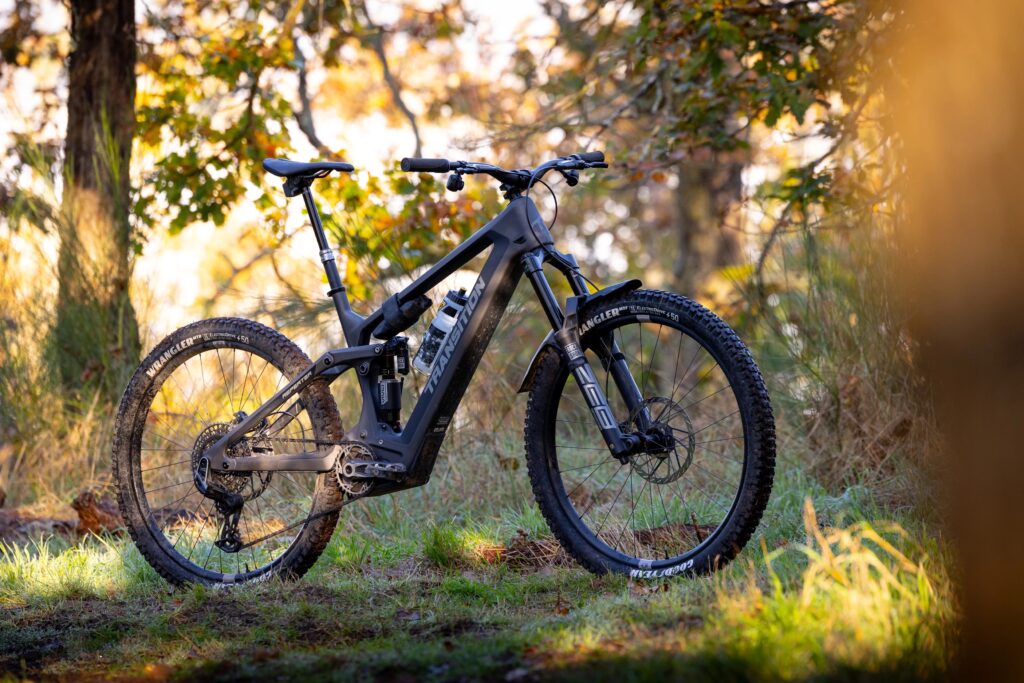
Transition Repeater Test: Ballerbike aus Bellingham
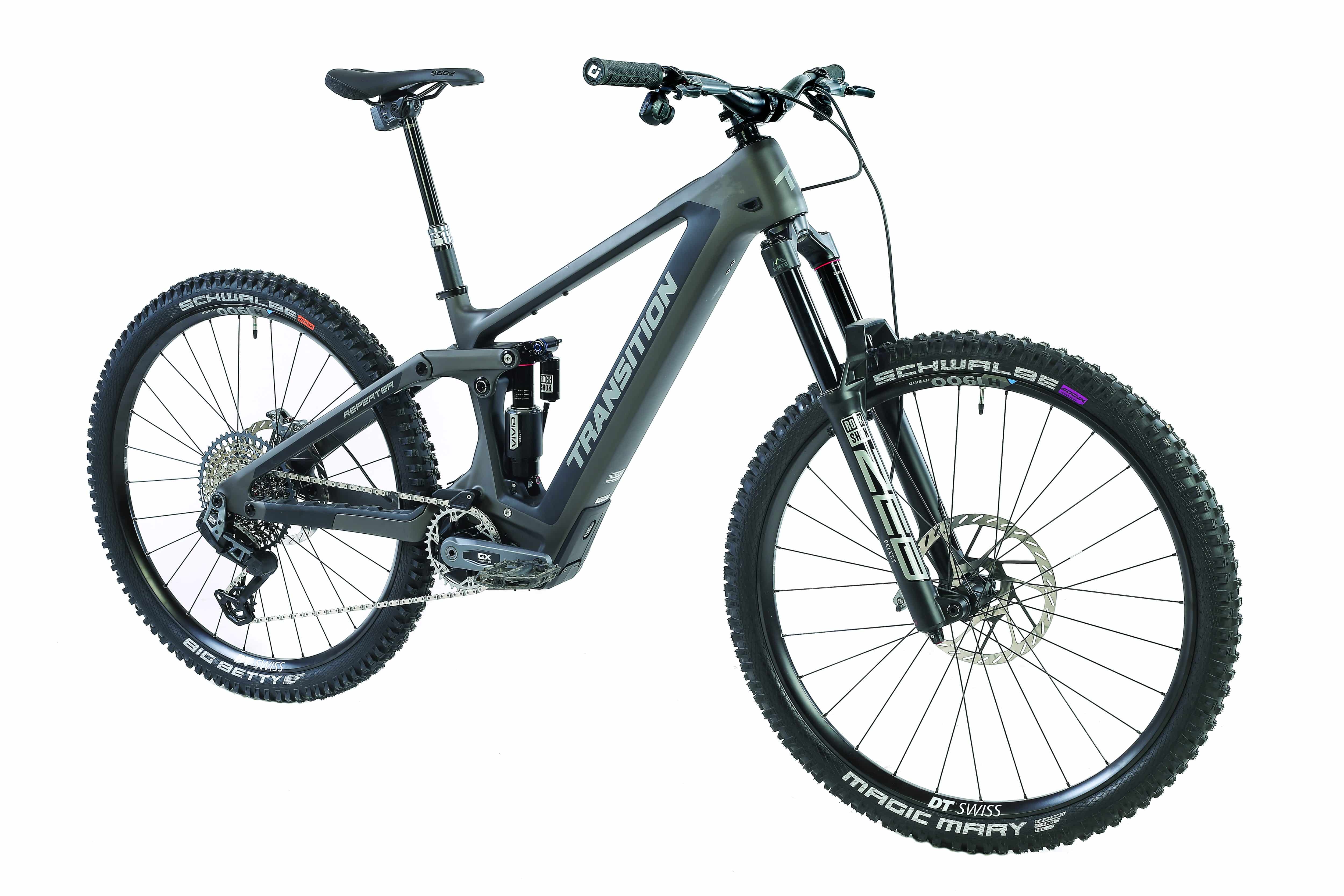
LONG TERM REVIEW: TRANSITION REPEATER POWERTRAIN CARBON – WE BROKE SRAM’S MOTOR!
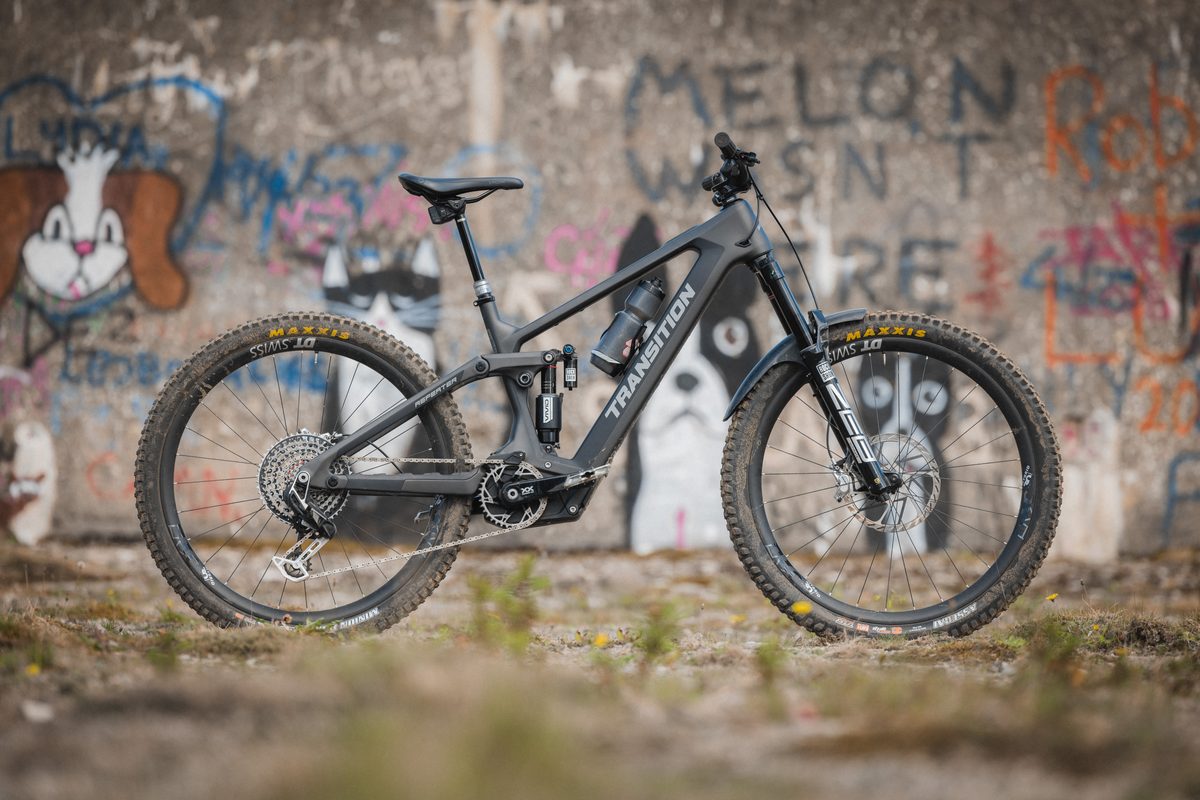
5 of the top eMTBS of 2024 (so far)

April 2024 - Transition Repeater Powertrain
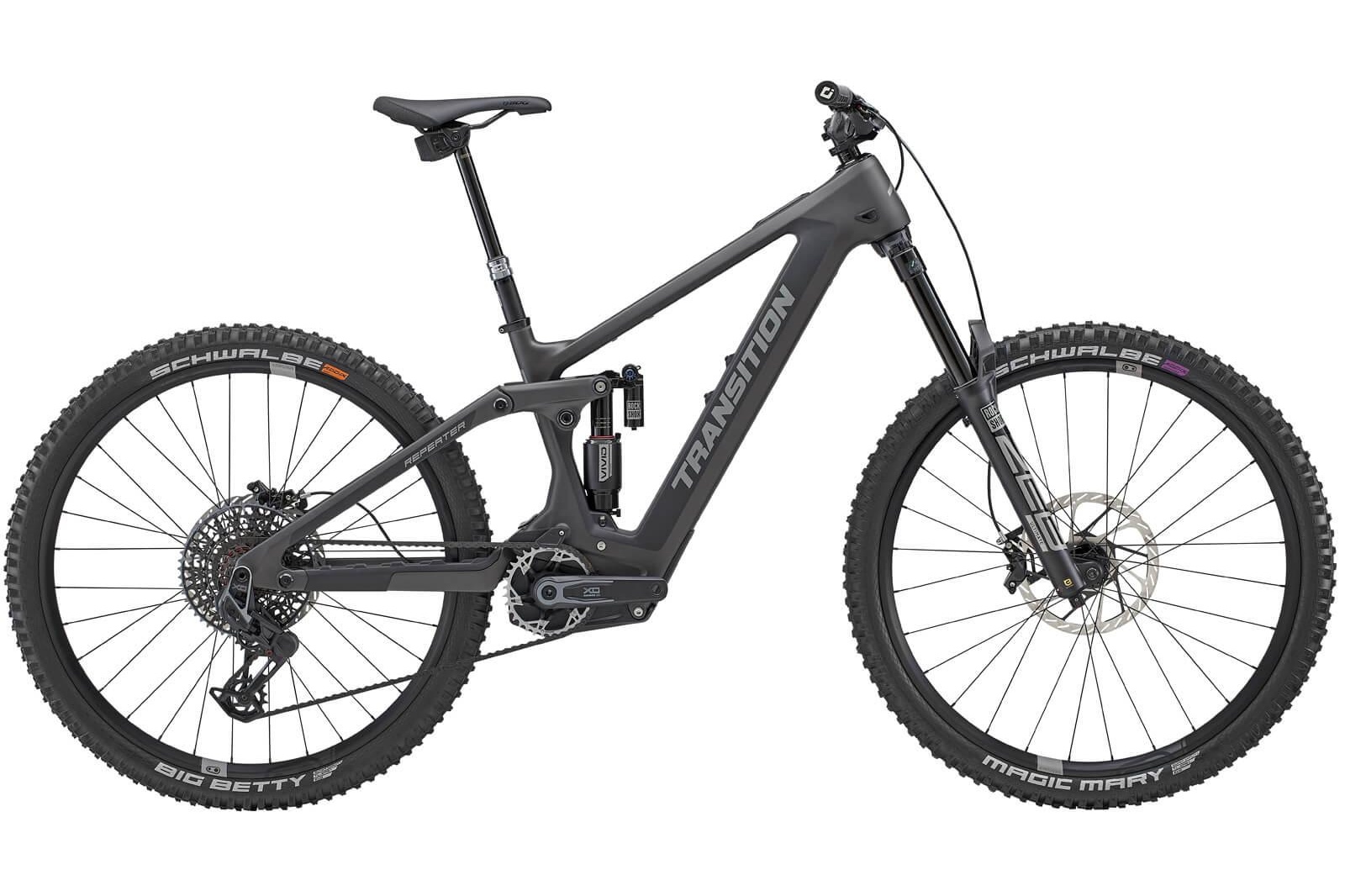
Transition Repeater Carbon XO axs 2024 im Test
Transition Repeater Powertrain | Blister