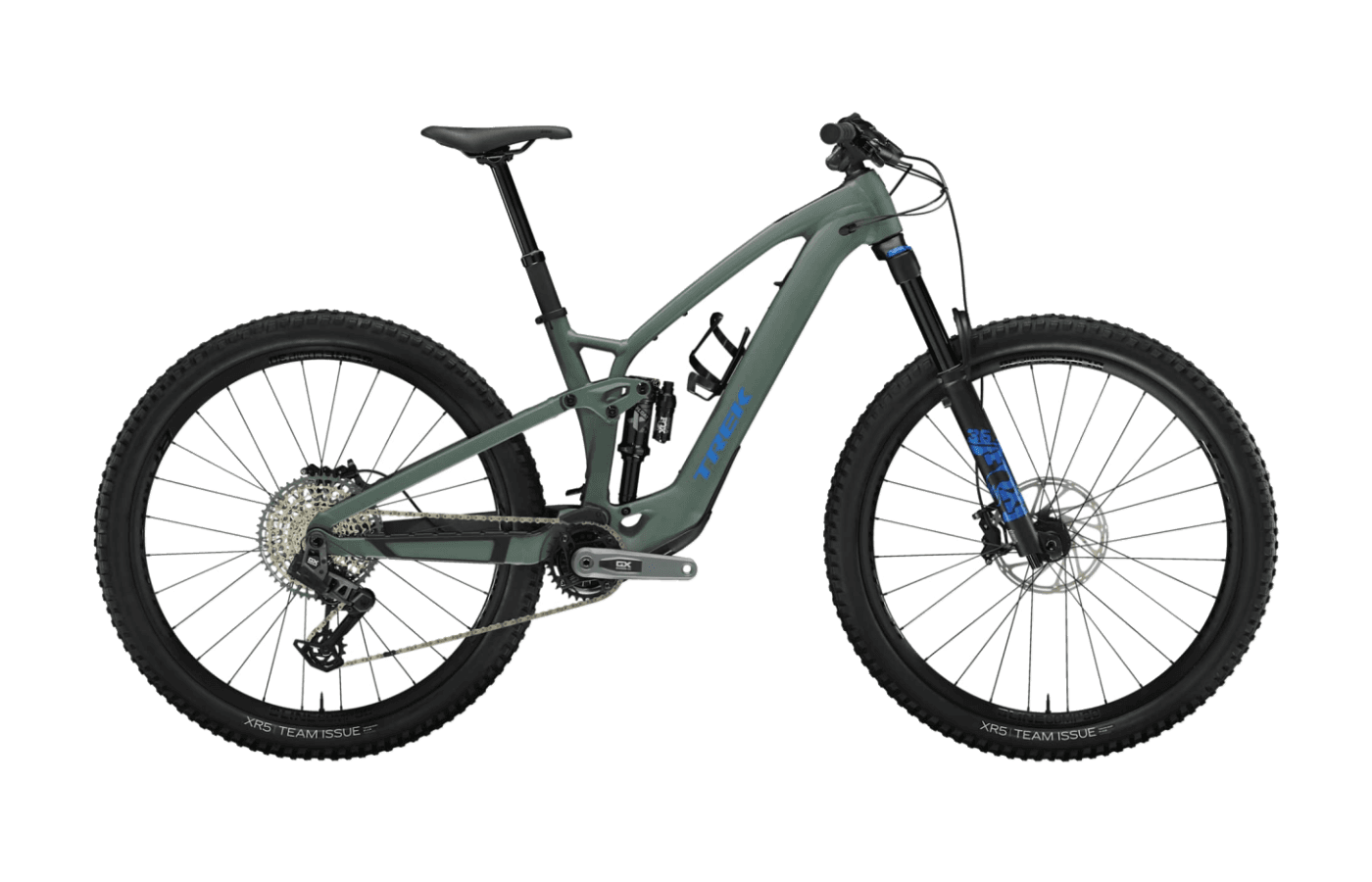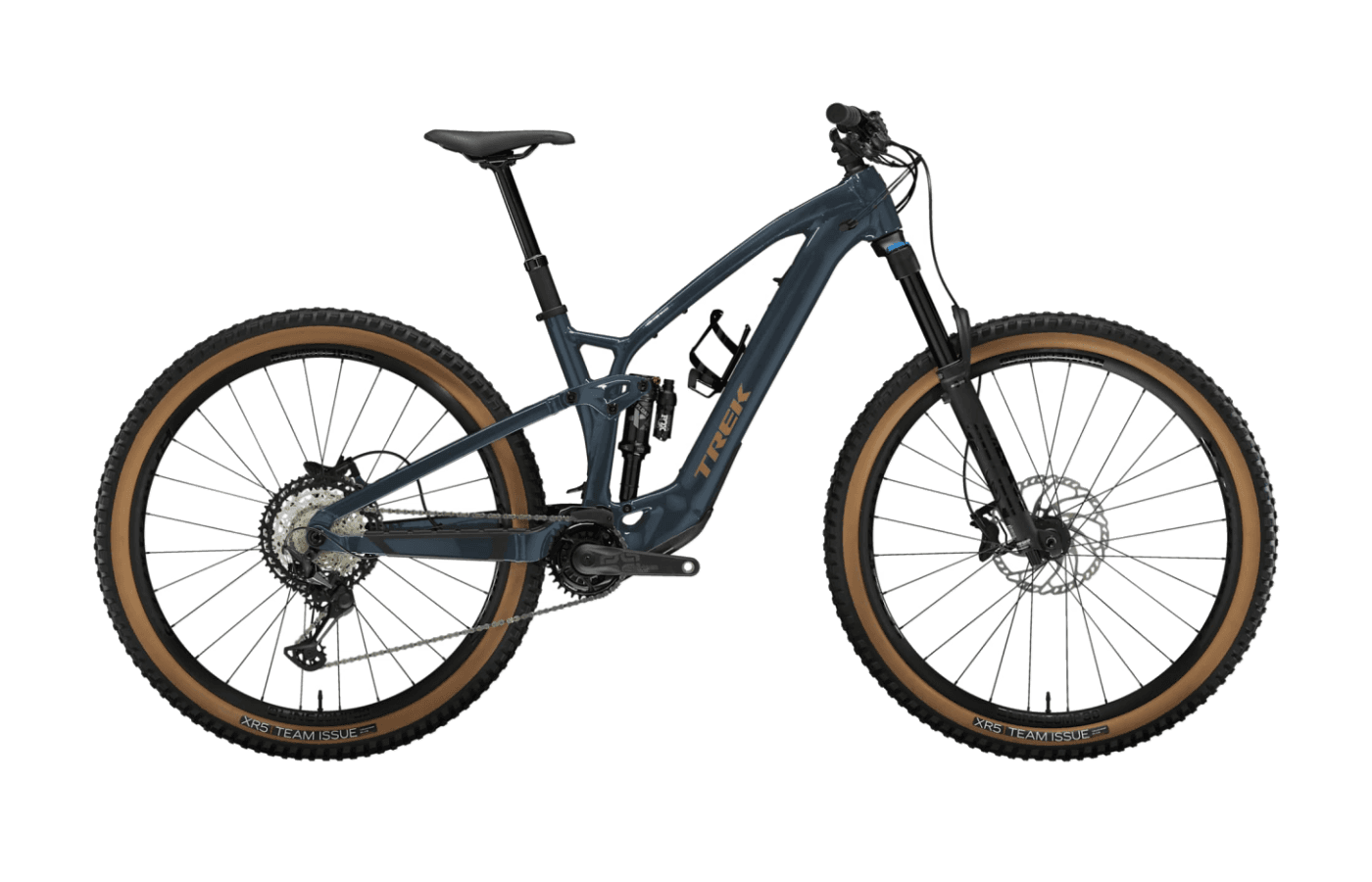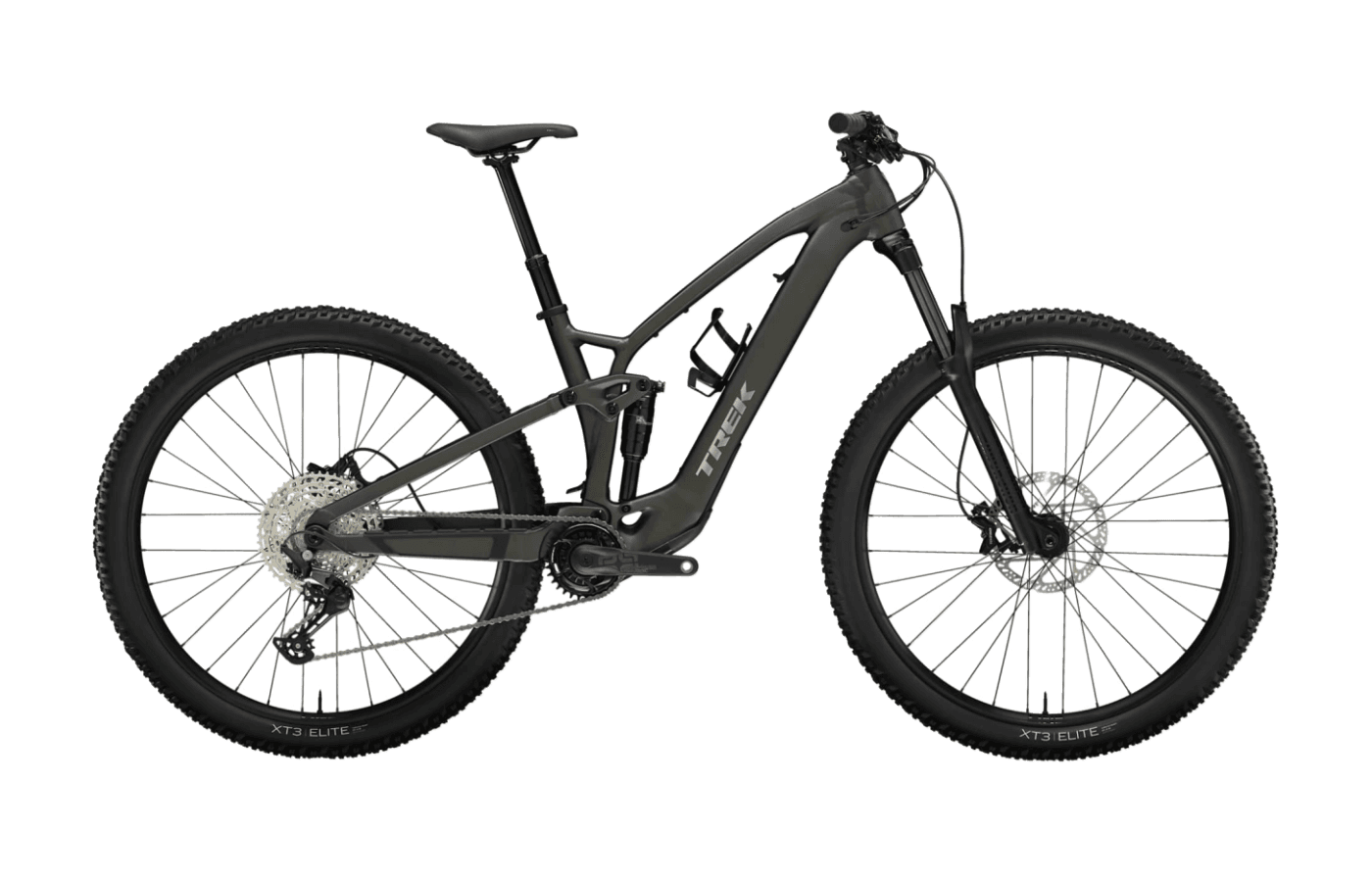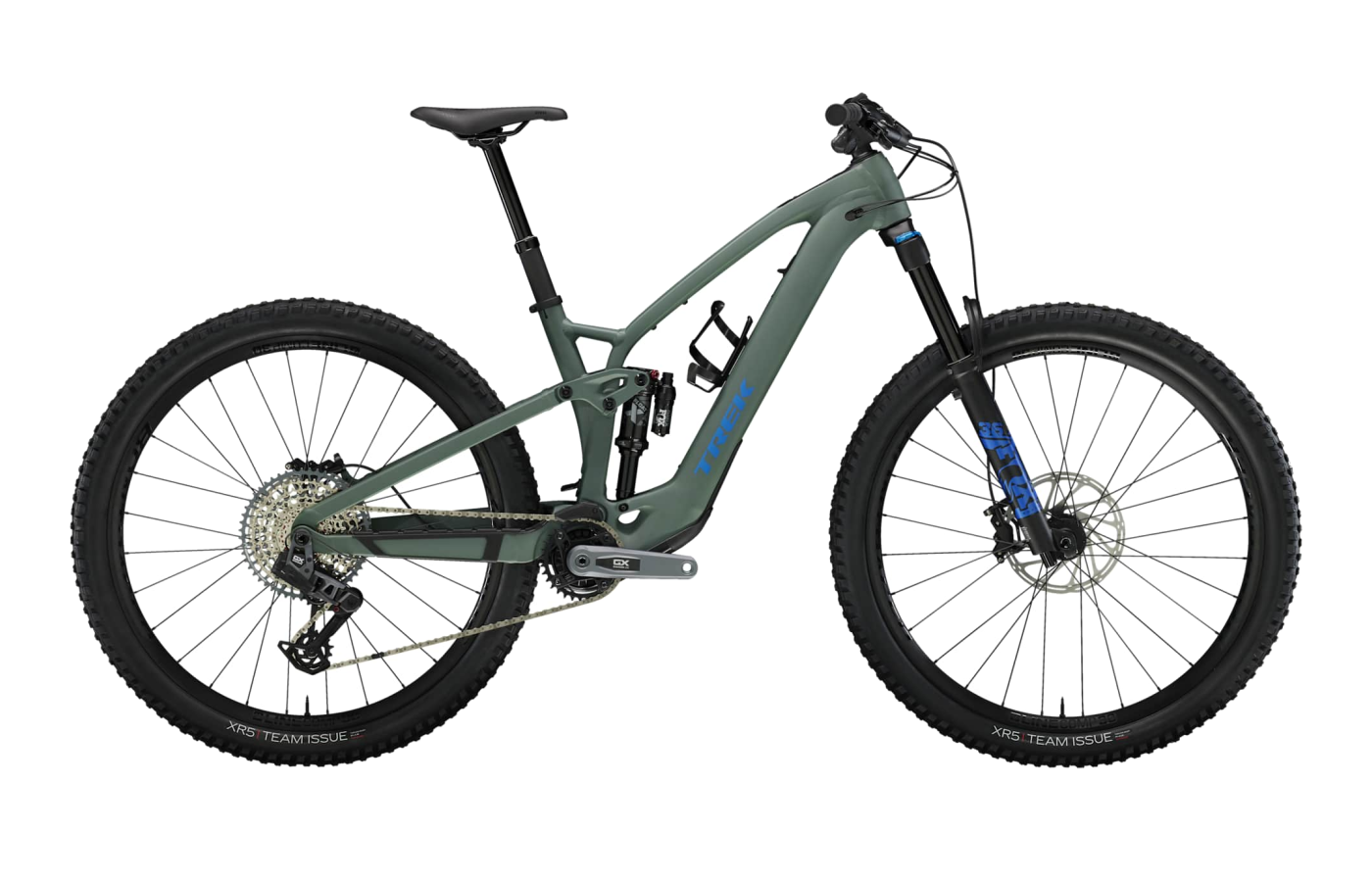
Fuel EXe Gen 1 was Trek’s first serious push into the light-assist trail eMTB category, and its identity was defined by the TQ HPR50 drive system. Rather than chasing the power and battery size of full-fat eMTBs, Trek built this platform around a compact 360Wh battery, the option of a 160Wh range extender, and a notably slim frame profile that made it look and ride closer to a conventional trail bike. With 140mm of rear travel, a 150mm fork, 29-inch wheels, and approval for a mixed-wheel setup, it was aimed squarely at riders who wanted trail-bike handling with subtle motor support rather than shuttle-bike behavior.
What set this generation apart was how consistently Trek stuck to that brief across the range. The chassis and kinematics remained the same through its 2023-2025 run, even as Trek expanded the lineup to include aluminum models alongside carbon versions. Geometry adjustability via Mino Link and frame-dependent angle adjustment reinforced the bike’s all-around trail focus rather than pushing it toward enduro extremes. In the market, Fuel EXe Gen 1 sat as a premium lightweight eMTB option for riders prioritizing low noise, lower system weight, and a more natural ride feel over outright torque, maximum range, or downhill bias.
Where to get it.
1 retailer.
Spec sheet.
Every component shipped with this build.
No specs available yet.
The lineup.
3 builds, ranging $3,900 – $5,200.
The available builds show Trek positioning Fuel EXe Gen 1 across a relatively focused price spread, from the Fuel EXe 5 at $3,899.93 to the 8 XT at $4,499.93 and the 8 GX AXS T-Type at $5,199.93. Even at the lower end, the value proposition is tied less to travel or motor changes and more to the fact that every model shares the same core platform: the TQ HPR50 system, 140/150mm travel layout, and the same light-assist trail intent.
The main differences are in drivetrain level and overall component finish. The 8 XT build offers a clear step up for riders who want a higher-tier mechanical Shimano setup, while the 8 GX AXS T-Type moves into wireless SRAM territory with T-Type transmission, making it the premium option for buyers prioritizing shifting performance and a cleaner cockpit. With the chassis and motor concept unchanged across the range, the buying decision is largely about how much a rider values upgraded components rather than access to a different ride character.