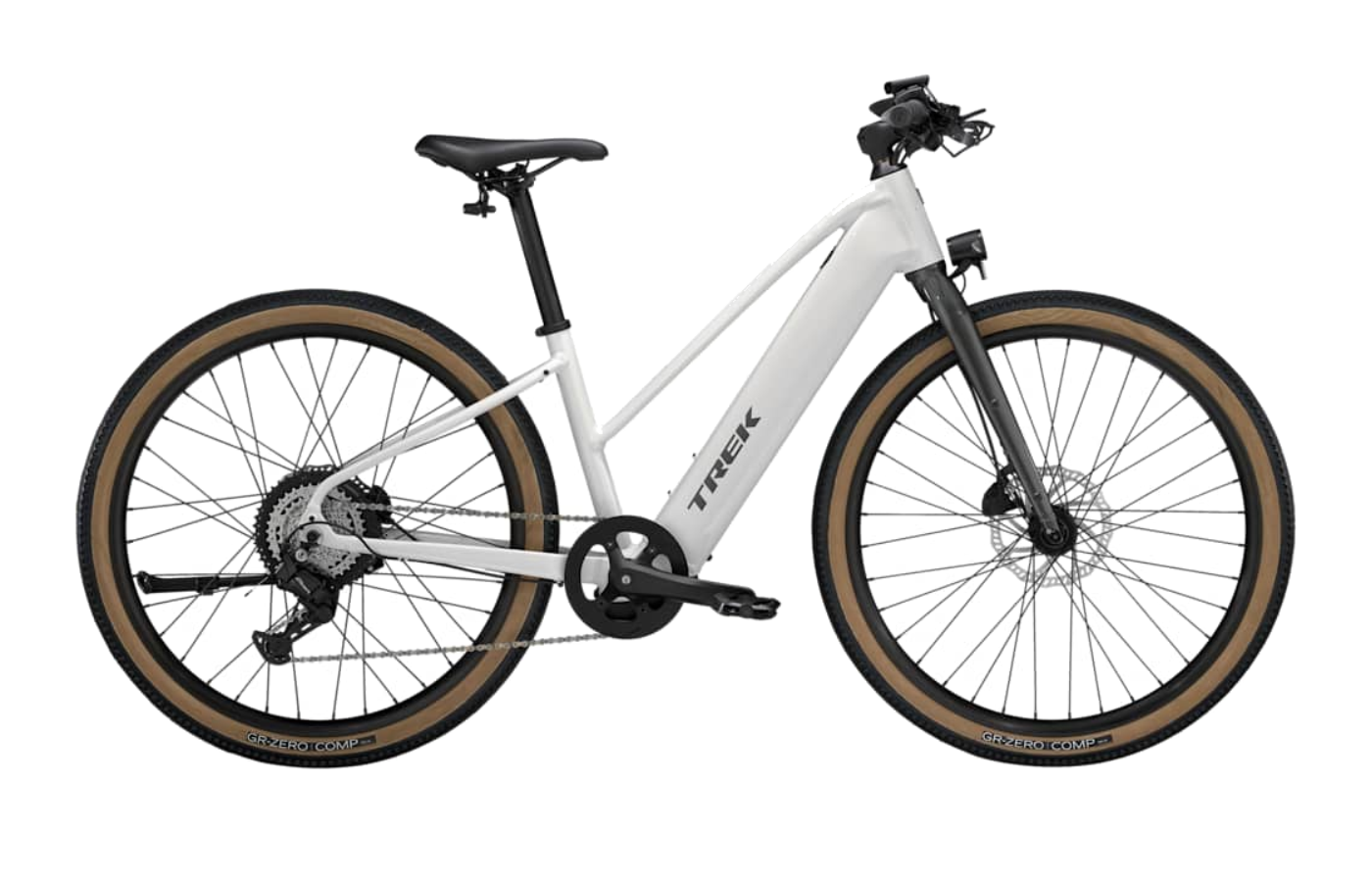
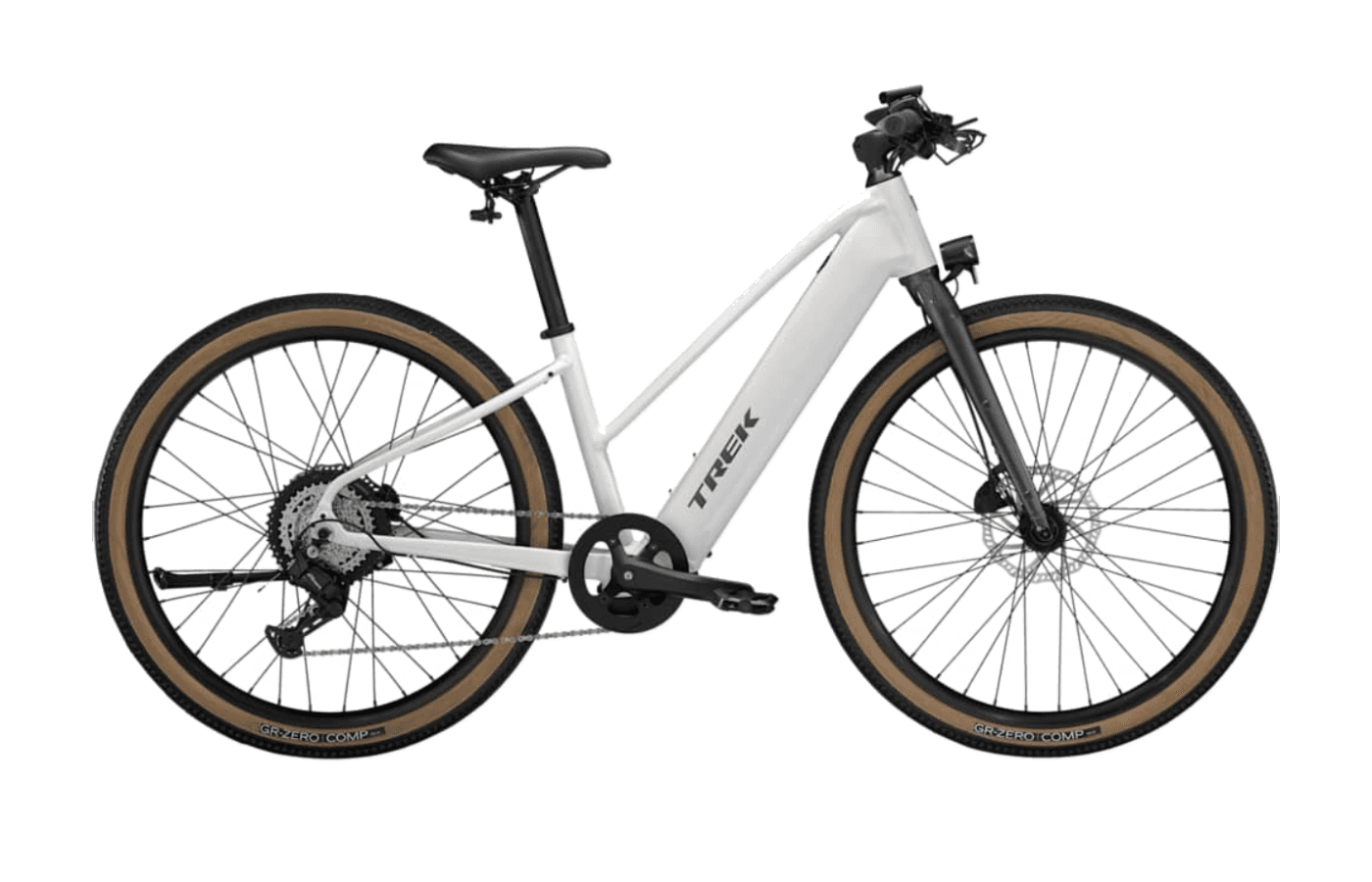
The 2026 Trek FX+ marks a clear reset for the FX+ line. Rather than simply updating the previous lightweight, pedal-assist-only formula, Trek introduced a new frame and repositioned the bike around broader urban utility. The defining change is the addition of throttle capability for the first time in the FX+ family, with two regulatory versions: the FX+ 1 as a 20 mph Class 2 bike and the FX+ 1S as a faster Class 3-capable variant with 28 mph pedal assist and a 20 mph throttle. Trek also moved to a more substantial Hyena rear-hub system rated at 500W and 60 Nm, paired with a much larger 520Wh integrated battery, making this generation notably more commuter-oriented than earlier FX+ bikes.
The chassis and equipment choices reinforce that shift. It is built around 27.5-inch wheels with 650x50 tires, a rigid fork, rack and fender mounts, integrated lighting, and turn-signal functionality. That gives it a wider operating range than a typical flat-bar city e-bike: paved commuting, rougher streets, mixed-surface paths, and light gravel are all clearly within its remit. The result is not a stripped-down fitness e-bike, nor a heavy-duty cargo-style utility machine, but a mid-weight urban platform that tries to preserve some of the FX series' direct handling while adding the convenience features and motor output buyers increasingly expect below the premium price tiers.
In the market, this generation sits as Trek's answer to the sub-$2,500 commuter e-bike segment long dominated by direct-to-consumer brands. What distinguishes it is less raw spec-sheet excess than the combination of a mainstream dealer network, a cleaner frame integration, safety-focused system design, and practical details such as the EasyMag magnetic charger and onboard display. It is aimed at riders who want a more polished, bicycle-like urban e-bike than many budget competitors, but with more power, battery capacity, and day-to-day utility than Trek's earlier FX+ models offered.
Where to get it.
No retailers stocking size 50.
No retailers carrying size 50 right now.
Spec sheet.
Every component shipped with this build.
Geometry & fit.
6 sizes published.
The available geometry points to a stable, comfort-forward urban fit rather than a quick-steering fitness hybrid. Across the 45, 50, and 55 sizes, stack grows from 604 mm to 650 mm while reach stays relatively short at 382 to 393 mm. That combination generally produces a more upright cockpit with moderate forward lean, which matches reviewers' descriptions of a position that is active enough to weight the front wheel but not aggressive for commuting. Effective top tube lengths of 569, 574, and 592 mm support that middle-ground fit, giving the bike room without pushing it into stretched-out flat-bar road territory.
The handling numbers also favor stability. Head tube angle increases from 70 to 71 degrees across the size range, paired with long 468 mm chainstays and wheelbases from 1092 to 1109 mm. Those are long rear-center figures for a flat-bar urban bike, and they help explain the composed, planted feel reviewers noted at higher speeds and on rougher surfaces. Trail figures of 76, 73, and 69 mm further reinforce predictable steering rather than twitchy responses. Combined with the 70 mm bottom-bracket drop and 50 mm tires, the geometry should give riders a secure, centered feel in traffic and on mixed surfaces, with less of the nervous front-end behavior common to shorter, steeper city bikes.
Where the handlebar sits relative to the bottom bracket — the single most important fit pair.
01Fit geometry6 values
03Handling geometry8 values
Which size should I buy?
Slide your height to see the recommended size. GearWise's fit algorithm works from the published stack, reach, and ETT — the brand's own recommendation may differ.
→Calculated from GearWise's own stack / reach / ETT algorithm — the brand's size chart may recommend a different size, and a proper bike fit beats any calculator.
The lineup.
4 builds, ranging $2,200.
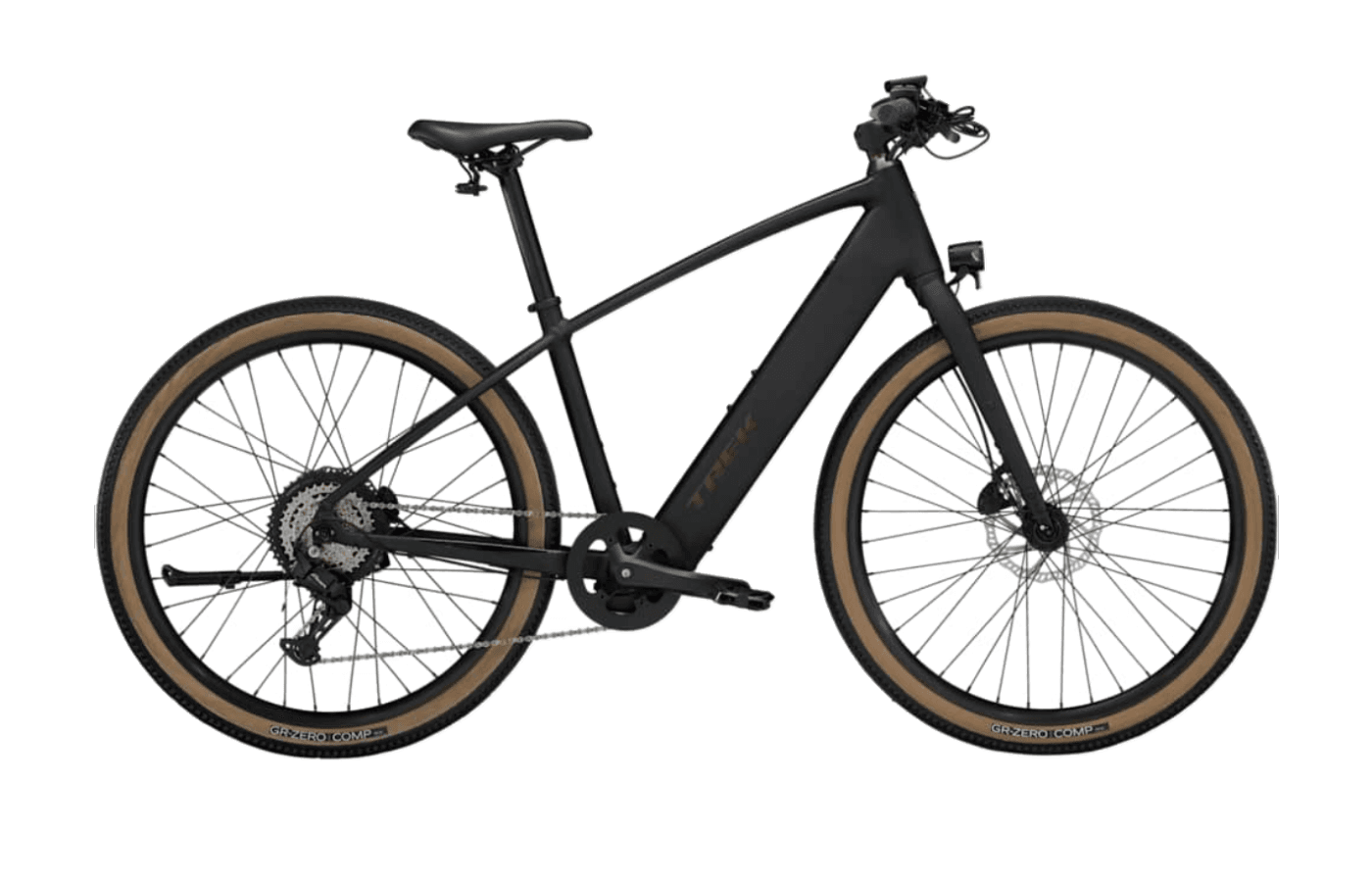
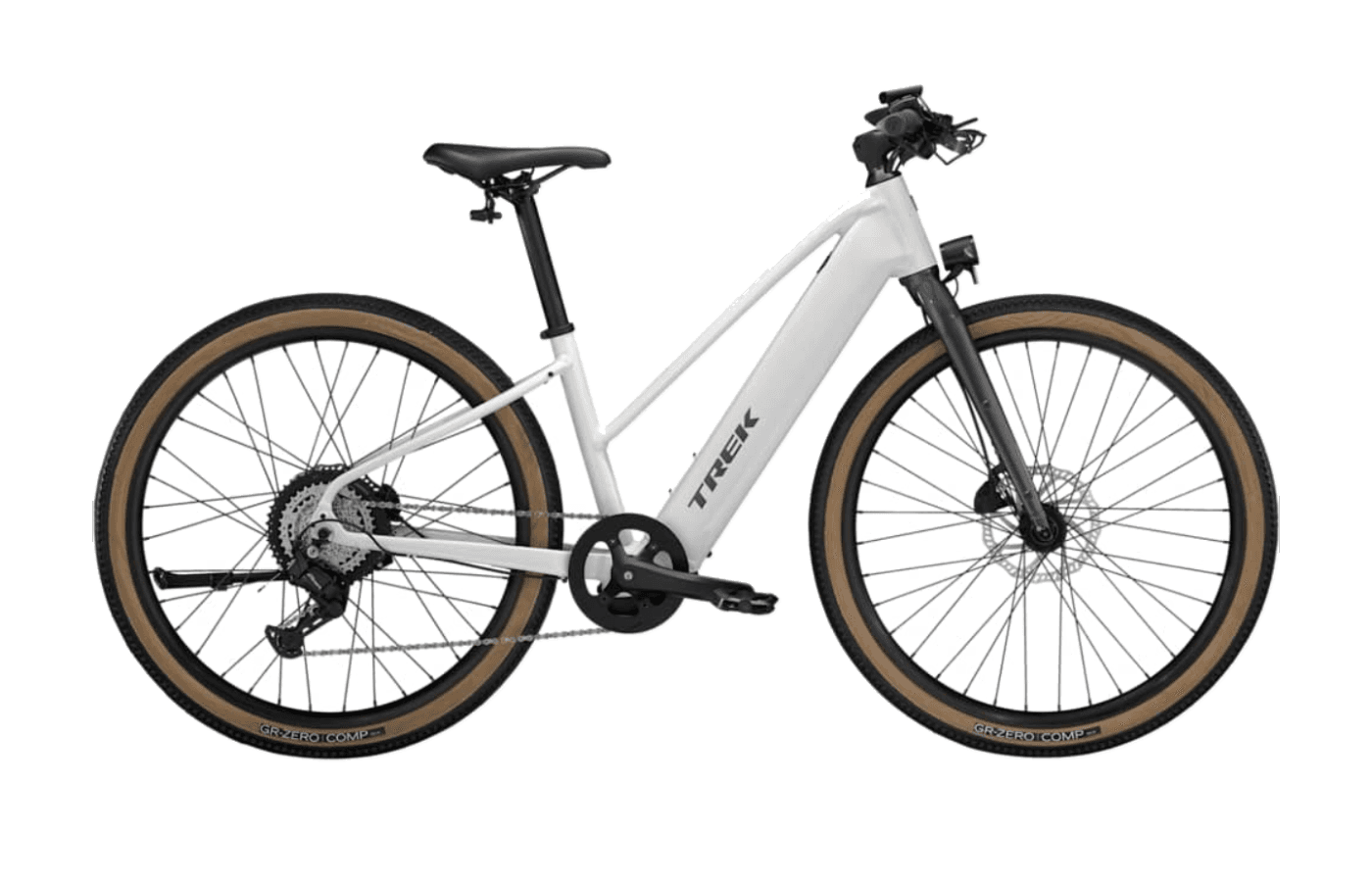
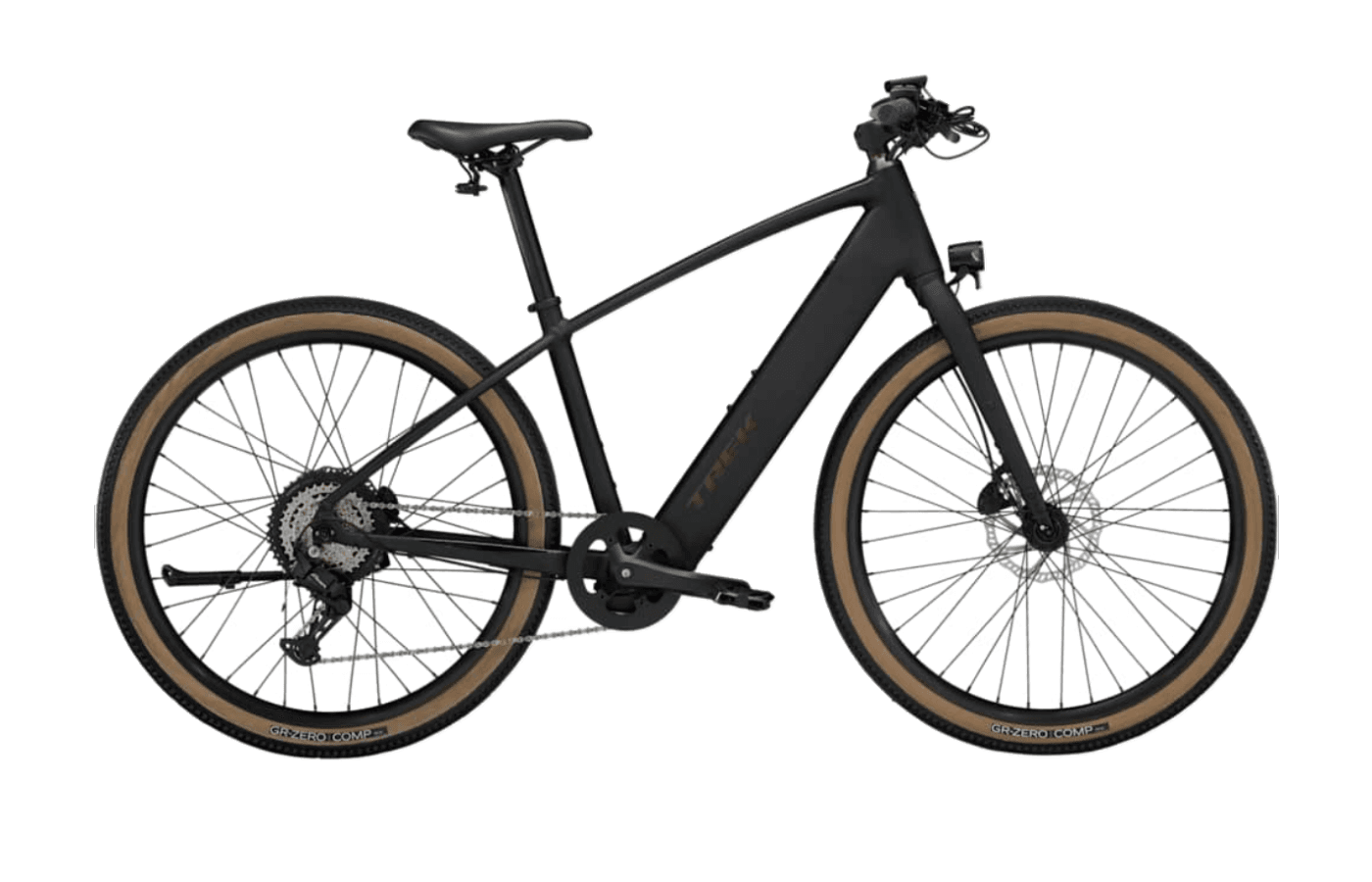
The range is straightforward: four listed versions all share the same $2,199.99 price, split between the FX+ 1 and FX+ 1S, each offered in standard and Midstep frame configurations. The meaningful distinction is regulatory tuning rather than equipment hierarchy. The FX+ 1 is the lower-speed Class 2 version with 20 mph assist, while the FX+ 1S adds 28 mph pedal assist while retaining a 20 mph throttle. Buyers are therefore choosing between local-legal speed format and frame access style, not between better and worse component packages.
Across the line, the key spec story is the same: Trek's new-frame FX+ platform uses a 500W, 60 Nm Hyena rear-hub system with a 520Wh integrated battery, 27.5-inch wheels with 650x50 tires, integrated lighting, utility mounts, and an onboard display. Review coverage also points to a Shimano ESSA 8-speed drivetrain and hydraulic disc brakes with 180 mm rotors as central parts of the package. At this price, the value argument is less about premium components than about the overall system integration: a large battery for the category, throttle functionality, app-based tuning and battery management, magnetic charging, and Trek dealer support in a segment where many competitors trade polish and serviceability for headline specs.
From the press.
7 reviews from the cycling press.
Reviewers were largely aligned in describing the FX+ 1 and 1S as unusually refined for a throttle-equipped commuter at this price level. Electric Bike Report, Electric Bike Journal, and Electric Bike Review all emphasized that Trek managed to add a rear-hub motor and throttle without losing the direct, precise feel associated with the analog FX line. Testers repeatedly called the handling crisp and stable, especially for a bike weighing roughly 48 to 50 pounds, and several noted that the torque-sensor-based Hyena system delivers smoother, quieter assistance than many hub-motor rivals. The 650b x 50 mm Bontrager GR0 tires were a consistent highlight, with reviewers saying they meaningfully improved comfort and grip on rough pavement and light gravel, especially when run in the high-20s to low-30s psi range.
Performance was another strong point. Multiple outlets found the 500W, 60 Nm motor genuinely capable on hills, with Electric Bike Report specifically citing strong climbing numbers and noting that the bike held speed well even on steeper grades. The 1S model's 28 mph assist was also praised for remaining composed at speed, helped by the rigid frame, wide tires, and 180 mm brake rotors. Reviewers also singled out Trek's integrated features as unusually thoughtful at this level, including the EasyMag magnetic charger, app-based battery management and tuning, integrated lights, and rear brake/turn-signal functionality.
Criticism was present but fairly consistent and mostly limited to secondary components and use-case compromises. Several reviewers found the Rush hydraulic brakes effective but less refined than Shimano systems, with mentions of noise and lever rattle on rough roads. The stock plastic pedals were widely viewed as a weak point and frequent candidates for immediate replacement, while saddle comfort drew mixed reactions. Reviewers also noted that the rigid fork means big potholes and square-edge hits are transmitted directly to the rider, and the non-removable battery is less convenient for anyone who cannot bring the whole bike indoors to charge. A few outlets also mentioned occasional app pairing glitches, though these did not appear to undermine the bike's core ride experience.
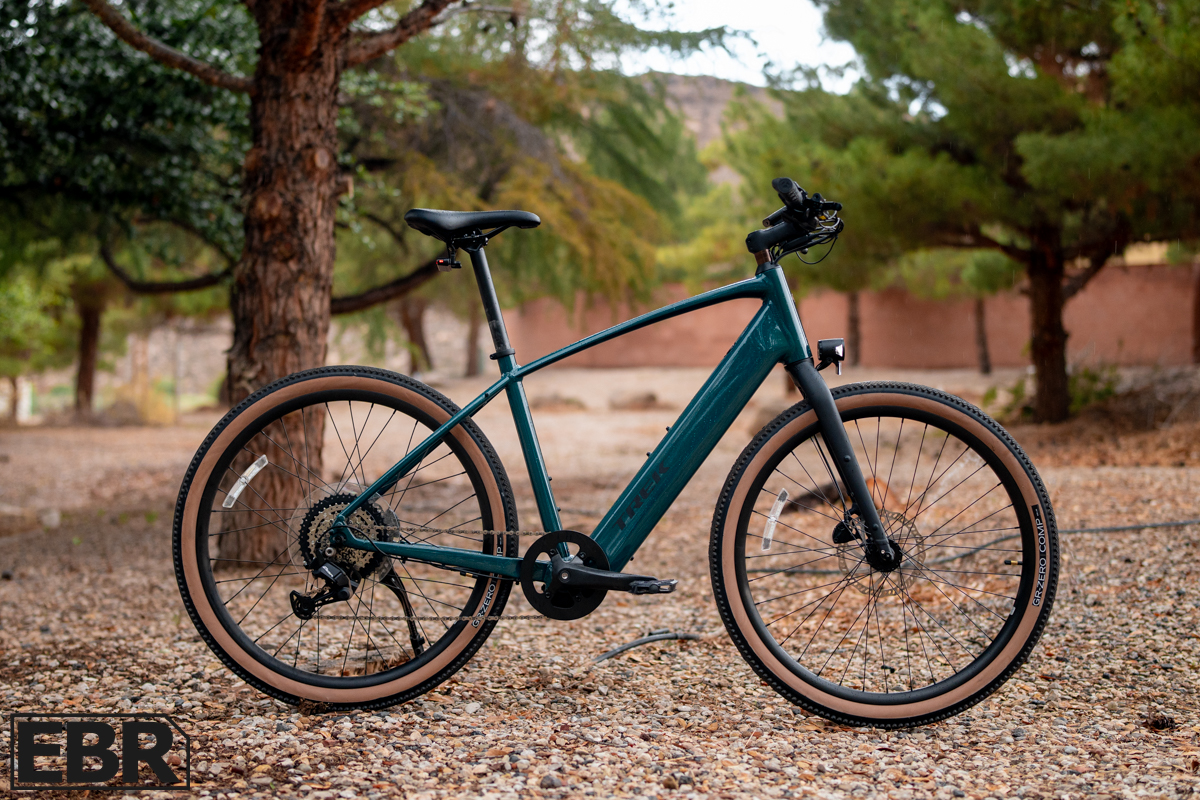
Trek FX+1S Review: Trek Enters the Rear Hub and Throttle ...
Test Report: Trek’s All-new Powerful & Light FX+1 Packs a Punch as Their First-ever Throttle eBike – eBikes Int'l
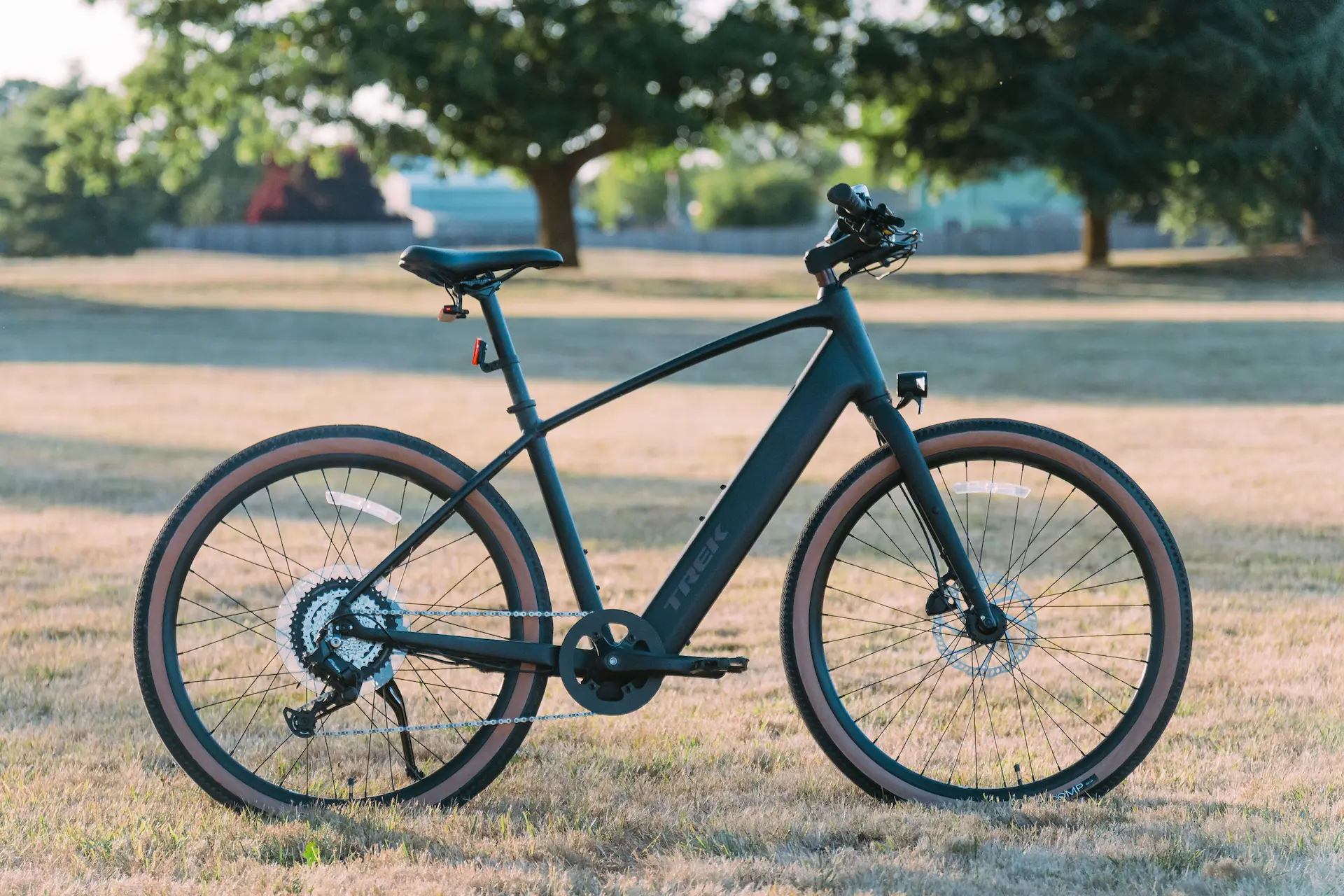
Trek FX+ 1 Review

Trek FX+ 1S Review: A Versatile City E‑Bike With Throttle Power and Premium Features

- Trek FX+ 1S Review – Lightweight, Fast & Smar
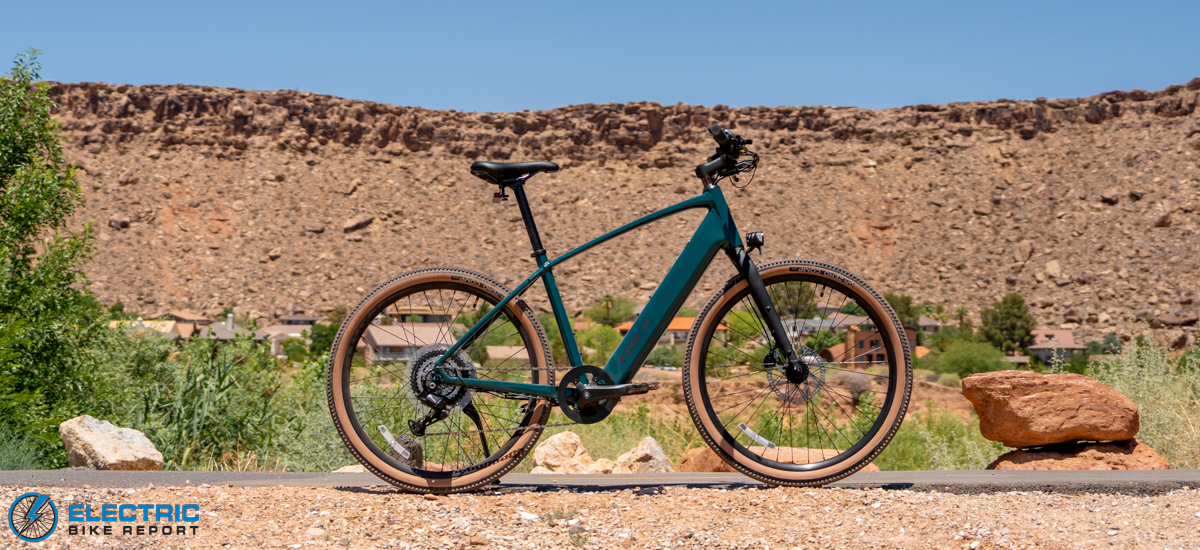
Trek FX+ 1S Review | Legacy Meets Affordable Lifestyle