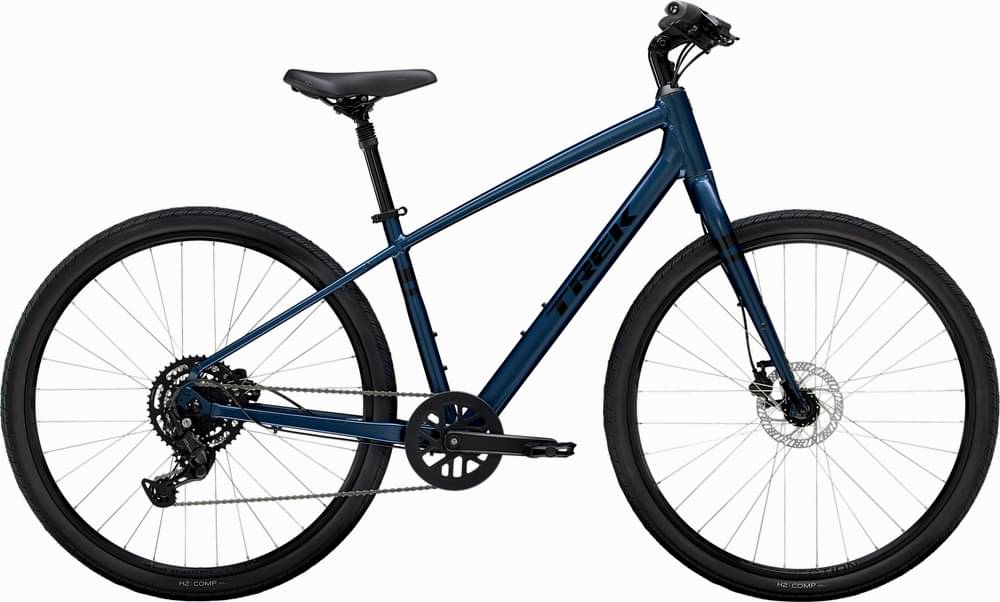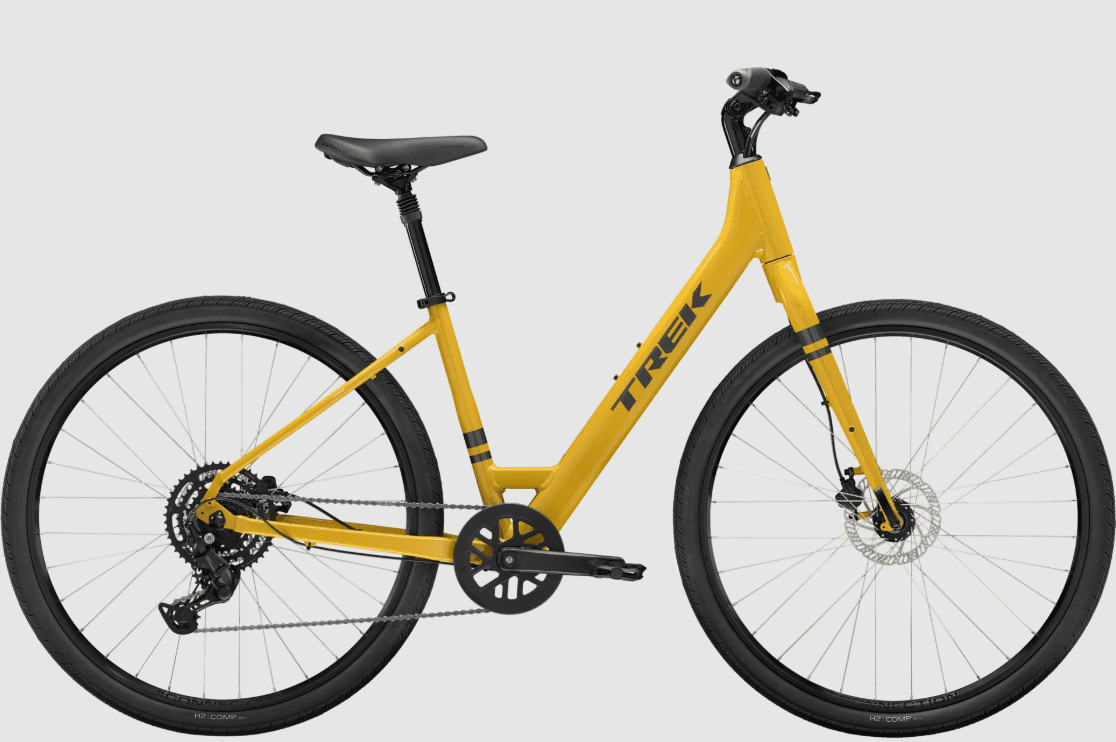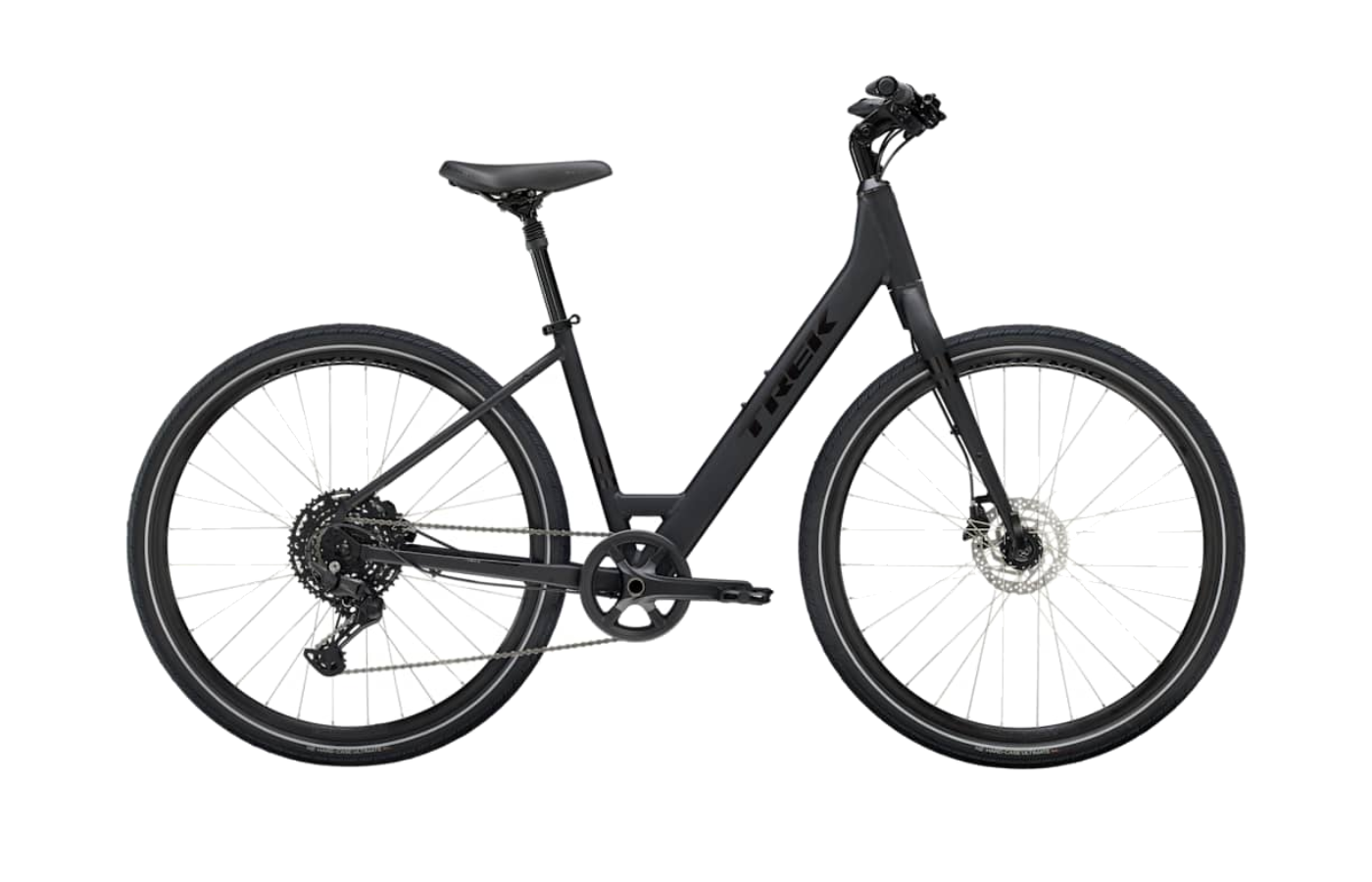
The fifth-generation Trek Verve is a comfort hybrid built around everyday usability rather than speed. For 2025, Trek updated the platform in ways that are more structural than flashy: the Gen 5 frame adds internal cable routing and uses flat-mount disc brakes, bringing the Verve in line with more current frame standards while keeping the practical details that matter in this category, including rack and fender mounts and wide tire clearance. It remains a bike aimed at commuting, neighborhood riding, rail trails, and low-stress fitness use, with an upright position and comfort-oriented contact points central to the concept.
What distinguishes this generation is that Trek modernized the frame without changing the Verve’s core identity. Across the range, the bike pairs 700c wheels with 45 mm tires and clearance for up to 50 mm, giving it more cushioning and surface versatility than a typical city hybrid. The move toward Shimano CUES and LINKGLIDE drivetrains on many builds also fits the bike’s purpose: simple, durable gearing for riders who value low maintenance over maximum gear range. In the market, the Gen 5 Verve sits at the more polished end of the comfort-commuter segment, offering a cleaner frame design and more refined standards than many entry-level hybrids, but without trying to pass as a sporty fitness bike.
Where to get it.
1 retailer · size S.
Spec sheet.
Every component shipped with this build.
Geometry & fit.
5 sizes published.
The Verve Gen 5’s geometry is clearly tuned for comfort and stability. In size M, it combines a 624 mm stack with a short 387 mm reach, producing a naturally upright riding position before the adjustable stem is even taken into account. The 70.5-degree head tube angle is quite relaxed for a hybrid, and with 81 mm of trail it points to slow, steady steering rather than quick turn-in. That matches reviewer impressions of a bike that feels planted and confidence-inspiring, especially for casual riders and commuters who want predictable handling on rough pavement or shared-use paths.
The rest of the numbers reinforce that calm character. A 470 mm chainstay and roughly 1100 mm wheelbase in size M are long by hybrid standards, which helps straight-line stability and keeps the bike composed under load or at lower speeds. The effective top tube grows from 552 mm in S to 612 mm in XL, while reach changes only modestly from 382 mm to 400 mm, so fit remains conservative and comfort-oriented across the size range. Standover is also notably accessible, and the availability of Lowstep versions broadens that further. Overall, the geometry favors easy mounting, relaxed posture, and stable tracking over agility or aggressive pedaling position.
Where the handlebar sits relative to the bottom bracket — the single most important fit pair.
01Fit geometry6 values
02Component geometry3 values
03Handling geometry8 values
Which size should I buy?
Slide your height to see the recommended size. GearWise's fit algorithm works from the published stack, reach, and ETT — the brand's own recommendation may differ.
→Calculated from GearWise's own stack / reach / ETT algorithm — the brand's size chart may recommend a different size, and a proper bike fit beats any calculator.
The lineup.
4 builds, ranging $880 – $1,000.
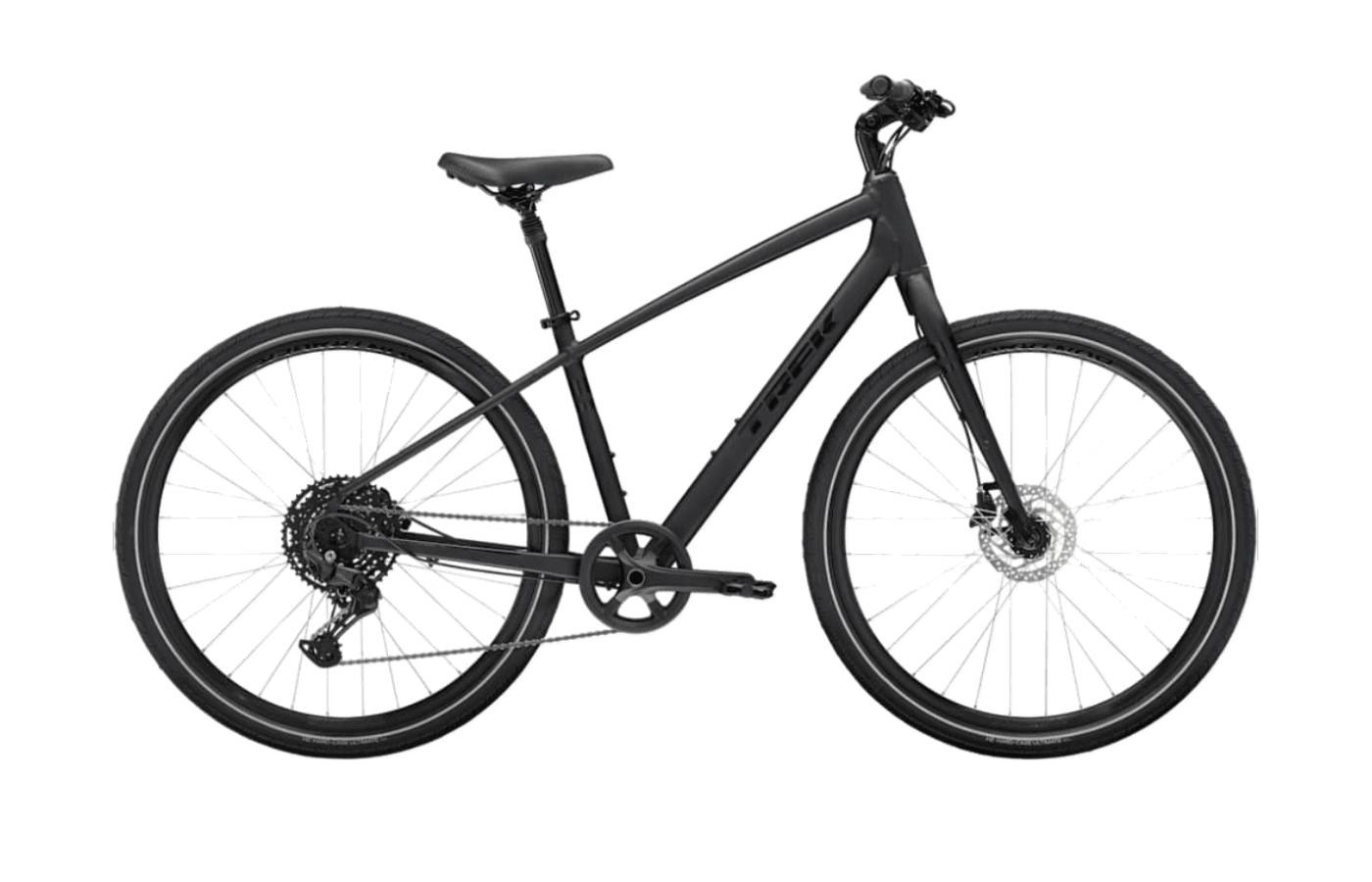
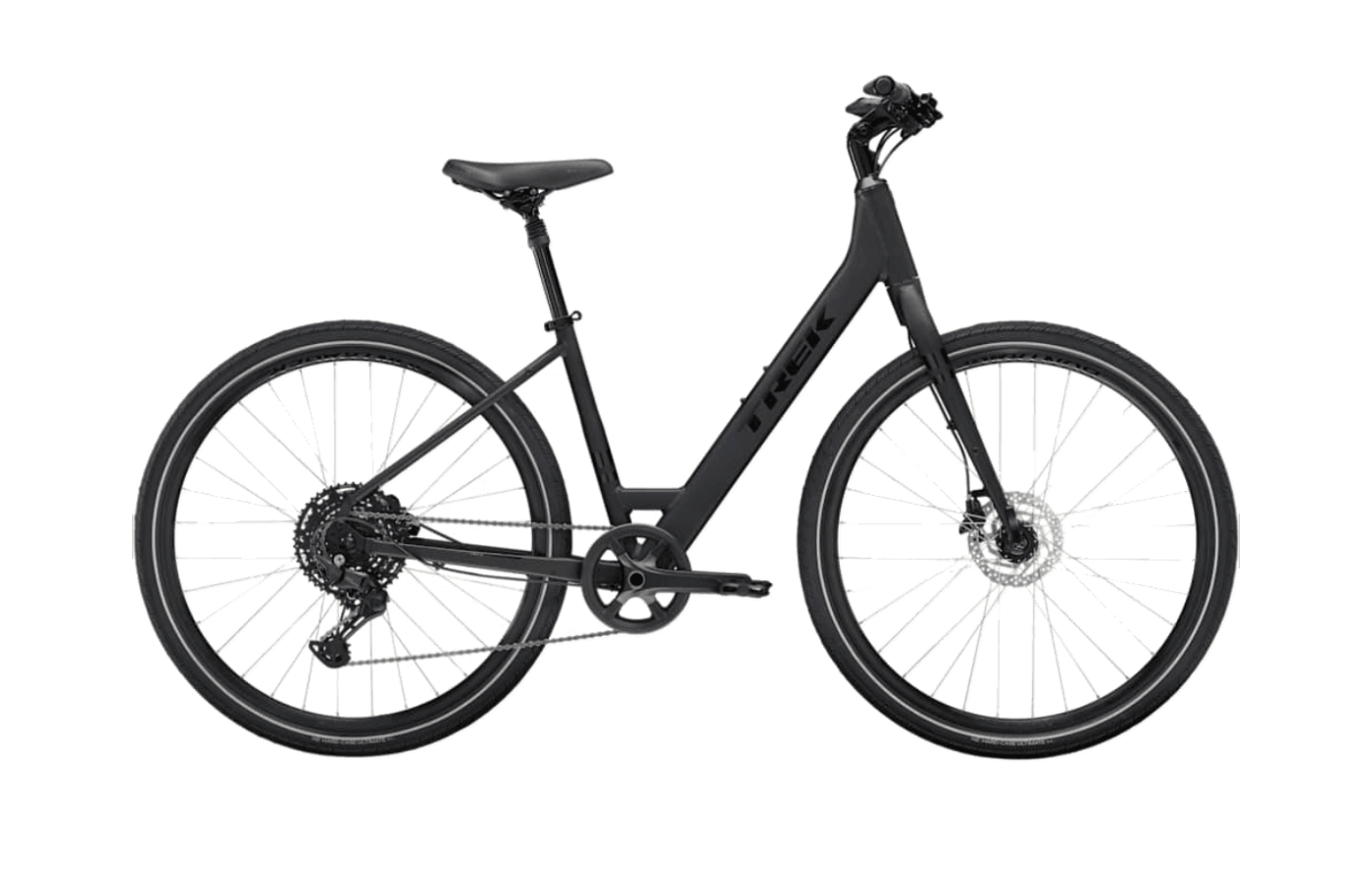
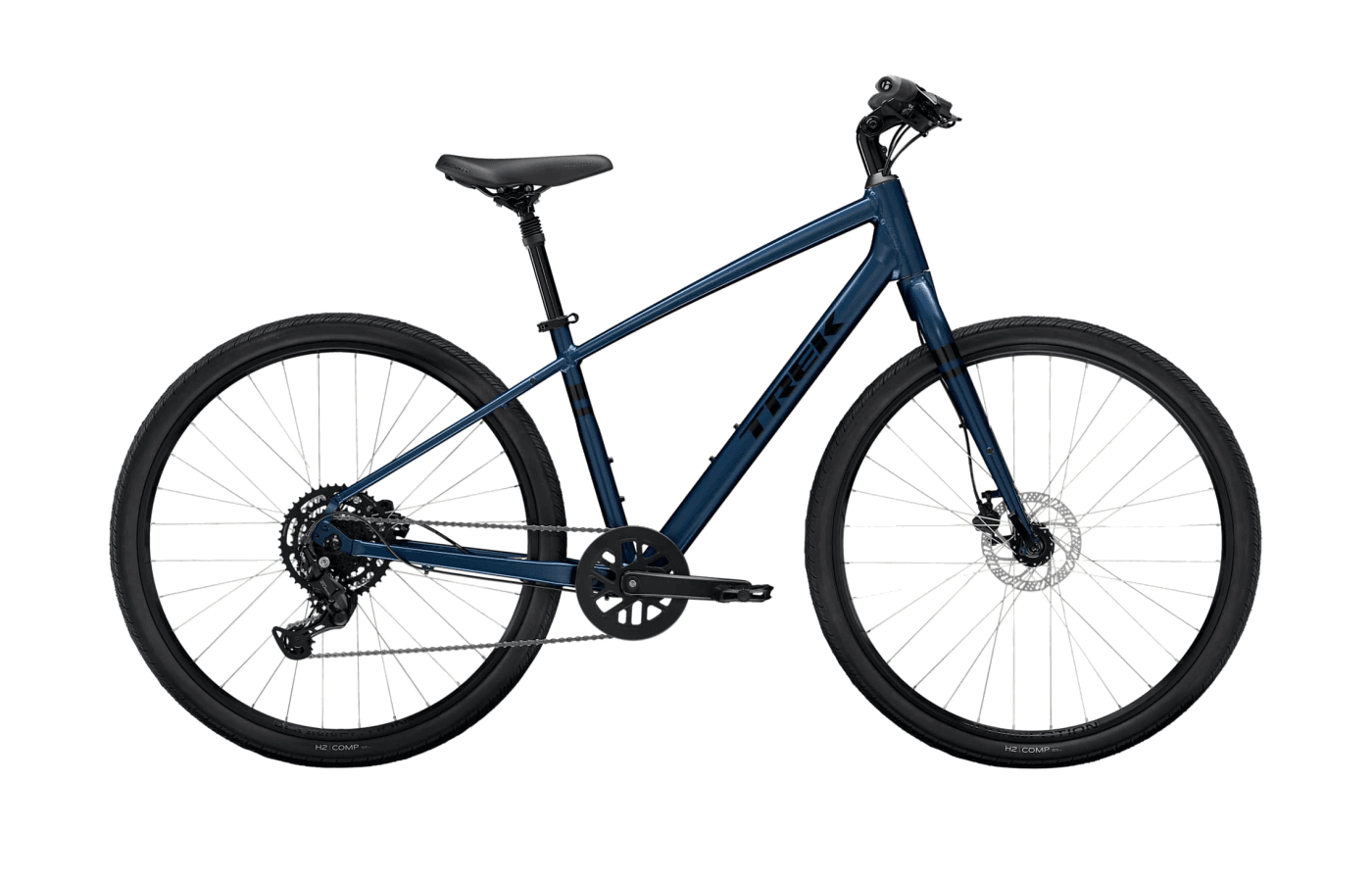
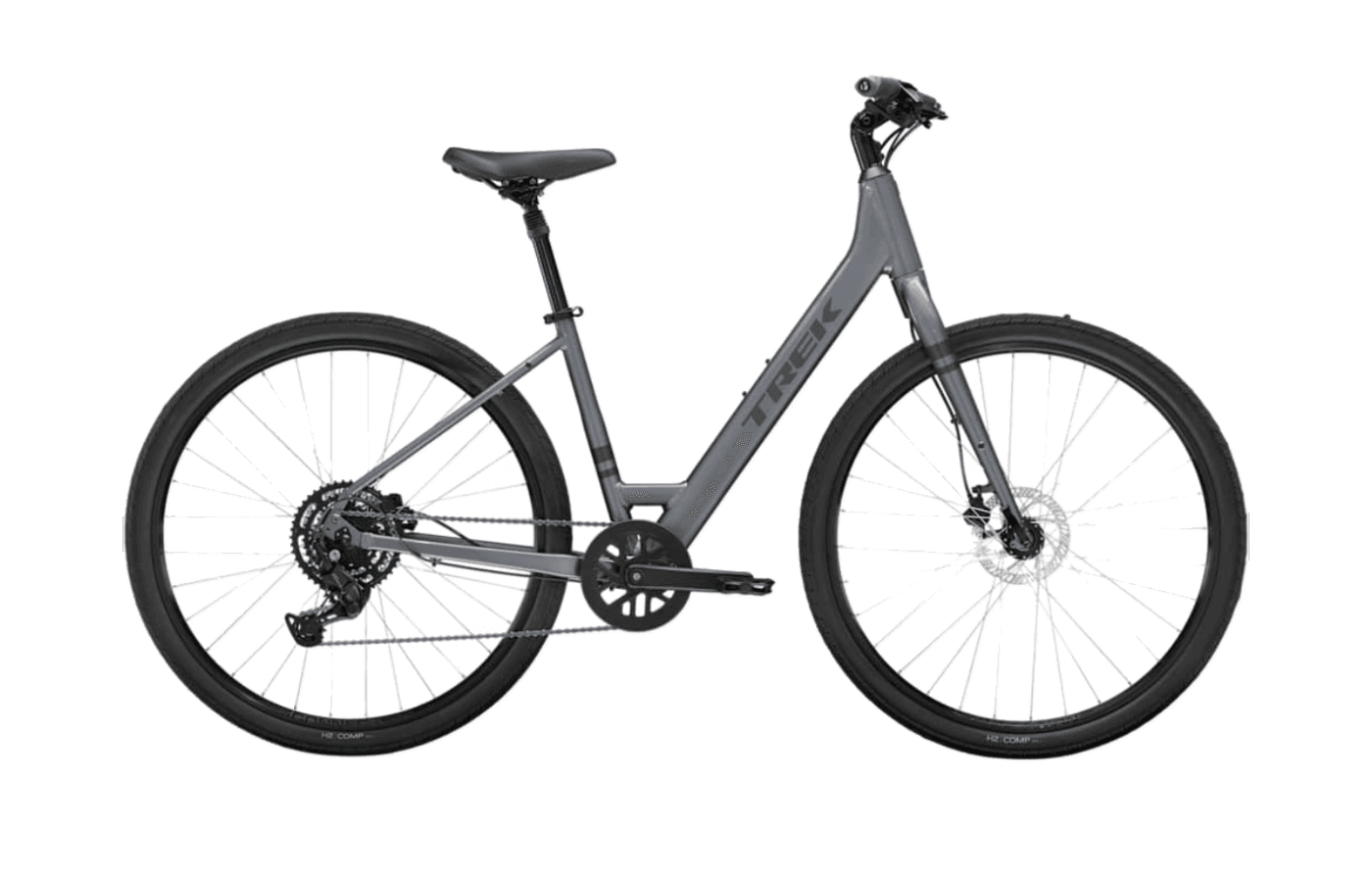
The Gen 5 Verve range is straightforward, with four main builds listed: Verve 2 Gen 5 and Verve 2 Lowstep Gen 5 at $879.99, and Verve 3 Gen 5 and Verve 3 Lowstep Gen 5 at $999.99. The key divide is between the two spec levels rather than the frame shape, with both standard and Lowstep versions offered at the same price. That makes the choice between frame styles largely a fit and accessibility decision rather than a value compromise.
At the lower price point, the Verve 2 uses a Shimano CUES 1x9 drivetrain and Tektro hydraulic disc brakes, while the Verve 3 moves to a Shimano CUES 1x10 setup and Shimano MT200 hydraulic discs. Both keep the core comfort formula intact with an aluminum frame, rigid fork, suspension seatpost, and 700c wheels. The Verve 2 is also slightly lighter at 13.68 kg versus 14.02 kg for the Verve 3. In practical terms, the Verve 2 looks like the value pick for riders who want the updated frame and modern commuter-friendly layout at the lowest price, while the Verve 3 justifies its extra cost with a slightly higher-spec drivetrain and brake package.
From the press.
3 reviews from the cycling press.
Reviewers consistently describe the Gen 5 Verve as plush, stable, and unintimidating. Multiple sources highlight the upright fit, adjustable-rise stem, and swept-back cockpit as key reasons it feels easy to settle into, while the 45 mm Bontrager tires and suspension seatpost do much of the work in muting rough pavement, curb cuts, and park-path chatter. Bestbikeselect called out the bike’s ergonomic design, stable handling, and bump absorption, and broader test impressions repeatedly characterize the ride as planted rather than lively. The relatively low weight for the category—around 13.68 kg for the Verve 2 and 14.02 kg for the Verve 3—was also noted as a meaningful advantage when maneuvering in traffic or lifting the bike.
The strengths reviewers return to most are comfort, predictable handling, and low-maintenance simplicity. The 70.5-degree front end and long wheelbase contribute to the calm steering that testers found confidence-inspiring on city streets and casual paths, while hydraulic discs were praised for dependable stopping in mixed conditions. The Shimano CUES 1x drivetrains were generally seen as a smart fit for the bike’s mission because they reduce complexity and emphasize durability.
Weaknesses are mostly tied to that same comfort-first brief. Several reviewers note that the 1x setup, even with 11-46T or 11-48T cassettes, can feel stretched on steeper climbs compared with older multi-ring hybrids. The bike is also not especially quick or sharp-handling by design; it favors stability over responsiveness. One reviewer specifically criticized the stock saddle for longer-distance riding, suggesting that while the Verve works very well for errands, leisure loops, and short-to-mid-distance fitness rides, high-mileage riders may want to change contact points.