Garda Hybrid
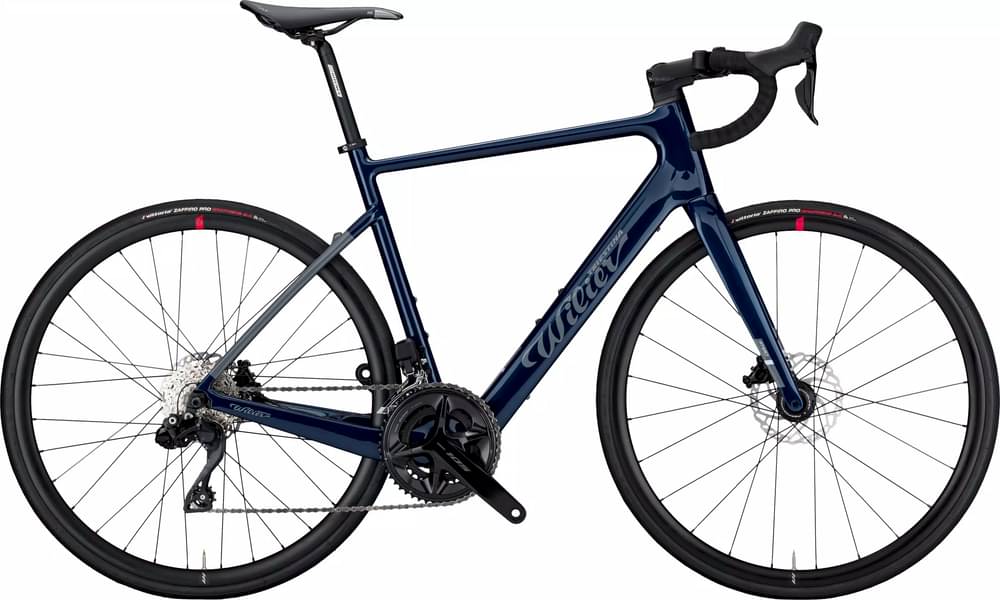
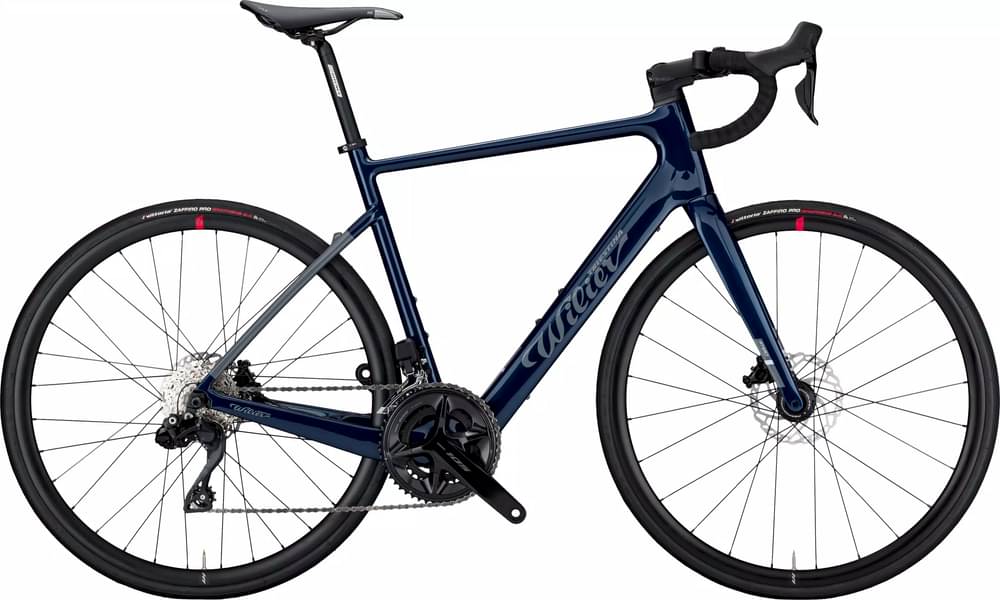
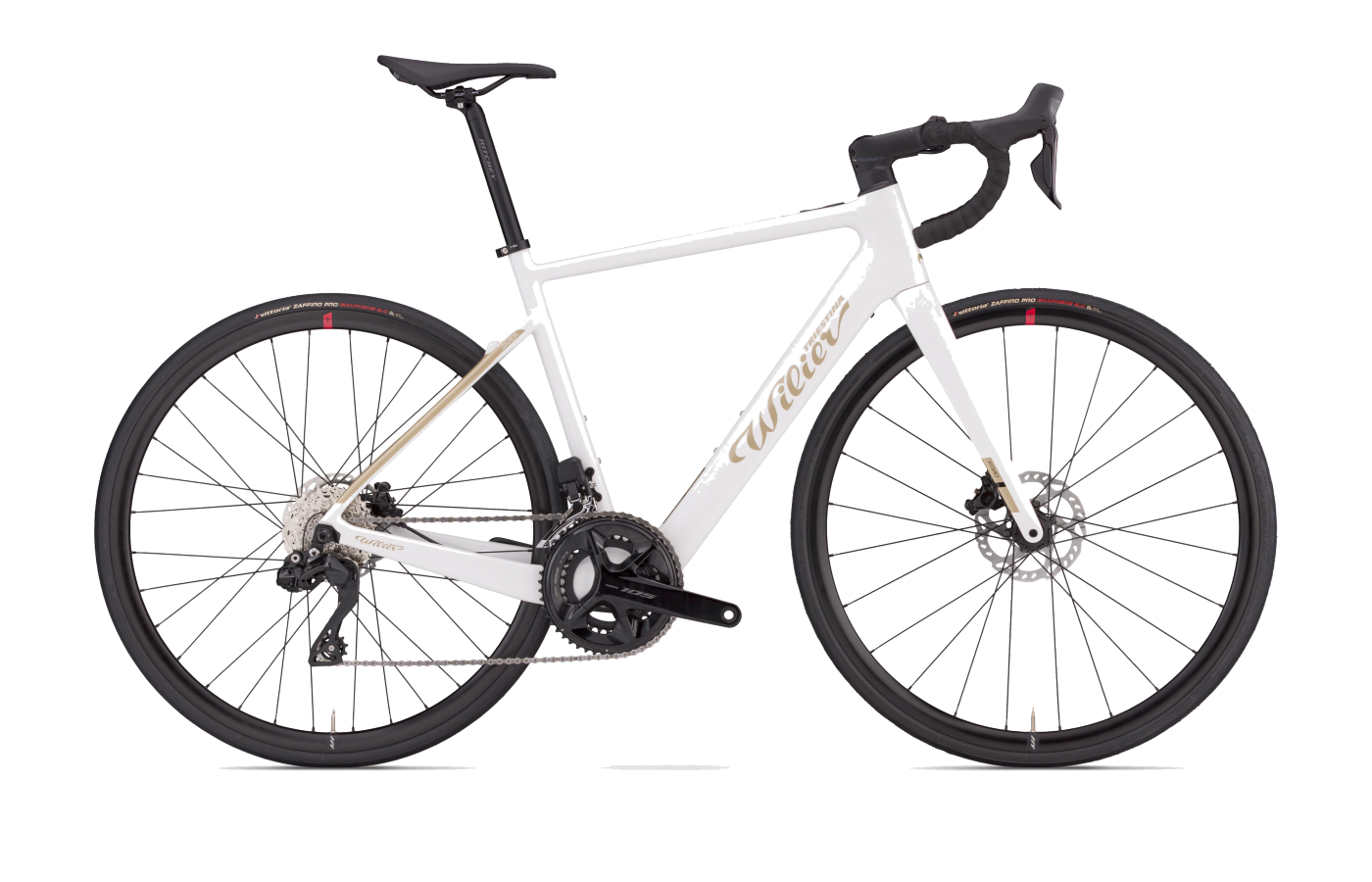
The Wilier Garda Hybrid is a carbon endurance e-road bike built around a relatively light, discreet-assist concept rather than the high-power mid-drive approach used by many electric road bikes. This generation uses the GARDA HY carbon monocoque frame and fork, integrated routing through Wilier’s Stemma S/Barra S cockpit, flat-mount disc brakes, 12 mm thru-axles, and a Mahle rear-hub system with the battery hidden in the downtube. Across MY2024 to the current model, the frame, geometry, and overall platform remain unchanged; the notable running update is the move from the earlier Mahle X35/40 Nm setup to current X30/45 Nm builds.
What distinguishes the Garda Hybrid is how closely it tries to preserve the feel and proportions of a conventional endurance road bike. The design priorities are clear: endurance geometry, low visual clutter, modest system weight, and assist that supports rather than dominates the ride. That puts it squarely in the light e-road segment for riders who want help with rolling terrain, headwinds, or longer days without giving up the handling and pedaling character of a carbon road bike. It is less suited to riders looking for maximum climbing torque or oversized battery capacity, and more convincing for those who value subtle assistance and traditional road-bike manners.
Geometry & fit.
5 sizes published.
The available geometry points to a clearly endurance-oriented fit. In size M, the Garda Hybrid combines a 555 mm stack with a 383 mm reach, alongside a 71.5° head tube angle and 74° seat tube angle. That is a taller, shorter front-end relationship than a race bike, giving riders a more upright position for long hours in the saddle while keeping enough reach for efficient seated pedaling. Across the size range, stack grows from 515 mm in XS to 595 mm in XL, while reach changes more modestly from 365 mm to 395 mm, which is typical of bikes designed to preserve comfort and front-end stability as sizes increase.
Handling numbers also support that brief. The head tube angle ranges from 70.5° in XS to 72.5° in XL, with smaller sizes using slacker steering to avoid overly twitchy handling. Chainstay length is compact but not extreme at 406 mm in XS/S, 408 mm in M, and 411 mm in XL, which should help balance agility with predictable tracking. The effective top tube figures—505 mm in XS up to 578 mm in XL—show a conservative progression that matches the bike’s all-day road focus. Overall, the geometry suggests stable, balanced handling and a rider position aimed at comfort and efficiency rather than aggressive front-end loading.
Where the handlebar sits relative to the bottom bracket — the single most important fit pair.
01Fit geometry5 values
03Handling geometry2 values
Which size should I buy?
Slide your height to see the recommended size. GearWise's fit algorithm works from the published stack, reach, and ETT — the brand's own recommendation may differ.
→Calculated from GearWise's own stack / reach / ETT algorithm — the brand's size chart may recommend a different size, and a proper bike fit beats any calculator.
The lineup.
2 builds, ranging $3,750 – $4,500.
The currently listed builds are both based on Shimano 105-level components paired with the updated Mahle X30 system. The range starts with the Shimano 105 R7020 build and steps up to a Shimano 105 Di2 R7170 version; both are listed with alloy wheelsets. Earlier reviewed MY2024 pricing put the mechanical 105 model at $6,322 and the 105 Di2 model at $7,276, with the Di2 bike also receiving the stronger OptiScore in the supplied reviews. That pricing places the Garda Hybrid in the premium light e-road category rather than the entry-level e-bike market.
Spec differences are straightforward and sensible. The mechanical bike was reviewed with a 50/34 crank and 11-30 cassette, while the Di2 version used a 50/34 with 11-34, giving the higher-end build a slightly easier low gear as well as electronic shifting. Both reviewed versions used Shimano hydraulic disc brakes, 700c alloy wheels, and the same 250 Wh Mahle system architecture. The value proposition is therefore less about dramatic build divergence and more about whether the buyer wants the cleaner shifting and broader gearing of the Di2 model; otherwise, both builds emphasize dependable road components over flashy parts.


From the press.
2 reviews from the cycling press.
Reviewers consistently describe the Garda Hybrid as a light e-road bike with a notably natural ride character. The Mahle hub-drive system is repeatedly praised for feeling discreet rather than intrusive, giving the bike more of a tailwind effect than a hard shove. That impression is reinforced by the bike’s quoted 12.9 kg weight in the Shimano 105 build, which reviewers say helps it feel nimble, lively, and far less cumbersome than heavier e-road or all-road alternatives. The endurance-focused carbon chassis is also seen as a genuine strength on long rides, with reviewers pointing to its fatigue-reducing fit and composed behavior on rolling terrain and all-day efforts.
The main caveat is that the same restrained system tuning that makes the bike feel refined also limits its outright assistance. Reviewers note that the 40 Nm X35 setup is subtle on steep alpine climbs and does not deliver the brute-force support of more powerful mid-drive bikes. Range from the 250 Wh battery is generally framed as adequate rather than generous, with roughly 70–100 km cited depending on terrain and usage, so bigger days require some planning. The stock 28 mm Vittoria Zaffiro Pro tires also drew criticism for producing a firmer ride on rougher roads than many modern endurance bikes, which increasingly lean toward wider rubber. In short, reviewers see the Garda Hybrid as strongest when used as a road bike first and an e-bike second.