Wilier
KargaShimano XT 1x12s + Shimano EP801
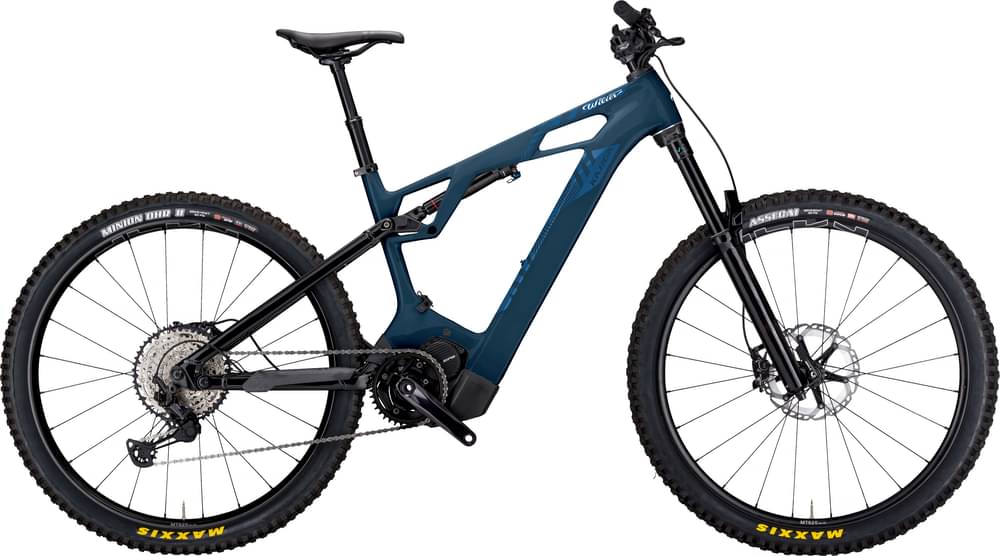
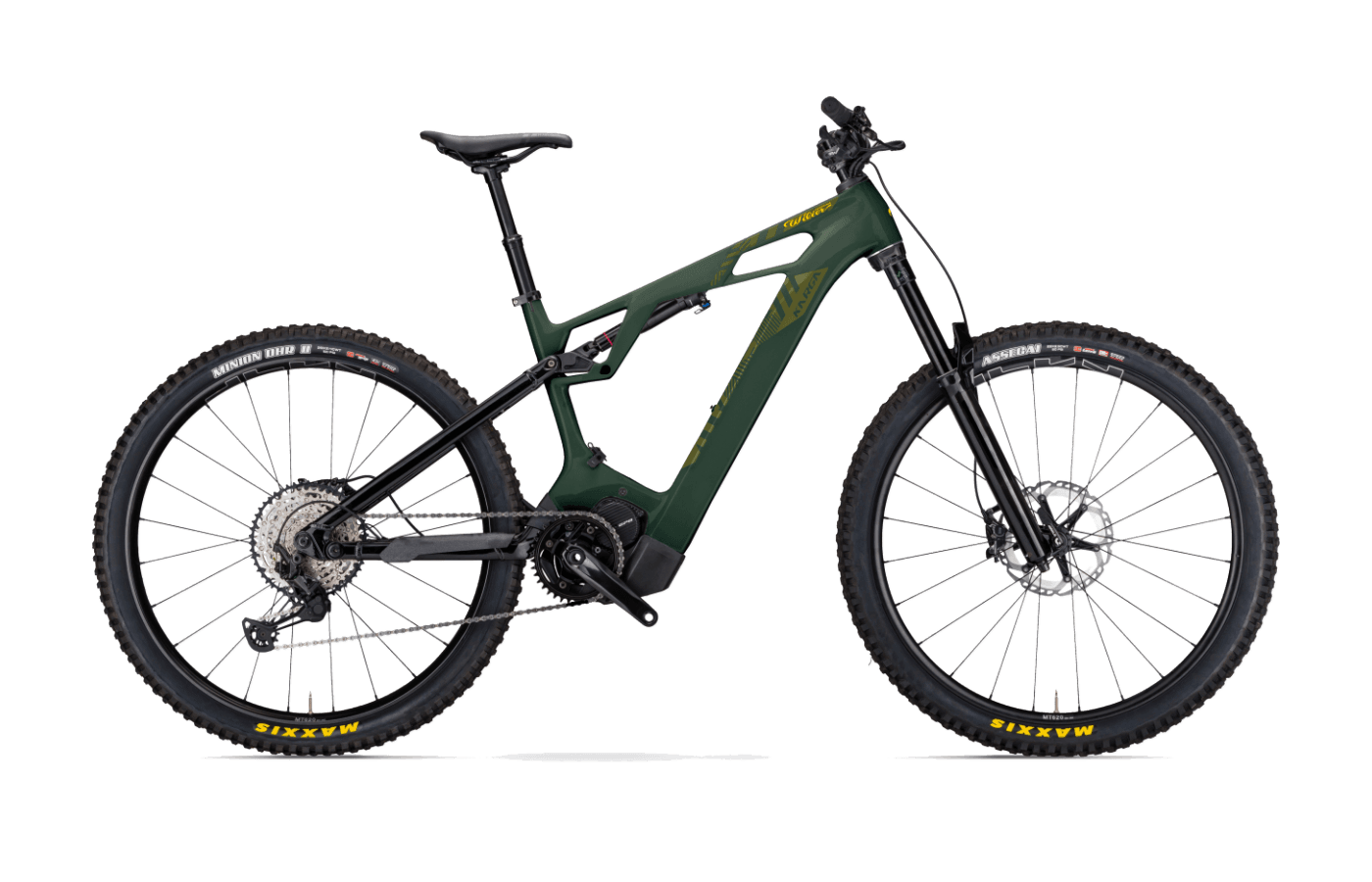
The Wilier Karga is Wilier’s dedicated long-travel e-MTB platform for riders who want a full-power bike aimed squarely at aggressive trail and enduro terrain. For this 2024-present generation, the core formula is consistent: 160 mm front and rear travel, 29-inch wheels, a carbon front triangle paired with an aluminum rear triangle, Shimano EP6 or EP801 mid-drive motors, and a 720 Wh in-tube battery. That gives the Karga a clearly modern e-enduro layout, with the mixed-material chassis balancing frame stiffness and impact resilience while the large battery and Shimano system put range and service familiarity ahead of novelty.
What distinguishes the Karga is not unusual category experimentation, but a conventional and purposeful execution of the current full-power e-enduro brief. Wilier pairs aggressive numbers with practical details such as 203 mm rotor specification, bearing-area protection, and a steering-stop style lower headset arrangement. In the market, it sits in the premium tier: not because it rewrites the segment, but because it combines a carbon-based chassis, big-battery Shimano powertrain, and gravity-oriented travel into a package aimed at riders using an e-bike as a genuine uplift replacement for steep, rough, high-speed riding.
Spec sheet.
Every component shipped with this build.
Geometry & fit.
4 sizes published.
The Karga’s geometry is firmly in current e-enduro territory. A 64.5° head tube angle is slack enough to prioritize front-end stability on steep descents, while the 76.5° seat tube angle keeps the rider centered for seated climbing and helps manage front-wheel wander on technical ascents. Reach numbers are contemporary rather than extreme—430 mm in S, 455 mm in M, 480 mm in L, and 505 mm in XL—paired with stack heights from 620 mm to 641 mm, which suggests a roomy but not ultra-low front end suited to long descents and all-day control rather than an aggressively race-low cockpit.
The 450 mm chainstays are relatively substantial and, combined with wheelbases of 1213 mm in S up to 1298 mm in XL, reinforce the bike’s stable, ground-hugging character. In practice, those numbers point to a bike that should hold lines well and stay calm under motor-assisted speed, but feel less compact and less eager to snap through tight corners than shorter, more playful alternatives. Overall, the geometry supports exactly the ride character reviewers describe: secure, centered, and confidence-oriented, especially at speed and on steep terrain.
Where the handlebar sits relative to the bottom bracket — the single most important fit pair.
01Fit geometry5 values
02Component geometry1 values
03Handling geometry4 values
Which size should I buy?
Slide your height to see the recommended size. GearWise's fit algorithm works from the published stack, reach, and ETT — the brand's own recommendation may differ.
→Calculated from GearWise's own stack / reach / ETT algorithm — the brand's size chart may recommend a different size, and a proper bike fit beats any calculator.
The lineup.
3 builds, ranging $8,231 – $10,616.
Wilier offers three builds for this generation: Shimano Deore 1x12s + Shimano EP6, Shimano Deore XT 1x12s + Shimano EP801, and Shimano XT 1x12s + Shimano EP801. Pricing in the provided review data spans from about $8,231 (€6,900) for the Deore/EP6 model to $10,616 for the XT/EP801 version. Across the range, the key constants are the carbon frame platform, 29-inch aluminum wheels, 10-51T gearing, and the 720 Wh Simplo TPS-002 battery, so buyers are paying primarily for differences in motor tier and component quality rather than changes to the chassis itself.
The lower-tier Deore/EP6 build delivers the same frame and battery foundation at the lowest entry price, but reviewers noted that its RockShox 35S TK fork and Shimano MT401 brakes are modest for such an expensive bike. The upper XT/EP801 build is the more cohesive enduro package, adding the stiffer RockShox 38 ZEB Select Plus fork and Shimano M8120 brakes to better match the bike’s weight, speed, and intended terrain. That makes the premium build the more convincing choice for hard descending, while the cheaper version makes more sense for riders who value the frame, battery, and Shimano motor system first and may be willing to upgrade parts later.

From the press.
4 reviews from the cycling press.
Reviewers consistently describe the Karga as a planted, composed e-enduro bike that favors stability and traction over quick direction changes or playful handling. Across the EP6 and EP801 builds, the recurring theme is that it feels most comfortable on steep, rough terrain where the 29-inch wheels, long-travel chassis, and high-torque Shimano motor can be used to carry speed through rock gardens and sustained descents. Several reviewers highlighted how confidently it tracks through roots and chattery sections, and noted that technical climbing feels especially easy with 85 Nm from either the EP6 or EP801.
The main criticism is that the same traits that make it secure at speed also make it less lively. Reviewers repeatedly noted a heavier e-enduro character, with less manual-friendly pop and less willingness to be thrown around in tight or airborne terrain. Build choice also matters: the higher-end XT/EP801 version was seen as a better match for the bike’s intent thanks to the stiffer RockShox ZEB fork and stronger Shimano M8120 brakes, while the lower-priced Deore/EP6 model drew some criticism for pairing an expensive carbon e-MTB chassis with more modest parts. Value was therefore seen as mixed: the platform and motor system are well regarded, but the asking price is high relative to some competitors with more aggressive component specs.