RaceMax
vsAspero
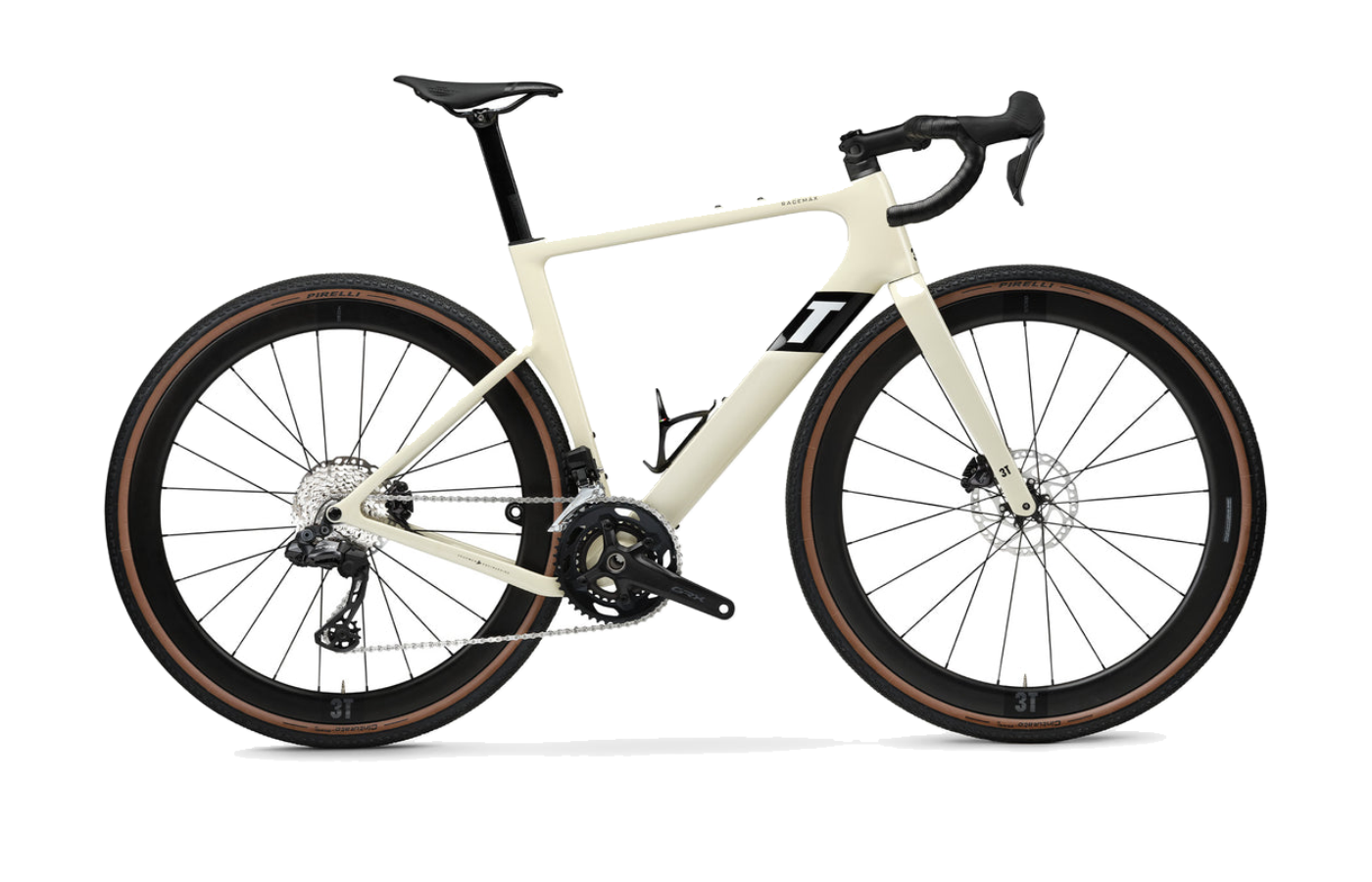
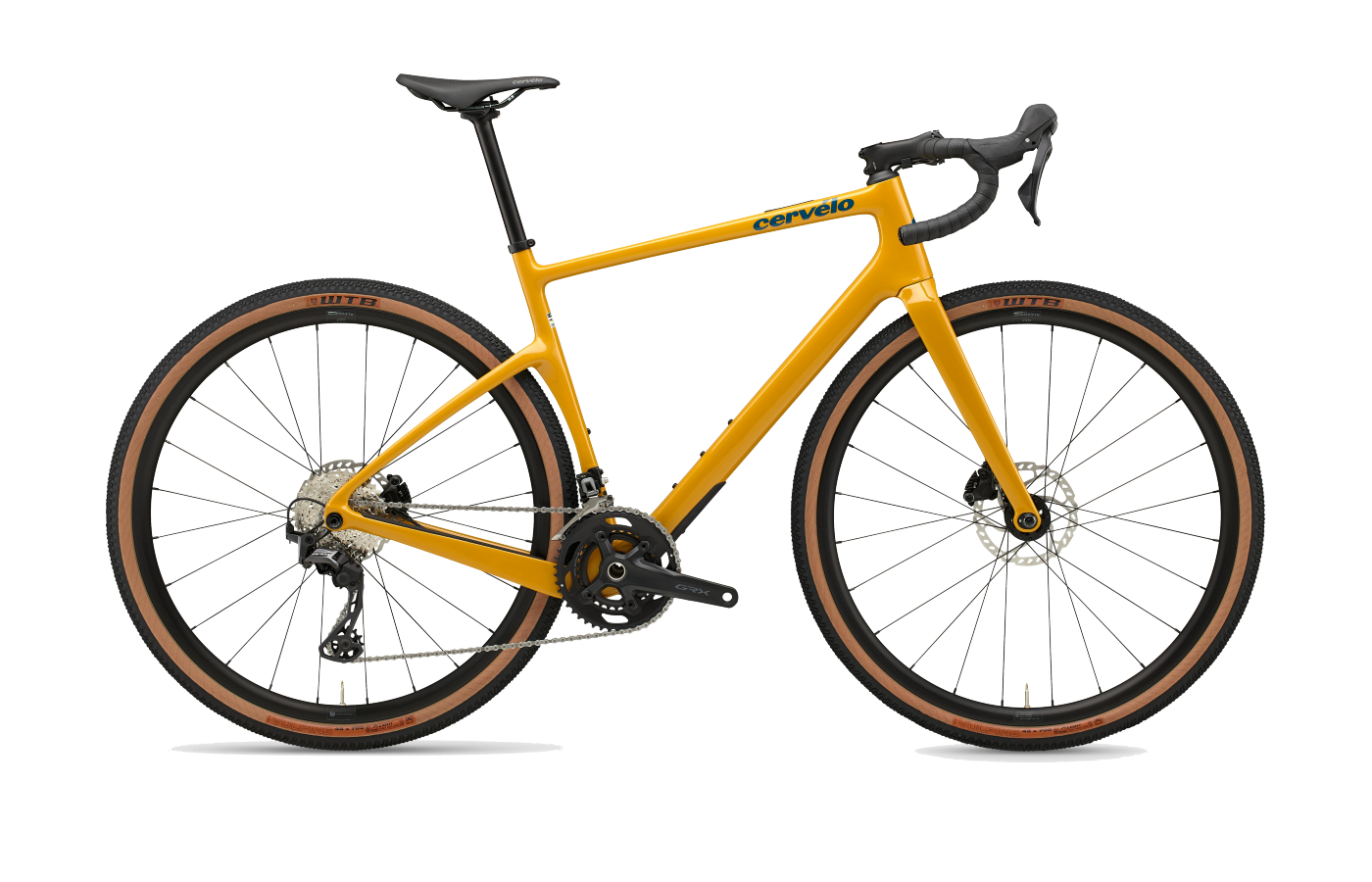
Two Vroomen-designed gravel racers, two ways to be fast.
The 3T RaceMax is the aero-everything chameleon with a 61 mm tire ceiling. The Cervelo Aspero is the refined, road-feel race bike — half the entry price, lower stack, and easier to live with.
RaceMax
- Massive 61 mm tire ceiling on 650b, plus 42 mm on 700c — the widest 'Max mode' clearance in the aero-gravel segment.
- Aero-first frame design with a 75 mm truncated-airfoil downtube and tight rear-wheel cutout reviewers consistently call 'fast everywhere.'
- Taller, more endurance-friendly stack — 586 mm at size 56 vs 555 mm on the comparable Aspero, useful for less flexible riders.
- No build under $6,799 — the entry price is nearly double the Aspero's.
- Stiff chassis demands wider tires for compliance; reviewers flag a 'firm' or 'jarring' ride on narrow 700c rubber.
Aspero
- Half the entry price — $3,550 buys you in, and even the GRX Di2 flagship undercuts the equivalent 3T by ~$2,100.
- Service-friendly standards — threaded T47 bottom bracket, UDH derailleur hanger, 27.2 mm round seatpost. Reviewers call it 'home mechanic-friendly.'
- Refined ride for a race bike — Cervelo deliberately reduced front-end stiffness ~10% on this gen to cut fatigue on long events.
- 45 mm tire ceiling — fine for race gravel, but capped vs the 3T's 61 mm 'Max mode'.
- Lower 555 mm stack puts the rider in a road-race tuck; less forgiving for non-flexible riders.
Editor’s analysis
Same designer, same race brief — but one bike chases tire range and aero extremism, the other chases the polish of a fast road bike with knobbies on.
Gerard Vroomen drew both of these frames, and it shows in the macro pitch: gravel race bikes that prize speed over comfort and aero over compliance. Look closer and the philosophies pull apart fast. The 3T RaceMax is the maximalist — a 75 mm-wide truncated-airfoil downtube, dropped chainstays, and 61 mm tire clearance on 650b for what 3T calls 'Max mode'. The Cervelo Aspero is the minimalist — a refined refresh of a five-year-old race shape, with a threaded T47 bottom bracket, UDH derailleur hanger, and a standard 27.2 mm round seatpost.
Geometry tells the same story. At the fit-picked sizes (56 RaceMax / 54 Aspero, both for a 5'8" rider), the 3T sits 31 mm taller in the stack — a more endurance-friendly perch for a so-called race bike. The Aspero is lower and more roadie-aggressive at 555 mm stack, with a steeper 72 deg head angle and a flip-chip 'Trail Mixer' fork that lets you tune trail between roughly 62 and 68 mm depending on wheel size. The RaceMax runs a tight 418 mm chainstay; the Aspero stretches to 425 mm. One favors reactive front-end snap, the other favors planted high-speed composure.
Pricing exposes the biggest practical gap. The Aspero starts at $3,550 with mechanical GRX and tops out at $7,050 for the GRX Di2 build. The 3T RaceMax starts at $6,799 — almost double the Aspero's floor — and climbs to $9,199. There's no sub-$6k entry on the 3T at all. If your budget is under $5k, the Aspero is the only bike in this conversation. If your budget clears $7k, you're shopping equivalent Di2 trim on both, and then the question is character.
Character is where it lands. The RaceMax is for the rider who genuinely wants one bike to do road group rides on 35 mm slicks and bikepack on 650b x 2.1" knobbies — and is willing to buy a second wheelset and live with a stiff, demanding chassis to get there. The Aspero is for the rider who wants a fast, refined gravel race bike that handles like a road bike, services like a road bike, and disappears under them on long days. Different jobs, both done well.
Where the builds differ.
Comparing our editor's-pick builds side-by-side. Winners highlighted row-by-row — lower price and weight, and the better-spec component, each mark a point.
Build variants & pricing
The Aspero spans $3,550 to $7,050 across six builds. The RaceMax is premium-only — four builds from $6,799 to $9,199.
Prices are current US MSRP. Editor's picks are tier-matched at Shimano GRX Di2 RX825 — $7,119 vs $7,050 — making the spec table genuinely apples-to-apples. If your budget is below $6k, only the Aspero offers builds in that range.
How they fit, how they steer.
The fit algorithm picks size 56 on the RaceMax and 54 on the Aspero for a 5'8" rider — both bikes use numeric sizing but anchor differently. The RaceMax sits 31 mm taller in stack (586 vs 555) with virtually identical reach (382 vs 388). The Aspero is steeper at the head (72 vs 71.7 deg) and runs a slightly longer 425 mm chainstay vs the 3T's 418 mm.
Which size should I buy?
Size recommendations from stack, reach, and effective top tube. Both ranges overlap in the middle; the Aspero stretches further at the small end with a 48 (505 mm stack).
→These are starting points. Flexibility, riding style, and preferred position all shift the answer — if you’re between sizes, a professional fit beats a chart.
What the magazines said.
Published reviews from trusted cycling outlets. Click through for the full write-up.
Which one should you buy?
If you want one bike to span road-fast slicks and 2.1-inch knobbies, get the RaceMax. If you want a refined, road-feel gravel race bike at a sane entry price, get the Aspero.
RaceMax
If you want a single bike that morphs from a fast road racer to a 650b x 2.1-inch monster-cross machine — and you're willing to buy a second wheelset and live with a stiff, demanding chassis to make it happen — the RaceMax is still the original and the most committed.
Aspero
If most of your riding is fast gravel events and tarmac transfers, and you want a bike that services easily, costs less to enter, and rides like a slightly softened road bike, the Aspero is the cleaner answer. The new T47 BB and UDH make ownership painless.
Questions buyers actually ask.
Short answers to the things we get emailed about most often.
01Which is faster on flat, hardpacked gravel?
The 3T RaceMax, marginally — its 75 mm-wide truncated-airfoil downtube and tight rear-wheel cutout are more aggressively shaped than the Aspero's slimmer tubes. Reviewers consistently describe the RaceMax as 'fast everywhere' and 'glides along at speed with ease.'
Cervelo claims a ~4.2 W aero saving on this Aspero gen vs the original — a real but modest gain. At social-ride speeds the difference between the two bikes will be invisible; at race pace on long flat sections, the RaceMax has the edge.
02What's the maximum tire clearance?
3T RaceMax: 700 x 42 mm or 650b x 61 mm (around 2.4"). The 650b 'Max mode' is the bike's signature trick.
Cervelo Aspero: 700 x 45 mm or 650b x 47/48 mm. Plenty for race gravel and most adventure use, but capped well below the 3T's 'Max mode.' Reviewers note ~6 mm of mud clearance with a 44 mm tire fitted.
03How do the editor's-pick builds compare on price?
Almost identically — and that's the point. The 3T Integrale WPNT GRX Di2 2x12 is $7,119; the Cervelo GRX RX825 Di2 is $7,050. Both run Shimano GRX Di2 RX825 (2x12), so the spec table compares clean.
Where the bikes diverge in this trim: the 3T ships with 3T Discus 40|30 carbon wheels (or Zipp 303S, depending on availability) and proprietary Superergo Integrale LTD carbon bars. The Cervelo runs Reserve 40|44 carbon wheels with DT Swiss 370 hubs and the AB09 carbon bar with a conventional alloy ST36 stem — easier to swap if you want a different cockpit length.
04Which is easier to live with as a home mechanic?
The Cervelo Aspero, by some margin. It uses a threaded T47 bottom bracket (eliminates press-fit creak), the SRAM UDH derailleur hanger (replacements available globally), a standard 27.2 mm round seatpost (dropper-compatible, easy to swap), and a semi-integrated cable routing that lets you change stems without re-routing hoses.
The RaceMax uses a BB386EVO press-fit bottom bracket shell, more complex internal routing, and proprietary aero seatpost and integrated cockpit pieces. Reviewers specifically flagged the cable routing as 'fiddly' and linked it to shifting issues on mechanical groupsets.
05Can I run a dropper post on either?
Aspero: yes. The standard 27.2 mm round seatpost accepts an aftermarket dropper without modification — a common upgrade for riders pushing the bike into more technical terrain.
RaceMax: no. The aero carbon seatpost is proprietary and not dropper-compatible. If you want a dropper on a RaceMax, you'd be replacing the seatpost entirely with a standard round post in a custom adapter, which most riders won't bother with.
06Which one climbs better?
Closer than you'd expect. Both frames are stiff around the bottom bracket and both reward out-of-saddle efforts. The 3T's tight 418 mm chainstays make it feel reactive and 'spritely' (Cyclist Magazine) on punchy efforts; the Aspero's 425 mm stays trade a bit of snap for stability.
Neither is a featherweight — both sit in the ~8.5–9 kg range in mid-tier builds. If your climbs are long and steep, neither bike is the optimal tool; a Specialized Crux or 3T Strada would shed grams. But for race-day climbing in a gravel context, both are competitive.
07Is the RaceMax really that stiff?
Yes — and this is the trait that most divides reviewers. Velo called the ride 'dull and lifeless' on narrow 700c tires; Bike Rumor and Bicycling found it 'lively' and 'enjoyable.' The frame relies almost entirely on tire volume for compliance, which is why the bike transforms when you fit 650b knobbies.
The Aspero's gen-2 frame deliberately reduced front-end stiffness by about 10% to combat fatigue on long events, and reviewers consistently note the new bike is 'smoother' and 'easier to live with' than its predecessor. If outright frame compliance matters to you, the Aspero is the more forgiving platform.
08What if my budget is below $6,000?
Then the Aspero is your only choice in this conversation. Cervelo offers four builds under $5k — the GRX RX610 mechanical at $3,550, the Apex XPLR at $3,750, the GRX RX820 at $4,250, and the Apex XPLR AXS at $4,550. The 3T RaceMax has no build under $6,799.
This isn't a knock on the 3T — it's positioned as a premium-only platform. But if you're shopping with a real-world budget, the spec sheets only line up apples-to-apples above the $7k mark.
Similar bikes
If your priorities don’t map cleanly onto either of these, one of these adjacent bikes probably fits better.
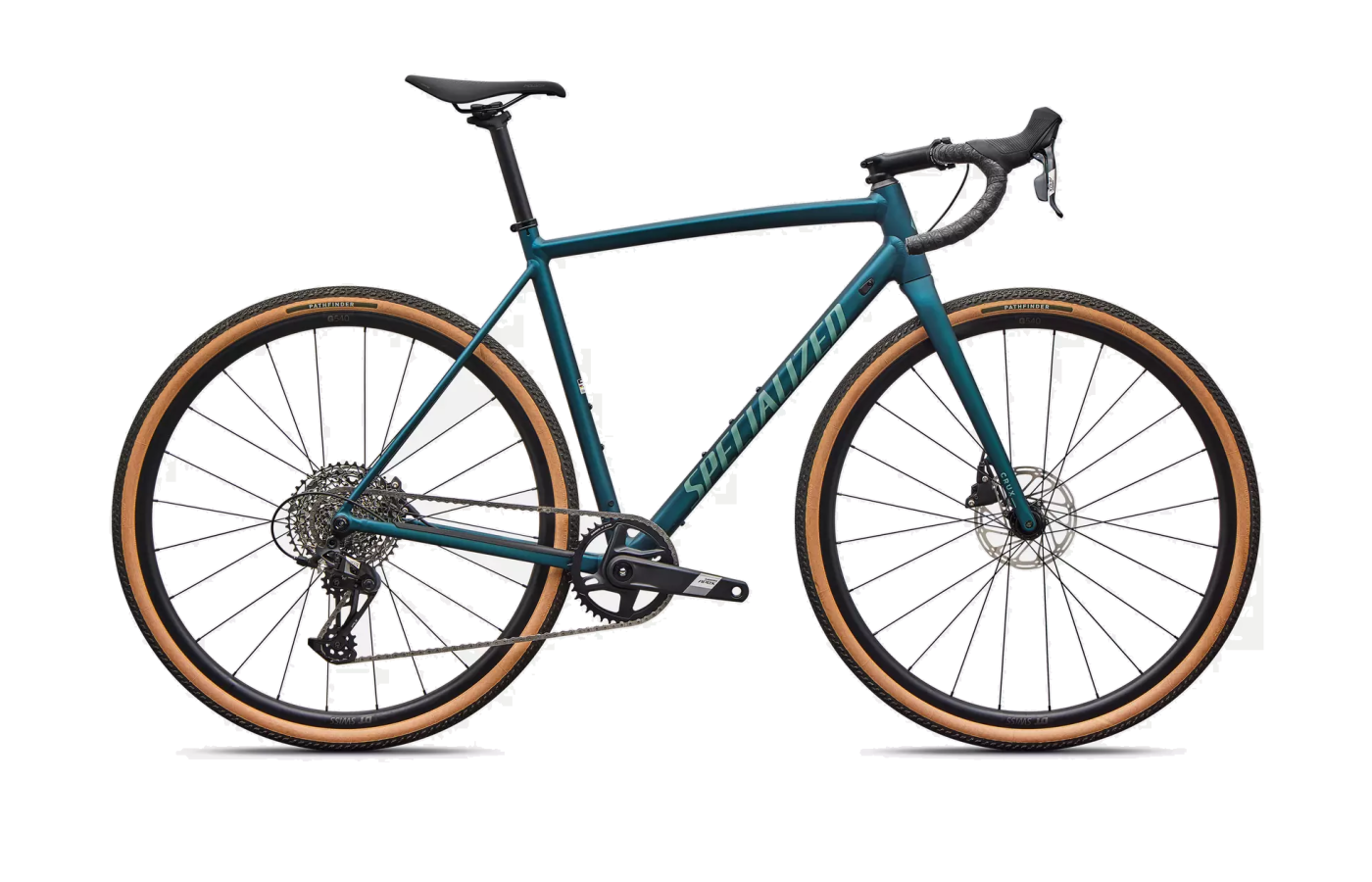
Crux
The weight-weenie alternative — a sub-8 kg gravel race frame that trades the 3T's aero shaping for class-leading lightness and more conventional handling. Worth a look if your gravel rides go uphill more than they go fast.
Compare →
Grail
Canyon's aero-leaning gravel racer with the polarizing double-decker cockpit for vibration damping. Direct-to-consumer pricing makes it the value play in this set — accept the no-dealer caveat and you save real money over both bikes here.
Compare →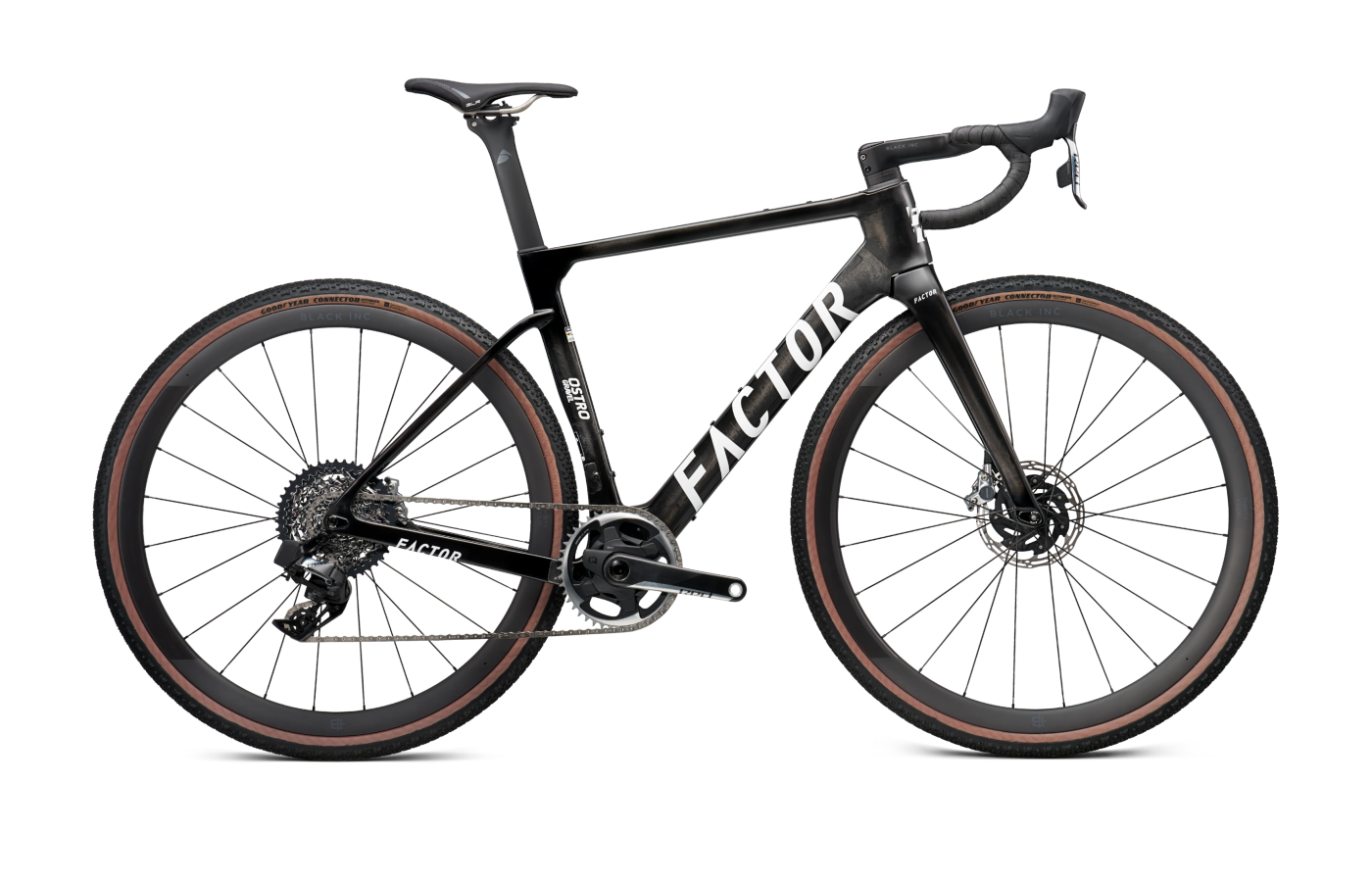
Ostro Gravel
Factor's all-in aero-gravel answer — closer in spirit to the RaceMax than the Aspero, with a fully integrated cockpit and a notably stiff chassis. Premium-priced and aimed squarely at gravel racers who want one bike, not two wheelsets.
Compare →