RaceMax
vsUltra
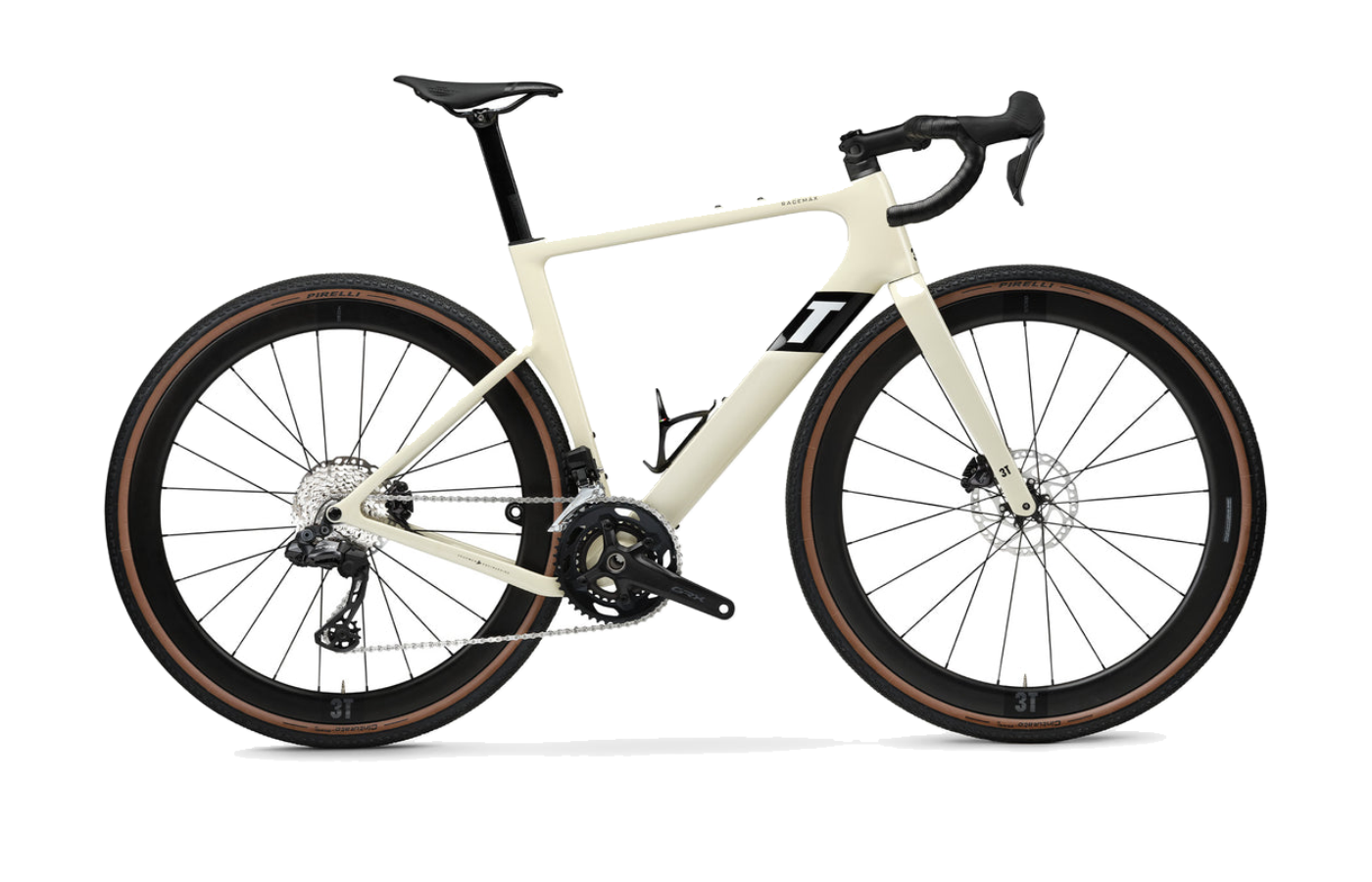
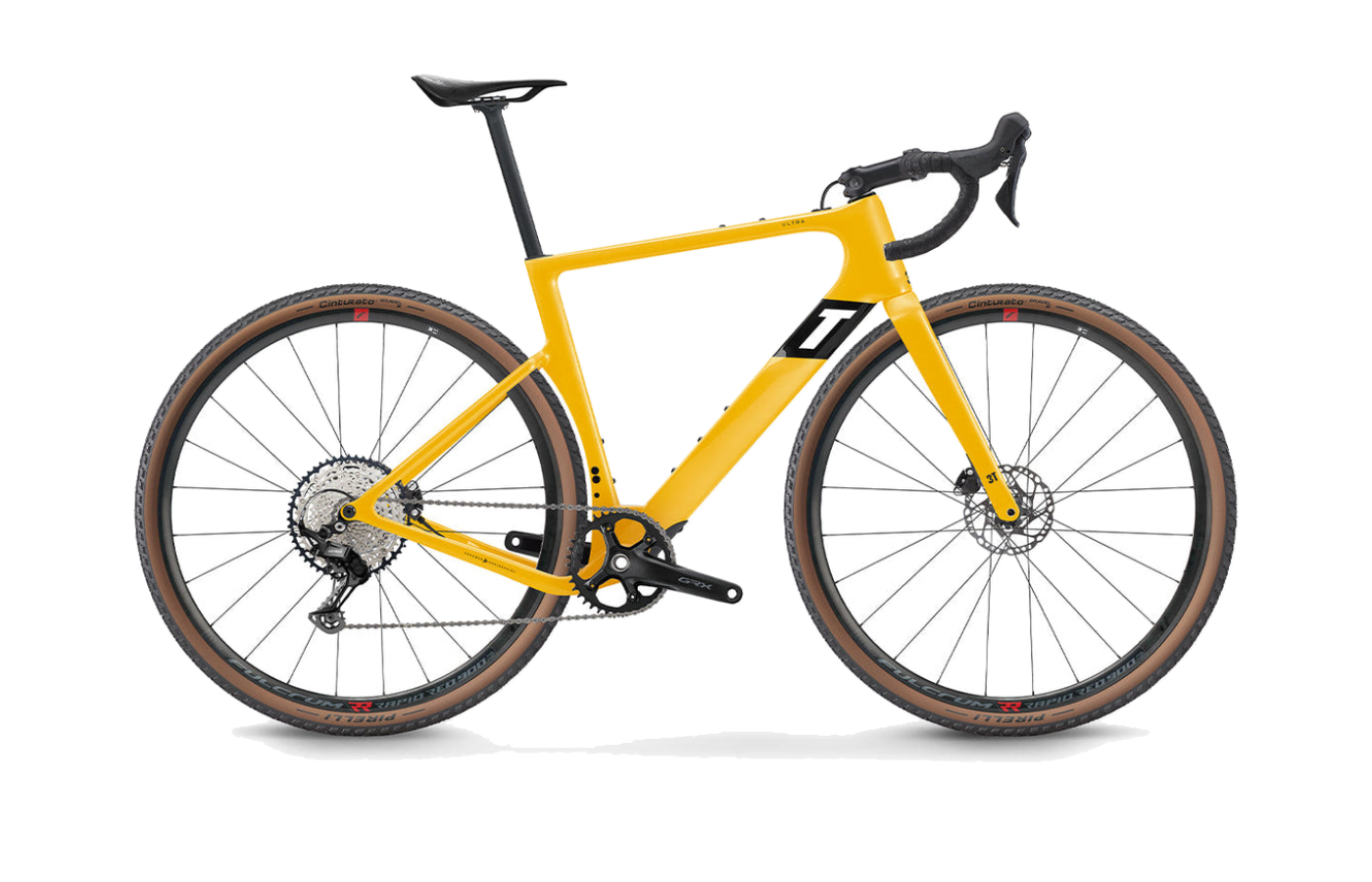
Same DNA, two missions.
The RaceMax is 3T's aero gravel racer. The Ultra stretches the same formula to swallow 61 mm MTB rubber — at the cost of speed and slickness on pavement.
RaceMax
- Sharper aero focus — 46 mm downtube neck and D-shaped aero seatpost make it the faster bike on pavement and hardpack.
- Electronic-shift builds across the lineup — every 3T RaceMax build ships with Shimano GRX Di2 or SRAM Rival AXS.
- Tighter rear end — 418 mm chainstays keep it quicker to flick through directional changes.
- Tire clearance caps at 42 mm — no 650b x 61 mm MTB option.
- Proprietary aero seatpost blocks dropper posts and most aftermarket compliance upgrades.
Ultra
- Massive tire clearance — 700x46 mm or 650x61 mm (2.4") opens up singletrack and bikepacking terrain no RaceMax will touch.
- Standard 27.2 mm round seatpost accepts aftermarket droppers, suspension posts, and compliant carbon options.
- More affordable entry price — the 3T Ultra starts at $5,399, $1,400 below the cheapest RaceMax.
- No Di2 or AXS build — drivetrain tier caps at Shimano GRX 12-speed mechanical or SRAM Apex Eagle.
- Heavier, draggier on pavement with 650b knobbies mounted — harder to use as a pure road crossover.
Editor’s analysis
Both bikes came out of Gerard Vroomen's head. The question is how far down the off-road rabbit hole you actually want to go.
The 3T RaceMax and 3T Ultra share a silhouette, a designer, and the same uncompromising aero-first philosophy — and that's where the overlap ends. The RaceMax is the sharpened version: a 46 mm downtube neck, a proprietary D-shaped aero seatpost, 418 mm chainstays, and a tire ceiling of 42 mm. It's the aero gravel archetype, tuned for 35–40 mm rubber on fire roads and canal paths where a road rider wants to be fast off the tarmac.
The 3T Ultra takes the same frame language and hammers it wider. The downtube neck opens from 46 mm to 60 mm, the chainstays stretch a single millimeter to 419 mm, and tire clearance balloons to 46 mm of 700c or a full 61 mm of 650b — 2.4 inches of mountain bike rubber. Critically, the proprietary aero seatpost is gone in favor of a standard 27.2 mm round tube, which means aftermarket dropper posts, suspension posts, or a compliant carbon piece to soften the otherwise-stiff frame are all on the table. The Ultra is the one you'd take bikepacking the Alps Divide.
Geometry-wise, the two are remarkably close in the middle of the size run. At size 56, the 3T Ultra sits 2 mm lower in stack and 1 mm shorter in reach than the 3T RaceMax, with a near-identical head tube angle. What shifts is trail (56 mm on the Ultra vs. 59 mm on the RaceMax at size 56) and the standover/clearance geometry around the rear triangle. Both steer quick for a gravel bike — this is a Vroomen signature. Neither has the slack, long-front-center character of a progressive adventure rig.
Price tells the cleaner story. The 3T RaceMax lineup runs $6,799 to $9,199 and skews toward Shimano GRX Di2 builds. The 3T Ultra caps at $5,599 with either Shimano GRX mechanical or SRAM Apex Eagle — there is no Di2, Force, or Red-tier Ultra build. If you want the best drivetrain, the RaceMax is the only door. If you want mountain bike tires and a dropper post, the Ultra is the only door.
Where the builds differ.
Comparing our editor's-pick builds side-by-side. Winners highlighted row-by-row — lower price and weight, and the better-spec component, each mark a point.
Build variants & pricing
The 3T RaceMax runs $6,799 to $9,199 with electronic drivetrains throughout. The 3T Ultra tops out at $5,599 with mechanical GRX or SRAM Apex Eagle.
The Ultra and RaceMax don't have tier-matched builds at the top — 3T doesn't offer the Ultra with GRX Di2 or a Force/Red-level AXS kit. We've paired the RaceMax Integrale WPNT GRX Di2 2x12 ($7,119) against the Ultra GRX 1x12 700c ($5,599) — same brand drivetrain, same 700c wheel size, but the RaceMax is electronic and one tier higher. Read the spec table with that asymmetry in mind.
How they fit, how they steer.
Both at size 56 — the fit-picked size for a 5'8" rider on each bike. The 3T Ultra sits 2 mm lower, 1 mm shorter, with 3 mm less trail than the RaceMax and a near-identical head tube angle. The primary divergence is rear-end clearance, not rider fit.
Which size should I buy?
Size recommendations based on stack, reach, and effective top tube. Both frames share the same 74° seat tube angle and 418–419 mm chainstays across the range.
→These are starting points. Flexibility, riding style, and preferred position all shift the answer — if you’re between sizes, a professional fit beats a chart.
What the magazines said.
Published reviews from trusted cycling outlets. Click through for the full write-up.
Which one should you buy?
If you're racing gravel or riding mostly road-to-gravel transitions, get the RaceMax. If you want MTB-sized tires, a dropper post, or cheaper entry, get the Ultra.
RaceMax
If your rides are 35 to 42 mm tires, mostly fire roads and road connectors, and you want Di2 or AXS shifting on every build — this is the sharper, faster choice. The RaceMax keeps you on tarmac-adjacent speeds when the surface gets rough.
Ultra
If you want to run 2.4-inch knobbies, bolt on a dropper, and point it at singletrack or bikepacking routes that would overwhelm a normal gravel bike — the 3T Ultra is genuinely the only aero frame that accepts that setup. Just don't expect a Di2 build.
Questions buyers actually ask.
Short answers to the things we get emailed about most often.
01What's the maximum tire clearance on each?
3T RaceMax: 42 mm of 700c. 3T doesn't publish a 650b clearance figure; real-world reports put the RaceMax at up to 650x2.1" on most builds.
3T Ultra: 46 mm of 700c or a full 61 mm (2.4") of 650b. That second figure is the entire reason the Ultra exists — no other aero-shaped gravel frame in the segment accepts that much rubber.
If you're riding below 42 mm, either bike works. Above that, it's the Ultra or nothing.
02Can I fit a dropper post to the RaceMax?
No. The 3T RaceMax uses a proprietary D-shaped aero seatpost that blocks any aftermarket dropper option. The 3T Ultra uses a standard 27.2 mm round post, which accepts most droppers on the market — and indeed, some Ultra builds on previous model years shipped with a Crankbrothers Highline dropper factory-installed.
If a dropper is non-negotiable for your riding, the Ultra is the only choice of the two.
03Which is faster on pavement?
The RaceMax, and it's not especially close when both are wearing their native tires. The RaceMax was designed around 35–42 mm rubber and an aero-specific downtube that narrows to 46 mm at the headtube, optimized for narrower-tire airflow. The Ultra's downtube opens to 60 mm to clear MTB rubber — still aero-shaped, but less efficient in that middle range.
Reviewers universally describe the Ultra as surprisingly quick on pavement considering its clearance, but they all frame that as a pleasant surprise, not a match for the RaceMax.
04Which has better drivetrain options?
The RaceMax, clearly. Every RaceMax build ships with either Shimano GRX Di2 (electronic) or SRAM Rival AXS (wireless) — 12-speed or 13-speed depending on build.
The Ultra caps at Shimano GRX RX610 12-speed mechanical or SRAM Apex Eagle (an entry-tier AXS mullet setup). There is no Di2 Ultra, no Force AXS Ultra, no Red AXS Ultra. If you want the highest-tier drivetrain on an aero 3T, you're on the RaceMax.
05What about weight differences?
The Ultra's frame is claimed at 1,130 g for a 54 cm; the RaceMax lands in the 1,050–1,150 g range for the same size. Frame-only, they're within measurement noise.
Complete-bike weights diverge more: a Force AXS RaceMax with carbon wheels and 35 mm tires came in at 8.09 kg (17.8 lb) per Velo's testing. A comparable Ultra build lands around 8.78 kg (19.4 lb), mostly due to bigger tires, the dropper, and lower-spec stock wheels. With matched rubber, the frames are close; it's the build kits that pull them apart.
06Is the geometry really that different?
Not as different as their tire specs suggest. At size 56, the 3T RaceMax is 586 mm stack / 382 mm reach; the 3T Ultra is 584 mm stack / 381 mm reach — within a couple of millimeters.
Head tube angles are within 0.3° of each other (RaceMax 71.7°, Ultra 72°), and the Ultra's chainstays are 1 mm longer (419 mm vs 418 mm). Trail is where you'll feel the biggest delta: the Ultra's 56 mm is 3 mm quicker than the RaceMax's 59 mm at this size. The rider position barely changes between them; the handling character is shifted mostly by tire choice, not frame numbers.
07How bad is the cable routing, really?
Both frames share a top-tube cable entry port behind the stem that has been criticized consistently in reviews of both bikes. The friction it introduces makes mechanical shifting feel 'heaving and labored' (Boundlessmag on the RaceMax) and makes dropper post levers notably stiff on the Ultra.
Wireless (AXS) or electronic (Di2) setups sidestep the shifting issue entirely, but the dropper problem remains on Ultra builds that run mechanical dropper remotes. Plan for it if you're buying mechanical.
08Which should I buy if I can only own one bike?
Depends on what that one bike needs to do. If you own a road bike already and you want a capable gravel companion that can also handle a Monday group ride on 30 mm slicks, the 3T RaceMax blurs those roles well — it was reviewed across multiple outlets as genuinely fast on tarmac.
If this bike is your road-and-gravel-and-light-trail-and-bikepacking rig and you want to actually go off-road off-road, the 3T Ultra covers more ground with two wheelsets (one 700c for fast days, one 650b for rowdy ones) than the RaceMax ever will.
Similar bikes
If your priorities don’t map cleanly onto either of these, one of these adjacent bikes probably fits better.
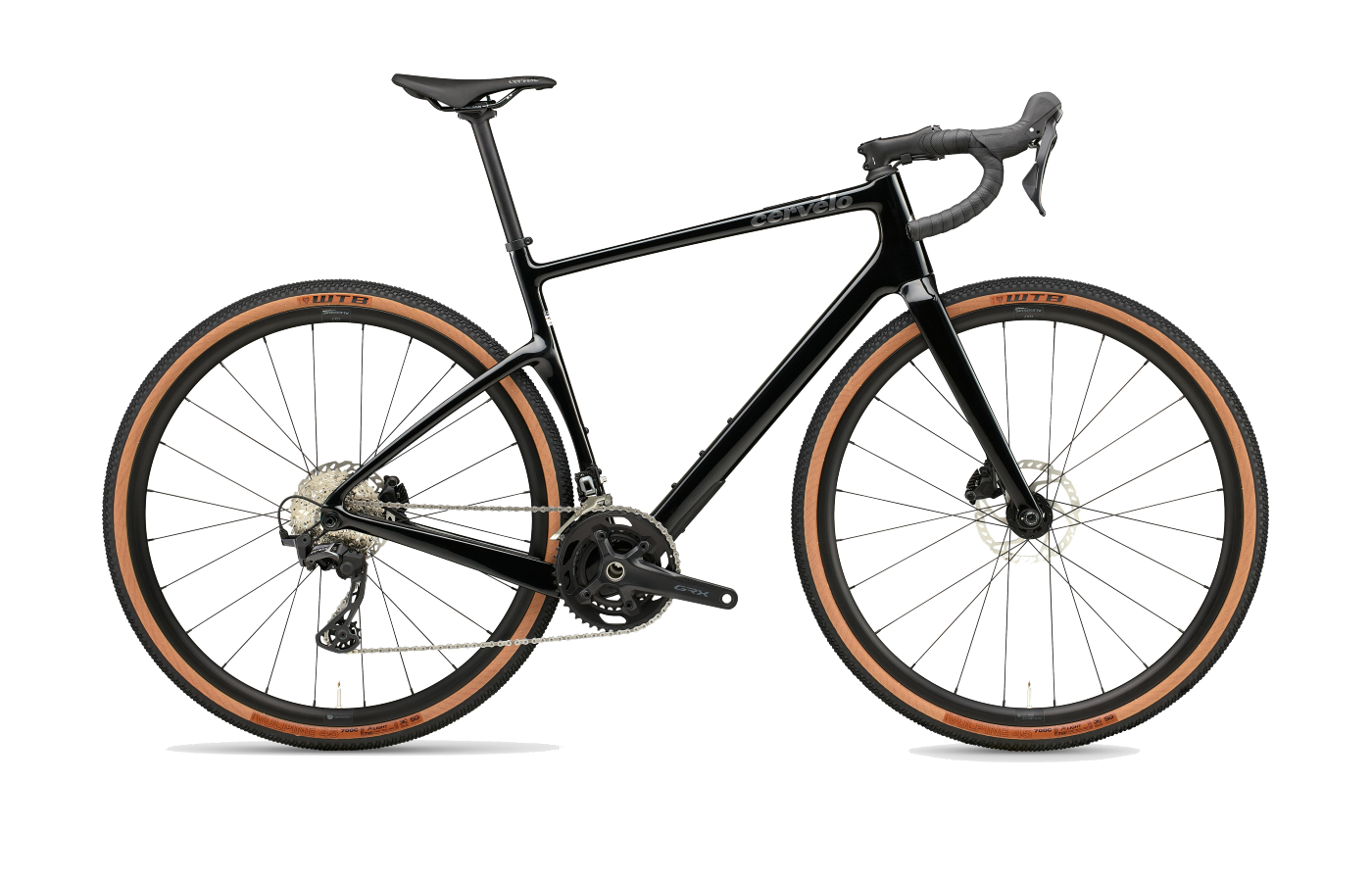
Aspero
Cervelo's take on road-fast gravel — sharp handling like the RaceMax, but with a TrailMix chip in the fork that keeps the geometry honest across 700c and 650b tire swaps.
Compare →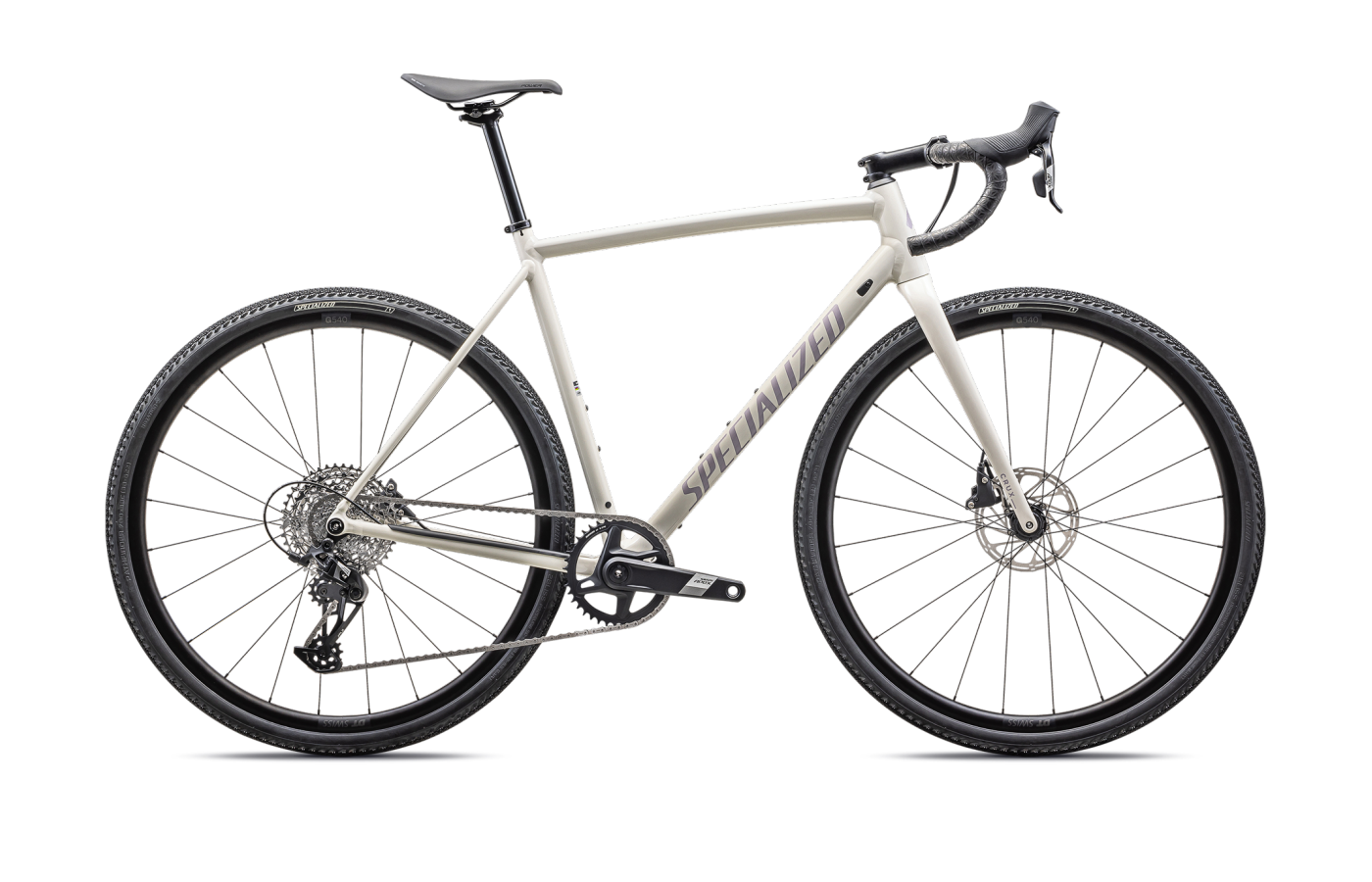
Crux
The Specialized Crux is the climber's gravel bike — notably lighter than either 3T, with a cleaner frame silhouette. You give up the aero shielding and the Ultra's 61 mm clearance in exchange for a bike that simply weighs less.
Compare →
Grail
Canyon's direct-to-consumer pricing puts a Grail in the same conversation for noticeably less money. The integrated cockpit softens the front end — a different compliance strategy than swapping a 27.2 mm post.
Compare →