Impulso
vsGrail
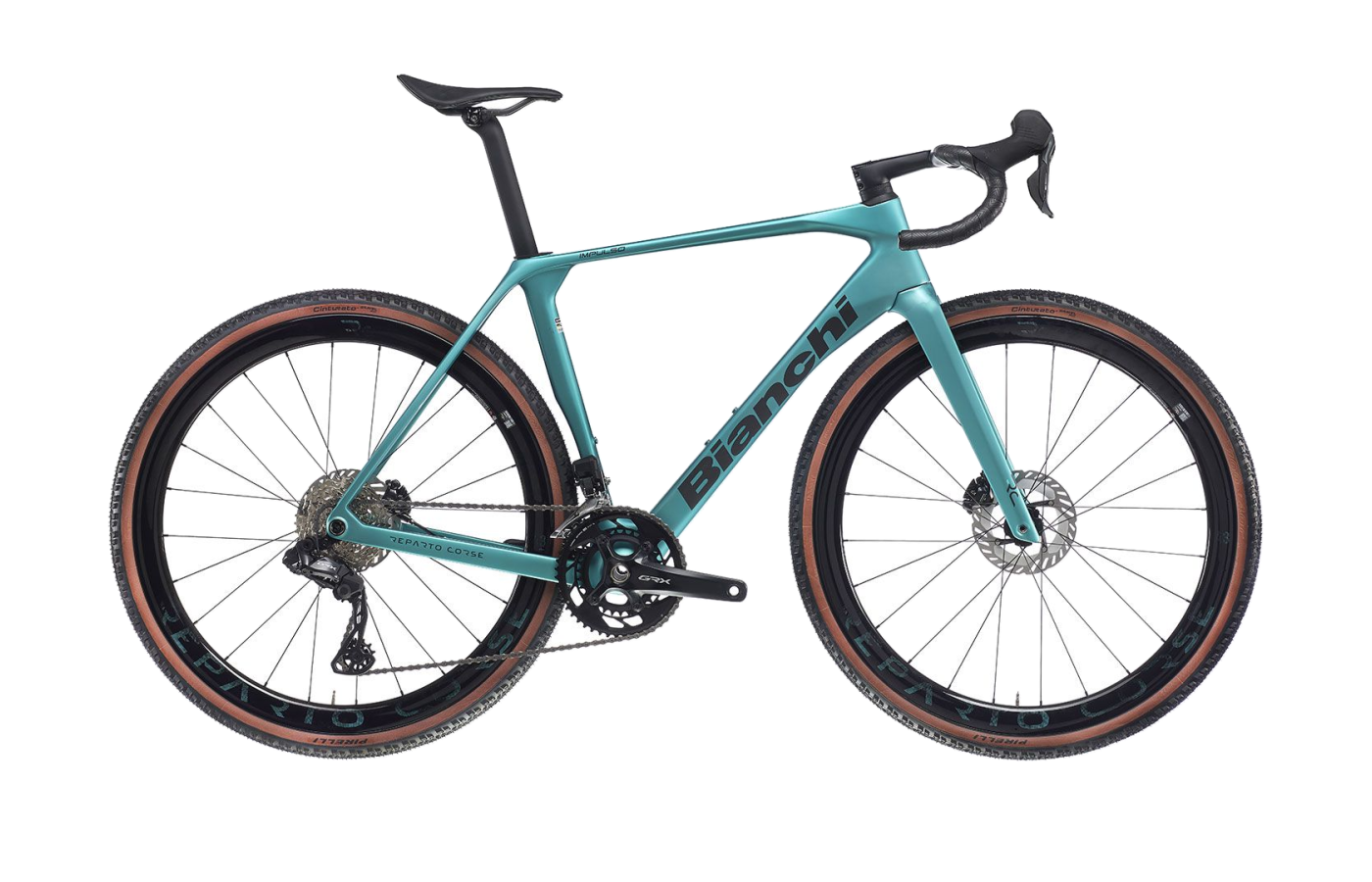
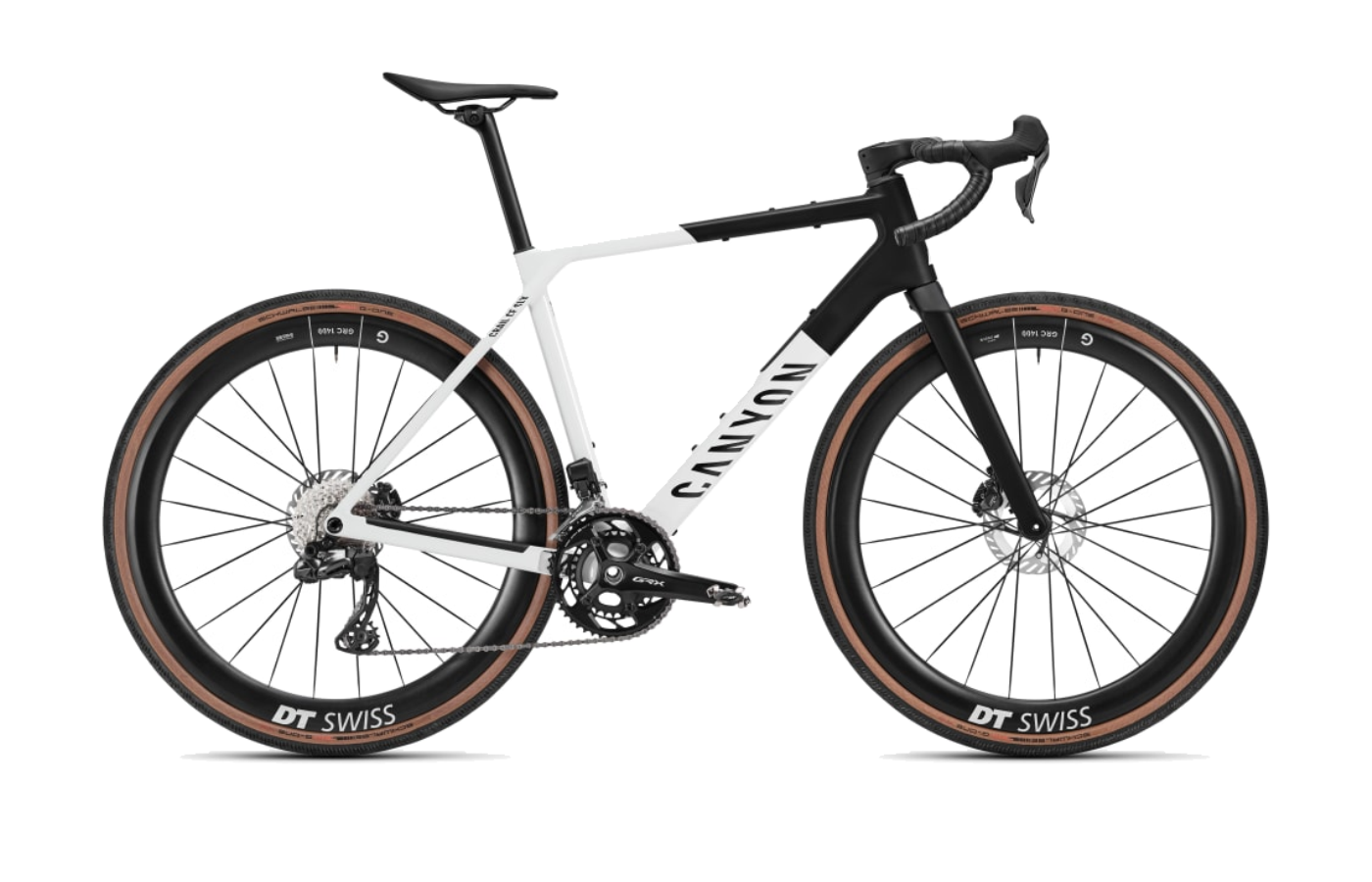
Two race-only gravel bikes — one Italian, one direct-to-consumer.
The Impulso is a stiff, upgrade-friendly Italian frame. The Grail is a fully integrated aero system that arrives ready to race.
Impulso
- Standard 1 1/8" steerer — bars and stem swap with off-the-shelf parts, no proprietary headache.
- "Super stiff" race frame — reviewers consistently describe the redesigned frame as planted on descents and direct under power.
- UDH-equipped carbon frame from $3,200 — the Comp build is one of the cheapest modern carbon gravel race platforms with future-proof drivetrain compatibility.
- Stock alloy wheels on the Pro and Comp builds add weight — reviewers found the Comp "sluggish" uphill until upgraded.
- No down-tube storage and fewer integrated extras than Canyon.
Grail
- Aero claims back the price — Canyon's published 9.1-watt saving over the prior Grail at 45 km/h, plus 1.3-1.5 watts more from the Fidlock frame bag.
- Integrated down-tube storage on SLX and CFR frames — multi-tool and mini-pump tucked inside the frame, no jersey pockets needed.
- Direct-to-consumer pricing — the GRX Di2 build at $5,599 lands a full Di2 spec with DT Swiss GRC 1400 carbon wheels at a price that traditional brands struggle to match.
- Proprietary one-piece cockpit limits fit changes and forces aftermarket buys for many riders, especially smaller frames.
- Reviewers report the bike transmits noticeable shock through the bars and the D-shaped seatpost on rough terrain.
Editor’s analysis
Both bikes ditched their adventure-bike roots and committed to gravel racing — but they did it from opposite ends of the industry.
On the surface, the Bianchi Impulso and the Canyon Grail look like the same bike with different paint. Both cap tire clearance at 42 mm. Both run modern UDH frames with internal routing and 2x GRX or AXS drivetrains. Both were redesigned in the last two years to chase the same crowd: the Midwest gravel racer who wants speed first and adventure second.
The philosophies diverge fast. The Bianchi Impulso is a more traditional take — a 1 1/8" steerer, swappable cockpit, alloy or carbon wheels depending on build, and a frame reviewers describe as "super stiff" and "really beefy." Bianchi sells it as a foundation: buy the frame, ride the stock spec, then upgrade wheels and bars on your own timeline. The flagship RC Di2 build runs $7,500 and the carbon-frame Comp starts at $3,200 — wide range, lots of headroom for tinkering.
The Canyon Grail goes the other direction. Canyon claims a 9.1-watt aero saving at 45 km/h over the previous Grail, an integrated "Double Drop" one-piece cockpit, hidden down-tube storage on the SLX and CFR frames, and a magnetic Fidlock frame bag that Canyon claims adds another 1.3-1.5 watts. The flagship Force XPLR builds at $6,099 and the GRX Di2 at $5,599 undercut traditional brand pricing — but the proprietary cockpit, narrow-but-wide stock bars, and Canyon-specific accessory mounts mean you live inside Canyon's ecosystem.
Put another way: the Bianchi Impulso is the bike for the rider who wants to build a race bike. The Canyon Grail is the bike for the rider who wants to unbox one.
Where the builds differ.
Comparing our editor's-pick builds side-by-side. Winners highlighted row-by-row — lower price and weight, and the better-spec component, each mark a point.
Build variants & pricing
Bianchi spans $3,200–$7,500 across five builds; Canyon runs $2,899–$6,099 across five. Canyon's direct-to-consumer pricing leans heavier on stock spec value.
Prices are current US MSRP. The editor's-pick row pairs each platform's GRX Di2 flagship — the most apples-to-apples spec match the lineups offer. Bianchi's Pro and Comp builds shift to mechanical GRX 820/610 and stock alloy wheels.
How they fit, how they steer.
The Bianchi Medium and the Canyon XS are the fit-picked sizes for a 5'8" rider — the Grail's geometry runs a full size up the chart. At those sizes the reach is nearly identical (391 vs 385 mm), but the Canyon stacks 2 mm higher and runs a slacker 71° head tube versus the Bianchi's 71.5°.
Which size should I buy?
Size labels diverge across the two brands — match by stack and reach, not by the letter on the tag.
→These are starting points. Flexibility, riding style, and preferred position all shift the answer — if you’re between sizes, a professional fit beats a chart.
What the magazines said.
Published reviews from trusted cycling outlets. Click through for the full write-up.
Which one should you buy?
If you want a stiff Italian frame to build up over time, get the Impulso. If you want a turn-key aero race bike out of the box, get the Grail.
Impulso
If you want a modern carbon gravel race frame with a standard cockpit interface and the freedom to choose your own wheels, bars, and components over time, the Impulso is the foundation. The Comp is the entry door at $3,200; the RC Di2 is the no-compromise version.
Grail
If you want the integrated aero, the down-tube storage, the magnetic frame bag, and a Di2 spec at a price that undercuts the traditional brands — the Grail is hard to argue with. As long as the stock cockpit fits.
Questions buyers actually ask.
Short answers to the things we get emailed about most often.
01Which is faster on smooth gravel?
The Canyon Grail, by Canyon's own published numbers — a claimed 9.1-watt saving at 45 km/h over the previous-generation Grail, plus another 1.3-1.5 watts when you fit the Fidlock frame bag. The Bianchi Impulso has no published aero figures and reviewers describe it as "pretty aero" rather than measurably so.
On rolling smooth-gravel courses where you spend hours between 30 and 40 km/h, that adds up. On a chunky technical course where the average speed is lower, the gap shrinks toward irrelevance.
02Which has more tire clearance?
Both bikes are officially capped at 42 mm. That's the same number, and it's at the conservative end of the modern gravel-bike market — wider 45-50 mm tires won't fit either platform.
If you need more rubber, the Canyon Grizl (50 mm) or a dedicated adventure bike is the right tool. Neither the Impulso nor the Grail is built for it.
03How serviceable are the cockpits?
The Bianchi Impulso uses a Reparto Corse AeroFlare integrated cockpit on the RC builds and a standard two-piece Velomann alloy stem and bar on the Pro and Comp builds. Either way, the frame uses a standard 1 1/8" steerer, so aftermarket cockpits bolt right on.
The Canyon Grail ships with a one-piece CP0039 (SLX/CFR) or CP0045 (SL) integrated bar/stem. Adjusting reach or width means buying a new unit. The 1 1/8" steerer means you can swap to an aftermarket two-piece — but that's an expensive route, and reviewers consistently flag the stock 420 mm bars on XS/S frames as too wide for many riders.
04Which has a better stock build for the money?
The Canyon wins on stock value, especially at the SLX tier. The CF SLX 8 Di2 at $5,599 ships with full Shimano GRX RX825 Di2 and DT Swiss GRC 1400 carbon wheels — a spec that traditional-brand competitors typically charge $7-8k for.
The Bianchi Pro at $4,600 lands GRX 820 mechanical with alloy Velomann carbon wheels — solid functional parts but heavier and at a higher per-watt cost than Canyon's stock spec. Bianchi's value case is the upgrade path, not the stock build.
05Are both compatible with electronic shifting only?
No — both platforms span mechanical and electronic. The Bianchi Pro and Comp builds run mechanical Shimano GRX 820 and 610 respectively, while the RC builds get GRX Di2 or SRAM Red XPLR AXS. The Canyon CF SL 7 Shimano build at $2,899 is mechanical GRX; the SL 7 AXS, SLX 8, and CFR builds are wireless/electronic.
If you specifically want a mechanical drivetrain, both brands have an option, with Canyon's $2,899 entry point being the cheapest.
06Which has the more comfortable ride?
Neither bike is a comfort-first design — both prioritize stiffness for power transfer.
Reviewers describe the Impulso as "super stiff" and felt it "a little harsher than some other bikes" with more compliance built in. The Grail's D-shaped Comfortpost is designed to flex but still gets called "firm" and "stiffer than the VCLS seatpost" it replaced — Bicycling noted it "transmits more shock to a rider's hands and butt/legs" than they expected.
In both cases tire pressure and tire choice matter more than the frame for ride comfort.
07What about down-tube storage and accessories?
The Canyon Grail SLX and CFR frames include integrated down-tube storage with clips for a multi-tool and mini-pump, plus the optional Fidlock magnetic frame bag and Canyon's "Gear Groove" cockpit interface. The CF SL frames omit the down-tube hatch — a notable downgrade for the price.
The Bianchi Impulso has none of this. It's a more traditional gravel frame with no integrated storage, no proprietary mount system, and no claimed-aero accessory ecosystem.
08Which is the better choice for a home mechanic?
The Bianchi Impulso, fairly clearly. Reviewers found its internal cable routing manageable — "not the most complicated" they had encountered — and the standard 1 1/8" steerer plus two-piece cockpit (on Pro and Comp) means adjustments and replacements use off-the-shelf parts.
The Canyon Grail routes its hoses through the upper headset cover, which Bicycling and Escape Collective both flagged as complicating headset cleaning and bearing replacement. Add the press-fit BB (which one tester reported "did its fair share of creaking") and the proprietary cockpit, and Canyon ownership leans heavier on shop service.
Similar bikes
If your priorities don’t map cleanly onto either of these, one of these adjacent bikes probably fits better.
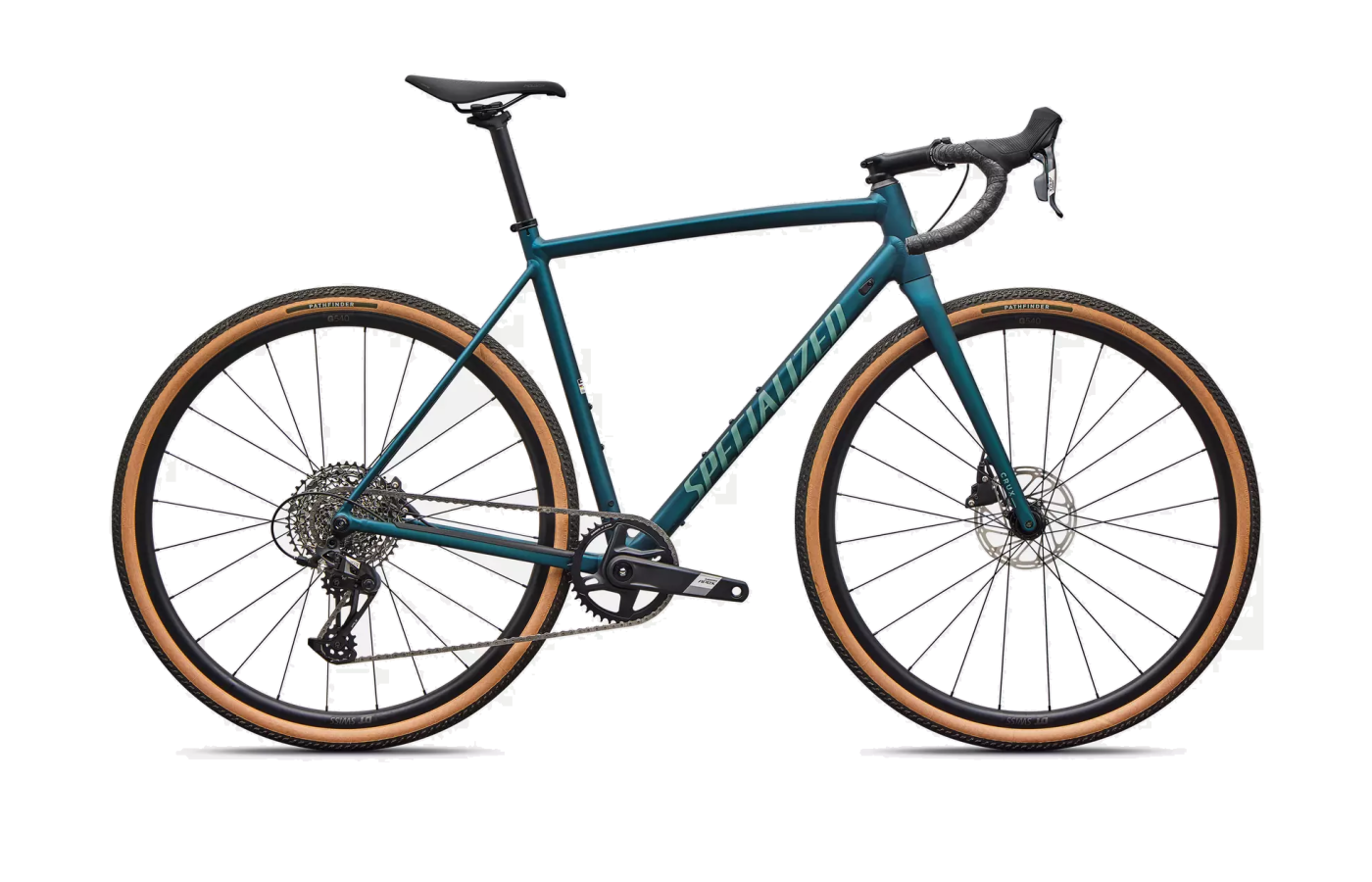
Crux
The lighter, more agile choice — the Specialized Crux doubles as a cyclocross racer, with a focus on flickability over flat-out aero speed. Pick this if your gravel courses lean more technical than fast.
Compare →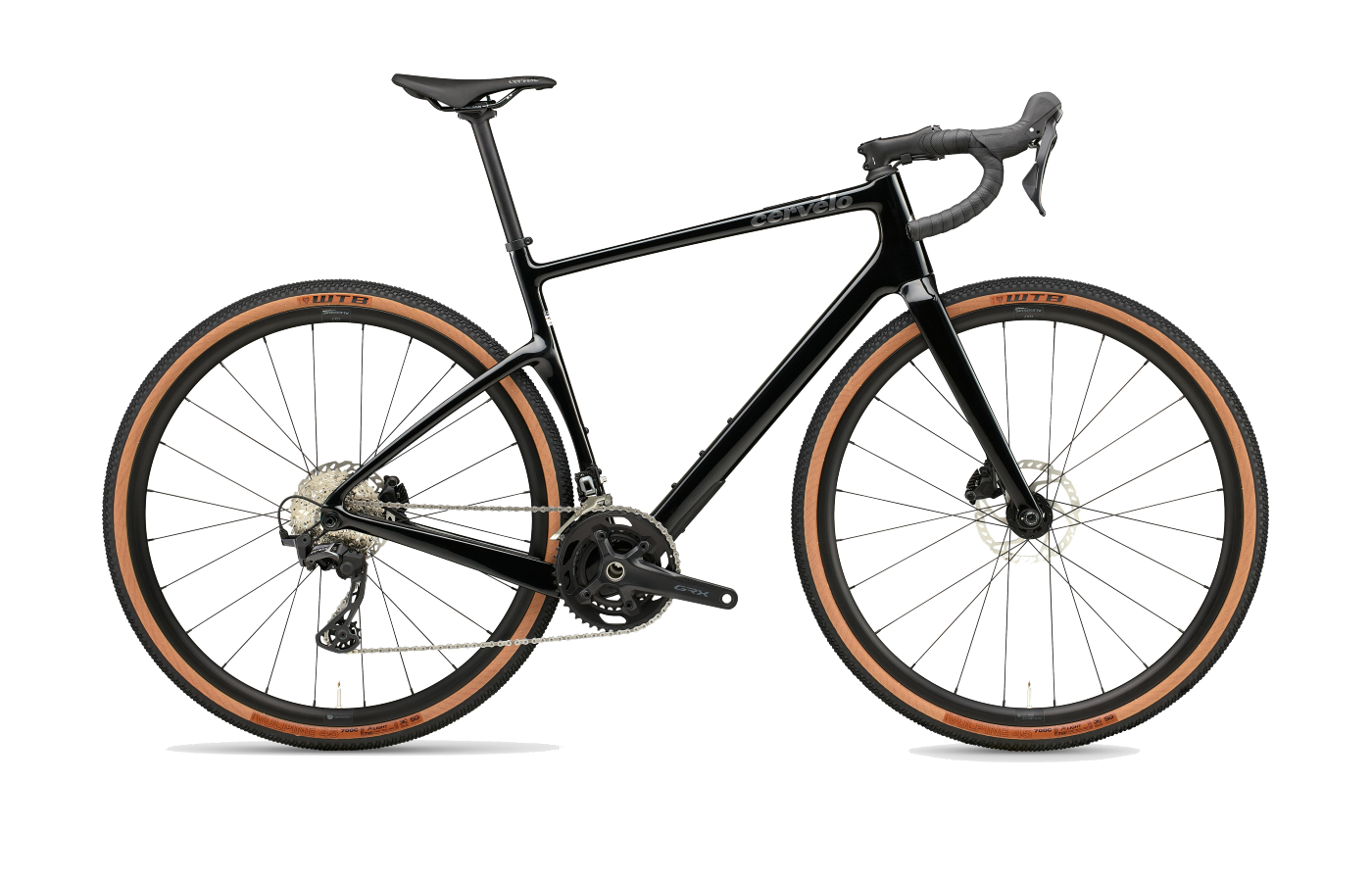
Aspero
Cervelo's Aspero is the most road-handling bike in this group — sharper steering and a more aggressive front end than either the Impulso or Grail, in a similarly race-only package.
Compare →Grizl
If the Grail's 42 mm tire cap is the dealbreaker, the Canyon Grizl is the in-house alternative — same brand DNA, but room for 50 mm tires and a more comfort-tuned, adventure-ready geometry.
Compare →