Impulso
vsSprint
One brand, two surfaces.
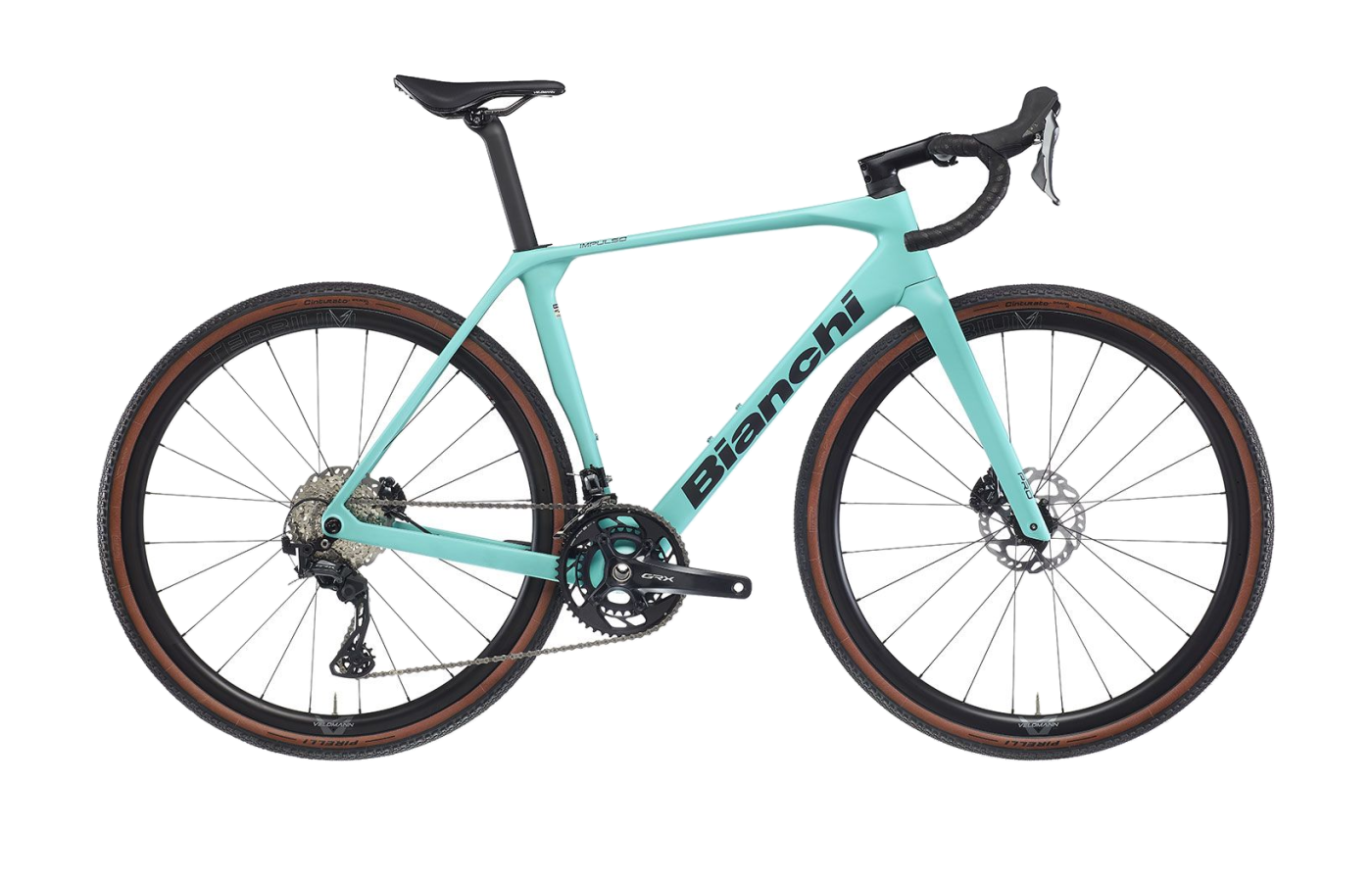
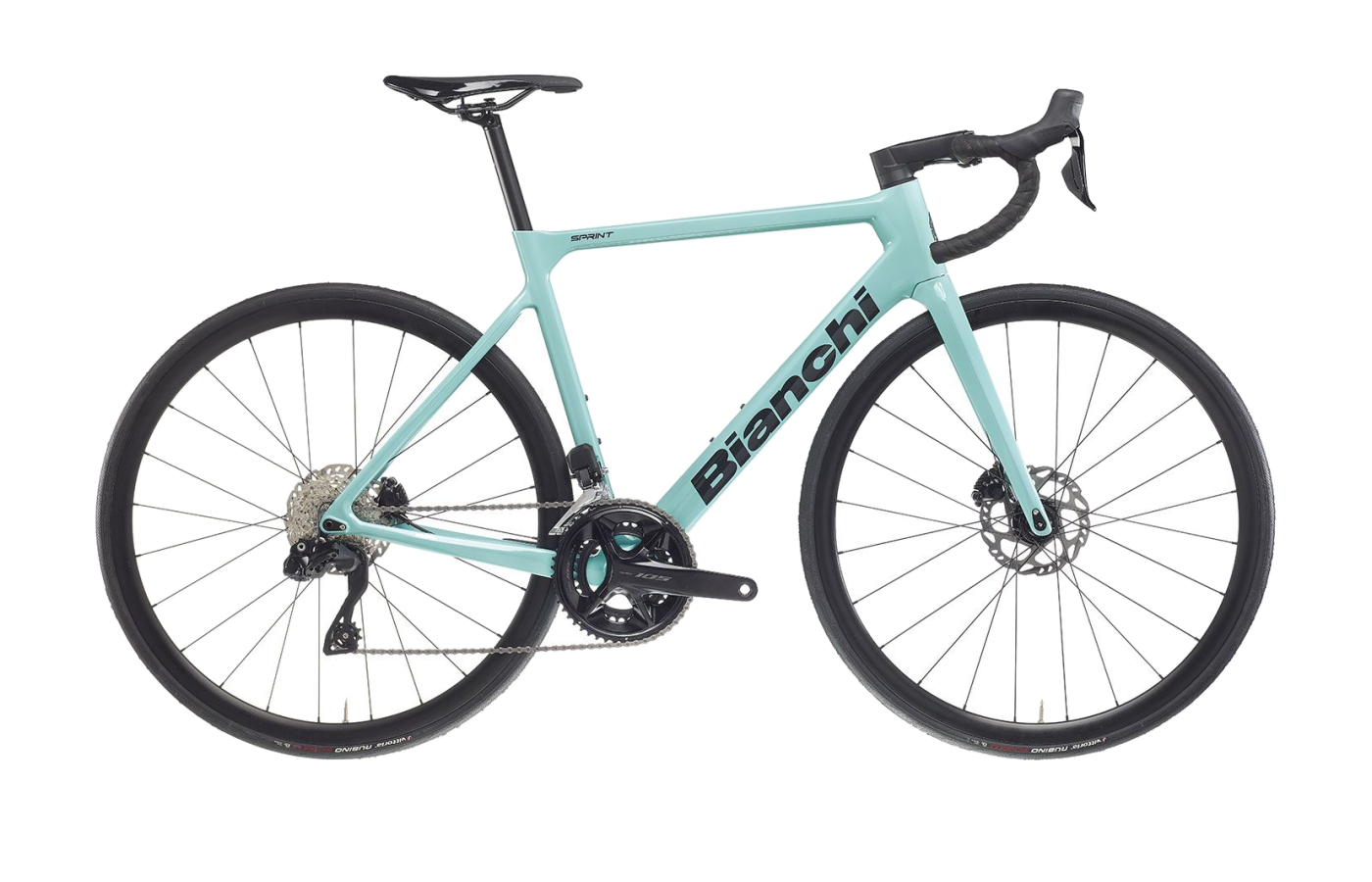
The Impulso is Bianchi's gravel race bike — 42 mm tires, GRX, planted on dirt. The Sprint is the entry-level Celeste road racer — 32 mm max, 105, snappy on tarmac.
Impulso
- True gravel-race platform — 42 mm clearance, 71.5 degree head tube, GRX drivetrain, designed for fast rolling terrain.
- Wide build ladder from $3,200 Comp to $7,500 GRX Di2 RC — room to upgrade or buy in higher.
- Stiff, planted frame — reviewers call it "super stiff" with confident high-speed descending.
- 42 mm tire ceiling is mid-pack for modern gravel — tight for technical singletrack.
- Comp build's heavy Fulcrum alloy wheels make it feel sluggish climbing until you upgrade.
Sprint
- Complete 105 groupset — full shifting, brakes, and crankset all matched, even on the $3,000 mechanical build.
- Sharp "power box" front end — reviewers note zero front-end flex and crisp steering at speed.
- Affordable Bianchi entry — Celeste paint, ICR cockpit, and race geometry under $3,650.
- Only two builds — no carbon-grade ladder above it short of jumping to the Oltre.
- Stock Velomann alloy wheels and 25 mm tires feel firm; chassis rewards a wheel upgrade.
Editor’s analysis
Same Celeste paint, same press-fit BB, same race DNA — but the two bikes barely overlap on the road that connects them.
The Bianchi Impulso and Bianchi Sprint sit on opposite sides of Bianchi's performance lineup, divided by the moment the pavement turns to dirt. Both are carbon, both are race-shaped, both run Bianchi's modern internal cable routing — but the Impulso clears 42 mm Pirelli Cinturato Gravels and runs GRX, while the Sprint tops out at 32 mm tires on a road-standard Shimano 105 setup. There is no version of either bike that crosses over.
The Impulso is the more ambitious platform. It scales from a $3,200 Comp build with Shimano GRX 610 to a $7,500 RC GRX 825 Di2 with carbon Reparto Corse wheels, and tops out (no published US price) with a SRAM RED XPLR 1x13 build. That spread tells you the bike is built to be upgraded — reviewers explicitly call out the Comp's heavy Fulcrum alloy wheels as the first thing to swap. Frame stiffness is the consistent praise: "super stiff," "really responsive," "planted" on descents. Tire clearance jumped from 38 mm on the prior generation to 42 mm here, which is mid-pack for modern gravel — fine for fast gravel races, tight for true singletrack.
The Bianchi Sprint plays a smaller, sharper game. Two builds, both Shimano 105 — mechanical at $3,000, Di2 at $3,650. That's the entire range. The frame's "power box" front end gets singled out for steering precision and zero front-end flex; reviewers compare its acceleration to a savannah cat after a downed pheasant. Geometry at size 550 is racy by 2026 road standards: 545 mm stack, 388 mm reach, 73 degree head tube. The trade-off is that the Sprint is the only Bianchi road bike at this price point — there's no carbon-tier ladder above it short of jumping to the Oltre or Specialissima, both of which double the cost.
Pick by the surface, not the spec sheet. If most of your riding is dirt — gravel races, fire roads, the occasional washboard — the Impulso is the obvious answer, and the Pro GRX 820 mid-build is where the platform makes the most sense. If you're on tarmac and want a Celeste race bike under $4k, the Sprint is one of the few mid-range carbon road bikes that still ships with a complete 105 groupset (no mismatched chainsets or cheaper brakes) and a real internally-routed cockpit.
Where the builds differ.
Comparing our editor's-pick builds side-by-side. Winners highlighted row-by-row — lower price and weight, and the better-spec component, each mark a point.
Build variants & pricing
The Impulso scales from $3,200 Comp to $7,500 GRX Di2 RC. The Sprint stops at $3,650 — two builds, both 105.
Prices are current US MSRP. Bianchi does not offer a flagship-tier (Dura-Ace, Red AXS) Sprint — if you want top-tier road components on Celeste, the Specialissima is the next step up. The Impulso also has a SRAM RED XPLR 1x13 RC build with no published US price.
How they fit, how they steer.
Impulso M vs Sprint 550 — the fit-picked sizes for a 5'8" rider on each. The Impulso sits 9 mm taller in stack and 3 mm longer in reach, with a 1.5 degree slacker head tube and 12 mm longer chainstays. That's the gravel bias showing up in the numbers.
Which size should I buy?
Size recommendations based on stack, reach, and effective top tube. Both ranges cover similar rider heights, but the Sprint offers seven sizes vs the Impulso's five.
→These are starting points. Flexibility, riding style, and preferred position all shift the answer — if you’re between sizes, a professional fit beats a chart.
What the magazines said.
Published reviews from trusted cycling outlets. Click through for the full write-up.
Which one should you buy?
If you ride dirt, get the Impulso. If you ride pavement, get the Sprint.
Impulso
If your weekends are hardpacked fire roads, BWR-style events, or rolling Midwest gravel where keeping pace in a pack matters more than clearing technical chunk, the Impulso is built for that exact use case. The Pro GRX 820 build hits the sweet spot — full mechanical GRX, modern frame, room to upgrade wheels later.
Sprint
If you want a Bianchi for club rides, sportives, or the local crit, and you're not chasing flagship components, the Sprint delivers a complete 105 groupset, ICR cockpit, and proper race geometry under $3,650. The chassis has more in it than the stock wheels show — a carbon wheel upgrade is the obvious path to unlock it.
Questions buyers actually ask.
Short answers to the things we get emailed about most often.
01Can the Bianchi Sprint take gravel tires?
Not really. The Sprint is built around 32 mm maximum tire clearance, and ships stock with 25 mm Vittoria Rubinos. You can run a 28 mm or 30 mm slick for chip-seal or rough tarmac, but anything off-pavement is outside its design envelope.
If you want one Bianchi that does both, the Impulso is the answer — but you'll give up the Sprint's road-race geometry to get there.
02Which is faster on pavement?
The Sprint, by a meaningful margin. It's lighter (no published claimed weights from Bianchi, but the 105 mechanical build is around 8.5 kg vs the Impulso Comp's tested 9.55 kg / 21 lb 4 oz), runs narrower 25 mm road tires, and has a steeper 73 degree head tube for more responsive steering at speed.
The Impulso isn't slow on pavement — reviewers note its aero shaping helps it hold speed on flat, rolling terrain — but the Sprint is the dedicated road tool.
03What's the maximum tire clearance on each?
Bianchi Impulso: 42 mm (ETRTO 622-42) on 700c, official spec. Up from 38 mm on the previous generation.
Bianchi Sprint: 32 mm (Bianchi-published, road-standard).
Neither is built for wider plus-size or 650b setups. If you need 45 mm or more for technical gravel and bikepacking, look at the Bianchi Arcadex instead.
04Why is the Impulso so much more expensive at the top end?
The Impulso's lineup runs from a $3,200 Comp build with Shimano GRX 610 and alloy Fulcrum wheels all the way up to a $7,500 RC build with GRX 825 Di2 and carbon Reparto Corse wheels — plus an unpriced SRAM RED XPLR 1x13 build above that. The Sprint stops at $3,650.
Bianchi positions the Sprint as their accessible road platform; if you want top-tier road components in Celeste, the next step is the Specialissima or Oltre, not a higher Sprint trim.
05Are the integrated cockpits user-serviceable?
Both bikes use Internal Cable Routing (ICR), but with standard 2-piece bar-and-stem setups rather than fully one-piece integrated cockpits. That's the friendly version — you can swap stem length or bar width without throwing the whole cockpit away.
Reviewers note the Impulso's internal routing is "a little tougher to work on" than external setups but "not the most complicated" they've seen. Plan on a bike-shop visit for a hose bleed; basic shifting tweaks are still home-mechanic friendly. The top RC builds use a one-piece Reparto Corse AeroFlare cockpit, which is less serviceable.
06How does the Impulso compare to the Bianchi Arcadex?
The Impulso is the gravel race bike — 42 mm tires, no extra mounts, designed for high-speed rolling terrain. The Arcadex is the gravel adventure bike, with wider clearance, mounting points for racks and bags, and 650b compatibility.
Reviewers explicitly position the Impulso as "not an adventure bike" and "not made for bikepacking." If you want one Bianchi gravel bike for everything from gravel racing to multi-day tours, the Arcadex is the broader tool.
07Is the Sprint complete-105 or a mixed groupset?
Complete 105. Both Sprint builds — the $3,000 mechanical 105 12sp and the $3,650 105 Di2 12sp — ship with the full Shimano 105 groupset (shifters, derailleurs, crankset, and brakes all matched).
Reviewers single this out as a value point, noting that bikes at this price often mix 105 derailleurs with cheaper chainsets or brakes. The Sprint doesn't.
08Can I run a power meter on either?
Yes on both. The Sprint and Impulso use standard road and GRX cranksets respectively, so any spider-based or pedal-based power meter (4iiii, Stages, Power2Max, Favero Assioma, Garmin Rally) bolts on without issue.
The Impulso RC GRX 825 Di2 build ships with a 4iiii Precision 3 single-side power meter stock, and the SRAM RED XPLR build comes with a SRAM RED XPLR power meter crank. The Sprint builds do not include a power meter from the factory.
Similar bikes
If your priorities don’t map cleanly onto either of these, one of these adjacent bikes probably fits better.
Arcadex
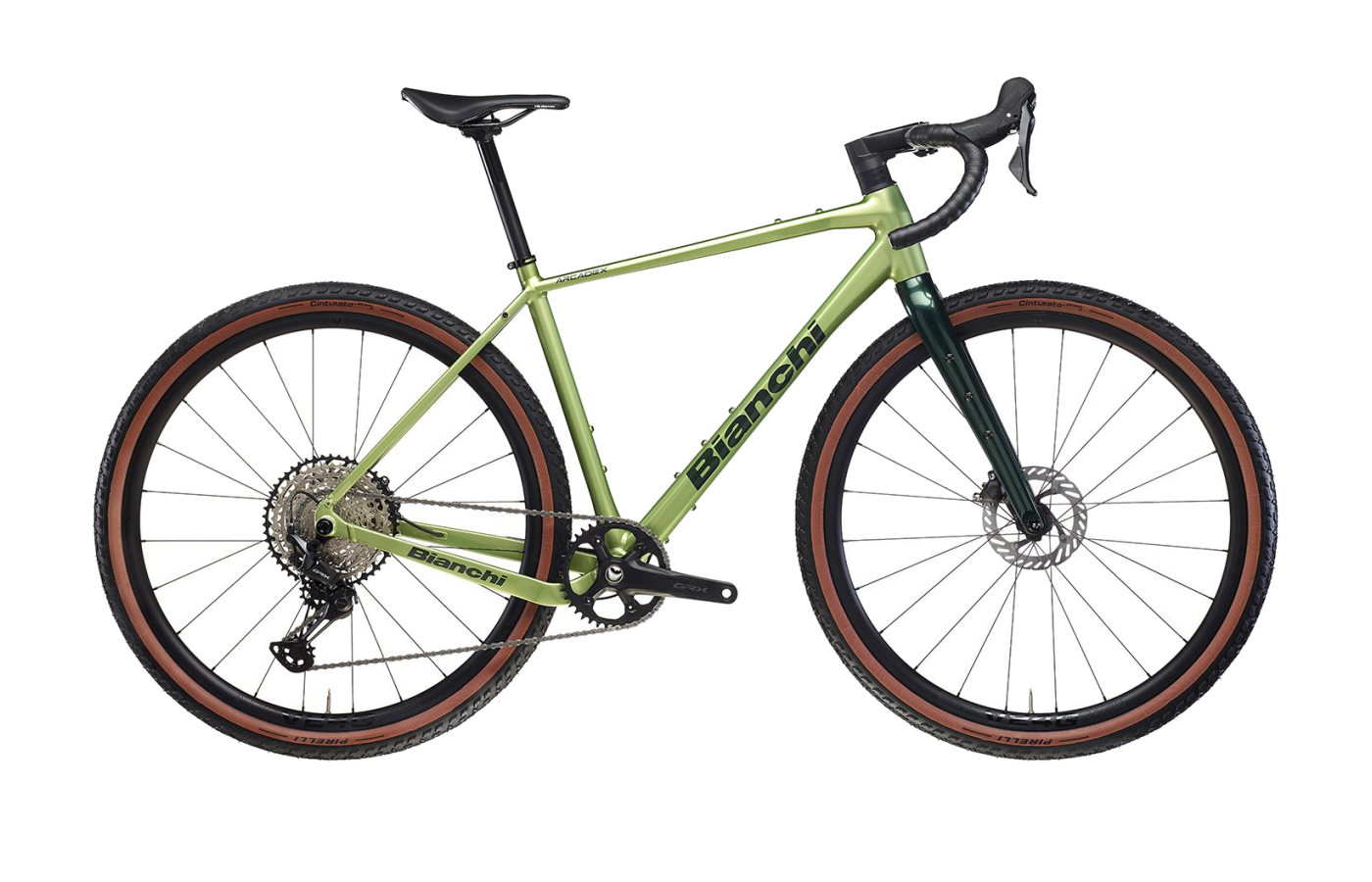
Bianchi Arcadex — the adventure-oriented sibling to the Impulso, with wider tire clearance, more mounts, and 650b compatibility. The pick if you want one Bianchi gravel bike for races and bikepacking, not just races.
Compare →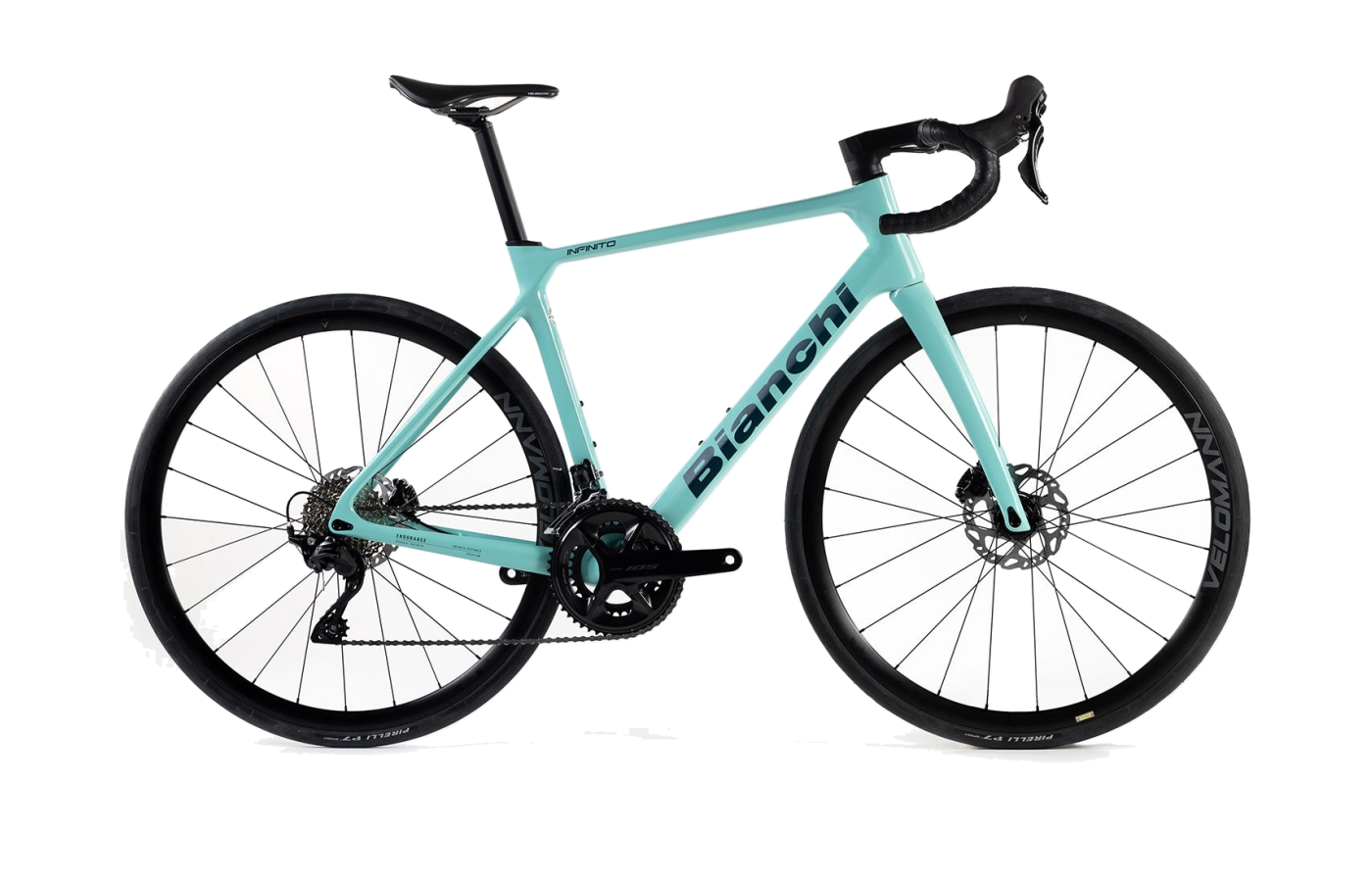
Infinito
Bianchi Infinito — the endurance road alternative to the Sprint. Less aggressive geometry, more compliance, and a more upright fit for riders who find the Sprint's 545 mm stack too low for long days.
Compare →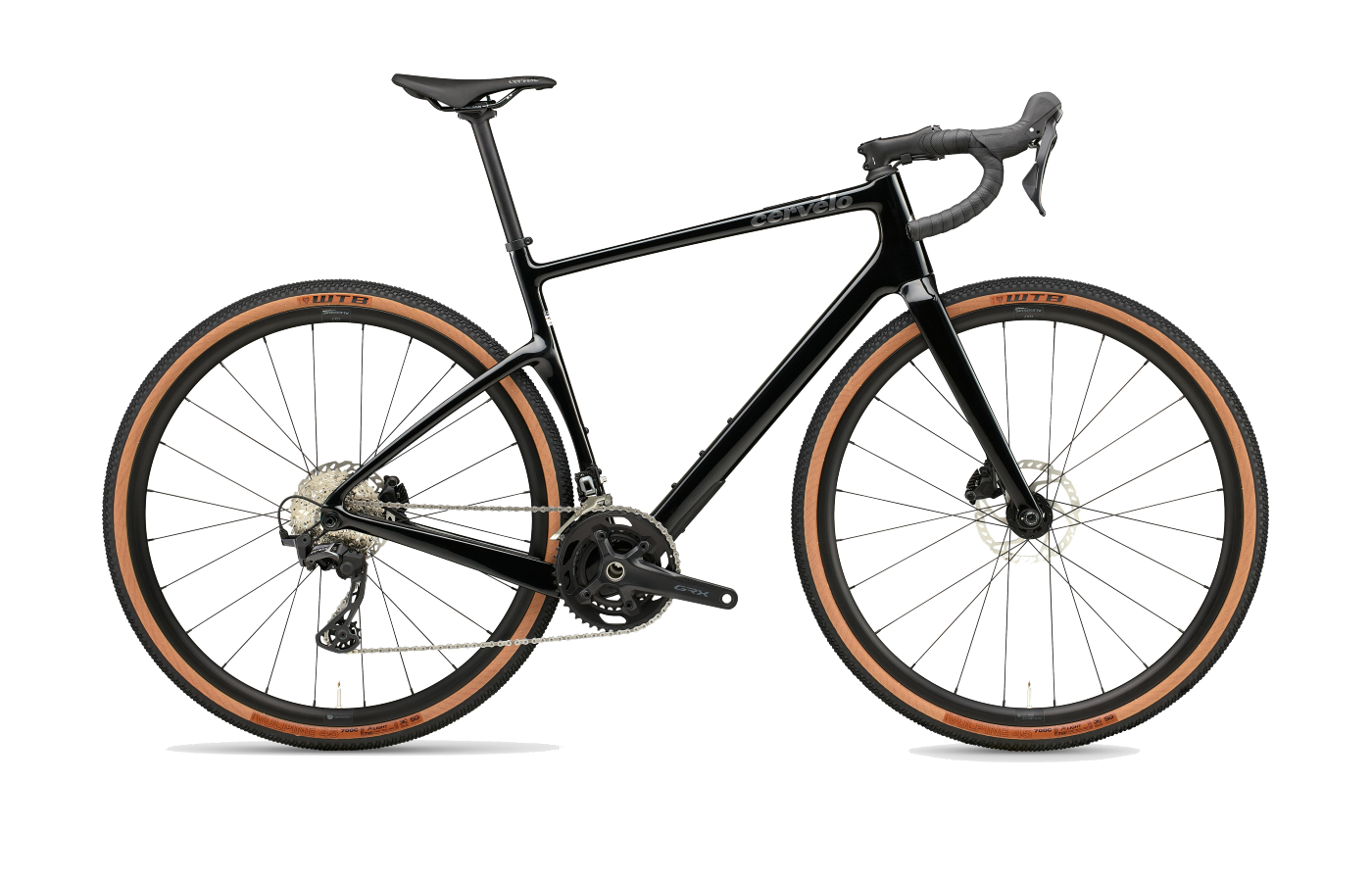
Aspero
Cervélo Aspero — a direct gravel-race rival to the Impulso, also focused on speed and stiffness over plush comfort. Worth comparing if you're set on the gravel-race category and want a non-Bianchi take.
Compare →