Oltre
vsSpecialissima
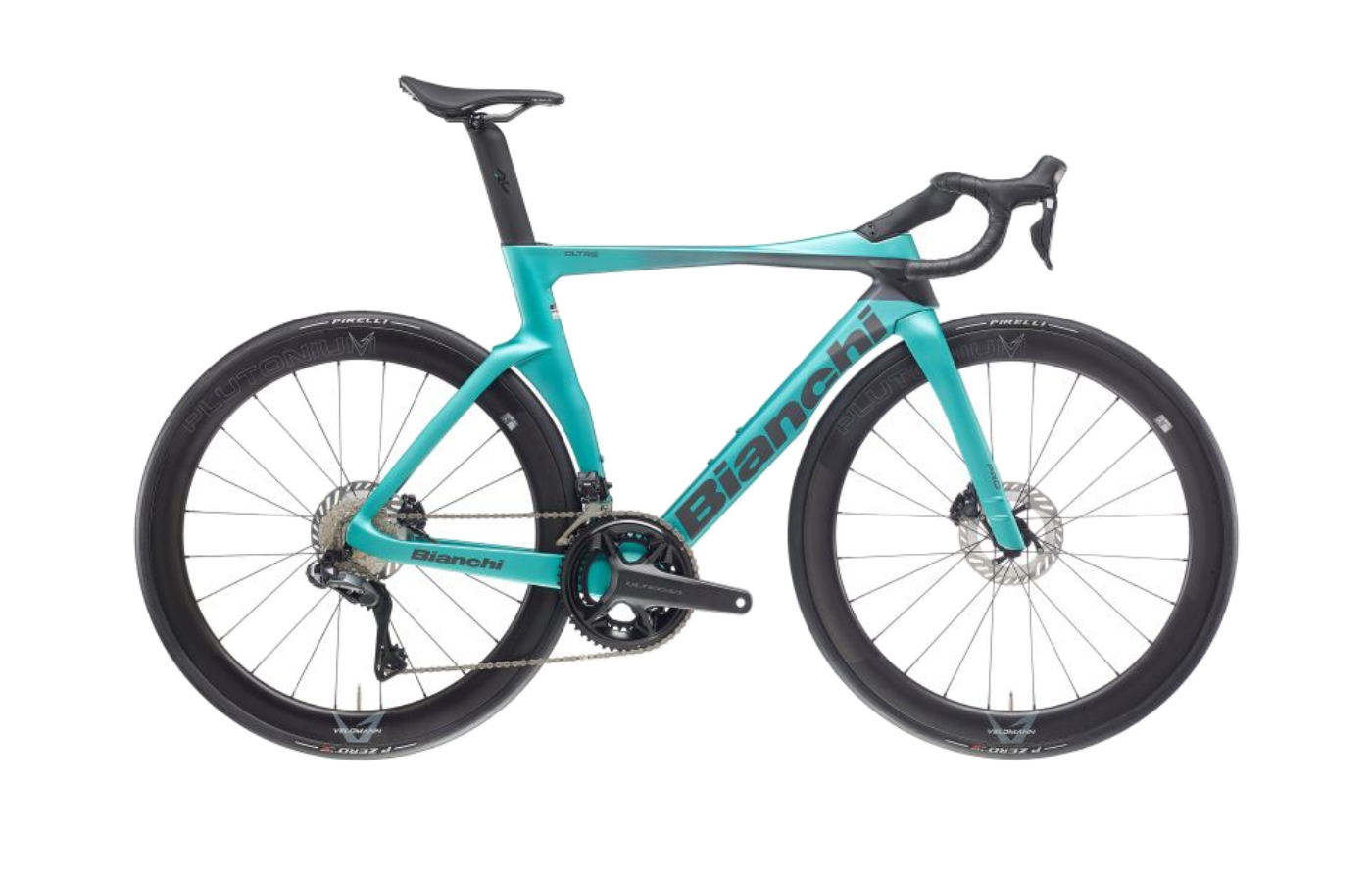
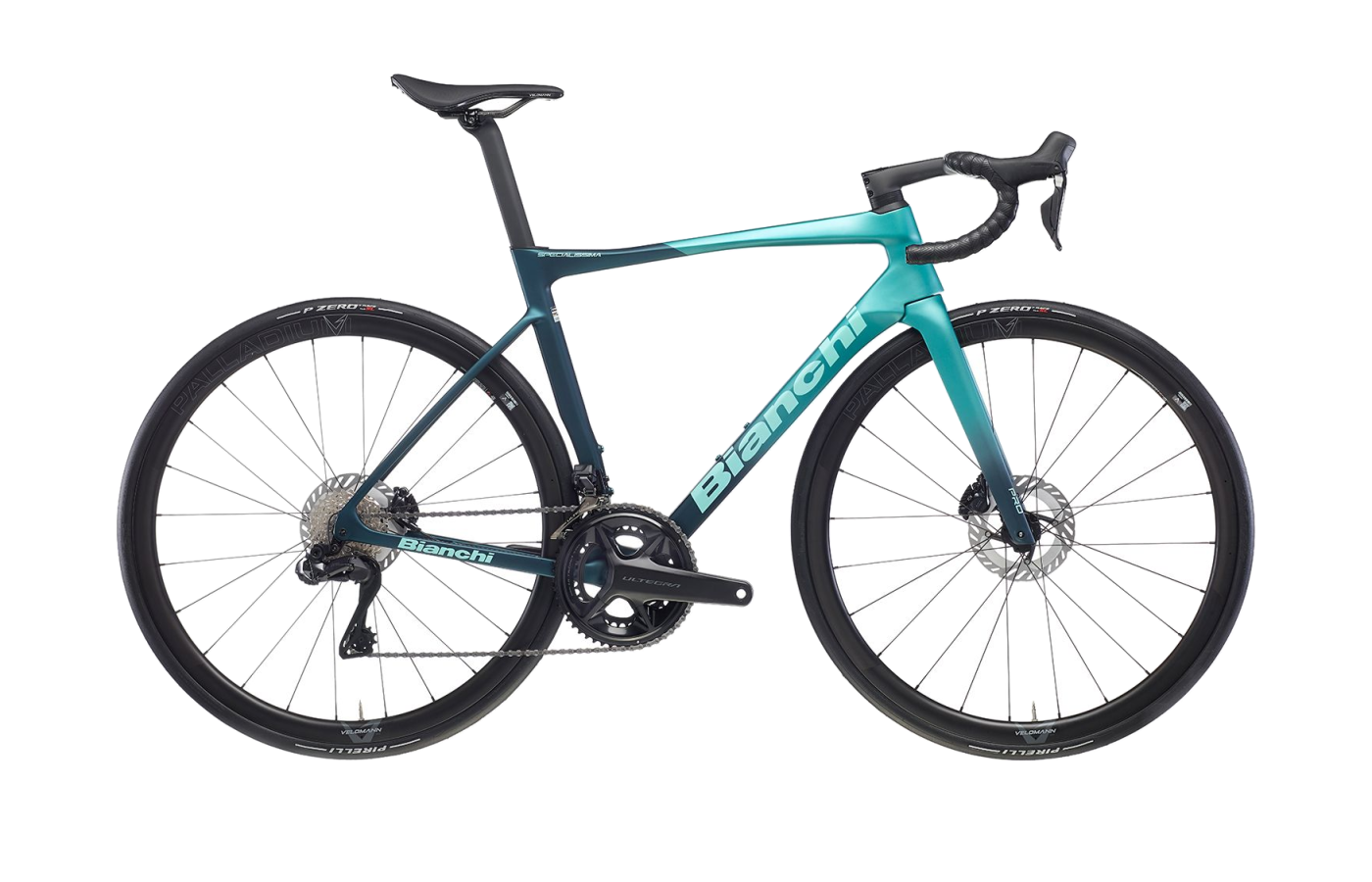
Two Celeste race bikes, two different fights.
The Oltre is Bianchi's wind-slicing hyperbike. The Specialissima is the lightweight all-rounder that leans into the climbs.
Oltre
- Holds momentum on the flats — reviewers describe it 'slicing through the wind' and needing to ease off in bunch rides.
- Stiff rear triangle — 'top-shelf' power transfer with no noticeable flex, in or out of the saddle.
- Countervail damping on Pro builds takes the edge off road buzz without softening the race character.
- Heavier — measured 8.0–8.3 kg for a mid-tier size 55/59 build, noticeable on long climbs.
- Aggressive front end — stack is 'extremely low' for size; a professional fit is strongly recommended.
Specialissima
- Genuinely light — RC builds hit 6.56 kg; the Pro Ultegra build weighs 7.27 kg, lighter than any Oltre build.
- Faster uphill above ~4% gradient by Bianchi's own measurements vs the Oltre — the climber's pick of the two.
- Stable, composed descender — 988 mm wheelbase and predictable steering, with no 'nervous' twitchiness.
- Shallow 33 mm stock wheels give up flat-land speed — reviewers suggest deeper hoops as an upgrade.
- Stock 26 mm P Zero TT tires are a consensus weak point; plan on swapping to 28–32 mm tubeless.
Editor’s analysis
Same brand, same Countervail trick, same Celeste — but one is built for the flat-crit finish, the other for the road up the mountain.
The Oltre is Bianchi's aero statement: radical tube shaping, head-tube air deflectors (UCI-illegal and kept on for the rest of us), and a 'long-and-low' front end that reviewers call 'extremely low' for its size. It's not light — mid-tier builds land around 8.0–8.3 kg measured — but it holds momentum, and reviewers describe it 'slicing through the wind' and begging to be 'ridden hard and fast.' Bianchi claims a 17-watt saving at 50 kph over the previous XR4.
The Specialissima is the lighter, more versatile sibling. RC builds come in at a UCI-illegal 6.56 kg; the Pro model lands closer to 7.27 kg with Ultegra Di2 but keeps the Countervail damping layer the Oltre Pro also uses. Reviewers repeatedly use the word 'agile' on climbs and credit it with 'gliding up hills' while still holding aero-bike speed on the flats — Bianchi's own numbers say it overtakes the Oltre on gradients above roughly 4%.
Geometry tells you which one is actually more aggressive. At the fit-picked sizes, both Bianchi Oltre (570) and Bianchi Specialissima (550) land at 536 mm stack — but the Oltre gets there with 402 mm of reach, the Specialissima with 391 mm. The Oltre is the longer, flatter missile; the Specialissima keeps a tighter cockpit and a 2.4 mm-tighter wheelbase (988 mm vs 996 mm). Head-tube angles sit 73.0 vs 72.5, which is half a degree of extra twitch on the Oltre.
The honest summary: if your riding is flat, fast, and full of surges, the Bianchi Oltre is the bike. If you live near mountains, ride five-hour days, or just want something under 7.3 kg that still looks like it escaped from a race paddock, the Bianchi Specialissima is the smarter buy — and it's usually cheaper at matched spec.
Where the builds differ.
Comparing our editor's-pick builds side-by-side. Winners highlighted row-by-row — lower price and weight, and the better-spec component, each mark a point.
Build variants & pricing
Both platforms run three trims — Comp, Pro, RC — in the $6.1k–$25.6k range. The editor's pick on each side is the Pro Ultegra Di2 build, where the frames get Countervail damping at the best price-to-performance ratio.
Prices are current US MSRP; Bianchi pricing shifts with EU FX and dealer import. Both Pro Ultegra builds cost within $150 of each other and both ship with Velomann house-brand wheels — the 50 mm Plutonium on the Oltre vs the 33 mm Palladium on the Specialissima is the aero-vs-climbing bet made visible.
How they fit, how they steer.
Fit-picked for a 5'8" rider: the Oltre in 570, the Specialissima in 550. Both land at 536 mm stack, but the Oltre runs 11 mm more reach (402 vs 391), a 0.5° steeper head tube, and an 8 mm longer wheelbase — the longer, more aero missile vs the tighter, more agile all-rounder.
Which size should I buy?
Size recommendations based on stack, reach, and effective top tube. Both lineups cover 47–59 cm, but the Oltre's lower stack at each size means it rides more aggressively than the Specialissima at the equivalent label.
→These are starting points. Flexibility, riding style, and preferred position all shift the answer — if you’re between sizes, a professional fit beats a chart.
What the magazines said.
Published reviews from trusted cycling outlets. Click through for the full write-up.
Which one should you buy?
If you race the flats and hold a low tuck all day, get the Oltre. If you ride with gravity going up and want a bike that stays fast when it flattens out, get the Specialissima.
Oltre
If your riding is crits, breakaways, or long rolling days where speed comes from wattage and aero position, the Oltre is built around you. It's heavier and demands a more aggressive fit, but reviewers consistently describe it as an 'absolute rocket' once you're moving.
Specialissima
If you live near real climbs or want one bike that handles both a five-hour alpine day and a flat group ride, the Specialissima is the more useful Bianchi. Lighter, more composed, and — at Pro-tier spec — usually cheaper than the Oltre.
Questions buyers actually ask.
Short answers to the things we get emailed about most often.
01Which is faster on the flats?
The Bianchi Oltre, by design. Bianchi claims a 17-watt saving at 50 kph over the previous Oltre XR4 and publishes a 30% aero advantage in variable winds. The 50 mm Plutonium wheels on the Pro build reinforce that — they're deeper than the 33 mm hoops on the equivalent Specialissima.
The Specialissima is not slow on the flats — Bianchi calls it 'aero-optimized' and cites a 31-second gain over the prior model on a 10 km flat at 200 W — but it's the slower of the two in pure drag terms. The Oltre's advantage shrinks below 35 kph and disappears at social-ride speeds.
02Which climbs better?
The Bianchi Specialissima, clearly. The RC builds are measured at 6.56 kg; the Pro Ultegra Di2 lands around 7.27 kg. The Oltre's comparable mid-tier builds measure 8.0–8.3 kg — roughly 700–1,000 g heavier, depending on trim.
Bianchi's own data says the Specialissima becomes faster than the Oltre on gradients above roughly 4% for a 250 W rider. Reviewers back this up, calling it 'agile and snappy' on climbs and comparing its uphill feel to dedicated climbing bikes.
03What's the tire clearance?
Both frames officially clear 32 mm tires. Both ship with Pirelli P Zero variants at 28 mm on the mid-tier builds; the Specialissima RC ships with 26 mm P Zero TT tires that most reviewers recommend swapping immediately for wider (28–32 mm) tubeless rubber.
Neither is a gravel-capable bike — this is pure paved-road territory.
04Do both have Countervail (CV)?
The Pro builds on both platforms have Countervail. The Comp models do not, and — counterintuitively — neither do the flagship RC frames on the Oltre. Bianchi reserves CV for the Pro layer of the lineup on the Oltre specifically.
On the Specialissima, the Pro frame adds CV on top of the high-modulus carbon layup, at a ~40 g weight penalty vs the RC. Reviewers describe CV as turning vibrations into 'thuds that die off immediately' — it's damping, not suspension, and it doesn't soften the fundamentally firm ride.
05How aggressive is the fit?
Both are 'long and low' race bikes, but the Oltre is the more extreme of the two. In the fit-picked sizes for a 5'8" rider — 570 Oltre, 550 Specialissima — stack is identical at 536 mm, but the Oltre runs 11 mm more reach (402 vs 391 mm) and a 0.5° steeper head tube.
The integrated aero cockpit on both sides has limited configurations. Multiple reviewers recommend a professional bike fit before buying either, especially the Oltre.
06Which is easier to live with day-to-day?
The Specialissima. It's lighter, more composed at lower speeds, and the 33 mm wheels are easier to manage in crosswinds than the Oltre's 50 mm hoops. Reviewers consistently note the Oltre 'rewards effort and punishes laziness' — it's designed to be ridden hard.
That said, both use integrated cockpits with fully internal routing, so hose or cable work is a shop job on either frame.
07Is there a big price difference at matched spec?
No — at Ultegra Di2 Pro trim they're within $150 of each other: $8,850 for the Oltre Pro Ultegra Di2 vs $8,699 for the Specialissima Pro Ultegra Di2. The Comp Ultegra Di2 builds are similarly close at $6,100 vs $6,500.
At the flagship RC level the numbers diverge more based on drivetrain and wheelset, but in the Comp and Pro tiers these are functionally the same price — pick by mission, not by dollars.
08What about resale and warranty?
Both frames carry Bianchi's lifetime frame warranty to the original owner. One Velo reviewer flagged that Bianchi's US service network is small and that replacement for proprietary small parts (bolt covers, seatpost gaskets) can take months — worth knowing before you buy from a shop far from a Bianchi dealer.
Resale on Celeste Bianchis tends to hold reasonably well due to the brand's heritage, but the Oltre's polarizing aesthetic and the Specialissima's modern angular look mean buyer taste matters more than with a Tarmac or SuperSix.
Similar bikes
If your priorities don’t map cleanly onto either of these, one of these adjacent bikes probably fits better.
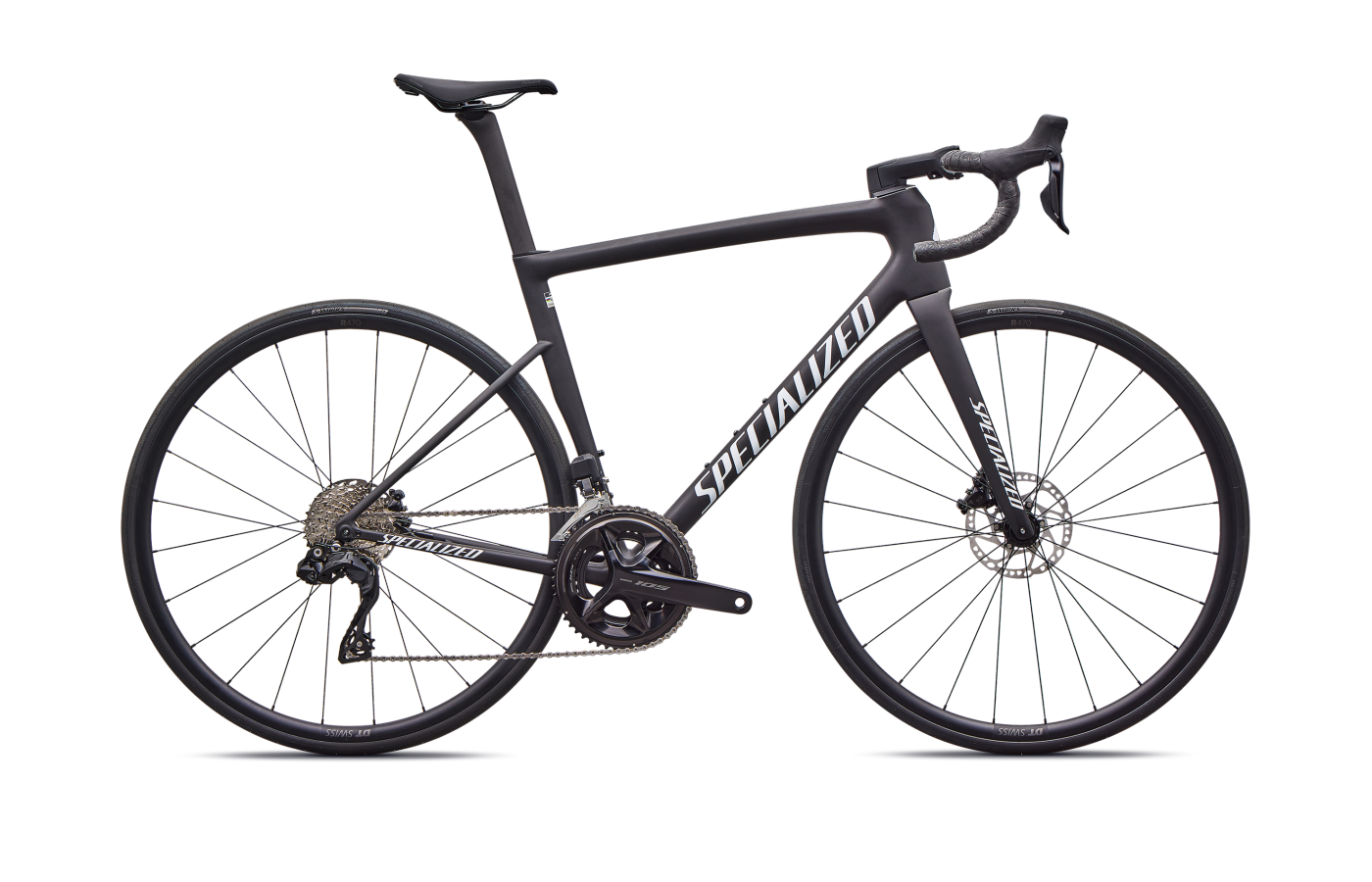
Tarmac
The Specialissima's most direct rival — same aero-meets-light pitch, same sub-7 kg target at flagship trim, but with a slightly taller stack that suits more riders without a professional fit.
Compare →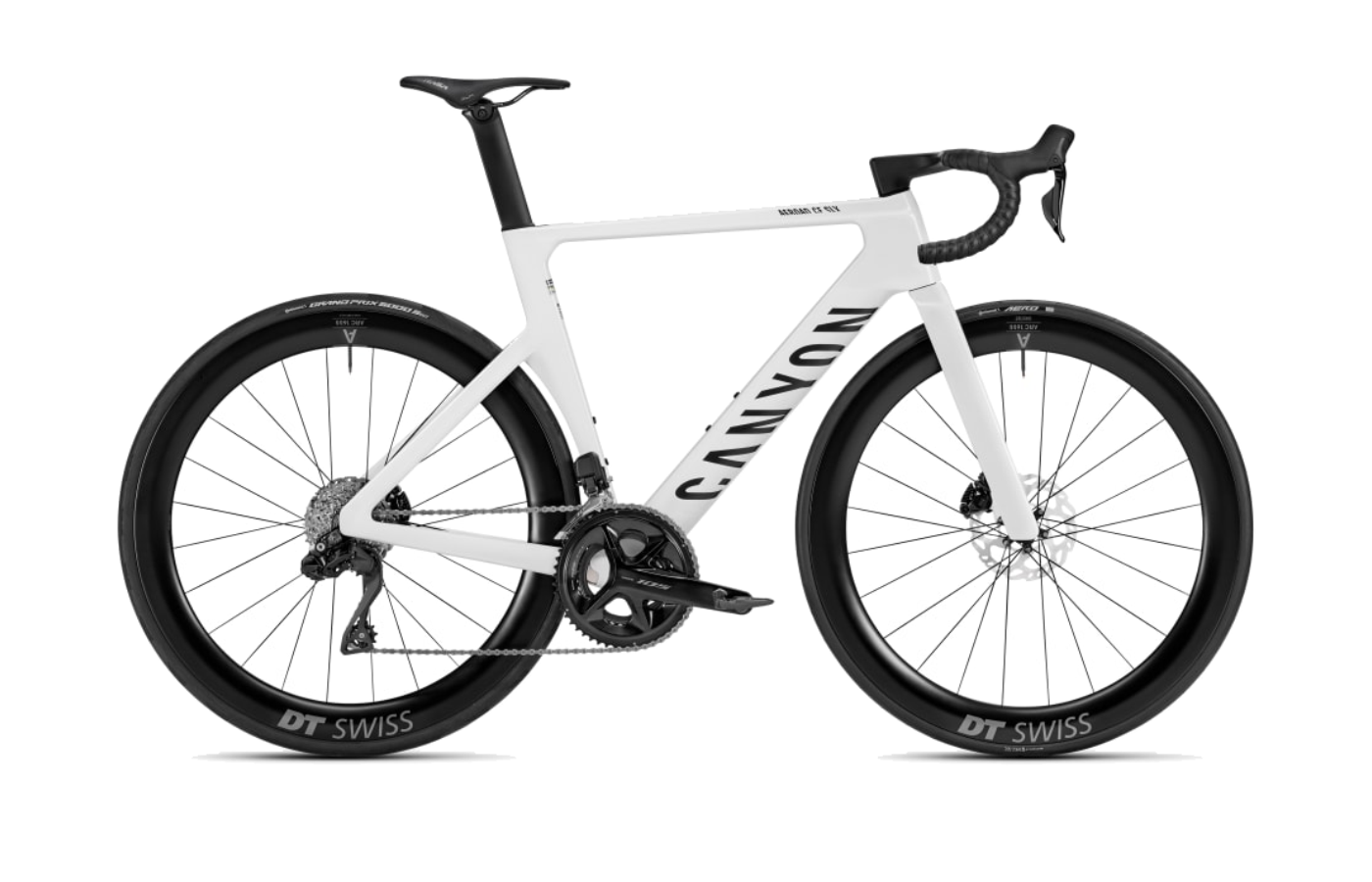
Aeroad
If the Oltre's aero agenda appeals but the price doesn't, the Aeroad delivers similar deep-tube drag numbers at roughly 30% less money. Direct-to-consumer only — no dealer, no demos.
Compare →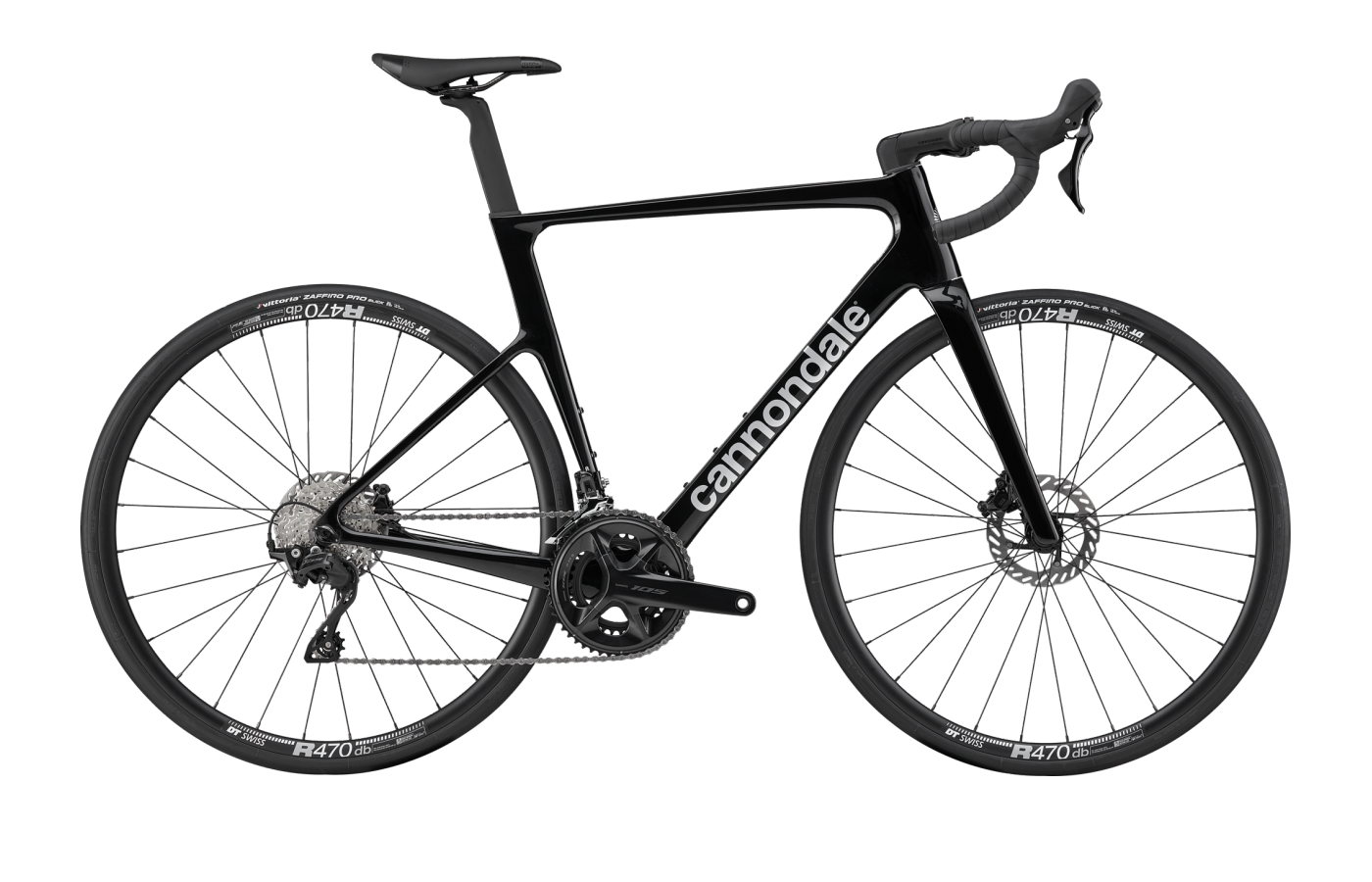
SuperSix EVO
A more refined, less polarizing alternative to the Specialissima — lighter than most aero bikes, more aero than most climbers, with handling that feels intuitive from the first corner.
Compare →