Sprint
vsGarda
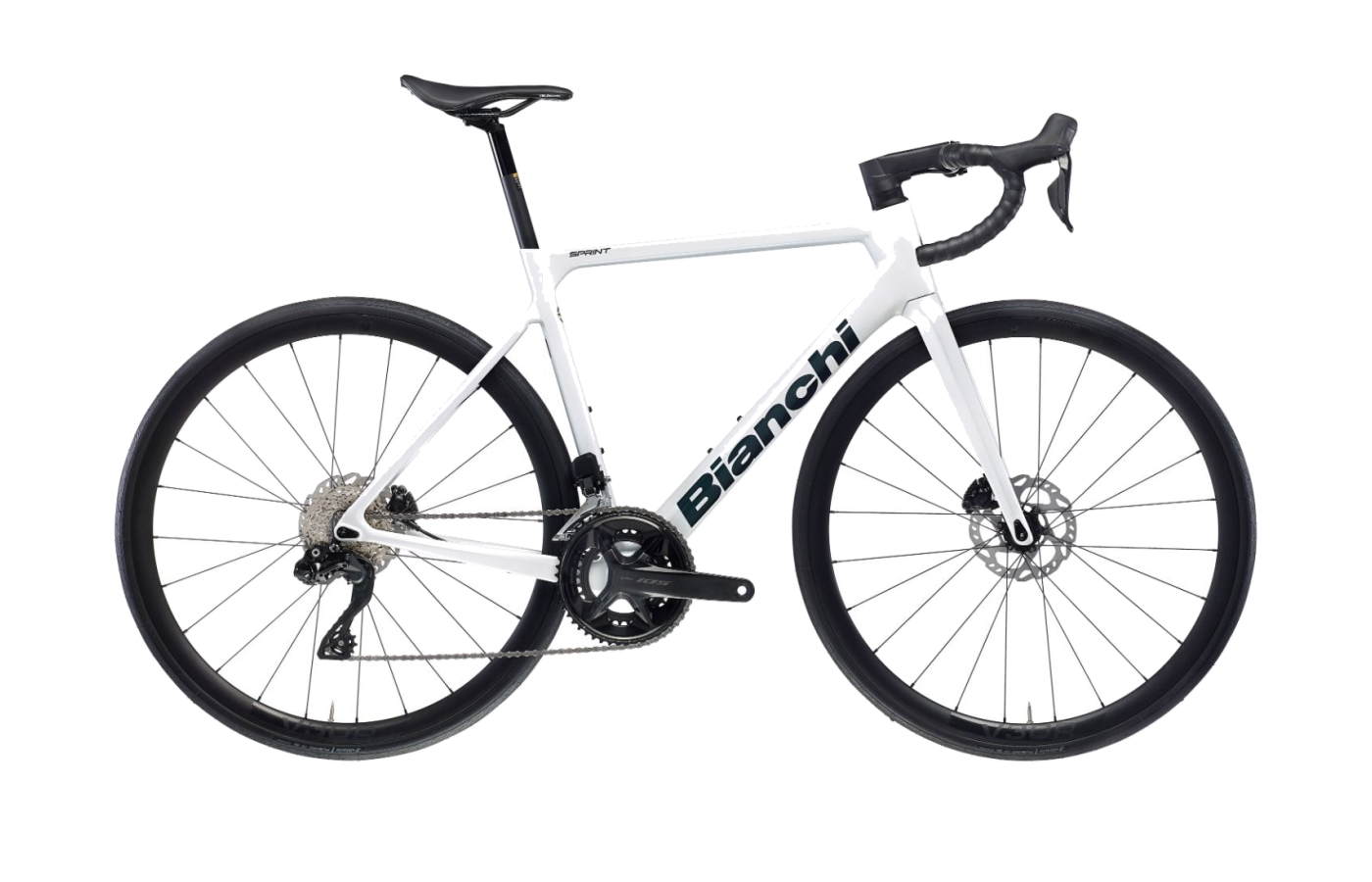
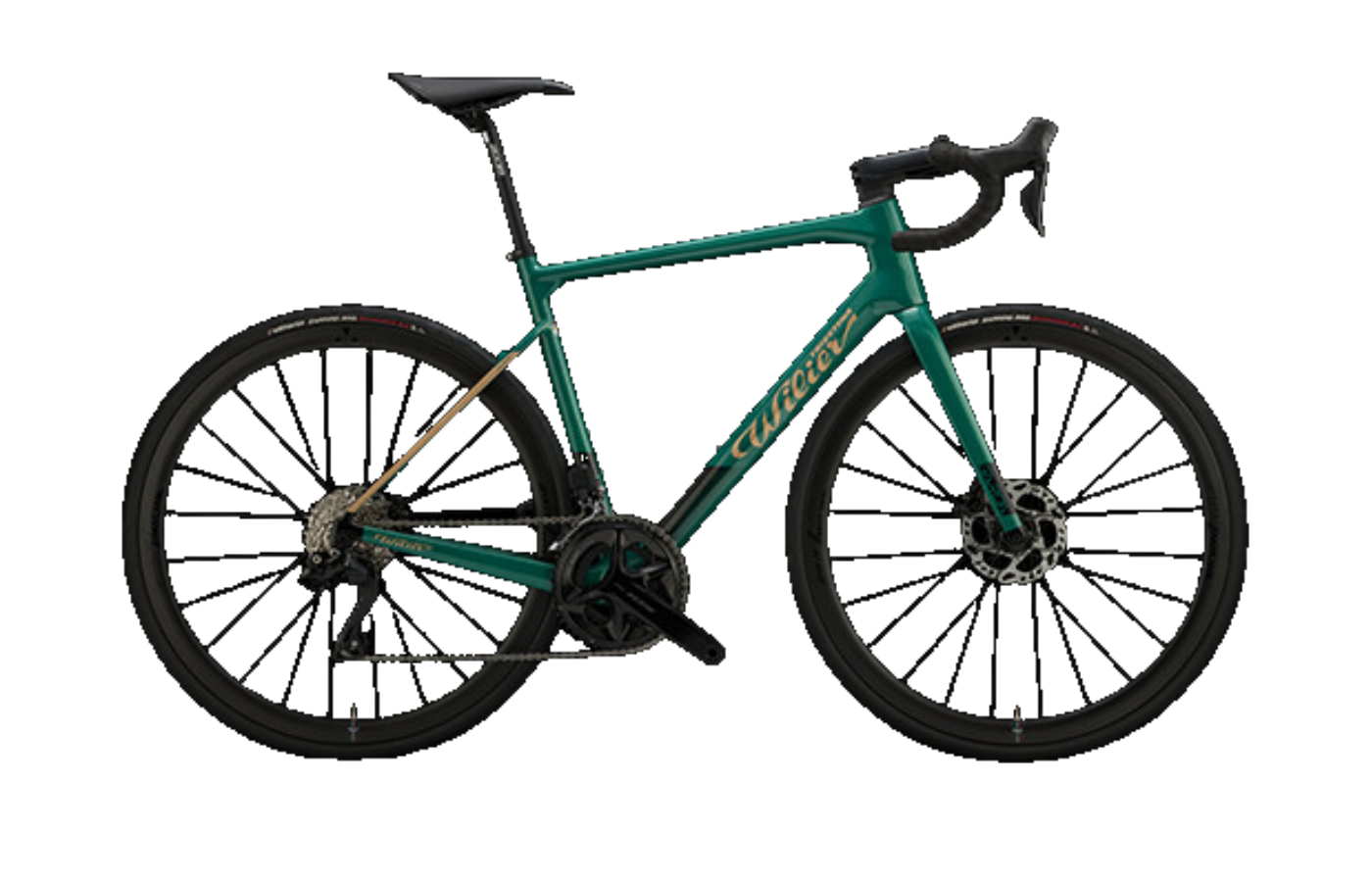
Two Italian road bikes, two takes on "fast."
The Bianchi Sprint is a stripped-down race frame at an entry-level price. The Wilier Garda is a racy endurance bike with superbike styling and a Wilier badge tax.
Sprint
- Cheapest way into a modern race frame — $3,000 mechanical 105, $3,650 for 105 Di2.
- Stiff, reactive "power box" front end — zero flex at the head tube under hard efforts.
- Full 105 group, not the usual mixed spec — no downgraded crank or cassette to pad the margin.
- Heavy 2 kg alloy stock wheels cap the frame's potential until you upgrade.
- No higher-tier builds — if you want Ultegra, Force AXS, or carbon cockpit, you're buying a different bike.
Garda
- 32 mm tire clearance on a racy frame — wider rubber for rough pavement without moving to gravel.
- Composed, stable handling on bad roads — flattened seatstays and a balanced front end soak up chatter.
- Filante-inspired integrated cockpit — clean superbike aesthetic uncommon at this price.
- Basic alloy seatpost and middling Zaffiro tires "dull the ride" at a price that should be pricier-feeling.
- You're paying a noticeable Italian-brand premium over spec-for-the-penny rivals like Canyon.
Editor’s analysis
Same country, same tire clearance, almost the same price — but one bike is built to sprint and the other is built to stay composed when the road turns rough.
On paper these are both mid-range Italian carbon road bikes with 32 mm of tire clearance and a 105 Di2 top build within $50 of each other. That surface similarity hides two pretty different design briefs. The Bianchi Sprint is the baby sibling to the Oltre and Specialissima — a pared-down race frame with classic race angles. The Wilier Garda is the entry point into Wilier's endurance lineup, but it borrows the integrated cockpit and muscular tube shapes from the Filante SLR and tucks them into a geometry that's only modestly relaxed.
The Bianchi Sprint is the sharper, more direct bike. At size 550, it runs a 73-degree head tube, 388 mm reach, and 545 mm stack — unapologetic race geometry. Reviewers describe the "power box" front end as flex-free even under out-of-the-saddle efforts, and the chassis "wants to hold its speed like there's no tomorrow." The catch is the stock rolling kit: 2 kg Velomann alloy wheels on 25 mm Vittoria Rubinos that every review flags as the first upgrade. The frame has more in it than the parts let through.
The Wilier Garda is the more composed, more expensive bike. The size M geometry is 3 mm taller in stack and 5 mm shorter in reach than the Sprint, with a 72.15-degree head tube — not exactly "endurance upright," but enough to take the edge off. Dropped, flattened seatstays are engineered for vertical compliance, and testers describe the handling as "swift yet stable" even on wet winter roads. The price-to-spec ratio is the recurring knock: alloy two-bolt seatpost, middling Vittoria Zaffiro tires, narrow 17 mm internal rims. The Wilier badge costs real money.
Put simply: the Bianchi Sprint is what you buy if you want Italian race DNA for $3,000 and plan to upgrade the wheels. The Wilier Garda is what you buy if you want Italian superbike looks, 32 mm tires for rough pavement, and can tolerate paying a premium for the frame and badge rather than the componentry.
Where the builds differ.
Comparing our editor's-pick builds side-by-side. Winners highlighted row-by-row — lower price and weight, and the better-spec component, each mark a point.
Build variants & pricing
Bianchi offers two Sprint builds, both on 105 — a mechanical floor and a Di2 ceiling. Wilier spans six Garda builds from mechanical 105 up to 105 Di2 with carbon wheels.
Prices are current US MSRP. The Sprint has no Ultegra or SRAM option at all — if you want anything above 105 Di2, you're moving up to the Oltre. The Garda offers SRAM Rival AXS as a sideways swap if you prefer AXS ergonomics.
How they fit, how they steer.
Compared at Bianchi 550 and Wilier M — the fit-picked size on each for a 5'8" rider. The Garda sits 3 mm taller in stack and 5 mm shorter in reach, with a 0.85-degree slacker head tube — a measurably less aggressive front end.
Which size should I buy?
Size recommendations based on stack, reach, and effective top tube. The Sprint runs seven numeric sizes (470–610) while the Garda uses six letter sizes (XS–XXL); ranges overlap through the middle.
→These are starting points. Flexibility, riding style, and preferred position all shift the answer — if you’re between sizes, a professional fit beats a chart.
What the magazines said.
Published reviews from trusted cycling outlets. Click through for the full write-up.
Which one should you buy?
If you want Italian race heritage on a budget and will upgrade wheels later, get the Sprint. If you want superbike looks with 32 mm clearance for rougher roads, get the Garda.
Sprint
If your weekend is group rides, Strava segments, and the occasional local crit, the Sprint's race geometry and flex-free front end deliver the directness you want. Expect to earmark a wheel upgrade down the road — the frame has more than the stock Velomanns can show.
Garda
If you ride long days on mixed-quality pavement and want a bike that stays composed when the road gets greasy, the Garda's combination of 32 mm clearance, compliant rear end, and integrated cockpit is hard to match at this price. Just plan on a tire and seatpost swap to match the frame.
Questions buyers actually ask.
Short answers to the things we get emailed about most often.
01Which is the better value at ~$3,600?
The Bianchi Sprint 105 Di2 at $3,650 gets you a complete 105 Di2 group on a race frame with no drivetrain downgrades. The Wilier Garda 105 Di2 with Miche SWR EVO 40 carbon wheels at $3,600 gets you the same groupset but with a real carbon wheelset and an integrated cockpit.
Spec-for-the-dollar, the Garda wins — carbon wheels alone justify the price parity. If you care about race geometry and plan to upgrade wheels anyway, the Sprint's frame is the better long-term platform.
02What's the maximum tire clearance on each?
Both frames list 32 mm official clearance — identical on paper.
In practice the Garda is the more versatile of the two thanks to its endurance-leaning geometry and dropped seatstays. The Sprint's tighter rear triangle means 32 mm is closer to a genuine ceiling. Neither is a gravel bike; for anything rougher than chip-seal, look at a proper endurance or all-road frame.
03Which one climbs better?
Neither is a dedicated climber — both run Shimano 105 12-speed with a 50/34 chainset and 11-34 cassette, which reviewers confirm is enough for Alpine gradients.
The Sprint feels livelier on climbs thanks to its stiffer, more reactive front end and race geometry that encourages out-of-the-saddle efforts. The Garda is reportedly 8.87 kg in a size Large (per BikeRadar's review) — somewhat heavy for a dedicated climber. Pure pitch performance goes to the Sprint.
04How aggressive is the Wilier Garda's "endurance" geometry really?
Less than you'd expect from the "endurance" label. At size M the Garda runs a 548 mm stack and 383 mm reach — only 3 mm taller and 5 mm shorter than the Sprint at size 550. Multiple reviewers flag that it sits "at the racier end of the endurance spectrum."
If you're looking for a genuinely upright, all-day position, the Garda won't deliver it. For a truer Bianchi endurance fit, the Infinito is the better pick.
05Can I get either with SRAM or Ultegra?
Sprint: No. Both of the Sprint's builds are Shimano 105 — mechanical at $3,000, Di2 at $3,650. No SRAM and no Ultegra option exists in this generation. If you want Ultegra, you're moving up to the Oltre.
Garda: Yes on SRAM. The Garda is offered with SRAM Rival AXS (electronic, 46/33 crank, 10-36 cassette) at $2,800 (alloy wheels) or $3,200 (Miche SWR EVO 40 carbon). No Ultegra option here either — if you want Ultegra, you're moving up to Wilier's higher tiers.
06What should I plan to upgrade first on each?
Sprint: the wheels. Every review flags the 2 kg Velomann alloys as the single biggest thing holding the frame back. A set of lighter carbon wheels "makes the bike literally take off" per Robjchesters.
Garda: the tires and seatpost. The stock Vittoria Zaffiro 28c tires are described as "middling" and the basic two-bolt alloy seatpost is noted to "dull the ride." Swapping to Vittoria Corsas and a carbon post is the fast path to unlocking the compliance the frame is engineered for.
07Are the integrated cockpits a pain to service?
Both frames run internal cable routing through the headset, so yes — adjusting stem length or bar width means a partial disassembly at a shop.
The Sprint uses full ICR (internal cable routing) new for the 2024 model. Clean aesthetic, standard ICR serviceability concerns. The Garda routes cables through the Ritchey Stemma S2 stem into the headset — "very neat" per reviewers, same maintenance tradeoff. Neither offers the bolt-on clamshell convenience of pricier integrated cockpits.
08Which holds its resale value better?
Both brands depreciate fairly steeply in the mid-range carbon segment — neither has the "flagship halo" that props up used values on something like a Dura-Ace S-Works.
Bianchi has stronger brand recognition in the US second-hand market thanks to decades of Grand Tour presence. Wilier is more niche — smaller production runs can mean better held value on a clean example, but also thinner buyer pool. For either bike, buying one-season-old from a shop closeout is the most efficient way in.
Similar bikes
If your priorities don’t map cleanly onto either of these, one of these adjacent bikes probably fits better.
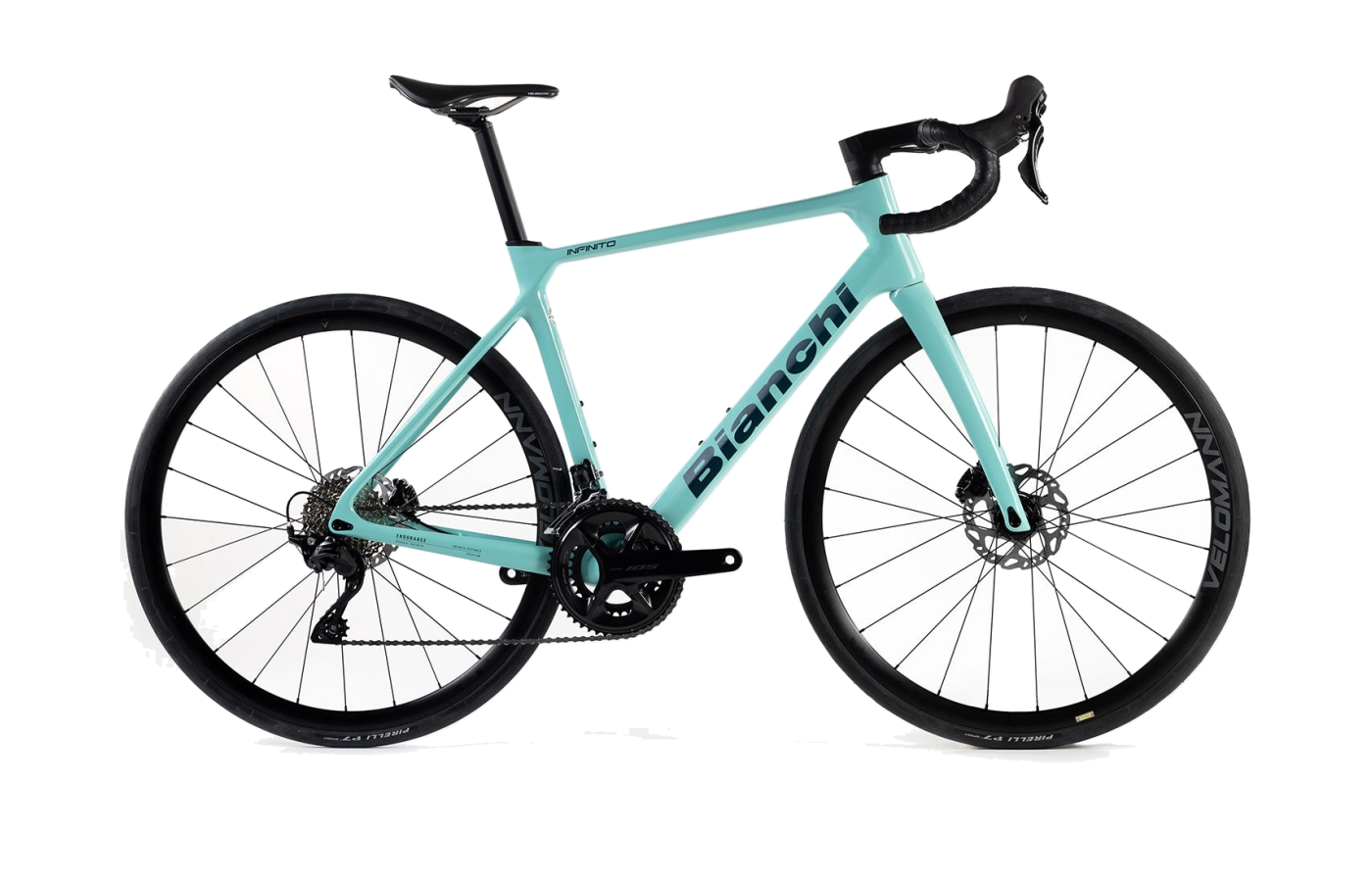
Infinito
If the Sprint's race angles are too low and the Garda's endurance label turns out to be a bluff, the Bianchi Infinito is the genuine all-day endurance fit in the Bianchi lineup. Taller stack, more compliant rear, same Celeste.
Compare →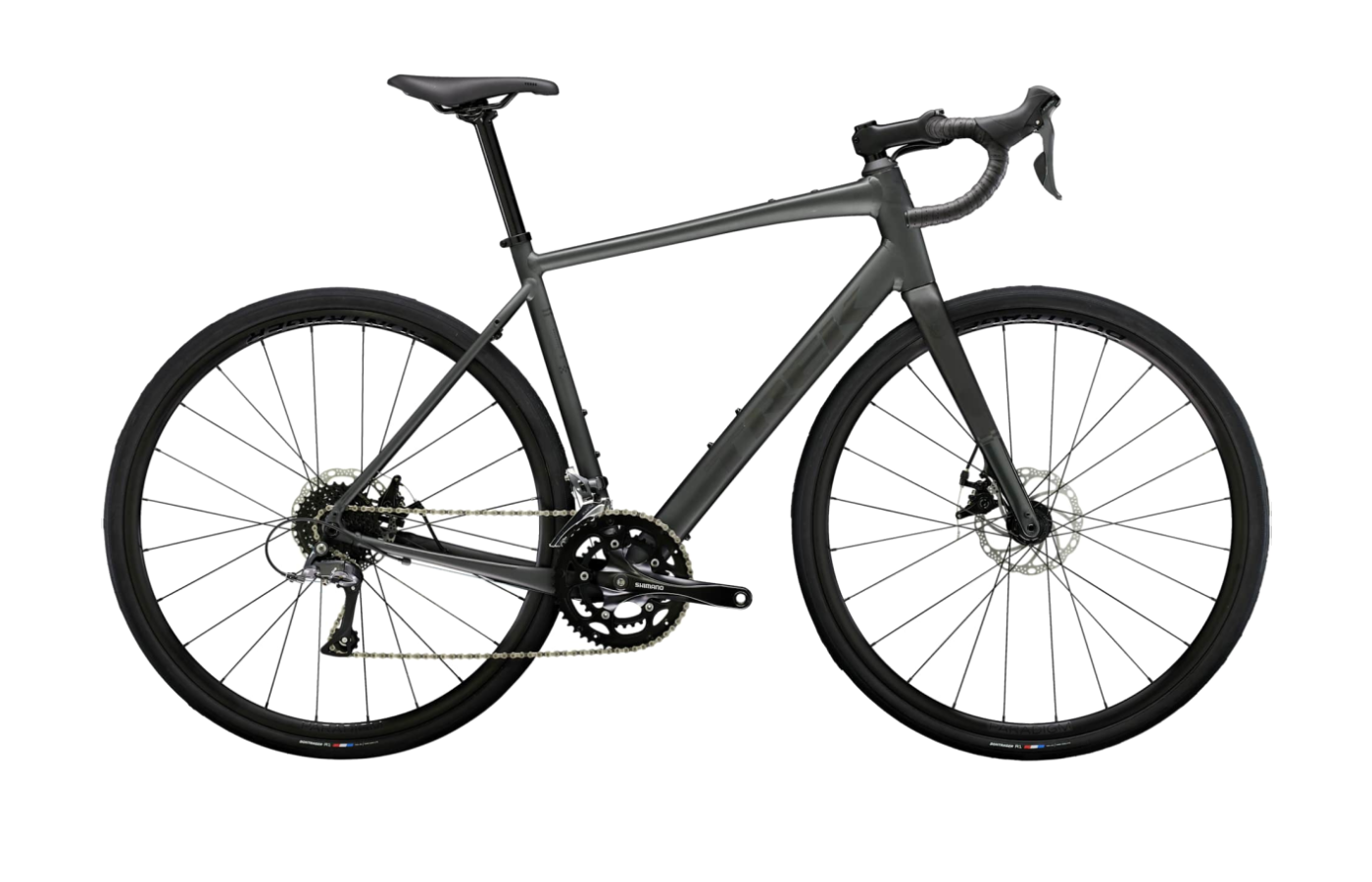
Domane
The Trek Domane goes further down the compliance road with IsoSpeed decoupling and internal storage. Pick it if you ride genuinely broken pavement and want a bike that swallows it rather than just tolerating it.
Compare →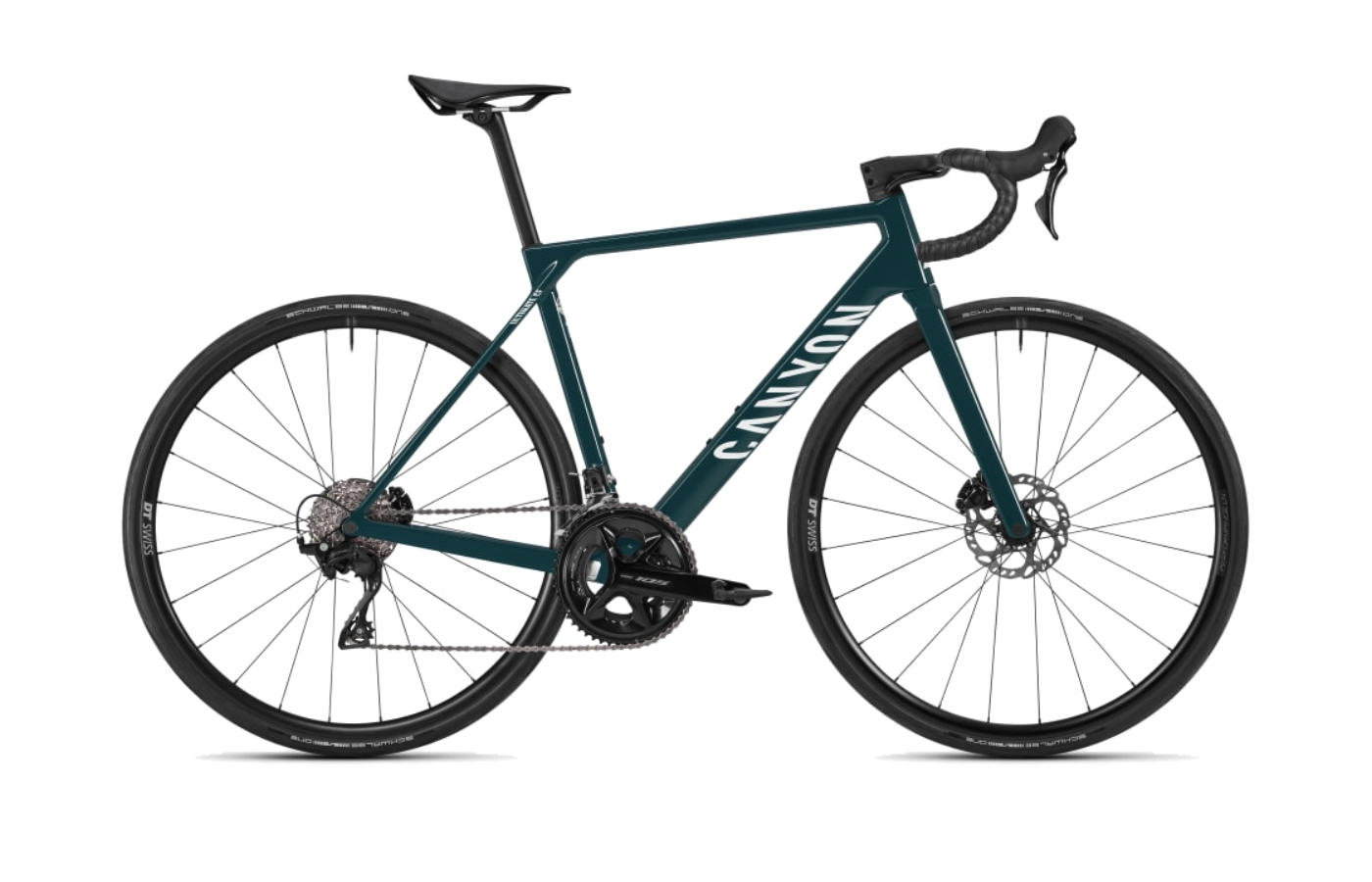
Ultimate
The Canyon Ultimate is the direct-to-consumer answer — similar racy-but-versatile positioning at a meaningfully better spec-for-the-dollar ratio. The catch is no local dealer and no pre-purchase demo.
Compare →