Fourstroke
vsEpic
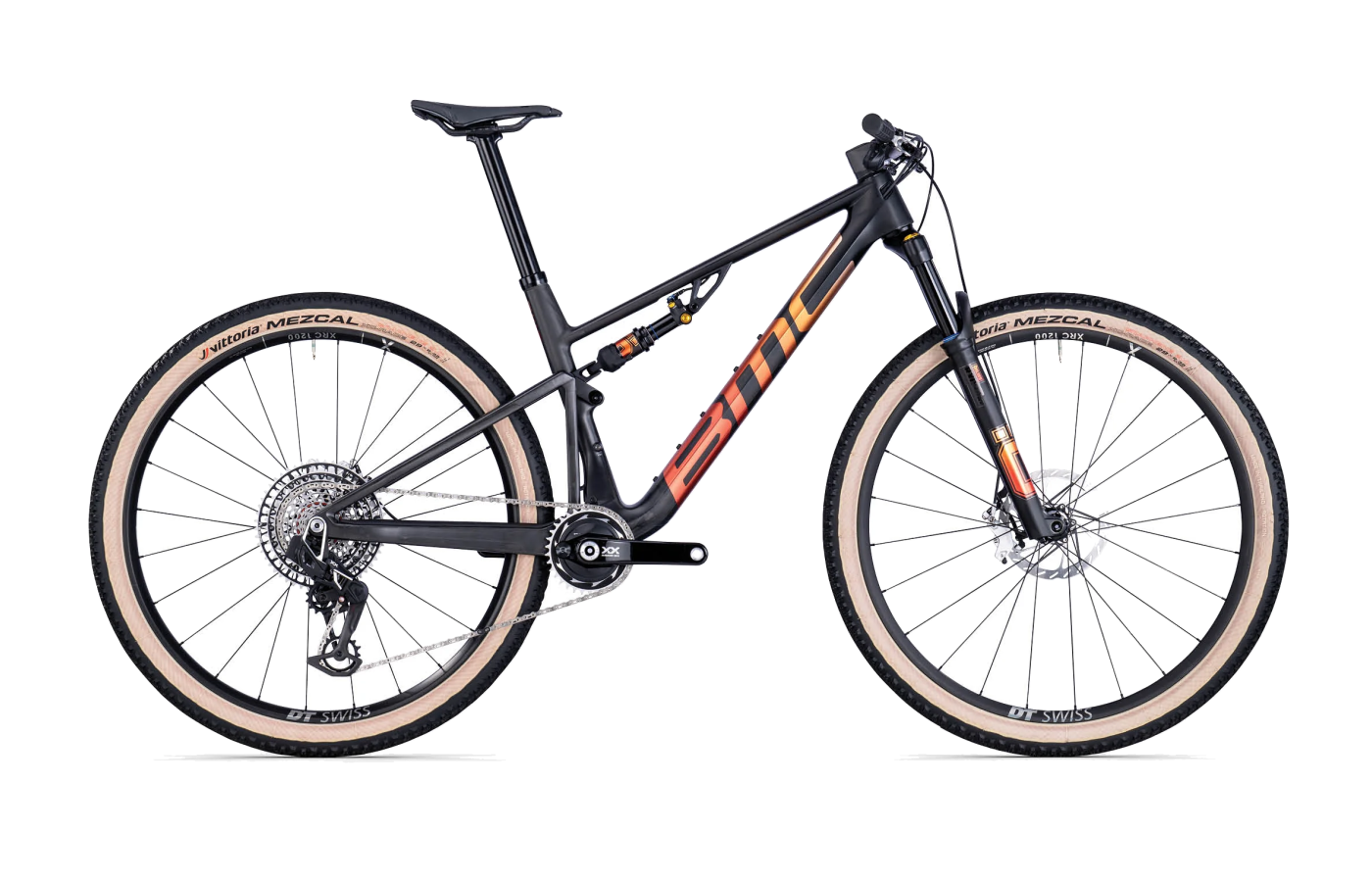
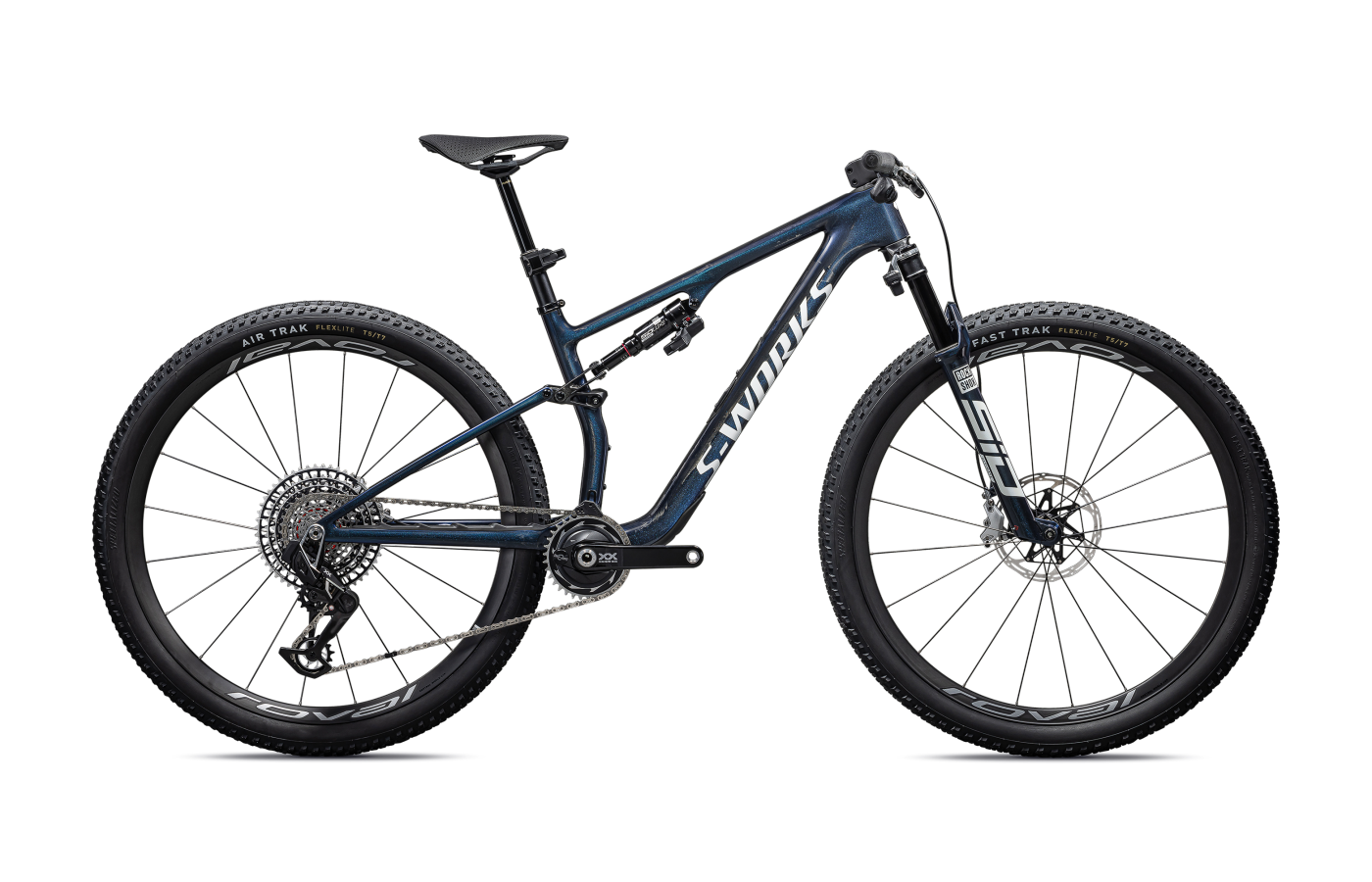
Two World Cup XC bikes, two suspension philosophies.
The BMC Fourstroke is a taut, remote-locked race weapon. The Specialized Epic 8 is the new 120mm benchmark that descends like a trail bike.
Fourstroke
- Wickedly efficient APS suspension — dual-link with anti-squat tuned for relentless climbing traction.
- Sharper steering — 66.5° HTA and 1,172 mm wheelbase make it more agile in tight, technical sections.
- Autodrop seatpost on the 01 series — drops without rider weight, saving seconds in a race.
- Only two builds in the US lineup — flagship XX SL or the $4,699 SLX 100 mm version, with no mid-tier in between.
- Stock 100 mm fork on the lower build is reportedly 'outridden by the frame' on aggressive descents.
Epic
- 'Magic Middle' shock tune — digressive damper holds firm pedaling, then pops open on impact. Reviewers love it.
- Trail-bike composure — slack 65.9° HTA, 1,179 mm wheelbase, and 120 mm travel descend like a short-travel trail rig.
- Eight builds from $4,499 to $14,999 — and the same custom shock tune runs across the whole range.
- S-Works hits $14,999 — among the most expensive non-motorized mountain bikes ever sold.
- Single-pivot flex-stay can 'hang' on square-edged hits compared to a multi-link layout.
Editor’s analysis
Both bikes have won at the top of the sport — but they get there from opposite directions. One asks you to manage the suspension. The other asks you to ride.
The BMC Fourstroke and Specialized Epic both sit at the pointy end of cross-country, both run 120 mm front and rear in their flagship trim, and both have podium pedigree — Pidcock's Olympic gold on a Fourstroke, Specialized's decade-plus of Epic World Cup wins. But the way each bike makes you fast is fundamentally different, and the choice between them comes down to how you want the suspension to behave under you.
The BMC Fourstroke is the older-school race answer, modernized. Its dual-link APS suspension is described by reviewers as 'wickedly efficient,' anti-squat starts at 160% and tapers to 90% — it pedals firm and grips hard. To squeeze more out of it, you flip a remote lockout (DT Swiss on the R 01 ONE) and the bike turns into a hardtail on smooth ground. The flagship adds the Autodrop seatpost — a two-position dropper that drops without your weight, saving seconds in a race. It's a bike that rewards an active, attentive rider who likes a tool with switches.
The Specialized Epic 8 took a sledgehammer to that approach. Gone is the Brain inertia valve. In its place: a custom 'Magic Middle' shock tune that gives a firm pedaling platform but pops open instantly on impacts, plus a slacker 65.9° head angle, longer 1,179 mm wheelbase, and 4 mm longer chainstays. Specialized claims 20% less pedal bob than the previous Epic with 12% more bump absorption — and on the S-Works, Flight Attendant electronically manages the damping for you. The Epic 8 is the bike that thinks for you.
On geometry, the Fourstroke runs steeper (66.5° HTA), shorter (1,172 mm wheelbase), and slightly longer in reach (457 mm vs 450 mm at size M). It's the more 'race XC' shape — quicker, twitchier in tight low-speed terrain, demanding line choice. The Epic is the more 'downcountry' shape — calmer at speed, more composed in chunder, less work on long descents. Pick by what kind of XC you actually ride: World Cup-style technical race courses (Fourstroke), or a broader trail diet where descents matter as much as climbs (Epic 8).
Where the builds differ.
Comparing our editor's-pick builds side-by-side. Winners highlighted row-by-row — lower price and weight, and the better-spec component, each mark a point.
Build variants & pricing
BMC's US lineup is bookended — flagship or budget, with nothing in the middle. The Epic 8 spans eight builds across the same price range.
Prices are current US MSRP. The Fourstroke R 01 ONE ($13,499) is the only Premium Carbon BMC build in the US — the next step down is the 01 THREE ($4,699) on a different carbon layup, 100 mm travel, and SLX. We compared the flagships here because they're the closest apples-to-apples on materials and travel; if your budget caps below $10k, the Epic 8 Expert ($7,199) is the more realistic comparison and arguably the value pick of the entire segment.
How they fit, how they steer.
Both at size M. The Fourstroke is 7 mm longer in reach (457 vs 450), 6 mm lower in stack (592 vs 598), 0.6° steeper at the head tube (66.5° vs 65.9°), and 4 mm shorter at the chainstay (431 vs 435). It's the sharper, racier shape; the Epic sits taller and more stable.
Which size should I buy?
Both bikes offer S/M/L/XL; the Epic also adds an XS. Reach values overlap closely through M and L.
→These are starting points. Flexibility, riding style, and preferred position all shift the answer — if you’re between sizes, a professional fit beats a chart.
What the magazines said.
Published reviews from trusted cycling outlets. Click through for the full write-up.
Which one should you buy?
If you race XC and want a sharp, lockout-managed weapon, get the Fourstroke. If you want one fast bike that climbs like an XC racer and descends like a trail bike, get the Epic 8.
Fourstroke
If you race or train on World Cup-style courses, value firm-pedaling efficiency above all, and don't mind reaching for a remote lockout — the Fourstroke is the sharper tool. The Autodrop is a real race feature, the APS suspension grips like glue under power, and the 66.5° head angle keeps the front end alive in tight, technical lines.
Epic
If your XC diet includes real descents — modern enduro-adjacent race courses or just a varied trail network — the Epic 8 is the more capable, more forgiving platform. The Magic Middle shock tune means less fiddling, the slacker geometry means more composure, and the build range from $4,499 up means you can buy in at almost any budget.
Questions buyers actually ask.
Short answers to the things we get emailed about most often.
01Which is more efficient on smooth climbs?
Slight edge to the BMC Fourstroke when both are unlocked, thanks to the dual-link APS suspension and aggressive 160%-down-to-90% anti-squat tune that reviewers describe as 'wickedly efficient.' On sustained smooth fire-road climbs, both bikes flatten out once you engage their respective lockouts — the Fourstroke's DT Swiss remote and the Epic's TwistLoc (or Flight Attendant on S-Works) both deliver a near-hardtail platform.
In the real world, the Epic 8's 'Magic Middle' setting closes most of the gap by giving you firm pedaling without having to think about it.
02Which descends better?
The Specialized Epic 8, by a clear margin. Its 65.9° head angle (low setting), 1,179 mm wheelbase, and 120 mm of travel paired with the Magic Middle tune make it ride like a short-travel trail bike — reviewers consistently use phrases like 'outrageously stable,' 'time-warps through terrain,' and 'featherweight trail bike.'
The Fourstroke R 01 ONE also runs 120 mm front and rear, but its steeper 66.5° HTA, shorter wheelbase, and shorter chainstays keep it in race-XC handling territory — quicker through tight turns but less composed at high descending speeds.
03Are the two bikes' flagship builds at the same component tier?
Yes. Both run SRAM's XX SL flagship MTB drivetrain — the BMC R 01 ONE has SRAM XX SL Eagle Transmission with the Pod controller; the S-Works Epic 8 has SRAM XX SL Eagle AXS with a Quarq XX SL power meter crankset. Both use top-tier carbon wheels (DT Swiss XRC 1200 on the BMC, Roval Control World Cup on the Epic) and integrated one-piece cockpits. The S-Works adds RockShox Flight Attendant — automatic electronic suspension control — which the BMC does not offer.
04What's the deal with BMC's Autodrop seatpost?
The Autodrop is a proprietary integrated dropper found on the Fourstroke 01 series. Unlike a normal dropper, it lowers itself without rider weight — push the lever twice and it sucks down on its own, saving the few seconds and watts of squatting before a descent. Reviewers consistently call it 'a revelation' for racing.
The trade-offs: it's a two-position post (all up or all down — no infinite adjustment), it needs regular air-pressure top-ups (one tester ended rides with an empty tank), and the proprietary oval seat tube limits aftermarket dropper options. The Epic 8 uses a standard dropper across the range.
05How do build options compare across the lineups?
Specialized offers eight Epic 8 builds in the US, from the $4,499 Comp (alloy wheels, mechanical SRAM S-1000 Transmission) up through the $7,199 Expert (Roval Control carbon wheels, GX or XT Di2), $10,999 Pro (X0 Transmission, Roval Control SL VI), and $14,999 S-Works (XX SL, Flight Attendant).
BMC offers only two Fourstroke builds in the US: the $13,499 R 01 ONE flagship and the $4,699 01 THREE — the latter on a different carbon layup, 100 mm travel front and rear, and Shimano SLX. There is no mid-tier ($6k–$10k) Fourstroke option in the US lineup.
06Which has a more comfortable long-ride position?
The Specialized Epic 8 sits 6 mm taller at stack (598 vs 592 at size M) and runs a more upright -12° integrated stem versus the BMC's -19°. Combined with the Epic's slightly slacker head angle and Specialized's 'Rider First Engineered' size-specific carbon layups (which they claim cut vibration transmission by 12%), it's the more relaxed, less aggressive cockpit.
The Fourstroke is the more stretched-out, race-bred position — more efficient for full-tilt XC efforts, less forgiving over a 4-hour marathon.
07What about tire clearance and wheels?
Both bikes ship with 29x2.35" tires as stock — Vittoria Mezcal on the BMC, Specialized Fast Trak/Air Trak on the Epic. Frame clearance is generous on both: roughly 62 mm on the Fourstroke and 59.7 mm on the Epic 8, comfortably accommodating a 2.4" tire if you want more grip for trail use.
Both flagship builds run 29" carbon wheels — DT Swiss XRC 1200 (30 mm internal width) on the BMC, Roval Control World Cup (28.5 mm internal) on the Epic.
08What's the warranty story?
BMC offers a 5-year frame warranty on the Fourstroke. Specialized offers a lifetime frame warranty to the original owner against manufacturing defects, plus a lifetime warranty on Roval wheels. Both brands offer crash-replacement pricing on damaged frames. Specialized's larger US dealer network is a meaningful real-world advantage — Fourstroke service and warranty work generally requires a BMC-authorized retailer, which is a sparser map.
Similar bikes
If your priorities don’t map cleanly onto either of these, one of these adjacent bikes probably fits better.
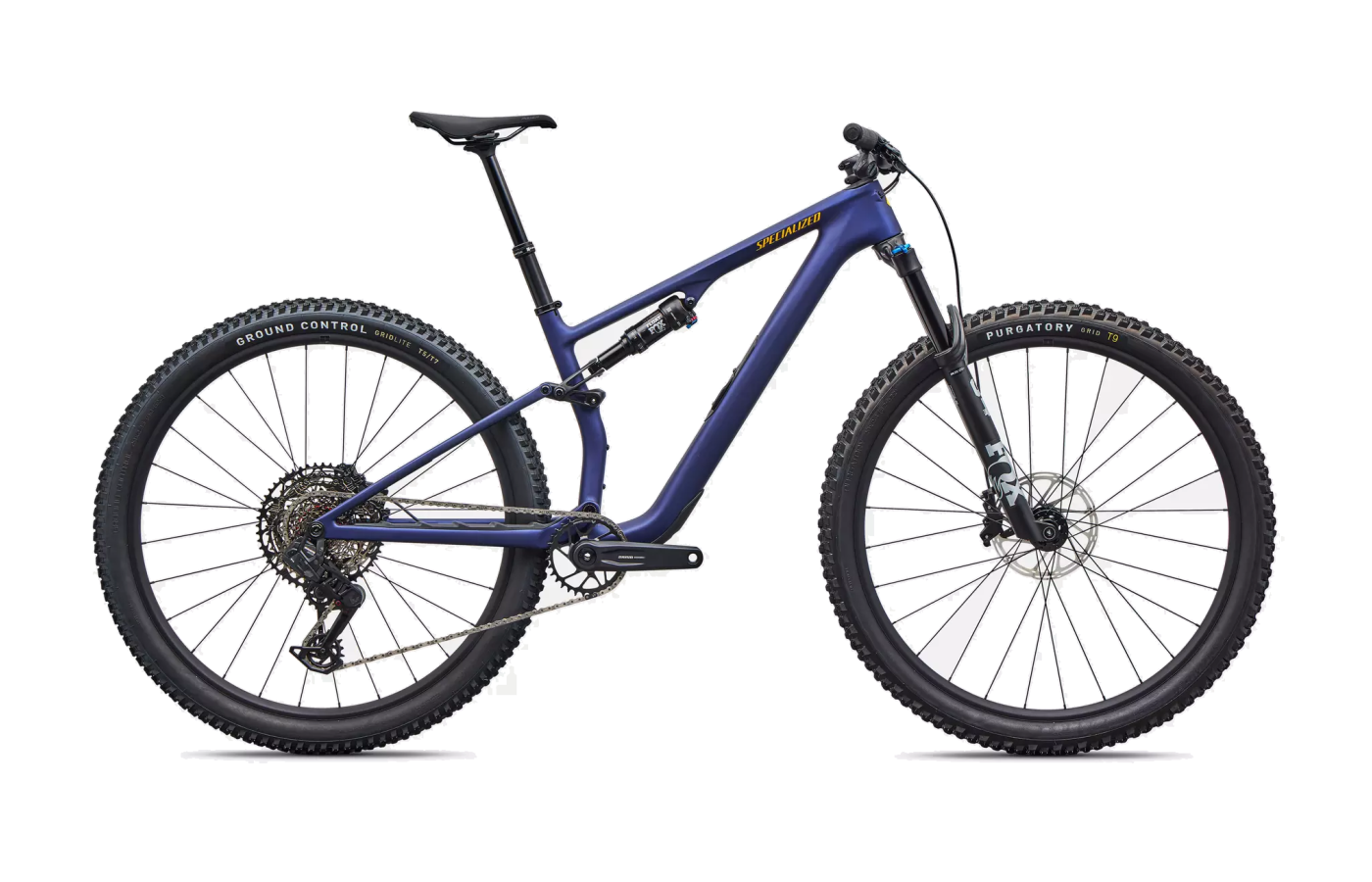
Epic Evo
Same frame as the Epic 8, but with a 130 mm fork, knobbier tires, and burlier parts. The pick if you like the Epic's chassis but want to push it further into trail territory.
Compare →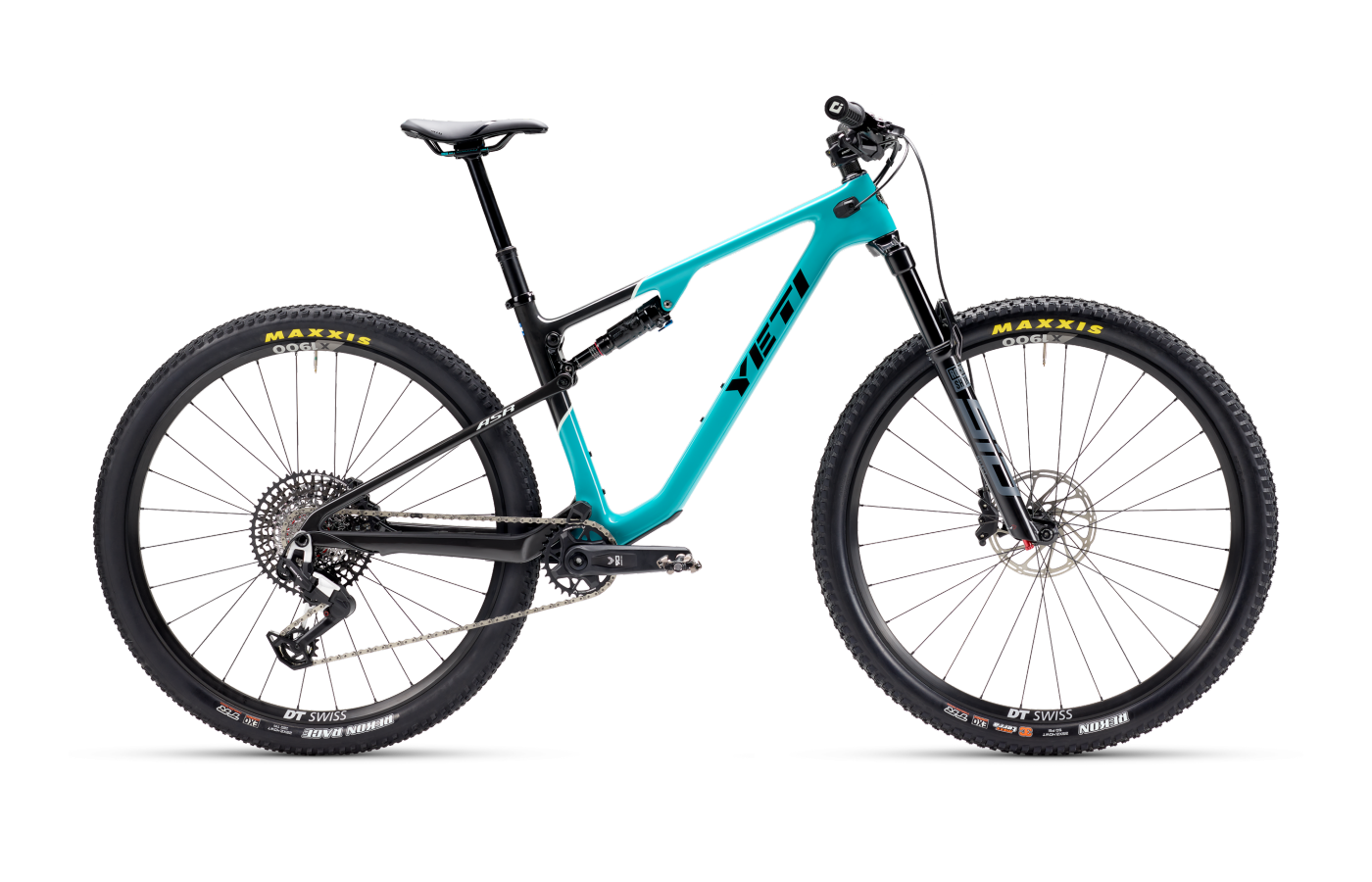
ASR
Yeti's 115 mm XC rig — reviewers call it sharper and more 'purebred race bike' than the Epic 8. Closer in spirit to the Fourstroke than to the new Epic, with Yeti's switch-infinity suspension.
Compare →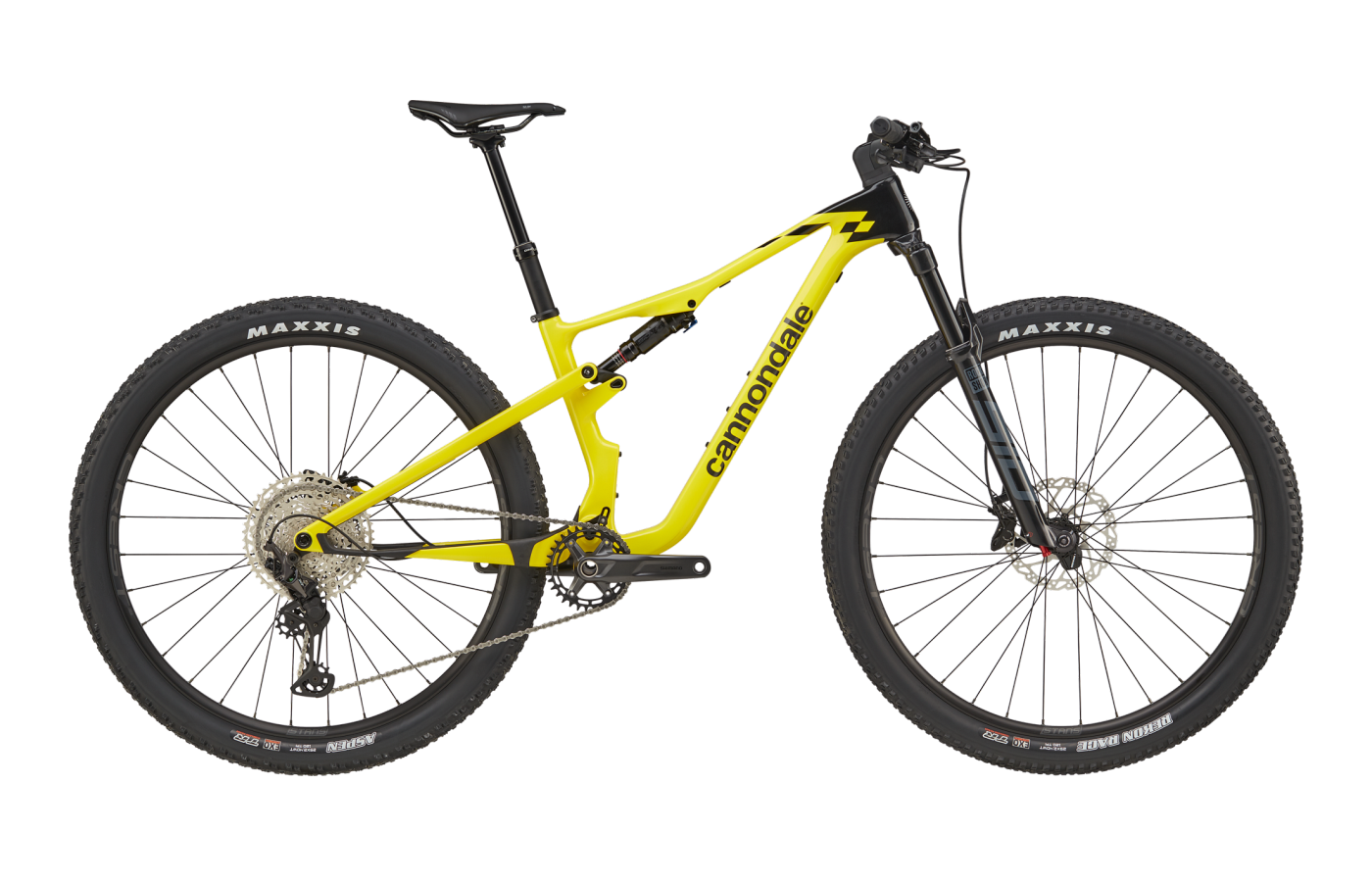
Scalpel
Another 120 mm flex-stay XC rig with a similar do-it-all brief. Some reviewers note it offers slightly better braking traction than the Epic 8, with Cannondale's lefty front-end heritage in play.
Compare →