Kaius
vsGrail
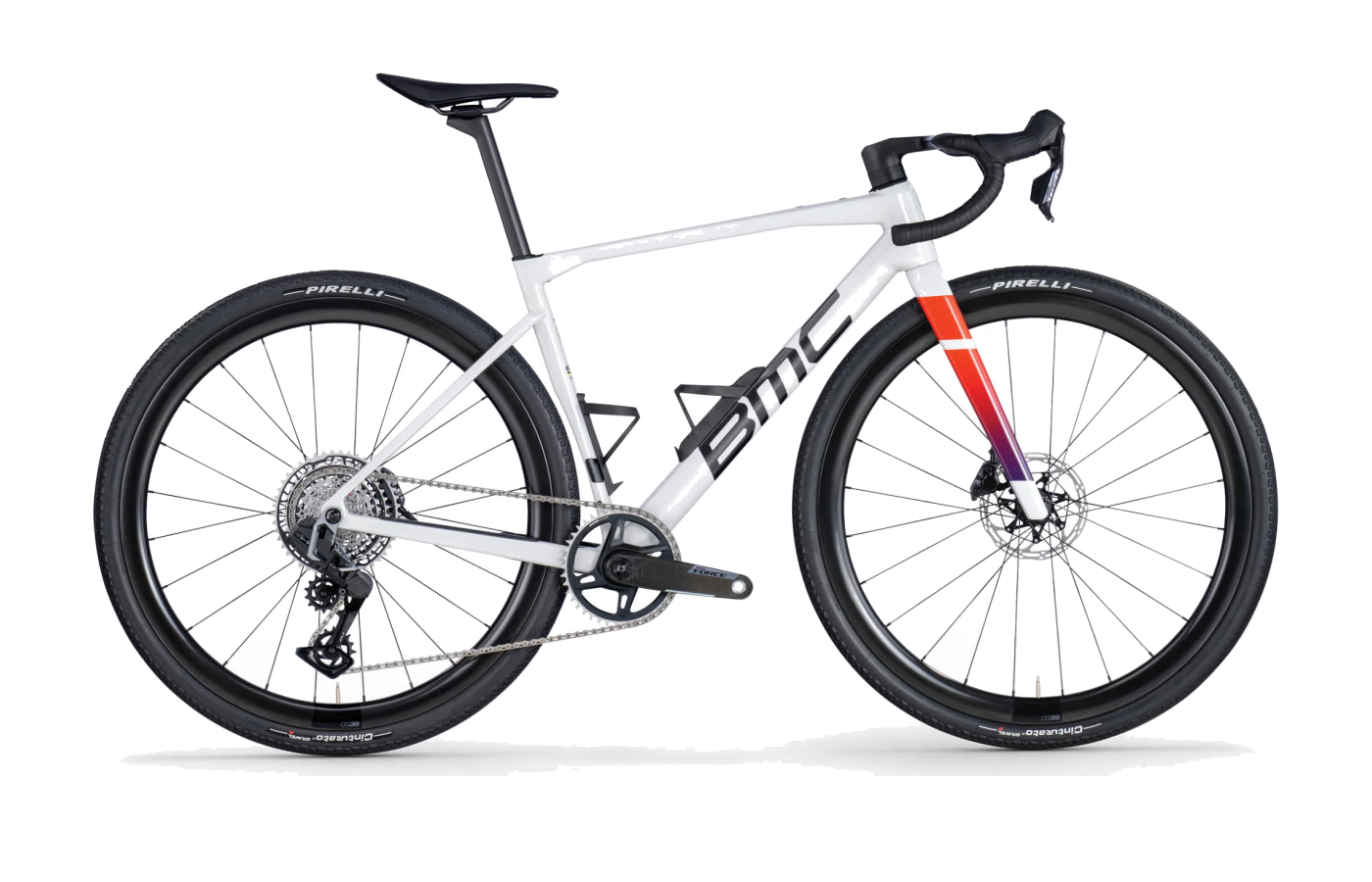
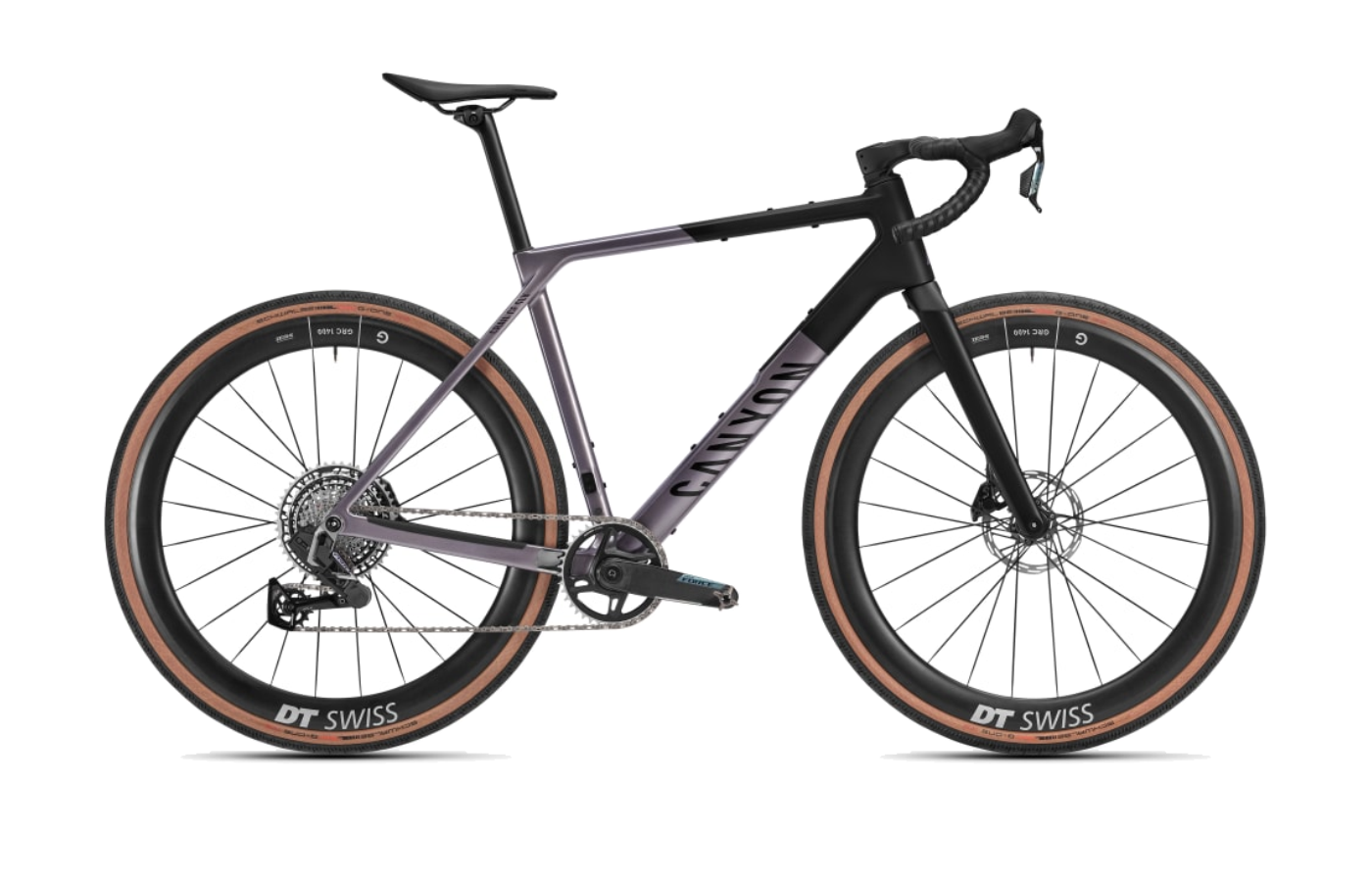
Two race-gravel bikes, two price tags.
The BMC Kaius is a Swiss-precision aero-road bike with 44 mm tires. The Canyon Grail is the direct-to-consumer answer at nearly half the money.
Kaius
- Lighter package — 7.8 kg at Force AXS trim, 7.5 kg at the Red flagship, on a frame that shares layup philosophy with the Teammachine SLR.
- Wider tire clearance — official 44 mm to the Grail's 42 mm, with room for Pirelli Cinturato H 40s plus sealant and clearance margin.
- Sharper front end — 420 mm chainstays, 80 mm BB drop, 1003 mm wheelbase in the small size. Agile and direct on smooth dirt and tarmac.
- ICS Carbon Aero cockpit with a 360 mm hood width is polarizing and a hassle to swap — new bars mean new hoses.
- Reviewers unanimously call it firm on rough terrain: 'bone rattler' (Granfondo), 'brutal' when the surface turns choppy (BikeRadar).
Grail
- Class-leading value — Force AXS, DT Swiss 1400 carbon wheels, and integrated storage at $6,099; carbon entry at $2,899.
- Genuine storage system — downtube hatch, Fidlock magnetic frame bag that Canyon claims is +1.3–1.5 W aero-positive, and Gear Groove accessory mounts.
- High-speed composure — wheelbase stretched 27 mm longer than gen 1; Road.cc gave stability a perfect 10, reviewers describe 'calm' and 'planted' descending.
- 42 mm tire clearance is on the low end of the race-gravel segment — fine for champagne gravel, tight for anything gnarlier.
- The proprietary cockpit is stiff and comes in wide stock widths on small frames (420 mm on XS/S); narrower options are aftermarket and expensive.
Editor’s analysis
Same race category, same aero playbook — but one costs $11,000 and the other starts under $3,000. The question is what you're actually buying with the difference.
On the surface these bikes share a target: hard-packed gravel, 40 mm tires, 1x electronic drivetrains, integrated cockpits, and a rider tucked low enough to sting. Both borrow their tube shapes from their makers' road-race flagships — the BMC Kaius from the Teammachine SLR, the Canyon Grail from the Ultimate. Both use a D-shaped seatpost as the primary compliance trick. Both have been raced to podiums at Unbound and beyond.
The Kaius is the purer instrument. It's lighter (7.8 kg at Force AXS trim vs. the Grail's mid-19-pound range), takes a 44 mm tire to the Grail's 42 mm, and carries BMC's polarizing ICS Carbon Aero one-piece cockpit with a 360 mm bar at the hoods — narrower than almost anything else on the market. Geometry is short and sharp: 1003 mm wheelbase at size 47, 420 mm chainstays, 80 mm bottom-bracket drop. Reviewers at BikeRadar and Granfondo both called it a 'bone rattler' on rough stuff; Velo called it 'intoxicatingly fast' on smooth stuff. It doesn't pretend to be a do-everything bike.
The Canyon Grail picks a different fight. At size XS its wheelbase runs 1024 mm — 21 mm longer than the Kaius at the equivalent fit — with 425 mm chainstays and a 71.5° head tube angle across most sizes. Canyon stretched the second-gen Grail 27 mm longer than its predecessor specifically to improve high-speed composure, and reviewers felt it: Road.cc gave the stability a perfect 10, BikeRadar used the word 'calm.' Layered on top is the Aero Load System — a downtube storage hatch, a magnetic Fidlock frame bag that Canyon claims actually saves 1.3 to 1.5 watts at speed, and a Gear Groove cockpit mount for extensions and computers.
The price gap is the honest headline. At tier-matched Force AXS, the Kaius 01 Two is $6,799 and the Grail CF SLX 8 AXS is $6,099 — close enough. But the Kaius range tops out at $9,199 while the Grail range starts at $2,899. If you want the cheapest way into modern carbon gravel racing, Canyon is the only serious answer. If you want Swiss frame engineering and a thoroughbred 7.5 kg flagship, BMC is the only serious answer. Both arguments are coherent.
Where the builds differ.
Comparing our editor's-pick builds side-by-side. Winners highlighted row-by-row — lower price and weight, and the better-spec component, each mark a point.
Build variants & pricing
Both lineups are Force AXS at the mid-tier. The Kaius tops out at $9,199 and starts at $5,199; the Grail tops out at $6,099 and starts at $2,899.
Prices are current US MSRP. The Kaius only sells in premium-carbon trim — there is no alloy or lower-grade-carbon build to undercut the price floor. The Grail sells a full carbon-frame range from Rival mechanical up to Force AXS with power, which is where most of the value story lives.
How they fit, how they steer.
Kaius 47 vs Grail XS — the fit-picked size for the same rider on each bike. The Grail sits 46 mm taller in stack with 5 mm less reach, and runs a 21 mm longer wheelbase with 5 mm longer chainstays. Head angle is 71° on both.
Which size should I buy?
Size recommendations based on stack, reach, and effective top tube. The Kaius uses numeric sizing (47–61) while the Grail uses 2XS–2XL — the ranges overlap through most of the middle of the bell curve.
→These are starting points. Flexibility, riding style, and preferred position all shift the answer — if you’re between sizes, a professional fit beats a chart.
What the magazines said.
Published reviews from trusted cycling outlets. Click through for the full write-up.
Which one should you buy?
If you want the lightest, sharpest race tool and the budget is there, get the Kaius. If you want a composed, practical race bike at a price that leaves money for entry fees, get the Grail.
Kaius
If your riding is hard-packed gravel, smooth dirt, and tarmac — and you want the lightest, snappiest, most uncompromising race tool in the segment — the Kaius earns its price. You should be comfortable with a low, stretched position and have no objection to a 360 mm bar.
Grail
If you want a bike that can win a gravel race but also handle a ten-hour day, unexpected chop, and a full weekend of events — and you'd rather not spend $11,000 to do it — the Grail is the smarter buy. Integrated storage and long-wheelbase stability are genuine advantages on race day.
Questions buyers actually ask.
Short answers to the things we get emailed about most often.
01Which is faster on smooth gravel?
It depends on the rider. The BMC Kaius is roughly 300 g lighter at tier-matched Force AXS trim and uses a narrower 360 mm hood-width bar that measurably reduces frontal area — Velo and BikeRadar both called it 'intoxicatingly fast' and 'without peer' on hard-packed surfaces.
The Canyon Grail counters with Canyon's claimed 9.1-watt drag reduction versus the previous Grail at 45 km/h, plus an Aero Load System that Canyon says adds another 1.3–1.5 watts when the Fidlock frame bag is installed. At most race paces the two bikes are within a rounding error of each other — the Kaius wins on smooth dirt and climbs, the Grail wins on long, rolling, windy courses.
02Which is more comfortable over long distances?
Neither is plush. Both use a D-shaped carbon seatpost and rely heavily on 40 mm tubeless tires for damping.
The Grail, despite its race focus, is the more composed bike — Granfondo and BikeRadar both noted it handles long days better thanks to the longer wheelbase and slacker 71.5° head angle, and multiple reviewers found the ride quality sufficient for ultra-distance racing on moderate terrain.
The Kaius is firmer. Granfondo explicitly flagged it as unsuitable for 'ultra-distances and multi-day rides' for less fit riders, and Velo noted the ride is 'firmer than I expected.' If most of your rides exceed four hours on mixed surfaces, the Grail is the friendlier choice.
03What's the maximum tire clearance?
BMC Kaius: 44 mm officially. Most builds ship with 40 mm Pirelli Cinturato Gravel H.
Canyon Grail: 42 mm officially. Most builds ship with 40 mm Schwalbe G-One RS or G-One R.
Neither is a true adventure bike — if you want 45 mm+ tires, the Canyon Grizl (50 mm clearance) or a dedicated all-road/adventure frame is the better tool.
04Is the Kaius's 360 mm handlebar really that narrow?
Yes. The ICS Carbon Aero cockpit on the Kaius 01 One measures 360 mm at the hoods, flaring out to 420 mm at the drops. For context, typical road and gravel bars run 380–440 mm at the hoods.
Reviewers were split. Warren Rossiter at BikeRadar and Calvin Zajac at Granfondo both called the narrow bars problematic in slow technical terrain — less leverage, reduced control. Betsy Welch at Velo (who raced the bike to a win at Lil Sugar Gravel) said they 'didn't bother me at all.'
Note: the lower-tier Kaius 01 Two and 01 Three ship with more conventional two-piece cockpits, so the 360 mm bar is only on the flagship One.
05Does the Canyon Grail's frame storage actually matter?
More than it sounds. The CF SLX and CFR frames have a hatch in the downtube for a multi-tool and mini-pump, plus top-tube mounts for a bolt-on bag. The magnetic Fidlock frame bag is claimed to improve the bike's aerodynamics by 1.3–1.5 watts at speed — an unusual case of luggage that isn't a drag penalty.
For ultra-distance racing where jersey pockets fill up with snacks, tools, and spare kit, having tire plugs and a pump tucked into the frame is genuinely useful. The lower-tier Grail CF SL frames do not include the downtube storage — that's reserved for SLX and CFR.
06How do the geometries compare for a mid-height rider?
On our fit-picked sizes — Kaius 47 and Grail XS — the Grail runs 46 mm taller in stack (556 vs 510), 5 mm shorter in reach (385 vs 390), and 21 mm longer in wheelbase (1024 vs 1003). Both bikes use a 71° head angle at these sizes.
In practical terms: the Grail positions the rider more upright and more 'between the wheels,' which reviewers at Road.cc and Bike Perfect consistently linked to its high-speed composure. The Kaius puts you lower and more forward, with a tighter wheelbase that reviewers called agile on smooth terrain and 'a handful' on rough technical sections.
07Which holds up better to the rigors of gravel racing?
Both have strong frame durability reputations. BMC explicitly reinforced the Kaius's down tube and bottom bracket area for rock strikes (per BikeRadar and Velo), and the Grail's Gen-2 frame has been raced to multiple Unbound wins and a world gravel title.
The bigger durability question is integration overhead. Both bikes run headset-routed cables, which means headset service on either is more involved than a traditional setup. The Grail has documented early-assembly QC issues in some Escape Collective testing (misaligned brakes, loose bolts on delivery) — worth a careful shakedown ride on a new build. The Kaius's fully integrated ICS cockpit means any bar or stem change requires new brake hoses, which reviewers at Velo called 'highly inconvenient.'
08Which should I buy if I can only own one gravel bike?
The Canyon Grail, probably. Its wheelbase and handling profile absorb a wider range of terrain than the Kaius, and the price gap — the Grail starts at $2,899 vs. the Kaius at $5,199 — leaves real money for tires, events, and a wheel upgrade down the line.
The Kaius is the right buy only if gravel racing is your primary discipline, you already own a second bike for rougher or slower riding, and the Swiss frame engineering and sub-7.8 kg weight are worth paying for. It's a specialist tool — excellent within its range, uncompromising outside it.
Similar bikes
If your priorities don’t map cleanly onto either of these, one of these adjacent bikes probably fits better.
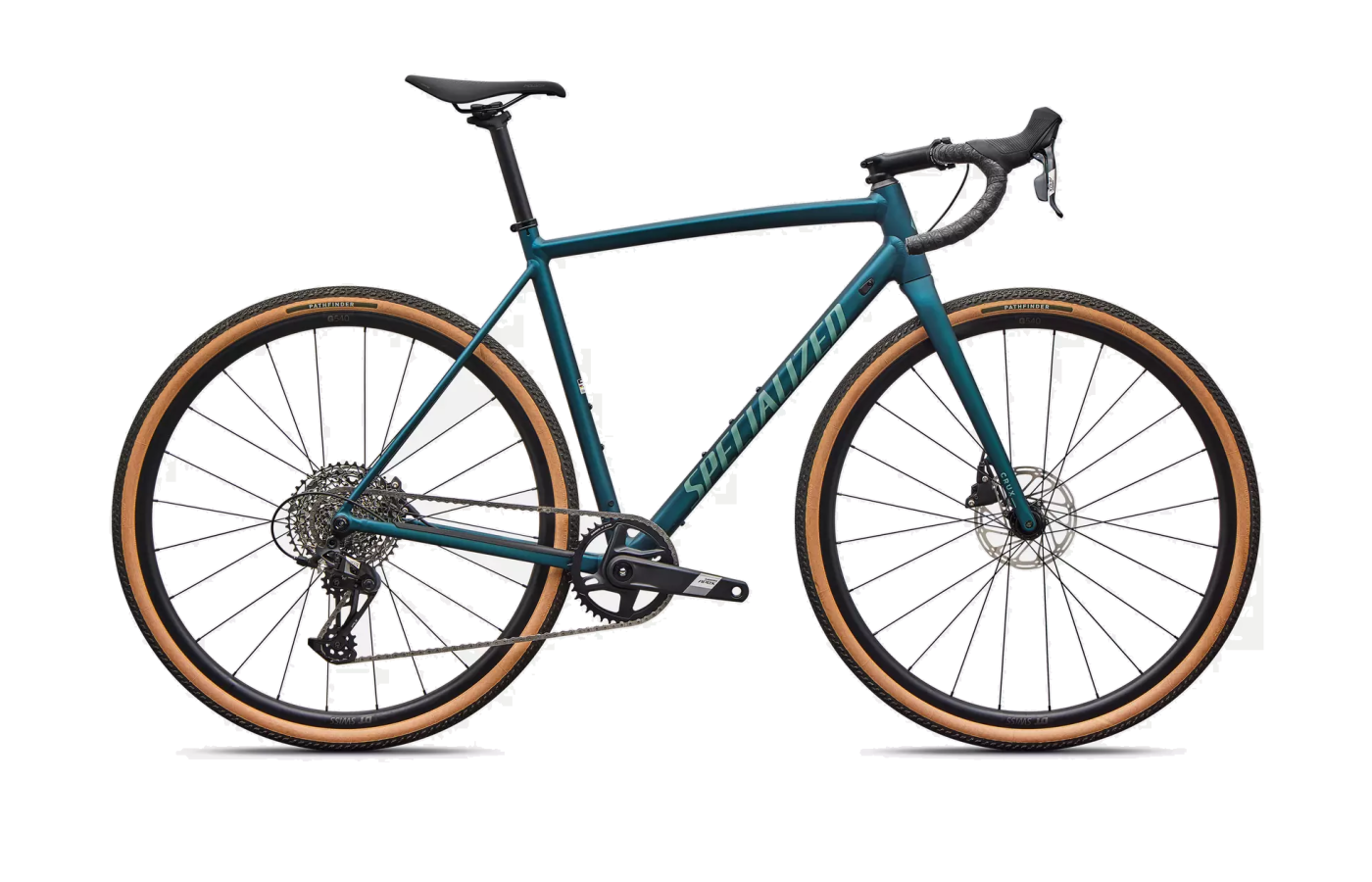
Crux
The Specialized Crux is the Kaius's closest philosophical rival — even lighter frame, even more vertical compliance, and no aero-integration compromises. If you like the Kaius's race-first stance but don't want a 360 mm bar.
Compare →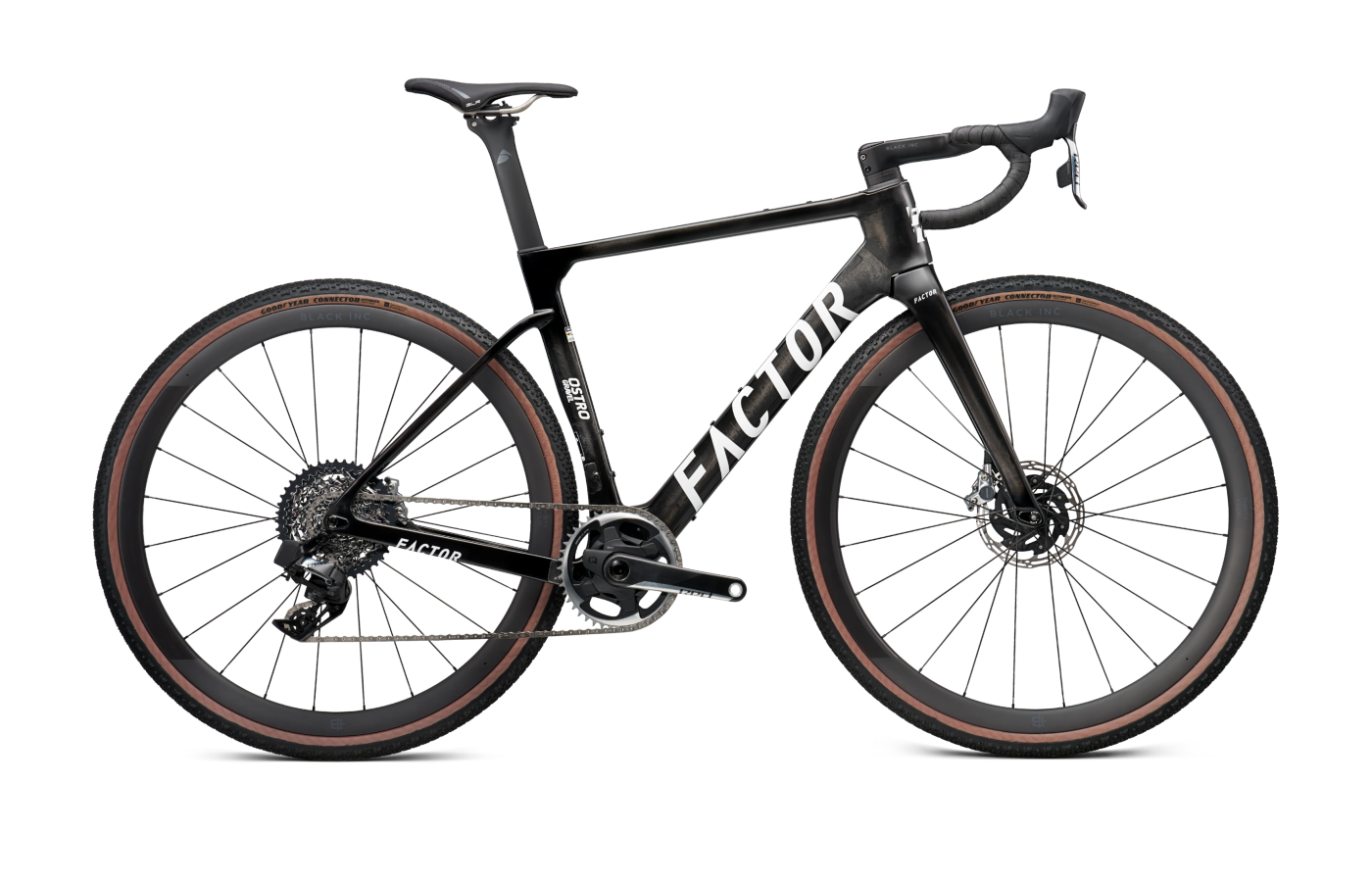
Ostro Gravel
The Factor Ostro Gravel pushes the aero-gravel idea further than either of these bikes — deeper tube profiles, a platform optimized for high-speed desert-style racing. If the Grail's aero claims don't go far enough, Factor is the logical next step.
Compare →Grizl
The Canyon Grizl is the Grail's more adventurous sibling — 50 mm tire clearance, more compliant tubing, and a less race-obsessed geometry. If the Grail's 42 mm limit is a problem or you ride more rooty than rolling, this is the bike.
Compare →