Roadmachine
vsSynapse
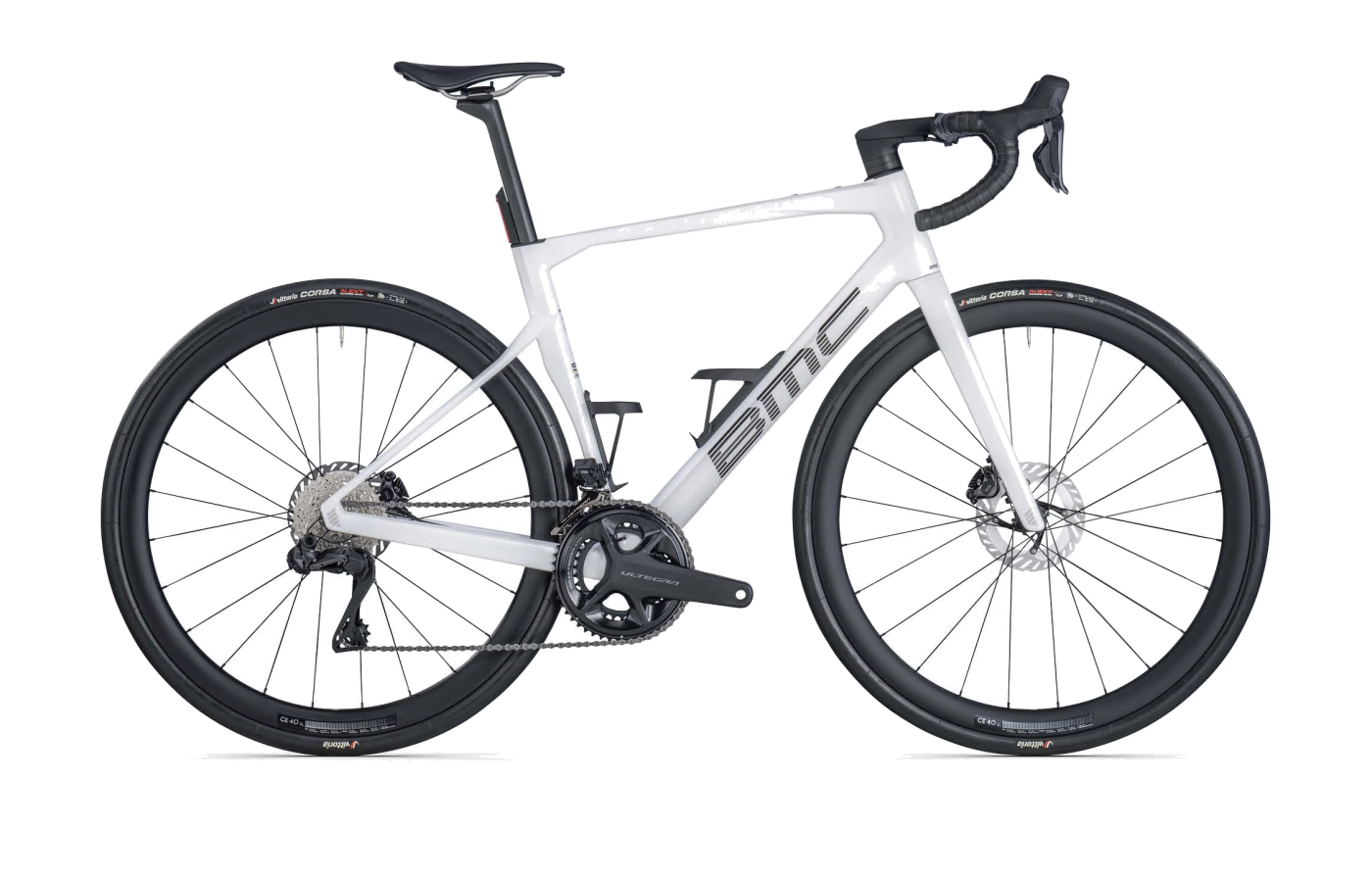
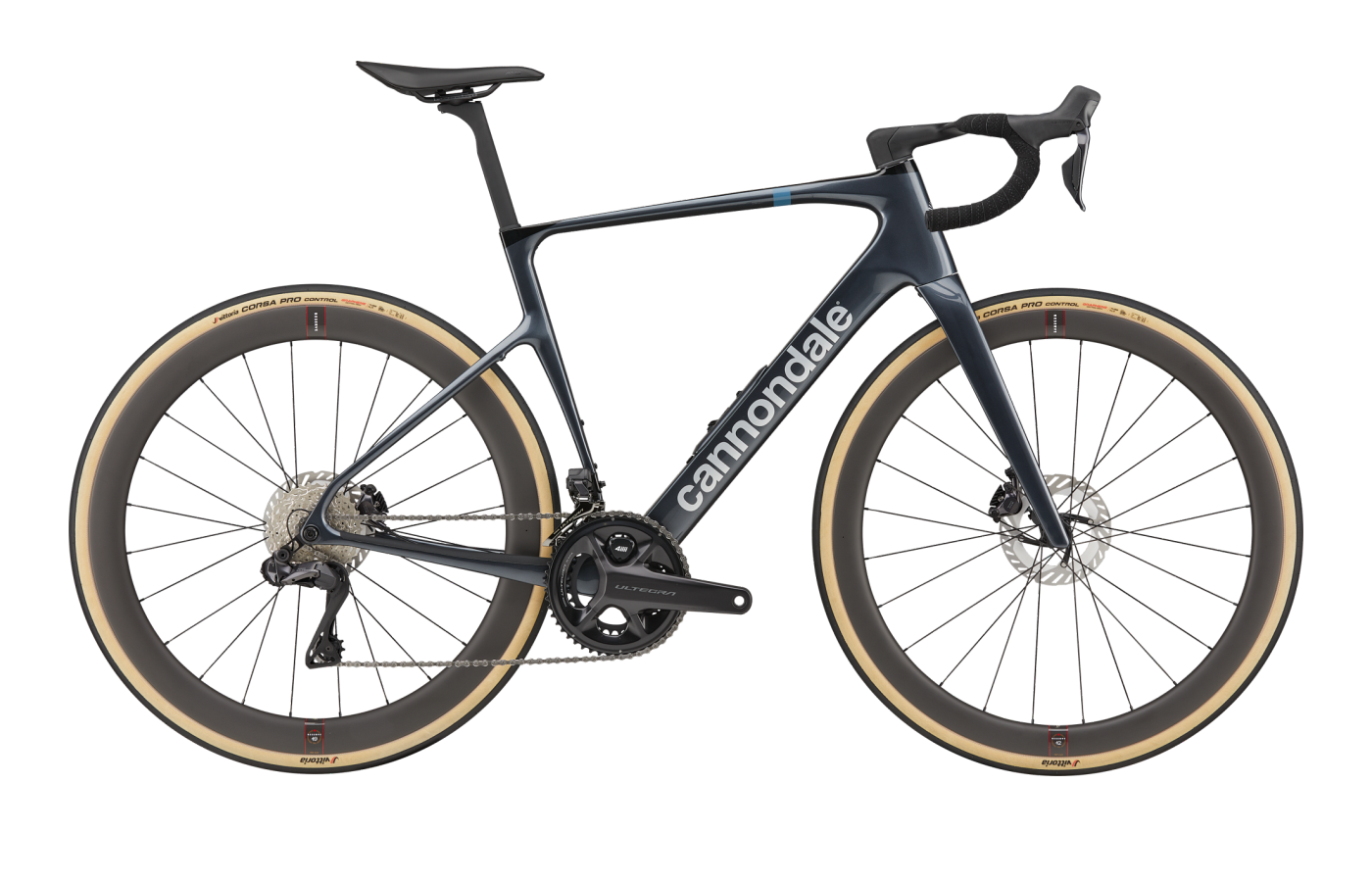
Two endurance bikes, two ideas of comfort.
The BMC Roadmachine engineers compliance into the carbon itself. The Cannondale Synapse leans on geometry, tire volume, and a downtube full of electronics.
Roadmachine
- Most compliant pure-frame endurance bike — BMC's redesigned rear triangle delivers ~20 mm of seated deflection without any mechanical suspension.
- Snappier under power — 415 mm chainstays and a 72.2° head angle give it a more race-bike feel than the Synapse.
- ICS Carbon Evo cockpit — BikeRadar's favorite integrated cockpit, with an 8° flare that genuinely helps in the drops.
- Press-fit bottom bracket and proprietary one-piece cockpit make home-shop maintenance harder.
- 8.0 kg on the 01 Four build — heavier than the price tag implies.
Synapse
- Class-leading tire clearance — 42 mm at the rear, 48 mm at the fork. Nothing else in the segment matches it.
- SmartSense integration — one battery powers the front light, rear radar, and SRAM AXS shifting on equipped models.
- Threaded BSA bottom bracket and UDH — Cannondale finally killed the press-fit, and it shows in long-term serviceability.
- Longer wheelbase and slacker head angle make it noticeably less eager than the BMC under hard cornering.
- Stock Vittoria Rubino tires on most builds are a clear upgrade target.
Editor’s analysis
Both claim to be the modern endurance benchmark — but they get there from opposite directions, and the differences show up the second the road turns ugly.
On paper the BMC Roadmachine and Cannondale Synapse occupy the same shelf: premium carbon, integrated cockpits at the top end, downtube storage, room for fat road tires, claimed compliance gains in the high-20-percent range. Both are in their newest generation. Both have been hailed as the best in class by serious reviewers in the last 18 months. The interesting argument starts when you look at how they get there.
The Roadmachine is the more classical of the two. BMC's pitch is that you don't need gimmicks — a redesigned rear triangle with kinked seatstays, a thin seat tube, and a D-shaped post deliver up to 20 mm of seated travel without springs or dampers. Reviewers consistently call it the most compliant pure-frame endurance bike on the market. The 415 mm chainstays (race-bike short) keep it lively under power, and the 72.2-degree head angle gives it a more conventional, slightly snappier road feel. It tops out at 40 mm tire clearance.
The Cannondale Synapse takes a wider, slower, smarter approach. Chainstays grow to 425–430 mm. Head tube angle slackens to 71.3 degrees. The wheelbase on the size 51 is 1013 mm vs the BMC's 1000 mm — modest at first glance, but it adds up to a more planted, more sedate ride that BikeRadar and Road.cc both flag as the new gold standard, and that one reviewer (David Arthur) calls outright "sedate." Tire clearance jumps to 42 mm at the rear and 48 mm at the fork, the most generous in the segment. And then there's SmartSense — a single downtube battery powering an 800-lumen front light, a Garmin Varia rear radar, and the SRAM AXS drivetrain on equipped builds.
Put simply: the Roadmachine wants to be the one road bike you own, with a slightly racier soul. The Synapse wants to be the safest, most comfortable, most maintenance-friendly mile-eater on the road, and it doesn't mind being called a sofa to get there.
Where the builds differ.
Comparing our editor's-pick builds side-by-side. Winners highlighted row-by-row — lower price and weight, and the better-spec component, each mark a point.
Build variants & pricing
Both ranges scale from sub-$2k alloy/Sora-class commuters up to $13k–$16.5k flagships. The Synapse starts cheaper; the Roadmachine's mid-tier is the sweet spot.
Prices are current US MSRP. Cannondale's Lab71 SmartSense flagship runs to $16,499 — almost $3,500 above BMC's top 01 One. At the bottom, the Synapse 3 at $1,299 is $2,000 below the cheapest Roadmachine.
How they fit, how they steer.
Both at size 51 — the fit-picked size for a 5'8" rider on each bike. Stack is identical at 550 mm; the BMC is 3 mm longer in reach and runs 415 mm chainstays vs the Synapse's 425 mm, with a 0.1° steeper head angle.
Which size should I buy?
Size recommendations are based on stack, reach, and effective top tube. The Synapse extends one size smaller (44 cm) at the bottom of its range; the Roadmachine starts at 47.
→These are starting points. Flexibility, riding style, and preferred position all shift the answer — if you’re between sizes, a professional fit beats a chart.
What the magazines said.
Published reviews from trusted cycling outlets. Click through for the full write-up.
Which one should you buy?
If you want a sharper, pure-carbon endurance bike with race-bike DNA, get the Roadmachine. If you want the most comfortable, best-equipped, longest-day machine on the market, get the Synapse.
Roadmachine
If your typical ride is a fast group spin, a long Sunday in the hills, and the occasional dirt detour — and you'd rather your bike feel like a road bike than an electronics platform — the Roadmachine is the sharper tool. The frame compliance is genuinely class-leading, and the short chainstays keep it interesting when you stand up.
Synapse
If most of your miles are long, mixed-surface, and on roads with car traffic — and you'd actually use a built-in radar and a 42 mm tire — the Synapse is the more complete machine. The slacker geometry gives up some agility, but the stability, the SmartSense system, and the maintenance-friendly bottom bracket make it the better long-term partner.
Questions buyers actually ask.
Short answers to the things we get emailed about most often.
01Which is more comfortable on rough roads?
Both are excellent, by different mechanisms. The Roadmachine delivers compliance through frame architecture — kinked seatstays, a thin seat tube, and a D-shaped post that BMC's R&D head says provides up to 20 mm of seated deflection. Multiple reviewers (BikeRadar, Velo) call it the most compliant pure-frame endurance bike they've ridden.
The Synapse gets there through tire volume and geometry. Stock 32 mm tires that often measure 35 mm on the wide Reserve rims, plus a 1013 mm wheelbase at size 51 (vs the BMC's 1000 mm), make it feel planted and undisturbed by chip-seal or broken tarmac. Reviewers describe it as "sublime" and "oblivious" to surfaces that knock other bikes off-line.
If you want pure frame magic, BMC. If you want the bike that just irons everything flat, Cannondale.
02Which has more tire clearance?
Cannondale Synapse: 42 mm at the rear, 48 mm at the fork — the most generous in the endurance segment.
BMC Roadmachine: 40 mm officially. Still well above category norms.
Neither is a substitute for a dedicated gravel bike on truly rough stuff, but the Synapse's extra fork clearance opens up real all-road and light-bikepacking territory that the Roadmachine can't quite reach.
03Is the BMC really sharper to ride than the Synapse?
Yes, measurably. The Roadmachine runs 415 mm chainstays across the entire size range — race-bike short — and a 72.2° head tube angle in size 54+. The Synapse stretches chainstays to 425–430 mm and slackens the head angle to 71.3°. That's a meaningfully longer wheelbase and a more relaxed front end on the Cannondale.
Reviewers consistently describe the Roadmachine as "lively," "reactive," and "intuitive," while the Synapse is praised for stability and confidence — and dinged by at least one reviewer (David Arthur) as "sedate" and "not very agile." Neither is wrong; they're tuned differently.
04What is SmartSense and is it worth it?
SmartSense is Cannondale's integrated electronics system. A single battery in the downtube powers an 800-lumen front light, a Garmin Varia rear radar/light, and — on AXS-equipped builds — the SRAM derailleurs themselves. It charges via USB-C in or out of the bike. If shifting battery dips below 5%, the system dims the lights to preserve gear function.
Reviewers (BikeRadar in particular) consistently call it the system's killer feature, especially for high-mileage riders on high-traffic roads who'd otherwise juggle three or four chargers. If you ride solo on open roads a lot, it's a real safety upgrade. If you mostly ride in groups or off-road, you're paying for tech you won't use.
05Which is easier to maintain and modify?
The Synapse, clearly. Cannondale has moved to a threaded BSA bottom bracket and SRAM's Universal Derailleur Hanger (UDH) on this generation — both are home-mechanic friendly and future-proof.
The Roadmachine still uses a press-fit bottom bracket and BMC's proprietary ICS Carbon Evo one-piece cockpit, which only ships in one bar width per frame size. BMC has done thoughtful work to make the integrated front end serviceable (you can swap stem length 10 mm or a single spacer of headset height without cutting hoses), but it's still an integrated system that benefits from a dealer.
For a long-term home-shop owner, the Synapse is the friendlier platform.
06Are these heavy compared to a race bike?
Yes, modestly. The mid-tier picks here — Roadmachine 01 Four at 8.0 kg and Synapse Carbon 1 with full Ultegra Di2 — sit a few hundred grams above pure aero-race or lightweight bikes in equivalent trim. Even the flagships pay a small weight tax: BMC's 01 Two with Dura-Ace Di2 is 7.5 kg, and the Synapse Lab71 with SmartSense and pedals/cage is closer to 8.3 kg.
Reviewers note the weight (especially BikeRadar on the BMC and Cyclonline on both) but largely agree it's appropriate for what these bikes are doing: storage, integrated tech, big tire clearance, real-world durability. Neither is a climber's first choice, but neither feels sluggish either.
07Can I run mechanical shifting on either?
Yes on the BMC — the Roadmachine Three at $3,299 ships with mechanical Shimano 105 (R7120). The frame supports both wired and wireless drivetrains.
Mostly no on the Synapse — the carbon Synapse range is built around Di2 and AXS wireless. The bottom of the alloy range (Synapse 2 at $1,799 with Shimano CUES, Synapse 3 at $1,299 with Sora) is the only way to get a mechanical drivetrain on the Synapse platform.
If you specifically want mid-range mechanical 105 on a carbon endurance frame, the BMC is the only option of the two.
08Do both have downtube storage?
Yes, both. BMC calls it the integrated downtube storage compartment, accessed via a turn-dial; reviewers note it's well sealed against dirt and water but won't fit a gravel-sized tube or mini-pump.
Cannondale calls theirs StashPort and reviewers consistently praise it for being more generous and rattle-free, with rubber grommets on the opening to prevent scratches. On SmartSense builds, the same compartment also houses the system battery.
Both eliminate the saddlebag for most riders. The Synapse's is the more spacious of the two.
Similar bikes
If your priorities don’t map cleanly onto either of these, one of these adjacent bikes probably fits better.
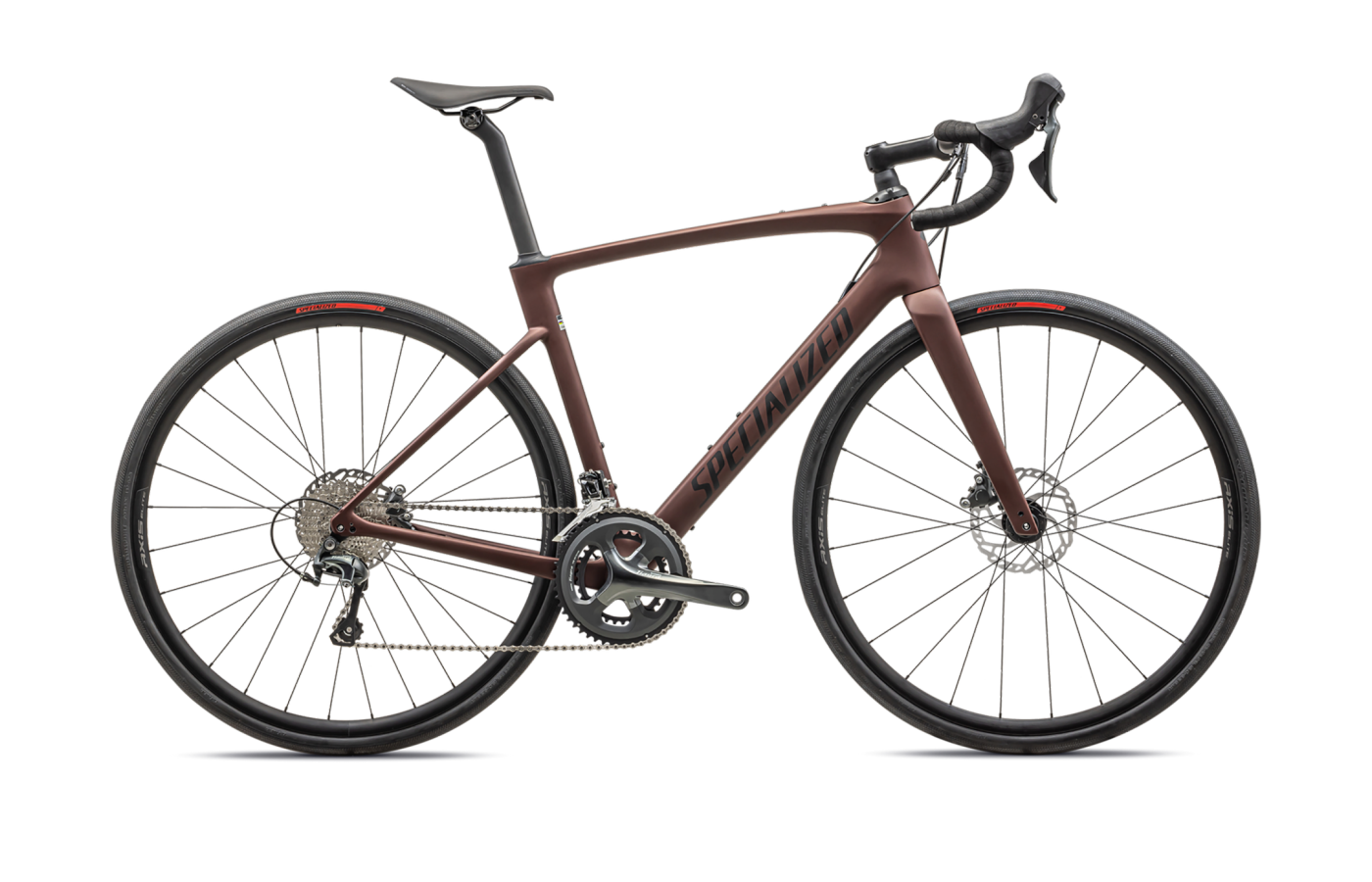
Roubaix
The Specialized Roubaix is the only mainstream endurance bike with actual mechanical suspension up front — the Future Shock 3.0 head tube. If you want sharp-hit damping that no carbon-flex frame can match, this is the move.
Compare →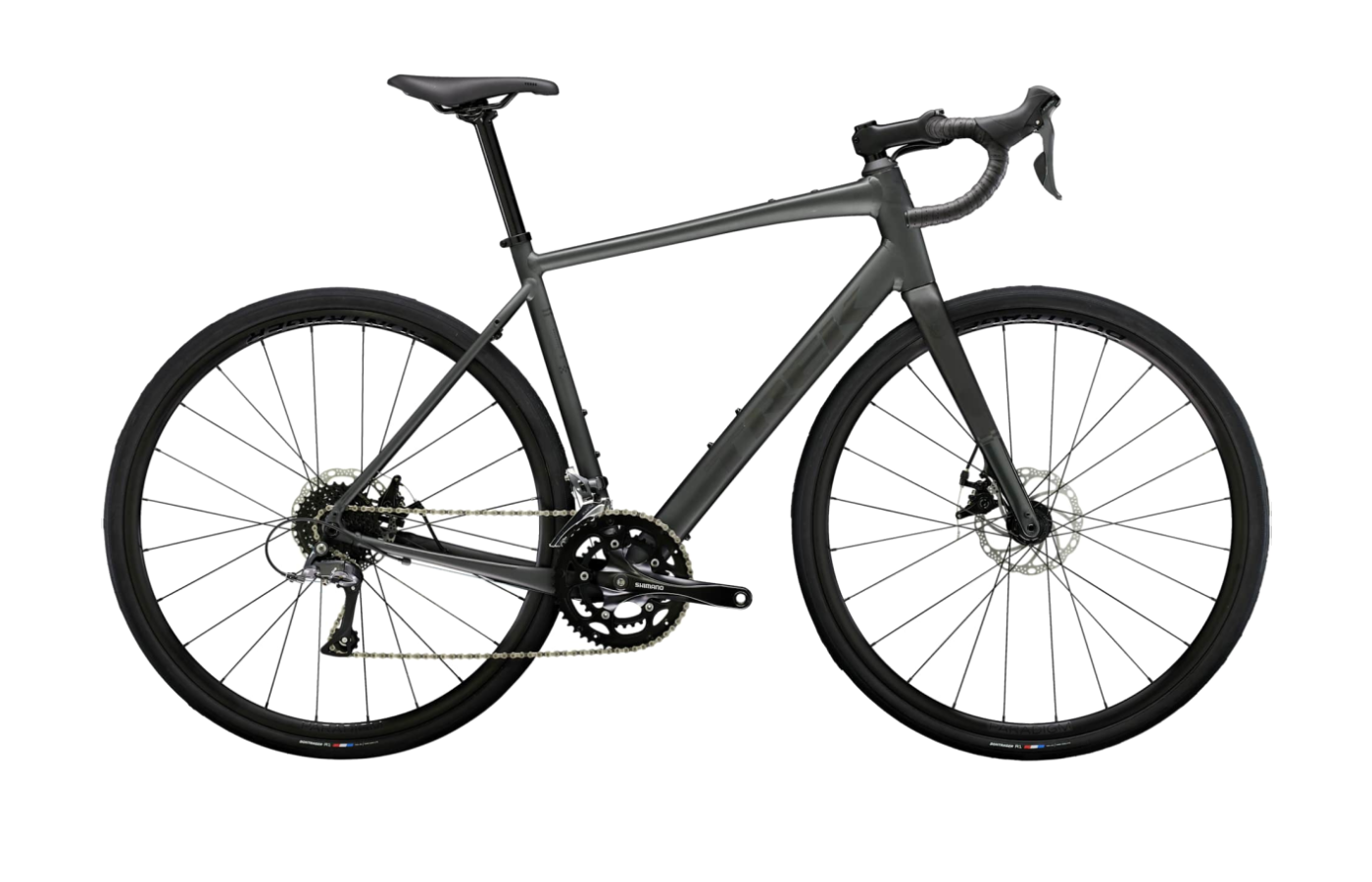
Domane
Trek's Domane brings the IsoSpeed decoupler at the rear for active vertical compliance, plus a similar downtube storage cubby. A more mechanically active take on the same problem these two solve with carbon layup.
Compare →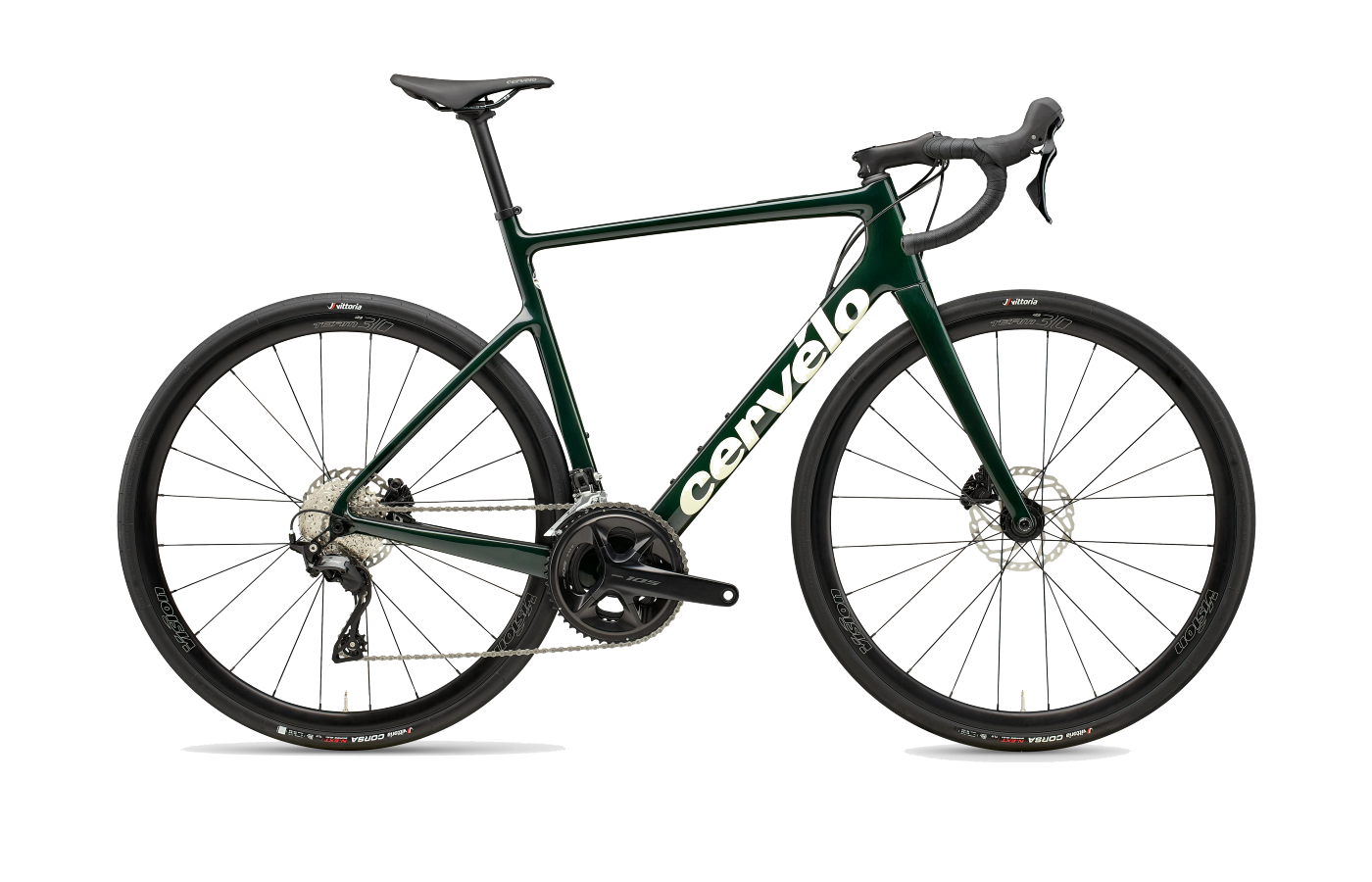
Caledonia
Cervélo's Caledonia is the racier alternative — quicker steering, lighter feel, and still 35 mm of clearance. Worth a look if the Synapse feels too sedate and the Roadmachine isn't quite sharp enough.
Compare →