Roadmachine
vsPinarello X
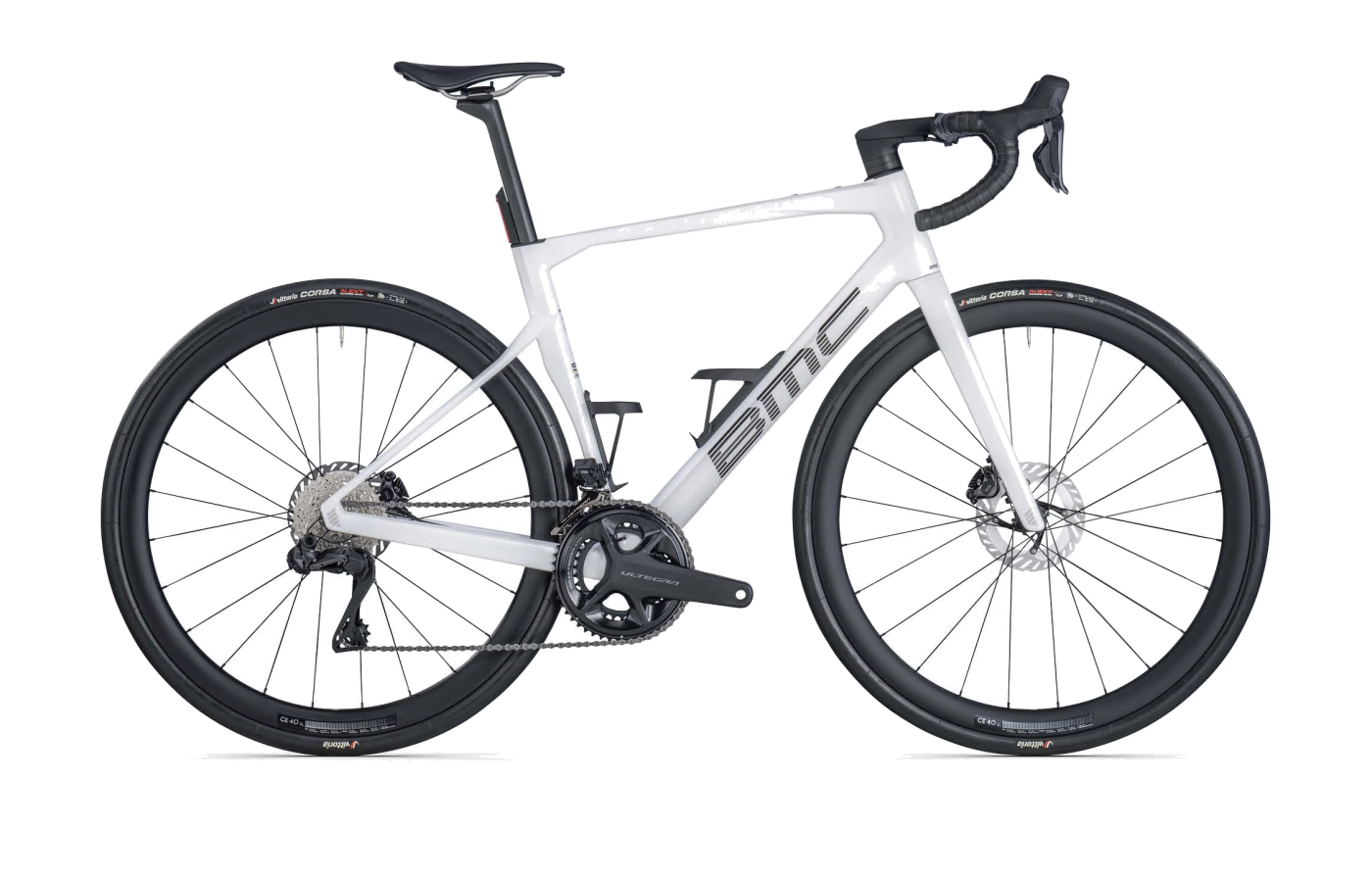
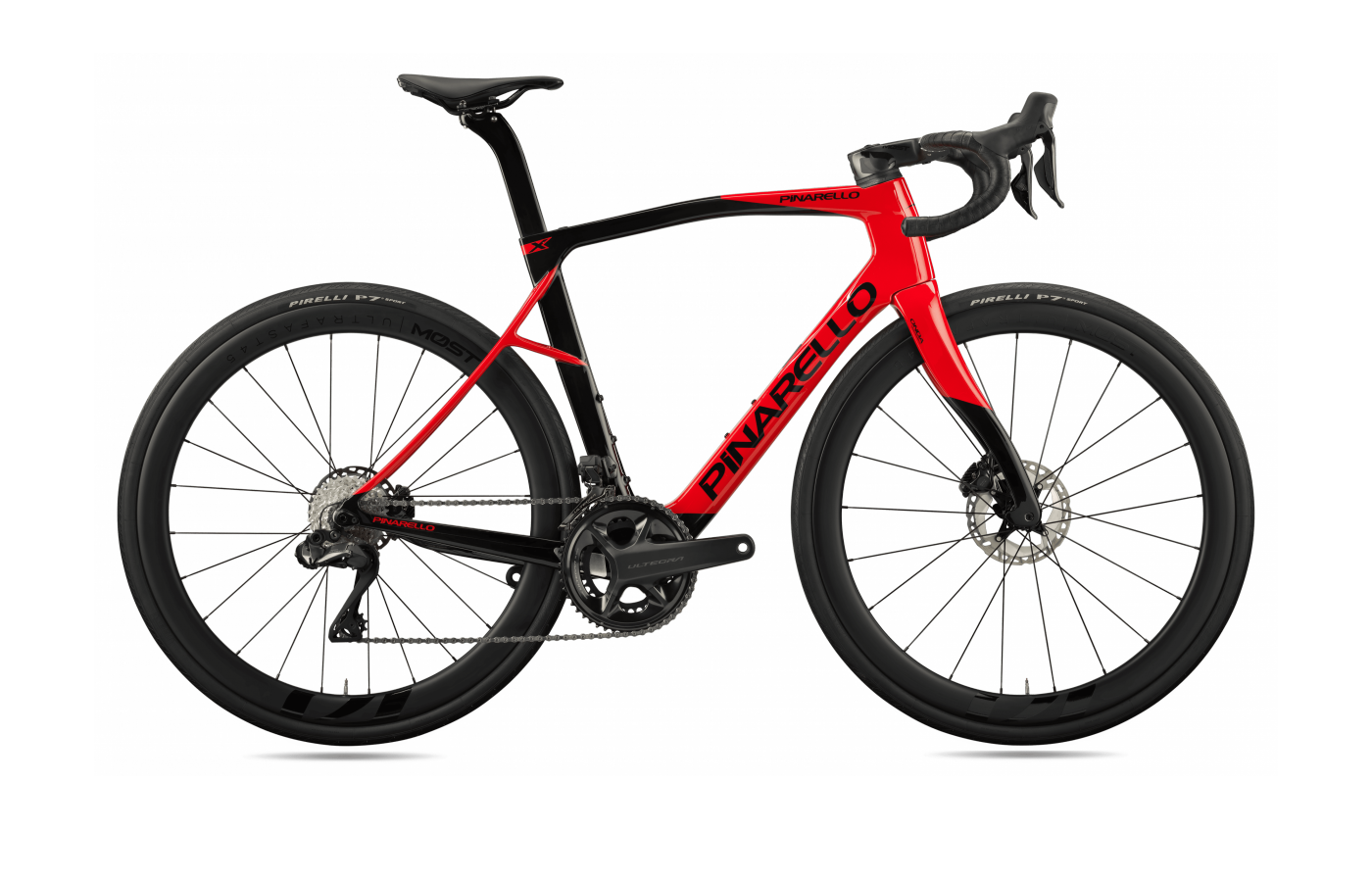
Two endurance bikes, two ideas of comfort.
The BMC Roadmachine engineers compliance into the frame itself. The Pinarello X keeps the chassis stiff and asks the tires to do the soaking.
Roadmachine
- Genuinely compliant frame — ~27% more vertical give claimed than the prior gen, with no mechanical damper to maintain.
- Bigger tire room at 36 mm officially, with 32 mm Vittoria Corsas stock — easy to push toward light gravel.
- Integrated downtube storage and a built-in StVZO rear light come standard across the range.
- 01 frame at a claimed 963 g (size 54) is heavier than several rivals at the same price.
- Proprietary one-piece cockpit limits fit tweaks once you've bought a size.
Pinarello X
- Nine frame sizes from 425 to 590 — the broadest fit range in the segment, with two fork rakes to keep trail consistent.
- Italian-threaded bottom bracket across the lineup — a small but real durability and serviceability win over press-fit.
- Sharper, more predictable steering than the Dogma X according to Velo, with confident behavior at descending speeds.
- Stiff front end and aero seatpost translate into a buzzier ride than peers — comfort hinges on tire choice.
- Tire clearance caps at 35 mm — the narrower of the two if light gravel is on the menu.
Editor’s analysis
Both wear the endurance label. Only one of them actually rides like one — the other rides like a Dogma in a slightly taller stack.
On paper the BMC Roadmachine and the Pinarello Pinarello X land in the same bracket: carbon endurance road, ~7.5 kg, integrated cockpits, 35-plus mm of tire room, four-figure price tags. Spend any real time with the geometry and the meta-reviews, though, and the philosophies split almost immediately. BMC engineered the new Roadmachine for compliance — kinked seatstays, a thinner seat tube, a D-shaped post claimed to give up to 20 mm of vertical travel. Pinarello kept its X-stays, its deep aero seatpost, and its Most Talon Ultra one-piece cockpit, then asked you to run a 35 mm tire.
The numbers back it up. Reviewers describe the BMC Roadmachine as 'the most compliant endurance bike I have ever ridden' and call out a roughly 27% claimed jump in vertical compliance over the prior generation — without a single mechanical damper. Velo's review of the Pinarello Pinarello X says the opposite out loud: 'felt buzzier than most endurance and all-road bikes I've ridden in recent memory,' lists the integrated cockpit and aero post as the culprits, and concedes that the fix is to fit the widest tire that'll clear. The BMC will take a 36 mm tire; the Pinarello caps at 35 mm.
Geometry tells the same story from a different angle. At the fit-picked sizes (BMC 51, Pinarello 525) the Pinarello sits noticeably taller — 588 mm of stack vs 550 on the BMC — but with shorter reach (377 vs 379 mm). It's an upright, Dogma-style sit-up posture meant for riders who want the look without the slammed bars. The BMC at size 51 is the lower, longer one, and its 71.4 degree head angle plus 415 mm chainstays are tuned for the planted-but-quick descender, not the all-day cruiser. Trail on both sits in a similar zone, so steering feel converges more than the rest of the geometry suggests.
Put another way: the BMC Roadmachine is the bike you buy when you want one machine that erases bad pavement and double-dips into 36 mm gravel tires for the occasional dirt detour. The Pinarello Pinarello X is the bike you buy when you want a Dogma-shaped silhouette in a friendlier stack, and you've already accepted that comfort is a setup problem rather than a frame problem.
Where the builds differ.
Comparing our editor's-pick builds side-by-side. Winners highlighted row-by-row — lower price and weight, and the better-spec component, each mark a point.
Build variants & pricing
Both ranges span roughly $3.3k to $13k, with full-carbon frames at every tier. The BMC scales further at the top with a $12,999 SRAM Red AXS flagship; the Pinarello tops out at $11,000.
Prices are current US MSRP. The BMC's 01 Three and 01 Four sit roughly $100 apart with matched premium carbon and equivalent groupsets — the only practical difference is SRAM Force AXS vs Shimano Ultegra Di2. On the Pinarello side, the X7 builds offer the same T900 carbon frame as the flagship X9 at meaningfully lower prices.
How they fit, how they steer.
Sizes picked to fit the same rider on each bike. The Pinarello sits 38 mm taller in stack (588 vs 550 mm) and 2 mm shorter in reach — an unusually upright position for a performance road bike. The BMC's 71.4 degree head angle and 415 mm chainstays are 0.85 degrees slacker and 7 mm shorter than the Pinarello, biasing toward planted high-speed stability over snap.
Which size should I buy?
Both lineups offer broad size coverage; the Pinarello extends further at both extremes (425 to 590) with two fork rakes to keep steering trail consistent across the range.
→These are starting points. Flexibility, riding style, and preferred position all shift the answer — if you’re between sizes, a professional fit beats a chart.
What the magazines said.
Published reviews from trusted cycling outlets. Click through for the full write-up.
Which one should you buy?
If you want the smoothest endurance ride on the market and room for 36 mm tires, get the BMC Roadmachine. If you want Italian aesthetics and a tall, stiff-but-sharp Dogma-adjacent ride, get the Pinarello Pinarello X.
Roadmachine
If your weekends are spent on broken pavement, sportive routes, or the occasional gravel detour, this is the easier bike to live with. Frame compliance is real, the storage and integrated light feel premeditated for long days, and the 36 mm tire room buys real versatility without ever needing a second bike.
Pinarello X
If you want the Pinarello aesthetic and a Dogma-style silhouette but need a taller front end than a slammed race bike, the X is the answer. Pair it with a wide tire and decent pressure and the chassis comes alive — sharp, predictable, and arguably the better climber.
Questions buyers actually ask.
Short answers to the things we get emailed about most often.
01Which is more comfortable on rough pavement?
The BMC Roadmachine, by a meaningful margin. BMC redesigned the rear triangle around a thinner seat tube, kinked seatstays, and a D-shaped post that's claimed to give up to 20 mm of vertical travel — and reviewers across BikeRadar, Velo, Granfondo, and Rouleur consistently corroborate it. BikeRadar's Oscar Huckle goes as far as calling it 'the most compliant endurance bike I have ever ridden.'
The Pinarello, by contrast, is described in Velo's review as 'much stiffer-riding' than peers including the BMC, with the Most Talon Ultra cockpit and aero seatpost called out as the main culprits. The recommended fix is to run the widest tire the frame will accept.
02What's the maximum tire clearance?
BMC Roadmachine: 36 mm officially per the catalog spec, though BMC's marketing materials reference up to 40 mm on the new gen. Stock builds ship with 32 mm Vittoria Corsa N.EXT.
Pinarello Pinarello X: 35 mm claimed. Velo's reviewer reported successfully fitting a 37 mm gravel tire with room to spare, but 35 mm is the official ceiling — and the bike ships with a 35 mm Pirelli on the X7 and X9 builds, suggesting that's where Pinarello expects you to live.
Neither is a true gravel bike, but the BMC's extra room is the difference between 'occasional dirt detour' and 'leave it set up that way.'
03Which climbs better?
It's close. The Pinarello X9 is reported around 7.4 kg in a 51.5 cm frame; the BMC Roadmachine 01 Two is reported around 7.37 kg in size 58 in Granfondo's test. Frame numbers favor the BMC slightly (claimed 963 g for the 01 frame in size 54) once you account for the bigger frame size.
Handling-wise, Velo specifically praises the X9 for not exhibiting the front-end wander on steep climbs that some testers reported on the Dogma X. The BMC's reviewers describe it as 'no slouch on climbs' but 'not the most urgent of climbers' — the compliance comes with a tiny weight tax.
For most riders, neither weight gap is decisive. Pick on ride feel.
04How do the integrated cockpits compare for fit and service?
Both are proprietary one-piece units, and both lock you into limited adjustment after purchase.
The BMC ICS family allows handlebar height adjustment via one spacer and stem-length swaps of 10 mm without cutting hydraulic hoses, and BikeRadar calls it 'one of the easier systems to work on.' Width, however, is fixed per size, and Velo notes you'll want to dial fit at the time of purchase.
The Pinarello Most Talon Ultra is similarly integrated and similarly stiff. Velo flags it as a primary contributor to the X's 'chattery' front end. There's no built-in mechanism for tweaking length without re-routing.
For riders who change cockpit setups often, both are friction. The BMC is marginally more service-friendly; neither is a winner.
05What size should I get on each?
For a 173 cm (5'8") rider, our fit algorithm picks size 51 on the BMC (stack 550 mm, reach 379 mm) and size 525 on the Pinarello (stack 588 mm, reach 377 mm). Reach is essentially identical; the Pinarello sits dramatically taller, by about 38 mm.
If you're between sizes, BMC's six-size grid jumps roughly 25 mm of stack per step, while Pinarello's nine-size grid jumps in finer 12 to 18 mm increments — the Pinarello is the easier bike to get a precise stack height on.
06Are both compatible with mechanical groupsets?
The Pinarello range includes a Shimano 105 mechanical build (the X1 105 at $3,250), so cable-shift is on the table at the entry tier. The BMC Roadmachine 'Three' at $3,299 also ships with mechanical Shimano 105.
Mid-tier and up, both lineups go electronic only — Ultegra Di2 / 105 Di2 / Force AXS / Dura-Ace Di2 / Red AXS. The integrated cockpits on the higher trims are designed around wireless or semi-wireless routing; retrofitting cable shift is impractical.
07Do either come with a power meter stock?
Yes on the BMC's higher trims. The 01 Two ships with a 4iiii Precision Gen3+ dual-side power meter; the 01 Four uses the non-drive-side single-sided version of the same unit; the 01 One comes with SRAM's Red AXS spider-based meter.
Pinarello's Pinarello X builds do not include a stock power meter at any spec level. Plan to add one — pedal-based units like Favero Assioma, Garmin Rally, or aftermarket spider/crank meters all bolt on without issue.
08Which has better long-term serviceability?
The Pinarello Pinarello X has a notable advantage: an Italian-threaded bottom bracket across the lineup. Threaded BBs are widely considered easier to service and less prone to creak than press-fit equivalents.
The BMC Roadmachine uses a press-fit BB shell, which is a well-understood pattern but does require more care during install and replacement. On the other hand, the BMC includes practical features the Pinarello doesn't: integrated downtube storage with a stash bag, a built-in StVZO-certified rear light, and chain catcher protection.
Velo's Pinarello review also flags T20 Torx for the seatpost wedge and stem — an uncommon size missing from many multi-tools — and notes the unsecured wedge is easy to lose during seatpost removal. Worth knowing before your first long-tour disassembly.
Similar bikes
If your priorities don’t map cleanly onto either of these, one of these adjacent bikes probably fits better.
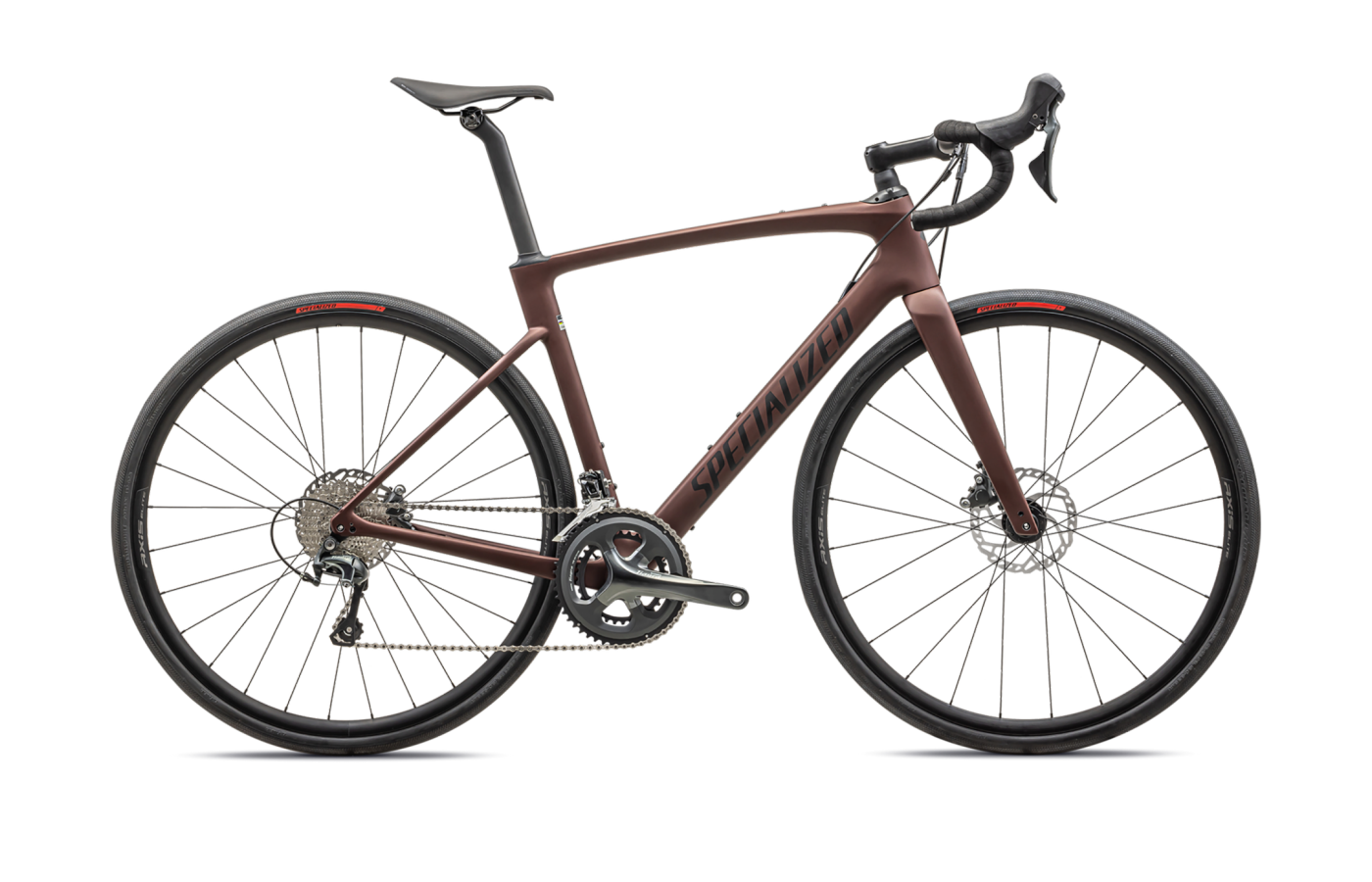
Roubaix
Specialized's endurance benchmark plays the same 36-to-40 mm-clearance game as the BMC, but adds the Future Shock — an active hydraulic damper at the head tube that does what the Roadmachine asks the frame to do. Pick it if you want suspension you can tune.
Compare →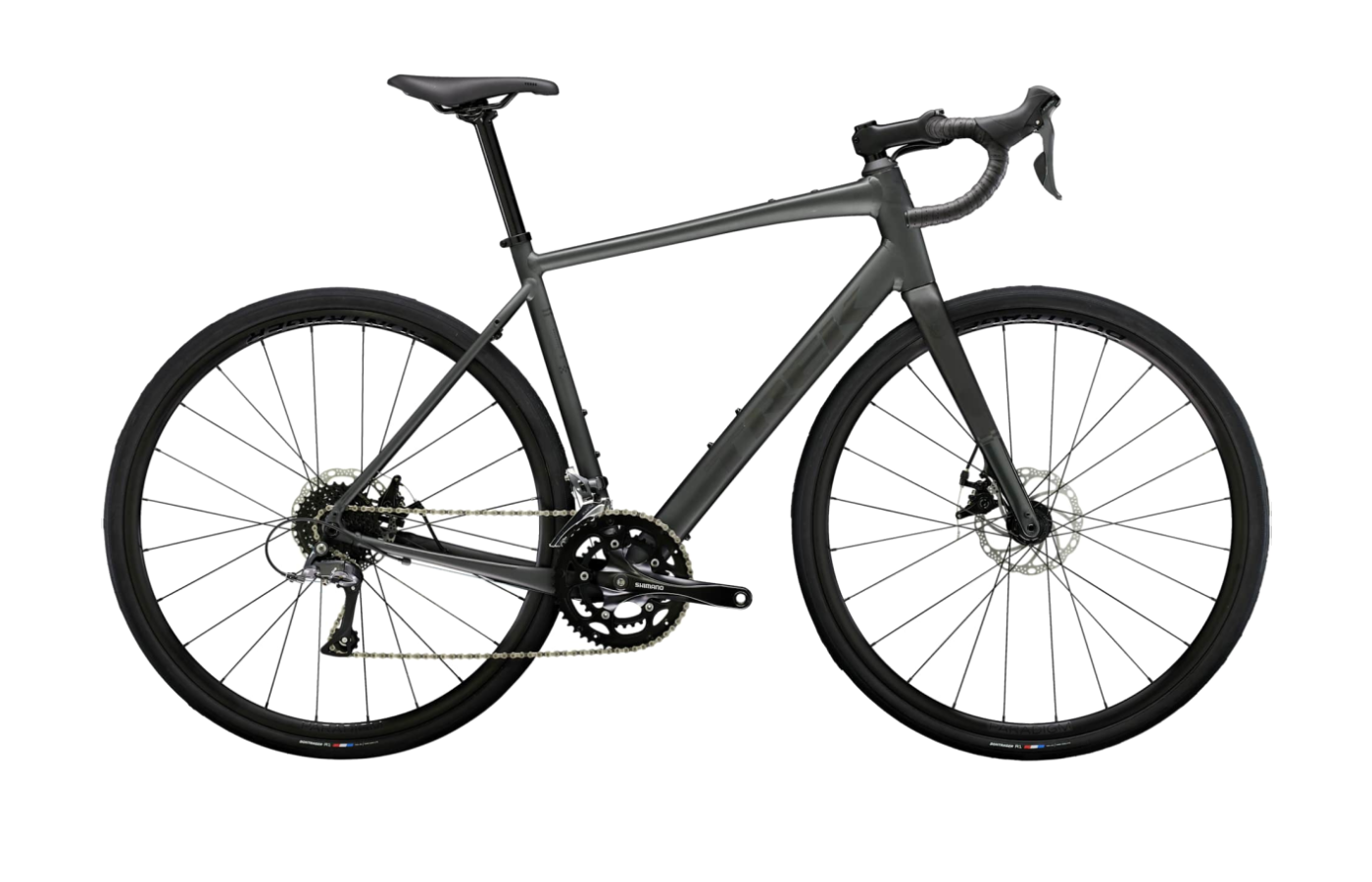
Domane
Trek's IsoSpeed decoupler is the third philosophy on the table — a literal pivot at the seat-tube/top-tube junction that lets the seatpost flex independently. A different mechanism, similar goal: erase road buzz without giving up pedaling stiffness.
Compare →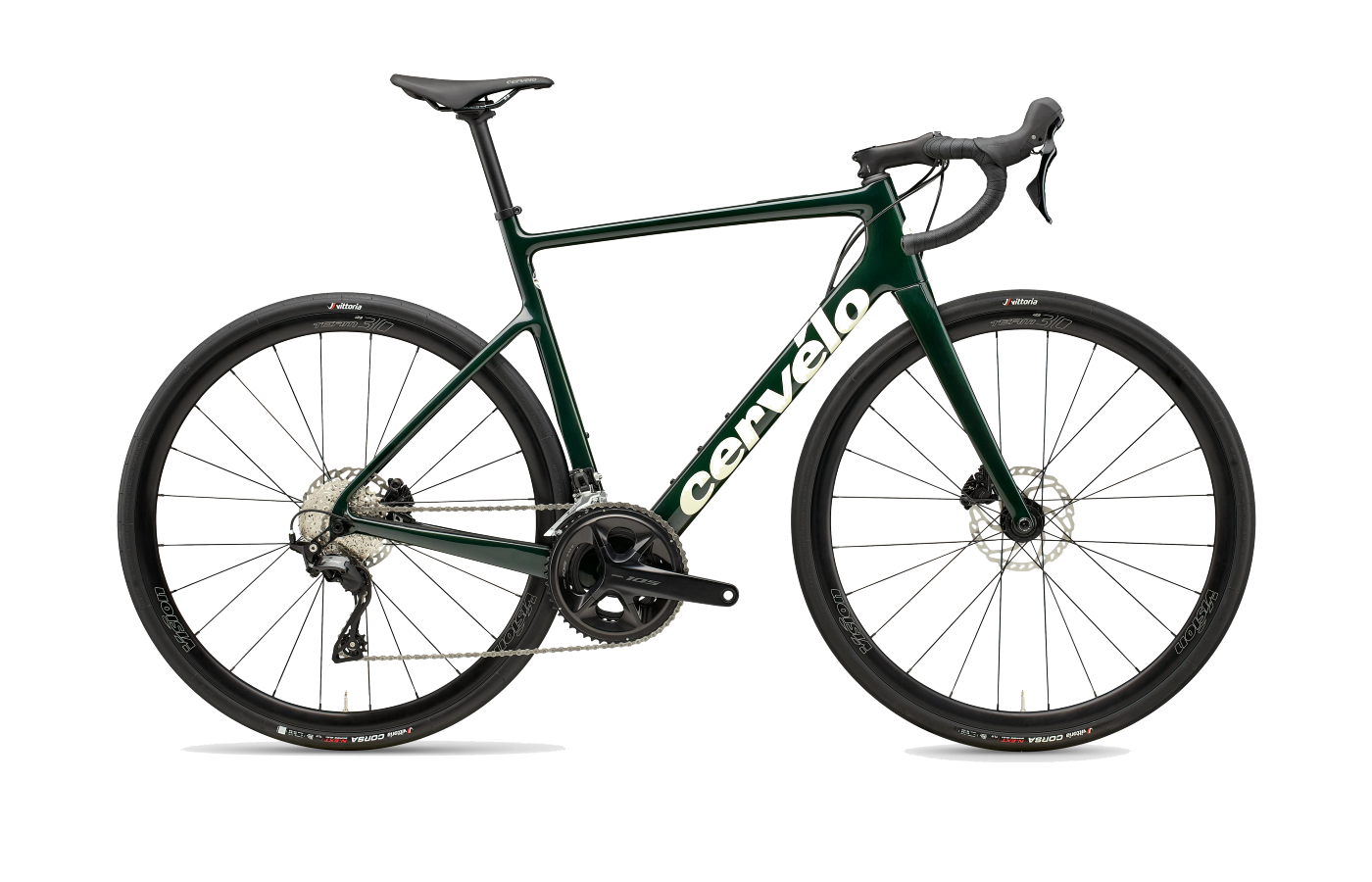
Caledonia
Cervelo's Caledonia is the sharpest-handling bike in this group — closer to a road race bike with extra stack and 35 mm tire room than a true endurance platform. The right call if the BMC feels too soft and the Pinarello too buzzy.
Compare →