Roadmachine
vsDomane
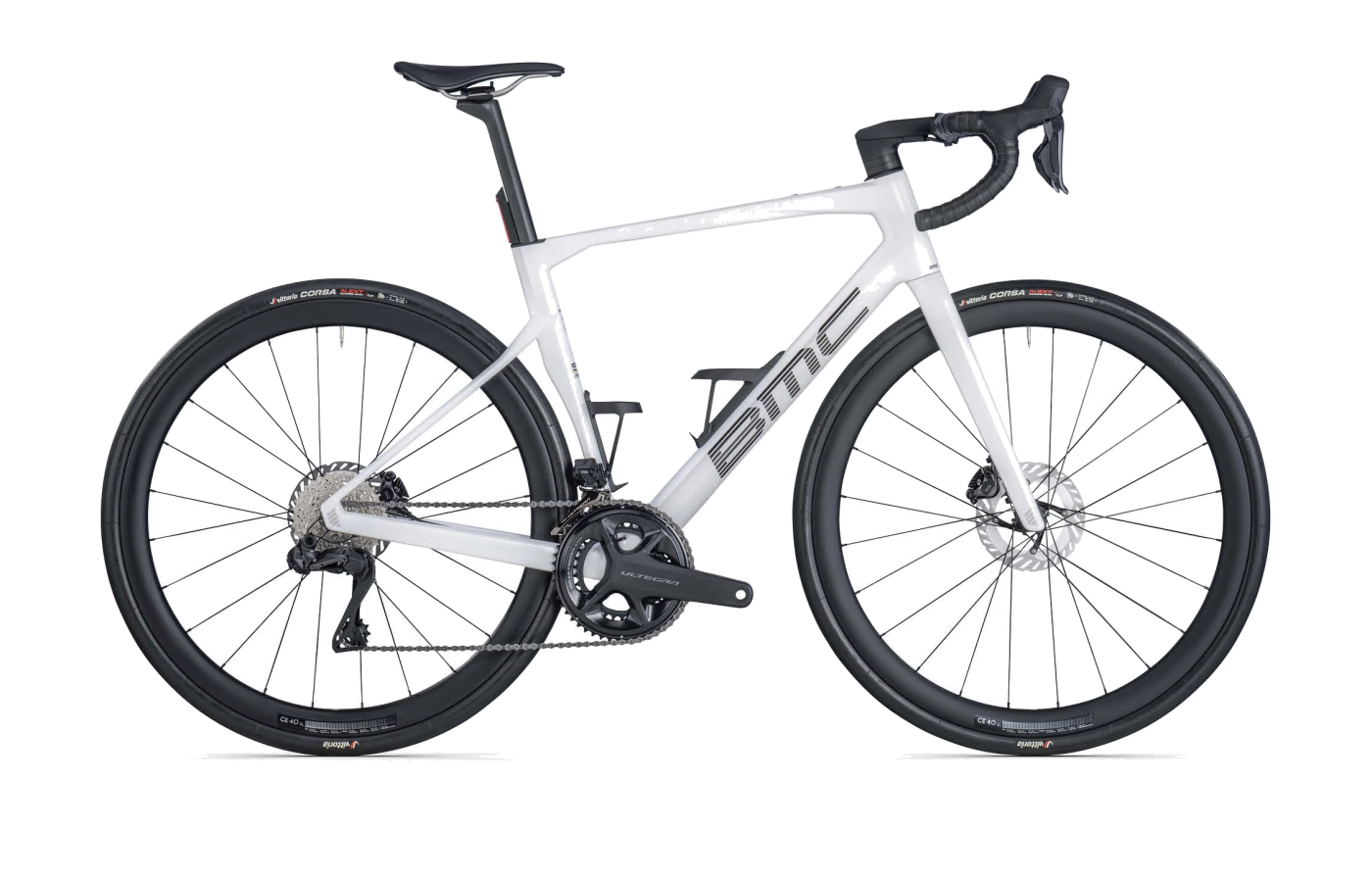
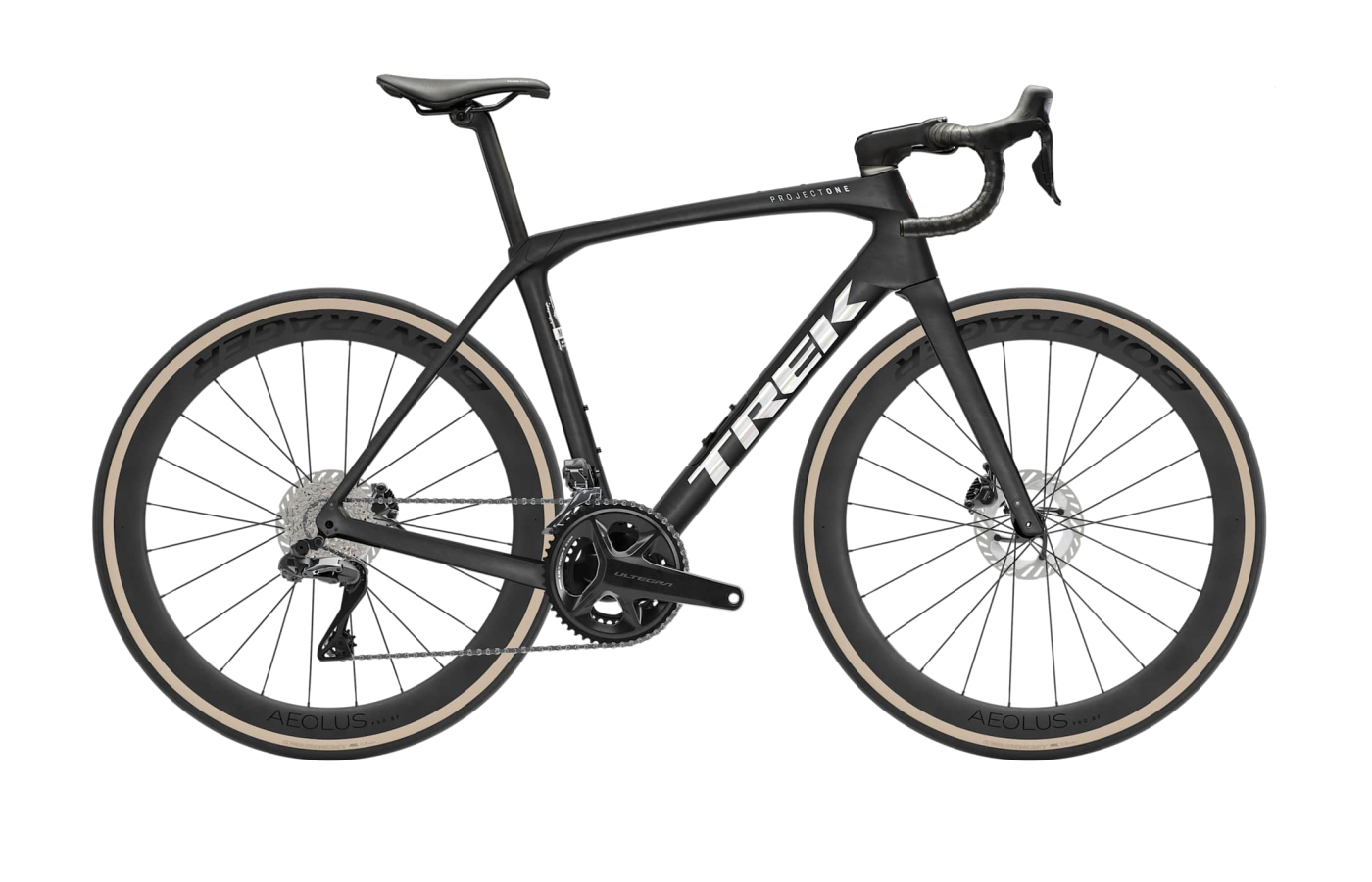
Two endurance bikes, two ways to kill road buzz.
The Roadmachine engineers compliance into the carbon. The Domane bolts a decoupler to the seat tube. Both work — they just feel completely different.
Roadmachine
- Compliance without moving parts — BMC's claimed 27% jump comes from frame architecture, not a decoupler that can creak or wear.
- Sharper handling for the segment — 415 mm chainstays and a 72.2° head angle make it feel race-bike quick when you stand on the pedals.
- Premium spec depth — even the mid-tier 01 builds ship with DT Swiss/SRAM-Force-grade kit and a power meter.
- Press-fit BB and proprietary ICS cockpit make home maintenance harder.
- Lineup starts at $3,299 — no sub-$2k option for budget buyers.
Domane
- Astonishing rear-end smoothness — the IsoSpeed decoupler measurably outclasses pure-frame compliance on rough surfaces.
- Truly wide build range — from $1,199 alloy AL 2 to $12,499 SLR 9 AXS, more entry points than almost any rival.
- T47 threaded BB — Trek's switch away from press-fit means fewer creaks and easier home servicing.
- Front-rear ride imbalance after the front IsoSpeed was removed in Gen 4.
- Recurring seatpost-creak/slip issue in early Gen 4 frames; check for Revision 4 hardware.
Editor’s analysis
Same category, opposite engineering religions — frame architecture on one side, mechanical pseudo-suspension on the other.
On paper the BMC Roadmachine and Trek Domane occupy the same slot: high-stack, long-wheelbase, 32 mm-tire endurance bikes pitched at riders who'd rather finish a 100-mile day fresh than win a town-line sprint. Both clear wide rubber, both hide storage in the down tube, both come in carbon and (for Trek) alloy. From three meters away you'd struggle to tell the philosophies apart.
Get closer and they diverge fast. The BMC Roadmachine engineers comfort straight into the carbon — kinked seatstays, a thinner seat tube, and a D-shaped post that BMC says deflect up to 20 mm under load, no moving parts involved. Reviewers measured a 27% bump in compliance over the previous generation while keeping a stiff 415 mm chainstay for snap. The cockpit on 01 builds is a one-piece ICS Carbon Evo that further filters road buzz at the bars.
The Trek Domane takes the opposite approach. Its rear IsoSpeed decoupler physically separates the seat tube from the top tube — a hinge, in essence, that lets the seat tube pivot on impact. Trek dropped the front IsoSpeed for Gen 4 to save ~300 g, leaving the front to lean on 32 mm tires and the IsoCore bar. Reviewers call the rear "dream-like" on rough tarmac; some find the front-rear balance off when the road gets really chunky.
Geometry tells the same story. The Roadmachine runs 415 mm chainstays and a 72.2° head angle (sizes 54+) — sharper for an endurance bike. The Domane stretches to 420–425 mm stays and a slacker 71.3° head angle in the middle sizes, with a low 80 mm bottom bracket drop that puts you "in" the bike. Result: the BMC feels more like a race bike that's been calmed down; the Trek feels like a long-distance cruiser that's been tuned to go fast.
Where the builds differ.
Comparing our editor's-pick builds side-by-side. Winners highlighted row-by-row — lower price and weight, and the better-spec component, each mark a point.
Build variants & pricing
The Domane spans nearly the full price range of the segment — alloy 105 to flagship Red AXS. The Roadmachine plays only in the carbon end of the pool.
Prices are current US MSRP. The Domane offers two carbon grades (800 Series OCLV on SLR, 500 Series on SL) plus an alloy frame; the Roadmachine offers two carbon grades (Premium on 01, standard on the rest). Editor's picks are tier-matched at Ultegra Di2 on the higher-grade carbon — 01 Four vs SLR 7 — for an apples-to-apples comparison.
How they fit, how they steer.
BMC at size 51 vs Trek at size 50 — the closest fit on each bike for the same rider. Stack is within 4 mm; reach is 11 mm longer on the BMC. Both run 71° head angles in this size band; chainstays are 5 mm longer on the Domane (420 vs 415 mm).
Which size should I buy?
Size recommendations from stack, reach, and effective top tube. The Domane offers more granularity (eight sizes vs six), helpful for riders at the edges of the range.
→These are starting points. Flexibility, riding style, and preferred position all shift the answer — if you’re between sizes, a professional fit beats a chart.
What the magazines said.
Published reviews from trusted cycling outlets. Click through for the full write-up.
Which one should you buy?
If you want endurance comfort that still rides like a race bike, get the Roadmachine. If you want the smoothest rear end in the segment and the widest build range, get the Domane.
Roadmachine
If you want one bike for fast group rides, sportives, and the occasional unmaintained backroad — and you'd rather have engineered carbon flex than a mechanical decoupler — the Roadmachine is the sharper tool. The 415 mm stays and 01 Premium carbon make it feel race-bike eager when you stand up.
Domane
If most of your riding is long, mixed-surface, and you value rear-end isolation above all else — and you want a real entry point at $1,199 — the Domane is the safer pick. The IsoSpeed system is genuinely unique, and the alloy AL builds are a class-leading way in.
Questions buyers actually ask.
Short answers to the things we get emailed about most often.
01Which is more comfortable on rough roads?
Reviewers consistently describe the Trek Domane's rear end as the smoothest in the segment — "dream-like" and "on cloud 9" on broken tarmac, thanks to the IsoSpeed decoupler that physically pivots the seat tube on impacts. The catch is front-rear balance: Trek removed the front IsoSpeed in Gen 4 to save ~300 g, so the front end can feel "punishing" when the rear is still swallowing hits.
The BMC Roadmachine approaches comfort through frame architecture instead — kinked seatstays and a flexy D-shaped post deliver a claimed 27% compliance gain, with up to 20 mm of vertical seatpost travel. Reviewers call it "the most compliant endurance bike I have ever ridden." It's more balanced front-to-rear than the Domane, but the rear isn't quite as plush as the IsoSpeed-equipped Trek on truly chunky surfaces.
02What's the maximum tire clearance?
BMC Roadmachine: 40 mm officially — gravel-bike-wide for an endurance platform.
Trek Domane: 38 mm officially. Some reviewers report fitting 40 mm or even 43 mm tires with care, but Trek's spec sheet stops at 38.
Both ship with 32 mm Vittoria Corsa N.EXT (BMC) or Bontrager Kwaremont (Trek SLR/SL) on the higher builds. Either bike will handle hardpack and light gravel; for anything rougher, a dedicated gravel bike is still a better tool.
03Which has the better entry-level option?
The Trek Domane, by a wide margin. The Domane lineup starts at $1,199 with the alloy AL 2 (Shimano Claris) and includes a $1,799 AL 4 (Tiagra) and a $2,099 AL 5 (105). BikeRadar named the AL 2 their "Budget Road Bike of the Year" in 2024.
The Roadmachine starts at $3,299 with the carbon Three (Shimano 105 mechanical) — there's no alloy or sub-$3k option. If you're shopping under $3,000, the Domane is the only one of these two in your price range.
04Are the editor's-pick builds comparable on paper?
Yes — that's why they were picked. The BMC 01 Four ($8,299) and Trek SLR 7 ($8,499) both run Shimano Ultegra Di2 on each platform's higher-grade carbon (BMC's 01 Premium, Trek's 800 Series OCLV). Within $200 of each other, same drivetrain tier, same carbon tier — so the spec table differences come from frame engineering and house-brand parts, not drivetrain mismatch.
The biggest spec contrast is wheels: the Trek SLR 7 ships with deeper 51 mm Bontrager Aeolus Pro 51 wheels stock, while the BMC 01 Four runs 40 mm CE 40 SL carbon hoops.
05Are the integrated cockpits hard to live with?
BMC's higher-end 01 builds use the ICS Carbon Evo one-piece cockpit, praised by reviewers as one of the best-feeling on the market — but it's offered in a single width per frame size, so dialing in fit may require a dealer swap. Adjusting stem length means buying a new unit. The lower 01 Three / 01 Four / Four / Two / Three builds use a more conventional ICS2 stem with a separate Easton or BMC alloy bar — much friendlier to swap.
Trek uses a separate RCS Pro stem on every Domane carbon build, with the bar bolted on conventionally. Cables still route through the headset on Gen 4, but the bar/stem can be swapped without rebuilding the whole front end. It's the more user-friendly approach, and reviewers note it as a real win for fit flexibility.
06Has the Domane Gen 4 had any reliability issues to know about?
Yes — multiple long-term reviews flag a recurring seatpost creak/slip on early Gen 4 frames, traced to the IsoSpeed wedge/tongue interface. One reviewer reported their seatpost dropping nearly 2 cm mid-ride. Trek has shipped revised hardware (Revision 2 and Revision 4 wedges) to address it; if you're buying new in 2026, ask the dealer to confirm the latest revision is fitted.
Reviewers also noted that the Gen 4's fully internal cable routing through the headset bearings can expose them to sweat and water contamination, requiring more frequent service than older designs. Heavier riders (over 80 kg / 176 lbs) reported these issues more often.
07Which is more serviceable long-term?
The Trek Domane has the structural advantage: a T47 threaded bottom bracket across the lineup (much friendlier than press-fit) and a separate stem that lets you swap bars without a hose bleed.
The BMC Roadmachine uses a press-fit bottom bracket and a one-piece ICS Carbon Evo cockpit on 01 builds — both of which require more dealer involvement. BMC's lower builds use a conventional stem/bar and are easier to live with.
On the flip side, BMC's compliance comes from frame shape rather than mechanical parts, so there's nothing in the rear triangle to wear out or creak the way IsoSpeed has on early Gen 4 Domanes.
08Which one climbs better?
Closer than you'd think. The Roadmachine 01 Four claims around 8.0 kg without pedals; the Trek SLR 7 sits at roughly 7.99 kg in the size 56 — essentially identical at this tier. Frame stiffness is also similar; reviewers describe both as efficient under power, with Trek's IsoSpeed adding minimal hardware weight in Gen 4.
Where they diverge is feel. The BMC's shorter 415 mm chainstays and stiffer bottom bracket area make it feel "snappier" out of the saddle on short climbs — multiple reviewers called it "reactive and efficient." The Domane is more of a steady-rhythm climber, rewarding seated power over standing attacks. If you climb mostly seated, neither will hold you back; if you stand often, the BMC has the edge.
Similar bikes
If your priorities don’t map cleanly onto either of these, one of these adjacent bikes probably fits better.
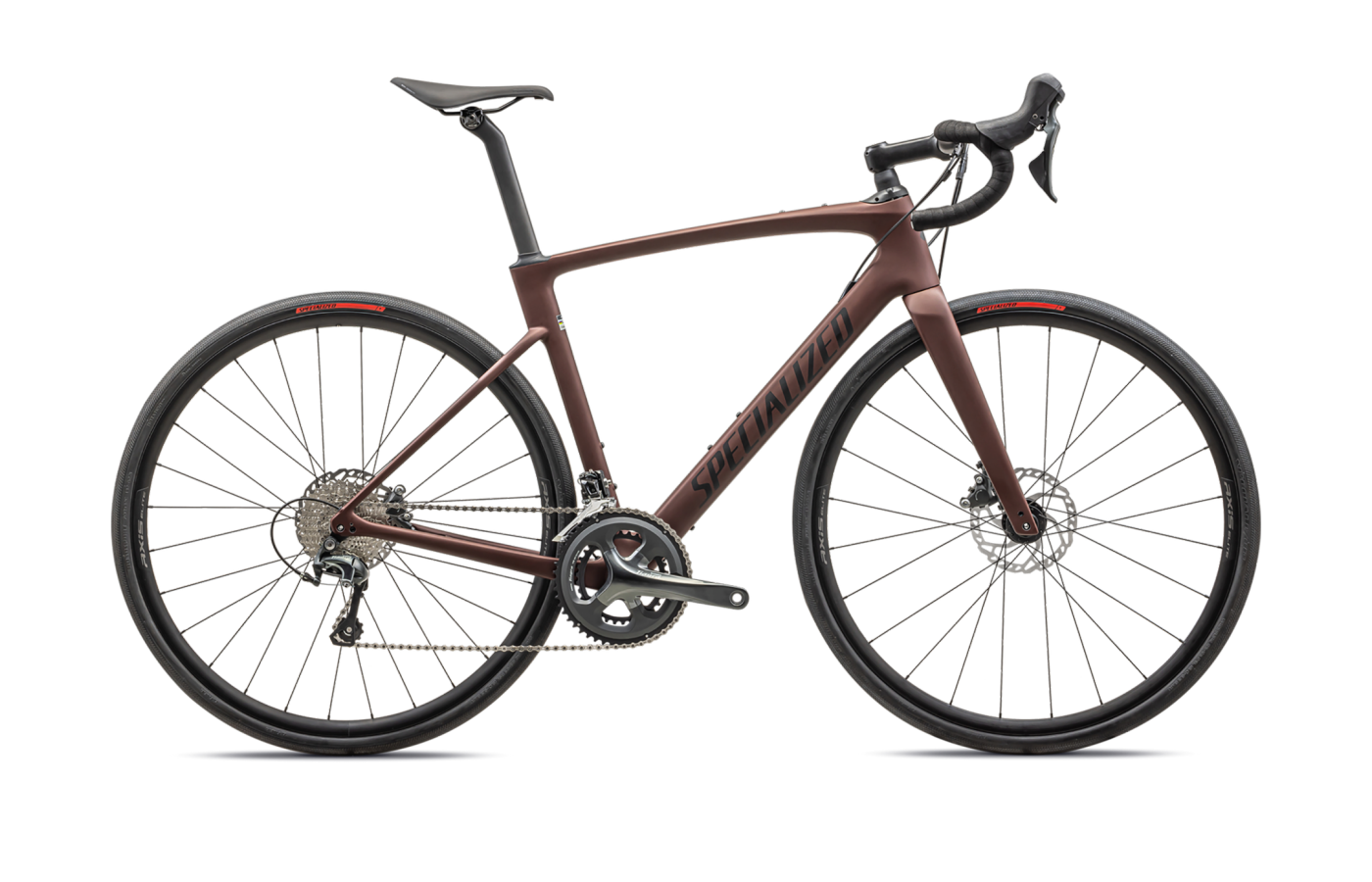
Roubaix
The Specialized Roubaix is the Domane's closest archrival, but it bolts a Future Shock damper into the head tube instead of a rear decoupler — front-end suspension where the Trek has none. Same 40 mm tire clearance; very different ride feel.
Compare →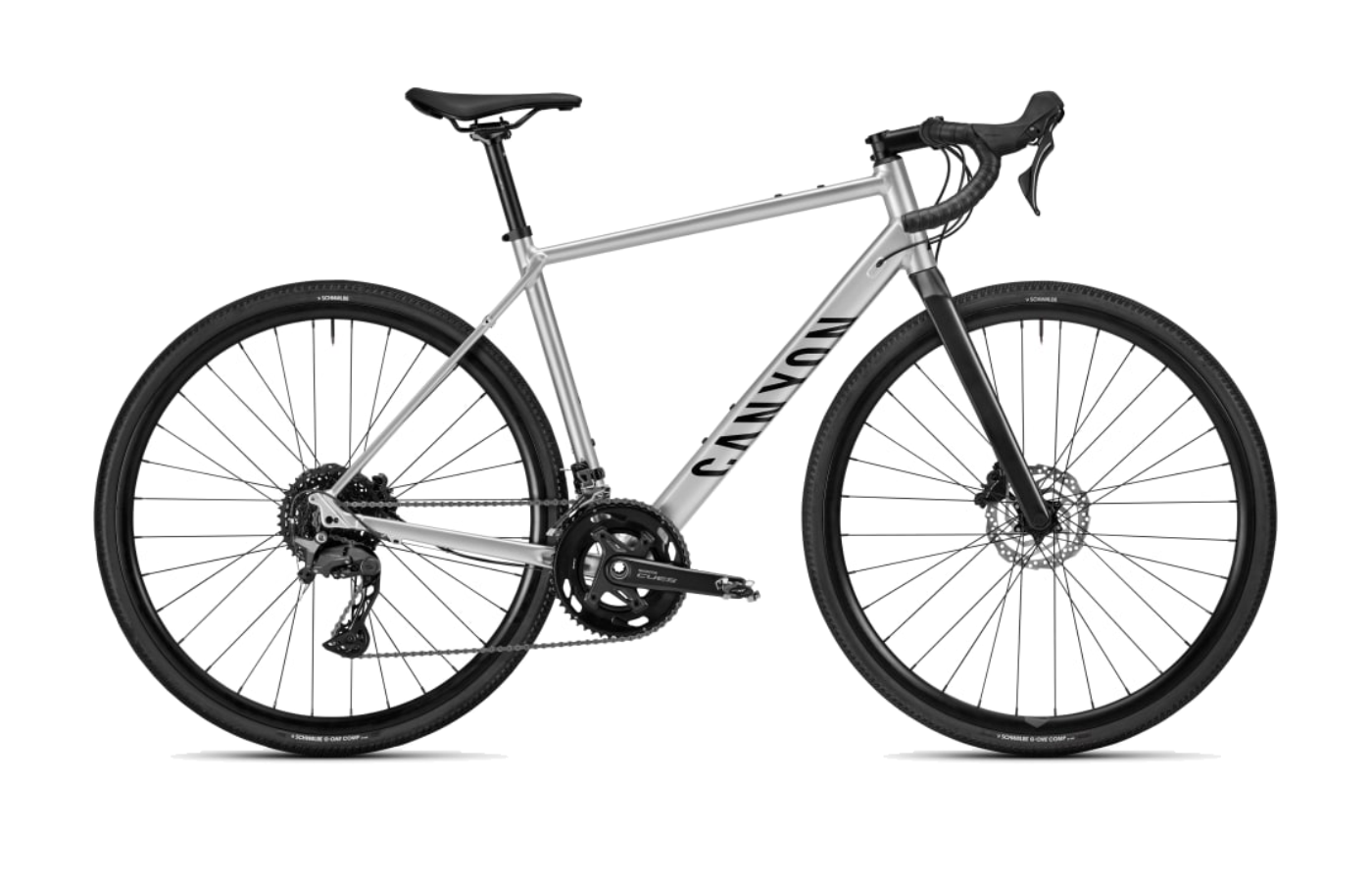
Endurace
The Canyon Endurace gets you most of the endurance-bike script — long wheelbase, comfort-focused VCLS leaf-spring seatpost, wide tire clearance — at direct-to-consumer pricing roughly 30% cheaper. The catch: no local dealer, no demos.
Compare →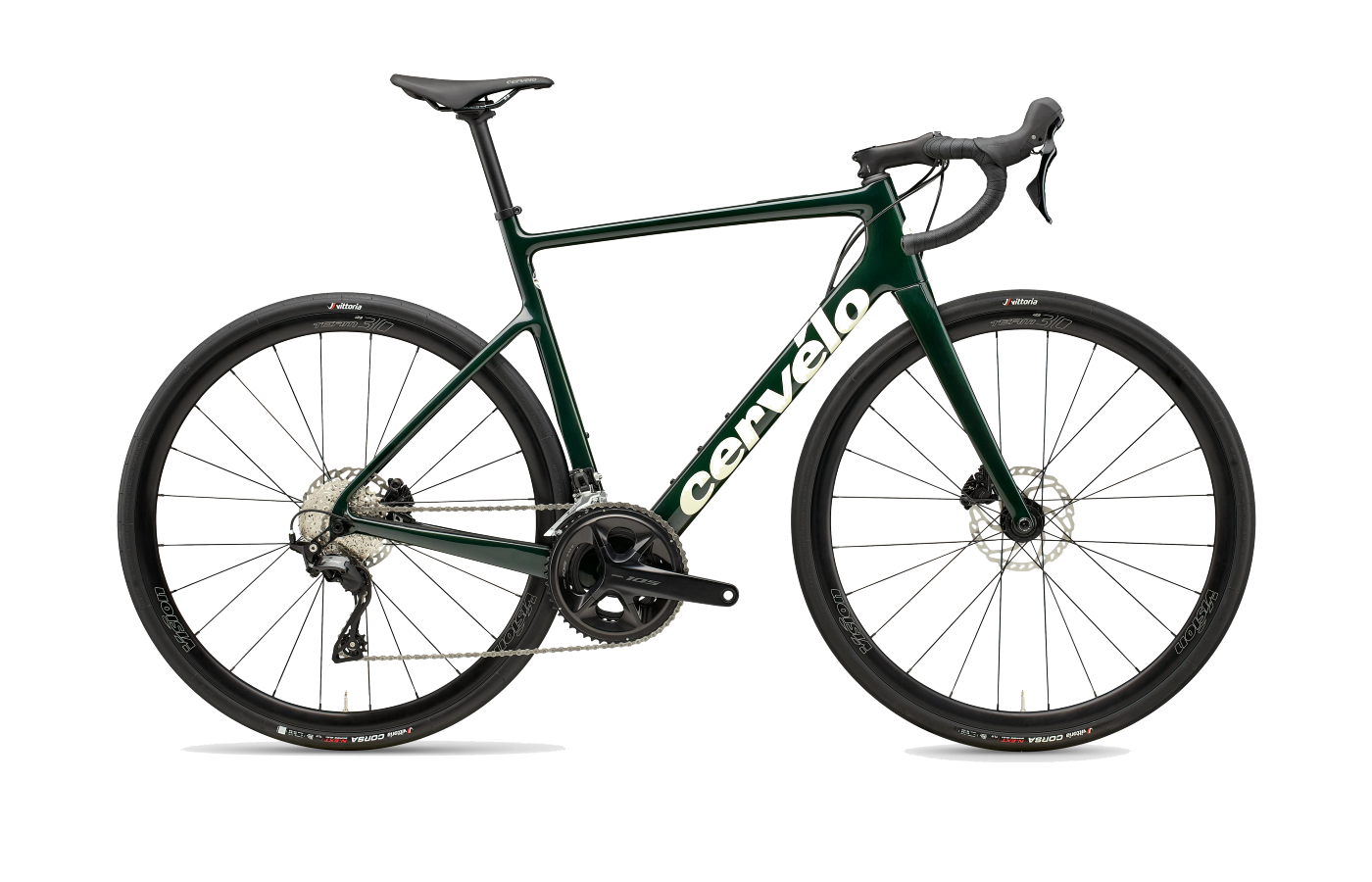
Caledonia
The Cervelo Caledonia sits philosophically next to the BMC — racy, stiff, no mechanical suspension, just clearance for 34 mm tires and a slightly more aggressive position. The pick if the Roadmachine appeals but you want a leaner, less-feature-laden frame.
Compare →