Scalpel HT
vsProcaliber
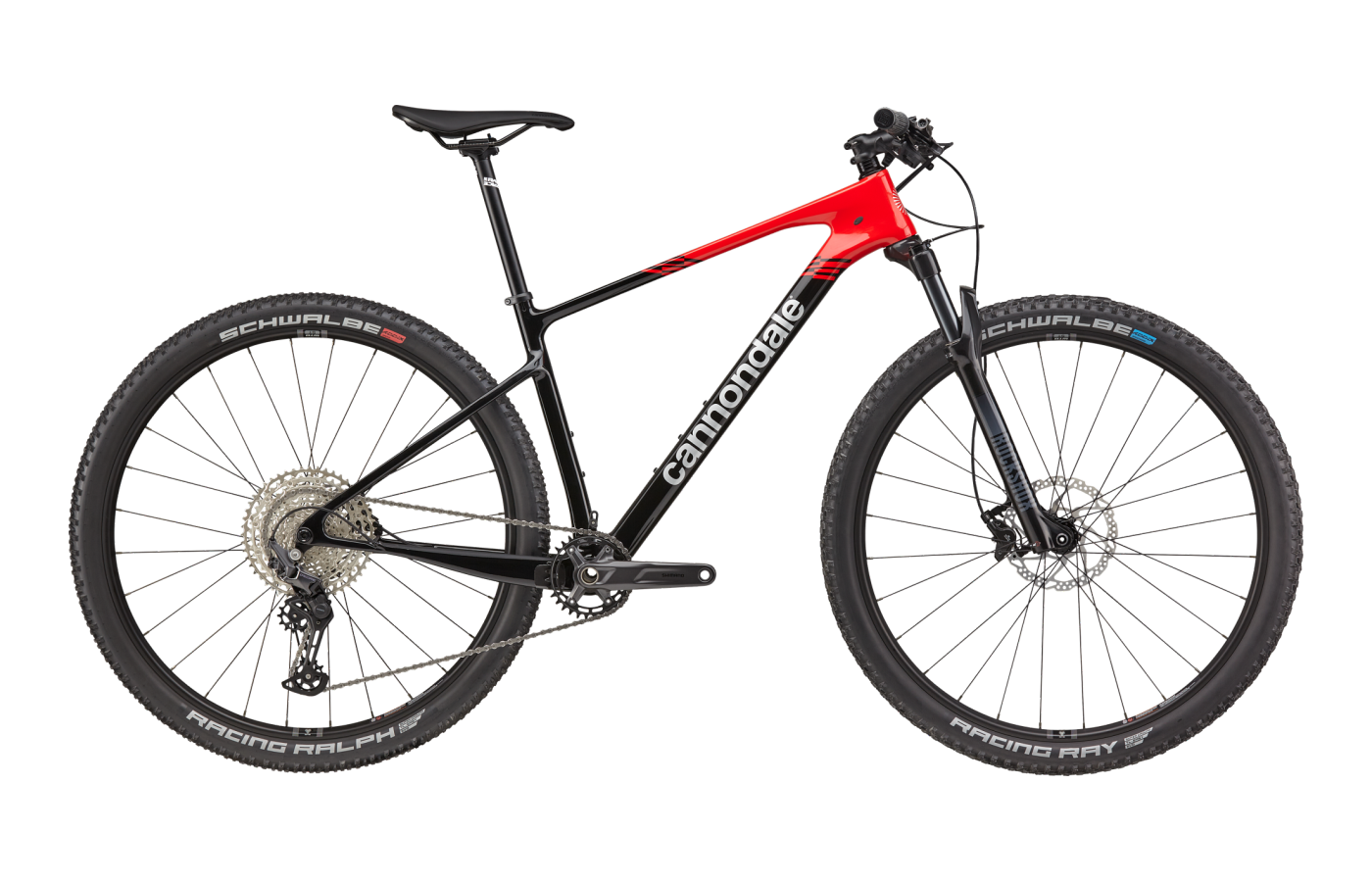
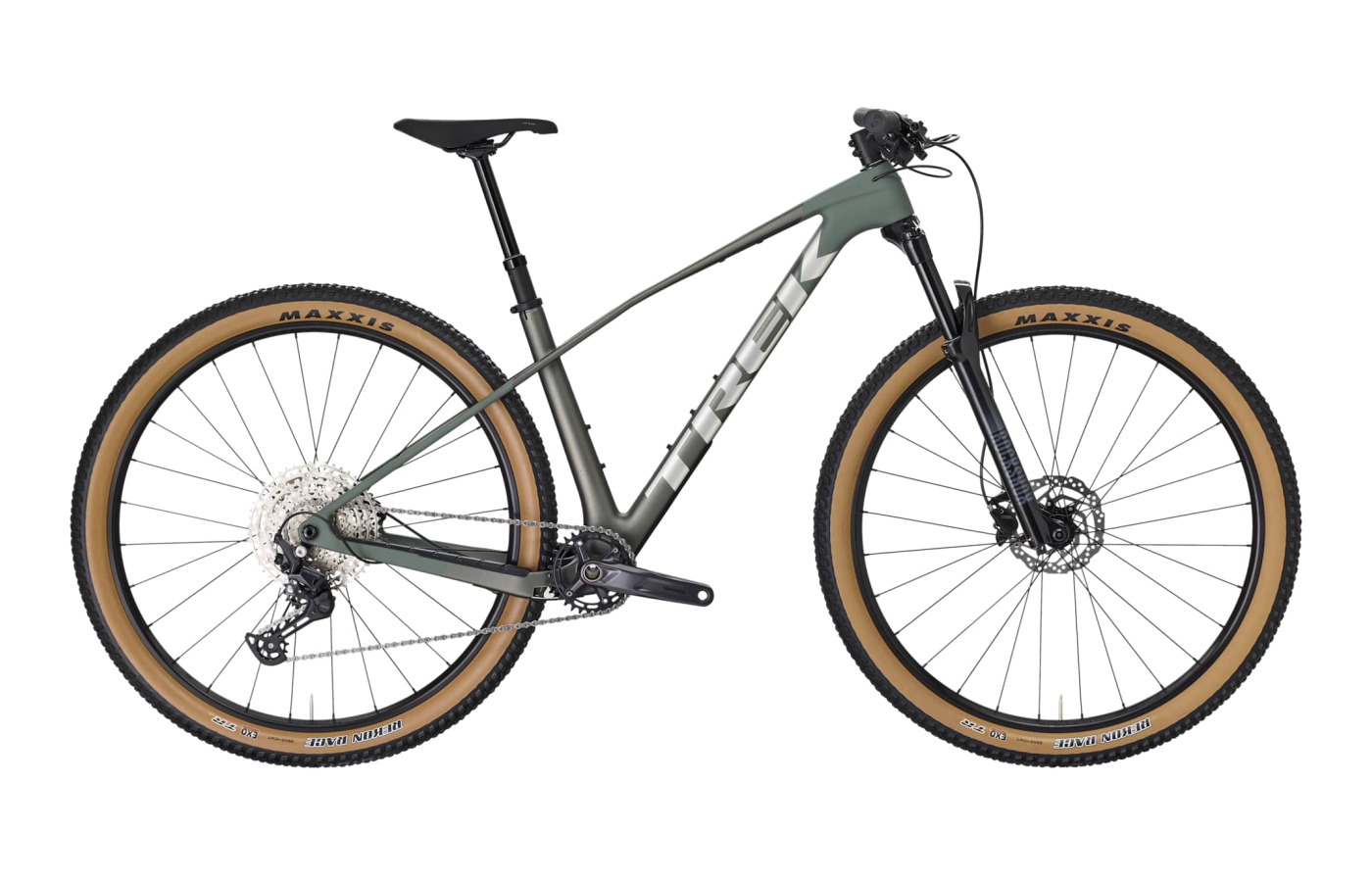
Two carbon XC hardtails that broke up with old-school XC.
The Scalpel HT chases compliance and downhill composure. The Procaliber Gen 3 chases zingy, snappy, race-day feel.
Scalpel HT
- Genuinely compliant rear end — flex-tuned chainstays plus a 27.2 mm seatpost smooth out chatter that hammers most hardtails.
- Slack, descent-ready geometry — 66.5° HTA with the 110 mm fork lets it run trails that would terrify an old XC hardtail.
- Proportional Response chainstays — 430–445 mm by size keeps weight balance honest as the frame grows.
- Stock 2.25" Schwalbe tires are a near-universal complaint — plan on a 2.4" upgrade.
- 27.2 mm seatpost limits dropper-post options, and Cannondale doesn't ship one stock.
Procaliber
- Same OCLV frame across the lineup — the entry-level 9.5 gets the exact same ~1,200 g chassis as the flagship 9.7.
- Snappy, reactive ride — short 430 mm chainstays and a stiff frame deliver the sprint response old-school XC riders want.
- Friendlier service standards — side-entry cable routing, no Knock Block, standard 31.6 mm seatpost for any aftermarket dropper.
- Very low 309 mm BB invites pedal strikes on technical climbs.
- IsoBow comfort is subtle — reviewers split on whether they can actually feel it working.
Editor’s analysis
Same category, same wheel size, two completely different theories of what an XC hardtail should feel like in 2025.
Both bikes have landed on a 67-degree head tube angle — slack by old-XC standards, mild by trail-bike standards. From there they diverge. The Cannondale Scalpel HT pairs that head angle with a 110 mm fork on the carbon builds (which actually slackens it to 66.5 degrees), a low bottom bracket drop, and a deliberately compliant rear triangle. The Trek Procaliber Gen 3 sticks with a 120 mm fork at 67 degrees, a very low 309 mm BB height, and a stiffer-feeling structural "IsoBow" yoke in place of the old IsoSpeed decoupler.
On the trail, reviewers describe the Scalpel HT as the plusher, more planted bike. The 27.2 mm seatpost and the leaf-spring chainstays do real work — testers consistently called out being able to stay seated and on power across rocky climbs that beat them up on stiffer hardtails. It's the hardtail you ride when you want to do five-hour marathons and the occasional steep, rooty descent. BikeRadar went so far as to say a stem swap gives it the handling of an enduro bike.
The Procaliber leans the other direction. Multiple testers used the same word — "zingy" — to describe how it feels under power, with an "energetic snap" out of the saddle and short 430 mm chainstays that make it flick through tight switchbacks. The IsoBow's compliance is real but subtle; reviewers admit the 2.4-inch tires do most of the comfort work. It's a bike for hardpack flow and punchy climbs, not for soaking up rock gardens.
Put it this way: the Scalpel HT is the hardtail you buy when your local trails make you wonder if you should have bought a full-suspension bike. The Procaliber is the hardtail you buy when you're sure you want a hardtail.
Where the builds differ.
Comparing our editor's-pick builds side-by-side. Winners highlighted row-by-row — lower price and weight, and the better-spec component, each mark a point.
Build variants & pricing
Both lineups are tight — two builds each. The Scalpel HT spans alloy-ish entry pricing to a flagship Lefty build; the Procaliber Gen 3 stays under $3k.
Prices are current US MSRP. The Scalpel HT's flagship Hi-MOD Ultimate ($6,999) jumps two component tiers and gets the Lefty Ocho fork — there's no equivalent halo build in the Procaliber Gen 3 lineup.
How they fit, how they steer.
Stack matches almost exactly (Scalpel HT L: 629 mm vs Procaliber ML: 614 mm), but reach diverges — 444 mm on the Cannondale L vs 445 mm on the Trek ML. The Procaliber's 67° HTA is fractionally steeper than the Cannondale's 66.5° (with the 110 mm fork), and chainstays match at 435–440 mm.
Which size should I buy?
Trek offers an ML size that splits the gap between M and L — useful for riders who fall between conventional sizes.
→These are starting points. Flexibility, riding style, and preferred position all shift the answer — if you’re between sizes, a professional fit beats a chart.
What the magazines said.
Published reviews from trusted cycling outlets. Click through for the full write-up.
Which one should you buy?
If you want a hardtail that can survive trails it has no business being on, get the Scalpel HT. If you want a hardtail that feels like a hardtail should — sharp, snappy, fast — get the Procaliber.
Scalpel HT
If your local rides routinely include rocky, rooty, technical sections and you want a hardtail that won't beat you up over a five-hour day, this is the one. The compliant rear end and slack front make it the rare XC hardtail you can ride hard on terrain that should belong to a full-suspension bike.
Procaliber
If you want the classic hardtail experience — a stiff, reactive frame that rewards aggressive pedaling on hardpack and flowy singletrack — the Procaliber delivers. The same OCLV frame across every build means you can buy the entry model and upgrade components over time without ever outgrowing the chassis.
Questions buyers actually ask.
Short answers to the things we get emailed about most often.
01Which is more comfortable on long, rough rides?
The Cannondale Scalpel HT, by a meaningful margin. Its 27.2 mm seatpost, dropped seatstays, and sculpted leaf-spring chainstays are engineered to flex, and reviewers consistently describe being able to stay seated and on power over chatter that forces them off the saddle on stiffer hardtails.
The Procaliber's IsoBow yoke adds some vertical compliance, but multiple testers called the effect subtle — most of the Procaliber's bump absorption comes from its 2.4-inch tires, not the frame.
02Which is faster on a smooth XC race course?
Probably the Trek Procaliber. Reviewers consistently describe it as "snappy," "zingy," and "reactive," with a stiff frame that translates pedal input into immediate forward motion. Short 430 mm chainstays make it feel agile through tight corners and easy to lift over obstacles.
The Scalpel HT isn't slow — it's an efficient climber with a steep seat tube — but its tuned compliance trades a sliver of pure pedaling stiffness for ride comfort. On a smooth, flowy course, the Trek's edge in snap will likely win out.
03Which handles technical descents better?
The Scalpel HT, especially with the 110 mm fork on the carbon builds. That 110 mm fork drops the head angle to 66.5° — significantly slacker than the Procaliber's 67°. Combined with a low bottom bracket and the bike's natural compliance, reviewers describe it as feeling "far more composed" than competitors on rough descents, with one tester saying a stem swap gives it near-enduro handling.
The Procaliber holds its own on flowy descents thanks to its stout 35 mm-stanchion fork and confident geometry, but it's less willing to charge into truly chunky terrain.
04What's the deal with the Scalpel HT's Lefty Ocho fork?
Only the flagship Hi-MOD Ultimate ($6,999) gets the Lefty Ocho — the carbon builds run a conventional RockShox fork. The Lefty is Cannondale's signature single-leg design with needle bearings, and reviewers praise it as "incredibly sensitive" under braking and cornering loads thanks to its upside-down geometry.
It's polarizing — you either love the look or hate it — but the engineering is real. If you want it, you have to commit to the top-tier build.
05How upgrade-friendly are these frames?
The Trek Procaliber is the more upgrade-friendly platform. It uses the same OCLV Mountain Carbon frame across the entire lineup, so a 9.5 owner can incrementally swap parts toward a 9.7-equivalent build over time. It also uses a standard 31.6 mm seatpost (open dropper compatibility), side-entry cable routing, and a UDH derailleur hanger.
The Scalpel HT's 27.2 mm seatpost limits dropper options dramatically, and one reviewer noted a bottle-cage boss interfering with full insertion of a 125 mm dropper. The frame itself is excellent, but it's a less flexible foundation for component upgrades.
06Are dropper posts included?
Cannondale Scalpel HT Carbon 3: No dropper stock — and the 27.2 mm seatpost limits aftermarket options.
Trek Procaliber 9.5 Gen 3: No dropper on the 9.5 either, but the standard 31.6 mm seatpost diameter means almost any aftermarket dropper will fit. Reviewers of the 9.7 confirm a 150 mm dropper ships on higher trims.
For either bike at the editor's-pick price point, budget for adding a dropper — the geometry deserves it.
07What tire clearance do they have?
Scalpel HT: roughly 2.4" (about 57 mm). The frame officially supports 2.4" tires and reviewers consistently recommend swapping the stock 2.25" Racing Ray/Ralph for wider rubber.
Procaliber Gen 3: roughly 2.4" as well (about 61 mm). The 9.5 already ships with 2.4" tires, so you don't need to upgrade out of the box.
Neither is a downcountry trail bike — both top out around 2.4" and aren't built for plus-size 2.6"+ rubber.
08Do these come with electronic drivetrains?
Not at the editor's-pick price point. Both the Scalpel HT Carbon 3 and Procaliber 9.5 Gen 3 run mechanical Shimano Deore M6100 12-speed groupsets — solid, reliable, and budget-friendly.
If you want wireless: the Scalpel HT Hi-MOD Ultimate ($6,999) runs SRAM XX1 Eagle AXS, and Trek sells a Procaliber 9.7 AXS variant (priced higher than the 9.5) with SRAM GX Eagle Transmission. Neither lineup offers a true mid-priced AXS option.
Similar bikes
If your priorities don’t map cleanly onto either of these, one of these adjacent bikes probably fits better.
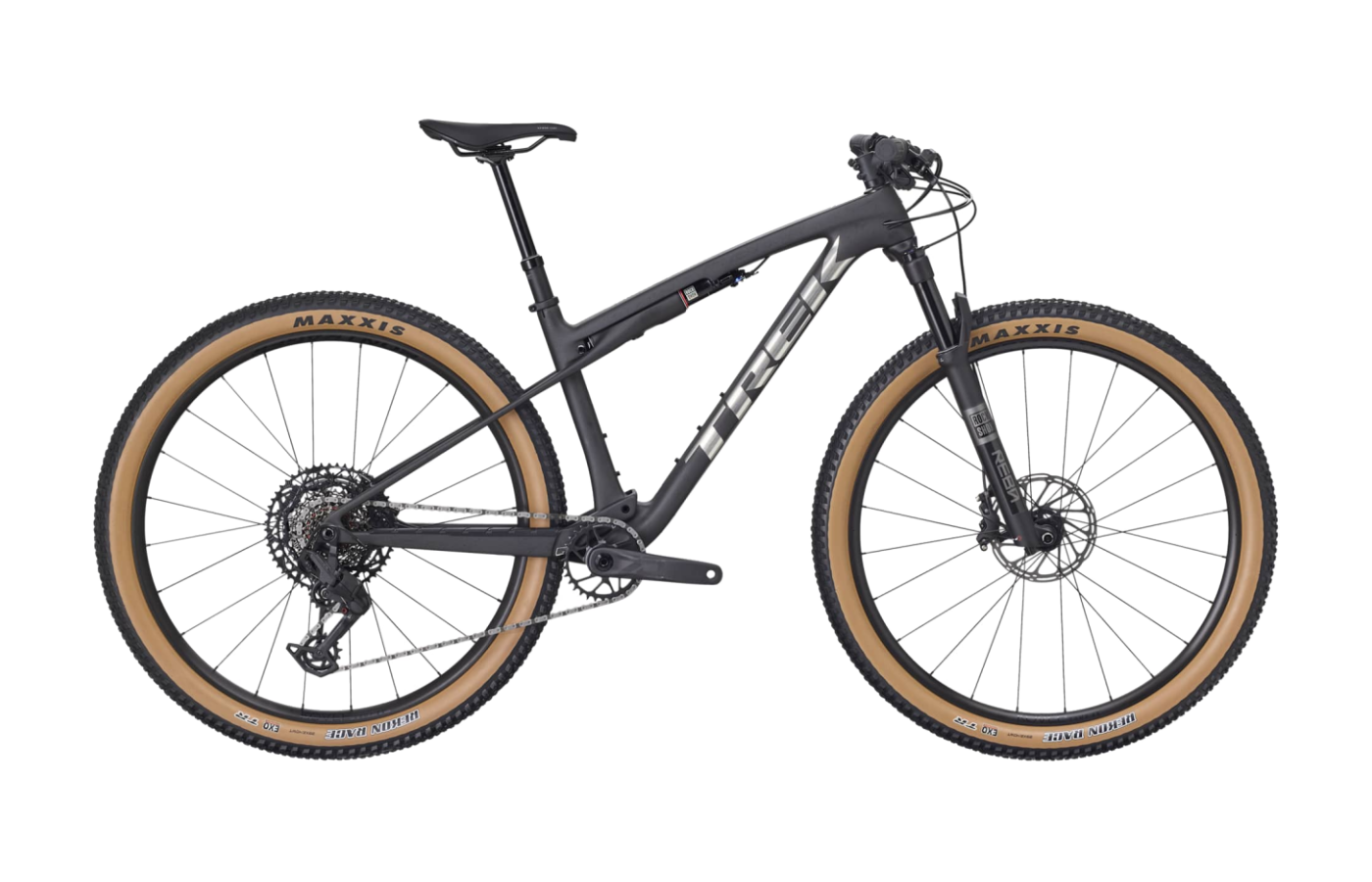
Supercaliber
If you can't decide between hardtail and full-suspension, the Trek Supercaliber splits the difference with 80 mm of rear travel via a single shock-strut. Race-bred, marathon-friendly, and lighter than most short-travel full-suspension bikes.
Compare →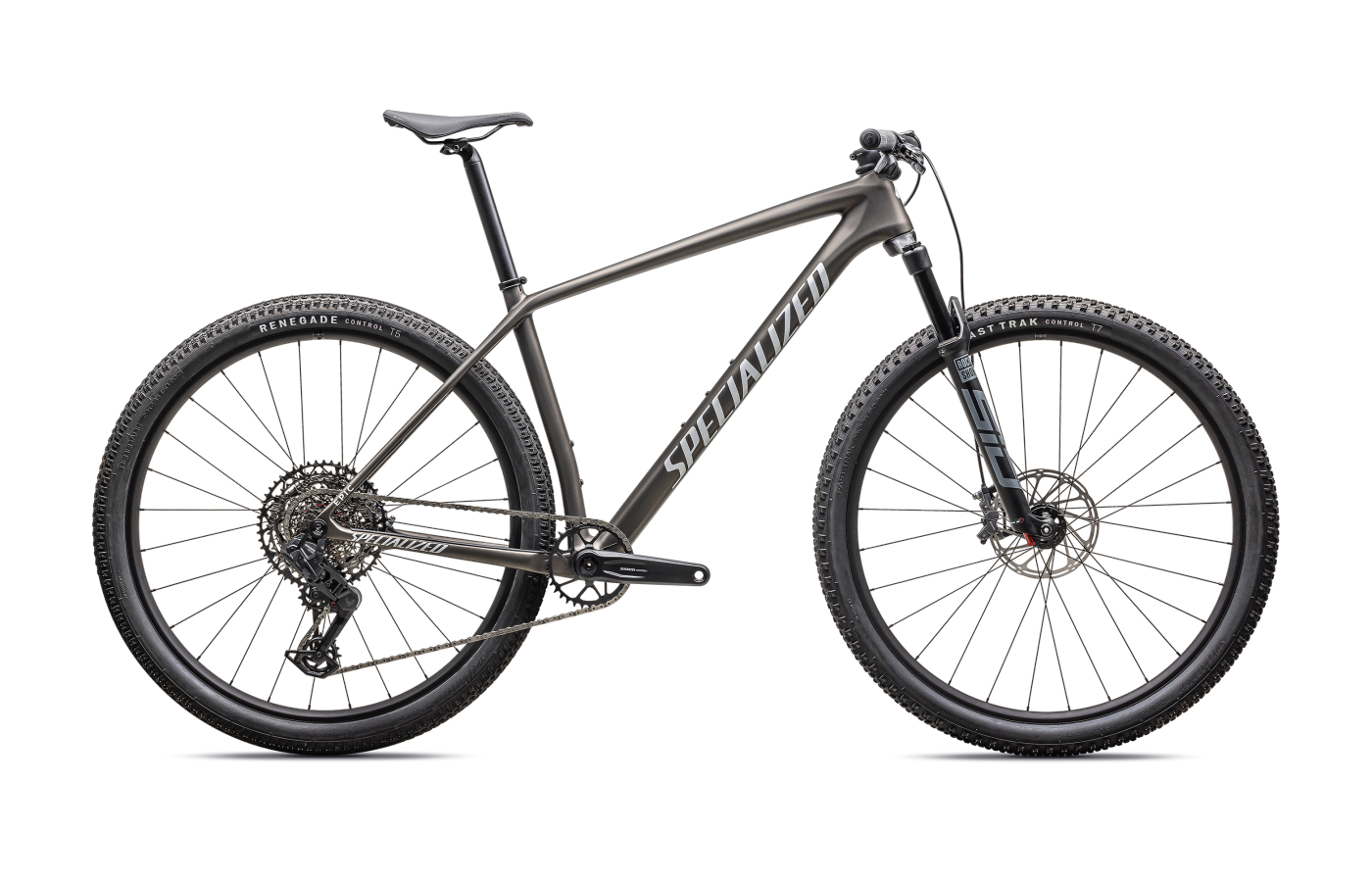
Epic Hardtail
The Specialized Epic Hardtail is the classic XC race weapon — extreme lightweight construction and sharper, more traditional handling than the deliberately slack Cannondale. The bike for riders who prioritize grams and snap over compliance.
Compare →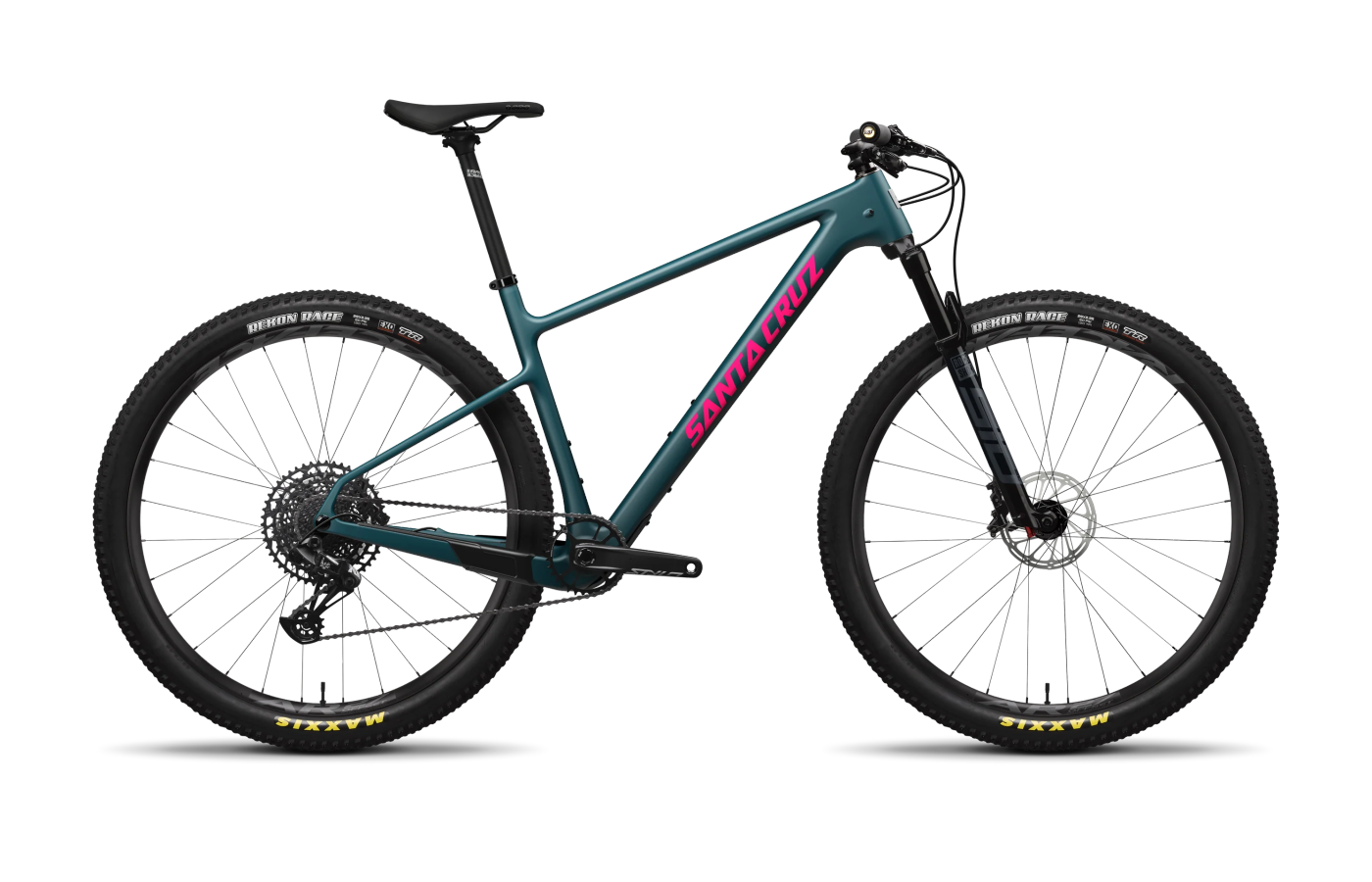
Highball
The Santa Cruz Highball is the boutique pick — Santa Cruz's take on a comfort-leaning carbon hardtail with their own layup philosophy. Smaller production runs and a price premium come with the territory.
Compare →