Scalpel
vsF-Podium
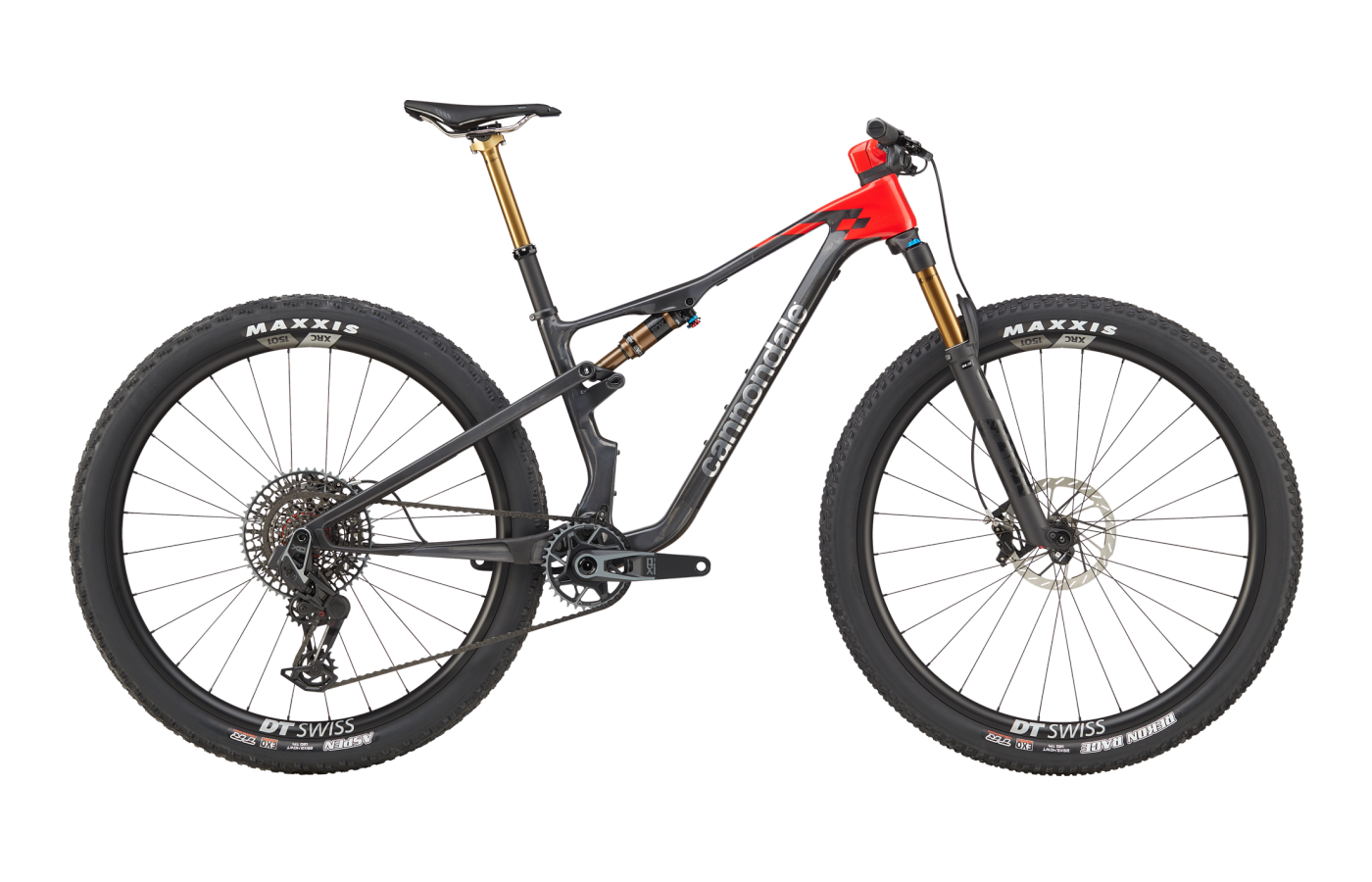
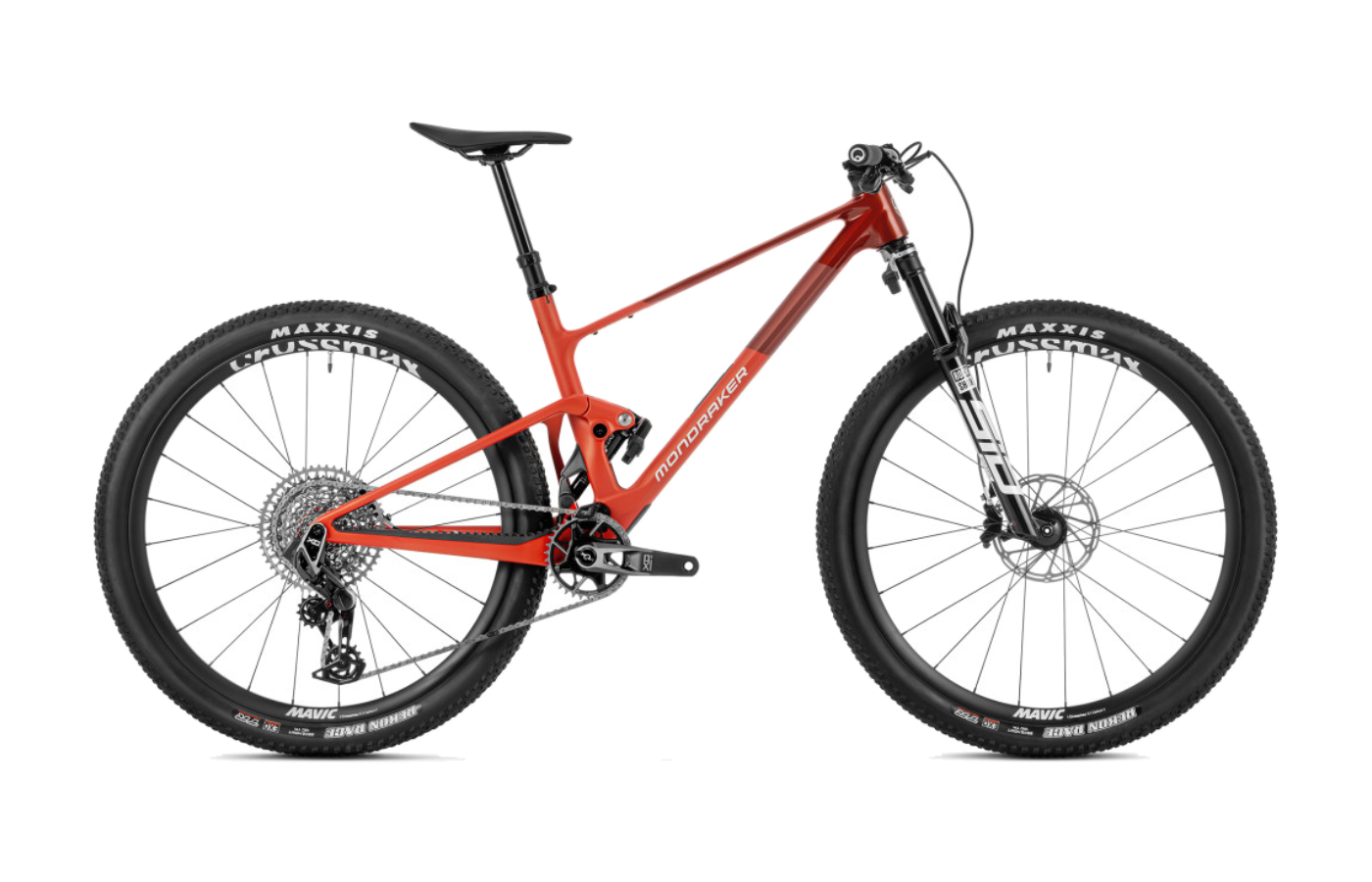
Two XC racers, two suspension philosophies.
The Cannondale Scalpel bets on lightweight FlexPivot simplicity. The Mondraker F-Podium spends weight on bearings to chase traction.
Scalpel
- Lighter, simpler rear end — FlexPivot replaces a pivot with engineered carbon flex; less weight, less maintenance.
- 120 mm rear travel — 10 mm more than the F-Podium, with size-specific chainstays (434–446 mm) for balanced fit across sizes.
- Steeper 75.5° seat tube angle puts the rider over the cranks — reviewers call the climbing posture 'rocket ship' efficient even without a remote lockout.
- Through-headset cable routing on every model is a documented headache for shop maintenance.
- Stock Maxxis Aspen rear tire breaks loose in loose or wet conditions — most reviewers swap it.
F-Podium
- Best-in-class climbing traction — the multi-link Zero Suspension hooks up where flex-stays skip; reviewers ride it up tech most XC bikes walk.
- Sharper, more aggressive geometry — 435 mm chainstays across all sizes, longer 455 mm reach at M, and Mondraker's signature short-stem Forward Geometry.
- 25-year frame warranty — and Mondraker spec'ing the same Stealth Air Full Carbon frame on every build, including the entry-level.
- Half-pound suspension weight penalty, and noticeable pedal bob in open mode — you'll use the remote lockout often.
- Slacker 72.9° seat tube and lower 594 mm stack at M — climbing posture is more stretched than the Scalpel's.
Editor’s analysis
This isn't a fight over geometry — it's a fight over what a 120-class XC bike's rear end should do.
On paper, the Cannondale Scalpel and Mondraker F-Podium look like the same bike. Both run 120 mm forks, both use carbon flagship frames across the entire range, both sit at a 66.5–66.6 degree head tube angle, both come at size Medium with reach inside 5 mm of each other, and both came out of a 2024 update aimed at the new, more technical XC World Cup courses. Where they diverge — and it's the only thing that really matters — is what's behind the seat tube.
The Cannondale Scalpel runs 120 mm rear and uses FlexPivot: a flex zone engineered into the carbon chainstay that mimics a Horst-link four-bar without adding pivot bearings. It's lighter and lower-maintenance, and reviewers (Blister, Theloamwolf, BikeRadar) consistently call it a 'rocket ship' on climbs — pedal bob is so muted that the North American builds ship without a remote lockout. The downside is a touch less raw traction on the messiest tech climbs, where the Mondraker's bearings keep the rear wheel hooked up.
The Mondraker F-Podium runs 110 mm rear (10 mm less than the Scalpel) and uses the multi-link Zero Suspension System — a fully bearing-supported twin-link layout that adds about half a pound versus a flex-stay design. The payoff is the F-Podium's signature trait: traction. Multiple reviewers (Bike-test, the YouTube comparison) call it the best-hooking-up XC bike they've ridden. The cost is more pedal movement in open mode — almost everyone who's ridden it leans on the three-position remote lockout to clean up the climbs.
Geometry-wise, the F-Podium runs a stubbier 435 mm chainstay across every size (the Scalpel's chainstays grow from 434 mm at Small to 446 mm at XL). At size M the F-Podium has 5 mm more reach (455 vs 450) and 3 mm shorter chainstays — it'll feel a touch sharper turning in. The Scalpel sits 2.5 mm taller at the front and 2.6 degrees steeper at the seat tube (75.5 vs 72.9), which is why every reviewer comments on its forward, planted climbing posture. Neither geometry is wrong; they're answering different questions.
Where the builds differ.
Comparing our editor's-pick builds side-by-side. Winners highlighted row-by-row — lower price and weight, and the better-spec component, each mark a point.
Build variants & pricing
Both ranges span roughly $5k. The Scalpel starts $2,850 cheaper and tops out lower; the F-Podium runs higher at the flagship and offers no comparable mid-tier electronic build.
Prices are current US MSRP. Note that Mondraker doesn't offer SRAM AXS electronic shifting on any F-Podium build — if wireless drivetrains matter to you, that's a real platform-level constraint, not a tier difference.
How they fit, how they steer.
Both at size M — the fit-picked size for a 5'8" rider on each. The F-Podium has 5 mm more reach (455 vs 450), 3 mm shorter chainstays (435 vs 438), and a 2.6° slacker seat tube. The Scalpel sits 2.5 mm taller at the front and runs a noticeably steeper, more forward seated position.
Which size should I buy?
Both ranges run S–XL with closely overlapping reach numbers; the F-Podium runs 5 mm longer at every size and the Scalpel's chainstays grow with frame size while the Mondraker's stay fixed at 435 mm.
→These are starting points. Flexibility, riding style, and preferred position all shift the answer — if you’re between sizes, a professional fit beats a chart.
What the magazines said.
Published reviews from trusted cycling outlets. Click through for the full write-up.
Which one should you buy?
If you climb light and value a snappy, low-maintenance rear end, get the Scalpel. If you ride technical XC where traction is what wins races, get the F-Podium.
Scalpel
If your rides are long, your climbs are sustained, and you want a bike that pedals like an XC machine but descends like a downcountry rig, the Scalpel is the lighter, more efficient choice. The 120 mm rear and size-specific chainstays make it the more forgiving long-day platform.
F-Podium
If your local races are won on tech climbs and chunky descents, the F-Podium's bearing-driven Zero Suspension hooks up where the Scalpel's flex-stay skips. You'll use the remote lockout — and you'll thank it. The 25-year warranty doesn't hurt either.
Questions buyers actually ask.
Short answers to the things we get emailed about most often.
01Which has more rear suspension travel?
The Cannondale Scalpel, with 120 mm front and rear. The Mondraker F-Podium runs 120 mm front and 110 mm rear — 10 mm less out back. Both hit the modern XC sweet spot, but the Scalpel's extra rear travel gives it a slight edge for absorbing repeated chunder; the F-Podium counters with a more progressive linkage that feels deeper than its 110 mm number suggests on big hits and drops.
02Which climbs more efficiently?
The Scalpel, in open mode. Cannondale's FlexPivot is tuned for ~100% anti-squat near sag, and reviewers (Pinkbike, Theloamwolf) note the North American builds don't even ship with a remote lockout because the suspension barely moves under power.
The F-Podium is more sensitive in open mode — there's noticeable pedal bob, especially at high cadence. That's why every F-Podium build ships with a 3-position remote, and reviewers report using it constantly. With the lockout engaged, the Mondraker is a 'rocket ship' too; without it, the Scalpel is the more efficient climber.
03Which has more climbing traction?
The F-Podium, decisively. The bearing-supported Zero Suspension System keeps the rear wheel actively tracking the ground in a way flex-stay designs can't fully replicate. Multiple reviewers (Bike-test, YouTube comparison test) call it the best-hooking-up XC bike they've ridden — riders hit tech climbs cleanly that they'd typically dab on other XC bikes.
The Scalpel's stock Maxxis Aspen rear tire compounds the gap; it's exceptionally fast-rolling but breaks loose in loose or wet conditions (per Bicycling, Pinkbike). A tire swap closes some of the difference, but the F-Podium's mechanical advantage stays.
04How do the geometries differ at size M?
Closer than you'd expect, but with meaningful detail differences:
Scalpel M: 450 mm reach, 597 mm stack, 66.6° HTA, 75.5° STA, 438 mm chainstay.
F-Podium M: 455 mm reach, 595 mm stack, 66.5° HTA, 72.9° STA, 435 mm chainstay.
Reach within 5 mm, head angle effectively identical. The big differences: the F-Podium runs a 2.6° slacker seat tube angle (more stretched seated position) and 3 mm shorter chainstays (snappier rear end). The Scalpel's chainstays grow with frame size (434–446 mm); the F-Podium runs 435 mm across all sizes.
05What's the maximum tire clearance?
Scalpel: approximately 61 mm (~2.4"). F-Podium: approximately 59.7 mm (~2.35"). Both ship stock with 29x2.4 (Scalpel) or 29x2.35 (F-Podium) Maxxis Rekon Race / Aspen tires. Neither is a downcountry bike that swallows 2.5" trail tires, but both have enough clearance for the modern XC standard 2.4" Rekon Race up front.
06Which has more reliable, easier maintenance?
Both adopted threaded BSA bottom brackets and UDH hangers in 2024 — a win for both. After that they diverge.
The Scalpel's FlexPivot has fewer pivot bearings to service (none in the chainstay), which is a long-term win. But the through-headset cable routing on every model is widely panned by reviewers and shop mechanics — Pinkbike comments call it a 'mechanic's nightmare,' and Cannondale itself recommends six-month headset bearing inspections.
The F-Podium uses a fully bearing-supported multi-link rear, which is more bearings to maintain, but Mondraker offsets that with a 25-year frame warranty and protective features like a steering-stop limiter that prevents bar-to-toptube damage in crashes.
07Does either come with electronic shifting?
Scalpel: yes — the Scalpel 1 ($8,499) and Scalpel 2 ($5,799) both come with SRAM AXS Transmission (XO and GX respectively).
F-Podium: no. Per the F-Podium's reviewers (BikeRadar specifically calls this out at the RR's €7,999 price point), Mondraker spec'd mechanical SRAM Eagle drivetrains across the F-Podium range. Reviewers praise the mechanical setup as 'flawless' and 'top-notch' — but if wireless shifting is a priority, the Scalpel is the only choice in this matchup.
08Which has the more usable build range?
The Scalpel scales lower: builds run $3,349 to $8,499 across four tiers, with the Scalpel 2 ($5,799, GX AXS Transmission, Cannondale HollowGram carbon wheels) widely cited as the value sweet spot.
The F-Podium runs $5,199 to $12,999 across five tiers, with no sub-$5k entry. Mondraker's pitch — and it's a real one — is that every build uses the same Stealth Air Full Carbon frame, so an entry-level F-Podium can be upgraded into a flagship over time without ever touching the chassis.
Similar bikes
If your priorities don’t map cleanly onto either of these, one of these adjacent bikes probably fits better.
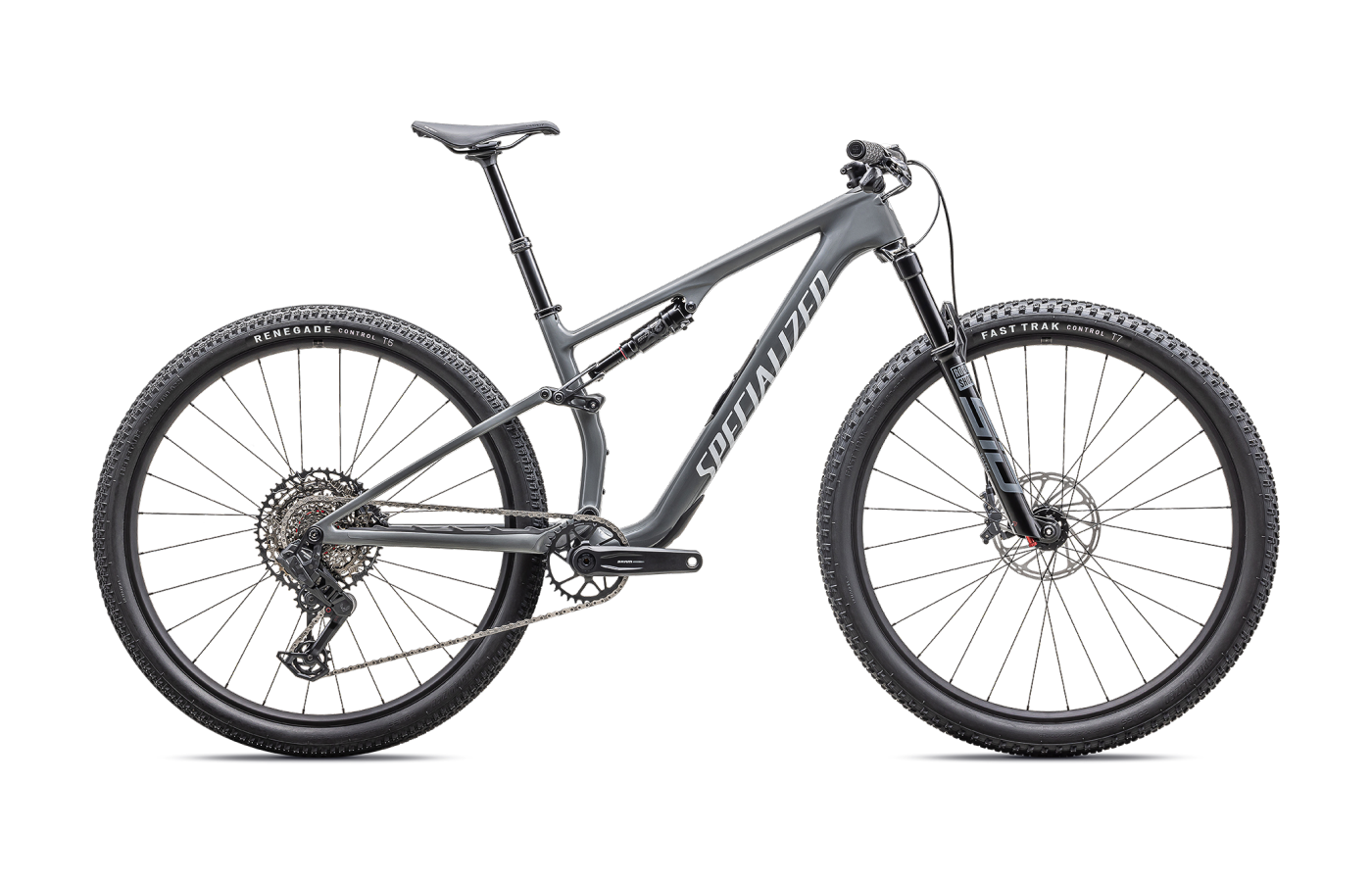
Epic
Specialized's Epic 8 is the third pillar of the modern 120 mm XC bracket — adds the SWAT internal storage neither of these has, and RockShox-co-developed Magic Middle suspension tune that splits the difference between the Scalpel's pedaling firmness and the F-Podium's plush traction.
Compare →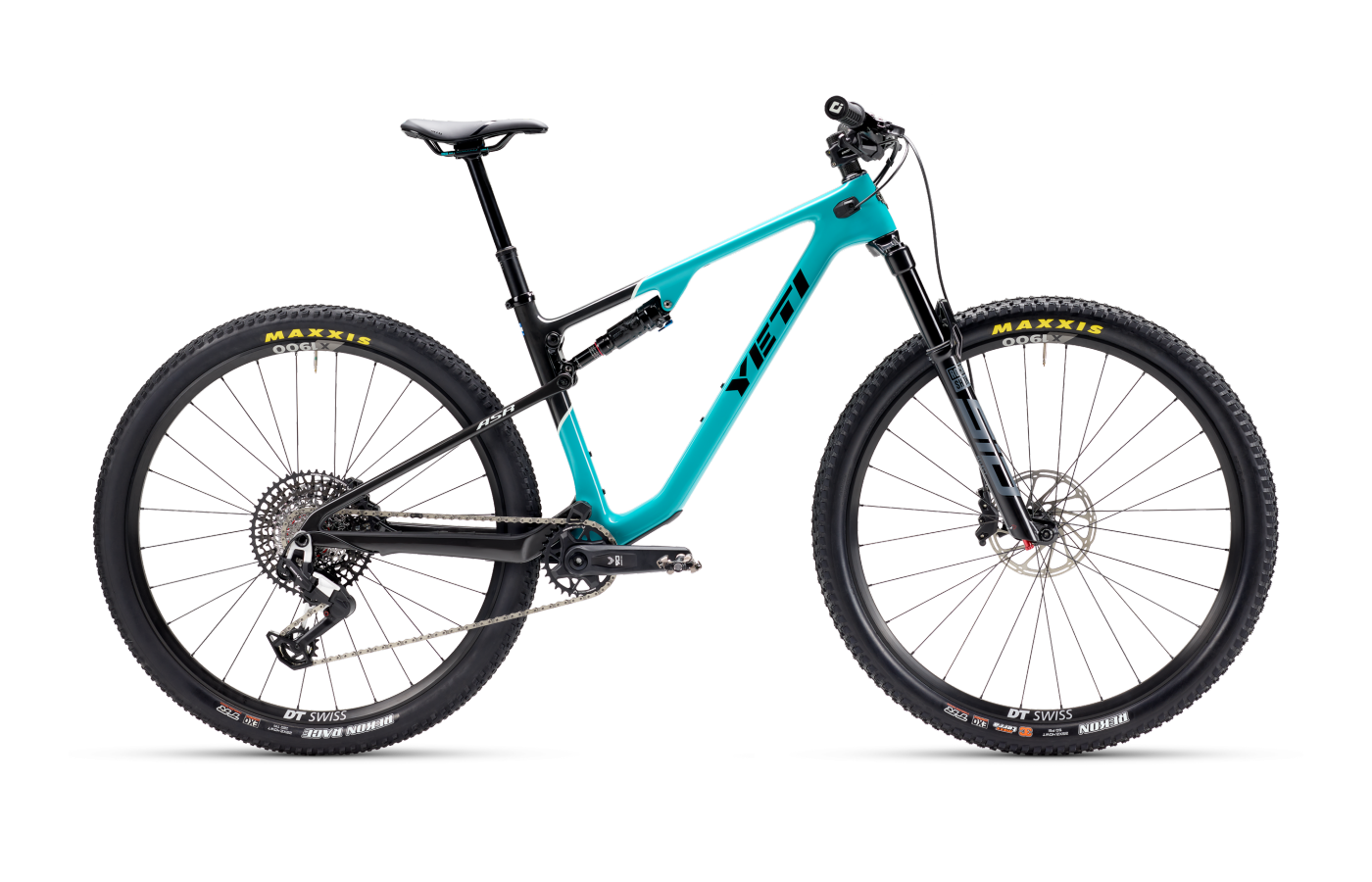
ASR
If 120 mm of rear travel feels like overkill and you want a true gram-counter, the Yeti ASR runs 115 mm with a flex-stay design and a more single-mindedly XC-race personality than either bike here.
Compare →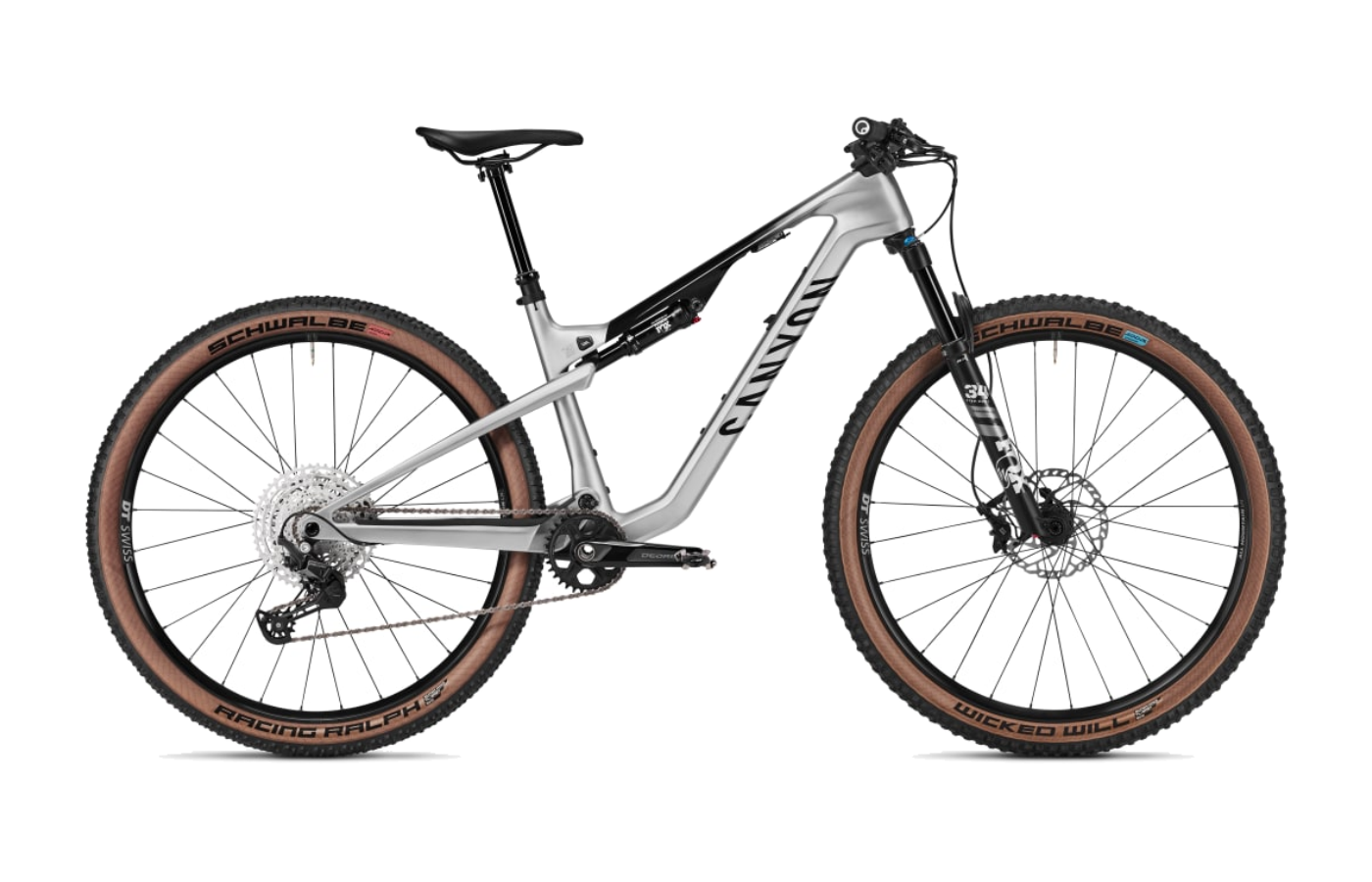
Lux Trail
Canyon's Lux Trail offers the same 120 mm formula direct-to-consumer at notably less money, with integrated tool storage. Geometry is a touch more conservative than the Mondraker, and you don't get a local dealer.
Compare →