Scalpel
vsBlur
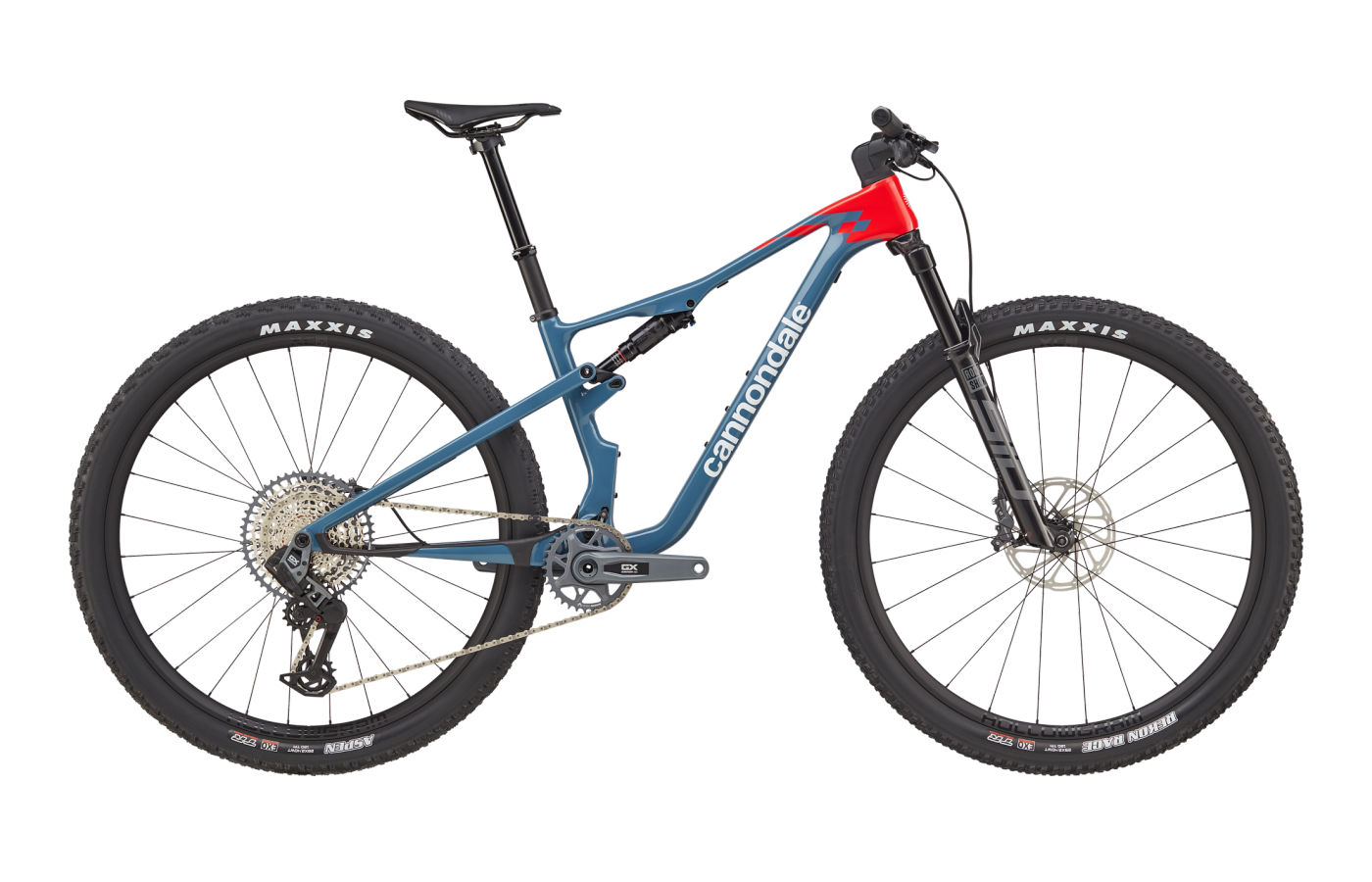
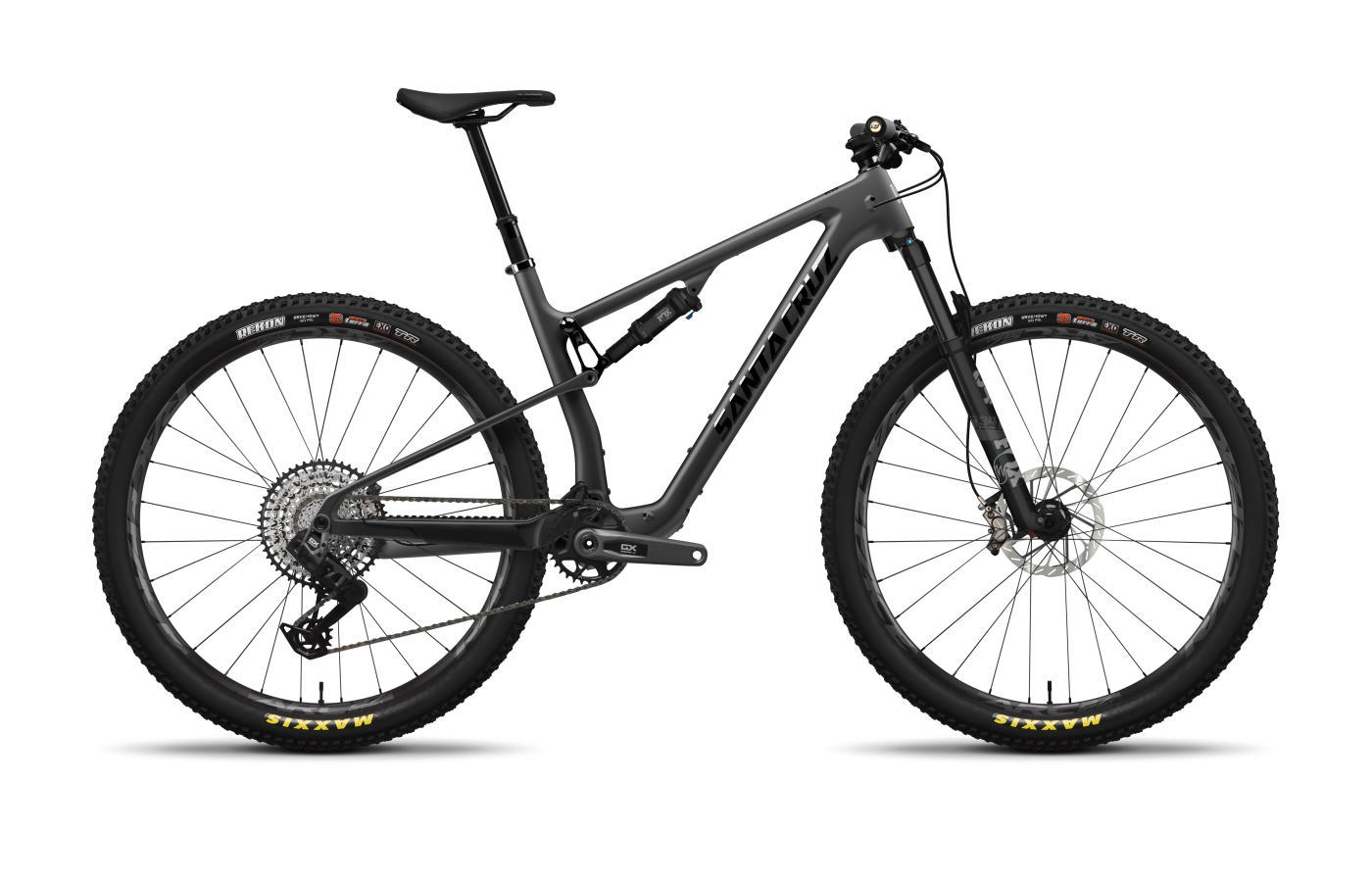
Two short-travel racers, two engineering bets.
The Scalpel goes long on integration and progressive geometry. The Blur strips out parts to chase mechanical grip and weight.
Scalpel
- More progressive geometry — 66.6° HTA and 450 mm reach (M) put it ahead of the Blur on the descents.
- Cheaper at every tier — GX AXS T-Type build starts at $5,799 vs. $6,949 for the Blur.
- Size-specific chainstays (434–446 mm) keep weight balance consistent across the size run.
- Through-headset and through-bar cable routing makes home mechanic work substantially harder.
- Stock Maxxis Aspen rear tire breaks loose under braking and pedaling — first thing most reviewers swap.
Blur
- Lighter frame — CC layup at 1,933 g (size L) makes complete builds as low as 11.27 kg.
- Lifetime warranty on frame, bearings, and Reserve wheels — industry-leading support that justifies part of the price gap.
- Exceptional rear-wheel traction on technical climbs — low anti-squat lets the suspension stay active under power.
- Pedal bob on smooth surfaces unless the lockout is engaged.
- Premium pricing across the range — entry point is $1,300 above the Scalpel's, ceiling is $5,000 higher.
Editor’s analysis
Both bikes hit 120 mm of fork travel and call themselves XC race bikes — but past that single number, almost every design decision diverges.
The Cannondale Scalpel is the more aggressive geometry pick. A 66.6° head angle, 450 mm reach in size M, 438 mm chainstays, and a 1,169 mm wheelbase put it firmly in modern-progressive XC territory. Cannondale's Proportional Response system varies chainstay length by size (434–446 mm), and the FlexPivot rear end mimics a Horst-link four-bar without the pivot hardware. It's a 120/120 mm platform across every build, no XC-only variant — Cannondale is betting the modern XC bike has trail-bike DNA whether you race it or not.
The Santa Cruz Blur takes the opposite bet: shed mass, simplify the linkage, prioritize traction. The Superlight single-pivot flex-stay design dropped 289 g from the previous VPP frame, putting the CC layup at 1,933 g. Santa Cruz also tuned anti-squat low — meaning the rear wheel stays free under power and "sucks itself to the ground" on technical climbs, at the cost of pedal bob on smooth fire roads. The Blur sells in two flavors off the same frame: a 100/120 mm XC build with remote lockout, and a 115/120 mm Trail build with a longer-stroke shock.
Geometrically, the Cannondale Scalpel runs longer and slacker — same 597 mm stack as the Blur in size M, but 12 mm more reach (450 vs. 438) and a half-degree slacker head tube (66.6° vs. 67.1°). Translation: the Scalpel is the steamroller, the Santa Cruz Blur is the scalpel — even though the names suggest the opposite. Wheelbase difference at size M is 12 mm in Cannondale's favor; chainstays are 5 mm longer too. On rough, fast singletrack, the Scalpel sits between the axles. The Blur asks the rider to stay more active.
Pricing is where the divide gets stark. The Scalpel range starts at $3,349 and tops out at $8,499. The Blur starts at $4,649 and runs to $13,449, with Reserve carbon wheels and lifetime warranty support baked into the premium. Cannondale undercuts at every overlapping tier — the GX AXS T-Type Scalpel 2 ($5,799) lands $1,150 below the equivalent GX AXS Trail Blur ($6,949). If you want the Blur experience without spending Santa Cruz money, you don't really have that option.
Where the builds differ.
Comparing our editor's-pick builds side-by-side. Winners highlighted row-by-row — lower price and weight, and the better-spec component, each mark a point.
Build variants & pricing
Both run SRAM's GX AXS T-Type at the editor's-pick tier, but the Scalpel ships carbon wheels at this price; the Blur saves them for builds $2,400 higher.
Prices are current US MSRP. The Blur's range starts $1,300 above the Scalpel's and runs $5,000 higher at the top. Cannondale also offers Shimano XT and Deore builds under $4,000 — Santa Cruz does not sell a sub-$4,500 Blur.
How they fit, how they steer.
Both at size M — the fit-picked size for a 5'8" rider on each bike. Identical 597 mm stack, but the Scalpel runs 12 mm more reach (450 vs. 438), 0.5° slacker head angle, and a 12 mm longer wheelbase — meaningfully more stable at speed.
Which size should I buy?
Size recommendations based on stack, reach, and effective top tube. Both sizing ranges overlap closely; the Scalpel adds a touch more reach at every size.
→These are starting points. Flexibility, riding style, and preferred position all shift the answer — if you’re between sizes, a professional fit beats a chart.
What the magazines said.
Published reviews from trusted cycling outlets. Click through for the full write-up.
Which one should you buy?
If you want descending stability and a lower price of entry, get the Scalpel. If you want a featherweight that finds traction on impossible climbs, get the Blur.
Scalpel
If your local races have technical descents and your trail rides include the occasional black-diamond, the Scalpel's progressive geometry and quiet 120 mm rear end give you a cushion the Blur doesn't. The cheaper price of entry and broader build range — Shimano XT and Deore options under $4,000 — make it the easier first XC race bike to recommend.
Blur
If your season is built around long endurance events and technical climbing where rear-wheel grip wins races, the Blur's low-anti-squat suspension and lighter frame are the sharper tool. The lifetime warranty on bearings and Reserve wheels is real value if you plan to keep the bike for five seasons.
Questions buyers actually ask.
Short answers to the things we get emailed about most often.
01Which is faster on technical climbs?
The Santa Cruz Blur, marginally. Santa Cruz tuned the Blur with low anti-squat, which keeps the rear wheel free to track over roots and stepped rock — testers at Pinkbike found it the fastest singletrack climber in field testing because the wheel "sucks itself to the ground."
The Cannondale Scalpel climbs efficiently too, but its higher anti-squat and stiffer pedaling platform are biased toward smooth-grade efficiency. On a steady fire road, the Scalpel feels punchier; on a rooty, broken climb, the Blur usually finds traction first.
02Which is the better descender?
The Cannondale Scalpel. A 66.6° head angle (vs. the Blur's 67.1°), 12 mm more reach in size M, and a 12 mm longer wheelbase put the Scalpel firmly in front on high-speed stability. Reviewers consistently describe it as feeling "like a mini trail bike" on descents.
The Blur is no slouch — it's been called "alive" and "engaging" — but multiple reviewers from enduro backgrounds noted it feels "flighty" or "twitchy" at high speeds. It rewards an active pilot rather than letting you point and plow.
03What's the weight difference?
The Blur is meaningfully lighter at the frame level. The CC frame is 1,933 g (size L with shock); the Cannondale Scalpel Series 1 frame is around 1,980 g without shock, and the Lab 71 top frame drops to 1,780 g.
At complete-bike level, the Blur GX AXS Trail comes in at 12.18 kg / 26.85 lb; the Scalpel 1 is around 11.15 kg / 25.35 lb in the size-M, top-build trim Pinkbike tested. Compare same tier and the Blur usually wins by a few hundred grams; compare top to top and the Scalpel can come out ahead.
04How does pricing compare?
Scalpel: $3,349–$8,499. Blur: $4,649–$13,449.
The Cannondale Scalpel undercuts the Blur at every shared tier. The GX AXS T-Type Scalpel 2 is $5,799 with HollowGram carbon wheels; the closest equivalent Blur GX AXS Trail is $6,949 on alloy RaceFace rims (Reserve carbon adds another $2,400). If your budget caps out under $5k, the Blur isn't really a contender — there's no Shimano build, no alloy build, no entry price.
05Is the integrated cockpit on the Scalpel a deal-breaker?
It's the most-criticized aspect of the bike. Cannondale routes cables through both the handlebar and the headset on most builds, which Bicycling called "a pointless and annoying feature" and Bike Magazine described as "not any mechanic's dream." Headset bearing service requires partial disassembly — Cannondale recommends professional inspection every six months.
The Blur uses traditional cable ports with internal tubes — much friendlier for home mechanics. If you do your own service, this is a real point in the Blur's favor.
06What about long-term durability?
Both come with lifetime frame warranties. Santa Cruz extends that to pivot bearings and Reserve wheels — an industry-leading position that real buyers cite as a justification for the premium.
The Blur's known weak spots are the Fox Transfer SL dropper (multiple reviewers reported lateral play and failure) and the gap between the rear triangle and seat tube where rocks can lodge and crack carbon (a $20 "Dirt Skirt" addresses it). The Scalpel had one documented frame failure during long-term testing at the seat tube near the shock mount, after a 5-foot drop the reviewer described as well outside the bike's intended use envelope.
07Can I race XCO on either of these?
Yes. The Cannondale Scalpel won the 2024 XCO World Championship and the World Cup overall under Alan Hatherly. The Santa Cruz Blur has been raced at World Cup level by Maxime Marotte, Luca Braidot, and Martina Berta. Both platforms have current World Cup pedigree.
That said, both run 120 mm forks and slacker geometry than past XC bikes. If your courses are smooth and short — old-school XCO — the Blur's lighter weight and (on the XC build) remote lockout edge it slightly. If courses are technical and descent-heavy, modern XCO style, the Scalpel's geometry is better suited.
08Which has better stock tires?
Neither. Both ship with a fast-rolling Maxxis Rekon Race front and Maxxis Aspen rear combination. The Aspen in particular is universally praised for low rolling resistance and universally criticized for breaking loose under braking and hard pedaling in loose conditions.
Most reviewers swap the rear tire as their first upgrade — a Maxxis Forekaster or Rekon (non-race) is a common pick for a "downcountry" setup that better matches the descending capability both frames now have.
Similar bikes
If your priorities don’t map cleanly onto either of these, one of these adjacent bikes probably fits better.
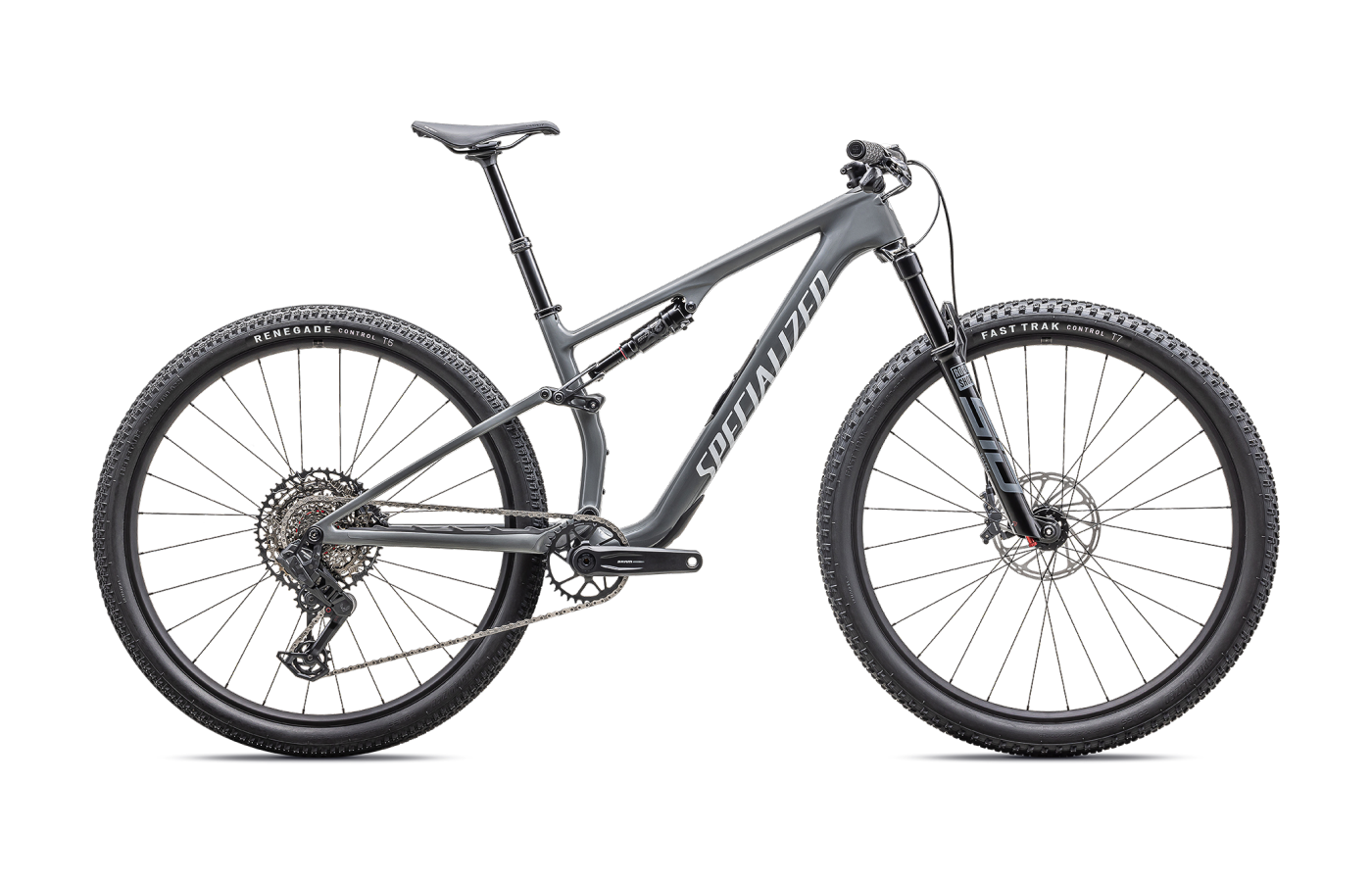
Epic
The third option in the modern-progressive XC bracket — also 120 mm front and rear, with the Brain shock as a unique pedaling-platform solution. Specialized's build range overlaps both bikes here, and skips the through-headset routing the Cannondale gets criticized for.
Compare →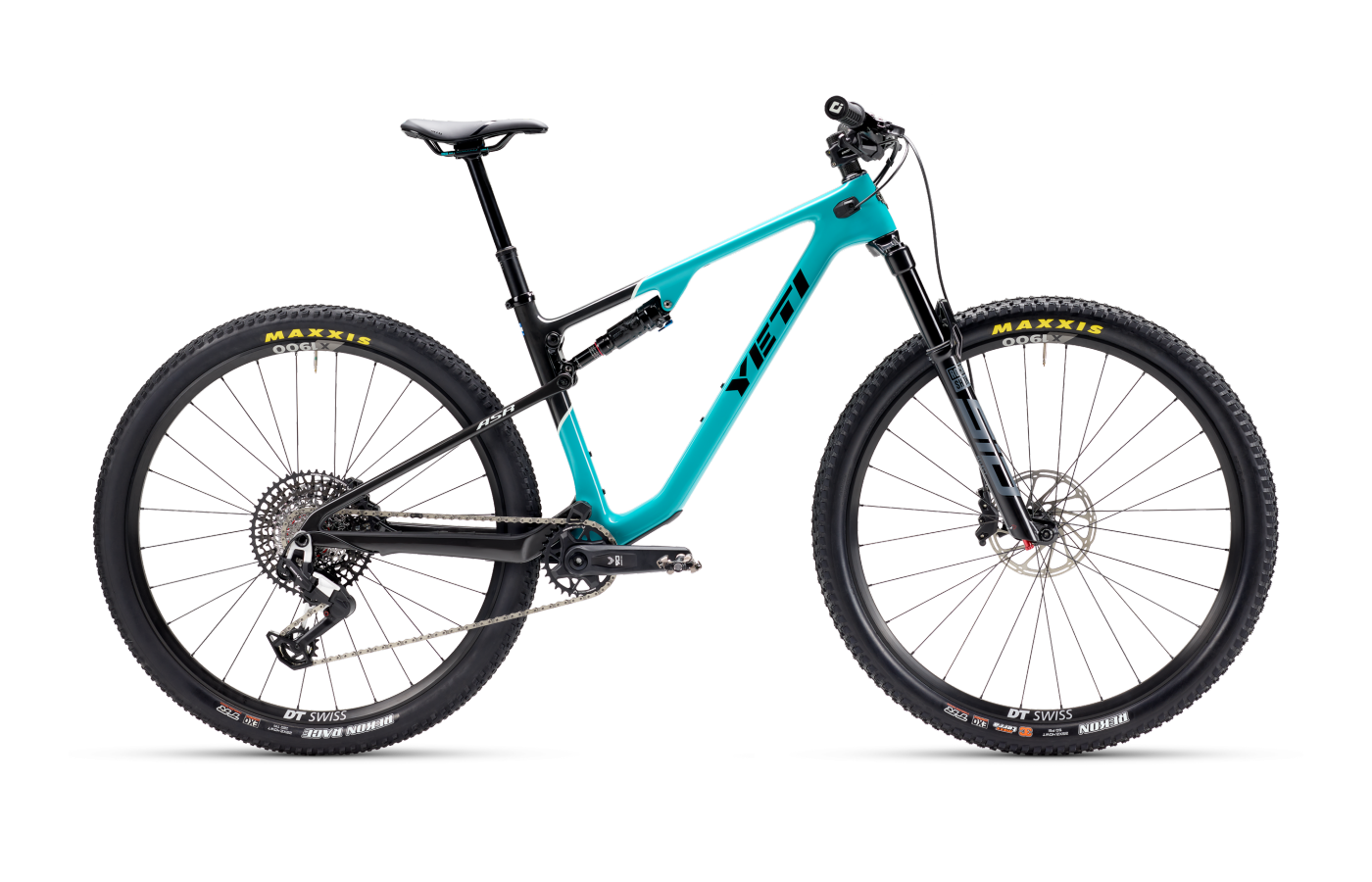
ASR
Lighter and more pedigreed than either, with a 66.5° head angle that splits the difference between Scalpel and Blur. The right pick if you're chasing the absolute lightest race build and willing to pay Yeti pricing to do it.
Compare →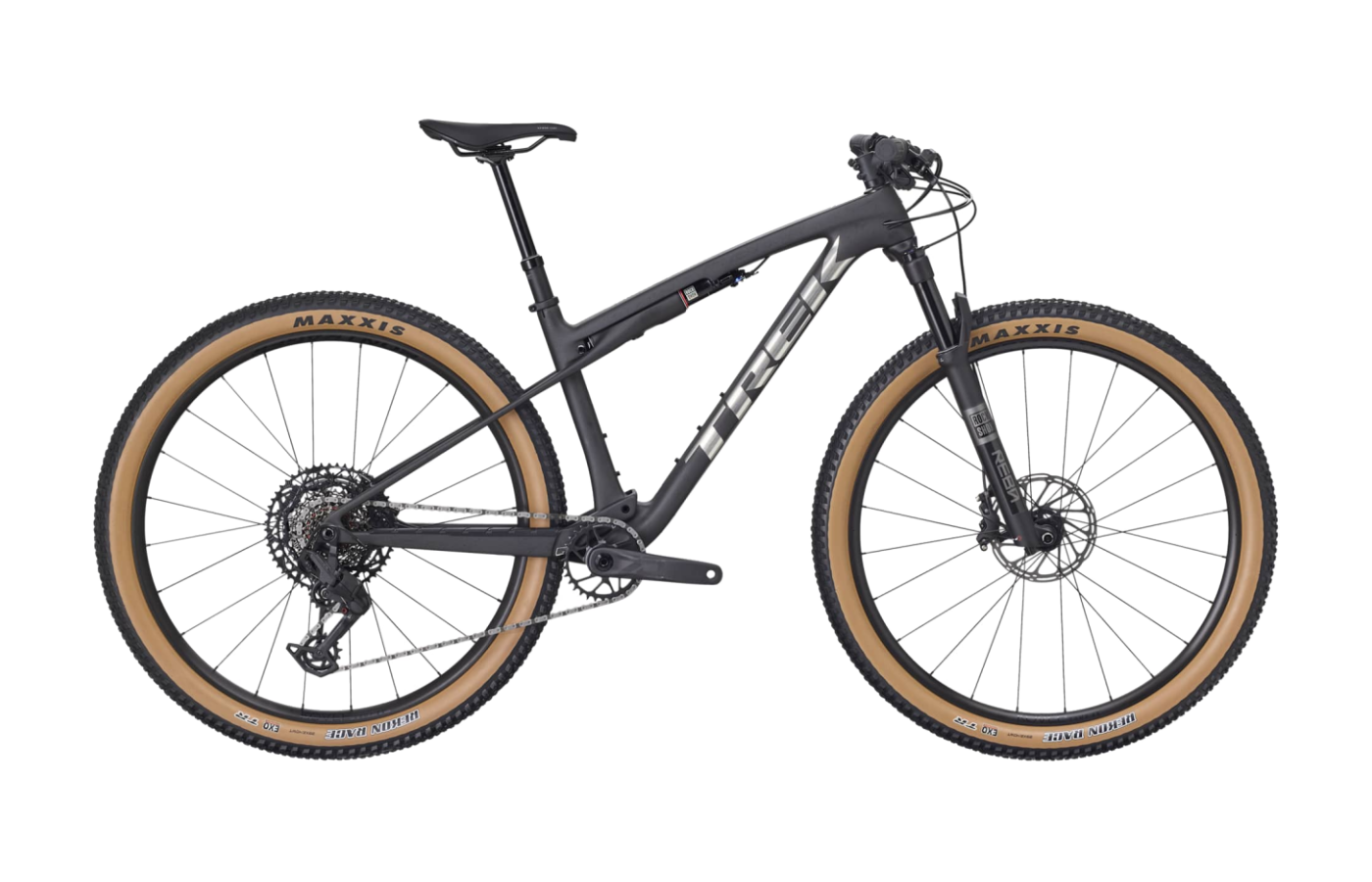
Supercaliber
Trek's IsoStrut design feels closer to a hardtail than either of these — the right pick if 120 mm is more travel than you need and you race smooth, short-track XC where every gram of suspension hardware feels like overkill.
Compare →