SuperX
vsAspero
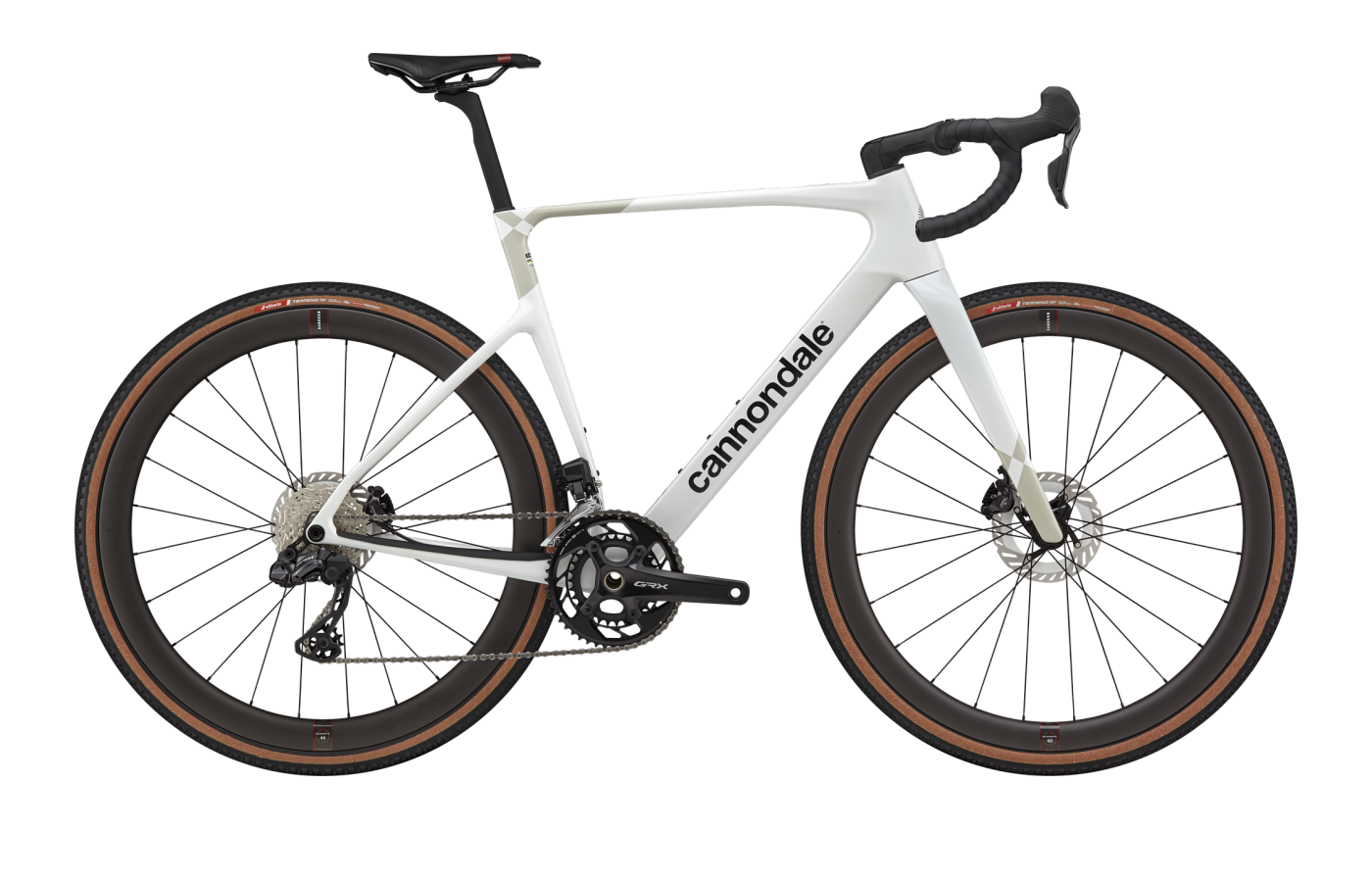
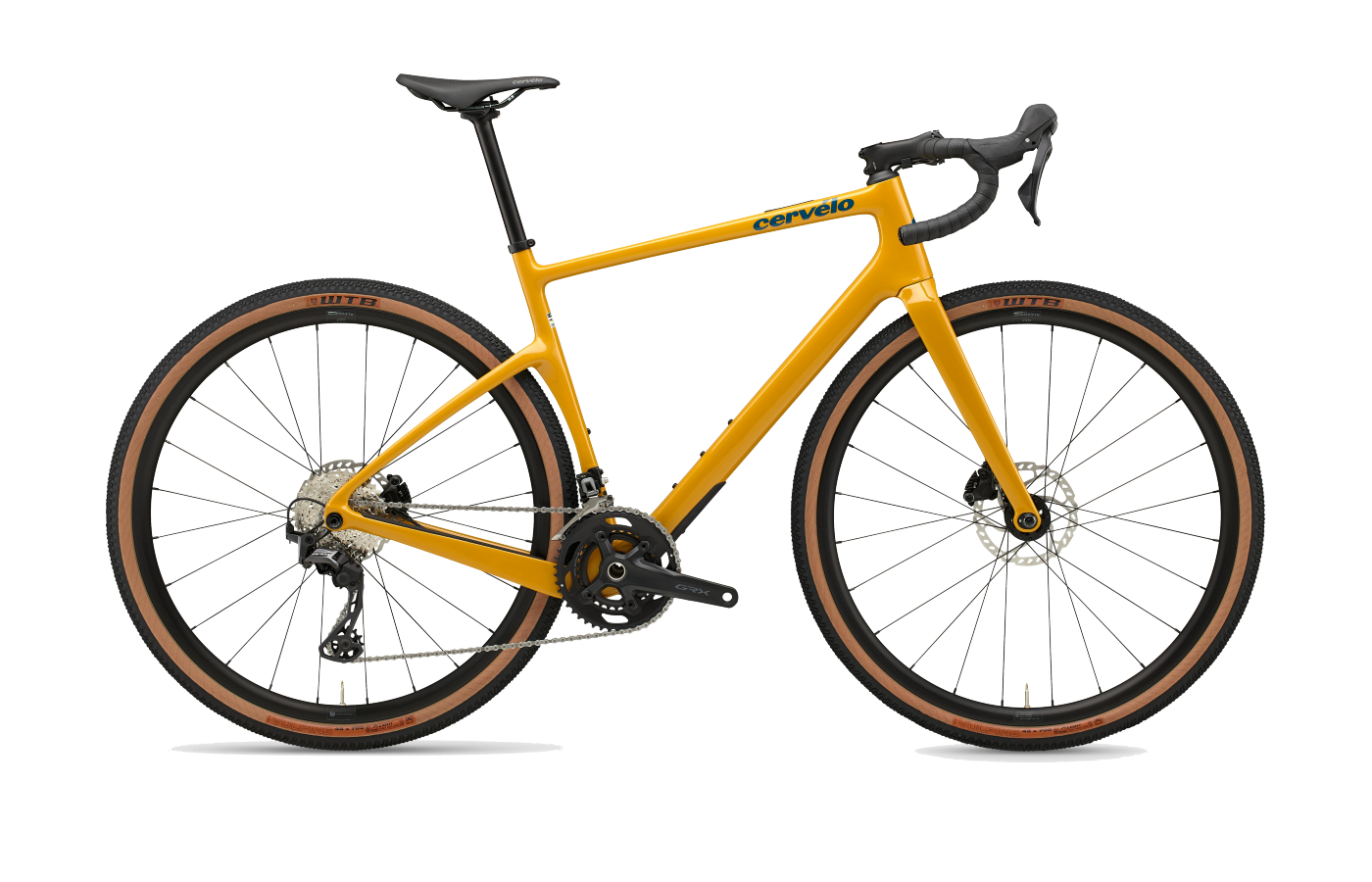
Two gravel race bikes, two ideas of "race."
The SuperX is the new-school aero hauler built to swallow chunky 48 mm rubber. The Aspero is the roadie's gravel bike — sharp, fast, and content with 45 mm.
SuperX
- 48 mm tire clearance — the widest in the race-gravel bracket, enough headroom for balloon 45 mm tires on chunky terrain.
- Proportional geometry — the 56 sits 20 mm taller than the Aspero 54, a sustainable position for all-day efforts.
- Integrated aero cockpit on upper builds (LAB71, build 1) — carbon SystemBar R-One, no visible cables.
- Pricier floor — the cheapest SuperX is $4,199, well above the Aspero's $3,550 entry.
- Reviewers consistently call the front end firm; rear is compliant, cockpit isn't.
Aspero
- Sharper steering — steeper 72° head angle and 62 mm of trail reward attacking riders on mixed surfaces.
- Home-mechanic friendly — threaded T47a BB, UDH, 27.2 mm round seatpost, semi-integrated routing that doesn't require pulling the hose to swap stems.
- Cheaper into the lineup — GRX RX610 build at $3,550 undercuts Cannondale's entry by $649.
- 45 mm tire clearance trails the SuperX's 48 mm and will feel limiting on chunky terrain.
- No LAB71-tier halo build; the range tops at $7,050, well short of the SuperX ceiling.
Editor’s analysis
Both of these bikes chase a gravel podium. They just disagree about what gravel looks like.
Cannondale's SuperX and Cervélo's Aspero are the definition of same-category, different-answer. Both are race-gravel flagships, both run Reserve carbon wheels on their upper builds, both use SRAM UDH and threaded bottom brackets, both are hostile to racks and bikepacking bags. The frame politics diverge hard from there.
The Cannondale SuperX is the more aggressive aero play. Delta Steerer up front, deep aero tubes, proprietary aero bottle cages, and 48 mm official tire clearance at the rear (reviewers note 51 mm at the fork). It's the new-generation "aero first, but make it tractor" gravel bike — stable at speed, willing to run balloon rubber, and set up to ride washboard sections seated. Frame sizes run 46 to 61 and the lineup spans $4,199 (Apex AXS) to $12,499 (LAB71 with Red XPLR and Reserve 40|44).
The Cervélo Aspero is the opposite thesis. It's the bike that invented "haul ass, not cargo," and the 2024 update kept that identity — tweaking carbon layups to soften the rear and drop front-end stiffness by a claimed 10%, but keeping the roadie geometry, the 72° head angle, and the 45 mm tire ceiling. Cervélo's Trail Mixer flip-chip lets you retune trail for 650b without losing the sharp steering. Builds start at $3,550 (GRX RX610) and top out at $7,050 (GRX RX825 Di2).
Put another way: the Cannondale SuperX wants you to roll a 45 mm file-tread and go fast on terrain most race bikes won't touch. The Cervélo Aspero wants you on 40 mm WTB Vulpines, half the ride on tarmac, picking the smooth line through loose corners at 38 km/h. They're both right — they're just solving for different courses.
Where the builds differ.
Comparing our editor's-pick builds side-by-side. Winners highlighted row-by-row — lower price and weight, and the better-spec component, each mark a point.
Build variants & pricing
Both lineups are SRAM-heavy with a single Shimano GRX Di2 flagship each — making the Di2 builds the apples-to-apples pairing.
Prices are current US MSRP. Cannondale lists the SuperX from $4,199 to $12,499; Cervélo lists the Aspero from $3,550 to $7,050. Cervélo does not offer a LAB71-tier halo — if a top-spec flagship matters to your shortlist, only Cannondale has one.
How they fit, how they steer.
Compared at the fit-picked sizes: SuperX 56 and Aspero 54. The SuperX sits 20 mm taller (575 vs 555 mm stack), the Aspero 3 mm longer (388 vs 385 mm reach). Head tube is 1° steeper on the Aspero (72° vs 71°), trail is 3 mm tighter (62 vs 65 mm), chainstays 3 mm longer (425 vs 422 mm).
Which size should I buy?
Size recommendations use stack, reach, and effective top tube. The two sizing conventions overlap closely through the middle; the Aspero runs one label smaller at equivalent stack.
→These are starting points. Flexibility, riding style, and preferred position all shift the answer — if you’re between sizes, a professional fit beats a chart.
What the magazines said.
Published reviews from trusted cycling outlets. Click through for the full write-up.
Which one should you buy?
If you want one bike for chunky races and cyclocross duty, get the SuperX. If most of your gravel is hardpack or pavement-adjacent and you want a roadie's handling, get the Aspero.
SuperX
If your races include sectors that look more like mountain biking than dirt road — rocky fire roads, rutted descents, cyclocross courses — the SuperX's 48 mm clearance, taller stack, and stable front end will pay back on terrain the Aspero doesn't want. Also the easier pick if you need one gravel bike to do cyclocross too.
Aspero
If you come from road racing and your gravel looks more like tarmac with detours, the Aspero's sharper steering, home-mechanic-friendly build, and lower price floor make more sense. The Trail Mixer flip-chip and 27.2 mm round post give you room to tune it without leaving the platform.
Questions buyers actually ask.
Short answers to the things we get emailed about most often.
01Which has more tire clearance?
The Cannondale SuperX, at 48 mm officially (with reviewers noting ~51 mm up front), vs 45 mm on the Cervélo Aspero.
That's enough to matter on chunky terrain — a true 45 mm knobby fits the SuperX with mud room to spare, while the Aspero maxes out at 45 mm nominal and reviewers have flagged that as limiting on rough gravel.
02Which is cheaper to get into?
The Cervélo Aspero. Its entry-level GRX RX610 build starts at $3,550, $649 under the cheapest SuperX (Apex AXS at $4,199).
At the top end, Cannondale goes further — the LAB71 build with SRAM Red XPLR AXS and a power meter is $12,499, while the Aspero tops out at $7,050 (GRX RX825 Di2). Neither platform offers a direct price-matched build across their full ranges.
03How different is the geometry?
Comparing at fit-picked sizes (SuperX 56, Aspero 54):
- Stack: SuperX 575 mm, Aspero 555 mm — the SuperX sits 20 mm taller.
- Reach: Aspero 388 mm, SuperX 385 mm — Aspero 3 mm longer.
- Head angle: Aspero 72°, SuperX 71° — Aspero's front end is steeper by a full degree.
- Trail: Aspero 62 mm, SuperX 65 mm — Aspero turns in quicker.
- Chainstays: SuperX 422 mm, Aspero 425 mm — SuperX is slightly shorter.
Net: the Aspero is the roadier, sharper bike; the SuperX is taller and more stable.
04Can either double as a cyclocross bike?
The SuperX is the more natural answer — the name itself goes back to Cannondale's dedicated cyclocross lineage, and the 2025 bike was explicitly positioned as a gravel racer that can still do cyclocross duty. The 48 mm clearance, taller stack, and 71° head angle all work in a CX course.
The Aspero's geometry is closer to a road bike than to a CX platform — steep head angle, lower stack, narrower clearance. It's not unridable on a cross course, but it wasn't designed for one.
05Which is more serviceable?
The Aspero, clearly. It uses a threaded T47a bottom bracket, a SRAM UDH hanger, a standard 27.2 mm round seatpost (dropper-compatible), and semi-integrated routing — cables exit externally under the stem before entering the frame, so you can swap stems without re-routing the hose.
The SuperX also runs UDH and a threaded BSA BB, but its upper builds (LAB71, build 1, build 2) use the Cannondale SystemBar R-One or C1 Conceal cockpit with internal routing. Changing stem length means more work.
06Are the Di2 editor's-pick builds actually comparable?
Yes — that's why we picked them. Both are Shimano GRX RX825 Di2, both run Reserve carbon wheels (40|44 GR on Cannondale, 40TA/44TA GR on Cervélo), both ship with WTB Vulpine / Vittoria Terreno 700x40c-class tires as stock.
The pricing spread is $449 (SuperX 2 at $7,499 vs Aspero GRX Di2 at $7,050), close enough that the spec-table differences are mostly about frame philosophy and cockpit (Cannondale's C1 Conceal alloy vs Cervélo's ST36 + AB09 carbon), not drivetrain hierarchy.
07What's the weight difference?
Reviewers measured the SuperX 2 at 8.53 kg (size 56, GRX Di2 build). The Aspero tested around 8.6–8.77 kg depending on build — the Velo review measured 8.4 kg (18.5 lbs) on a 51 cm Rival build, while Road.cc got 8.77 kg on the Apex AXS.
Frame-to-frame, the Aspero's bare frame is a claimed 1,141 g in size 56, noticeably lighter than the LAB71 Series 0 SuperX frameset — but at the GRX Di2 build level, you're within 100 g.
08Do they both work with dropper posts?
The Aspero does — it uses a standard 27.2 mm round seatpost, which opens up aftermarket droppers (Wolf Tooth Resolve, PNW Rainier, etc.).
The SuperX uses a proprietary D-shaped seatpost tuned for rear-end compliance, which rules out most aftermarket round-post droppers. Cannondale does not ship a dropper on any SuperX build.
Similar bikes
If your priorities don’t map cleanly onto either of these, one of these adjacent bikes probably fits better.
Crux
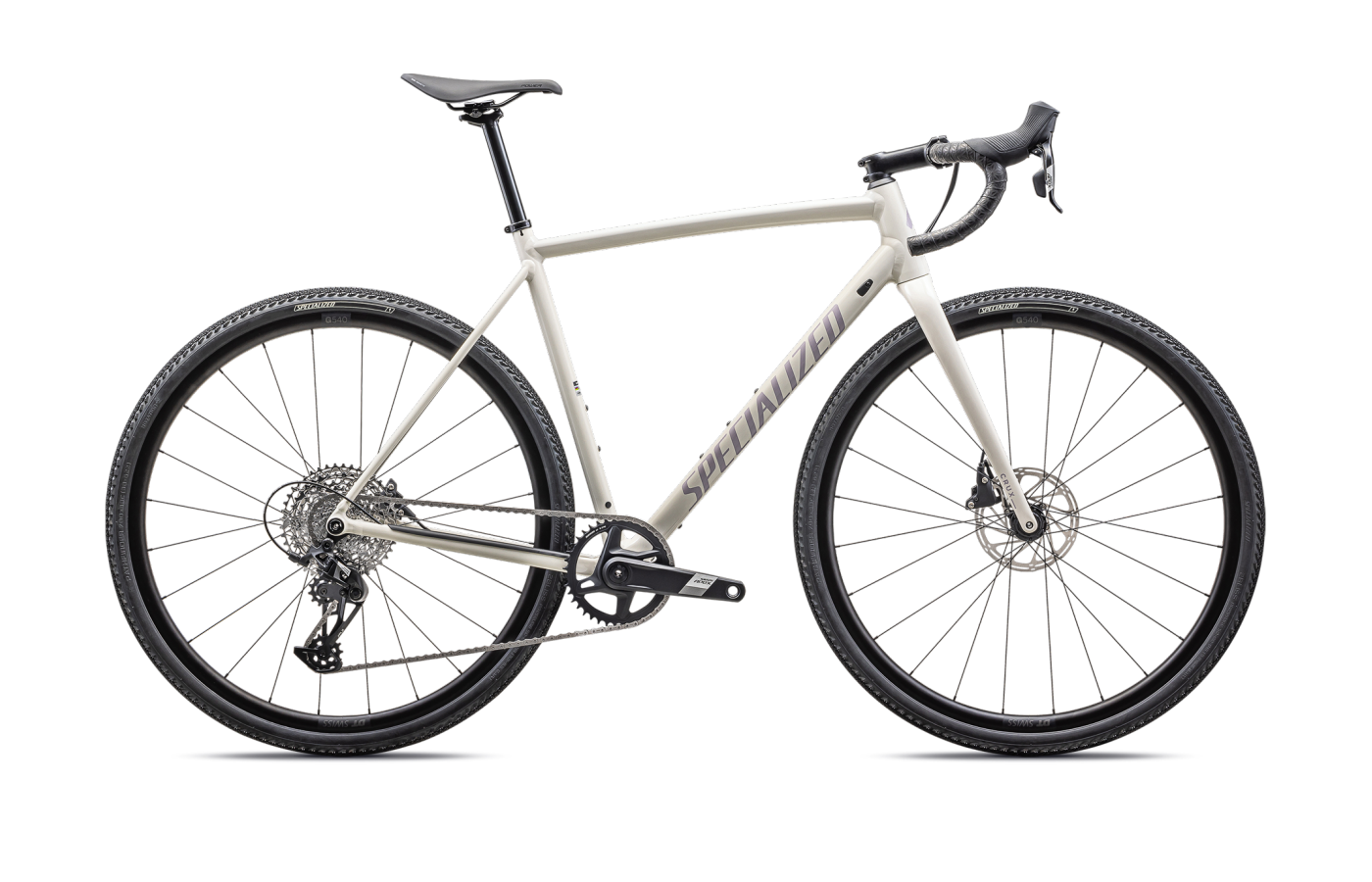
The other lightweight answer to gravel racing — the **Specialized Crux** trades the SuperX's aero integration for a genuinely featherweight, round-tube frame. The right pick if you value grams over watts.
Compare →
Grail
The **Canyon Grail** sits closest to the SuperX on aero intent — integrated cockpit, aggressive tube shaping — but direct-to-consumer pricing undercuts both. The catch: no local dealer, so fit has to be right before you click buy.
Compare →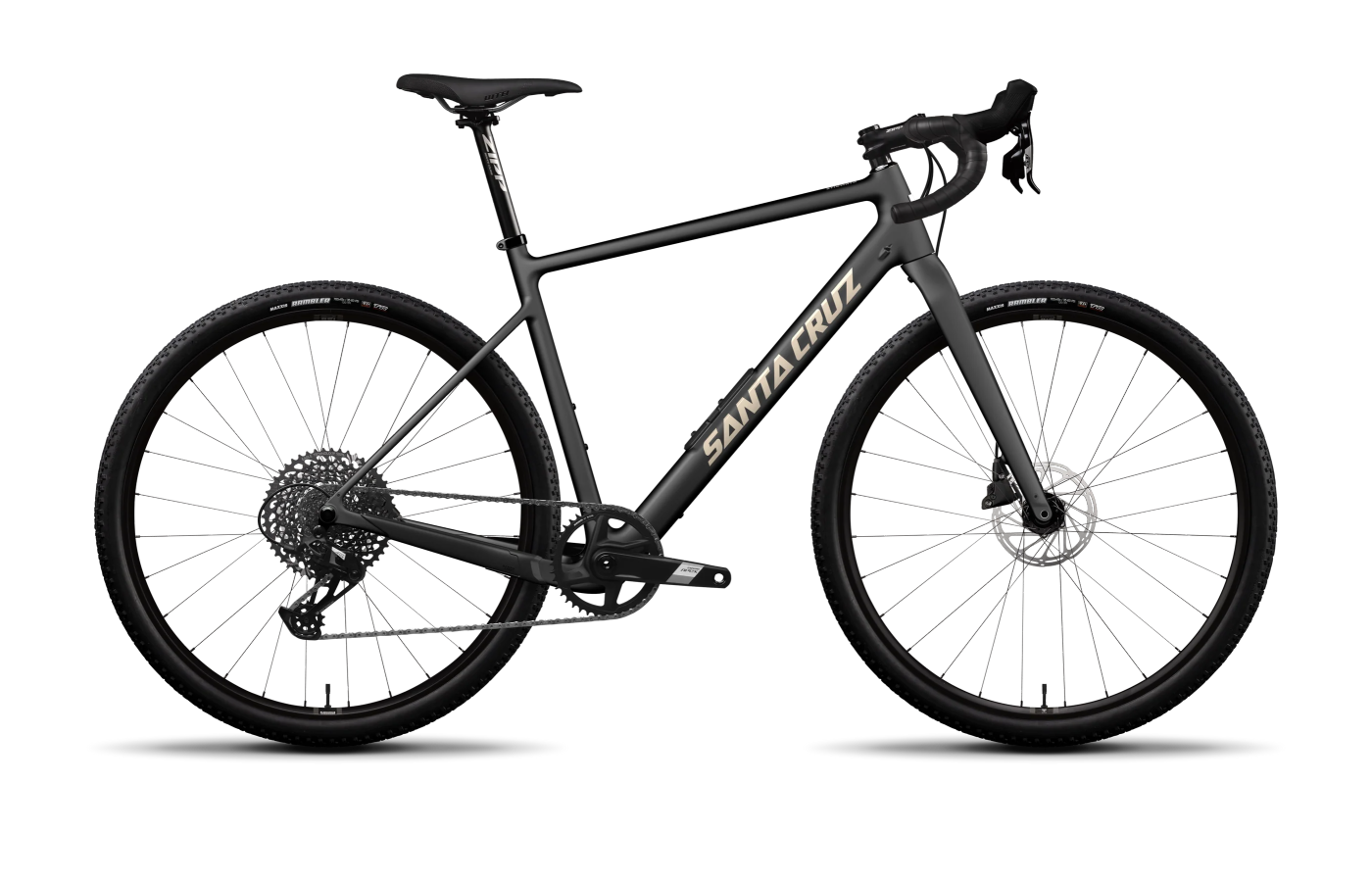
Stigmata
The **Santa Cruz Stigmata** is the grownup-geometry alternative — slacker angles, more progressive handling, wider clearance than the Aspero. Best if you want a race-capable bike that can still handle the rowdy stuff.
Compare →