Synapse
vsEndurace
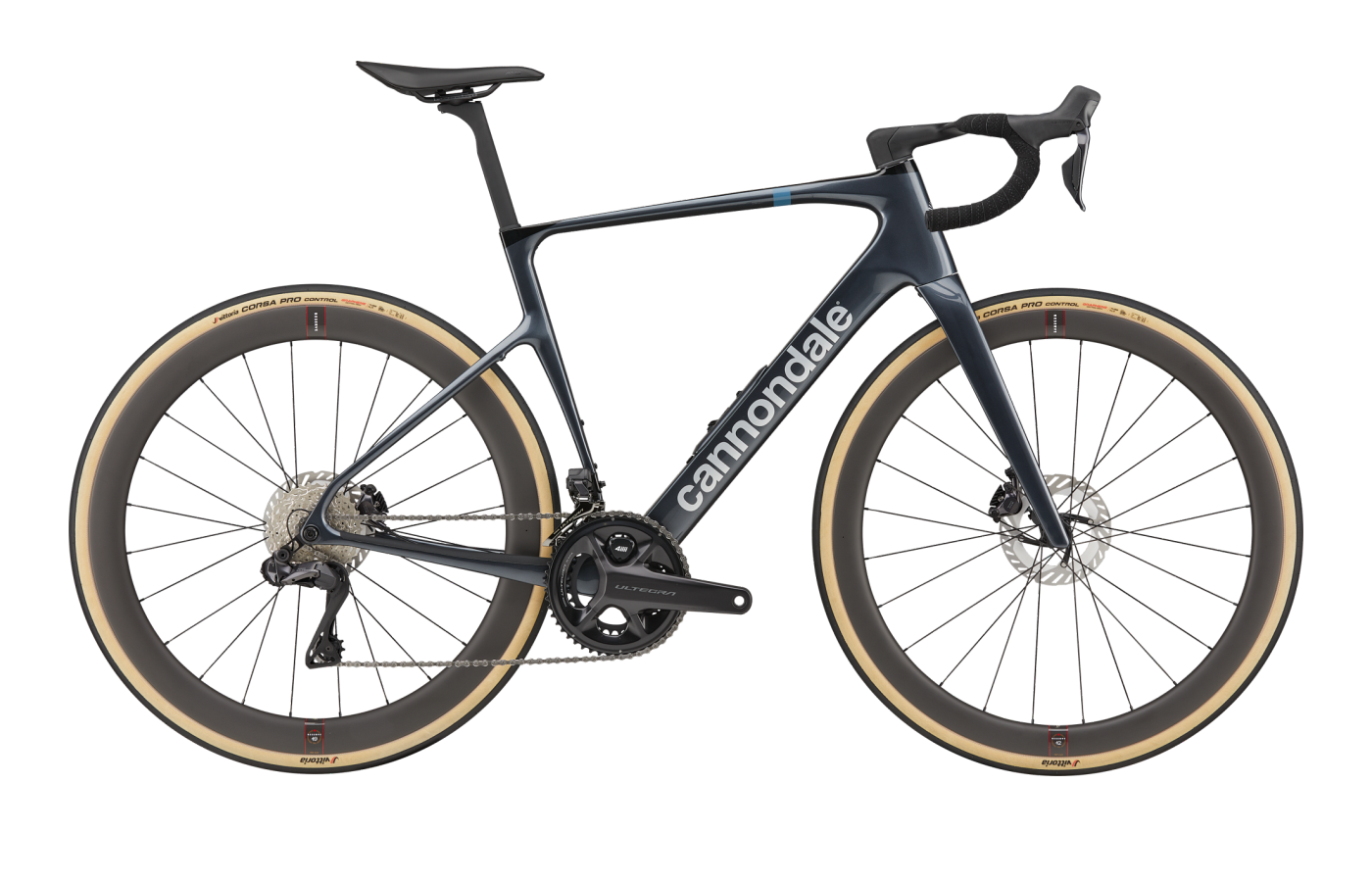
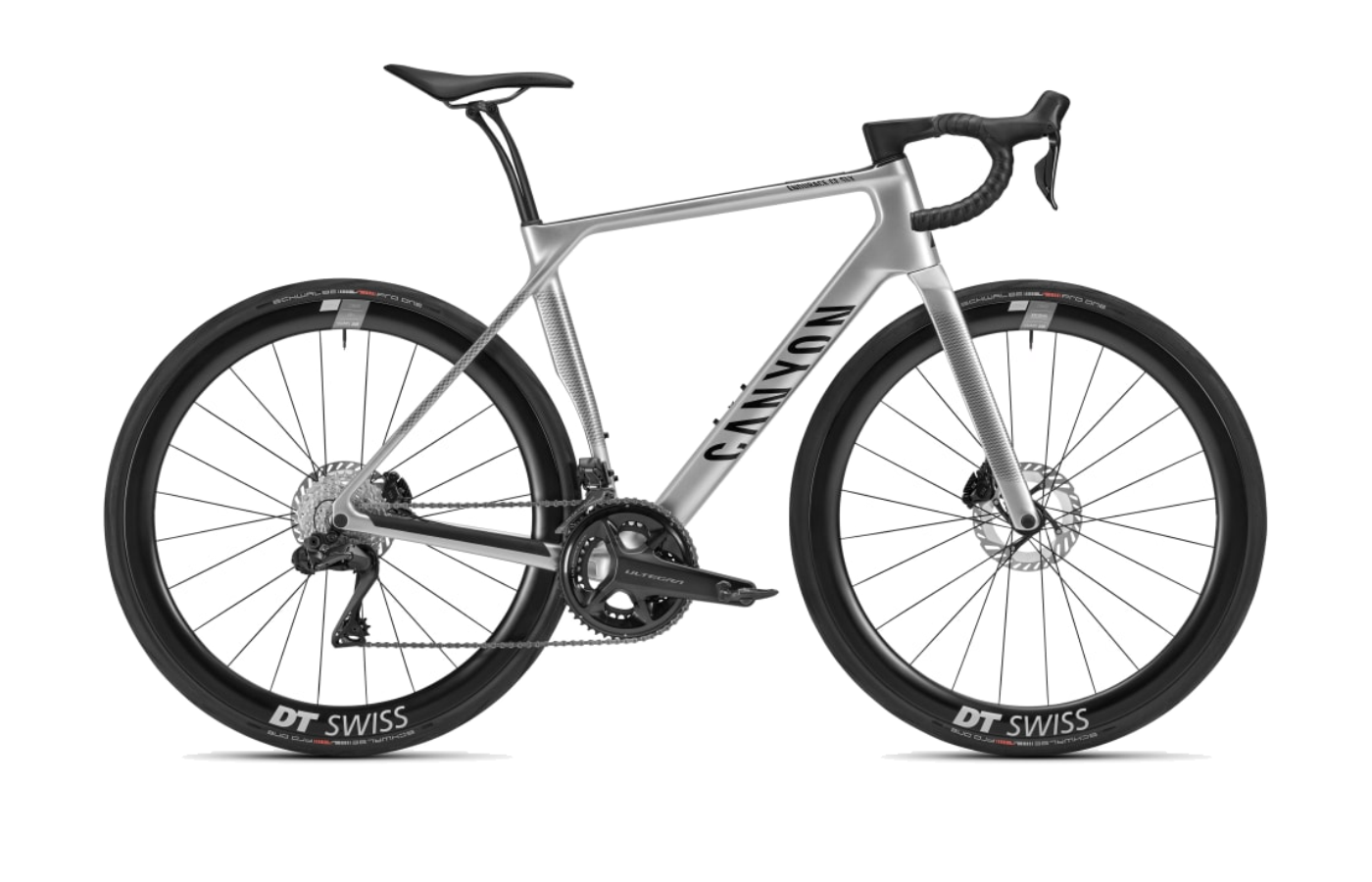
Two endurance benchmarks, two budgets.
The Cannondale Synapse is the do-everything endurance flagship with built-in lights and 42 mm clearance. The Canyon Endurace is the consumer-direct value play that gets you most of the way there for thousands less.
Synapse
- Class-leading tire clearance — 42 mm rear, 48 mm fork makes light gravel a real option, not a marketing line.
- SmartSense integration — frame-housed battery powers AXS shifting plus front light and Garmin Varia rear radar from one charger.
- Confidence-inspiring stability — 425–430 mm chainstays and a 71.3-degree HTA track cleanly on broken tarmac and fast descents.
- Pricier across the board — Hi-MOD Ultegra Di2 build is $3k more than the equivalent Endurace.
- Some reviewers (David Arthur of Just Ride Bikes) call the long wheelbase "sedate" — agility takes a back seat to stability.
Endurace
- Direct-to-consumer pricing — a Dura-Ace Di2 CFR build lands at $9,099, less than the Synapse's mid-range Hi-MOD.
- Power meter standard across the Di2 builds — even the mid-tier CF SLX 8 Di2 ships with a 4iiii Precision crank-based meter.
- Quicker, more agile handling — steeper HTA and 415 mm chainstays make it lively in switchbacks and sprints.
- 35 mm tire clearance is segment-average — no real off-road capability beyond chip seal.
- No demos, no local dealer, and the integrated CP0048 cockpit can't be re-stemmed without buying a new unit.
Editor’s analysis
Same brief — fast, comfortable, all-day. Wildly different answers, and the gap shows up on the receipt.
On paper, both bikes are built around the same mission: a quick endurance road platform with a slightly upright fit, modern wide-tire clearance, and integrated cockpits. But Cannondale and Canyon have arrived at the brief from opposite directions. The Synapse is the maximalist take — class-leading 42 mm tire clearance, full SmartSense integration with frame-housed battery, lights and a Garmin radar, plus downtube StashPort storage. The Endurace is the disciplined version — 35 mm clearance, top-tube LOAD storage, no integrated lighting, and prices that undercut almost everything in the segment.
Geometry-wise the Cannondale Synapse sits taller and longer at every comparable size. Even at the smallest fit-picked sizes, the Synapse's 425 mm chainstays and 1013 mm wheelbase against the Canyon Endurace's 415 mm stays and 991 mm wheelbase point to a more planted, surefooted ride — exactly what BikeRadar, Road.cc and others reported. The Endurace runs steeper and shorter, which Cycling News and Granfondo translate into "light, nimble" handling that's closer in spirit to Canyon's race-bred Ultimate.
Componentry tells the same story in reverse. At equivalent one-down Ultegra Di2 trim, our Synapse pick (Hi-MOD Carbon 1, $8,499) is $3,000 more than the Endurace pick (CF SLX 8 Di2, $5,499). Both run the same wireless 12-speed Ultegra Di2 groupset, both get DT Swiss carbon wheels, both ship with 32 mm Vittoria or Schwalbe rubber. What you're paying for on the Cannondale Synapse is the Hi-MOD frame, the Reserve 42|49 wheelset, the SmartSense system, and the integrated SystemBar R-One cockpit. None of those are bad reasons — but they are real ones.
Put another way: the Cannondale Synapse is the bike you buy when you want every bell, every whistle, and the longest tire-clearance leash in the category. The Canyon Endurace is the bike you buy when you want 90% of that experience, an immediate stock power meter, and another grand or three left in your pocket for tires, wheels, or a trip to ride it.
Where the builds differ.
Comparing our editor's-pick builds side-by-side. Winners highlighted row-by-row — lower price and weight, and the better-spec component, each mark a point.
Build variants & pricing
The Synapse spans $1,299 to $16,499 across alloy, carbon and Hi-MOD; the Endurace runs $1,499 to $9,099 with no flagship-tier Lab71 equivalent.
Prices are current US MSRP. The two editor's picks are tier-matched on drivetrain (Ultegra Di2) and the top carbon grade each brand offers (Hi-MOD vs CF SLX), but the Cannondale carries a $3,000 premium for SmartSense integration, Reserve carbon wheels, and the integrated SystemBar cockpit.
How they fit, how they steer.
Synapse 51 vs Endurace XS — the fit-picked sizes for a 5'8" rider on each. Stacks are nearly identical (550 vs 548 mm), but the Synapse runs 6 mm longer in reach, a half-degree slacker at the head tube, and 22 mm longer in wheelbase — measurably more stable, slightly less twitchy.
Which size should I buy?
Size recommendations based on stack, reach and effective top tube. Both ranges cover similar rider heights, but the Synapse offers more granular sizing in the small-to-medium band (44, 48, 51, 54).
→These are starting points. Flexibility, riding style, and preferred position all shift the answer — if you’re between sizes, a professional fit beats a chart.
What the magazines said.
Published reviews from trusted cycling outlets. Click through for the full write-up.
Which one should you buy?
If you want every modern endurance feature in one package and don't blink at the price, get the Synapse. If you want 90% of the bike for two-thirds of the money, get the Endurace.
Synapse
If you ride year-round, mix in light gravel, want lights and radar built into the bike, and care more about composed comfort than razor-sharp agility — this is the most complete endurance road bike on sale. The 42 mm clearance and SmartSense alone justify it for a certain kind of rider.
Endurace
If your priority is high-spec components per dollar, you mostly ride paved roads, and you're comfortable buying online without a demo, the Endurace delivers Ultegra Di2 with a power meter for $5,500 — and Dura-Ace Di2 for less than the Synapse's mid-range. Quicker, lighter, and dramatically cheaper.
Questions buyers actually ask.
Short answers to the things we get emailed about most often.
01Which is the better value?
The Canyon Endurace, by a wide margin. Direct-to-consumer pricing puts the flagship Dura-Ace Di2 CFR build at $9,099 — less than the Synapse's mid-range Hi-MOD Ultegra build. At equivalent one-down Ultegra Di2 trim, the Endurace CF SLX 8 Di2 is $5,499 versus the Synapse Carbon 1 at $8,499.
The Synapse charges back for SmartSense integration, Reserve carbon wheels, and a Hi-MOD frame. Whether those features are worth the $3,000 premium is the real question.
02Which has more tire clearance?
Cannondale Synapse: 42 mm rear, 48 mm fork — class-leading and genuinely all-road capable. Reviewers note the stock 32 mm Vittorias measure closer to 35 mm on the wide Reserve rims.
Canyon Endurace: 35 mm officially. The aluminum AllRoad build goes to 40 mm, but the carbon CF and CF SLX frames cap at 35 mm. Fine for chip seal and rough tarmac; not a gravel option.
03What is SmartSense and is it worth it?
SmartSense is Cannondale's integrated lighting and radar system — an 800-lumen front light, a Garmin Varia eRTL 615 rear radar/light, and a frame-housed battery in the downtube that also powers the SRAM AXS drivetrain on equipped models. One USB-C port charges everything.
Reviewers (BikeRadar, Cyclist) call the second-generation system "much improved" over the original and worth the ~460 g weight penalty for year-round commuters and group riders. The Endurace has no equivalent — you'd be bolting on a separate light and a separate Varia.
04Which climbs better?
Probably the Endurace, on weight alone — Cycling News measured the Dura-Ace CFR at 7.3 kg, while reviewers note the Synapse Lab71 sits around 7.79–8.3 kg with SmartSense fitted. The mid-tier Synapse Carbon 4 weighs in around 9 kg.
That said, both frames have stiff bottom brackets and Cannondale's claimed 20% compliance gain doesn't cost climbing efficiency. On a 30-minute climb, the weight gap is worth maybe 10–15 seconds for a typical rider — noticeable, not decisive.
05Can I service them at a local shop?
Synapse: yes — Cannondale's traditional dealer network means warranty, fits, and routine service all happen at brick-and-mortar shops. SmartSense diagnostics run through the Cannondale app.
Endurace: Canyon ships direct from Germany. There's no dealer network in North America. Most local shops will service it (it's standard parts inside), but warranty claims and fit consultations happen through Canyon's online support. If you don't already know your fit, this is the bigger risk.
06Are the integrated cockpits adjustable?
The Cannondale SystemBar R-One is a one-piece carbon bar/stem with internal routing — changing stem length or bar width means buying a new unit (similar to Specialized's Roval setup).
The Canyon CP0048 is more clever — width and height are adjustable within the unit (50 mm width / 20 mm height range). Stem length is still fixed, though, so a major reach change still requires a replacement cockpit.
07Which has better integrated storage?
Both have it. The Synapse's StashPort lives in the downtube — a generous compartment with rubberized seal, big enough for a spare tube, CO2, multi-tool, and a snack. Reviewers (BikeRadar, Road.cc) consistently praise it as rattle-free.
The Endurace's LOAD system lives in the top tube and includes a fitted multi-tool with Dynaplug and CO2 inflator. Some reviewers (Escape Collective, the linked YouTube review) noted rattling on rough surfaces and a less-robust plastic closure than expected at the price.
08Do both come with power meters?
Mostly. The Endurace ships with a power meter on every Di2 build from CF SLX 7 Di2 ($4,299) up — typically a 4iiii Precision spider or Shimano Dura-Ace meter. That's a standout for the price.
The Synapse includes power meters on the Carbon 1 ($8,499, 4iiii), the Lab71 SmartSense ($16,499, SRAM Red), and selected SmartSense builds. Lower-tier carbon and alloy builds do not.
Similar bikes
If your priorities don’t map cleanly onto either of these, one of these adjacent bikes probably fits better.
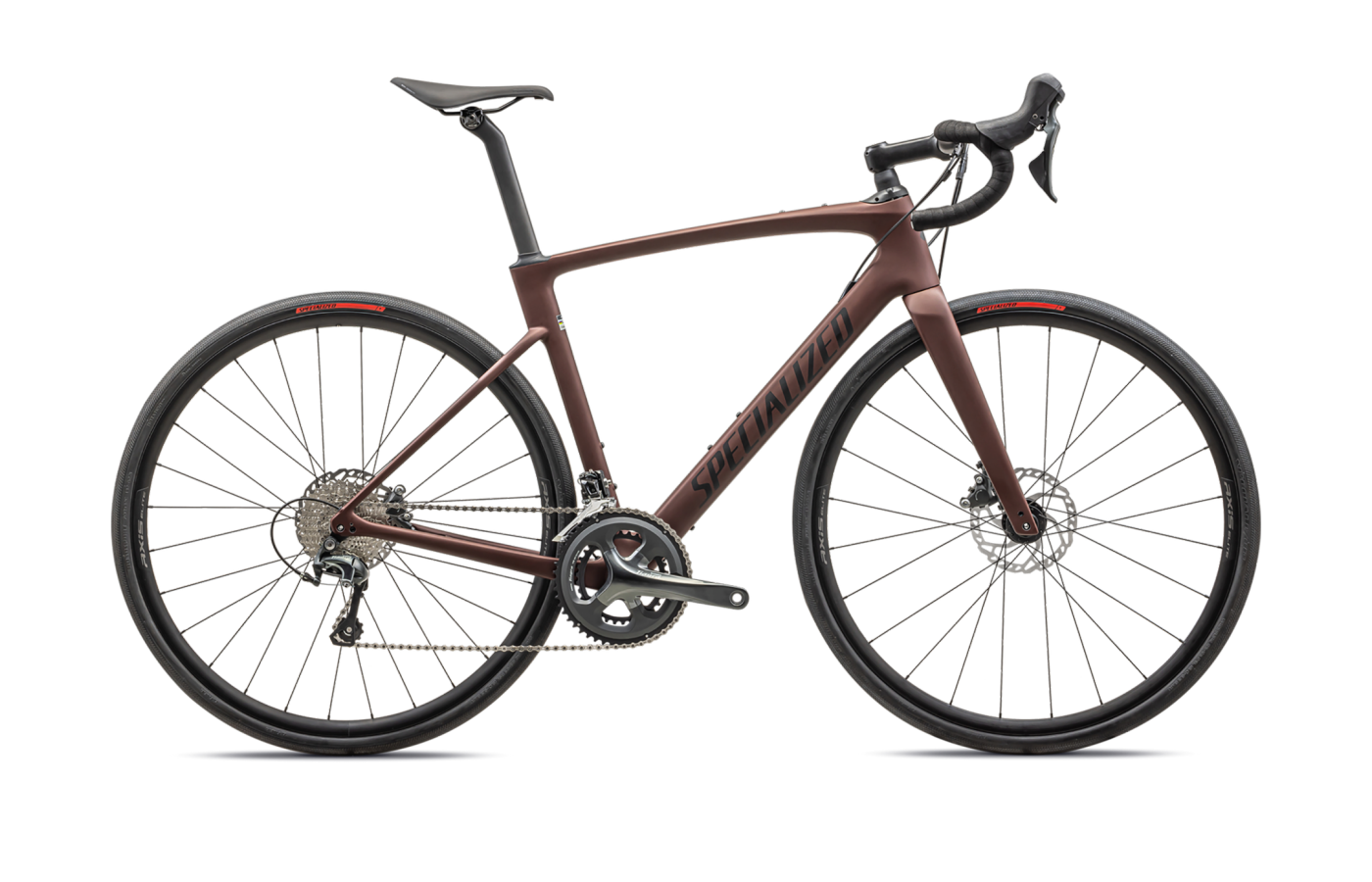
Roubaix
The Roubaix's Future Shock takes the front-end compliance argument further than either of these two — 20 mm of suspension travel under the stem instead of relying on tires. If you ride genuinely rough roads and the Synapse's tire-and-frame compliance still isn't enough, this is the next step.
Compare →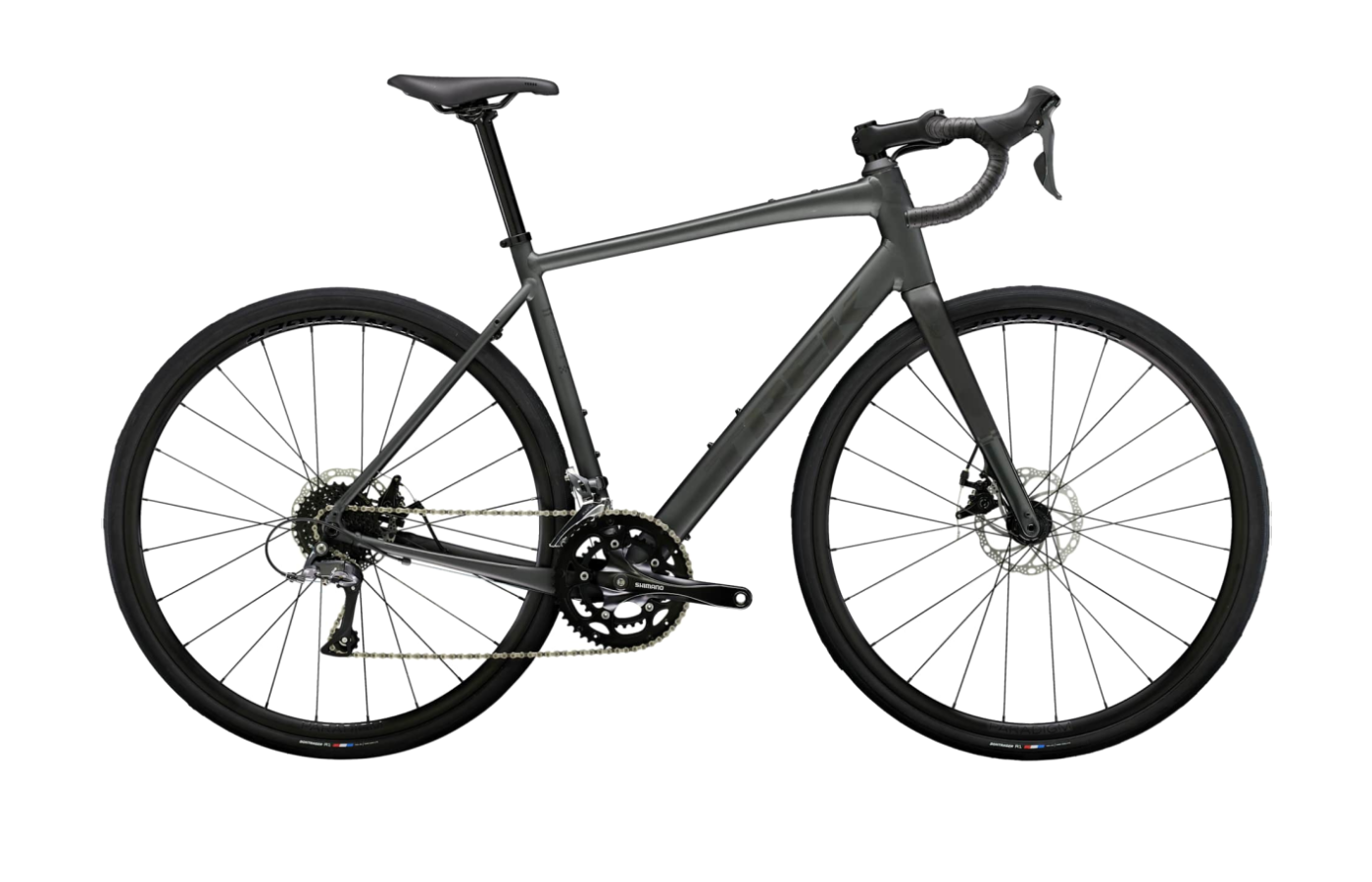
Domane
Trek's IsoSpeed decoupler is the third philosophy in this segment — a frame-engineered comfort solution rather than tires (Synapse) or a shock (Roubaix). Wider dealer network than Canyon, with downtube storage and a similar premium price band to the Synapse.
Compare →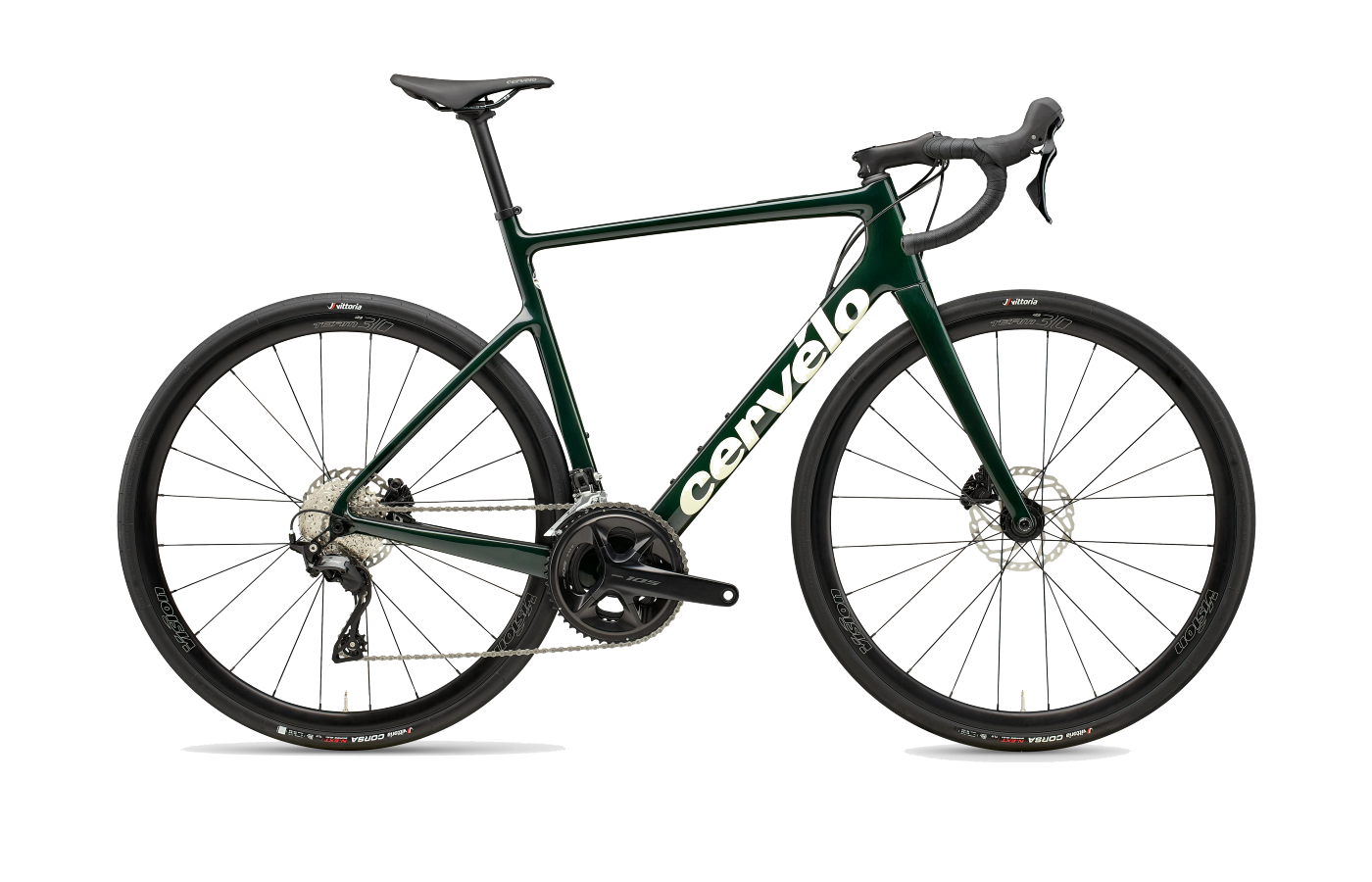
Caledonia
Cervélo's racy take on endurance — closer in spirit to the Synapse's 'fast endurance' ethos but without the integrated tech. If you want the ride character without the SmartSense complexity, the Caledonia is the cleaner answer.
Compare →