Topstone Carbon
vsCheckpoint
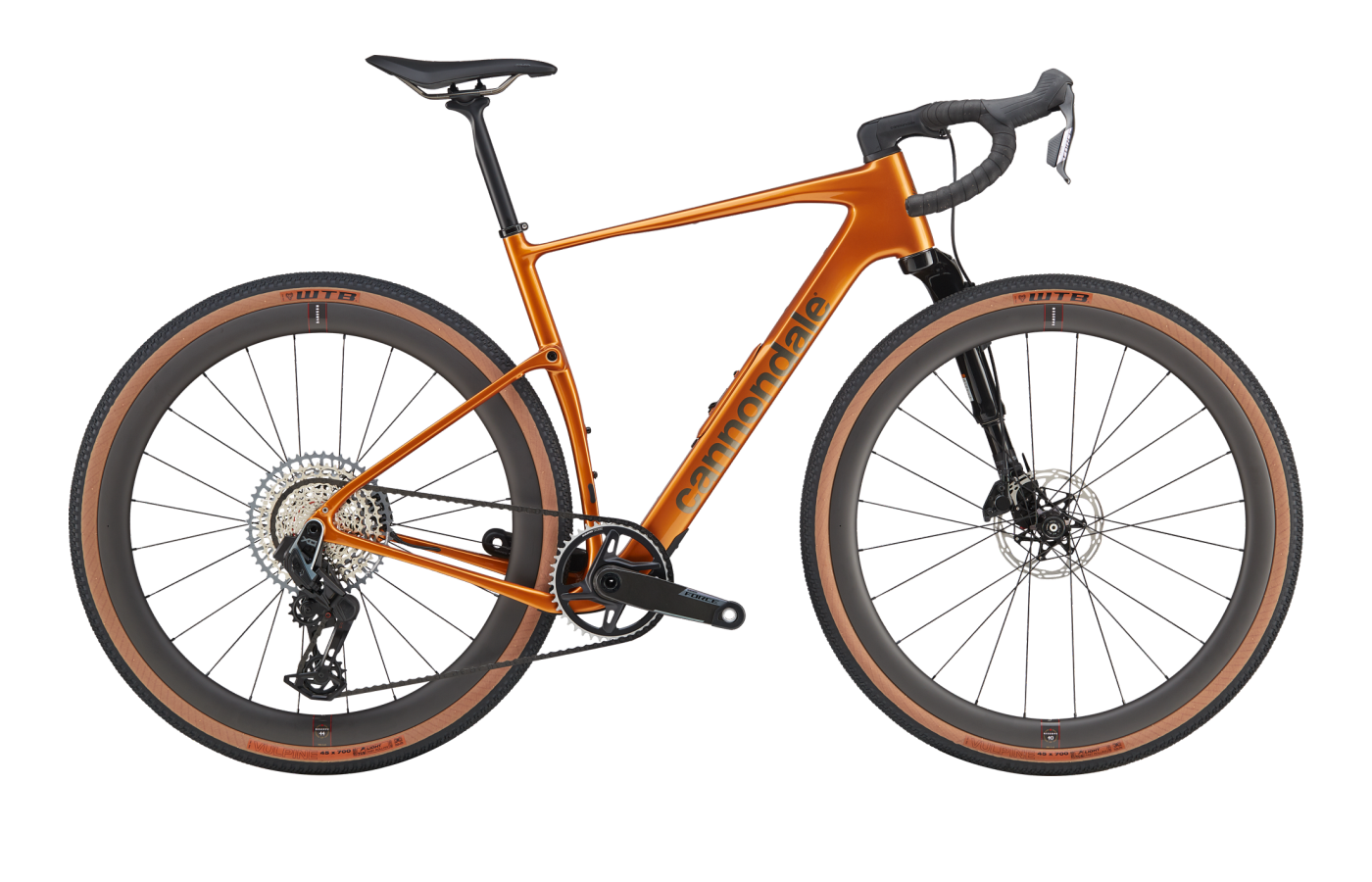
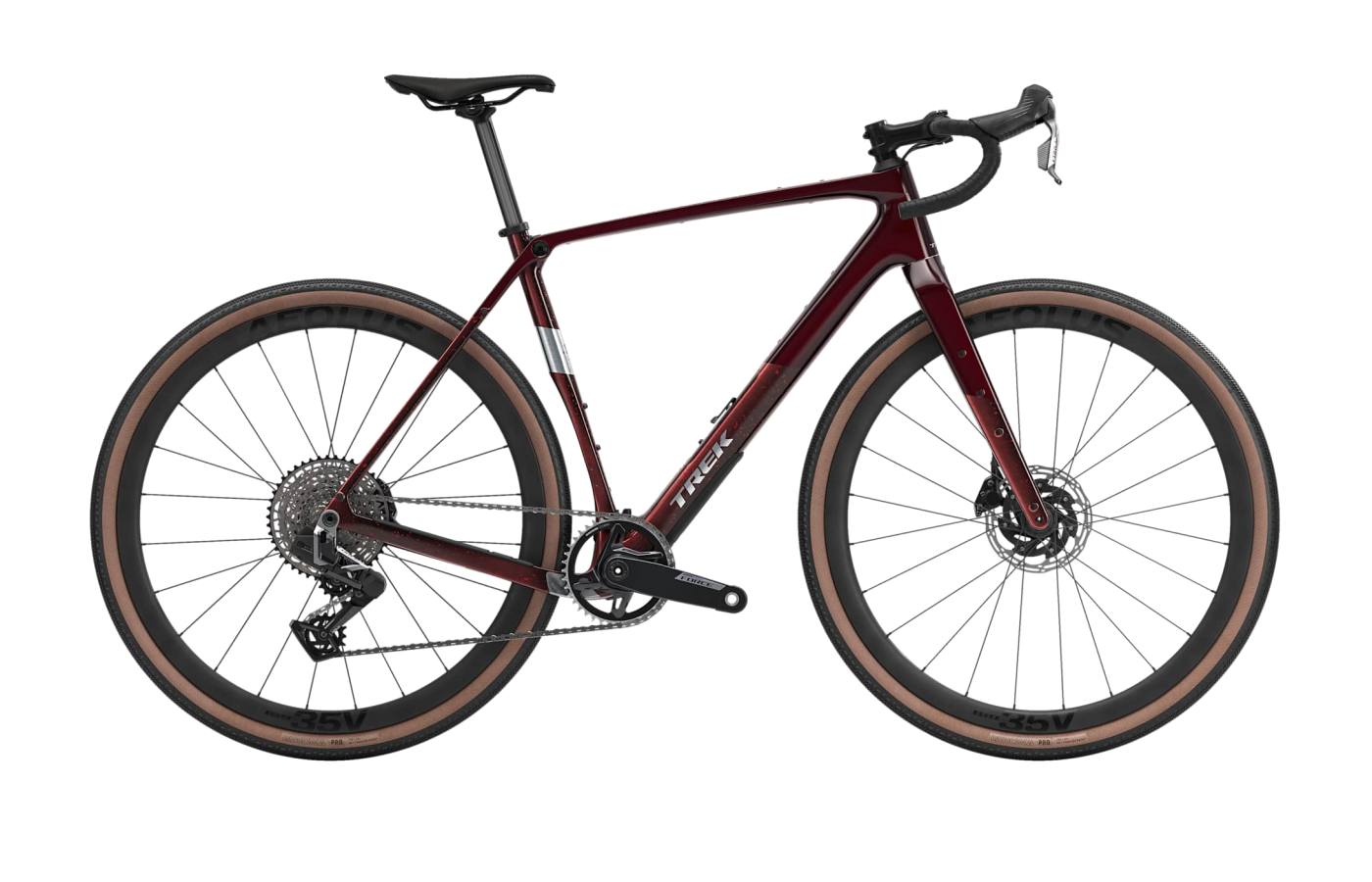
Two gravel bikes, two answers to the same question.
The Topstone Carbon fights washboard with suspension. The Checkpoint fights it with an IsoSpeed decoupler and 50 mm of tire clearance.
Topstone Carbon
- Dual suspension — 40 mm Lefty Oliver up front plus 30 mm of Kingpin flex at the rear, unmatched in the segment.
- Composed at speed — testers consistently describe descents on rough gravel as the bike's happiest place.
- Reserve carbon wheels ship on every Lefty-equipped build, not just the flagship.
- Lefty fork caps front tire clearance at 47 mm and requires a proprietary hub — no borrowing wheels from your other bike.
- Heavier than the Checkpoint at equivalent spec (~9.8 kg vs 9.33 kg on the flagship), and some testers feel a slight bob when standing on smooth pavement.
Checkpoint
- 50 mm tire clearance — the widest in this comparison, with no proprietary fork tax.
- IsoSpeed, simplified — a decoupler that quiets chatter without introducing hubs, air springs, or service intervals.
- Lighter at the top — the SL 7 AXS hits 9.33 kg (ML, claimed), noticeably spryer on climbs.
- Shorter reach puts weight forward on steep descents — one tester called it "hair-raising" under heavy braking.
- Through-the-headset cable routing: a minor annoyance on electronic builds, a genuine service expense on the mechanical ALR trims.
Editor’s analysis
Both bikes now sit a tier below their brand's race rig — and both have spent that freedom on comfort. The difference is how much mechanical complexity they're willing to throw at the problem.
On the surface this looks like a straight gravel-endurance fight. Both the Cannondale Topstone Carbon and Trek Checkpoint just stepped aside to let new race models (SuperX and Checkmate) handle the sharp end, and both lean into long-day comfort instead. Carbon frames, 1x or mullet drivetrains, room for chunky tires, stash ports in the downtube. On paper you could swap most of the spec sheets.
Cannondale's approach is the louder of the two: 30 mm of Kingpin flex at the seat and — on the Lefty builds — a 40 mm Lefty Oliver fork up front. That dual suspension is the whole pitch. Reviewers consistently describe high-speed washboard as where the Topstone Carbon feels almost smug, letting riders brake later and hold cleaner lines. It's the closest thing to a drop-bar short-travel trail bike that still wears a number plate at a gravel race.
The Trek Checkpoint is the quieter, simpler answer. IsoSpeed decouples the seat tube for high-frequency chatter without adding pivots or hubs to service, and the frame clears 50 mm tires — 3 mm more than the Lefty fork allows on the Topstone. New Gravel Endurance geometry pushes the rider upright; reviewers repeatedly come back to the word "chameleon" — commuter today, bikepacker Saturday, gravel race Sunday, no fork service ever.
Put another way: the Topstone Carbon is the bike you buy when the terrain is the problem. The Checkpoint is the bike you buy when the hours in the saddle are the problem — and when you'd rather solve that with fatter tires and a threaded bottom bracket than with a proprietary hub.
Where the builds differ.
Comparing our editor's-pick builds side-by-side. Winners highlighted row-by-row — lower price and weight, and the better-spec component, each mark a point.
Build variants & pricing
The Topstone spans $1,799–$7,999 across 13 builds; the Checkpoint covers $1,599–$6,499 across 6. Trek's ALR aluminum tier is the widest-reaching budget play in the segment.
Our editor's picks are tier-matched at SRAM Force AXS. The $1,500 price gap — LTD Lefty AXS at $7,999 vs SL 7 AXS at $6,499 — is the Lefty Oliver tax, not a frame or drivetrain delta. If you don't want the fork, the Topstone 1 AXS at $5,499 (Rival AXS, rigid) is the truer price-comparable.
How they fit, how they steer.
At the fit-picked sizes, the Checkpoint S sits 23 mm lower and 8 mm longer than the Topstone 54 — a sportier position, not a more upright one. The Topstone's chainstays are 10 mm shorter (420 vs 430 mm), which pairs with its 70.7° head angle for a tucked-in, planted feel. The Checkpoint counters with 71.4° of HTA for sharper low-speed steering.
Which size should I buy?
Size conventions differ — the Topstone uses numeric cm labels, the Checkpoint uses alpha sizes. Both platforms cover a similar height range; stack and reach are the right cross-brand comparison.
→These are starting points. Flexibility, riding style, and preferred position all shift the answer — if you’re between sizes, a professional fit beats a chart.
What the magazines said.
Published reviews from trusted cycling outlets. Click through for the full write-up.
Which one should you buy?
If your gravel gets chunky and your rides get long, get the Topstone. If you want one bike that commutes, bikepacks, and races, get the Checkpoint.
Topstone Carbon
If your regular loop includes genuine washboard, chunky fire roads, or mild singletrack — and you're willing to accept a proprietary fork and a slightly heavier package to ride it faster — the Topstone's dual suspension is the sharper tool. Reviewers consistently describe it as a bike that rewards pushing hard on terrain other gravel bikes flinch at.
Checkpoint
If you want one bike that handles commuting, bikepacking, and fast Saturday gravel without proprietary parts or a service schedule — and if 50 mm tire clearance matters more than a fork with travel — the Checkpoint is the quieter, more versatile answer. It's the "chameleon" reviewers keep reaching for that word.
Questions buyers actually ask.
Short answers to the things we get emailed about most often.
01Which has more tire clearance?
Trek Checkpoint — 50 mm, full stop, front and rear.
The Cannondale Topstone Carbon frame itself clears 52 mm, but the Lefty Oliver fork caps the front at 47 mm. If you buy a Topstone with the rigid Topstone Carbon fork instead, clearance goes up to 56 mm. So the ceiling depends on which fork you pick: 47 mm with the Lefty, 56 mm without.
02Which is more comfortable on rough gravel?
The Cannondale Topstone Carbon, measurably — especially in its Lefty configuration. The Kingpin rear offers 30 mm of flex and the Lefty Oliver adds 40 mm of front travel, and reviewers (The Radavist, Bike Rumor, Velo) consistently describe it as "floating" over washboard where rigid bikes feel skeletal.
The Checkpoint's IsoSpeed decoupler is effective but operates in a different register — it filters high-frequency chatter to reduce fatigue, rather than absorbing large hits. You won't feel it bobbing; you'll just feel fresher four hours in. Different solutions to different problems.
03Which climbs better?
The Checkpoint, on weight alone. The SL 7 AXS comes in at a claimed 9.33 kg (ML, no tubes), versus roughly 9.8–9.9 kg for the Lefty-equipped Topstone — that's 500 g the Checkpoint doesn't have to carry uphill.
Both bikes have enough gear range for steep gravel (40T chainrings paired with wide-range cassettes). On technical climbs, the Topstone's suspension actually improves traction on loose surfaces, which some testers felt offset the weight penalty. On smooth, paved climbs, the Checkpoint's lighter, stiffer platform wins.
04Is the Lefty Oliver fork worth the proprietary hassle?
It depends on how rough your gravel gets. The Lefty Oliver is genuinely excellent — reviewers call it "wildly stiff, light, and responsive," with a 100-hour service interval (double most conventional suspension forks).
But it requires a proprietary single-sided hub, removing the front wheel means detaching the brake caliper first, and it caps tire clearance at 47 mm. If you want maximum tire volume, easy wheel swaps, or rigid simplicity, Cannondale sells the Topstone with a rigid carbon fork too — that version goes up to 56 mm front tires and weighs roughly 900 g less at the fork.
If your riding lives on chunky gravel and light singletrack, the Lefty pays for itself. If not, the rigid Topstone or the Checkpoint are probably the saner call.
05How do the drivetrains compare at the editor's-pick tier?
Both are SRAM Force AXS at our pick tier, but they're set up differently.
The Topstone LTD Lefty AXS runs a mullet — SRAM Force AXS road shifters driving an XO Eagle AXS rear derailleur and a 10-52T Eagle cassette, paired with a Force XPLR 42T chainring. Massive gear range.
The Checkpoint SL 7 AXS runs a pure Force XPLR AXS 1x setup with a 10-46T cassette and a 40T chainring. Slightly narrower range on the low end, but simpler, lighter, and purpose-built for gravel. Both will get you up almost anything.
06Which has better internal storage?
Trek Checkpoint — reviewers call the downtube door larger, more secure, and more usable than the Topstone's Stashport, which is partly blocked off by an internal plate.
The Checkpoint also ships with a Trek BITS bag that's well-organized for tubes, tools, and a plug kit. Both frames have plenty of external mounting points for bottles, top-tube bags, and rack/fender compatibility — the raw cargo capacity is similar, but Trek's execution on the downtube compartment specifically is the clear winner.
07How serviceable are they in the long run?
Both use threaded (BSA 68 mm on the Topstone, T47 on the Checkpoint) bottom brackets and UDH rear dropouts — a big step forward on both platforms and a major durability win over the previous generations.
The Topstone's Kingpin system is maintenance-free (carbon flex, no bushings to service). The Lefty Oliver needs a 100-hour service and requires a Cannondale dealer for major work.
The Checkpoint routes cables through the headset. On electronic builds, that's aesthetically clean and causes no issue. On mechanical ALR builds, one reviewer cited shift cable replacements costing up to $200 in labor versus $25 on an externally-routed bike. Buy the electronic trims if you plan to keep it a decade.
08Which is the better one-bike quiver?
The Checkpoint, for most riders. The 50 mm tire clearance, simpler fork, upright Gravel Endurance geometry, and extensive mounting points make it genuinely capable as a commuter, bikepacker, light-tourer, and gravel racer in the same frame. The ALR aluminum trims extend that versatility down to $1,599.
The Topstone Carbon is more specialized — its suspension is a real advantage on rough terrain and a small penalty on smooth terrain. If your riding is diverse but consistently gravel-y, either works. If "gravel" is one of several hats your bike has to wear, the Checkpoint is the broader tool.
Similar bikes
If your priorities don’t map cleanly onto either of these, one of these adjacent bikes probably fits better.
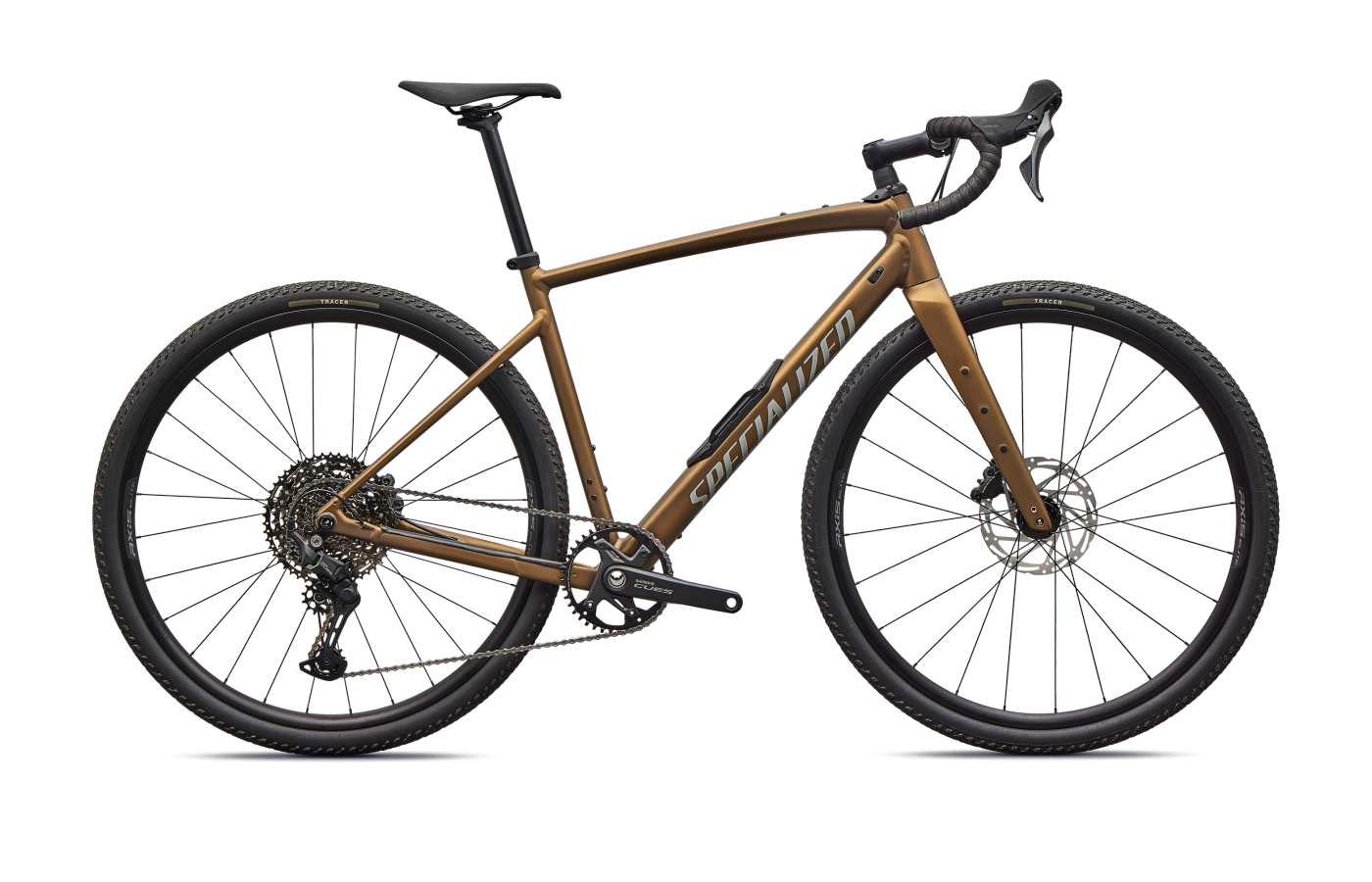
Diverge
The Diverge's Future Shock handles suspension at the stem instead of the fork — same "damp the high-frequency chatter" goal, but less polarizing than a Lefty and easier to live with at wheel-swap time.
Compare →Grizl
Canyon's adventure-first gravel rig — comparable tire clearance and mount count to the Checkpoint at direct-to-consumer pricing. The catch is no local dealer; best if you already know your fit.
Compare →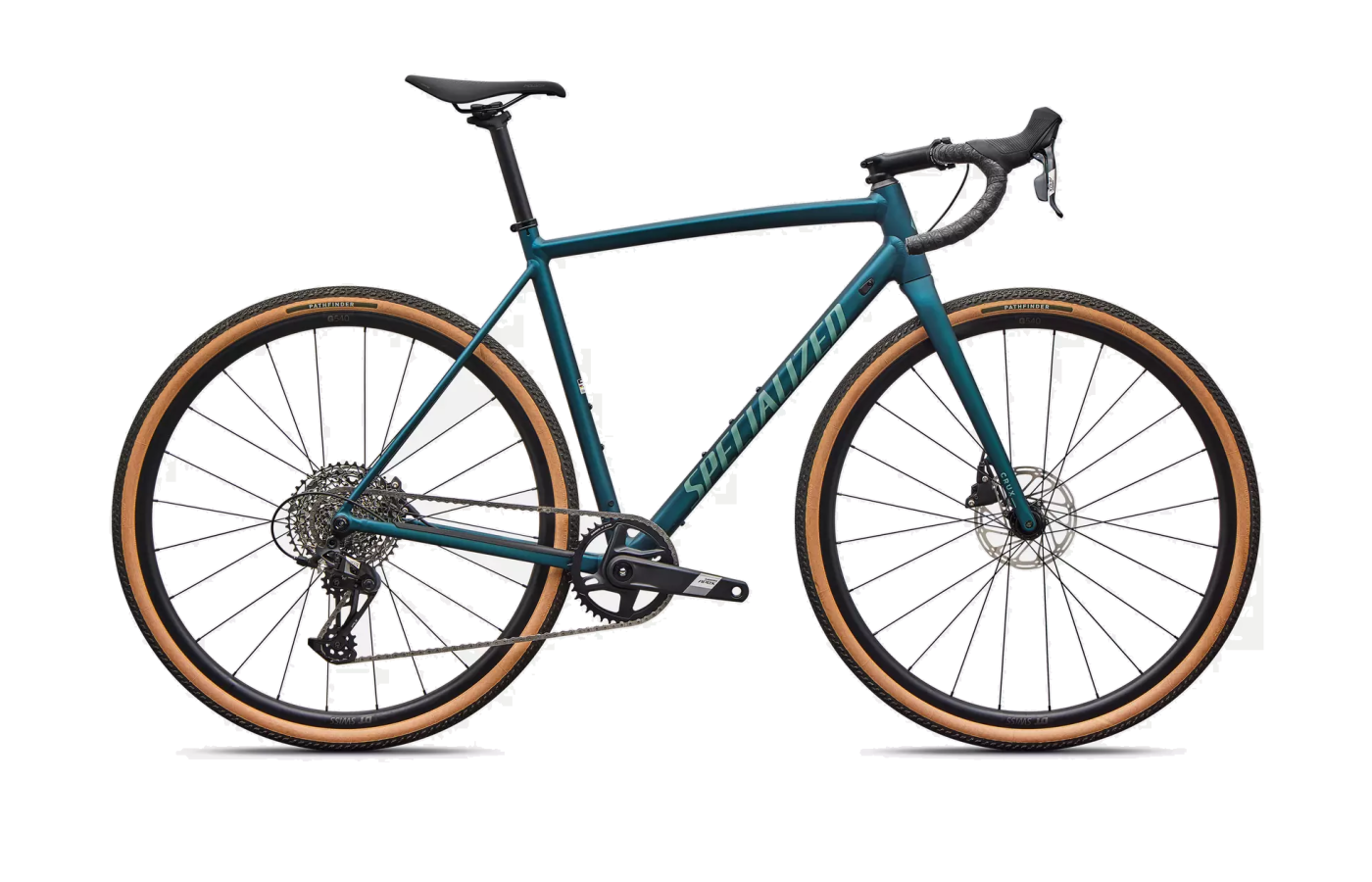
Crux
For riders who find both the Topstone and Checkpoint over-engineered, the Crux strips the category back to a minimalist, ultra-light rigid platform — a cyclocross-lineage bike that favors pure speed over comfort systems.
Compare →