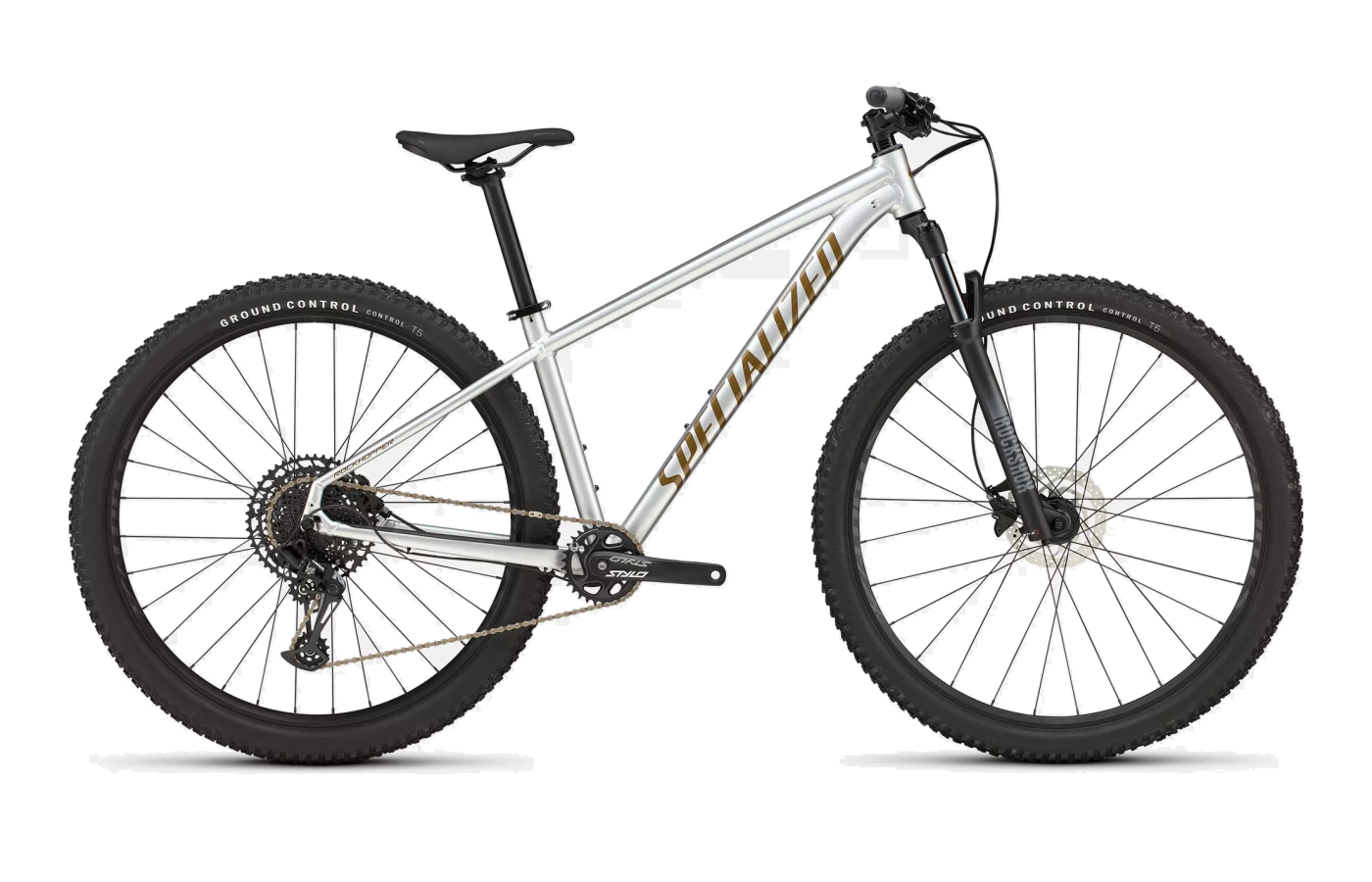
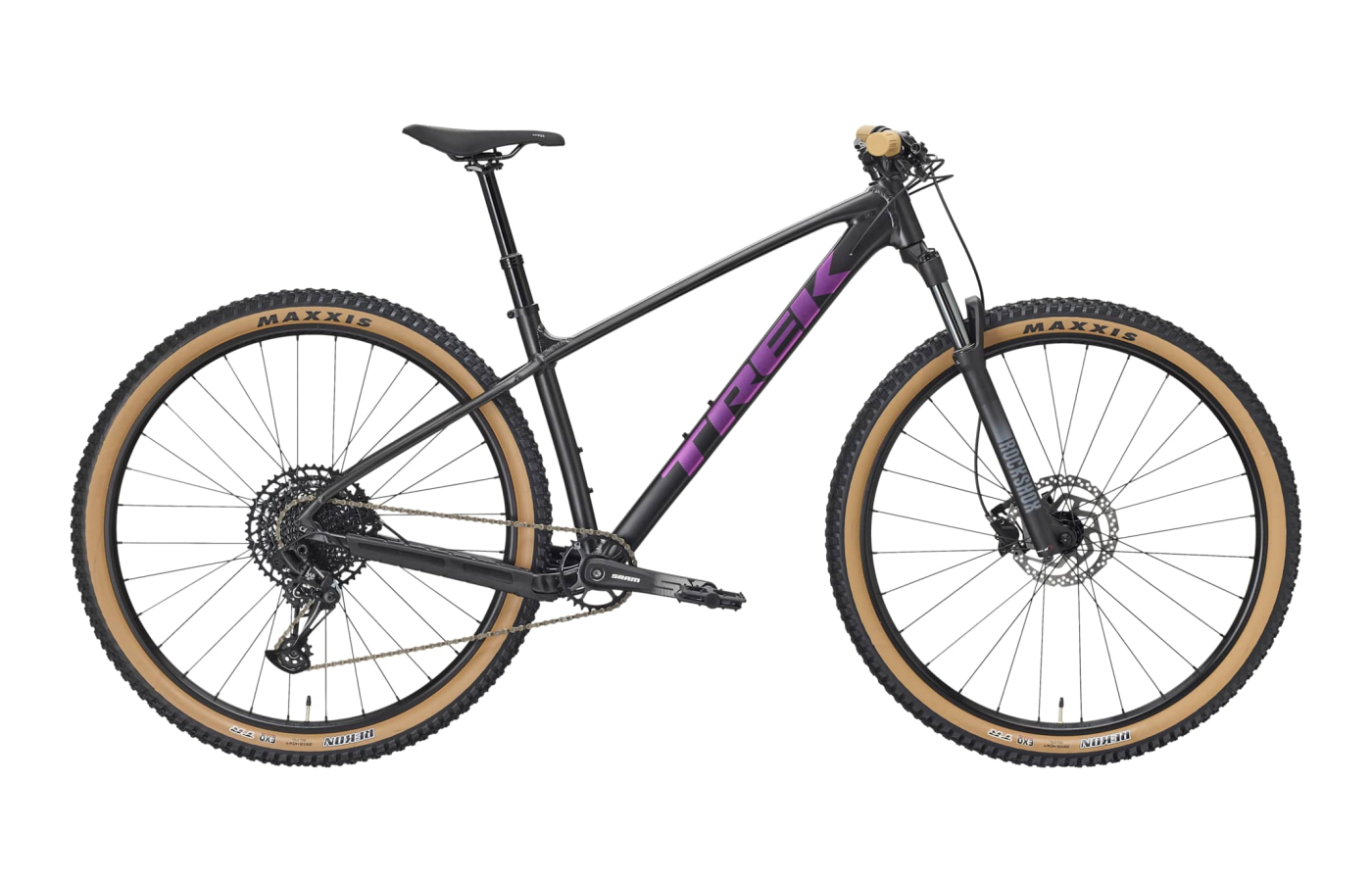
Cannondale TrailvsSpecialized Demo
Comparing the Cannondale Trail to the Specialized Demo is like comparing a reliable station wagon to a purpose-built Trophy Truck. One invites you into the sport with an accessible price and sensible manners, while the other demands a chairlift and a full-face helmet to even make sense. This is a decision about whether you want to pedal through the woods or survive a World Cup rock garden.
Overview
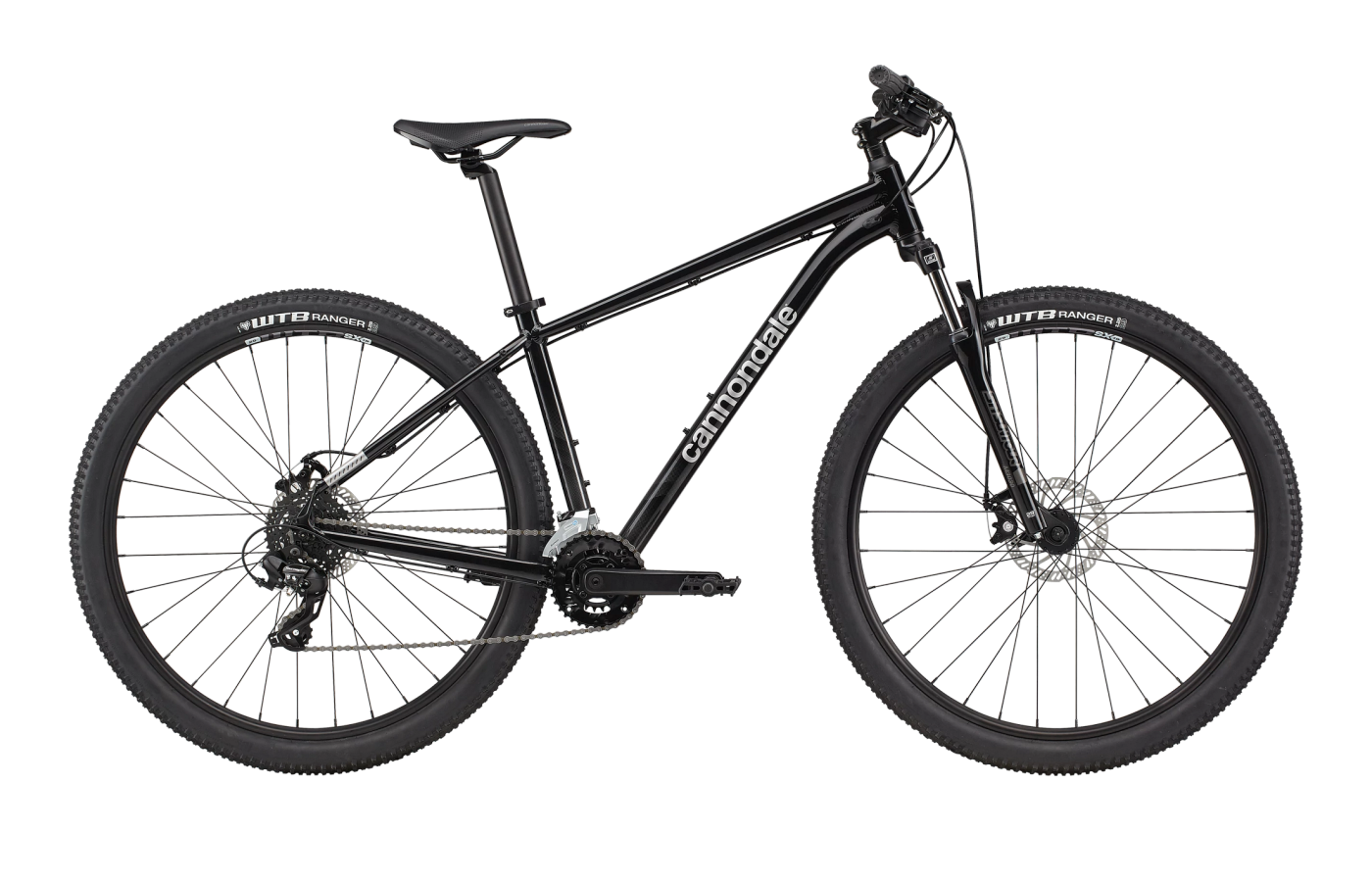
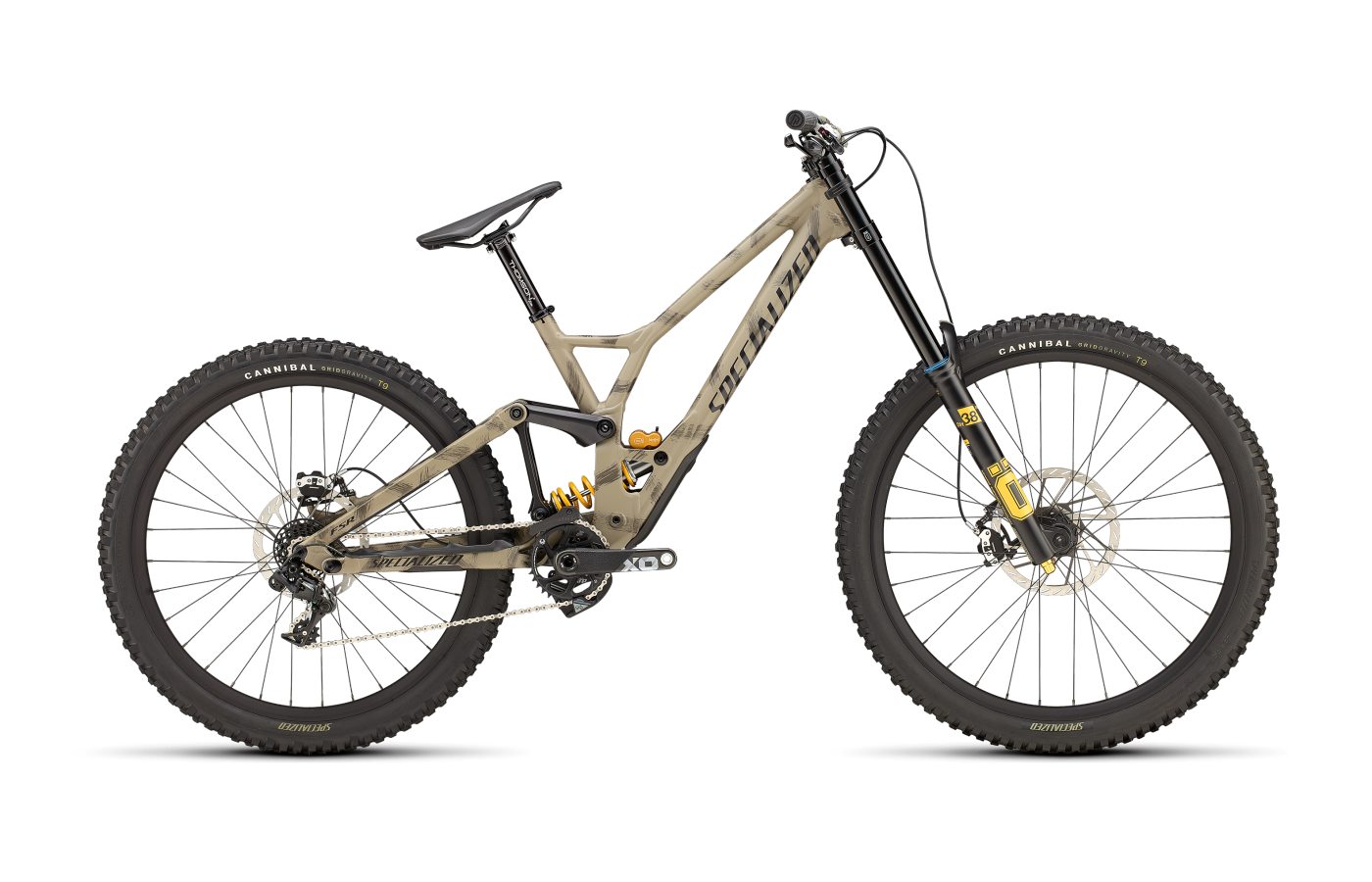
The market positions here couldn't be further apart. The Cannondale Trail range is a sprawling family of hardtails built for the entry-level rider, ranging from the bare-bones Trail 8 to the relatively capable SE models. It is designed to be the first "real" mountain bike for someone moving away from big-box store heavyweights, using its SmartForm alloy frame and SAVE vibration-damping seatstays to make light singletrack approachable. Specialized, meanwhile, has focused the Demo purely on gravity racing, moving back to an aluminum frame for this generation to allow for faster R&D iterations with pro riders like Loïc Bruni. While the Trail relies on its "Right-Sized Wheels" approach to ensure consistent handling across sizes, the Demo uses a massive 300% increase in anti-squat to ensure every ounce of power translates into forward momentum out of the starting gate. The Cannondale is a generalist that can double as a weekend commuter, but the Demo is a specialist that feels awkward anywhere without a 20% gradient. One is built for progression; the other is built for podiums.
Ride and handling
Riding the Trail feels intuitive and upright. Reviewers describe it as confidence-inspiring because it avoids surprises; the 68-degree head angle is slack enough to keep you from feeling like you are going over the bars on small drops, but the front end remains light enough to steer through tight uphill switchbacks. It is a stable platform for navigating roots and gravel roads without the nervous twitch of an old-school cross-country bike. At lower speeds, the nimble character helps beginners navigate technical sections and tight turns without feeling overwhelmed. The Demo is a different beast entirely, behaving more like a "monster truck" that demands aggressive input to stay on line. Its redesigned axle path moves the rear wheel back as it hits bumps, preventing the "hanging up" sensation that plagued previous versions. Instead of the wallowy feel of older downhill bikes, this one stays level under heavy braking thanks to a 70% increase in anti-rise. This stability allows you to brake much later into "moto-style whoops" without the bike pitching you forward. In corners, the Cannondale is nimble and lively, especially on the 27.5-inch wheels found in smaller sizes. The Demo, specifically in its "Race" mullet configuration, rails turns with a "Jack Russell chasing a tennis ball" intensity. It provides a supportive platform that eliminates the "fictitious flat tire" feeling when you are leaning hard into a berm. While the Trail is about survival and skill development, the Demo is about carrying terminal velocity through chaos. If you ride the Demo at breakneck speeds, the window for error narrows, requiring a focused pilot to keep it on its best behavior.
Specifications
The specs across the board highlight the massive chasm in performance requirements. The Specialized Demo Race uses a titanium-railed saddle and carbon cranks to shed weight where it matters, while the Cannondale Trail 8 makes do with heavy steel rails and square-taper bottom brackets. For $1,175, the Trail Women's SE 4 gives you a 10-speed Deore setup and 180mm rotors—decent for local hills, but the Demo's 220mm front rotor is a necessity for dissipating heat on high-speed descents. Suspension quality is the real divider. The Demo comes with World Cup-ready Öhlins or RockShox Ultimate dampers that allow for extensive external compression adjustments. These are built for consistency under fire, whereas the Suntour coil forks on most Trail builds are often described as "basic and heavy," offering only enough travel to swallow small bumps and potholes. The Demo's Roval alloy wheels are built to survive casing jumps, while the WTB SX19 rims on the lower Trail builds are explicitly not intended for serious jumping. Drivetrains follow the same logic of specialization. Specialized uses a dedicated SRAM X01 DH 7-speed system with a tiny 10-24T cassette because you do not need a climbing gear on a bike that only goes down. Cannondale offers everything from 2x8 Shimano Altus setups for beginners who need wide ratios for hills to 1x12 systems on the higher-end Trail 1 and 2 models. If you are buying a Trail 8, reviewers warn that the entry-level Tourney derailleur may need frequent adjustments, whereas the Demo’s X01 DH kit is designed to stay sharp through peanut-butter mud and high-vibration rock gardens.
| Trail | Demo | |
|---|---|---|
| FRAMESET | ||
| Frame | SmartForm C3 Alloy, SAVE, 1-1/8" headtube, post mount disc, StraightShot internal cable routing, dropper post compatible, BSA-73 | M5 alloy, Style-Specific DH Geometry, Horst pivot flip chip for 27.5 or 29 rear wheel, BSA threaded BB, full internal cable routing with option for full external brake, 148mm rear spacing, sealed cartridge bearing pivots, replaceable derailleur hanger, 200mm travel |
| Fork | SR Suntour M3030, 75mm, coil, 42mm offset (27.5") / 46mm offset (29") | Öhlins DH38 M.1 29, TTX Twin Tube Damping, external low-speed rebound adjust, external high/low-speed compression adjust, 20x110mm, 58mm offset, 200mm travel |
| Rear shock | — | Öhlins TTX22M.2 Coil, external rebound adjust, external high/low-speed compression adjust, Trunnion mount, 225x75 |
| GROUPSET | ||
| Shift levers | microSHIFT, 7-speed | SRAM X01 DH, trigger, 7-speed |
| Front derailleur | microSHIFT Dual Pull Compact, Band Clamp | — |
| Rear derailleur | microSHIFT M26L | SRAM X01 DH, 7-speed |
| Cassette | Sunrace, 11-34, 7-speed | SRAM X01 DH, 7-speed, 10-24T |
| Chain | KMC Z7, 7-speed | SRAM PC1130 w/ Powerlink, 11-speed |
| Crankset | Prowheel, 36/22 | SRAM X01 DH, DUB, carbon, direct-mount ring, 165mm |
| Bottom bracket | Sealed cartridge bearing, square taper | SRAM DUB, 83mm |
| Front brake | Tektro mechanical disc | SRAM Maven Ultimate, 4-piston hydraulic disc |
| Rear brake | Tektro mechanical disc | SRAM Maven Ultimate, 4-piston hydraulic disc |
| WHEELSET | ||
| Front wheel | WTB SX19, 32h; Formula, QR; Stainless Steel, 14g | Roval Traverse Alloy, 32h, 28mm internal width (29"); DT Swiss 350, 20x110mm; Sapim D-Light |
| Rear wheel | WTB SX19, 32h; Formula, QR; Stainless Steel, 14g | Roval Traverse Alloy, 32h, 28mm internal width (27.5"); DT Swiss 350, 12x148mm; Sapim D-Light |
| Front tire | WTB Ranger Comp, 29x2.25" (27.5x2.25" - XS, SM), DNA Compound | Specialized Cannibal, GRID GRAVITY casing, GRIPTON T9, 2Bliss Ready, 29x2.4 |
| Rear tire | WTB Ranger Comp, 29x2.25" (27.5x2.25" - XS, SM), DNA Compound | Specialized Cannibal, GRID GRAVITY casing, GRIPTON T9, 2Bliss Ready, 27.5x2.4 |
| COCKPIT | ||
| Stem | 6061 Alloy, 31.8, 8° | Renthal Integra 35 direct-mount stem, 45mm length |
| Handlebars | 6061 Alloy Riser, 31.8mm, 25mm rise, 700mm | Renthal Fatbar 35, 5° upsweep, 7° backsweep, 30mm rise, 800mm, 35.0mm clamp |
| Saddle | Cannondale Stage 3 | Body Geometry Henge DH, hollow titanium rails, 130mm |
| Seatpost | Cannondale 3, 6061 Alloy, 31.6x350mm (XS - SM), 400mm (MD-XL) | Thomson, alloy, straight, 12-degree clamp |
| Grips/Tape | Cannondale Dual-Density | Deity Lockjaw |
Geometry and fit comparison
Geometry numbers reveal two bikes designed for opposite ends of the speedometer. The Specialized Demo features a slack 62.8-degree head angle and a long 1,264mm wheelbase in the S3 size, which is pure stability. Compare that to the Trail's 68-degree head angle—which is progressive for a beginner hardtail but upright compared to a downhill sled. The Demo’s BB sits at 350mm to provide ground clearance for 29-inch wheels, whereas the Trail 8 has a low bottom bracket that reviewers warn can lead to pedal strikes in technical terrain. Fit logic is also fundamentally different between these two. Cannondale uses a traditional XS to XL sizing based on a "long top tube" philosophy, where they recommend sizing down if you are between sizes for better trail handling. Specialized uses "S-Sizing" where reach is the primary metric. With a maximum reach of 465mm on the S4, the Demo is actually quite conservative; a 6'4" rider will find it cramped compared to many modern enduro bikes. The Trail’s 73.5-degree seat tube angle is designed for seated pedaling comfort on flats. On the Demo, the seat tube is just there to hold the saddle out of the way; the 76.8-degree angle doesn't matter much because you will spend almost all your time standing. One specific detail is the Demo's 443mm chainstays, which are 20mm longer than the previous model to improve high-speed traction—a stark contrast to the Trail’s 435mm stays which prioritize quick maneuvers at lower speeds.
| FIT GEO | Trail | Demo | |
|---|---|---|---|
| Stack | 632 | 632 | 0 |
| Reach | 447 | 426 | -21 |
| Top tube | 634 | — | — |
| Headtube length | 115 | 105 | -10 |
| Standover height | 795 | — | — |
| Seat tube length | 470 | 394 | -76 |
| HANDLING | Trail | Demo | |
|---|---|---|---|
| Headtube angle | 68 | 62.8 | -5.2 |
| Seat tube angle | 73.5 | 78.2 | +4.7 |
| BB height | 307 | 350 | +43 |
| BB drop | 65 | 25 | -40 |
| Trail | 101 | 130 | +29 |
| Offset | 46 | 56 | +10 |
| Front center | 728 | 801 | +73 |
| Wheelbase | 1166 | 1244 | +78 |
| Chainstay length | 445 | 443 | -2 |
Who each one is for
Cannondale Trail
The Cannondale Trail is for someone who wants to leave the neighborhood pavement behind but isn't interested in jumping off cliffs. If your Saturday morning involves a few miles of fire roads and a smooth singletrack loop before riding the same bike to work on Monday, this hardtail is the tool. It is built for the rider who values a predictable, stable platform to learn how to shift and brake without the complexity of rear suspension.
Specialized Demo
The Specialized Demo is for the gravity specialist who lives for bike park season and shuttle days. If your idea of a good time is timing yourself down the steepest, rootiest double-black diamond in the region, the Demo is your rig. It makes no compromises for pedaling uphill; it is built purely to carry momentum through the kind of terrain that would fold a standard mountain bike in half.